


14,99 €
Mehr erfahren.
- Herausgeber: John Wiley & Sons
- Kategorie: Fachliteratur
- Sprache: Englisch
Legendary leaders change the world by putting leadership at the service of humanity
Humanise is a comprehensive look at human-centred leadership, providing insight and guidance for those who want to change the world. A deep examination of the concept of moral leadership, this book examines what it is, how it's acquired, and how it can be applied in business, government, and society. Readers will gain insight into predominant leadership styles exemplified in governments and organizations around the world, and discover the missing pieces that come together to more effectively guide people through challenges and transitions. With a focus on building a solid foundation, a strong moral compass, and deep empathy for others, this book shows you how to be a leader wherever you are, build your leadership capability, and make a positive impact on the world.
We are facing a crisis of leadership. Where are the new Mandelas? What type of person is that? What are their qualities and attributes? Who will lead us into the future? Humanise is a book for people who want to be the very best version of themselves, the best leader they can be, and impact the world for good.
- Discover a different perspective on the leadership crisis throughout the world
- Create your own leadership foundation starting with your purpose and principles
- Turn your personal moral values into a leadership style that will benefit and inspire others
- Influence the individuals and world around you to become a part of the solution
Following in the footsteps of Mandela and Ghandi, this book explains why great leadership is human-centred, and how you can become such a leader, no matter who you are or what position you are in. For those interested in picking up the torch and guiding the way, Humanise provides a roadmap to the version of you you've always wanted to be, and that the world needs you to be.
Sie lesen das E-Book in den Legimi-Apps auf:
Seitenzahl: 428
Veröffentlichungsjahr: 2015
Ähnliche


















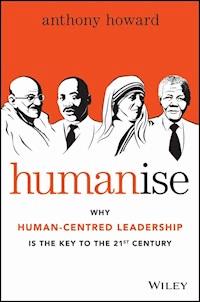
This is not a book about Gandhi, Mother Teresa, King and Mandela. It is rather a book about a thread or theme that runs through their stories, and which you can weave into yours.
That thread is a common concern for others, for putting people first. Their actions, clarity of purpose, focus, and moral stature transformed the 20th century. Your actions can transform the 21st century.
Every century opens with promise and opens ever wider because of great leaders. Not political, economic, or institutional leaders but moral leaders. People with the competence and capability to lead in business, government and society; and who possess the moral courage to refuse to be a bystander, the moral imagination to paint a picture of what could be, and the moral stature to draw people to follow them toward that better vision.
Mahatma Gandhi
2 October 1869 – 30 January 1948
Gandhi's commitment to non-violence and change influenced not just his fellow citizens, but other great agents of change who have followed in his footsteps, including Martin Luther King Jr and Nelson Mandela. He led India to independence, and perhaps led us all to independence of thought. Through his example we grasp the power of gently and persistently standing up for what is right.
Martin Luther King Jr
15 January 1929 – 4 April 1968
Martin Luther King Jr could have lived out his life as an academic, but chose to respond to the needs of his people in the USA's South, knowing that to do so put his life at risk. He was inspired by the example of Gandhi in overcoming oppression and adopted, embraced, and in the face of great violence, preached non-violent response.
He brought freedom to African Americans, and his ‘I have a dream' speech with its call to ‘let freedom ring' reverberates in the hearts and minds of leaders who find courage and inspiration in King's example.
He was awarded the Nobel Peace Prize in 1964 for his work in civil rights and social justice.
Mother Teresa
26 August 1910 – 5 September 1997
Mother Teresa was a Catholic nun of Albanian origin who, working as a teacher and headmistress in a school in Kolkata, became increasingly unsettled by the poverty that confronted her every day. Her response was not to tell others what to do, but to do something herself. Mother Teresa set out to help each person she came across in the slums of Kolkata, one person at a time. She devoted her life to alleviating suffering, sickness and poverty wherever she found it, eventually establishing hospices, orphanages and health clinics, and leaving a legacy which asks us about our response to those who suffer and who have less. Her example invites us to look beyond who stands in our way to the person who stands before us.
She alleviated the suffering and pain of the poor and the marginalised and continues to draw followers from all over the world.
She was awarded the Nobel Peace Prize in 1979.
Nelson Mandela
18 July 1918 – 5 December 2013
Nelson Mandela transformed from a terrorist to a world leader as I grew from a child to an adult. From 27 years in prison emerged a man radiating grace and wisdom, focused on reconciliation and renewal.
He brought an end to apartheid in South Africa, and his legacy invites us into the political arena, asking questions about the way power is wielded, the way people are treated by the state, and the injustice we choose not to see.
He was awarded the Nobel Peace Price in 1993.
People are searching for a new form of leadership, the kind embodied in Gandhi, King, Mother Teresa and Mandela. These leaders all put people first. All responded to the needs of other human beings, and made their difference.
They were human-centred leaders who changed the 20th century.
You can be a human-centred leader who changes the 21st century.
Resource scarcity, climate change, deepening inequality — all of the challenges facing modern society and businesses mean we need to fundamentally reinvent the way we think about leadership. Results-centred leadership is no longer enough. Humanise is crucial reading for business leaders at the vanguard of change in a world that's crying out for leadership with a human purpose. Anthony Howard's delightful storytelling decodes the dilemmas facing leaders today and provides superb insight into how we can change leadership styles for future-fit growth. Great leadership is not about doing things the way they've always been done before and this book truly shakes up thought-leadership in this field.
—Osvald Bjelland, Chairman and CEO, Xyntéo Vice Chairman, The Performance Theatre Oxford University Business Fellow
In his latest work, Anthony Howard addresses a growing disconnect between corporate objectives and people-friendly practices that undermines the best interests of both parties. He focuses on a leadership vacuum at the highest levels that is leaving corporations aloof, adrift, and unable to capitalise on their most valuable resource: their own employees. Humanise is a critical reminder that all business is driven by people and meant to serve people; Howard's personal and accessible style makes this lesson resonate.
—Ian Bremmer, Founder and Chairman, Eurasia Group Author of Every Nation for Itself
This book provides a powerful foundation to being the best person you can, and is essential reading for anyone in leadership, or on the path to leadership, who wants to leave their organisation and world in a better place. Anthony Howard's thinking about Human-Centred Leadership, and its relevance and application to contemporary leadership challenges, is an important insight for this time. There is much to consider and much to keep coming back to in this very practical book.
—Dame Alison Carnwath, Chairman Land Securities plc
Reading this book drives home just how inhuman so many organisations have become, in the demands and stresses they place on people. It also makes it clear that there is no reason to accept this status quo. Anybody can set off on the path towards a more human-centred business life, and as the book argues, if you can, you have a responsibility to do so. This is a liberating message — read this and act now!
—Diane Coyle, Vice Chair BBC Trust Professor of Economics, University of Manchester Founder of Enlightenment Economics
This book contributes considerably to the leadership debate:
One can never stop learning leadership lessons. They are a vital constituent to the government of this increasingly fractious world.
Humanise
lays out the important lessons in simple and appealing terms.
As communication becomes more sophisticated, leaders are more in the global eye and need to have a complete grasp of sound principles, and live by them.
Humanise
helps identify and then confirm these principles.
As the media becomes more inquisitive, it is even more important to live decent lives, with clear values and standards. The imperative for leaders is to focus on people first and foremost, to take an interest in and care for them, to respect the community, to be an example to others. These are all the critical basics.
Humanise
shows how this is done.
Humanise
explains that whilst leadership is personal and dependent on circumstances, it is based on enduring principles.
With a deep commitment, sound judgement and a steady self control … you can lead in your chosen field.
—Major General Arthur Denaro, CBE DL
Anthony takes some seemingly ‘old fashioned' and ‘non-corporate' concepts, terms and values such as morality, virtue, humility, and justice, and weaves them into a coherent framework through which to consider one's own motivations, responses and journey through corporate and wider life. This creates a powerful mirror to look into but also a powerful window to look out on to what might be.
— Gary Dransfield, Chief Executive, Vero Insurance New Zealand
In a world dominated by technological change, it is easy to overlook the common humanity that binds us all. In his new book, Anthony Howard calls on leaders to integrate the intellectual, emotional, and spiritual dimensions of work. Humanise lays out a clear business case for re-humanising corporate life, and provides a useful reminder that, more than any other factor, a company's fate is determined by its people.
— Serge Dumont, Vice Chairman, Omnicom Group Inc.
Anthony Howard reminds us that a leader's true role is to serve the people who follow them and that good leaders reflect deeply on their purpose and the morality they bring to their role. He puts the view in a compelling way that it is not only appropriate for leaders to care deeply about the people they lead — it's an imperative. If you are looking to grow and become a better leader, you need to read this book.
— Craig Dunn, Chief Executive Officer (retired), AMP Limited
This is not a typical management textbook, rather a thoroughly thought-provoking narrative that is reminiscent of the path Anthony took me on when I was at a very difficult crossroads in my career. His insights and understanding of the human spirit are clearly demonstrated throughout the journey he will take you on as you read this book. Will you be a better person and a better leader for having read Humanise? I most certainly was after having worked with Anthony, and now you can get the benefit of his insights from reading and reflecting on the wisdom in these pages.
—Eric Ford, Non-executive director, Compass Minerals International Former Chairman, Peabody Energy Australia Former Executive Vice President, Office of the CEO, Peabody Energy
I have observed Anthony Howard's rare ability to get face to face with influential leaders, allow them to talk about their innermost thoughts and deepest leadership challenges, and then provide guidance and wisdom from his own unique background. In Humanise he outlines both the philosophy on Human-Centred Leadership and its application to contemporary and emerging challenges. The book offers page after page of usable insights, gleaned from his years of thinking about leadership, talking about leadership, and being a leader. His vision of aligning your own purpose with your organisational purpose, and then finding where that touches the world — in order to change the world — is truly inspiring. I would recommend this book both to those in leadership, and those contemplating leadership in the future.
—Andrew Kakabadse, Professor of Governance and Leadership, Henley Business School, University of Reading Emeritus Professor of International Management, Cranfield University School of Management
During my business career I have learned that happy staff make happy customers make happy shareholders. In this book Anthony Howard explains why that is true. The world is crying out for leaders with strong moral compasses that care about people during the short, medium and long term. This book explains how you can build your own moral compass and provides insight about how you could be one of those leaders the world needs.
—John Stewart, Chairman, Legal & General plc. Chairman, Guide Dogs for the Blind Member of the Court of Directors of the Bank of England
Humanise could transform you from a reader to a leader. In this work Anthony Howard helps you restore your key settings, regain your footing and recharge your key values and virtues to cultivate truly Human-Centred Leadership, so you can lead confidently and ethically.
The evenly paced narrative is strewn with unique insights drawn from Anthony's amazing life, accompanied by a roadmap and tools to help you unlock your hidden potential and get the most out of your journey.
Anthony has absorbed the experiences of many truly remarkable leaders and individuals whose powerful vision and input he shares with you in a step-by-step tale to help you achieve the moral heights that are needed for human-centred leaders in business, government and society.
No moralising or preaching, just a book to nudge you softly in the direction of something infinitely good and rewarding, where each step allows you to reflect on where you are and where you can go, shape your conscience and cultivate good habits and virtues to secure the foundation of your character. Anthony explains why we are experiencing a lack of great leaders today and why it is imperative for you to become one. Humanise explains how you can get there using your moral compass to stay the course to your true north.
— Anatoly Yakorev, Center for Ethical Business & Compliance, International University in Moscow
humanise
WHY HUMAN-CENTERED LEADERSHIP IS THE KEY TO THE 21ST CENTURY
First published in 2015 by John Wiley & Sons Australia, Ltd 42 McDougall St, Milton Qld 4064 Office also in Melbourne
Typeset in 12/15 pt Adobe Garamond Pro
© Anthony Howard 2015
The moral rights of the author have been asserted
National Library of Australia Cataloguing-in-Publication data:
Creator:
Howard, Anthony, author.
Title:
Humanise: why human-centred leadership is the key to the 21st century / Anthony Howard.
ISBN:
9780730316640 (pbk.) 9780730316657 (ebook)
Notes:
Includes index.
Subjects:
Leadership — Social aspects. Executives — Conduct of life. Executives — Attitudes. Total quality management. Personnel management. Quality of work life.
Dewey Number:
658.409
All rights reserved. Except as permitted under the Australian Copyright Act 1968 (for example, a fair dealing for the purposes of study, research, criticism or review), no part of this book may be reproduced, stored in a retrieval system, communicated or transmitted in any form or by any means without prior written permission. All inquiries should be made to the publisher at the address above.
Quotes from Nelson Mandela on p. 120, p. 123 and p. 171 reproduced with permission from the Nelson Mandela Foundation.
Cover design and illustrations by Wiley
Disclaimer
The material in this publication is of the nature of general comment only, and does not represent professional advice. It is not intended to provide specific guidance for particular circumstances and it should not be relied on as the basis for any decision to take action or not take action on any matter which it covers. Readers should obtain professional advice where appropriate, before making any such decision. To the maximum extent permitted by law, the author and publisher disclaim all responsibility and liability to any person, arising directly or indirectly from any person taking or not taking action based on the information in this publication.
For Giovanna
Contents
About the author
Acknowledgements
Preface
Introduction: Discovering Human-Centred Leadership
Two kinds of leadership
Get out and see the future
PART I The challenge facing human-centred leaders
A framework for future leadership
1 The future and the future of leadership
Two models for understanding change
A future of unbounded possibility
Five big shifts revealed through a human lens
Notes
2 Shifts 1–3: Technology
Shift 1: Fragmented
and
connected
Shift 2: Overwhelmed
and
underprepared
Shift 3: Always on
and
never off
Notes
3 Shift 4: Moral drift
Adrift on a wide, wide sea
Moral drift and the separation of markets and morals
Moral drift and a trust deficit
Moral drift and the abdication of personal responsibility
Notes
4 Shift 5: The convergence and crossover of ‘man' and machine
Conscious computers?
People are our greatest liability
Homo economicus:
the person as a unit of economic production
Time for human-centred leaders
The Journey Map: a model for Parts II and III
Notes
PART II Foundations for human-centred leaders
A map for your life
5 Becoming the best version of yourself
‘I want to be a better person …'
A relational anthropology
The four key relationships
Who is in your four circles?
Relationships as the key to navigating systemic challenges
Notes
6 Foundations of leadership
The influence of upbringing
Lesen Sie weiter in der vollständigen Ausgabe!
Lesen Sie weiter in der vollständigen Ausgabe!
Lesen Sie weiter in der vollständigen Ausgabe!
Lesen Sie weiter in der vollständigen Ausgabe!
Lesen Sie weiter in der vollständigen Ausgabe!
Lesen Sie weiter in der vollständigen Ausgabe!
Lesen Sie weiter in der vollständigen Ausgabe!
Lesen Sie weiter in der vollständigen Ausgabe!
Lesen Sie weiter in der vollständigen Ausgabe!
Lesen Sie weiter in der vollständigen Ausgabe!
Lesen Sie weiter in der vollständigen Ausgabe!
Lesen Sie weiter in der vollständigen Ausgabe!
Lesen Sie weiter in der vollständigen Ausgabe!
Lesen Sie weiter in der vollständigen Ausgabe!
Lesen Sie weiter in der vollständigen Ausgabe!
Lesen Sie weiter in der vollständigen Ausgabe!
Lesen Sie weiter in der vollständigen Ausgabe!
Lesen Sie weiter in der vollständigen Ausgabe!
Lesen Sie weiter in der vollständigen Ausgabe!
Lesen Sie weiter in der vollständigen Ausgabe!
Lesen Sie weiter in der vollständigen Ausgabe!
Lesen Sie weiter in der vollständigen Ausgabe!
Lesen Sie weiter in der vollständigen Ausgabe!
Lesen Sie weiter in der vollständigen Ausgabe!
Lesen Sie weiter in der vollständigen Ausgabe!
Lesen Sie weiter in der vollständigen Ausgabe!
Lesen Sie weiter in der vollständigen Ausgabe!
Lesen Sie weiter in der vollständigen Ausgabe!
Lesen Sie weiter in der vollständigen Ausgabe!
Lesen Sie weiter in der vollständigen Ausgabe!
Lesen Sie weiter in der vollständigen Ausgabe!
Lesen Sie weiter in der vollständigen Ausgabe!




