


Erhalten Sie Zugang zu diesem und mehr als 300000 Büchern ab EUR 5,99 monatlich.
- Herausgeber: Entrelinha Editora
- Kategorie: Geisteswissenschaft
- Sprache: Englisch
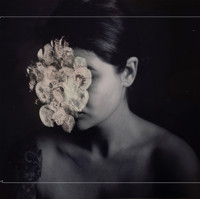
Creating meaningful images goes beyond technique but does not exclude it as a relevant component of this composition. There are spaces for dialogues about image production to take place. I do not intend to exhaust any subject but to understand that the creation of thought is intimately related to the production of images; that is why I propose to be a deep place of connections, reflections and, most importantly, movement. I don't see photography as a visual end but rather as a manner of expression, alive, questioning and producing. The image does not have a priori meanings – it is built from our relationship with the world and how we project this in the photographs we read. That is why thinking of photography as a place of dialogue, education and problematization is fundamental not only to deepen the studies with the tool but mainly to the reasoning of what we want to build with it.
Sie lesen das E-Book in den Legimi-Apps auf:
Seitenzahl: 113
Veröffentlichungsjahr: 2022
Das E-Book (TTS) können Sie hören im Abo „Legimi Premium” in Legimi-Apps auf:
Ähnliche



















Remodal
Responsive, lightweight, fast, synchronized with CSS animations, fully customizable modal window plugin with declarative state notation and hash tracking.
This page needs permission to play audio
Please click “OK” to allow audio playback
//
Remodal
Responsive, lightweight, fast, synchronized with CSS animations, fully customizable modal window plugin with declarative state notation and hash tracking.
This page needs permission to play audio
Please click “OK” to allow audio playback
//
Remodal
Responsive, lightweight, fast, synchronized with CSS animations, fully customizable modal window plugin with declarative state notation and hash tracking.
This page needs permission to play audio
Please click “OK” to allow audio playback
//
Remodal
Responsive, lightweight, fast, synchronized with CSS animations, fully customizable modal window plugin with declarative state notation and hash tracking.
This page needs permission to play audio
Please click “OK” to allow audio playback
© 2022, Editora Entrelinha
E-mail:[email protected]
www.entrelinhaeditora.com
Creating meaningful images goes beyond technique but does not exclude it as a relevant component of this composition. There are spaces for dialogues about image production to take place. I do not intend to exhaust any subject but to understand that the creation of thought is intimately related to the production of images; that is why I propose to be a deep place of connections, reflections and, most importantly, movement. I don’t see photography as a visual end but rather as a manner of expression, alive, questioning and producing. The image does not have a priori meanings –it is built from our relationship with the world and how we project this in the photographs we read. That is why thinking of photography as a place of dialogue, education and problematization is fundamental not only to deepen the studies with the tool but mainly to the reasoning of what we want to build with it.
Title:Hybrid Photography
Editorial Coordination:Danny Bittencourt
Production Coordination:Nathalie Pires
Graphic composition:Victória Santos
Translation:Priscila Pacheco
1st edition:May 2022
ISBN:978-65-997916-0-4
Support:46graus
//
Remodal
Responsive, lightweight, fast, synchronized with CSS animations, fully customizable modal window plugin with declarative state notation and hash tracking.
This page needs permission to play audio
Please click “OK” to allow audio playback
//
Remodal
Responsive, lightweight, fast, synchronized with CSS animations, fully customizable modal window plugin with declarative state notation and hash tracking.
This page needs permission to play audio
Please click “OK” to allow audio playback
For those who believe, support and strengthen. My wings are more powerful with your support. Especially for my Mariel and Mia.
//
Remodal
Responsive, lightweight, fast, synchronized with CSS animations, fully customizable modal window plugin with declarative state notation and hash tracking.
This page needs permission to play audio
Please click “OK” to allow audio playback
Part 1PLACE OF SPEECH
Contemporary Photography
Photography as Record
Photography as Staging
Photography as Memory
Photography as Impermanence
Part 2MONOLOGUE
Creative Process
Motivation
Incomplete Movements
Part 3DIALOGUES
Hybrid Photography
Dialogue with Paint
Dialogue with Elements
Dialogue with the Abrasion
Dialogue with the “Rephotography”
Dialogue with Experience
Part 4EXPERIMENTAL CONVERSATION
Chemical Processes
Cyanotype
Turning Process
Transfer with TransferPrint
Solvent Transfer
Part 5WAY OF SPEAKING
Support
Prints
Presentation
Part 6GESTURE AND EXPERIENCE AS A PROCESS OF SIGNIFICANCE
Inspirations
This is not the last word
PICTURE CREDIT
BIBLIOGRAPHIC REFERENCES
Table of Contents
IntroductionFIRST WORDS
//
Remodal
Responsive, lightweight, fast, synchronized with CSS animations, fully customizable modal window plugin with declarative state notation and hash tracking.
This page needs permission to play audio
Please click “OK” to allow audio playback
//
Remodal
Responsive, lightweight, fast, synchronized with CSS animations, fully customizable modal window plugin with declarative state notation and hash tracking.
This page needs permission to play audio
Please click “OK” to allow audio playback
Art is a fertile ground for innumerable possibilities, appropriations, encounters, connections, transversality. Hence, these plural discourses are easily absorbed by photography, which becomes a complex cultural product, very effective as a tool for expression.
By perceiving photography under this light, we can observe that the creative process is not linear. Instead, it enables the dialogue of techniques, non-techniques, and events that arise during the poietic, allowing for conceptual and plastic changes during the process that are not established a priori. Hybrid Photography develops in this context, assuming multiple guises and powerful nuances in the narrative and conceptual construction, since it awakens different senses and strengthens the relationship of experience between artwork and spectator.
The challenge of talking about Hybrid Photography arises from the perception of what is not enough, of the ephemeral and immaterial in the morphogenesis of the image. It was necessary to blur certain edges so that the restlessness could fit in the process. What I propose in these pages is to share questions, some investigations, many mistakes and the vibrant motivation that underlies my relationship with photography, myself and the world that overflows with me.
To do this, I had to take the photographs out of their frames and rethink them in another contemporary place that would allow me to make such inquiries and experiments without borders, validation needs or any kind of legitimacy.This photography is impure, contaminated and completely alive.
Introduction
FIRST WORDS
//
Remodal
Responsive, lightweight, fast, synchronized with CSS animations, fully customizable modal window plugin with declarative state notation and hash tracking.
This page needs permission to play audio
Please click “OK” to allow audio playback
//
Remodal
Responsive, lightweight, fast, synchronized with CSS animations, fully customizable modal window plugin with declarative state notation and hash tracking.
This page needs permission to play audio
Please click “OK” to allow audio playback
Not every photograph adapts to the conceptual questions proposed by this book. Therefore, it is necessary to provide some context of where the photography of which we are talking here is being constructed, in order to have a broader understanding of its intentions. Disrupting the notion of photography as a truth-legitimizing register helps us think about the role of photography in contemporary art, dislocating its concept from formal photography – that is, committed to purely technical standards – to the artistic field.
All technical issues – composition, harmony, treatment, color theory etc. – do not make sense independently. It is the artist himself (or herself) who signifies them. That is why photography fits so comfortably into art spaces, which allow it to be more than its technical operation.Expanded photography deviates from places so heavily underlined by photographic production systems, a resistance of those who must build their works beyond these historically erected borders.
This does not mean being oblivious to the machine. A deep knowledge of the main tools in photography – camera, editing, color theory, natural light – is essential so that the mechanics of image construction and the limits of the device can be overcome, and a higher level of poetics can be achieved.
Contemporary Photography
Part 1
PLACE OF SPEECH
//
Remodal
Responsive, lightweight, fast, synchronized with CSS animations, fully customizable modal window plugin with declarative state notation and hash tracking.
This page needs permission to play audio
Please click “OK” to allow audio playback
hybrid photography
From this perspective, contemporary photography spills over into possibilities for imagery that stimulate an in-depth reading of its viewer.It is a favorable field for ideas related to Hybrid Photography to germinate freely. Like art, contemporary photography values both the creative process and the process of signification of the work, in a way that the technique is chosen and woven together with these processes –not prioritizing the difficulty or quality of execution of these manifestations, but rather verifying if they are well employed according to the artistic proposal.
This imagery production is not limited to the visual field, promoting the stimulation of other senses and relationships that collaborate to profoundly involve the viewer in the context of the artist’s creations. The interaction with the work will happen consciously and/or unconsciously, according to internal and external factors.The artist invites the viewer, who chooses to step in or not. And the work, when ready, no longer belongs solely to the artist.Once exposed, the artwork belongs to the world. The contemporary image acts in deconstruction and discomfort; it does not provoke serenity but calls for further thought through absences, disruptions, incompleteness and impermanence.
It needs this counteraction to exist. Of course,in the same way that the author builds their works upon their own experiences, pains and trebles, the observer reads them with the same tools.This reading is multiple and inconstant.The authors themselves relate to their work differently as they add new layers of experience to their experience. We can say something about an image because it is material, but something else hurts us in different places each time we look at or live a photograph. One of the most interesting theories about this relationship between the viewer – including its own author – was written by the non-photographer Roland Barthes. He called STUDIUMwhat is possible to categorize within an image, both from the ethnographic, cultural, or historical and from the classificatory point of view. And the word PUNCTUMhe used to refer to that which inexplicably hurts (he uses and abuses that expression to strengthen the term) and hurts differently for different viewers. In this sense,in the images I observed, PUNCTUMwould be the color – the color that hurts me. What was being represented in the image was in the background. Then, considering that the images have a different effect on each one that interacts with them,this would place them in a polar opposite of the real one, the register and the permanence.
//
Remodal
Responsive, lightweight, fast, synchronized with CSS animations, fully customizable modal window plugin with declarative state notation and hash tracking.
This page needs permission to play audio
Please click “OK” to allow audio playback
place of speech
There is also a very coherent issue regarding photography and the visual arts: the education of the photographer in an atmosphere outside the scope of art has a different tempoand construction in comparison to the visual artist who uses photography (often without understanding the technique or its complexities) as a tool for his creations. There is a growing number of visual artists searching for more information about photography,as well as photographers using photography as a form of artistic expression, inserted in the scene of contemporary art, uniting photography and art after so many misconceptions and estrangement.
By incorporating these thoughts and contexts, contemporary photography is set in this place of miscegenation, rich in possibilities and ramifications. A prosperous field to think about image construction from a less solid and more expanded space.
//
Remodal
Responsive, lightweight, fast, synchronized with CSS animations, fully customizable modal window plugin with declarative state notation and hash tracking.
This page needs permission to play audio
Please click “OK” to allow audio playback
hybrid photography
Photography as Record
The very notion of photography is historically intertwined with the ability to register, to eternalize a moment. Even though this notion has already been heavily disproven by many authors (Kossoy, Barthes, Soulages, Ruillé, among others) – and yet it is promptly disseminated in the photographic production system –, it is necessary to think about photography and its ramifications. As conscious producers of images in a contemporary world, we should assume responsibility and think about our connection with the images and about their relationship with the world. There is still a prevailing discourse that naturalizes the capacity of photography to capture and register moments forever. Much of this way of thinking is related to the commercial character that photography carries, but also to the historical charge of being perceived solely as a form of registration, having as primary function the faithful representation of the “real” – a notion that has been constructed since photography was officialized in 1839, when it was also categorized according to its mechanics and ignored as an authorial and artistic tool. This notion was later reinforced by the camera manufacturers industry and still lives in the speeches of non-expert people, who reduce the construction of the image solely to the functionalities of the camera.
It is undeniable that the image has a physical materiality. We can describe everything we can see in a picture. However, our relationship with it changes and, therefore, that moment is no longer the same; it can not be fixed on paper because it exists in the connection.
At first, Barthes’s theory of “this was” is enough to explain the image, because it is something that happened and has passed, that is no longer there, that becomes past and ceases to exist after the click. However, in a
//
Remodal
Responsive, lightweight, fast, synchronized with CSS animations, fully customizable modal window plugin with declarative state notation and hash tracking.




