


Erhalten Sie Zugang zu diesem und mehr als 300000 Büchern ab EUR 5,99 monatlich.
- Herausgeber: Abrapalabra Editorial
- Kategorie: Ratgeber
- Sprache: Englisch
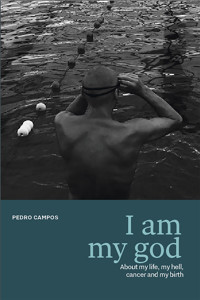
I am my god is a captivating, inspiring, and thrilling autobiography. It addresses how to understand and heal from cancer, that true inner battle, that journey to the center of one's own hell, to face one's own demons. A story of overcoming, of a life ,of sport, a test of courage, a handbook regarding the philosophy of life. After deciding to get to the very edge of death, to expose his life so that everything that had to die in him may die, until hearing his diagnosis and 24 hours later, knowing that he was cured and feeling like the happiest man in the world, the protagonist narrates in the first person this story that will leave the reader with the certainty that everything is possible.
Sie lesen das E-Book in den Legimi-Apps auf:
Seitenzahl: 394
Veröffentlichungsjahr: 2024
Das E-Book (TTS) können Sie hören im Abo „Legimi Premium” in Legimi-Apps auf:
Ähnliche



















Pedro Campos
I am my god
About my life, my hell, cancer and my birth
Campos, Pedro
I am my god / Pedro Campos. - 1a ed. - Ciudad Autónoma de Buenos Aires : Abrapalabra Editorial, 2024.
Libro digital, EPUB
Archivo Digital: descarga y online
ISBN 978-631-6594-09-9
1. Autobiografías. I. Título.
CDD 808.883
Translation:
Horacio Andrés Castelli
Cover image:
Hector Perrone
First edition: March, 2024
Layout:
Abrapalabra Editorial
Buenos Aires
E-mail: [email protected]
www.abrapalabraeditorial.com
ISBN: 978-631-6594-09-9
Made the deposit indicated by law 11,723
Made in Argentina
Gratitude
To my son Augusto, my hero.
To my children Julia and Martín, to Laura, to my dad and mom, to Silvina, to Norberto, to José, to Fedra, my daughter at heart, to my dear friends, to all the people who were and are in my life, to Melina.
Atheist, spiritual and triathlete
Prologue
I was very honored to be invited to write the prologue for this book, which portrays in a fully experiential way, in the deepest sense of the word, a transit of stages with an outcome that, in addition to being positive, has signs of a deep internal revolution and a new way of living life.
Pedro, like other people who crossed and cross my path, who comes and goes and who continues, not only because of persistence but also because of a feeling of gratitude mixed with unrestricted confidence in continuing and in glimpsing, understands that in addition to everything he achieved and perceived, more is always possible, following our will and predestination.
Everything I do, I do with love and dedication, seeing it as more than a job, a spiritual mission to serve life and revolutionize the lives of people in their processes to awaken consciousness.
Pedro’s story is moving and stimulating, and may provide hope for other people, who, like him, will be able to feel in their skin and their guts, the greatest, perhaps, of all of life’s challenges, which is not only to overcome death, but rather to understand what life means, and the way one transcends and understands that process as something in fact “liberating”.
I feel part of that important journey in the life of someone like Pedro, who portrays his innermost intimate experiences in a book, recounting the events in their different stages.
I know for certain that the Pedro I knew is totally different from the Pedro of today. All of his transformations were based on the principles that Yoga portrays in its spiritual literature. Principles such as confidence that everything is possible, unrestricted dedication to change and what it entails in our lives, commitment, and discipline, among others.
His imminent life-threatening situation, the grieving process, and the internal transformations that would cause many to succumb to chaos and imbalances, always remained far from Pedro’s purpose.
Ever since we started serious work in favor of his health, in the broadest sense of the word, beyond the physical order, it was always seen and treated as the possibility of overcoming challenges, and that is what life represents.
When we overcome challenges, we feel liberated from our restraints and limitations, and we subtly understand the essential values of life, such as honor, humility, and honesty, and that the more faithful we are to our feelings, the closer we come to the transcendent truth; without any kind of judgment, blame or denial.
I know that many people, and I include myself in this story, were part of the transformation of a victor in his challenging days, as was Pedro’s case.
Everyone will have the opportunity, by reading this book, to bring to their own reality, regardless of what it may be, whether it is the case of a similar ailment, or about the questions and challenges of life, and benefit from this story to help them overcome those challenges as well.
Living wholly implies much more than breathing, keeping our daily tasks under control, or fulfilling our dreams or desires, but learning from our challenges, that is what makes us different, that we can be living or dying every minute that passes and that we can transform, change, simply overcome, understanding that we are not people but soul, and that it is by its own nature free.
Admitting that we are soul above all else, re-educates us and gives new meaning to all the patterns imprinted in our mind, which insist on attending only to those limitations, without the possibility of awakening and realizing a life of well-being, harmony, love, peace, and happiness.
My most sincere thanks to Pedro and to all the people who, by being beside him, praying, with their strength, or in silence, have shown their affection and love for his heroic story, which is now presented in the form of a book that records a literary story, its authorship.
May this book be a new beginning of life, full of blessings, prosperity, and help to others who can benefit from this noble task.
Shri Swami Shankara Sarawati,
Sergio Oliveira, Caxias do Sul, RS, Brasil
I am my god
On August 28, 2018, the head of Hematology at Hospital San Martin, sitting on a chair and looking into my eyes, told me I had cancer and explained what the treatment was going to be. I processed the news for 24 hours and, after that, I knew I was cured. Knowing I had cancer ended my hell. The fact that I had this disease gave me the certainty that everything had definitely changed and that I was going to start living my own life.
I will try to tell everything, from the moment I was conceived until my birth, at the age of fifty-one.
It’s a rainy morning, I’m still in bed feeling sleepy, which I do not intend to resist, by the way. From the kitchen comes the smell of fresh coffee.
I’m at the Ponta das Pedras inn, in Morro do São Paulo, Itacaré island, Brazil. In this place, over two years ago, my illness began to manifest itself more intensely. My spleen started to swell, as did my ankles, due to the lymphoma.
I came back to close pending matters, to finally let others go, and to live moments wholly, which due to my physical problems, I was unable to do at the time. There is a lot of symbolism here, in this wonderful and singular place. At the northern end of the island, at its highest point, stands, almost majestic, the lighthouse. It’s called ‘el farol’, meaning the streetlight. It has a lot to do with my new life, it has a very special meaning. It is a challenge, something pending. I will elaborate on why soon.
It rains on.
I was locked in a cage, with a hungry lion and with just a dull and worn-out knife to defend myself. Not only did I kill the lion, but I managed the most difficult thing - to open the cage.
That is why, when I’m asked how I managed to go to the gym in the afternoon after my morning chemo, I reply that cancer and the treatment were a party to me. I was already lying under the sun, my real hell was behind me. That dark tunnel that never ended, that anguish of not knowing, of not understanding, of thinking that I had gone crazy, was necessary. Amid all that martyrdom, of all that madness with no apparent end, I knew only one thing, and that was that if I stopped confronting it, I would die. Those twenty-four hours following my diagnosis taught me everything. I was able to understand and answer the questions I was constantly asking myself. I had been told that I had cancer, that the only treatment was chemotherapy, and that a person with the values I had in my blood at that time could not be alive. Nevertheless, I did not feel fear, I did not feel anguish, I did not wonder why it had happened to me. No, none of that. From the moment I heard my diagnosis, I knew I was healed because my soul was at peace, I had healed my true affliction. I understood.
I declare myself incapable of describing how I feel about the people who did everything in their power to make it possible for me to be writing this today, especially my son Augusto. Gratitude? To thank every one of them? No, that doesn’t do it justice, that doesn’t begin to describe it.
One day, I called Ricardo. I had not been feeling well for a long time, but beyond the biological disease that I already had, and that I felt, and did not know what it was, my life was broken. I knew I could not go on like that. I knew and felt that the time had come to face and decide whether I wanted to go on living or die. I did not consciously know what I had to do, I did not consciously understand which path to follow, but I knew that something had to change.
Ricardo saw me, and I told him what was happening to me. “An anemia that won’t go away”, I told him. He then explained to me that it was a problem concerning my family, a problem within the family bosom. “There’s a problem in your blood”, he told me, “and blood is family”. He asked me what happened to me in the middle of my life. I thought for a second. “My grandfather on my mom’s side committed suicide”, I said.
After that, he gave me an appointment. When the day came, we sat face to face and then began the most difficult part, the darkest and most bitter part of this and the many other lives I got to live.
In that first session, the punches began to rain down. They came from all sides, almost always from where I least expected them. Of course, we weren’t fighting, but words and their meaning are much more painful than any punch dealt using knuckles.
I began to realize what my life had really been like, who and how those around me had been and are since I was conceived, and fundamentally, why things had not been the way I thought they had. I started to be conscious of how I had been raised, how I had been taught not to be myself and, little by little, to become someone insecure, full of fears, and terrified of living his own life. I began to relate states of mind, conflictive situations within me, and ways in which I had reacted in certain circumstances. It was the way I began to realize what I had lived through and in the family I had chosen to be born into.
The patterns of behavior of all of us have been fixed and predetermined for at least four or five generations. If we believe that the way we react and relate to others is our own, we are completely wrong. To be aware of this is to take a giant step to begin to live our own life. Otherwise, there is no chance of that. With Ricardo, I realized that my life had been marked by suffocation. My life was suffocation.
My mom, executing her ancestral programming and complying with the mandates of generations ago, did nothing more than make a prison out of my life, a cage, in which she believed she was protecting me from the very life I was to live. She thought she was helping me, she thought she was doing the best job of the best mom, not realizing that she was locking me in a little more every day. She didn’t let me breathe. Several times, while she was alive, I came to think about how much better my life would be without my mom.
Much the same happened with my father, about whom I never knew too much. My dad died and I never knew what he really thought, I never knew what he felt about his life, about what he had to live, about his sorrows, his anguish, or the things that made him happy. Apart from shouting the goals of our favorite teams, I never really knew who he was.
I had a happy childhood, I have beautiful memories of going to the kindergarten that was three blocks away from my house and next to what would be my elementary school. Several of my friends today date back from then. They are dear to me, and fill an important part of my life. Over time, I shared many beautiful moments with them, and I still share emotions with them today, as I did back then. Friends who, moreover, helped greatly to save my life when it seemed that I was refusing to do so.
In those years I felt that I had a sense of leadership among my group and my elementary school memories are mainly those of a boy who played at being the boss, who was followed and respected. I felt I was a leader.
It was in that school, my School No. 1, where I learned to love sport, where I began to understand that my life was going to be marked by it, that my passion was awakening and would never end. And I have to say that the great architect of that, the person who made my inner fire ignite and develop the way it did and last until today, was the incomparable mentor of life, whom I keep in the bottom of my heart, Professor Don Héctor Paterlini. I evoke him and the emotion springs spontaneously from my heart, passes through my throat, and ends with sweet tears in my eyes. What a formidable being, what a wonderful person and friend! He had a unique talent to always bring out the best in everyone, a wise man who convinced you that every jump, every move, every run, and every strike at the ball had to be from the heart. That’s how he conveyed what he taught, with his heart. He is an eternal inspiration for me.
This was also a stage of travels, which were adventures filled with nature and feelings. The four of us would travel, my parents, my sister, and myself. They were camping trips, trips that would turn into stories to tell and remember, travels with which I learned to love the immense landscape filling my eyes and heart, travels that will never end because they were engraved into my soul forever. That too is forever in my life.
We got to know a great part of the country that way, discovering colors, and smells, feeling the wind, the heat and cold in our skin. To rub one’s fingers on some plant and feel its smell, to wake up to the singing of birds and deep nature all around me, enchanting me… Incredible feelings that I learnt to value and experience at a very early age.
Several times I described in a very particular way the feeling that invaded me, and invades me still, whenever I contemplate something that marveled me in nature. Those whole and exciting moments when I was in front of something beautiful, I used to say that what I was living made me suffer. “I suffer, I suffer,” I would say. I believe with that expression I intended to declare my impotence of not being able to be part of it, of not being able to have it and make it my own, but I didn’t understand that I was able and that I was also that. We are all that.
Kindergarten, elementary, and high school were places that meant friendship, beautiful moments, emotions, and many teachings for me. I have countless anecdotes and experiences from that time. I remember the moments, smells, tones of voice, attitudes, and phrases of my friends, classmates, and teachers. Many things and situations seem vivid as if they were happening today, including what I felt and experienced. Even today, when we have the opportunity to share whole moments among friends, I am still able to tell a story in great detail or impersonate teachers and professors who have earned my attention for that purpose.
As I mentioned, elementary school was the beginning of my life related to sports, to my passion for sports, which accompanies me until today, and I know it will be so forever.
I think that besides representing friendship, elementary school marks a milestone for my love of sports. It was born there and I am grateful to life for having come across such a wonderful and unique person as Héctor Paterlini was to me.
I have beautiful memories and experiences from that elementary school, but there is one in particular that I remember with the greatest emotion.
It was the end of the year ceremony, although I don’t remember which, and I was performing. I played the role of the circus presenter. I was the one who opened the show for the audience in attendance, who built the expectation for what was about to come. And, among the audience, among all the dads, moms, grandmoms, grandpas, aunts, and uncles, there was him, my idol, my reference, my maternal grandfather, Grandpa Tatán. I spoke and everyone listened, I moved my arms, my eyes were filled with emotion and everyone was at the edge of their seats, but I, at that moment, up on that stage, was acting just for him. He had my attention, he drew my stare, my movements, and my emotion, and his face and his eyes reflected his own. I need not close my eyes to see him standing there among everyone, craning his neck to get a better view, with his smile and his sweet tears of pride and love, the same ones that come to my eyes now as I write and feel him with me. My grandfather, my permanent guide.
Grandpa Tatán and Grandma Tatána.
A grapevine covered a considerable portion of the yard, a part that was brick-floored and had a gutter that served as a river to play with plastic and wooden little ships. It was the drain from a basin fed from the water tank on the roof. Beyond the pillar began the open yard, an immense piece of land where I spent a lot of time playing and learning; an orchard with vegetables, a hen pen, fruit trees, and a bird of paradise bush which was my haven and an exclusive zone for me and my fantasies.
There was a lot of magic there, and I needed nothing else to feel like I was in the best place in the world. To treat myself to a sweet and tender tomato from the plant was one of the greatest pleasures I could have, as was walking among the chicory, squash and all else that grew with the care of my grandparents. There was also a shed on one side, where my grandfather kept all his tools and anything else that might be useful.
He was always doing something, fixing or making something that was necessary for something. They were both untiring and that’s why I called them that, because there was always the sound of work in the air, there was always activity and the ta-tan of the hammer or any other sound meaning action. Of course, there was also the mate break in the shade and the happy chats. My whole childhood was like that. I lived and shared a lot with my grandparents and learned plenty and more from them.
Uncle Manolo and aunt Chola, Bernabé and Paula, uncle Agustín and aunt Herminia, aunt Pancha and Ramon. All of them are a part of my life, of this wonderful life I lead and with which I’m getting along better and better. All of them compose whole moments, moments I can remember and relive as if they were happening right now and are treasures that will be with me forever, and from which I still learn today.
My grandma Inés died young, when I was fifteen years old. The Soccer World Cup was being played in Spain, in 1982. She had an autoimmune disease that progressively stripped her of her forces and ended her life as she lay asleep on her bed.
My grandfather never recovered from that, and he carried it for the rest of his life with ups and downs. He was lonely after my grandma’s death, despite having us beside him. My parents, my sister Laura, and myself lived next door, so it was almost like we were all living together. The backyards were the same because nothing was there to separate them and it was all the same space.
A long time afterward, when my son Augusto was already ten months old, my grandfather Pedro, Grandpa Tatán, and Grandpa Pico, decided he didn’t want to live anymore.
Twelve years after my grandma’s death, on the afternoon of December 29th, he woke up from his nap, went to the bathroom, waved at me, and killed himself.
I was in a room in his house doing some chores, which I was almost about to finish, when he opened the door, and, leaning on the door frame, asked me how I was doing. “What’s up, nenito?”. I turned around and answered that all was well, that it was odd that he was up so early from his nap and, while I waited for his response, I went back to my checklist. It was then that he told me that he was doing bad, bad, bad and that he was going to “off himself”.
It was the first time in my life that I would feel my whole spine freeze up in one second. No one is prepared for that, let alone me.
I tried to lessen the importance of what I had heard, but I couldn’t come out of shock, and I started talking to him, telling him to get dressed, to get the mate ready and go home, sit, and have a few with my mom.
My mind was set on not realizing the gravity of what was happening, so I decided to finish what I was doing and let him go back to his room. After a few moments, I heard the noise of a chair on the other side of the wall, but I preferred to imagine that it had his clothes on it and that he was getting dressed. I kept trying to understand and it was only after a couple of minutes that I left the room where I was, walked a few meters across the yard, and put my hands against the glass on the door to peep inside, wishing to see him putting the water on. But that is not what I saw.
From where I was I could see up a hallway separating the house’s two rooms, and it took me a couple of seconds to react and realize that the person I saw hanging from a rope, in his underwear, was my grandfather.
Following my screams, came my parents. We joined efforts and were able to cut him down, we laid him on his bed and my mom started to massage his throat and his face, which was swollen and purple. I tried CPR, but nothing could bring him back. It was too late, he was already dead.
From the moment he opened the door and said ‘What’s up, nenito?’, as he always called me, his mind was made up. I always thought he was a brave man, even right then, because you can’t do that without bravery.
I can’t say that he’s missing in my life since that moment, because he’s not, I don’t feel it that way. I know that he’s always with me, we are together and he continues to look after me. I can still hear him talking to me, he still calls me saying ‘on the double’ into his kitchen to have a piece of beef, and lettuce from his orchard for lunch. It was his decision and his way of changing course, of solving what was wrong with him and which he knew he had never gotten over. Life is an eternal learning process. My heart knows he’s there.
One of the things I understood after going through my process, was the fact of realizing how much guilt I had carried all my life because of what happened that day with my grandfather Pedro. I became aware that I had lived all these years blaming myself for his suicide, thinking and putting it on me for not preventing it, for doing no more than what I did.
This astounding and transcendental fact was the first big signal sent by life for me to realize that I had to do something to change it. At the time, I didn’t understand it that way, and several other similar episodes were needed for me to hit rock bottom, see it all, confront it, and be reborn.
By the end of elementary school, in seventh grade, I had my first girlfriend. She was my first love, I was leaving childhood behind and stepping into adolescence, experiencing love, and living new sensations.
Claudia also enjoyed sports in school, she excelled in track and field, and she was always winning competitions among schools. We were a couple on and off, we shared Sunday afternoons and the occasional “asalto” held at a schoolmate’s house. Just that.
At the time, the cinema held double features on Sunday. 5 PM cinema… Which was useful to learn how to kiss and to hold your horses. Those were fumbling kisses that tasted like fruit candy, given without breathing much and losing sight of the world. Those were kisses that set your face on fire and sent your head spinning, those were back-row kisses, given as if each were the last one.
It was a seventh grade I still treasure, a seventh grade with many beautiful things, like, for example, the radio and Maradona. It was the year of the Youth Soccer World Cup in Japan. We snuck a radio into school to listen to those matches, which we enjoyed almost as much as the fact that it was being done behind the school principal’s back.
Wonderful seventh grade, the end of a cycle, the next step, omens of new challenges and discoveries. Seventh grade, the last one in School N°1. High School was coming, and we saw it as another life
I believe that being able to have, to this day, after fifty years, the relationship I maintain with my friends from those days is one of the treasures of which I am most aware in my life, and that makes it, for that very reason, a life of privilege.
Friends that were right there, worrying and helping as well, alongside my son Augusto and other people whom I’ll name in due time, to get me out of the dangerous place I was in before I was involuntarily committed, to bring me back from the brink of death. They are a part of my life as I am of theirs, they are people with whom I’ll forever be connected.
When I was able to understand what had happened to me, when I realized how close I had come to dying and everything that had been done for me, everything that they had gone through with my son Augusto, who was the general of that battle, I felt so privileged, so blessed and acknowledged, that I can’t but forever be grateful.
I feel friendship as a containment network, a calm water lagoon, soft and warm, which is there, without pretense, without demand. That love that flows without speculation, without seeking advantage or calculations, is peace, it is solace and a feeling of perpetual belonging. It is one’s self in others.
My kindergarten friends, my elementary school friends, but also my high school friends, and those that life provided afterward. Friends that were there and are always with me, friends with whom we’ve shared life. Friends that sport brought, friends who appeared and appear in my life and have the habit of never leaving again. That’s why I say that such a treasure transformed my life into a privilege, my friends have made a privilege out of my life.
High school was a huge change for me. Back in the last months of elementary school, we could smell it already. We were all wondering how it would be, what we would feel. It meant changing schools, buildings, and neighborhoods, to stop being the eldest and become the youngest of a much larger and unknown school. This was a great challenge and I felt it as such.
The first day of class was very special. It was the first time that I had to wear a tie, a high school uniform! It was another reality, other classrooms, other teachers, other subjects, other schedules, and even another bell, which sounded different from the one that let us know in elementary school that the yard was ours for the taking.
I remember when a fifth-year boy took us on a tour of the school, which seemed immense in my eyes, and I remember seeing him as a man, but he was only seventeen years old. This was the new reality I was going through, and it was also, of course, a beautiful change.
I started to get to know other classmates and hit it off right away with some of them. Almost none of my elementary school friends were in my class, many were on the afternoon shift. In the morning shift, we had to choose between English or French, though it was really down to a lottery and we just had to stick to the result. I got French, and with French came many friends.
Sports were really important to me in high school too, because it was then that I felt best.
“Skinny Cravero”, “Puchi”, and “Rocho”, were the teachers who marked that time of sports, each in their way, each with their tastes, preferences, and their personalities. Somewhere along the way, I let people know about my tendency to imitate. Well, Skinny Cravero, a very particular person and very dear to me, was the main target of my performances. Many anecdotes, and of course impersonations, I still repeat to this day and are a part of my life’s story, which I often share with my friends.
Those were times of softball, rugby, and volleyball, as well as track and field, and soccer, of course. I always had a very special place in my heart for my P.E. teachers, because the bond was very close with all of them, in particular with my greatest teacher, Héctor Paterlini.
P.E. classes were very special to me, as it was in those classes that I put all my passion and enthusiasm, which I’d brought from elementary school, and that continued to manifest in high school. I paid my full attention, and I never went unwillingly to those classes, there was always extra motivation, a personal demand that drove me to always do more, and do better.
There, a new stage in my life began, a stage that forced certain decisions and behaviors that I undoubtedly was not too convinced of going through, or, more accurately put, I wasn’t ready for. I didn’t have the guts.
I can now acknowledge how at that time in my life my emotional dependence towards my mom was evident, and the rivalry this awoke in my dad, all that, was preparing the path for my life to close in on itself, little by little, but relentlessly.
It was also clear at that time, early in high school, when I began to feel as though I could not be whole; that something inside me made it so that I could not live what I was dealt to live feeling whole. I always felt that way, but ever since that time, that feeling became clearer, my inability to do that. Living whole.
Ever since I was a boy, a little boy, that feeling was within me; as if there was something physically the matter with me, something inside my body that made me feel that way. Something that didn’t let me be myself, that didn’t allow me to be happy. That’s how I saw it in my mind, something all tangled up and taking up space inside me, a sort of tangle between my organs that regulated everything I felt. That was the feeling that was always within me until the day I was told I had bone marrow cancer. Exactly like that.
High school life was a beautiful experience for me because it meant starting to discover a little more about life, making friends, of experiencing new moments, new challenges, new loves, and new feelings.
I’ve always felt that having friends is a true privilege, and I have them. Besides my kindergarten and elementary school friends, I met many more in high school. And my life carries on with them to this day, sharing many whole and gratifying moments in my life, whilst also being nearest to my family when I was worse.
And high school began. Adolescence ahead, incertain adventure and new paths to live through and discover. Marvelous. However, it also meant that I started discovering not-too-pleasant things that began to manifest inside me. That feeling of not being able to be whole grew and was always present.
Consequently, in every outing, trip or in any other experience, this feeling came over me. In certain aspects of my life, I started to behave in a more closed, and distant way, as if certain things irked me, which I made apparent, to myself and all others.
It was always hard for me to do what most people do, I always felt the need to stay aside from group and ensemble attitudes. I always preferred to keep my distance from all that, but, also, in those times everything was exacerbated by that feeling of not being able to feel whole. That feeling was the reason I lost some amazing times to share. The trip to Bariloche was a perfectly clear example.
In those years, I began to be aware of the influence that my mom had in everything, or nearly everything, that I did and how I did it. On one hand, it was that, that emotional dependency became more and more accentuated, and though I did not accept it, I didn’t know how to avoid it. On the other hand there was my father’s absolutely passive attitude. He was a man with whom I had practically no dialogue, and not because he was distant and tough on me, but because any attempt to talk to him other than about soccer or anything concrete, was doomed to failure. That was surely due to what he had experienced. Any conversation at the table, for example, that brought out opinions was enough for him to change the subject or demand that we watch the TV. If that didn’t happen, his answer was to get up and leave. I never had a talk about life with him, about important and transcendental matters, because I knew beforehand what his response was going to be. He permanently avoided any change of opinion, and many times he treated me like I was crazy for the things I said and thought. To him, I was always the family nutcase, his only center of attention inside the house was the TV.
He was also a very nice man, kind-hearted and amiable, a dear friend to his friends, and beloved by them. I remember many things related to him, like when we were driving one day, just him and I. I must have been ten years old, and I blurted out that when I grew up, I’d have ten Chevys and ten Ford Falcons, which at the time were the best cars out there. I said it with such conviction that he patted my leg and, almost whispering, he said: “Let’s hope so, son, let’s hope so”. That was my dad, that and also his other ways with me, with my sister Laura, and with my mom.
I now understand many things that I didn’t at the time, and I’ll tell them as they come up.
As I told before, at the time I could already feel my mom’s expectations on me, and how they would weigh on me more and more. And with the end of high school and the beginning of college, they became unbearable.
My life was a permanently chopped sea, which would sometimes push me in my favor, and other times against it, and even toss me around and pull me down. I could feel all of this, I could suffer it, but I couldn’t make out why this was inside me, or even less, how to avoid it. It was very unpleasant to live like this all the time, to carry this around and not be able to be rid of it.
My mom Ilda, the teacher.
She would always talk about her first school, where she began her teaching career. A rural school in Timote, a lost landscape in the Buenos Aires province. The frogs’ school, she said, because there was a well full of frogs. She lived in that rural school for a time, where every once in a while my grandparents would visit, and stay with her for the occasional weekend. I don’t know how long she worked there, but after that, she went back to Lincoln and taught there until her retirement.
When she was young and had just started working, she bought a scooter and rode it around town. She used to seize the occasion to drive by him who would later on be my dad. She wanted to seduce him, and my dad, who it seems had other worries in mind, apparently didn’t care too much for her at first. It was only my mom’s insistence that claimed a bit, just a bit, of my father’s attention.
That sort of behavior by my mom would define the rest of her life, because ever since she met my father and they began their relationship, she lived in acceptance of a situation, that she surely knew about from the start, which she was never able to digest, and that would much later on caused her health issues that would lead to her death.
Of course, everyone dies sooner or later, and there’s always a cause, but I’m now telling the cause of my mom’s death. It was cancer, which, like mine, is always the expression of unresolved emotions. I didn’t die, because I was able to understand where it came from and why. My mom didn’t have that possibility. Just that.
My dad was her trophy, he was her achievement, but also, her cross to bear. They loved each other dearly, they would always be there for each other, and would tend to one another, they loved me and my sister dearly, and we shared many beautiful moments as a family. Weekend trips, and camping holidays, which as I have already told, are among the most lovely and meaningful memories of my life. Although their relationship would always have something unresolved which would never be settled.
My dad Avelino was a store salesman, a cadet in a notary’s office, and finally, a clerk for the DMV, where I also worked later on, so to speak.
He always led a life of freedom, of friends, of outings, of weekends in Buenos Aires, with older friends, with whom he lost touch when I was very young. What I know about them, little as it is, I know by what he said and told.
I think that must have been a beautiful stage in his life because he lived without a family and did what he liked. All that changed for him when he met my mom and afterward when they were married. Or should I say, not everything changed for him. And that was the hardest part for my mom, which she could never get over.
I wasn’t shocked to know, and I found out after my mom’s death, that he had always dated women after meeting my mom. What amazed me was that I had never noticed anything, I had never realized a thing, until one time, during biodecoding I was able to figure it out. I remember telling my sister and she, almost as surprised as I was, asking me how it was that I didn’t know. She figured I had to know and was puzzled by the fact that I didn’t. So, since then, I understood many other things about their relationship to each other and my relationship to them.
This situation was very uncomfortable for my mom. I remember when my dad would go out of our house, get in the car, and tell no one where he was going, for obvious reasons, of course. I’m not judging him, I’m simply describing the context in which I was raised, what surrounded me as a child, and how this influenced my personality.
Surely both were responsible for this situation, which I’m sure everyone in my family knew, but everyone pretended not to. It’s one of those things that are known but not spoken about, and that’s why I say that those unresolved emotions were the cause of my mom’s terminal disease.
I remember many situations between my parents in which surely this came up, but that never amounted to a discussion because my mom didn’t want to and my father would never face the fight, he’d flee instead, as he did on every occasion when something important was spoken of as a family. I was able to come to terms with that part of my father’s personality, which must surely have had something to do with what he suckled as a child. His father’s home must have been like that, a place where sensitive matters were not to be discussed.
He told me one day how his father, my grandfather (of whom I have no memories other than a photo I saw of him with me sitting on his lap when I was around two years old), left his town in Spain, being around fifteen years old, leaving his mom, my great grandma, weeping at the door and pleading him not to go. I envisioned that image many times, which was surely harrowing and brutal. A fifteen year old boy, a hundred and twenty years ago, leaving home, leaving it all behind, never to return. How do you come back from that? How do you process that?
Undoubtedly, my grandfather must have been scarred for life and, undoubtedly, my dad grew up with that. So I understood that his life had not been easy in many ways and that his life, like anyone’s, was the best he could make of it.
Of course, I don’t hold a grudge over him for that, nor for his lack of communication, or his relationships with other women, at all. It’s only that when he died I realized that I never really got to know him. Just that. And that I never had a feeling of great love, for him or my mom.
It is undoubtedly that the fact of stirring up the past, to expose all such as it was, to face and resolve it, is freeing. All issues left unsolved, any emotion that’s hurtful and is not confronted, ends up somehow causing other emotions, which will build up through life, tying up and limiting the life of those who deal with things, as one would say, sweeping it all under the rug.
I was able to process many things thanks to having gone into that black tunnel which kept getting narrower and more difficult. I was able to heal everything that was emotionally hurting me, that had become unbearable, and kept me from moving on. It was all this that I always carried inside me and that I described as something that wouldn’t allow me to be whole, that wouldn’t let me be, that life tested me many times, warning me to realize that something needed to change inside me, that I had to solve that which didn’t understand and was inflicting me with so much harm. So many times life put these warnings for me to see, so many of them I wouldn’t see and kept on going until cancer appeared in my life, that wonderful cancer, that marvelous final warning that meant to process or die. Just like that. That’s why I feel privileged, because I was able to understand all of that because cancer appeared in my life.
It was this whole inner process that allowed me to understand and accept the lives of my parents, and not because they were bad parents to me. On the contrary, they gave me all the love they had and helped me grow in the best way they could. To accept that was to understand, understand the why of each thing, then solve it inside of me and let it go. That’s liberating.
The adolescent stage, as I said, meant the beginning of challenges, and that was how I started to perceive and acknowledge certain limitations and fears that started to manifest inside me. Those challenges were the first tests I would be consciously confronting as trials that would define my whole life. Those were no longer like the tests and challenges of childhood, which were also for life, but which I could not yet comprehend as such. At this point in my life, I did, I interpreted them for what they were, and that caused these fears and insecurities to emerge, which would constantly grow, imprison, and limit me.
I was fourteen years old when I had my first sexual experience, as well as when I stole my dad’s car for the first time. It was the time to start going out dancing at night, drinking alcohol, and listening to loud music.
It was the time of Queen, and Freddie’s wonderful voice. The magic was instantaneous, and I haven’t stopped listening to Queen to this day. There’s an example that I believe describes my devotion to this band. We were driving home, my dad, my mom and myself. Queen was performing at the Velez stadium in Buenos Aires, and I would have given part of my life to go, but I knew it was impossible. The car radio was on and the magnificent concert was playing, but my parents were talking, oblivious to the heavenly music coming out of the speakers, and, besides, the volume was very low. So, with my plea that the volume be raised unheard and their ongoing conversation, I had no other choice but to lay my head near desperation on top of the speaker at the back of the car. And for a moment, I felt I was there in the Stadium…
It may be because of that, and all else that I transmitted to him later on, that my son Augusto says, now and then, a bit as a joke and another bit seriously, that he is Freddy Mercury reincarnate.
I would go to school, not because I was interested in studying, nor because I liked a single subject. No, I only went by obligation and because we were among friends, which was not a lesser thing.
All things considered, I only had to go through summer school and the December compensatory exams twice. Math, both times. In the third and fourth years. However, the third year was worse.
A ministerial resolution stated that, at the beginning of that school year, we would all take an exam that would include everything that was covered in the previous year. I, simply, refused. I didn’t accept it and of course, I didn’t take that test, nor any other for the remainder of the year. Ridiculous of me? Surely. Results? Summer exams. But that wouldn’t be the end of it.
I grudgingly prepared for the December exams, even more so because I hated that subject, so as one would expect, I had to retake the exams in March. But that situation led me to experience something else from which, later on, I was able to understand and learn.
My mom, who had already placed absolutely all her expectations on me, took my ‘failure’ in the December exams awfully, and made it perfectly clear to me. I remember that a few days after those exams, my friend Fabián, with whom we had a beautiful, very close friendship, stopped by. He came by my house, I was lying on my bed in anguish and sorrow, not for me or because of what it had all meant for me; my anguish had but one single powerful cause, my mom. Fabián came in and asked her how I had done on the exams. What I remember, besides the scene, is my mom’s voice, in frustration and fury, telling him “There you have him, your friend, he needs to go back in March”.
This may be a typical example of motherhood, but this was my mother, and I took that as the worst thing in the world, as it meant realizing the pressure of her expectations, with which I had to deal. She slowly put all that emotional baggage on me, all those expectations that surely were already a part of her when I was still in her womb.
And on the other hand, I was beginning to become a great rival to my dad, though unconsciously for us both.




