


Erhalten Sie Zugang zu diesem und mehr als 300000 Büchern ab EUR 5,99 monatlich.
- Herausgeber: Atlantic Books
- Kategorie: Geisteswissenschaft
- Sprache: Englisch
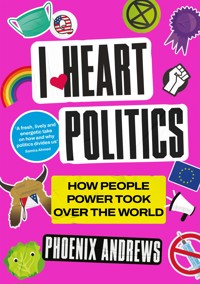
'Fascinating' Sunday Times 'A fresh, lively and energetic take on how and why politics divides us' Samira Ahmed 'As knowledgeable as it is fun' James Ball 'A must-read' Mollie Goodfellow If a week is a long time in politics, the past decade has felt like a lifetime. A series of explosive revolts has erupted around the world, redrawing the political map and amplifying the already deafening online echo chambers. Sometimes it feels like we've lost all common ground. Sometimes it feels like politics has stopped working. Sometimes it all feels too much. But what's behind the unrelenting upheaval? Is there more to it than what we're usually told about crumbling elites and a shrinking centre ground? How did everything get so polarised - so frenzied? And why does there seem to be a revolving door between high office and reality TV? Look no further than fandom - the hidden power behind many of the most surprising events in recent history... and the key to getting to grips with them. From the mass movements resulting in Brexit and Trump, culture wars and conspiracy theories, to online engagement that enriches lives and inspires positive social and political change, I Heart Politics reveals how a passionate wave of people power is upending our politics and remaking the wider world.
Sie lesen das E-Book in den Legimi-Apps auf:
Seitenzahl: 400
Veröffentlichungsjahr: 2024
Das E-Book (TTS) können Sie hören im Abo „Legimi Premium” in Legimi-Apps auf:
Ähnliche




















I HEART POLITICS
‘If you want to find out why we’re in the political position we’re in right now, this is the book for you. Andrews breaks down the last few years in politics in an accessible and fun way. A must-read.’
Mollie Goodfellow, journalist and comedy writer
‘Andrews’ writing is illuminating, educational and a whole lot of fun. What can I say? It’ll make you a fan.’
Kieron Gillen, co-writer of The Wicked + The Divine
‘This is an important book, by turns deeply serious and darkly funny. Andrews takes the tools of cultural analysis and in a personal, accessible yet analytical tone, uses them to explain why the kaleidoscope of our politics seems so broken.’
Glen O’Hara, Professor of Modern and Contemporary History, Oxford Brookes University
‘Andrews adopts an unusual lateral view on the tribalism and loyalties of parliamentary politics. I Heart Politics is equal parts fascinating and funny, insightful and infuriating. I’m a fan.’
Ally Fogg, journalist
Phoenix Andrews is a journalist, writer, broadcaster and researcher. His expertise in politics, fandom, popular culture and digital culture has seen him published in The Times, Independent, Prospect, New Statesman, Slate and other publications, and interviewed by BBC World Service and Times Radio.
First published in trade paperback in Great Britain in 2024 by Atlantic Books, an imprint of Atlantic Books Ltd.
Copyright © Phoenix Andrews, 2024
The moral right of Phoenix Andrews to be identified as the author of this work has been asserted in accordance with the Copyright, Designs and Patents Act of 1988.
All rights reserved. No part of this publication may be reproduced, stored in a retrieval system, or transmitted in any form or by any means, electronic, mechanical, photocopying, recording, or otherwise, without the prior permission of both the copyright owner and the above publisher of this book.
Every effort has been made to trace or contact all copyright holders. The publishers will be pleased to make good any omissions or rectify any mistakes brought to their attention at the earliest opportunity.
10 9 8 7 6 5 4 3 2 1
A CIP catalogue record for this book is available from the British Library.
Trade paperback ISBN: 978 1 83895 422 2
E-book ISBN: 978 1 83895 429 3
Printed in Great Britain
Atlantic Books
An imprint of Atlantic Books Ltd
Ormond House
26–27 Boswell Street
London
WC1N 3JZ
www.atlantic-books.co.uk
For Philippa.
CONTENTS
Introduction
1. History
2. The hows and whys of fandom
3. The uses (and abuses) of fandom
4. Grassroots fandom
5. Fan creativity
6. The sensibles are not sensible
7. When fans go bad
8. Moral panics and radicalization
Conclusion
Acknowledgements
Notes
Index
INTRODUCTION
‘The lettuce has won!’
A week is, as Harold Wilson said, a long time in politics. History is made – JFK is assassinated, and suspect Lee Harvey Oswald is arrested then shot by nightclub owner Jack Ruby. Change is in the air – Thatcher protégé Michael Portillo loses his seat as Tony Blair pronounces that ‘a new dawn has broken – has it not?’, making way for the 1997 Labour landslide. Something unexpected happens – the 2010 General Election, coalition negotiations and David Cameron and Nick Clegg in the Downing Street rose garden. A ridiculous story comes out – Cameron and Piggate in 2015. The most exciting weeks combine all these things – the final days and resignation of Liz Truss as Prime Minister in 2022. History was made: Truss became the shortest-serving PM in UK history. Change was in the air: it seemed constant, as Truss and her Chancellor Kwasi Kwarteng scrambled to manage the impact of their economic announcements and everything fell apart. As for a funny story, they flooded in. The lettuce. The jokes. The day-collar truthers (a theory that a necklace worn regularly by Truss indicated that she was a submissive in a BDSM relationship). At those times, being a fan of politics comes into its own. Everybody knows something about the important days and the funny ones, but only the truly committed feel the benefit of those years of politics-watching and frustrating factional rows: deep, absurd joy at every new revelation. When other people get into the topic, you feel like your knowledge and time in the trenches pays off because friends and colleagues ask you for insight and are interested in what you have to say.
The casual viewer in October 2022 enjoyed the idea of a Prime Minister being outlasted by an iceberg lettuce, but there was an extra level of entertainment to be had in understanding the references in the Daily Star livestream of ‘Liz vs Lettuce’ and the steady trickle of MPs making manoeuvres against Truss. Fans know the names and backgrounds of the minor players. We know the context for every allegation and innuendo. We knew why the lettuce had been served tofu (a line in a Suella Braverman anti-woke speech, hours before she was sacked as Home Secretary). Fans were aware that Ed Miliband had waited seven whole years to mock David Cameron’s ‘stability and strong Government with me, or chaos with Ed Miliband’ tweet by using a single emoji of a clown, and that Miliband had been the one to call the fracking debate that precipitated the collapse of Truss. It was delicious.
Who said the lettuce had won? Social media. Politics Twitter (a loose community of journalists, people who work in politics, activists and fans on the platform now known as X) added both entertainment and insight to proceedings. Westminster’s most seasoned lobby hacks, wonks and parliamentarians saw their veneer of reason and respectability peel away in real time while live reports came in from the field of a Conservative Party in ruins. Fans followed the action ball by ball like they were listening to Test Match Special, and then some. However, those reliant on broadcast news and articles published after the madness was over missed out on both detail and fun.
Online fandom is more intense in every way. Part of the joy of ‘Liz vs Lettuce’ was that everyone lost their cool. Celebrities like H from pop superstars Steps and double act Dick & Dom, of noughties children’s programme In Da Bungalow, called for Truss to resign. Fans had the fun of witnessing both those outbursts and the visible discomfort of Truss’s many right-wing libertarian backers. They also enjoyed piecing together news stories as they came out, including illicit photographs taken by a Labour MP during a voting lobby skirmish, conflicting statements issued by ministerial aides and interviews with exasperated senior Tories. The pace was thrilling.
If a week is a long time in politics, the past decade has felt like a whole generation. We’ve had more weekly crises than hot dinners: financial, political, social and personal. While I understand the sanity-preserving impulse to avoid all news and current affairs, if you’re reading this book then you probably haven’t managed that. In that case, you’ve seen the rocky nature of the political landscape over this period. There have been multiple populist movements – Brexit, Trump, Corbynism/left populism and the big anti-woke/culture war/ conspiracy theory mess that has glommed up many countries in what is left of the West. Nationalism has mixed itself into that soup, both Scottish and English. The Queen died. We had a pandemic. Somehow the UK has engineered a cost of living crisis worse than most rival countries, leading to economic hardship across the board and endless headlines about inflation and industrial action. Political loyalties are fragmented and public services fractured. Interest and enthusiasm have moved from barely there to the passionate backing of political parties, individual leaders and campaigns – and then back to nihilistic apathy. Trust in elites, the media and organizations has gone, according to the polling, and they’ve crumbled.
There’s been much chat about polarization, with the assumption that the left and right have moved away from the centre at equal rates. However, though the right have moved a long way to the right, especially in the UK, Europe and the US, the left have barely shifted – they’re losing the argument.1 The real story is affective polarization: where people’s feelings about their own views and communities become more positive and opposing ones more negative. Similarly, while freedom of speech has been a big topic across party lines and international borders, it isn’t being suppressed as many would have you believe. Those with reactionary views are regularly seen in newspapers and on broadcast media complaining about being silenced and cancelled, whereas people from the minority groups they criticize do not have that mainstream media or political power so are not heard at all. There are no transgender newspaper columnists or regular panel show guests, but no shortage of people voicing their opposition to trans rights. You can fit the all-time total of Black Westminster MPs on a single-decker bus (thirty-nine, at the time of writing), but many white people complain that their views on race have made them feel excluded.2 The rise of social media has meant more voices have been heard, but it hasn’t all been welcome. What is reasonable criticism to one person should be shut down to preserve free speech for another.
Politicians and commentators ask us to ‘pay no attention to that man behind the curtain’, as the Great and Powerful Oz told Dorothy, but as politics stops working, more and more people start to see the problems with politics and the media. While political parties – most notably Labour – have always ‘purged’ members, removed the whip (party backing) from MPs and blocked candidates seen as a threat to the leadership of the day, these moves have become more urgent and more obvious in recent years as leaders’ authority within their parties and with the general public has waned.
Over the years we’ve had post-war consensus and (neo)liberal consensus, but now we are somewhere else entirely. With my academic hat on, I call this period in time the ‘digital dissensus’: rather than consensus, where everyone broadly agrees on how things are, there is an abundance of conflicting and dissenting views. The loudest voices aren’t necessarily the most representative, even of their particular brand of politics. Fandom is one of many explanations for why politics has become so unstable. People in fandoms might notice these patterns of behaviour, but those outside of fandoms, quite reasonably, don’t understand why people are behaving the way they are. Someone ranting to you about the ECHR (European Convention on Human Rights) or Just Stop Oil or US President Joe Biden with the same passion they’d normally reserve for talking about their family or James Bond films? This is fandom behaviour crossing over into political issues and personalities.
This period began with the financial crash of 2008, whose fallout continues and intensifies online.3 The initial fragments of coherent ideologies – of big groups such as Remainers and Leavers, Populists and Liberals, Internationalists and Nationalists, Corbynites and Blairites – are fracturing further, falling out with each other and forming smaller groups with ever more distinct characteristics and concerns. It’s noisy, it’s chaotic and it’s difficult to navigate.
Friends joke that I see everything as fandom, and it’s kind of true. I’m obsessed with it. Why did that woman ring a radio station to defend the Prime Minister as if someone had slagged off her mum? Why is my friend’s dad acting like wanting to stay in the European Union is a personality trait? Their behaviour looks the same as when Taylor Swift fans kick off at anyone who gives her a bad review, or when people a bit too into gin post pictures of it all over Facebook. Oh. Yeah. They’re acting just like fans. I’d seen those patterns before, of enthusiasm and defensiveness and weird behaviour. Once I’d worked out what was going on, I started to see it everywhere. There’s an old football song that England fans would sing at games against Germany, to the tune of ‘Camptown Races’: ‘Two World Wars and One World Cup, doo-dah, doo-dah’. New Labour fans have their own version, which they use to mock the left: ‘Lose, lose, lose, lose, Blair, Blair, Blair, lose-lose, lose-lose’ (Peter Mandelson) or ‘Lost, lost, lost, lost, Blair, Blair, Blair, lost-lost, lost-lost’ (Alastair Campbell).
While people understood that supporters of Jeremy Corbyn and Donald Trump were ‘fans’, what with the chants and the t-shirts and the hats and the screaming rows with dissenters, it was obvious to me – as someone who knew fandom inside out – that there was more to it than the celebration of individual politicians and a desire to defend them from criticism. Fandom had seeped into every aspect of politics and public life. Brexit cracked that wide open like a rift in space and time. The elite, the establishment, whatever you want to call it, were caught on the hop. The people who had always won without trying had lost. Oof.
Nobody other than Liberal Democrats, Eurosceptic Tories and bureaucracy nerds had cared that much about the European Union before. All of a sudden, a person’s views on Brexit said everything about who they were, and they were determined to find like-minded people and have a good moan. Instead of going to the pub, they went where everyone goes these days: social media. Before they knew it, half of them were wearing EU flags as capes, the other half were doing the same with Union Jacks, and both discovered that they had a Lot of Feelings about it. The memo about never discussing money, religion or politics in polite society had been set on fire. People now had Very Strong Views about everything and had joined more groups to talk about them than an over-caffeinated student at a freshers’ fair.
When you are a fan, it’s not just what you like. Your fandom is part of your identity, like your name and where you come from. That’s why football fans take it so personally when their team loses: they lost too. Their team is ‘us’. When staying up late on election nights, people say the same sorts of things. ‘We’ve got no chance in Scotland.’ It’s not ownership. It’s not even membership. It’s family.
A fanbase is the collective name for the fans of someone or something. ‘Fanbase’ is roughly equivalent to ‘supporters’: everyone who supports a political party is a supporter of that party, and everyone who likes something is a fan and part of the fanbase. Just as being a supporter doesn’t imply that you are a paid-up party member or regular campaigner, being part of a fanbase doesn’t imply that you interact with other fans. People can be fans while enjoying their interest on their own or with friends and family. What makes a fan part of a narrower fandom rather than the broader fanbase is the sense of community and identity that comes from joining in.6
Fans use their shared interest to find their people: the people who get where they’re coming from and share their values as well as enthusiasms. There have always been people with strong political affiliations and people who argue for particular positions when political debate dominates the news, usually during an election or crisis or scandal. What tips this behaviour into fandom is when their politics becomes part of their identity and they find people to talk to who understand what they’re talking about: their community. Voting the same way every election or joining in a workplace conversation isn’t the same as making friends and debating politics online with strangers, or getting upset if someone criticizes a politician who shares their views.
A fandom builds a community around a shared interest. Fandoms are broader and more intense than just liking something. Someone who is part of the Doctor Who fandom, for example, will probably collect merchandise, know about all the spin-offs, engage with debates within the fandom, maybe attend Doctor Who conventions and talk to other fans on- or offline. They might also write articles, make videos or art or write stories relating to Doctor Who. I’m a Doctor Who fan who knows a lot of other Doctor Who fans, reads the Doctor Who Magazine and chats to other fans regularly. I co-wrote a Doctor Who book! It’s an important part of who I am. Football fans are similar – there are those who watch major competitions and vaguely follow a team, and there are those whose lives are full of significant moments connected to their football club. You know as soon as you meet a committed Gooner (Arsenal fan), even if they aren’t wearing a football shirt, and it’s rare for them not to spend time with other fans at matches, in the pub and online.
A fandom is a collective identity. It’s more than the sum of its parts. When you join a fandom, you’re suddenly part of a network of people who understand and will discuss the things you’re interested in, which is better than just enjoying something on your own. Anti-fans – think of the passionate opponents of Donald Trump or Jeremy Corbyn – get a similar sense of purpose, identity and even joy from despising someone or something and finding others who feel the same way.
I’ve been ‘in fandom’ since I was tiny, asking for music albums for presents and begging copies of pop magazines off my cousin Mark (a decade older than me). My room was plastered with posters and press cuttings of my favourite bands. I made my own fan collages, recorded ‘radio shows’ discussing my favourite bands on cassette and wrote bad Grease fanfiction before I left primary school. My first homemade pop magazine was put together with friends when I was twelve, and then I learned about fanzines via flyers in the local record shops. I made and traded zines as a teenager and twenty-something who hung around gigs and comedy shows, then upgraded to a website and podcast. Fandoms came and went but Doctor Who persisted.
The first election I remember was in 1987 and I was six years old. I watched Newsround and didn’t like Mrs Thatcher, even though my parents did. My mum had campaigned for her as a young Conservative and my nana enjoyed explaining the call ‘Number 10 – Maggie’s Den!’ when we played bingo together in Scarborough. I fervently followed Thatcher’s decline and sneakily watched Spitting Image, reading books about politics from the mobile library that visited our road in holidays. When the time came for Thatcher to be replaced, I discussed the runners and riders with our regular supply teacher at my primary school. She liked Douglas Hurd for a sensible choice. I favoured John Major – he was younger and seemed to have less baggage – but thought Michael Heseltine’s hair would win the day. It took a little longer for my passion for politics to match my passion for pop music, but I was ‘up for Portillo’ (awake when Michael Portillo lost his seat in 1997), even though I wasn’t old enough to vote.
My first political party conference looked a lot like a fan convention or comic con, and it basically was. Instead of queueing to get a poster signed by Peter Capaldi, I was queueing to get into a tiny fringe event with Ed Miliband. Panels about monster prosthetics were replaced with panels about housing policy. Diane Abbott walked past me and everyone was trying to grab a selfie. The twenty-something potential candidates hoping for a safe seat all looked like they were doing Wes Streeting cosplay: identical blue suits, shiny shoes, red ties and crisp white shirts. I found it funny when old New Labour MPs were mocking Jeremy Corbyn supporters for being fans, because people too young to have been born when Tony Blair became leader were going mad for ‘Things Can Only Get Better’ (Labour’s theme song of the 1997 election, very much a fannish choice) at the Labour Students disco.
Fandom has always been with us and goes back to ancient times. We have always been political; we have always been passionate. Political graffiti in ancient Greece and Rome were the fan social media of their time. When leaders gave money to citizens who were struggling, the people’s gratitude also made it into Pompeii’s graffiti: ‘When Caesar came to most holy Venus – when your heavenly feet carried you, Augustus – there were thousands of thousands of gold pieces.’ There are no half-measures in their praise. It’s reminiscent of the brown-nosing replies under Elon Musk’s posts. The printing press, brought to England in the fifteenth century, enabled politicians and fans to share ideas, have arguments and issue threats via pamphlets (like today’s meme wars, where rival groups of fans share visual and text-based jokes). History books are full of contemporary references to the ‘cults’ (fandoms) of Oliver Cromwell, Napoleon, Ferdinand Lassalle and more. In the nineteenth century, celebrity authors like Benjamin Disraeli became politicians, and politicians became celebrities. Heroes and villains alike spoke to mass rallies and sold merchandise to their supporters. Fan mail poured in.
Fandom is being taken more seriously now because it’s getting harder to ignore. Social media, DIY politics and newer forms of activism have changed who can be heard in politics and what they want to say. At the turn of the millennium, election turnout had dropped on both sides of the Atlantic. Voters thought politicians were all the same. For over a decade it didn’t matter to many people who won, as you would either keep being okay or keep being screwed over no matter who was in power. Elections were being won from the centre, but eventually that centre collapsed in on itself. Gordon Brown and Al Gore seemed stale. Politicians had become smug. The centre ground was so hollow that it didn’t mean anything anymore. There were no new ideas.
Over time, however, culture wars and important single issues pushed people into more emotional and active involvement on politics. Like other institutions, parties didn’t mean what they used to. Personalities did. Outsider politicians, influencers and thinkers on the left and right pulled in fans across the world. When Corbyn, Brexit and Trump disrupted everything, the UK and the US had to stop pretending that only developing countries had problems with democracy.
Social media brought new forms of criticism, activism, new ways to organize supporters and new ways for people to get involved as politicians, commentators or fans. Traditional forms of networking and campaigning excluded people who couldn’t physically access them, didn’t feel welcome or had different kinds of skills. Grassroots political group chats, video, memes, polls, analysis, GIFs, graphic design and crowdfunders are everywhere. Fans make their own content rather than just sharing official party materials. Some of it is serious and some is very silly. There is fun to be had.
We have a human need to make sense of the world, but currently there is uncertainty in politics on every level and in every country. Climate crisis, economic challenges, wars and the impact of the Covid-19 pandemic have affected local and national governments and changed how people feel about politics and politicians. At the same time, because of economic and social change, many people feel uncertain about their status and identity. The old ways people used to bolster these things were via their work, which is less stable now, or in institutions that aren’t as important these days. Football matches and gigs are so expensive that many fans are priced out. Fandom is becoming more mainstream for other enthusiasms outside sport. Marvel fandom used to be cult, but now you can buy Marvel-branded clothing everywhere. Gaming is normal for all ages – even cryptofinance and billionaires have fandoms online. Talking to a wider range of people on social media, not just family and friends and colleagues, encourages shared experiences and interests of a different kind.
The appetite for more knowledge and engagement with politics is exemplified by the popularity of political podcasts like The Rest Is Politics, which regularly tops the podcast charts and holds sold-out live events. If its listeners aren’t fans of politics the same way the listeners of The Rest Is Football and the Gary Neville Podcast are football fans, something very strange is going on. I can see people engaging with presenters Rory Stewart and Alastair Campbell on social media every day, between episodes, and getting stuck into online debates about politics. Online fandom moves more quickly than offline. The range of people involved in the cut and thrust of social media is broader than that seen at political events, because it fits more easily into busy lives. The online experience can be richer, because fans have access to more information and social contact, but seeing behind the curtain of politics can burst an idealist’s bubble. Offline fans – or realistically, fans who just spend less time online – don’t see how badly politicians and activists can behave and have the narrative curated for them by whatever news sources they consume and their limited connections in real life.
I can’t just observe fandom in a detached way, because I’m inside it. I’m all over it, grinning at the chaos of it all and asking awkward questions – like the Cheshire Cat. I’ve been to rallies and launches and marches and hustings and fundraising dinners and karaoke nights for all sorts of parties and campaigns. I’ve chatted to people dressed up as chickens or Michael Gove. I even accidentally stumble on politicians and fans in the wild. I spotted a glowing homemade Bernie Sanders sign as I was walking to the Tube in 2019 and I joined in the march rallying overseas voters in the Democratic primary, talking to Bernie fans and those of Elizabeth Warren. Paid reps for Mike Bloomberg gave me stickers. One time in Ottawa I walked up Parliament Hill to go to a shopping centre and saw a stage with TV cameras and lights. I stuck around and ended up seeing Justin Trudeau and indigenous Canadians give speeches. Trudeau’s famously objectified ‘bubble butt’7 was just a few feet away from me as he walked back to his office. My replies on social media were full of insults. . . and swooning.
If Lord Byron could get away with writing the equivalent of stan (super-fan) posts about Napoleon – who he also saw as a version of himself because that lad was never not a narcissist – it’s okay to be a fan of politics. Byron openly adored Napoleon, buying his merchandise and willing him to win. Here are my favourite Byron posts:
Napoleon! – this week will decide his fate. All seems against him; but I believe and hope he will win – at least, beat back the invaders. What right have we to prescribe sovereigns to France? Oh for a Republic! ‘Brutus, thou sleepest.’
Sent my fine print of Napoleon to be framed. It is framed; and the Emperor becomes his robes as if he had been hatched in them.8
People’s politics don’t come out of nowhere. Just like musicians are fans of other musicians, politicians and activists got into politics because they are fans of politics, as well as wanting power or change. Just look at how US presidents decorate the Oval Office with paintings and statues of politicians they admire. The relationship between politicians and fans is more complicated than between leaders and followers, because what fans say and do, enjoy or despise feeds back into how politicians think and act. It’s more like a chain of influence – influence is about taking elements from someone else’s work and building on it, rather than being given something. It’s active rather than passive. Someone’s politics are a mixture of what has gone before and ideas of their own, and being a fan doesn’t mean sharing the same views on everything. Fans can also influence politicians. They share a deep interest, after all.
People who aren’t fans of politics aren’t that bothered about political parties, politicians, policy, activism or campaigns most of the time. Even those who are passionately engaged in current affairs can’t all be called fans (and of course, many would reject the very idea), because politics isn’t that important to who they are. The inactive public aren’t well informed on, say, the minutiae of policy.9 They’re not thinking about it, they’re not buying books about it, they’re not reading long articles about it and they’re not talking about it with people they’ve never met before on the internet or in person. That doesn’t mean they don’t care about certain issues. They’re partisan about those things. It’s just not ‘politics’ or ‘politicians’ or ‘activism’ or ‘campaigns’ or even ‘current affairs’ or ‘my community’. They want things to get better in their lives, or otherwise just make it (the noise about politics, the news) stop. When Theresa May used the slogan ‘strong and stable’ in the 2017 election, the appeal to the public was supposed to be an end to all the turmoil around Brexit and personality politics. Only around 15–20 per cent of people follow politics closely or at all.10 In one study of 3,000 Americans, only 27 per cent said that they discuss politics frequently and a majority considered themselves to be ‘moderates’.11 Out of that group, 70 per cent believed that a typical member of the other party can’t stop talking about politics and holds extreme views. People who are into politics are not great at judging what’s normal, because they are overrepresented in the media but in reality they are only a small group of voters.
Politics fandom isn’t just about electoral politics and winning elections. Activists, campaigners, thinkers, commentators and influencers can inspire people to think differently about politics. Their support often comes from regular voters, especially if they talk about specific parties and politicians, but those with no connection to party politics can pick up a following from non-voters and previously apathetic people. Fans are a diverse bunch.
While treating all online spaces like fandoms (niche spaces where most of the audience understand the context of each post) is particularly prominent in under-twenty-fives, people much older learned how to act online from the places they first hung out when they got the internet. For some people, socializing and discussing topics online with people they also met online (as opposed to family members, work colleagues and communities initially established offline) is a recent development – even if they have had access to the internet for a long time. I’m in my forties and I was interacting with strangers in a range of different contexts, including fandoms, from my earliest days online in the late 1990s. I learned how to negotiate different norms, use of slang and assumptions about culture.
Being ignorant of the dynamics of fandom and internet cultures makes it more likely that someone will copy these behaviours without recognizing their own involvement in the toxicity. These behaviours might be making inflammatory comments, driving followers to mock individuals and not understanding the broader audience in online spaces who will read their words out of context.
The problems of fandom are perpetuated and compounded in political spaces whenever people say that fans are the problem with politics. Most of the people who say this are fans themselves in politics-based fandoms that they don’t think of as fandoms. A prominent political journalist or celebrity might say or post something flippant and foolish about a politician (positive or negative) – for example, claiming that Boris Johnson will be remembered as one of the greatest Prime Ministers of all time for saving the UK from communist Corbyn – and then complain about the reaction from fans and anti-fans. A British YouTuber who goes by the mononym Shaun made a post on Twitter in January 2020, and it regularly goes viral during political arguments online: Shaun’s post simply states: ‘brigaded by the vile trolls again, simply for deliberately provoking them with lies and insults’.12
Politics is about more than political parties and winning elections, internal or public. There are other reasons for being a fan than protecting your team, excluding other people or beating the one you hate the most, and the happiest fans know this. It’s about moments of tenderness and understanding within a community, and even joy.
Fandom is an acknowledgement that our politics are built on collective understandings and emotional attachments. There is such a thing as a society (contradicting Margaret Thatcher), and what we believe, who we share that with and where we belong is important to who we are. What fandom offers is a way of looking at the world with empathy, explanations for things that seem inexplicable and tools that enable more people to get interested in politics without losing their principles or losing hope.
The opposite of democratizing political engagement is asking for top-down intervention to save us from bad decisions by the public or elected politicians. After Liz Truss resigned, former flamboyant pop star and current centrist broadcaster Reverend Richard Coles tweeted: ‘Could the King, within his powers of course, FIRMLY ENCOURAGE the calling of a General Election, for the good of the country?’13 While Plato argued that the ideal state would be run by philosopher kings, leaving the people (demos) out of it, the call from the so-called sensible grownups like Coles was for Charles III – a sometime philosopher and literal king – to actually step in and save them from the messy business of politics. Convention has it that the British monarch follows Westminster politics closely, but does not intervene. However, the maelstrom of Brexit saw the wardrobe choices (such as a blue and yellow hat resembling the EU flag, or brooches with historical significance) and rubber-stamping role (Royal Assent) of the King’s mother, Queen Elizabeth II, wildly interpreted by a subset of fans of remaining in the European Union. They strongly desired for her to use the powers she had on paper to make all the things they didn’t like stop at once. They especially wanted the Queen to use any royal tricks she could to stop Brexit itself. These sensible sorts started to resemble the noisiest fans of Harry Styles and wildly popular K-pop group BTS, desperate for their idol and other fans to notice them, and that wasn’t even the maddest thing that happened in the Brexit wars and the years that followed.
Every iteration of the UK government further escalates its fannish tendencies among both politicians and supporters, while the Opposition is also in hock to icons of the past. From campaign song ‘It’s Maggie For Me’ and Margaret Thatcher treasuring framed flattery from Enoch Powell to ‘Things Can Only Get Better’ and Tony Blair claiming that ‘Putting me in No 10 was like letting a fan take over Manchester United’. From Boris Johnson namedropping Churchill and Pericles to ‘Boris Or Bust’. Liz Truss cosplayed Thatcher’s most iconic outfits while stanning for Ronald Reagan, followed by the ‘In Liz We Truss’ mugs being swiftly withdrawn from the Conservative Party online store as her stock began to fall. Keir Starmer sent out posters of his own face to Labour Party members during his leadership bid and peppers his speeches with Thatcher, Wilson and Kinnock hits.
While many of the goings-on in the House of Commons – not least weekly Prime Minister’s Questions (PMQs) – owe a lot to the brash British style of music hall culture, politics fandom has a lot in common with music hall too. Historian Peter Bailey claims that music hall, by combining elements of the theatre and the pub, was the first real attempt to combine an indulgent and carnivalesque good time with ‘orderly consumption’ – or to put it more simply, sell riotous entertainment as if it were any other commodity.14 Bailey also points out that music hall let the crowd try out different styles and identities, though they were mostly working class, because the interactive performances on stage satirized and celebrated all kinds of different people and complicated the relationships between insiders and outsiders and performers and audiences. Music hall crowds, Bailey reckons, can be thought of as ‘producers as much as consumers’. It is the same with fans of politics, especially since social media blurred the boundaries between professional and amateur and private and public for politicians, journalists, celebrities and activists. Fans contribute to what politics is as much as follow what it does.
Note on X/Twitter: In this book the name ‘Twitter’ is used when it refers to events that occurred prior to the platform’s rebranding as X in July 2023.
1
HISTORY
Fandom has always existed. Of course, it has changed over time. New technologies and the emergence of the ‘celebrity’ shaped the evolution of fandom, along with the media and politics, which have been intertwined for as long as they’ve existed. More people gained voting rights as access to information and campaigning abilities grew, at first through growing literacy and the printing press, later by broadcast media and the internet. From the populism of the ancient world to the memorabilia explosion of the twentieth century, history tells us a lot about politics fandom and how it became the phenomenon it is today.
The ancient world is where politics fandom began. Greek philosopher and historian Plutarch documented the Trump-like relationship between populist politician Clodius and his fans, whom he called ‘a rabble of the lewdest and most arrogant ruffians’. Clodius, while harassing the great Roman statesman Pompey (for planning to bring back his enemy, Cicero, from exile), stood in a prominent place and called out to the crowd:
‘Who is a licentious imperator?’
‘What man seeks for a man?’
‘Who scratches his head with one finger?’
And they, like a chorus trained in responsive song, as he shook his toga, would answer each question by shouting out ‘Pompey.’1
Much of the language of politics comes from the Greeks and Romans: ‘democracy’, ‘partisan’, ‘faction’. So too does the political myth. We never really know everything about a politician or political movement, and what we do know is heavily influenced by the stories they tell about themselves and those that are told about them. This kind of storytelling didn’t start with the modern media. Narrative and emotions drive voting patterns more than policy and principles, and likely have done since before someone scratched this message into a wall in Pompeii: ‘I ask that you elect Gaius Iulius Polybius as aedile. He bakes good bread.’2 Many people aren’t that interested in politics or its players in the time between elections, but political fans both keep political myths alive and even develop them.
Perhaps the most beloved figure in political history is Pericles, the great ancient Athenian orator and statesman, who has been cited as inspirational to politicians past and present. But why is he so admired, by Hitler and Boris Johnson alike? Perhaps because historians are fans, too – and they themselves have fans, who support their authority as experts. History is shaped by the people who write and share it. Their choices of what information to include in their writing and how they frame the facts persuade us, intentionally or not, to view politicians as heroes or villains.
In the case of Pericles, his reputation comes from ancient Greek historian Thucydides. Thucydides himself has modern-day fans and is still widely studied because he writes insightfully about politics, social behaviour and communication. He also rewrote accounts of historical figures to make them appear more noble and articulate. Pericles’ most famous speech is the Funeral Oration (given after a battle, not at an actual funeral), which Thucydides recounted from his own memory and that of others. It is likely not a verbatim transcript, but rather an attempt to capture a sense of Pericles’ ideas and ideals and an invitation to readers to compare the vision Pericles outlined in his speech with the reality of the period.
The following excerpt from the opening of the Funeral Oration shows that the speech was eloquent and admirable, and it made fans of many who love politics and democracy:
Our constitution does not copy the laws of neighbouring states; we are rather a pattern to others than imitators ourselves. Its administration favours the many instead of the few; this is why it is called a democracy. If we look to the laws, they afford equal justice to all in their private differences; if no social standing, advancement in public life falls to reputation for capacity, class considerations not being allowed to interfere with merit; nor again does poverty bar the way, if a man is able to serve the state, he is not hindered by the obscurity of his condition.3
But how much of this writing is a true reflection of Pericles, and how much is myth created by a fanboy and excellent writer?
Beyond grand battles and noble speeches, things got messier when the general public started to become involved in politics. There were no elections in the Byzantine Empire, which was the continuation of the Roman Empire in eastern provinces during Late Antiquity and the Middle Ages. Curiae, or city councils, usually only appointed the wealthy landowning elite. Ordinary people could only voice their opinions on social and political issues through shouting and booing at public events. Well-organized fan clubs (demes) that supported sports factions or teams (‘faction’ comes from factione, the name for a company of charioteers) were the main outlet for their enthusiasms and frustrations, acting like a mixture of football hooligan gangs and political parties. Sports and politics have long been linked, from chariot racing fans booing the emperor at the Hippodrome in Constantinople to Liverpool fans cheering the death of Margaret Thatcher. The name for a fan of a faction? Partisan, a word often used as a slur in modern politics for those seen as mindlessly tribal. The emperor and his officials looked out for signs of public unrest across the Byzantine Empire, which often flared up among the partisans at chariot races. Fans shouted their political demands between races. The imperial forces and guards in the city needed the co-operation of the factions to maintain law and order.
There were initially four major factions in chariot racing, named for the colours of charioteers’ uniforms. These were the Blues (Veneti), the Greens (Prasini), the Reds (Russati) and the Whites (Albati). Fans wore their faction’s colours. By the sixth century the only teams with any influence were the Blues and Greens, and that’s when things got spicy. The Nika Riots against Emperor Justinian took place in Constantinople during one week in ad 532.4 Nearly half of Constantinople was burned or destroyed, and tens of thousands of people were killed.
It began with a fight that broke out during a chariot racing event at the Hippodrome. The fight was between fans of the Blues and Greens. It ended badly, and seven partisans involved in the violence were found guilty of murder. However, one Green and one Blue fan escaped hanging because the scaffold holding the noose broke, and they sought sanctuary in a church. The crowd who were watching the hanging called upon the emperor to pardon the pair. But Emperor Justinian didn’t give in to their request and refused to respond to the demands, so a riot kicked off.
By the time there were only two races left of the season Justinian still refused to respond, and the factions united to oppose him. It didn’t matter who they supported; it mattered that they, as fans, won. Partisans stopped yelling ‘Blue!’ or ‘Green!’ and started chanting ‘Nika!’: the ‘Victory!’ chant. Justinian still wouldn’t respond to partisan demands at the Hippodrome, so they burned down the praetorium and the crowd freed the prisoners. The emperor tried to restart the games, but the partisans set fire to the Hippodrome itself and demanded three officials were fired. Justinian finally responded by dismissing the officials, but then he sent in troops to try to stop the partisans.
The partisans set alight more civic buildings; Justinian sent in more troops from the garrison. He eventually suppressed the riot. Much of the violence and unrest may have been avoided if Justinian (a fan of the Blues) had understood how far the partisans were prepared to go and if the public had more of a voice in local and imperial politics.
The next snapshot of history I want to explore involves a technological development that changed fandom and politics forever, so we will have to travel forwards about a thousand years. Charles Babbage, the mathematician credited with inventing the computer, reportedly said that ‘the modern world commences with the printing press’. With the printing press, literacy and learning became available to ordinary people. They also now had an affordable and widely available method to read and express political views: the pamphlet. These printed tracts were used to argue points of religious doctrine, report news and express political dissent. By the 1580s, during the Reformation period, pamphlets had begun to replace broadsheet ballads as the main means for communicating information to and influencing the views of the general public. The printing press also made it possible to be a fan nationally and internationally. Pamphlets were very much the social media of their time, with interpersonal complaints playing out as well as ideas spreading between their pages. Thus began what became known as the ‘pamphlet wars’.56
During this time, both Protestants and Catholics engaged in the pamphlet wars, which might be viewed as the first battle for the popular mind in Western history. Now that’s politics. People often draw a parallel between fandom and religious fervour, and associate popular political figures with a cult of personality. The Reformation saw what might be called the first battle for the popular mind in Western history, when Protestants and Catholics engaged in a vicious and highly personal pamphlet war. For example, theologian Martin Luther himself, far from being above the fray, got stuck into the nastier end of the pamphlet wars when he wrote Against the Murderous, Thieving Hordes of Peasants (1525) – a rant about radical Luther fans who he thought made him look bad when they got out of hand and began the German Peasants’ War. His original title was ‘Against the Rioting Peasants’, but the tabloid-headline writers of the day (printers in other cities) harshened it without his permission. Luther rebuking his own fans in print might be seen as a precursor to Labour MP John McDonnell rebuking fans of Jeremy Corbyn’s Labour Party for perpetuating ‘antisemitic stereotypes’ and undermining the cause.7
You might think that Martin Luther’s main beef would have been with the Catholic Church, but he also found time to squabble about religion with a fellow reformer, the up-and-coming John Calvin. While Luther managed to fit in being a priest, academic, composer and author (and a former monk), Calvin juggled writing with being a theologian, pastor and religious reformer – having given up his career as a lawyer. Both were what we now call Protestant, but they had major disagreements.




