


Erhalten Sie Zugang zu diesem und mehr als 300000 Büchern ab EUR 5,99 monatlich.
- Herausgeber: Crown House Publishing
- Kategorie: Ratgeber
- Sprache: Englisch
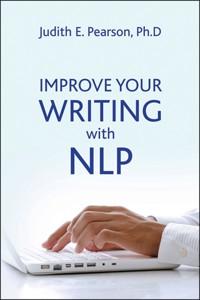
The secret to great writing lies in learning how to alternate between three mindsets: Dreamer, Realist and Critic. The author will tell you exactly how to get into each mindset and how to apply it. This book will teach you the NLP models for creativity, tenacity and meticulous attention to detail. Read this book and you'll know how to write persuasively, hypnotically and prolifically.
Sie lesen das E-Book in den Legimi-Apps auf:
Seitenzahl: 261
Veröffentlichungsjahr: 2013
Das E-Book (TTS) können Sie hören im Abo „Legimi Premium” in Legimi-Apps auf:
Ähnliche

















Praise for Improve Your Writing with NLP
When people find out I have written over 30 books, they often confess to me that they have always wanted to write a book. But wanting to write a book is common – writing a book, less so. Judith Pearson’s Improve Your Writing with NLP will improve the odds of getting that book within you written. It has strategies that I wish I had known when I was starting out – it would have made writing a book much easier and quicker. If you long to write a book, reading Improve Your Writing with NLP can put you one giant step closer.
Bill O’Hanlon, author of Write is a Verb and Becoming a Published Therapist
To be able to write is to have a different kind of voice – one that can share a vision with the world. Judith Pearson offers a means whereby pretty much anyone can find their voice. It is a tribute to what she has done that the question now is not so much, “how do you write?” but, “what do you really want to say?”
Ian McDermott, Founder of International Teaching Seminars and author of numerous bestsellers including Principles of NLP, The NLP Coach and The Coaching Bible
As the former publisher of Anchor Point journal and co-author of several books, I know how daunting it can seem to get your ideas out in a book or article. Judith’s book, Improve Your Writing with NLP, offers practical and easy-to-follow instructions to help you write imaginatively and effectively, and to stay motivated through a writing project. The book is packed with tips and suggestions that you may not have considered in planning and writing. She also shows how you can use the Dreamer – Realist – Critic strategy as a creative approach to reach your audience. The worksheets included at the end of the book provide a clear guide for thinking through a writing project. In fact, they alone are worth the price of the book.
Tim Hallbom, NLP Author, Developer and Trainer, NLP and Coaching Institute
The difference between people who succeed at an endeavor and those who do not, is about whether (or not) they implement their great ideas. Judith Pearson’s book shows you exactly what you need to do to succeed at writing and enjoy the process. I suggest you read this book, and then close it often in order to do the exercises that will allow you to implement her great strategies. This will guarantee your success! I highly recommend Judith’s book.
Shelle Rose Charvet, author of Wishing, Wanting and Achieving
If you are interested in writing and you want to tap into the genius of the NLP Communication Model, Judith Pearson’s new book is just the book for you! Why do I say that? Because here is a solid, NLP-based book that uses and applies many of the very best patterns to bring out your own very best as a writer.
In this book you will find a lot of practical suggestions on how to think about writing, how to organize yourself as you write, how to get yourself into the best mental and emotional states to write, and how to use the three dimensions of the Disney Creative Strategy so that your writing is creative, realistic, and refined.
How do you get in rapport with your readers? Judith shows you how! Using perceptual positions, getting engagement, answering the “what’s in it for me?” question. And what if you are not a writer and don’t plan to be a writer? Judith quotes me as saying that one of the reasons I write is to learn. In fact, I write to learn and, by writing, I incorporate my learning in my own words. Writing helps me learn. And it can help you learn as well. Bottom line: Go buy this book!
L. Michael Hall, Ph.D., Co-Developer of Neuro-Semantics and Meta-Coaching, author of over 45 books in the field of NLP
In Improve Your Writing with NLP, Judith Pearson, Ph.D. offers a well-rounded perspective on how to tap the power of NLP to improve your writing skills. She also helps to access the wellspring of creativity and ideas that might be locked up in the far corners of your mind and otherwise be inaccessible to you. In that regard, this book is also about how to improve your thinking with NLP. What’s more, this is a hands-on guide, with keen insights, probing questions, and ready-to-use worksheets to propel you along.
Jeff Davidson, “The Work-Life Balance Expert®” and author of Breathing Space, Simpler Living, and The 60 Second Innovator
Engaging! I genuinely enjoyed reading Improve Your Writing with NLP. It is an excellent role model for the very thing the book is about … NLP and Writing! As an editor of a journal, this book is a fantastic reference and I will be adding it to our “must read” list. I would recommend this book to anyone who wants to express their ideas well through writing whilst maintaining a passion for their subject.
Joe Cheal, NLP Master Trainer, author and editor of Acuity: The ANLP Journal
Judith provides a worthy and valuable guide to a subject which may be challenging to many people, including myself! She shines a light on many of the dark areas experienced when writing, and offers superb and practical advice to overcome these particular challenges. Judith has a gentle and clear way of communicating with us through her book and her NLP applications serve as a practical guide to NLP as well as to writing. Thank you, Judith, for providing such an insightful and useful how-to guide for using NLP to improve my writing.
Karen Moxom, Managing Director, The Association for NLP – The Association for NLP Professionals
IMPROVE YOURWRITING WITH NLP
Judith E. Pearson, Ph.D.
This book is dedicated to John—my sweetheart, husband, soul mate, and closest friend.
Acknowledgments
Many authors have lamented that the book they produce is never as good as the one they originally envisioned. I always feel that way about my books. Nevertheless, acknowledgments are due to those stalwarts who gave maximum effort and skill to help make this book resemble the one I had in mind.
David Bowman and the staff at Crown House Publishing did more than shepherd this book to publication. They demonstrated patience when unexpected events in my life delayed completion of the manuscript and revisions. They answered my questions and advised me. Mark Tracten, the Crown House U.S. representative, gave helpful recommendations about chapter titles as the draft neared completion.
Although I’ve never met Richard Bolstad, I’ve admired him through his books and articles for many years. An article he wrote in Anchor Point in 2003 grabbed me. The ideas stayed with me. That single article inspired me to write this book. I thought it only fitting that Richard should write the foreword. I feel honored and grateful that he said yes.
I also thank Dixie Elise Hickman and Sid Jacobson for developing the POWER Process and for publishing The POWER Process: an NLP Approach to Writing in 1997. This book revealed to me, for the first time, how a little knowledge of NLP makes writing easier. Sid and Dixie were both generous and gracious in allowing me to include the POWER Process in this book. Mine is one of many lives their work has influenced in a positive way.
I’ve mentioned many NLP authors throughout the text who have continually taught, inspired, and informed me through their words and accomplishments. Some I’ve had the good fortune to meet in person; others through phone conversations or via email correspondence. Their insights and knowledge have graced the pages of this book. I acknowledge these authors for their example and the many ways in which they have given of their time, energies, and talents to make the world a better, happier place. I especially thank those who gave me permission to cite their books and articles, quote them, and write about their work.
I thank my husband, John, an author himself, for his continuing support and morale-boosting throughout the project of writing this book. John helped edit these pages and gave suggestions about content. He routinely took over household chores to give me time to write. Sometimes he gave me the quiet, uninterrupted concentration time and space every author needs. He is a generous, decent, caring sweetheart of a guy. I cherish our marriage and a friendship that began over 30 years ago.
Last, I thank you, the reader, for picking up this book and deciding it might be useful to your writing endeavors. You are the person I had in mind as I wrote and revised each sentence.
Author’s Note
Wherever I have mentioned experiences or conversations with clients in this book, I have changed the names and consequential details to protect their privacy. Some cases are represented as composites rather than the experience of any one individual.
Foreword
Research shows that many people don’t fully read the foreword of a book, so the fact that you are reading this may already be an indication of your interest in the way books are written. Well, I have good news for you. Whether you are an experienced writer who wants to improve the effectiveness and publication rate of your work, or you are someone who is embarking on their first ever writing project, you are in for a treat! This book connected with me in three major ways.
Firstly, I have published a dozen books and hundreds of articles in ten different languages, so writing is one of my passions, and I’m very interested in how to do it well. Secondly, even when I’m not writing, I am a Certified Trainer of NLP (Neuro-Linguistic Programming) which is the methodology that guides much of this book, and I want to learn as much as I can about this amazing field. Thirdly, this is an inspiring book, a book which made me want to begin writing all over again, and so reading it was like a second honeymoon with my writing career.
Now I’m going to tell you in a little more detail about these three connections. Let’s start with the last one, because it’s the most important to me. Judith Pearson obviously loves writing. Of all the people whose reviews of my books I’ve read, she’s the one person who I know for sure read my book before reviewing it. And her passion for writing is contagious. You will understand that, if you’ve read one of her other books, and you’ll feel it as you read this. Try to resist the temptation to read this whole book in a day (which I did, the first time) or, if you can’t, be curious about what it is that makes this “how-to” book so exciting to read. You can learn not only from what Judith tells you about writing, but also from studying and “modeling” how she wrote this example.
Judith says, “The most successful writers strive to enrich the lives of others and better the world around them. Successful writers derive pleasure when they inform, entertain, inspire, persuade, and move people to action. They believe in the value of what they produce and consider writing as a means to answer a calling.” This book is an invitation to join a great writer in her calling. It reminds me of those times when I wake up in the morning and realize, with gratitude to life, that I am going to be able to write today. This book is a place to soak up that attitude. Finally, with Judith, you will say “Ahh! So that’s how it feels to be a writer!”
Secondly, Judith knows all the details about what it really takes to make writing a practical reality, and she knows how to explain that to you. Rather than just being a person with a manuscript waiting at the back of your mind, you’ll learn how to get published results. Whatever the subject, the format and the context of the writing you decide to do, this book explains how to do it. As a writer, I really checked that this book shows you how to deal with every imaginable challenge, external and internal, that you might face.
There are details about making sure your computer is up to the challenge, finding and expanding on creative ideas for writing, writing a thorough plan of your work in linear sequence and in mindmap format, doing thorough research on your topic, getting yourself to actually put words down on paper, understanding and selling your ideas to your audience, presenting a coherent thesis, and writing with both precision and playful ambiguity as required.
Judith can tell you these things with specific concrete examples from her own life … right down to showing you the actual cover letter that finally got her a job as a Program Manager/Writer after 70 failed attempts. And then she has concrete, step-by-step exercises that install these skills in your brain and body. Nothing of her success is hidden. If you’ve got a question about writing, the answer is here somewhere.
The third connection I have with this work is my familiarity with NLP. Most of the creativity and self-management skills that Judith teaches in this book come from that field. Her coverage of these is as exquisite as her coverage of the other writing skills. So much so, that this is also one of the best introductions to NLP I have seen. That makes this book literally two books for the price of one. The book covers the NLP field from its most basic presuppositions, which she shows are also the basic presuppositions of successful writers, to the most advanced processes for changing your state of mind and freeing you up to do what you want to do. This book will not just make you a better writer, it will help you to become a better human being.
There is an image that seems at home with tragic writers such as Fyodor Dostoyevsky and Thomas Hardy, of the writer as a tortured soul who draws on her or his own suffering to write a cry of anguish. Improve Your Writing with NLP will show you, instead, how to write words that sing with your joy; how to make your writing projects the perfume of a personal life and a career that is also blossoming.
Judith takes you in depth through the creativity strategy which NLP trainer Robert Dilts modeled from Walt Disney, and the POWER Process for writing, developed by NLP experts Dixie Elise Hickman and Sid Jacobson. She also shares insights from prolific writers in the NLP field, such as L. Michael Hall, about how to keep creativity flowing. NLP practitioners and trainers will also learn from the elegant way that Judith presents NLP, and from the breadth of her knowledge of the field. There is so much here, that we can all expect to learn new NLP skills and new applications of the NLP model. Imagine how much more you could achieve in your career if you added the skill of writing inspirational and persuasive texts. I recommend this book to every NLP trainer and practitioner.
This book, then, is a book for anyone who wants to write, and anyone who wants a better life and would welcome writing as a celebration of that life. It is a book for those who want to learn NLP for the first time and for those who want to fill out their understanding of it and communicate that understanding to others. And above all, it is an opportunity to experience great writing as you learn about it. Enjoy!
Dr Richard Bolstad NLP Trainer and Author of Transforming Communication Auckland, New Zealand October 12, 2012
Contents
INTRODUCTION
What Does NLP have to do with Writing?
Have you ever read a book or an article and thought to yourself, “I could have … written that”?
Do you secretly agree when someone tells you that you ought to write a book or article on a topic you know well?
Do you long to see your byline at the top of a magazine page, a screenplay, or on the cover of a book?
Do you have all kinds of topics you’d like to write about buzzing around in your brain, yet you don’t know where to begin?
If you answered “yes” to any of these questions, this book will show you how Neuro-Linguistic Programming (NLP) will improve your ability to transport ideas from your head onto the printed page.
Or perhaps your situation is that every time you begin to write, you feel intimidated by that blank page staring back at you. It seems to say, “What’s wrong with you? Don’t you know how to write?” Then, does your mind fill with so many fears and precautions that you feel as though a dragon is breathing down your neck? If you suffer from writer’s block, it’s because you start with the wrong mindset. NLP will help you to start writing and keep on writing with the right mindset.
Or maybe you’ve already tested the waters of writing with reviews, articles, or a blog, and you simply want to learn more about how to smooth out the process and get past the glitches. NLP will help there too.
With a little knowledge of NLP, you can write more creatively, efficiently, and prolifically. With NLP, you can sharpen your edge. In the pages that follow, I promise to teach you how.
One Writer’s Path: My Story
If you said “That’s me,” to any of the above paragraphs, then you are the reader I envisioned for this book. We have something in common. I’ve known each phase of authorship, from wannabe to actually getting published.
As a teenager, I wrote for the high school newspaper. I scrawled half-finished novels and trite short stories into spiral notebooks. I compulsively kept journals. Then I went to college and got interested in social work, psychology, and counseling.
Years later, while getting my doctorate in counseling, I submitted a term paper on nutrition and mental health. My instructor liked it. As I was finishing up an exam, he called me over to his desk. He held my term paper in his hand. “You ought to publish this,” he said. “Let me co-author with you to show you how.” The very word, “publish” seemed to lift me three feet off the ground! My teenage dreams of being an author were revived in an instant!
Professor Thomas J. Long and I published “Counselors, Nutrition, and Mental Health” in the Personnel and Guidance Journal in 1982. From the moment I saw my byline, I was hooked. I couldn’t stop thinking of all the things I wanted to say on a printed page. I knew I had to keep writing!
Upon graduating, I published parts of my dissertation in professional journals. With degrees under my belt, I steered my educational pursuits in two directions. First, I joined Toastmaster’s International to learn public speaking. In 1989, I published the first of about a dozen articles in The Toastmaster, actually getting paid for a few. Second, I enrolled in the American Hypnosis Training Academy, directed by Ron Klein, in Silver Spring, Maryland. I spent the next five years in training (while working a full-time job) to acquire advanced certifications in clinical hypnotherapy and NLP.
I became absolutely intrigued with the ways in which communication influences thinking and behavior. That’s why, in 1992, even though I was working as a project manager for a Department of Defense contracting firm, I started a part-time, solo counseling/coaching practice. I left corporate work in 2004 to practice full time.
In 1992, I also became an associate trainer with Ron: a masterful storyteller, methodical trainer, and superbly sensitive NLP practitioner/trainer. I taught with him for over a decade, learning about stage presence and rapport. I learned how to teach and demonstrate NLP processes. Today, Ron and I continue to collaborate as directors of the National Board for Certified Clinical Hypnotherapists. In 1997, I began publishing book reviews and articles on NLP and hypnotherapy.
I wanted to write books, but I wasn’t sure I knew enough about anything to fill even a slender volume. Sometimes I sat down to write and nothing happened. Or, more likely, what occurred was so bad I threw it away. Once more, fate stepped in.
In 1999, while I was teaching an NLP course, a student named Kathy Corsetty invited me to co-author a book with her. Kathy is a remarkable person. Sometime before we met, she attended a Tony Robbins seminar. Inspired by his NLP-based approach to personal mastery, she learned all she could about nutrition and exercise, dropped 40 pounds, and competed in a triathlon. She wanted to relate her experience in a book. As co-author, I would explain how NLP fosters behavioral change. In 2000, Kathy self-published Healthy Habits and we eventually sold a few copies. Some remain in a box in my hallway closet.
A few overweight clients enlisted my services because they liked what they read in Healthy Habits. Through trial and error, I eventually developed an eight-session, hypnotherapy and NLP-based weight reduction program. During that time, I was leading a monthly NLP practitioner discussion group. I taught the program to participants. One said, “You ought to write a book about this!” I spent the next year working on a manuscript. In 2005, I submitted a book proposal to Crown House Publishing
I chose Crown House because, to them, I believe I was something of a known quantity. I landed on their reviewers’ list in 1997 when I reviewed The Spirit of NLP by L. Michael Hall (1995) for Anchor Point magazine. I figured if any publisher would give me a chance, it would be Crown House. The Weight, Hypnotherapy, and You Weight Reduction Program reached publication in 2006. A second book, Why Do I Keep Doing This!!? was published in 2012.
I have joined that strange breed of people unable resist the urge to put fingertips to the keyboard, despite wastebaskets full of jettisoned drafts, little hope of financial remuneration, and the ever-present possibility of rejection.
I give you my credentials with humility. Even in the narrow niche of NLP authors, I’m small potatoes compared to those who have achieved international acclaim. Even though I regard myself as a beginning writer with much to learn, I can attest that NLP has been a huge help. That’s what I want to share with you.
NLP Enriches the Writing Process
Somewhere along the way to getting published, I started applying NLP to my writing. NLP communication patterns helped me write more clearly. When I applied NLP to the task of writing, my productivity improved. I caught my clumsiness more easily. I became more patient in working out glitches and inconsistencies (my editors and proofreaders might disagree). I became more open to criticism. I got better at switching perspectives between writer and reader; writer and editor. Soon I was coaching other new authors in NLP.
I wondered: had anyone ever written a book about how NLP improves writing? Surely, I thought, I couldn’t be the only one who knew this! Many NLP trainers have written about NLP applications, ranging from teambuilding to stuttering. Despite all the books about NLP, I found only one that discussed how to apply NLP to writing. That book was The POWER Process: An NLP Approach to Writing published in 1997 by Dixie Elise Hickman and Sid Jacobson.
The POWER Process guides the reader, work-book style, through a writing project. It discusses the unique requirements of various types of projects. The case studies are instructive and the book discusses how to beat writer’s block. I like the book and have found it helpful in my own projects. Nevertheless, I thought I could add something to the discussion, building on Hickman and Jacobson’s fine work.
Improve Your Writing with NLP percolated in the recesses of my mind for about three years before I could free up my schedule to pound on it in earnest. Now, I intend to tell you how NLP can make your writing process more rewarding and, perhaps, less daunting.
I will not tell you how to get published or how to market your work. Books on these topics abound. The annual tome, Writer’s Market (2012), is a goldmine of such information. You’ll find it in the reference room of your public library.
I will not discuss the mechanics of grammar, sentence structure, composition, and style. For these, there is no equal to Strunk and White’s The Elements of Style (1999). If you don’t own it, get it. Read it.
This book is about NLP’s unique contribution to the process of writing, from nurturing your tiny seed of an idea to getting feedback on your finished manuscript. It’s about how NLP strategies can help you to access your creativity, hone your craft, and evaluate your work. It’s about how NLP communication patterns can help you varnish what you say when you arrange words on a page.
What is NLP?
You might say NLP is a method for deciphering the operations of the human mind. NLP is useful to writers in three ways: it’s a way to model excellence, solve problems, and improve communication.
• Modeling excellence: If we can figure out how people organize their thoughts to arrive at a particular result, then we can organize our own thoughts in a similar manner to get a similar result. That “figuring out” is called modeling. NLP is an approach to modeling behavior change and performance excellence.
• Problem-solving: If we can observe and understand how people organize their thoughts when faced with a problem, then we can teach them how to get a better result—a solution. With NLP strategies, you can solve self-imposed problems that have gotten in the way of your best writing.
• Communication: NLP is the study of excellence in human communication, verbal and non-verbal, interpersonal and intrapersonal.
NLP helps with organizing your work, managing your mindset, and communicating effectively. Now about the term: Neuro-Linguistic Programming. You might be wondering what it means. So let me simplify it.
Neuro refers to the human neurological system with which we process information in such a way as to experience cognition, emotions, and physical responses that generate behaviors.
Linguistic refers to the fact that we translate all perceived experience into some form of communication that holds meaning and implications. Thus, we have a continual and reciprocal interplay between experience and our interpretations and representations of that experience.
Programming refers to how we sequence and organize our neurological processes (thoughts, ideas, self-talk, etc.) to arrive at specific behavioral and emotional outcomes.
Richard Bandler, John Grinder and other developers of NLP originally characterized the human neurological system as something similar to a computer system. The input is the information that comes in via our senses. The output consists of behaviors, emotions, and physical responses. The software with which we program our neurological systems consists of our internal representations and our strategies for processing information (i.e. decision-making, problem-solving, and so on). If we don’t like the results we’re getting, it’s time to modify the programming. NLP provides the tools and methods for doing so.
NLP is about Mental Strategies—Mindsets
When a cognitive process typically follows a particular sequence of perceptions and internal representations, the sequence is then called, in NLP terminology, a strategy. You know a person is running a strategy when you hear something like this: “When my boss walked into my office, I said to myself, ‘Uh oh.’ I pictured his angry look when my report was late yesterday. I remembered the critical tone in his voice. I immediately felt nervous. My stomach felt queasy.”
We run strategies all the time, unconsciously. Good spellers use one strategy and poor spellers use another. A writer who gets ill-tempered under a tight deadline uses a different strategy from someone who simply pours forth more effort and concentration. NLP makes strategies evident. When we know the steps in problematic strategies, then we can experiment with changing the various steps to arrive at new outcomes.
Our strategies are derived from visual, auditory, kinesthetic, gustatory, and olfactory input to the brain. Internally, we “re-present” experience through these same five sensory “modalities.” On an objective level, our internal experience is the result of neuro-chemical events. On a subjective




