


7,19 €
Mehr erfahren.
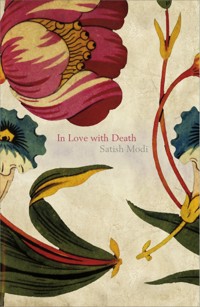
Death is the inevitable fate of every single person on earth. How do we accept the inevitability of our own death? How do we live our lives with meaning? Will money lead us to happiness? Satish Modi examines these questions is a moving, powerful, thought-provoking work based on his own reflections as well as the experiences of people from all walks of life. The result is a fascinating book that teaches us that whoever we are and whatever our aspirations in this life, it is important for each and every one of us to accept our own passing. In doing so we can free ourselves to live as well and fully as possible, guided by the principles of goodness, love and compassion.
Das E-Book können Sie in Legimi-Apps oder einer beliebigen App lesen, die das folgende Format unterstützen:
Seitenzahl: 221
Veröffentlichungsjahr: 2014
Ähnliche













In Love with Death
This eBook edition published in 2014 by
Birlinn Limited
West Newington House
Newington Road
Edinburgh
EH9 1QS
www.birlinn.co.uk
Copyright © Satish Modi 2010, 2014
First published in the United Kingdom in 2010 by Satish Modiin a limited edition of 500 copies.
The moral right of Satish Modi to be identified as the author of this work has been asserted by him in accordance with the Copyright, Designs and Patents Act 1988.
All rights reserved.
No part of this publication may be reproduced,stored or transmitted in any form without the expresswritten permission of the publisher.
ISBN: 978 1 78027 214 6ePub ISBN: 978 0 85790 796 7Mobi ISBN: 978 0 85790 796 7
British Library Cataloguing-in-Publication Data
A catalogue record for this book is available from the British Library
Contents
Introduction
1
On Salt Cellars
2
On Death Itself
3
On Time
4
On Time: Nina’s Story
5
On Music
6
On Music: Doreen’s Story
7
On Hallways
8
On Trust
9
On Trust: JP’s Story
10
On the Beauty of the Land: Tim’s Story
11
On Money
12
On Money: Frank’s Story
13
On Insurance
14
On Faces
15
On Grief
16
On Grief: Nancy’s Story
17
On Faith: Helen’s Story
18
On Fighting Disease: Julian’s Story
19
On the Materialist’s View: Terence’s Story
20
On Surviving
21
On Trees
22
On How To Live a Good Life
23
The Final Preparation
Introduction
Dear reader,
Before you proceed, please fill in the following details:
Your name:
Your date of death:
This is not a misprint.
It’s very important. Try to figure out the approximate date of your death, or at least hazard a guess. Take into account the lives of your parents, your relatives. Don’t feel discouraged. Every single person who reads this book (and every single person who doesn’t!) will die one day. Everyone who is born has to die. Sadly, none of us pay much attention to this fact. Many of us believe it’s going to be a long, long time before we die; some of us think we’ll live forever.
Now that you have written down your death date, work out how many more years you have left on this planet. It’s not much time, is it? Especially when you look back and realise how quickly the years have drifted past you. We only have a finite number of Christmases or Diwalis to celebrate.
So, now that we know our time is limited, we need to look at life from a new perspective.
A couple of years ago, I decided I wanted to set down my ideas about death as clearly as possible. I am not a great philosopher, nor do I pretend to know the solutions to any of the mysteries of the universe; like you, I’m just one individual who thinks about life and death, and the meaning of both. I often catch myself dwelling on the larger subjects in life, so I decided that a good way of examining them would be to write them down.
I travel a lot and like to talk to people about death wherever I go. What will become of us? Where will we go? What will happen? Often, if I’m in a room with friends or associates, I will ask what they think happens after death. This question naturally has a disquieting effect and is often followed by a long pause. But a curious thing happens to those people who choose to engage with the question. Suddenly, they skip over small talk – they soar above and beyond it. Some say they believe in dust to dust, others believe in a higher power; however, all are faced, if only for a moment, with the largest and most pertinent question of all – the one that should help us lead a better life.
My thoughts of mortality don’t creep into every conversation I have, but the subject is never far from my mind. It takes an act of will to turn death into a positive force – and sometimes I get the feeling that not enough people have tried.
I have learned that there is a clock that is always with me: in the pockets of all my suits, on the bedside table of hotel rooms when I travel, in my home. It glows at night. We all have a clock, and these days I can hear every tick of mine. I am paying close attention to it.
What I have come to notice more and more is that money seems to consume so much of everyone’s energy these days: how to get it, where to spend it, who has got the most of it. As I have travelled and spoken to people from all walks of life, I have witnessed the effect it has. One of the things I have considered about those who have money is that they, too, will one day die. Like every human who has ever lived, their own worth will slide inexorably to zero. It’s not just that you cannot take money with you, you certainly will not be able to access it wherever you end up. There are no guarantors, no guarantees, no Swiss bank accounts, no cars and no wallets. This is not breaking news, but it is something that is important to me and I hope to explore it further.
One of my main aims with this book is to provide comfort. Many things have given me happiness over the course of my life, but to add a dash of comfort to other people’s lives would dwarf all other accomplishments. We can never give enough comfort to last a lifetime, but I hope this book will allow you to take a brief moment to look away from the page and feel you are not alone.
I have, over the past few years, had the good luck to receive positive comments from a few individuals in whose minds my ideas have found purchase. I now know – in a small way – what it is like to comfort someone with an idea, even if it is simply, ‘Be aware of your life and of the passage of time.’
I’m grateful that they’ve listened to me. They might be thankful that I skipped the small talk to focus on something more meaningful. Somewhere in the transaction we’ve made each other aware of the importance of living a thoughtful life.
This is not meant as a work of scholarship; rather I hope I have written in a close and friendly way. And I trust you will spare me some time as we progress through these important subjects, one by one.
In order to widen the scope of the book, I have brought together the stories of others with first-hand experience of the subjects that concern me. I know I am not going to live forever, which is one of the reasons I knew it was important at this particular point in my life to examine these issues and listen to these voices.
If you embark on a project that examines the big questions, you must do so with a sense of humility. This book is the result of my own personal search. These are ideas I have turned over in my mind many times. One particular person can never provide a definitive answer to how we should deal with the issues surrounding death, life, love, trust and grief, but I hope your own thoughts are enhanced by the experiences and philosophies I have gathered together in this work. I have been changed by what I have heard, and it is my hope that my words may have an effect on you, and perhaps offer up the solace and comfort that many of us need in order to overcome the challenges in our lives. Some people I know have suffered in ways that are hard to comprehend, such as experiencing the death of a child or a partner. I do not know where you are in your life, but I hope this book helps.
Be aware of your life. It’s going on right now.
1
On Salt Cellars
We have so much to worry about in life. There’s the persistence of bills, the inevitability of wrinkles, the hassle of traffic, the pitfalls of love, the nuisance of hair loss and weight gain, the frustration of siblings, the phone calls from parents (and the lack of phone calls from children) – the small trials of life exasperate us on a regular basis. I could fill two books with an ongoing list. But everything pales in comparison when we focus on the great worry that we carry with us through life. Sometimes it’s masked or obscured, but the fear is always there. We die.
Pick out two members of any opposing faction, whether it’s two countries at war with one another, two cricket teams in fierce competition, or two brothers who have never found common ground. Whatever they claim and however they profess to be different, each shares a common end point.
Occasionally I employ cutlery to illustrate my ideas. Don’t laugh – it can be very effective. I’ve found it illustrates our journey on earth very well. The trick is to use a knife and fork, then set them apart with some space in the middle. One symbolises the beginning of life and the other the end point. The knife is sometimes a more effective symbol for the end – though some people prefer the fork, if only because they would rather not imagine death by a knife, even if it is just a table knife. Between these two points I usually place a salt cellar, which represents the individual. A child, for instance, would place the salt cellar close to the fork of birth, while an older person would typically place it past the halfway point. It’s easy to do, but this graphic illustration of our mortality often has a curious effect on my dining acquaintances.
One evening not so long ago, I was eating with a man in his 60s. After dinner I set out my knife and fork, and set the salt cellar in what I thought to be a fair position to represent him. He’s relatively healthy, so I placed it a little over the halfway mark.
‘Put me a little to the left,’ the man said, motioning towards the fork of birth. When I’d moved the salt cellar, he looked down at it again. ‘Move me a little more towards the left. I think I’m younger than that. Looking down at that knife makes my heart beat a little faster. All of a sudden I’m worried about how close I am.’
‘I can’t put you all the way back to your birth,’ I told him. ‘We have some control over our lives, but not that much.’
He really did not want to die. He did not want to reach the knife. The presence of the knife on the tablecloth – hard evidence of his mortality – was enough to get his heart racing.
‘It’s a game,’ I reassured him. ‘Don’t worry. You’re not really dying.’
He wasn’t. At least, no more than all of us are as each day passes.
Yet when studied in this way, the patch of tablecloth between the salt cellar and the knife begins to take on significance. It looks small on the table but feels large and expansive in our lives. What will we do with the time that’s left?
Thoughts of death should bring with them feelings of freedom, as well as reminders of life’s brevity. Ironically, inside most of us are memories of times when hours could not pass fast enough, when, as a youngster, we wished away our days and years. A child has an immature and uninformed sense of mortality, a belief that his or her days will stretch on forever, that there will always be another summer following this one. However, as we get older, we learn how short our time on earth is. Mortality does not belong to others – it is built into our own lives as well.
So, without sounding depressing, let us be aware of life’s brevity. There’s no greater catalyst.
2
On Death Itself
Reading about death can be comforting. I don’t mean gruesome death scenes but what actually happens – what the body goes through – when it reaches the common end point: that we give off acetone and acetic acid, then there is the breakdown that comes, thanks to bacteria, and the dust that our bodies become.
In The Way of All Flesh, Dutch writer Midas Dekkers notes:
All those birds born in all those nests, all those flies swarming round your head on a warm summer evening they must die to create space. All those shells on the beach have fought their own personal death-struggle. There’s a lot more dying than living in nature.
He goes on to examine the ‘complete’ fauna of insects, worms and other small fry that ‘had nagged to find their way through the cracks into the coffins’.
Dekkers continues: ‘Reconciliation with the idea of death is asking too much, but I find it comforting to know that when my time comes, many beautiful beetles and flies will be born out of my old man’s body.’ And what about those of us who choose cremation? We will end up as three kilogrammes of dust. Were you expecting something more? Did you think you might be four kilogrammes? All our experiences – all the love we’ve felt, money we’ve sought, our belongings, cars, watches and whatever else – are left and here we are, three kilogrammes of dust.
We’re mostly made up of water – apparently you can make 66 pots of tea with the water from one body – but it makes an early exit and dust is all that’s left. Some find this disheartening. I find it comforting – the thought of death is terrible, but the thought that we could live forever is worse.
Dekkers writes:
It’s a sobering thought to realise that, in the end, the greatest poet, the cruellest dictator, the most beautiful woman, will all be reduced to little piles of dust. But there is some consolation: the biggest trees, the most poisonous snakes, the most spectacular mountain ranges will also be reduced to dust. The dust you walk on, the dust you inhale and the dust you see dancing through sunlight.
So we might all end up dancing in the sunlight, somehow or other. This thought should spur us on to a better life.
For some, dancing in sunlight is not enough, however, and those with means manage to live on in such interesting ways. After all, immortality is so alluring. People have wings of museums named after them or grants and scholarships that bear their name, but for some, immortality comes with added conditions: a man named Juan Potomachi died in 1955 and left £25,000 to a local theatre – with one condition: they had to use his skull as Yorick’s whenever they performed Hamlet. To live on as a prop – perhaps that is true immortality.
One of the greatest pianists of all time, Vladimir Horowitz, left $300,000 to the Juilliard School of Music in New York. The condition? There was never to be a competition named after him.
3
On Time
I always like it when someone says to me, ‘Don’t worry, I have found some time for you.’ What a discovery. Sometimes I envisage them finding this time where they least expect it – hidden away, tucked in a pocket, or buried beneath stacks of paper – and now they are able to give it away as a present. I probably don’t need to tell you that time is a gift.
It’s also a remarkable substance. We can make time for someone. Anyone can do it. A degree in engineering is not necessary, nor is a toolkit. Nor is it a rare material available only to a select few. We may not all be able to make a lot of time – huge, industrial amounts – but everyone can make a little. And once you’ve made it for someone, you can then spend it with that person; there is nothing better to do with time, you might say. At certain points in your life, you might look down to see you’ve got time on your hands. It won’t stay there forever. And this time has been given to you without charge – free time, as it were – and should be used wisely. Wasted time is awful. It doesn’t linger; it disappears, it flees.
We are not always kind to time. In fact, it is very easy to kill time. We honestly believe we’re the ones causing the harm, but as playwright Dion Boucicault pointed out: ‘Men talk of killing time, while time quietly kills them.’ It has been rephrased in many ways since, but the sentiment is the same. I think about it all the time. We can master so much – we feel we are in control of our time – but in this case it is to no avail.
Here are the words of the poet Henry Austin Dobson:
Time goes, you say? Ah, no.Alas, time stays, we go.
When I’m looking through a newspaper, sometimes I glance at the horoscopes. Some people need to be told how to spend their time and there is usually a mystic to fulfil this request. (Her name usually begins with M: Mystic Meg, Mystic Mariah …) Astrologers believe the position of various bodies in the universe affect our time on earth, where the time we are born dictates our destiny. I suppose something has to dictate our fate, but our date of birth, to me, seems arbitrary. Perhaps the bumps on our head truly foretell our future. Or maybe it’s the lumps on our toes. Whatever it is, we are desperate to find a guiding hand. The stars are far enough away to play that role.
Whether they can tell us which tie is most suitable in the morning or whether we will be lucky in love is still unknown, and might always be, but they provide the stable markings for our seers and astrologers to make their predictions. More importantly, they are time itself. The light of the stars is older than the oldest person to live so far, Jeanne Calment, a French woman who lived to be 122. Each time we look up – whether to read the stars for meaning or just laying on our backs in a field to revel in their pinpoints of light – we should be reminded of time, of all that will outlast us.
Hours are known to ‘slip by’. As Macbeth famously said: ‘Time creeps in this petty pace from day to day.’ What makes a ‘good hour’? What makes a ‘good day’? As I look back on my years, I can see that the best hours were not necessarily the ones where I was most efficient or productive.
In the world of business, time does count. The phrase ‘time is money’ has been printed on millions of motivational posters. Managers bark it at employees just as it is repeated by finger-wagging CEOs. It is the final line of many an exhortative email. Those hours are important. The work of the world exists in real time. Try to do anything – run a business or work – in nothing but the sparest of your spare time and you will understand that time is money. It’s a necessary tool to live, to succeed. But now, in my 60s, I feel the hours that linger with me, those that stay in my head late at night when my mind is free and my thoughts have room to wander, are not the hours when airlines were devised, factories built, plans drawn.
It’s not always fruitful to turn to J.M. Barrie, author of Peter Pan, for advice on life, but he was able to capture the importance of occasionally letting time pass freely: ‘You must have been warned against letting the golden hours slip by; but some of them are golden only because we let them slip by.’
Does time heal? Yes, but only because time does everything else as well. Funny how we kill time, waste time, but it doesn’t begrudge us. Still, time is not your friend. It’s good to have a respectful working relationship with time, like one you might have with a very talented, driven co-worker. But don’t ever think you can postpone time’s betrayal with facelifts, chemical peels, health regimes or even with argument. The philosopher Horace said: ‘The years as they pass plunder us of one thing after another.’
This cruel skill is not something that time will give up for any man or woman. I’ve heard this before, you might think, but then we’ve all heard it before. There are no new lessons. Some people have wonderful memories and can search back through the years to the moment they learned of mortality: the instant they looked at the orange flash of a goldfish floating dead on the water or at a family cat taken from the road. It was at such a moment that we hadn’t heard it all before; back then the consequence of time was fresh and felt particularly cruel. And even though, since that point, we have on some level been aware of the onward march of time, of time’s plunder, it doesn’t lessen its impact: when we are suddenly faced with the reality, even our knowledge and experience of death cannot soften the blow.
If we are lucky enough to be part of a family which death has visited according to what we might deem the ‘correct order of life’, then our parents die first. Time just says, ‘That’s it,’ in its impassive way. Horace knew it. On some level we all know it, but I have found that I need to be reminded sometimes, if only to force me to regard it with new respect.
The artist Gauguin was fascinated by the subject of time. He wrote: ‘Life is hardly more than a fraction of a second. Such little time to prepare oneself for eternity.’
One of the most comforting aspects of eternity is that, in a very democratic way, no one gets to experience it on earth. Even if there is someone among us who has found the secret fount of eternal life, perhaps in some South American jungle or hidden in a park near Paddington Station – it could be anywhere – they will be faced with the other hard truth of time: it never ends, or at least it hasn’t yet.
‘Death is terrifying,’ said the Russian writer Anton Chekhov. ‘But it would be even more terrifying to find out that you are going to live for ever and never die.’
There is fairness, even in time’s harshness. At some point, after we have known loss, thankfully we, too, will be lost to all who are left.
A waiter approached my table once in a restaurant and asked me and my guests, ‘Is everyone having a good time?’ It may sound banal, but only until you examine the sentiment further. Are we having a good time? Are we having a ‘good time’? If only I could promise an explanation of eternity – or even of why some times are good and some are bad – then I would sell a copy of this book to everyone in the world. It might also accompany the Bible in every hotel room. However, as we have already established, we are in a kind of humble conversation. I put an idea forward, you think about it.
My own relationship with time is changing. I am trying to make the best of that change, even though it is hard. A child may honestly believe his time on earth lasts forever; a young man might obscure realities with confidence and brashness; a man in his 30s or 40s often has children around, younger children, each of whom brings a fresh reminder of youth and vitality. But beyond that the lessons of time become sharper and harder. I know I do not have forever. There is a date in my future when I won’t be able to ponder the mysteries of the stars or even speak with a waiter in a restaurant. We find time, we make time … until one day we don’t.
I want to spend the rest of my time wisely; spend it on the things that matter.
‘We have so much time and so little to do,’ wrote Roald Dahl. ‘Strike that. Reverse it.’
4
On Time: Nina’s Story
In her youth, Nina wrote a lot of letters. Through various organisations, she was introduced to pen pals all over the world. Nina dutifully kept in touch, sending letters that detailed her days, listed her after-school activities and sometimes contained information about her family – and not just her immediate family, but grandparents, aunts, uncles and cousins, too. Nina came from a large family. In return, she received letters from around the world. The ones from Japan were often printed on colourful stationery and adorned with cartoon characters. Letters from France came on graph paper. Her pen pal from India sent her letters wreathed in an exotic scent.
As an older woman, Nina continued to write letters. By then, most of the pen pals had drifted out of her life, but, as email took over the world, still Nina kept putting pen to paper. She liked the habit of writing letters on paper and affixing a stamp to the envelope.
One day she was told about a project where individuals wrote letters to prisoners and she was intrigued immediately. To Nina, it seemed a way of continuing her pen-pal




