


127,99 €
Mehr erfahren.
- Herausgeber: John Wiley & Sons
- Kategorie: Fachliteratur
- Sprache: Englisch
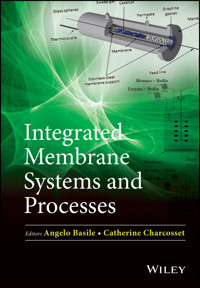
The book examines the possibility of integrating different membrane unit operations (microfiltration, ultrafiltration, nanofiltration, reverse osmosis, electrodialysis and gas separation) in the same industrial cycle or in combination with conventional separation systems. It gives careful analysis of the technical aspects, and the possible fields of industrial development.
The book reviews many original solutions in water desalination, agro-food productions and wastewater treatments, highlighting the advantages achievable in terms of product quality, compactness, rationalization and optimization of productive cycles, reduction of environmental impact and energy saving. Also included are examples of membrane reactors and their integration with a fuel cell; polymeric membranes in the integrated gasification combined cycle power plants; integrating a membrane reformer into a solar system; and potential application of membrane integrated systems in the fusion reactor fuel cycle.
With detailed analysis and broad coverage, the book is divided into two sections: Bio-applications and Inorganic Applications.
Sie lesen das E-Book in den Legimi-Apps auf:
Seitenzahl: 793
Veröffentlichungsjahr: 2015
Ähnliche


















Integrated Membrane Systems and Processes
Edited by
ANGELO BASILE
Institute on Membrane Technology - Italian National Research Council (ITM-CNR), University of Calabria, Cosenza, Italy
and
CATHERINE CHARCOSSET
Laboratoire d’Automatique et de Génie des Procédés, CNRS, Université Lyon 1, Villeurbanne Cedex, France
This edition first published 2016 © 2016 John Wiley & Sons Ltd
Registered officeJohn Wiley & Sons Ltd, The Atrium, Southern Gate, Chichester, West Sussex, PO19 8SQ, United Kingdom
For details of our global editorial offices, for customer services and for information about how to apply for permission to reuse the copyright material in this book please see our website at www.wiley.com.
The right of the author to be identified as the author of this work has been asserted in accordance with the Copyright, Designs and Patents Act 1988.
All rights reserved. No part of this publication may be reproduced, stored in a retrieval system, or transmitted, in any form or by any means, electronic, mechanical, photocopying, recording or otherwise, except as permitted by the UK Copyright, Designs and Patents Act 1988, without the prior permission of the publisher.
Wiley also publishes its books in a variety of electronic formats. Some content that appears in print may not be available in electronic books.
Designations used by companies to distinguish their products are often claimed as trademarks. All brand names and product names used in this book are trade names, service marks, trademarks or registered trademarks of their respective owners. The publisher is not associated with any product or vendor mentioned in this book.
Limit of Liability/Disclaimer of Warranty: While the publisher and author have used their best efforts in preparing this book, they make no representations or warranties with respect to the accuracy or completeness of the contents of this book and specifically disclaim any implied warranties of merchantability or fitness for a particular purpose. It is sold on the understanding that the publisher is not engaged in rendering professional services and neither the publisher nor the author shall be liable for damages arising herefrom. If professional advice or other expert assistance is required, the services of a competent professional should be sought.
The advice and strategies contained herein may not be suitable for every situation. In view of ongoing research, equipment modifications, changes in governmental regulations, and the constant flow of information relating to the use of experimental reagents, equipment, and devices, the reader is urged to review and evaluate the information provided in the package insert or instructions for each chemical, piece of equipment, reagent, or device for, among other things, any changes in the instructions or indication of usage and for added warnings and precautions. The fact that an organization or Website is referred to in this work as a citation and/or a potential source of further information does not mean that the author or the publisher endorses the information the organization or Website may provide or recommendations it may make. Further, readers should be aware that Internet Websites listed in this work may have changed or disappeared between when this work was written and when it is read. No warranty may be created or extended by any promotional statements for this work. Neither the publisher nor the author shall be liable for any damages arising herefrom.
Library of Congress Cataloging-in-Publication Data
Integrated membrane systems and processes / edited by Angelo Basile and Catherine Charcosset. pages cm Includes bibliographical references and index. ISBN 978-1-118-73908-2 (cloth) 1. Membrane filters. 2. Filters and filtration. I. Basile, Angelo, editor. II. Charcosset, Catherine, editor. TP156.F5I57 2016 660′.284245--dc23
2015024794
A catalogue record for this book is available from the British Library.
ISBN: 9781118739082
Contents
List of Contributors
Preface
1 Ultrafiltration, Microfiltration, Nanofiltration and Reverse Osmosis in Integrated Membrane Processes
1.1 Introduction
1.2 Membrane Processes
1.3 Combination of Various Membrane Processes
1.4 Conclusion
List of Abbreviations
References
2 Bioseparations Using Integrated Membrane Processes
2.1 Introduction
2.2 Integrated Bioseparation Processes Involving Microfiltration
2.3 Integrated Bioseparation Processes Involving Ultrafiltration
2.4 Conclusion
References
3 Integrated Membrane Processes in the Food Industry
3.1 Introduction
3.2 Fruit Juice Processing
3.3 Milk and Whey Processing
3.4 Conclusions
List of Abbreviations
References
4 Continuous Hydrolysis of Lignocellulosic Biomass via Integrated Membrane Processes
4.1 Introduction
4.2 Continuous Enzymatic Hydrolysis
4.3 Integrated Submerged Membrane System
4.4 Sugar Concentration
4.5 Sugar Concentration and Hydrolysate Detoxification by Nanofiltration
4.6 Statistical Design of Experiments
4.7 Analysis of Variance using Response Surface Methodology
4.8 Future Challenges
4.9 Conclusion
Acknowledgements
List of Abbreviations
List of Symbols
References
5 Integrated Membrane Processes for the Preparation of Emulsions, Particles and Bubbles
5.1 Introduction
5.2 Membranes for Preparation of Emulsions and Particles
5.3 Production of Emulsions Using SPG Membrane
5.4 Production of Emulsions Using Microengineered Membranes
5.5 Factors Affecting Droplet Size in DME
5.6 Factors Affecting Droplet Size in PME
5.7 Integration of ME with Solid/Semi-Solid Particle Fabrication
5.8 Integration of Membrane Permeation and Gas Dispersion
5.9 Integration of Membrane Micromixing and Nanoprecipitation
5.10 Conclusions
List of Acronyms
Symbols
Subscripts
References
6 Nanofiltration in Integrated Membrane Processes
6.1 Introduction
6.2 Pretreatment for Nanofiltration
6.3 Nanofiltration as a Pretreatment Method
6.4 Processes in Series
6.5 Integrated Processes
6.6 Hybrid Processes
6.7 Nanofiltration Cascades
6.8 Conclusions
List of Abbreviations
References
7 Seawater, Brackish Waters, and Natural Waters Treatment with Hybrid Membrane Processes
7.1 Introduction
7.2 Desalination Market
7.3 Seawater and Brackish Waters Composition
7.4 Desalination with Integrated Membrane Processes
7.5 Natural Water Treatment Using Hybrid Membrane Processes
7.6 Conclusion
List of Acronyms
References
8 Wastewater Treatment Using Integrated Membrane Processes
8.1 Introduction
8.2 IMS Application for Wastewater Treatment: Current Status
8.3 Strategic Co-location Concept for Integrated Process Involving RO, PRO, and Wastewater Treatment
8.4 Conclusions
Nomenclature
List of Greek letters
References
9 Membrane Reactor: An Integrated “Membrane + Reaction” System
9.1 Introduction
9.2 Hydrogen Economy
9.3 Membrane Reactors
9.4 Membranes for Membrane Reactors
9.5 Mass Transport Mechanisms for Inorganic Membranes
9.6 Applications of Inorganic Membrane Reactors
9.7 Conclusions
List of Symbols
List of Abbreviations
References
10 Membranes for IGCC Power Plants
10.1 Introduction
10.2 IGCC Technology for Power Generation
10.3 Application of Membranes in an IGCC Power Plants
10.4 Conclusion and Future Trends
Abbreviations
References
11 Integration of a Membrane Reactor with a Fuel Cell
11.1 Introduction
11.2 Fuel Cell Basics
11.3 Different Types of Fuel Cells
11.4 Contaminations of the PEFC
11.5 Methods to Avoid Poisoning
11.6 Conclusion
List of Abbreviations
List of Symbols
References
12 Solar Membrane Reactor
12.1 Introduction
12.2 Configurations of Solar MR Systems
12.3 Solar MRs Application from a Modeling Point of View
12.4 Solar MRs Application from an Experimental Point of View
12.5 The Main Challenges
12.6 Conclusion and Future Trends
List of Abbreviations
References
13 Membrane-Adsorption Integrated Systems/Processes
13.1 Introduction
13.2 Adsorption Pretreatment for Membranes
13.3 Integrated Membrane-Adsorption Systems
13.4 Membrane Adsorbents
13.5 Adsorption Post-treatment for Membranes
References
Index
EULA
List of Tables
Chapter 3
Table 3.1
Table 3.2
Table 3.3
Chapter 4
Table 4.1
Table 4.2
Table 4.3
Table 4.4
Table 4.5
Table 4.6
Chapter 5
Table 5.1
Table 5.2
Table 5.3
Table 5.4
Table 5.5
Table 5.6
Table 5.7
Table 5.8
Table 5.9
Table 5.10
Chapter 7
Table 7.1
Table 7.2
Table 7.3
Table 7.4
Table 7.5
Chapter 8
Table 8.1
Table 8.2
Table 8.3
Table 8.4
Table 8.5
Table 8.6
Table 8.7
Chapter 9
Table 9.1
Chapter 10
Table 10.1
Table 10.2
Table 10.3
Table 10.4
Table 10.5
Table 10.6
Table 10.7
Guide
Cover
Table of Contents
Preface
Pages
9
10
11
12
13
1
2
3
4
5
6
7
8
9
10
11
12
13
14
15
16
17
18
19
20
21
22
23
24
25
26
27
28
29
30
31
32
33
34
35
36
37
38
39
40
41
42
43
44
45
46
47
48
49
50
51
52
53
54
55
56
57
58
59
60
61
62
63
64
65
66
67
68
69
70
71
72
73
74
75
76
77
78
79
80
81
82
83
84
85
86
87
88
89
90
91
92
93
94
95
96
97
98
99
100
101
102
103
104
105
106
107
108
109
110
113
114
115
116
117
118
119
120
121
122
123
124
125
126
127
128
129
130
131
132
133
134
135
136
137
138
139
140
141
142
143
144
145
146
147
148
149
150
151
152
153
154
155
156
157
158
159
160
161
162
163
164
165
166
167
168
169
170
171
172
173
174
175
176
177
178
179
180
181
182
183
184
185
186
187
188
189
190
191
192
193
194
195
196
197
198
199
200
201
202
203
204
205
206
207
208
209
210
211
212
213
214
215
216
217
218
219
220
221
222
223
224
225
226
227
228
229
231
232
233
234
235
236
237
238
239
240
241
242
243
244
245
246
247
248
249
250
251
252
253
255
256
257
258
259
260
261
262
263
264
265
266
267
268
269
270
271
272
273
274
275
276
277
278
279
280
281
282
283
285
286
287
288
289
290
291
292
293
294
295
296
297
298
299
300
301
302
303
304
305
306
307
308
309
310
311
312
313
314
315
316
317
318
319
320
321
322
323
324
325
326
327
328
329
330
331
332
333
334
335
336
337
338
339
340
341
343
344
345
346
347
348
349
350
351
352
353
354
355
356
357
358
359
360
361
362
363
364
365
366
367
368
369
370
371
372
373
375
List of Contributors
Abbas Aghaeinejad-MeybodiChemical Engineering Department, Sahand University of Technology, Tabriz, Iran
Angelo BasileInstitute on Membrane Technology – Italian National Research Council (ITM-CNR), University of Calabria, Cosenza, Italy
Alfredo CassanoInstitute on Membrane Technology – Italian National Research Council (ITM-CNR), University of Calabria, Cosenza, Italy
Catherine CharcossetLaboratoire d'Automatique et de Génie des Procédés, CNRS, Université Lyon 1, Villeurbanne Cedex, France
Anthony G. FaneSingapore Membrane Technology Centre, Nanyang Technological University, Singapore
Kamran GhasemzadehChemical Engineering Department, Urmia University of Technology, Urmia, Iran
Raja GhoshDepartment of Chemical Engineering, McMaster University, Ontario, Canada
Adolfo IulianelliInstitute on Membrane Technology – Italian National Research Council (ITM-CNR), University of Calabria, Cosenza, Italy
Simona LiguoriInstitute on Membrane Technology – Italian National Research Council (ITM-CNR), University of Calabria, Cosenza, Italy
Sayed S. MadaeniMembrane Research Center, Chemical Engineering Department, Faculty of Engineering, Razi University, Tagh Bostan, Kermanshah, Iran
Mohammadmahdi MalmaliRalph E. Martin Department of Chemical Engineering, University of Arkansas, Fayetteville, AR, USA
Maxime PontiéL'UNAM, Nantes, France
Ehsan SalehiDepartment of Chemical Engineering, Faculty of Engineering, Arak University, Arak, Iran
Bart Van der BruggenDepartment of Chemical Engineering, ProcESS – Process Engineering for Sustainable Systems, Leuven, Belgium
Goran T. VladisavljevićChemical Engineering Department, Loughborough University, Leicestershire, UK
S. Ranil WickramasingheRalph E. Martin Department of Chemical Engineering, University of Arkansas, Fayetteville, AR, USA
Jinsong ZhangSingapore Membrane Technology Centre, Nanyang Technological University, Singapore
Preface
Membrane science and technology have shown an impressive growth since the early 1960s with the discovery of an effective method for the preparation of asymmetric cellulose acetate membranes. Membrane technology is now recognized for a number of advantages such as operational simplicity, low energetic requirements, good stability under a wide range of operative conditions, easy control and scale-up, and large flexibility. With the increasing understanding and development of membrane techniques, it became possible to integrate various operations with the purpose to improve performance in terms of product quality, plant compactness, environmental impact, and energy use. Hybrid or integrated membrane processes can be classified into several categories. In some processes, adsorption or reaction may be included in the membrane itself, like in membrane reactors, ion-exchange membranes, adsorptive membranes, and others. Other hybrid or integrated membrane processes combine several membrane separation steps, one step being dependent on the former one, in a multistage configuration. Finally, membrane filtration may be associated with other unit operations like adsorption on activated carbon or ion-exchange resins.
Lesen Sie weiter in der vollständigen Ausgabe!
Lesen Sie weiter in der vollständigen Ausgabe!
Lesen Sie weiter in der vollständigen Ausgabe!
Lesen Sie weiter in der vollständigen Ausgabe!
Lesen Sie weiter in der vollständigen Ausgabe!
Lesen Sie weiter in der vollständigen Ausgabe!
Lesen Sie weiter in der vollständigen Ausgabe!
Lesen Sie weiter in der vollständigen Ausgabe!
Lesen Sie weiter in der vollständigen Ausgabe!
Lesen Sie weiter in der vollständigen Ausgabe!
Lesen Sie weiter in der vollständigen Ausgabe!
Lesen Sie weiter in der vollständigen Ausgabe!
Lesen Sie weiter in der vollständigen Ausgabe!
Lesen Sie weiter in der vollständigen Ausgabe!
Lesen Sie weiter in der vollständigen Ausgabe!




