


122,99 €
Mehr erfahren.
- Herausgeber: John Wiley & Sons
- Kategorie: Fachliteratur
- Serie: IEEE Press Series on Biomedical Engineering
- Sprache: Englisch
A comprehensive reference and teaching aid on tissue engineering—covering everything from the basics of regenerative medicine to more advanced and forward thinking topics such as the artificial liver, bladder, and trachea
Regenerative medicine/tissue engineering is the process of replacing or regenerating human cells, tissues, or organs to restore or establish normal function. It is an incredibly progressive field of medicine that may, in the near future, help with the shortage of life-saving organs available through donation for transplantation.
Introduction to Tissue Engineering: Applications and Challenges makes tissue engineering more accessible to undergraduate and graduate students alike. It provides a systematic and logical eight-step process for tissue fabrication. Specific chapters have been dedicated to provide in-depth principles for many of the supporting and enabling technologies during the tissue fabrication process and include biomaterial development and synthesis, bioreactor design, and tissue vascularization. The tissue fabrication process is further illustrated with specific examples for liver, bladder, and trachea. Section-coverage includes an overall introduction of tissue engineering; enabling and supporting technologies; clinical applications; and case studies and future challenges.
Introduction to Tissue Engineering:
- Presents medical applications of stem cells in tissue engineering
- Deals with the effects of chemical stimulation (growth factors and hormones)
- Covers current disease pathologies and treatment options (pacemakers, prosthesis)
- Explains bioengineering, design and fabrication, and critical challenges during tissue fabrication
- Offers PowerPoint slides for instructors
- Features case studies and a section on future directions and challenges
As pioneering individuals look ahead to the possibility of generating entire organ systems, students may turn to this text for a comprehensive understanding and preparation for the future of regenerative medicine.
Sie lesen das E-Book in den Legimi-Apps auf:
Seitenzahl: 713
Veröffentlichungsjahr: 2014
Ähnliche


















Table of Contents
Cover
Series
Title Page
Copyright
Dedication
Preface
Acknowledgments
List of Abbreviations
Important Terminology and Concepts
Chapter 1: Introduction to Tissue Engineering
Chapter Overview
1.1 Introduction to Tissue Engineering
1.2 Chronic Shortage of Donor Organs
1.3 The Tissue Engineering Paradigm
1.4 Definition of Tissue Engineering
1.5 Process of Bioengineering 3D Artificial Tissue
1.6 Design Principles for Tissue Engineering
1.7 Building Blocks of Tissue Engineering
1.8 Scientific and Technological Challenges
1.9 Functional Assessment of Artificial Tissue
1.10 Seminal Papers in Tissue Engineering
1.11 Applications of 3D Artificial Tissue
1.12 Two-Dimensional Versus Three-Dimensional Culture
1.13 Integration of Core Technologies
1.14 Growth of Tissue Engineering
1.15 Disciplines in Tissue Engineering
1.16 Tissue Engineering and Related Fields
Summary
Practice Questions
References
Chapter 2: Cells for Tissue Engineering
Chapter Overview
2.1 Cells and Tissue Engineering
2.2 Cell Structure and Function
2.3 The Dynamic Extracellular Matrix
2.4 Cell Signaling
2.5 Cellular Junctions
2.6 Mammalian Tissue and Artificial Tissue
2.7 Cell Sourcing
2.8 The Cell Transplantation Process
2.9 Cells for Cell Transplantation
2.10 Mode of Action of Cells During Cell Transplantation
2.11 Cell Transplantation and Tissue Engineering
2.12 The Cell Culture Process
2.13 Applications of Monolayer 2D Cell Culture
2.14 Cell Culture Versus Tissue Engineering
2.15 Introduction to Stem Cell Engineering
2.16 Human Embryonic Stem Cells
2.17 Induced Pluripotent Stem Cells
2.18 Adult Stem Cells
Summary
Practice Questions
References
Chapter 3: Biomaterials for Tissue Engineering
Chapter Overview
3.1 Definition of Biomaterials
3.2 Scheme for Biomaterial Development
3.3 Historical Perspective on Biomaterials
3.4 Tensile Properties
3.5 Modulation of Tensile Properties
3.6 Material Degradation
3.7 Biocompatibility
3.8 Biomimetic Biomaterial
3.9 Classification of Biomaterials
3.10 Biomaterial Platforms
3.11 Smart Materials
3.12 The Dynamic Extracellular Matrix
3.13 Idealized Biomaterial
Summary
Practice Questions
References
Chapter 4: Tissue Fabrication Technology
Chapter Overview
4.1 Introduction to Tissue Fabrication Technologies
4.2 Self-Organization Technology
4.3 Cell Sheet Engineering
4.4 Scaffold-Based Tissue Fabrication
4.5 Cell and Organ Printing
4.6 Solid Freeform Fabrication
4.7 Soft Lithography and Microfluidics
4.8 Cell Patterning
4.9 Idealized System to Support Tissue Fabrication
Summary
Practice Questions
References
Chapter 5: Vascularization of Artificial Tissue
Chapter Overview
5.1 Introduction
5.2 Seminal Publications in Angiogenesis Research
5.3 Vascularization Defined
5.4 Molecular Mechanism of Vasculogenesis
5.5 Molecular Mechanism of Angiogenesis
5.6 Molecular Mechanism of Arteriogenesis
5.7 Therapeutic Angiogenesis
5.8 Tissue Engineering and Vascularization
5.9 Conceptual Framework for Vascularization During Artificial Tissue Formation
5.10
In Vivo
Models of Vascularization
5.11 Idealized Vascularization Strategy for Tissue Engineering
5.12 Flow Chart and Decision Making
5.13 Biologically Replicated Vascularization Strategies
5.14 Biologically Mediated Vascularization Strategies
5.15 Biologically Inspired Vascularization Strategies
Summary
Practice Questions
References
Chapter 6: Bioreactors for Tissue Engineering
Chapter Overview
6.1 Introduction to Bioreactors
6.2 Bioreactors Defined
6.3 Classification of Bioreactors
6.4 Design Considerations
6.5 Idealized Bioreactor System
6.6 Bioreactors and Tissue Engineering
6.7 Bioreactors for Mammalian Cell Culture
6.8 Bioreactors for Scaffold Fabrication
6.9 Bioreactors for Scaffold Cellularization
6.10 Perfusion Systems
6.11 Bioreactors for Stretch
6.12 Electrical Stimulation
Summary
Practice Questions
References
Chapter 7: Tracheal Tissue Engineering
Chapter Overview
7.1 Structure and Function of the Trachea
7.2 Congenital Tracheal Stenosis
7.3 Genetic Regulation of Tracheal Development
7.4 Post Intubation and Post Tracheostomy Tracheal Stenosis
7.5 Treatment Modalities for Tracheal Stenosis
7.6 Design Considerations for Tracheal Tissue Engineering
7.7 Process of Bioengineering Artificial Tracheas
7.8 Tissue Engineering Models for Artificial Tracheas
7.9 Tracheal Tissue Engineering—An Example of a Clinical Study
7.10 Tracheal Tissue Engineering—A Second Example of a Clinical Study
Summary
Practice Questions
References
Chapter 8: Bladder Tissue Engineering
Chapter Overview
8.1 Bladder Structure and Function
8.2 Neurogenic Bladder Dysfunction
8.3 Surgical Bladder Augmentation
8.4 Development of the Urinary Bladder
8.5 Design Considerations for Bladder Tissue Engineering
8.6 Process of Bioengineering Artificial Bladders
8.7 Cell Sheet Engineering for Bladder Tissue Engineering
8.8 Small Intestinal Submucosa (SIS) for Bladder Tissue Engineering
8.9 Plga as a Biomaterial for Bladder Tissue Engineering
8.10 Acellular Grafts for Bladder Tissue Engineering
8.11 Organ Models for Bladder Tissue Engineering
8.12 Clinical Study for Bladder Tissue Engineering
Summary
Practice Questions
References
Chapter 9: Liver Tissue Engineering
Chapter Overview
9.1 Structure and Function of the Liver
9.2 Acute Liver Failure
9.3 Liver Transplantation
9.4 Liver Regeneration
9.5 Liver Development
9.6 Design Considerations for Liver Tissue Engineering
9.7 Process of Bioengineering Artificial Liver Tissue
9.8 Stem Cells for Liver Tissue Engineering
9.9 Surface Patterning Technology for Liver Tissue Engineering
9.10 Biomaterial Platforms for Liver Tissue Engineering
9.11 Fabrication of 3D Artificial Liver Tissue
9.12 Vascularization for Liver Tissue Engineering
9.13 Bioreactors for Liver Tissue Engineering
9.14 Spheroid Culture for Liver Tissue Engineering
Summary
Practice Questions
References
Index
Series
End User License Agreement
Pages
xiii
xiv
xv
xvi
xvii
xviii
xix
xx
xxi
xxii
xxiii
xxiv
xxv
xxvi
1
2
3
4
5
6
7
8
9
10
11
12
13
14
15
16
17
18
19
20
21
22
23
24
25
26
27
28
29
30
31
32
33
34
35
36
37
38
39
40
41
42
43
44
45
46
47
48
49
50
51
52
53
54
55
56
57
58
59
60
61
62
63
64
65
66
67
68
69
70
71
72
73
74
75
76
77
78
79
80
81
82
83
84
85
86
87
88
89
90
91
92
93
94
95
96
97
98
99
100
101
102
103
104
105
106
107
108
109
110
111
112
113
114
115
116
117
118
119
120
121
122
123
124
125
126
127
128
129
130
131
132
133
134
135
136
137
138
139
140
141
142
143
144
145
146
147
148
149
150
151
152
153
154
155
156
157
158
159
160
161
162
163
164
165
166
167
168
169
170
171
172
173
174
175
176
177
178
179
180
181
182
183
184
185
186
187
188
189
190
191
192
193
194
195
196
197
198
199
200
201
202
203
204
205
206
207
208
209
210
211
212
213
214
215
216
217
218
219
220
221
222
223
224
225
226
227
228
229
230
231
232
233
234
235
236
237
238
239
240
241
242
243
244
245
246
247
248
249
250
251
252
253
254
255
256
257
258
259
260
261
262
263
264
265
266
267
268
269
270
271
272
273
274
275
276
277
278
279
280
281
282
283
284
285
286
287
288
289
290
291
292
293
294
295
296
297
298
299
300
301
302
303
304
305
306
307
308
309
310
311
312
313
314
315
316
317
318
319
320
321
323
324
325
326
327
Guide
Cover
Table of Contents
Preface
Chapter 1: Introduction to Tissue Engineering
List of Illustrations
Figure 1.1
Figure 1.2
Figure 1.3
Figure 1.4
Figure 1.5
Figure 1.6
Figure 1.7
Figure 1.8
Figure 1.9
Figure 2.1
Figure 2.2
Figure 2.3
Figure 2.4
Figure 2.5
Figure 2.6
Figure 2.7
Figure 2.8
Figure 2.9
Figure 2.10
Figure 3.1
Figure 3.2
Figure 3.3
Figure 3.4
Figure 3.5
Figure 3.6
Figure 3.7
Figure 3.8
Figure 3.9
Figure 4.1
Figure 4.2
Figure 4.3
Figure 4.4
Figure 4.5
Figure 4.6
Figure 4.7
Figure 4.8
Figure 4.9
Figure 4.10
Figure 5.1
Figure 5.2
Figure 5.3
Figure 5.4
Figure 5.5
Figure 5.6
Figure 5.7
Figure 5.8
Figure 5.9
Figure 5.10
Figure 6.1
Figure 6.2
Figure 6.3
Figure 6.4
Figure 6.5
Figure 6.6
Figure 6.7
Figure 6.8
Figure 6.9
Figure 6.10
Figure 7.1
Figure 7.2
Figure 7.3
Figure 7.4
Figure 8.1
Figure 8.2
Figure 8.3
Figure 8.4
Figure 9.1
Figure 9.2
Introduction to Tissue Engineering
Applications and Challenges
Ravi Birla
Department of Biomedical Engineering,
Cullen College of Engineering,
University of Houston, Houston, TX
Copyright © 2014 by The Institute of Electrical and Electronics Engineers, Inc.
Published by John Wiley & Sons, Inc., Hoboken, New Jersey. All rights reserved
Published simultaneously in Canada
No part of this publication may be reproduced, stored in a retrieval system, or transmitted in any form or by any means, electronic, mechanical, photocopying, recording, scanning, or otherwise, except as permitted under Section 107 or 108 of the 1976 United States Copyright Act, without either the prior written permission of the Publisher, or authorization through payment of the appropriate per-copy fee to the Copyright Clearance Center, Inc., 222 Rosewood Drive, Danvers, MA 01923, (978) 750-8400, fax (978) 750-4470, or on the web at www.copyright.com. Requests to the Publisher for permission should be addressed to the Permissions Department, John Wiley & Sons, Inc., 111 River Street, Hoboken, NJ 07030, (201) 748-6011, fax (201) 748-6008, or online at http://www.wiley.com/go/permissions.
Limit of Liability/Disclaimer of Warranty: While the publisher and author have used their best efforts in preparing this book, they make no representations or warranties with respect to the accuracy or completeness of the contents of this book and specifically disclaim any implied warranties of merchantability or fitness for a particular purpose. No warranty may be created or extended by sales representatives or written sales materials. The advice and strategies contained herein may not be suitable for your situation. You should consult with a professional where appropriate. Neither the publisher nor author shall be liable for any loss of profit or any other commercial damages, including but not limited to special, incidental, consequential, or other damages.
For general information on our other products and services or for technical support, please contact our Customer Care Department within the United States at (800) 762-2974, outside the United States at (317) 572-3993 or fax (317) 572-4002.
Wiley also publishes its books in a variety of electronic formats. Some content that appears in print may not be available in electronic formats. For more information about Wiley products, visit our web site at www.wiley.com.
Library of Congress Cataloging-in-Publication Data:
Birla, Ravi, author.
Introduction to tissue engineering : applications and challenges / Ravi Birla.
p. ; cm. – (IEEE Press series on biomedical engineering)
ISBN 978-1-118-62864-5 (hardback)
I. Title. II. Series: IEEE Press series in biomedical engineering.
[DNLM: 1. Tissue Engineering. QT 37]
R857.T55
610.28–dc23
2013035520
This book is dedicated to:
My parents, Mom and Dad,
My gorgeous and supporting wife, Swati, and
My precious kids Aditya and Pooja
Preface
This book is designed to serve as a textbook for a one-semester tissue engineering class, offered at the senior-undergraduate or first-year graduate level. The first six chapters of the book are focused on covering fundamental principles of tissue engineering and include cell sourcing, biomaterial development, tissue fabrication technology, vascularization strategies, and bioreactors for tissue engineering. These topics are at the heart of tissue engineering. The latter Chapter 3 are focused on applications of tissue engineering, which include development of 3D artificial trachea, 3D artificial bladder, and 3D artificial liver tissue.
The contents of this book are modeled after classes I teach in the Department of Biomedical Engineering at the University of Houston. I teach several classes, one of which is an introductory class in tissue engineering: BIOE 5323—Introduction to Tissue Engineering. BIOE 5323 is designed to serve as an introduction to the field of tissue engineering and is taken by senior undergraduate and first-year graduate students. When I first started teaching BIOE 5323, I put together lecture notes to provide students with a foundation in tissue engineering. Over time, these lecture notes were converted into book chapters and eventually combined into a complete textbook.
The book is designed as a textbook for use in a classroom setting. It is designed as a first text in tissue engineering and as such, does not rely on any other prerequisite classes. The book is self-contained and covers fundamental principles that are necessary to understand tissue engineering. The book is well suited for a one-semester class designed for undergraduate students at the senior level or first-year graduate students.
There is a large question bank that has been included in the book. The questions have been designed to test students' understanding of the principles of tissue engineering and their ability to apply these principles toward the fabrication of 3D artificial tissue. Therefore, all the questions are assay-based questions which require critical thinking; many of the questions are open-ended and can have multiple correct responses. These questions are designed to probe students and test their creativity in designing processes to fabricate 3D artificial tissue.
Acknowledgments
I would like to begin by thanking my Department Chair and mentor, Dr. Metin Akay, for his role in the preparation of this manuscript. Dr. Akay has been instrumental in this project, and without his support and encouragement, this book would never have happened. Dr. Akay was involved in this project from conception to completion and has participated in every aspect of the manuscript. Dr. Akay suggested this project to me, identified the need for this book, and shared his vision for the manuscript. Dr. Akay was enthusiastically engaged in every aspect of this project, from reviewing the preliminary proposals to suggesting ways to improve manuscript content. In addition, Dr. Akay also provided the necessary connections with important people at Wiley-IEEE Publishers, which made it all possible. Dr. Akay envisioned this project, believed in my ability to successfully undertake this task, and provided support in every way imaginable; for this, I am deeply indebted.
I would like to thank my wife, Swati, for her support during the preparation of this manuscript. My ability to complete this project in a timely manner required numerous evenings and weekends that were dedicated toward the manuscript, taking time away from personal commitments. Swati was always supportive of this project, encouraged my work throughout, and to the best of my knowledge, did not mind my absence from family commitments—I am still a married man!
I would like to thank my parents for their support and encouragement during the preparation of this book. They have taken a keen interest in this project and have been engaged in the development of the manuscript. They have also been enthusiastically waiting for the publication of this manuscript, and their eagerness to see the completed manuscript served as motivation to complete this project in a timely manner.
I would like to acknowledge the participation of my kids, Aditya and Pooja, in this project. During the writing of this manuscript, Aditya was eight years old and Pooja was six; they were both aware that I was working on this project. Every so often, Aditya and Pooja would come to me and ask “Dad, what chapter are you on?” I was encouraged to see the participation of Aditya and Pooja on this project. I was also reminded by my kids that I was behind schedule and needed to spend more time to catch up.
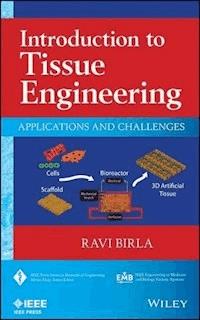
I would like to thank several people for their work in creating the illustrations that have been used in this book. I would like to thank Betsy Salazar and Kristopher Hoffman for creating all the images that have been used throughout the book. Ms. Salazar and Mr. Hoffman have devoted many hours to creating these images and their efforts have enhanced the quality of the book. These illustrations provide a valuable tool for student learning and the work by Ms. Salazar and Mr. Hoffman will go a long way in achieving this objective. I would also like to thank Mohamed A. Mohamed for creating the cover art; the cover image accurately captures the essence of the book.
I would like to thank Ms. Kelley Murfin, with the University of Houston Writing Center, for her assistance in editing and proofreading the manuscript. The time invested by Ms. Murfin in editing the manuscript has ensured accuracy of the material.
Important Terminology and Concepts
TISSUE ENGINEERING
—
Tissue engineering is a multidisciplinary field bringing together experts from engineering, life sciences and medicine, utilizing the building blocks of cells, biomaterials and bioreactors for the development of 3D artificial tissue and organs which can be used to augment, repair and/or replace damaged and/or diseased tissue
.
CELL-MATRIX INTERACTIONS
—
When a cell sees any given ECM protein, the cell scans the protein molecule to identify specific binding sites for which it has integrins; for example, the integrin α5β1 binds to the RGD site of the fibronectin molecule. Although the fibronectin molecule is large, there is only a sequence of three amino acids that are recognized by cells having the α5β1 integrin; the binding of the α5β1 integrin to the RGD site on the fibronectin molecule is referred to as a specific cell-matrix interaction
.
CELL-CELL INTERACTIONS
—
Cells communicate with other cells via cell-cell interactions, and these are critical in maintaining cell phenotype and tissue function. There are 4 types of cell signaling, known as endocrine, paracrine, autocrine, and contact-dependent signaling. In addition, cellular junctions provide various functions at the cell-cell; gap junctions are one example. The functional coupling of cells with other cells is known as cell-cell interaction
.
Lesen Sie weiter in der vollständigen Ausgabe!
Lesen Sie weiter in der vollständigen Ausgabe!
Lesen Sie weiter in der vollständigen Ausgabe!
Lesen Sie weiter in der vollständigen Ausgabe!
Lesen Sie weiter in der vollständigen Ausgabe!
Lesen Sie weiter in der vollständigen Ausgabe!
Lesen Sie weiter in der vollständigen Ausgabe!
Lesen Sie weiter in der vollständigen Ausgabe!
Lesen Sie weiter in der vollständigen Ausgabe!
Lesen Sie weiter in der vollständigen Ausgabe!
Lesen Sie weiter in der vollständigen Ausgabe!
Lesen Sie weiter in der vollständigen Ausgabe!




