


Erhalten Sie Zugang zu diesem und mehr als 300000 Büchern ab EUR 5,99 monatlich.
- Herausgeber: The Lilliput Press
- Kategorie: Geisteswissenschaft
- Sprache: Englisch
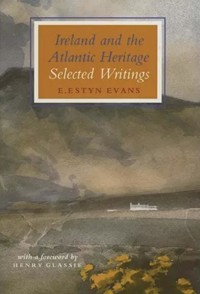
Henry Glassie, in his Foreword, describes Estyn Evans, the great geographer-historian of Belfast, as 'one in a tiny aristocracy of the mind who created the intellectual world we inhabit and whose writings will inspire scholars yet unborn'. This is manifest in the depth of knowledge and in the exhilarating grasp of detail and method to be found in Ireland and the Atlantic Heritage. A biographical memoir by Gwyneth Evans introduces the man and the work. Part I concerns the island of Ireland – its habitat and history, the relationship of the land to its occupants, the shaping of a country and its consciousness. Part II positions Ireland between the Old and New Worlds and contains Evans' pioneering essays on the pastoral experience of Atlantic Europe, the Pyrenees, the Scotch-Irish of North America. Part III focuses on Evans' beloved Ulster and its people: from Rathlin Island, Fair Head, Lammas Fair and Belfast, to the Mournes and Slieve Gullion. Part IV sketches with vivid particularity the folk customs and material culture of the province: harvest rituals; fields, fences and gates; the game of bullets in County Down; the observance of time; bird-song; and a tale from south-west Donegal. Part V includes affectionate pen-portraits of friends and colleagues in both academe and the countryside – John Clarke ('the potato king'), Geordie Barnett, Maisie Gaffikin, Rory de Valera, Adolf Mahr – as well as lighter, humorous pieces.Finally the Epilogue by John Campbell, with an accompanying bibliography, appraises and documents Evans' contribution to modern scholarship. Photographs and pen-and-ink drawings by the author illustrate the text. Like Lloyd Praeger, Carl Sauer and Fernand Braudel before him, Estyn Evans is one of the inspirational figures in the landscape of Irish and European studies. Lucid, witty, innovative and holistic, these selected writings testify to his enduring relevance in the late twentieth century.
Sie lesen das E-Book in den Legimi-Apps auf:
Seitenzahl: 575
Veröffentlichungsjahr: 2015
Das E-Book (TTS) können Sie hören im Abo „Legimi Premium” in Legimi-Apps auf:
Ähnliche



















E. Estyn Evans (1905–1989): photogaph by William Little
IRELANDandthe ATLANTIC HERITAGE
Selected Writings
*
EMYR ESTYN EVANS
THE LILLIPUT PRESS MLMXCVI
CONTENTS
PUBLISHER’S NOTE AND ACKNOWLEDGMENTS
This book has had a protracted genesis. It first surfaced as a proposal in discussion with Estyn Evans in 1984, when Lilliput published ‘Ulster: The Common Ground’ (included below). It was incorrectly listed in Evans’s 1988 Who’sWho entry as TheIrishnessoftheIrish, a book of essays published in 1986. The book never appeared in this form, however, as we had decided to broaden its geographical range and to emphasize—as Evans constantly did—the significance of Ireland’s setting on the Atlantic margins of the mainland of Europe (not as arrogated on occasion by our island neighbour).
A precedent exists for this decision. Following his delivery of The Frazer Lecture in 1961—on ‘Atlantic Europe: The Pastoral Heritage’, a major essay in the present collection—Evans was encouraged by the Vice-Chancellor of Liverpool University, and its University Press, to expand the lecture into a book, provisionally entitled ‘The Atlantic Heritage’. In a letter to Evans of 4 September 1962, J.G. O’Kane, Secretary of Liverpool University Press, wrote: ‘On reading The Frazer Lecture in typescript I was more than ever convinced that your theme and the outstanding way in which you have treated it in these pages would make a really fine book.’ O’Kane had in mind current economic and political conditions in western Europe and referred to ‘an outward-looking Atlantic Europe’ in the context of ‘the whole idea of the Common Market and the growth of the power of the European nations’. After some five years of desultory discussion the project came to nothing, but there is a sense in which this book, as its title suggests, fulfils an objective to which Estyn Evans gave serious consideration over thirty years ago.
The Pyrenees essay was written for Evans’s BA Honours thesis before his twentieth birthday in 1925. With its reference to politically contested regions like Catalonia and the Basque country, it anticipates Evans’s own preoccupations with borders and frontier, and is a unique and powerful interpretation by one so young. In general, sources are indicated either in headnotes or at the foot of each essay or article: where not attributed, it may be inferred that the work is unpublished.
The publisher is indebted to Elizabeth Purdy of Belfast for her work in typing the texts, and to John Campbell of Oxford for his invaluable advice and guidance in the work’s orchestration. R.H. Buchanan, Alan Gailey and Noel Mitchel helped with the book in its early stages. The Evans family, Gwyneth, Alun and David, have been especially supportive and encouraging. I trust that IrelandandtheAtlanticHeritage will be a fitting memorial to these labours, and to the memory of one of our immortals.
A.T. FARRELL
May1996
PROF. EVANSAForewordbyHenryGlassie
His students called him the Prof., as though there were no other. I was not among that fortunate few, but I revere E. Estyn Evans, as one of my masters, and I believe him to have been one in a tiny aristocracy of the mind who created the intellectual world we inhabit and whose writings will inspire scholars yet unborn. I welcome this harvest of his effort and the cogent programme it sets before us.
Start here, he taught, in this place, muddy beneath the feet, cloudy overhead, green upon the eye. In a lecture this book includes, named for a scholar who overreached in comparative enthusiasm, Prof. Evans said we must first know the local instance. Situating ourselves on particular earth, we prevent abstractions from carrying us away and tangling us in the filaments of our obsessions. This firm place displays to us a configuration of traits, a peculiar personality. Behind the measurable, depictable face of things, lies the dynamic revealed by analysis: the dialectic of environmental and historical forces, blent by will, managed by human beings. Emplaced, they do the best they can, given their limited resources and the storms that wreck their plans and keep them poised for contingency. The locale, its personality, is the yield of human enterprise, deserving understanding and, like any work of art, appreciation.
In his book MourneCountry, written in and about a high corner of north-eastern Ireland, Prof. Evans has provided for all time a model study of one place as the record of exchange between the environmental and the historical, mediated by the human. A taste of that grand book can be found in this volume. Every place unfolds through a particular concatenation of force and counterforce, compromise and accident. It is special in its pattern of broken rock and moulded earth. Yet all places interconnect. They meet and merge at their pervious borders. Border lands, Prof. Evans asserts, are rich in invention. Separation is defied by mobile, multicultural individuals, and his teacher, H.J. Fleure, noted that Prof. Evans was such a one, crossing in his youth the line dividing the English from the Welsh. Prof. Evans was attracted to travellers like himself—the adventurers of the Neolithic, the pioneers of the American frontier, the pedlars of Armagh—who go from place to place, inflecting the deep order with surprise.
Prof. Evans had his centres: Belfast, where he lived and taught; the Mournes, where he settled down to study; Antrim, where he was drawn by nature and tradition. But in his writings these fit as pieces into the larger puzzle of Ulster. The intransigent, fractious personality of Ulster charmed him into essays designed to capture its topographical, cultural, and political spirit in prose. Then working to establish the Ulster Folk and Transport Museum, he rendered to the people of the place a compact picture of their own complexity. It is one of the finest open-air museums in the world, where buildings, brought from throughout the province and fastidiously rebuilt, assemble for a regional portrait. Elaborated from his vision by his students G.B. Thompson and Alan Gailey, the museum reconstitutes the personality of Ulster.
MourneCountry remains the great, intense study of a single place. His museum symbolically incarnates his region. Then Prof. Evans lifts to the watery horizon to depict the regional variation within a geographical whole. Through his famed IrishHeritage and its noble successor IrishFolkWays, details from his notebooks—lovely sketches of whitewashed farmhouses, of fields and fences and the tools used to labour the earth—combine to create an image of Ireland as both a unity and a cultural collage.
Regional diversity, the outcome of the collision of mind and matter on particular ground, should prompt in us, Prof. Evans argues, more than tolerance. Our differences should be held as precious and nurtured in education, for in providing us natural resistance to the mediocrity of the age, the diversity of our cultural inheritance holds an essential resource for adjustment to future change.
Counselling an appreciation of difference, Prof. Evans offers a liberal’s solution to the ongoing problem of Ireland. The sea rolls on every side; the unity of the island is assured. Within its green space, the variety derived from environmental adaptation and historical synthesis contains the vitality people require in their quest for life. In ThePersonalityofIreland, the capstone of his achievement, Prof. Evans not only gives us the best description of Ireland, its oneness and its diversity, but as well the best description we have in any slim volume of one among the world’s community of nations.
Then gently raising his gaze again, acknowledging the interactions to which archaeology attests and stressing the pastoral experience, Prof. Evans positions Ireland within the Atlantic zone, running from the Iberian peninsula up to snowy Norway. At that point, suddenly, his project soars like a skyrocket, lifting from the closely studied place to spatter the darkness with a shower of light. From the Ireland he has seen and trodden, he abruptly gestures to Japan, to Africa, to North America, collecting samples and illuminating the particular through the general and the general through the particular. The process is clear in his early piece on the Pyrenees. Prof. Evans carries us back and forth across the mountainy divide, showing how it conditioned history, and then, once we have followed him into understanding, he urges our attention to India, to Wales, to Greece, to the general traits shared by high border country. Solid and valiant at once, his work claims our attention and must continue to inspire us for generations to come. The focus of the observant scientist, secure in specialization, and the reach of the humanist, oblivious to academic boundaries, are weak in themselves, but when they combine, they produce the intelligent toughness that characterizes the œuvre of E. Estyn Evans. My friends, the industrious artisans of Turkey, praise the great masters by saying that, like old plane trees, they are rooted firmly in tradition, but rise up and branch wide in personal aspiration. The figure fits Prof. Evans. His work exhibits the security of one rooted in empirical study, and it displays an expansive stretch that was emboldened by the archaeologist’s long view and that incorporates the humanist’s brave desire to speak of what is good and true and fine.
The unity of confidence and courage, which Prof. Evans practised in public lectures, is effected in his writing by a marvellous grace of thought and elegance of style. His cadenced sentences avoid the pinched dialect of the academy, resist the tug of scholastic fashion, invite the interest of the outsider, and adhere, always, to the highest standards of his craft. Once, in reviewing a book on rural trades, he chided its author for not crafting his prose with the same precision and affection that his subjects devoted to their making of baskets and boats. Leaky, lumpy writing galled him, and he strove to make his own both useful and beautiful.
Gwyneth Evans, who knows better than anyone, saw in her handsome husband a poet struggling in the confines of an austere scholar. On occasion, the poet breaks free, and this volume includes examples of the delightful result. But I am not sorry that, in most of his work, the poet and scholar continuedto battle. Ireland is blessed with poets, all of whom in recent times—John Hewitt, Louis MacNeice, Patrick Kavanagh, Michael Longley, Richard Murphy, Thomas Kinsella, John Montague, Seamus Heaney—have, like Prof. Evans, found in the epiphanic moment, in the little local instance, an excuse for a meditation on the general course of human experience. Prof. Evans saw first the metaphoric potential that lay in the bog and that Seamus Heaney, most deservedly the recipient of the Nobel Prize, turned then to deep verse. Brilliant poets abound in Ireland. I am grateful that Prof. Evans chose to confine himself by the constraints of his discipline. Within them, in the terms set by his craft, Prof. Evans was, in truth, a poet of the land in the great Irish tradition.
To say that Prof. Evans was at once a scientist, a humanist, and a poet, is to make a fair beginning in the assessment of the man’s work. But treating his writings as a unit, seeing them in the way he saw the land, as an expression of personality, I need to say more. For one thing, his works spray with wit, the playful quality he enjoyed in the countryman, the good humour he employed, especially, when meeting the reality of discord, whether in truculent Ulster or in the narrow, contentious domain of the scholar. It is good that this book includes his review of Rory de Valera’s archaeological study, and his thoughts on patriotic oratory and Parisian Orange Lodges, for they capture the robust, amusable mood in which he confronted the difficult.
Another quality in the man that marbles his works is loyalty. Writing in the booklet published to commemorate fifty years of geography at Queen’s University in Belfast, where he was for forty years the mainstay of the Department, Prof. Evans emphasized the loyalty of his friends and colleagues. He praised them for a virtue that reached full tide in himself. Loyalty is built through generosity, the hospitable give and take, and it is founded upon kindness. His kindness, his willingness to collaborate despite differences in condition, credentials, and prestige, draws comment in the fine essay in intellectual history with which John Campbell closes this volume, and it was a trait of his from which I benefited over a quarter of a century.
When I stood in the chaste, beautiful church that had been reconstructed at the Ulster Folk and Transport Museum, my role was to represent the scholars from abroad who had willingly received his impress, and my task was to say a few words at the memorial service. I was compelled in the moment to an epic trope. I thought of old Nestor upbraiding and challenging the warriors before Troy with accounts of the heroes of the past, and I described Prof. Evans, not extravagantly, as a hero fit to inspire us in this decadent era.
I recalled then how I was not brought into Ireland by a sentimental, genealogical search. My ancestors, many of them, were Irish, but my identity is regional, not ethnic, and Ireland beckoned me through its excellence, in particular the excellence of its writers: W.B. Yeats, J.M. Synge, Lady Gregory, Sean O’Casey, James Joyce, Samuel Beckett—and E. Estyn Evans. I spoke of the fullness of the man. He was a writer whose art could cross the Atlantic and tell a boy to study his own place with care. He was a scientist whose findings laid the foundations upon which others could build, sturdily. He was a teacher, surrounded by students who admired him so completely that four festschrifts were published to honour him. He was an administrator who could squeeze through the labyrinth of an academic bureaucracy to establish a great department. He was a man so generous that he sought through the radio and the public museum to make scholarly concerns popular. He was a man so kind that, together with Gwyneth, in a union that seemed perfect to the visitor, he could welcome me and my wild brood, muddy and chilled from the hills of Fermanagh, into a gracious home and supply us with sparkling talk, soothing drink, and clean warm beds.
Prof. Evans was a gentleman, a rigorous scientist, a witty narrator, a brave thinker, and an elegant stylist. There have been such men as E. Estyn Evans, such heroes of the intellect. They challenge us, the lesser people of later days, to do the best we can in this splendid, disappointing place.
Gwyneth Evans: drawing by Raymond Piper
ESTYNABiographicalMemoirbyGwynethEvans
This selection of some of Estyn Evans’ many essays written over a period of fifty years has no unifying theme save a sympathetic reverence for landscape and ordinary people. It contains some serious, academic pieces, as well as what he referred to as his lighthearted and even frivolous writings, composed mostly for his own pleasure and relaxation before he discovered that through the thirties and forties, the then ManchesterGuardian paid a much-appreciated three guineas for a short, back-page article.
I have always felt that inside the austere, disciplined academic there was a poet struggling to break free. He loved playing and experimenting with words, painting in watercolours, and he had a lively sense of the ridiculous. This is his account of his first landing in Ireland in 1928:
It was the merry month of May. The sight that greeted me that May morning as I travelled from Larne to Belfast was of hillsides ‘white over’ with May blossom. The whitethorn did not grow in such profusion in the even, pleached hedgerows of my native Shropshire. This was my fateful introduction to hedges which, ‘like prisoners wildly overgrown with hair, put forth disordered twigs’ to the fairy thorns of the pastoral Irish landscape, which was soon to become my consuming interest.
Later, he explained his emotions on first seeing the Antrim hills in Maytime: ‘In a similar environment Robert Burns wrote of the ecstasy of the first fine Sunday in May’, and he referred to Kilvert writing on the Welsh border of ‘the one day in Spring when the beauty of everything culminates and strikes one’s notice and a presentiment comes that one will not see such loveliness for another year’. He added, ‘I confess that each May I look for that day and recognize it when it comes.’
He had come to Ireland for an interview on his twenty-third birthday (29 May), and he was appointed to take charge of the new Department of Geography at the Queen’s University of Belfast.
I first met Estyn on 31 May 1928. It was my twentieth birthday, and I was feverishly revising for my finals at the University College of Wales at Aberystwyth. The late twenties and thirties were years of real depression and jobs were almost impossible to get. Estyn’s friends arranged a celebration picnic to the lovely Llyfnant Valley in Cardiganshire, and one of them said, ‘I will fetch that girl I know you will get along with.’ Three years later we were married.
Belfast in the thirties was a pleasant place if one was fortunate enough to have a secure job. There was appalling poverty, with large numbers of barefoot urchins and women in shawls. This ubiquitous garment had diversity in its use: a weary old woman would find comfort in its enveloping warmth and anonymity, while pretty young girls would wear one provocatively as a high fashion item. To us, men and women seemed to have stereotyped roles—one seldom saw a woman on a bicycle, and never a man pushing a pram—and we were amazed at the quantities of Guinness and whiskey consumed. But Belfast had no pall of black smoke hanging over it like the South Wales coalfield—or the highly industrialized towns of the north of England. For an industrial city Belfast was so nearly in the country that one could walk out in any direction into an unspoilt landscape. Now much of that country is covered by new houses. We found its people shrewd, robust and friendly. Many were no more than second-generation city folk, and had carried their country ways of neighbourly helpfulness with them.
My Welsh-speaking father’s mother (our mamgau) had no English and we no Welsh, but she was a loving old lady and we got on wonderfully without any language. My mother, a dynamic Scot, had come to West Wales to teach. She was always treated with respect and courtesy, but she was an interloper in a foreign country. Once a year we went north to visit relations, and felt aware of how different we were from our Scottish cousins. We realized that mother, by marrying outside her group, had lost caste. There were other differences, too. W.R. Rodgers, in his perceptive ‘Black North’, writes, ‘Ask an Irishman how far it is to a place and the distance diminishes with your weariness.’1 That would also be the Welshman’s reaction. But to my Scottish Presbyterian mother truth was absolute, and the differences between her version of truth and mine are a vivid nightmare of my childhood. (I have since learnt that Welsh Nye Bevan and Scottish Jennie Lee based their marital harmony on a formula, ‘That is my truth—now tell me yours.’)
Estyn’s background was equally unusual. His father, George Owen Evans, was born in 1865, and came from the Denbighshire coalfield, that narrow industrialized strip between the North Wales foothills and the English border. Orphaned when he was nine, he worked first in the local claypits; when he was twelve he was working underground, not hewing coal, but tending the fan that ventilated the mine. Because he was working underground he was eligible for three half-days’ schooling a week. Through attending Sunday School and Chapel, and with the help of friends, he educated himself and was able to enter the Calvinistic Methodist College of Bala in his early twenties where he qualified as a minister. In 1906 he wrote a detailed account, now in the National Library of Wales, of his early years in his second language, English. Estyn wrote that he found little trace of proletarian revolt in the story of his father’s early days: ‘Of Welsh nationalism there was no trace at all.’
Estyn’s father moved from a relatively comfortable living in Shrewsbury, where he ministered to a Welsh-speaking congregation, to a poor parish just across the Welsh border, so that his family should benefit from the inexpensive secondary education available in Wales following the 1889 Education Act. Unlike today, all education was through the medium of English so the parents made a firm decision to speak only English to their children, using Welsh as a secret language to speak to each other. The children had to walk a long mile over an unmarked border into England to get to the one-room Anglican primary school, with a male and female teacher. Being different, they were teased mercilessly, and as Non-Conformists they were excluded from religious education classes. Their distinctive Welsh names, Vyrnwy, Tanat, Hafryn and Estyn, were an acute embarrassment, so they became Sam, Tom, Harry and Bill. All five children (Deva was the only girl) got to secondary school and three of the four sons went to university.
Estyn completed his degree in Professor H.J. Fleure’s Department of Geography and Anthropology at Aberystwyth in 1925. His external examiner, Sir John Myres of Oxford, realized that he had exceptional ability and suggested that he do graduate work under his supervision at New College Oxford. Because Geography was held in low esteem there, Estyn decided on an archaeological subject for his master’s degree. But he never was to arrive: during the long summer vacation he started haemorrhaging from his lungs and ironically, on the very day when he should have gone up to Oxford, he was taken to a small sanatorium near Ironbridge.
After six months as a tuberculosis patient, Professor Fleure and friends arranged his convalescence in Wiltshire, to be cared for physically and intellectually by a keen amateur archaeologist general practitioner. Dr R.C.C. Clay was a remarkable man from a family which had been settled in Fovant as doctors for three generations. There was no Health Service in the twenties, so many doctors provided free treatment for impoverished patients and relied on fees from their more wealthy patients. Dr Clay had survived tuberculosis after losing a lung, and afterwards helped young sufferers. He was full of Downland lore. Along with poetry he wrote charming essays and a book of children’s fairy stories, which our own children enjoyed. During the war he also wrote a book on first-aid. He was passionately fond of trees and indeed of all wild things. Estyn used to say that to be with him was a liberal education. They became firm friends and exchanged letters and visits regularly until Dr Clay died in 1971.
Wiltshire was and is a prehistorian’s paradise. Estyn enjoyed long days helping Dr Clay with his excavations which included the avenue at Stonehenge, and visiting many famous sites such as Woodhenge, where Colonel and Mrs Cunnington were discovering the forerunner of Stonehenge, and Windmill Hill and Avebury, where Alexander Keiller was investing the profits of Dundee Marmalade in archaeological research. Through Dr Clay he met other archaeologists, among them the redoubtable O.G.S. Crawford who used to cycle over from Hampshire to visit Clay. Estyn was told that Crawford’s famous brainchild, the periodical Antiquity, had been conceived in the inglenook of Clay’s manor house. Altogether it was a first-rate crash course in archaeological techniques, and the interlude of Estyn’s illness was to shape the rest of his life.
In Wales, as in Ireland earlier this century, many young people suffered from tuberculosis, and the survival rate was often less than 50 per cent. But Estyn appreciated that his illness was not an unmitigated disaster. The enforced rest enabled him to see that there was more to life than competitive exams, giving him time to think and read creatively. Tuberculosis was a great leveller and he long remembered the warm sanatorium friendships he made with both a poacher and gamekeeper, and they with each other while they were together. His close contact with archaeologists over this period made him think like an archaeologist, viewing human history against a backcloth of thousands of years. Other disciplines see man’s development in a context of hundreds of years or less. Later his opponents who resisted his efforts to create a Geography Department used to say of him, ‘He is not a Geographer, he is an Archaeologist’, and later his warmest friendships were with archaeologists, many working in the south of Ireland.
Between moving from Wiltshire to Belfast he worked for a short time on the 14th Edition of the EncyclopaediaBritannica under Professor Fleure’s supervision, learning to convey the maximum of meaning using the minimum of words. He used to say a spell of such work should be compulsory for aspiring politicians.
Before Estyn left for Belfast, Fleure arranged a meeting for him with his old friend Thomas Jones, who had worked in Ireland for the Barrington Trust, and had held the Chair of Economics at the Queen’s University of Belfast from 1909 to 1911. Thomas Jones was then Under-Secretary to the Cabinet. He had been Lloyd George’s secretary from 1916, and his advisor in the negotiations which led to the Partition of Ireland. He told Estyn that when negotiations got tough they lapsed into Welsh to the amazement of the two proud Gaels, Griffiths and Michael Collins. He briefed Estyn about Belfast, and told him something about Queen’s, but the personalities he remembered best were his friends in the Workers’ Educational Association.
Estyn arrived at Belfast to take up his new appointment in the late September of 1928. On his arrival in Belfast from Liverpool he was interested to see Queen’s Island where so many famous ships had been built, but instead of the noise of industrial activity, there was silence, broken only by the crake of corncrakes. The migrating birds had taken possession of the silent, empty shipyard, bringing home to him the depths of the depression.
At Queen’s he found the trauma of Partition and a bitter civil war still unhealed. The Establishment, wishing to be neutral or apolitical, insisted that all new members of staff sign a promise to be impartial. But that was not a new demand. When Queen’s first admitted students in 1849, each professor on taking office was obliged to sign a declaration promising to ‘carry out his duties faithfully’ and to ‘abstain from teaching or advancing any doctrine or making any statement derogatory to the truths of revealed religion, or injurious or disrespectful to the convictions of any person in any class or audience’. In addition he had to undertake not ‘to discuss any subject of Politics or Polemics tending to produce contention or excitement’. One wonders how much this wording had changed down the years. I believe all signatories tried to honour the promise, but this is a place of different perceptions. When, after 1936, Estyn started taking students on fieldwork in rural Ireland it was said he sympathized with the nationalist cause. Many years later in 1949, after he had addressed a meeting of the Ulster Irish Society in New York on the theme ‘Visit Ulster’, a member of the Society congratulated Unionist Cabinet minister Dehra Parker on the fellow from Belfast. ‘He did your cause more good’, he said, ‘than a dozen political agents.’ Yet all Estyn had spoken about was of the complex geological structure of the country (the underlying cause of the unusual, exciting scenery), the strength and diversity of the Ulster people, and the house-types and archaic tools.
It has been said that Queen’s University in 1928 was like a nineteenth-century Scottish academy, and the Arts Faculty staff were mostly dedicated Scottish academics who equated scholarship with an elitist tradition of classics, languages, mathematics, logic and metaphysics. The degree structure had been copied from Scotland when Scotland was on the point of abandoning it. Students were treated rather like schoolchildren. They had to attend lectures and sign a register to obtain class certificates, without which they were not allowed to sit examinations. Honours students were selected on school records, entrance examinations and perhaps prowess at sport. It was impossible for a pass student to move to honours.
Livingstone, the first of three Oxford Vice-Chancellors, had recently been appointed. He was resented because of his English background and for having seditious ideas: a Department of Geography, and a school of Extra Mural Studies (to link up with the Workers’ Educational Association), now Continuing Education. Geography was not recognized as a university subject in Scotland and Scottish professors were reluctant to weaken the established traditions.
The University had little income and few students; new Departments would erode numbers. But Livingstone aimed to expand the University and was already persuading the District Councils to support it financially. Portadown was the first to respond with a promise of l/4d (a farthing) on each pound of the rates. Starting a new Department against such stiff opposition was like engaging in a marathon chess game. When Estyn asked for an assistant he was told he could not have one because he did not have an honours school, and when he suggested that his student numbers merited consideration for the formation of an honours school he was told that was impossible because he did not have an assistant.
He was rescued from this difficult position by Professor H.O. Meredith, who had been appointed to the Chair of Economics when Thomas Jones moved on in 1911, and was therefore automatically Dean of the Faculty of Commerce. Meredith suggested that geography students should combine with Economics and so attain honours status. This gave the new Department some much needed respectability, but it was not until 1947, when geography was granted a single honours course, that the Department thrived and became one of the largest in the Arts Faculty. Meredith stayed at Queen’s until he retired in 1942, except for the war years of 1914-18 when he was conscripted for government work. He had been a brilliant undergraduate at Cambridge, an automatic Apostle, to which select group he introduced his close friend E.M. Forster, who used to visit him in Belfast and thus became friendly with Forrest Reid.
In 1923 Meredith was a co-founder with George Buchanan of the Northern Drama League, and his main interest in the University became the production of plays, including the Greek classics (sometimes in his own translation). He had great influence among the more intelligent students, and in 1926 he took the Queen’s group to the Abbey in Dublin with plays he had produced himself.
In the thirties he produced plays for groups of unemployed workers of Belfast—those produced for the shipyard workers are perhaps best remembered—the money raised being used to alleviate their poverty. Meredith was regarded by some of his scientific colleagues as a dangerous intellectual. I have heard staid academics refer to him as unreliable or a maverick, but I remember him as my husband’s kindest and most distinguished colleague.
The early years from 1928 were busy years. Estyn was nursing his infant Department and building a class library of geographical books, and a map collection in the least expensive way possible. He also started the Belfast branch of the Geographical Association, thus facilitating regular meetings of Geography teachers, and at the same time was working on his MA thesis on ‘Some Late Bronze Age Industries in Western Europe’. He was awarded his MA with distinction in 1931.
The new Department was housed in a cluster of wooden huts on the site of the present Whitla Hall. They had been hastily erected in 1914 to serve as a hospital for the Ulster Division of the British army, recruited from members of the Ulster Volunteer Force, who had trained illegally to fight Home Rule and afterwards suffered so tragically at the Somme. The walls of the new Department were very thin so it was possible to hear the Professor of History declaiming his beautifully polished lectures for students to take down verbatim: ‘The Poles are a pack of licentious, corrupt, barbaric backwoodsmen.’
Estyn was astonished by the magnificence of the main University building. Britain has been strongly criticized for her meanness and insensitivity to Irish people during the famine in the 1840s, yet in 1845 had founded and funded three University Colleges. Wales on the other hand had been denied any third-level institution and from the mid-nineteenth century Welsh people raised subscriptions to establish their own university. The University College of Wales at Aberystwyth, which opened in 1872, was paid for entirely by public subscription.
From the tensions of nursing Geography it was a relief for Estyn to turn to Archaeology (there was no separate Department at this time—the demand for the subject came in the forties). Members of the Queen’s Arts staff showed little interest in the immediate environment, but local people were aware that the stones from megaliths had been used for road metal, and farmers were spreading the soil from historic forts on their fields. Britain had had a Prehistoric Monuments Council since 1908 for the protection of prehistoric sites, but there was no such body in Ireland. Concerned members of the local Naturalists’ Field Club founded a field-survey. Miss Maisie Gaffikin, the enthusiastic amateur organizer, had heard of Estyn’s Wiltshire experiences and asked him to work with her. Their survey was published under the title of ‘Raths and Megaliths’ in TheIrishNaturalists’Journal in 1935, but it was incomplete. It only included the few monuments marked on Ordnance Survey maps, and other well-known, accessible sites; a co-ordinated survey was clearly necessary.
In 1930 Oliver Davies (‘OD’ to his friends) came to Belfast to lecture in Classical Archaeology and Ancient History. A classicist by training, he had no experience of excavating, and little knowledge of local prehistory, but he was tremendously energetic and robust—and willingly agreed to co-operate with Estyn in conducting a detailed field survey of the province’s antiquities. No mountain or hill was too high or steep for OD to scale, no bog too deep or dirty for him to wade through in his quest for prehistoric sites. However, one had to suggest to him that if he phrased his question to a simple countryman, ‘Do you know of any big stones or giants’ graves round here?’ he would get more information than to, ‘Are there any megalithic monuments in the immediate vicinity?’ This was a remarkable partnership, OD and Estyn, the one with his public school and Oxford background, and the other a scholarship boy from an obscure Welsh college. Together, with the help and strong support of local field-clubs, they were to revolutionize Ulster archaeology during the thirties.
Estyn and OD subdivided the province for the six-county survey: George Paterson took charge of Armagh and the south, Mr McL. May mid Ulster, while Lady Dorothy Lowry-Corry, one of the 5th Earl of Belmore’s many unmarried sisters, found her vocation in locating and listing the many sites in Fermanagh. The Stormont government had promised to publish the Survey’s findings, and provided some money for maps. The work could not have been done without the help of local people, doctors, postmasters, parish priests and teachers. In country interests of this sort there is little division between the people in the north of Ireland. The volunteers who participated were true amateurs doing that work at weekends, during holidays, and in the long summer evenings. In the early thirties few people had cars, though those who had were generous—but the work was mostly done by walking and cycling, and using public transport. Checks had to be made on all new sites, as well as those already recorded, and so we came to know the country and its people, from those of the big house, to the small cottage. As newcomers we were surprised by the number of charming single women we met—the spiritual widows of the Somme and other battles? Of these days Estyn wrote later,
Thus I came to know the deserted hillsides whose prehistoric sites had to be tracked down and recorded, and I fell under the spell of the Ulster countryside. I sensed a link, spiritual and vocational, between the fairy-haunted dolmens of ancient farmers, and the peasant culture still living in the hills. And I began to turn from Archaeology to Ethnology, folk-life, and to the unrecorded traces of cultural history.
In 1932 Estyn and OD decided to bolster the survey with some excavations of typical monuments, following a suggestion made to Estyn, by Sir Arthur Keith at the British Association meeting of 1928, that the prehistoric monuments of the north of Ireland differed from those of the South. They decided to excavate a cairn with a semi-circle of standing stones forming a forecourt on the infertile foothills of the Mournes at Goward near Hilltown. The paucity of the finds was reflected in the continuing poverty of the place. Only a few worked flints and shards of round-bottomed Neolithic pots were found—previous digs had been undertaken by rapacious amateurs in search of crocks of gold and spectacular finds. The Goward dig attracted much interest and many visitors. In 1960 Rory de Valera was to describe it as the beginning of ‘a new approach to Irish Megalith research’. After Goward, Estyn and OD were to excavate more cairns of this type which they christened Horned Cairns (now court graves). Browndod and Ballyalton come to mind. Subsequently they realized they could do more, and train more students, if they worked separately.
Estyn’s excavating culminated on Lyles Hill, a large County Antrim habitation site. It was first noticed and photographed in 1927 by Wing Commander A.C. Wright of Aldergrove Airport. Early in 1937, while measuring the site for the Archaeological Survey, Estyn picked up a large piece of Neolithic pottery complete with rim and decided to excavate later in the year. The excavation continued through the summer and in 1938, but all the excavations stopped in 1939 because of the threat of imminent war. At first Estyn and his helpers were overwhelmed at the magnitude of the site. Funds and technical assistance were woefully inadequate and they were aware of the inevitability of war with Germany. They concentrated on the small mound within the enclosure and, as at Navan, a segment was left intact, so that their findings could be checked in the future with new techniques. At most digs finds cause excitement, but at Lyles Hill they became an embarrassment. They turned up thousands of Neolithic potsherds. When Lyles Hill was first identified, R.A.S. Macalister had written, ‘I do not suppose that ten pieces of Irish Neolithic pottery are known to be in existence.’2 After Lyles Hill Estyn never excavated again, but he always tried to visit any dig in progress in any part of Ireland.
By the end of the thirties such was the proliferation of unpublished excavation reports that in 1938 Estyn and OD, despite the threat of war, decided to revive the UlsterJournalofArchaeology in a third series. (Until 1948 the journal was issued from Estyn’s Department and it is still published.)
BroadcastinglivefromtheUlstercountryside:takingrecordmgequipmenttotheentranceofthelimestonecavesatMarbleArch,CountyFermanagh,andinactionbelow (seepp. 188-9).
With the outbreak of war OD immediately volunteered for intelligence work. He had worked in the Balkans, but he was not called up until early in 1942, so during the early years of the war he continued his archaeological survey work. He was conspicuous with his mop of flaxen hair and individual style of dress, but his impeccable accent and exquisite good manners gave him entry, and he was a welcome guest at the large country houses of Ulster. He rode a bright green bicycle, and his favourite sites happened to be in Republican districts west of the Bann. He was often followed by a posse of police, anxious to determine if he was a spy dropped from a German plane. Once, they caught up with him and asked him where he intended to spend the night. He gave them the name of a big house. ‘But where did you spend last night?’ OD’s naïve reply, ‘I slept with Mrs Parker’, greatly amused the members of the RUC. For Dame Dehra was a formidable lady—Stormont’s only female Cabinet minister. Estyn was very sad that OD did not return to the north of Ireland after the war, especially as there was a growing demand for a Department of Prehistoric Archaeology. OD became Professor of Archaeology at Pietermaritzburg, but continued to return for holiday periods, and to take a lively interest in Irish prehistory. In 1987 he met a premature death when he disturbed an intruder at his house in South Africa.
Estyn was active on other fronts throughout the thirties: he produced a small textbook on France (financially his most profitable publication). After the 1937 census he worked on the demography of Belfast, and produced maps showing the distribution of the religions in the different parts of the city. He also recorded the number of persons per room in the different districts. The religious distribution maps were published in the UlsterJournalofArchaeology in 1944, but maps giving the number of persons per room have vanished. The outbreak of war brought new responsibilities, and time for reflection. He started his first book on Ireland, IrishHeritage, as an ‘adventure into uncharted seas’. He felt Ireland, which had escaped the industrial revolution and the worst of repressive Puritanism, was a treasure-house of old ways, and so, excluding the more recent crafts which were already documented, he wrote of archaic practices and outdated tools that were still used. He believed that it was necessary to study the past to understand the present.
Ten years later Louis MacNeice, writing in the NewStatesmanandNation, observed, ‘Most books about Ireland are a rehash of old materials, though there are a few like E.E. Evans’ IrishHeritage which fill a notable gap’,3 and he included Maurice Craig’s Dublin1760-1860 in that special minority. Estyn came into contact with Louis through his involvement in a disastrous literary endeavour. In the late forties Louis and W.R. (Bertie) Rodgers decided to produce the definitive book on Ireland to be called ‘The Character of Ireland’ and published by the Oxford University Press. They asked all known specialists on Irish life to contribute a chapter. Estyn was asked to write on ‘The Irish Countryman’, which he wrote and sent to them within a month; but not all contributors delivered. Perfectionists continued to polish, some died before delivering and some never got started. Dan Davin, the Irish New Zealander then in charge of the Oxford Press, wrote in his tragi-comic book ClosingTimes (1975) about how, over the next twenty years, MacNeice and Rodgers failed to deliver, and how he chased them through every pub in Oxford and Dublin, until finally Louis, and then Bertie, eluded him by dying.
After the despair of the war came hope for a better world afterwards. Planning committees sprang up on which Estyn was glad to participate, believing that the knowledge gained from academic research should be available for use by the community. In 1946 he wrote ‘The Ulster Countryside’, published in 1947 on behalf of the Northern Ireland Planning Advisory Board. This was a policy document, a blueprint for action on rural planning and landscape conservation. It advocated the need to conserve landscape and wildlife and suggested national parks and nature reserves. It was not until 1965 that the policy was incorporated in the Amenity Lands Act.
In 1945 Queen’s finally created a Chair of Geography, thus giving the Department Estyn had nurtured full status. This was in response to pressure from outside opinion, for there was still opposition to it at Queen’s. In 1950 he was made an honorary member of the Royal Town Planning Institute. This was in recognition that he had been a pioneer in local urban research. At about this time he was tempted to move to another job. There were opportunities to return to Wales, but ironically he was reluctant because he was not fluent in Welsh which by the 1940s had become respectable.
Estyn felt that until the Department was fully recognized he had not fulfilled the trust that had been placed in him. Had he left before his chair was established he feared the improvements he had fought for would have been lost. From 1935 the radio had made it possible to reach a larger, if unseen, audience, and perhaps persuade more people of the benefits of an education in Geography. His first radio talk in 1934 was from Radio Éireann, but after 1935 he broadcast regularly on BBC’s Belfast Station and sometimes on the then National Home Service. Later in the fifties, in the early days of television, he sometimes appeared on the popular programme ‘Animal, Vegetable and Mineral’.
In 1948 Estyn was invited to Bowdoin College in Maine as visiting Professor. There was no precedent for a year’s sabbatical, so it caused some consternation. A colleague objected to Queen’s subsidising an unknown Americancollege, but Vice-Chancellor David Keir pointed out that Bowdoin was over a hundred years older than Queen’s, was one of the famous New England Ivy League colleges, and had sent many fine graduate students to Oxford! A London University lecturer took over at Queen’s for the year, while Estyn was handsomely remunerated by Bowdoin College. He left Belfast feeling content—his Department was flourishing and he felt that a new mind at the top for a year could be valuable. The very day he left Belfast a lecturer was appointed to take charge of the new Department of Prehistoric Archaeology, while OD’s old lectureship continued in Ancient History.
His first visit to America was by slow boat. After several uneventful days on board, the dramatic visual impact of the New York skyline seen from the sea was an everlasting memory, as was the kindness and generous hospitality of his American friends. The brilliance of New York—the spectacular luxury of the shops—and the quality and variety of food available everywhere was incredible to Europeans who had come from post-war austerity.
Bowdoin College, in the woods of Maine, goes back to the first half of the eighteenth century. New England was not a favourite point of entry for the Scots-Irish who came to America from 1720, but the first President of the college was a Mr McKeen from the north of Ireland. A flourishing Belfast and Bangor had grown up on the coast of Maine, but Newry inland had failed to develop. It was a wonderful, enlightening year. Bowdoin was steeped in recent history. Longfellow and Hawthorne had been students, and later Elijah Kellogg; Harriet Beecher Stowe had written UncleTom’sCabin while her husband held the Chair of Divinity at the College. The ‘Stowe House’ remained a tourist attraction.
Estyn enjoyed teaching American students. He found them more assured and articulate than their British counterparts, though perhaps not so advanced academically. Real scholarship develops in America at graduate school. Estyn’s brief, besides teaching, was to give four public lectures and he was encouraged to speak to local groups. He was invited to visit and speak at other Ivy League colleges. He visited Harvard and took part in seminars, and he gave a series of lectures at Dartmouth College. There were bizarrely named groups too: ‘The Daughters of the Revolution’, ‘The Colonial Dames’, and ‘The Odd Fellows of Bowdoinham’. He remembered hearing Churchill speak at the Boston Garden on 31 March 1949. Outside, Irish-Americans carried placards: ‘Send this Bundle back to Britain.’
Bowdoin was a small college where one had the assurance that one belonged to a supporting family but in 1948/49 there was an underlying tension. Estyn had heard of McCarthyism, and of how McCarthy’s committee to investigate un-American activities had been the scourge of the filmmakers on the West Coast, but the Committee were now targeting WASPs on the East Coast. Estyn, being a visitor from Ireland, was devastated to be told that the junior senator from Wisconsin was an Irish American and a close friend of the head of the powerful Kennedy family. Edward Kirkland, the College Professor of American History, was President of the Association of American University Teachers. He had a lecture on Academic Freedoms which was in great demand, as was his skill in defending indiscreet academics. He explained to Estyn that McCarthy’s methods were like those used in the Nazi movement. Friends were encouraged to inform on friends, and members of a family on each other. One could be judged guilty by association, or an indiscreet remark could be used as evidence years later. Kirkland got so involved in the sordid business that he was everlastingly grateful to Cambridge University for inviting him to become their visiting ‘Pitt’ Professor for a year, thus enabling him to escape to England.
Estyn left Bowdoin in 1949 with his first honorary degree, but I doubt if he realized how much he had been adopted by the Bowdoin family. Soon after he died in 1989, exactly forty years later, I had a charming, sympathetic letter from the then secretary of the College: ‘So many members of the Bowdoin family’, he wrote, ‘came to admire Dr Evans during his year as Tallman Professor, and will always have happy memories of his visit.’ A member of the community had seen Estyn’s obituary in the London Times. Afterwards Estyn was to regard his first year in America as a kind of watershed: before everything had to be fought for; thereafter good things happened to him.
The early fifties were fruitful years. In 1951 he wrote APortraitof NorthernIreland, one of the thirteen local guides published as part of the Festival of Britain—he was also a member of the local festival planning committee and he was closely involved in BelfastinitsRegionalSetting, produced for the British Association meeting in 1952.
MourneCountry also appeared that year. Estyn had been getting to know Mourne before going to America. He had always wanted to write a geographical study of a small area and initially favoured North Antrim and the Antrim Glens. He was fascinated by the juxtaposition of the chalk and basalt, and often quoted Charles Kingsley’s description of Rathlin in WestwardHo! ‘looking like a half drowned magpie in the sea’. But Harry Tempest, publisher of IrishHeritage, wanted a different book. He was a keen and proficient photographer and he had some wonderful photographs of Mourne. The Kingdom of Mourne is a compact and historic region and MourneCountry a good title. A friend found us a very basic cottage on the lower slopes of Slieve Donard, but Tempest was not amused. ‘It will all be basic chores, and no writing if you live there’, he threatened, overlooking the contribution the woman is prepared to make to the partnership. Estyn enjoyed his spells of living like a Mourne countryman. He walked the length and breadth of the mountains. He got to know the farmers, the fishermen and the granite workers. Perhaps it was the latter group he most amused with his constant questions. And he enjoyed ‘passing the time’ leaning over the half-door of the cottage. He felt assured that he had been accepted when one Spring day he asked a friendly local shopkeeper for some new potatoes to be told that there were none. ‘But there is a boat in the harbour full of Mourne potatoes,’ he replied. ‘Them’, said the Mourne man contemptuously, ‘are Pilots—they are only fit for the English.’
In his introduction to MourneCountry Estyn wrote, ‘I have written much of it on the seaward side of Slieve Donard, where I have only to lift my eyes to see the hills and watch the coloured seasons climbing from the golden whins to the glowing heathers and the snows.’ A Canadian reviewer wrote of it, ‘none but an Irishman could write with such depth of feeling for the land and those that call it home’,4 while the DublinMagazine of April 1952 described it as ‘a scholarly and fascinating book written in rigorous and lucid language that has moments of poetry’.
In 1955 he was invited to an international symposium organized by the Wenner-Gren Foundation for Anthropological Reasearch to be held at Princeton to discuss ‘Man’s Role in Changing the Face of the Earth’, later described as ‘the first large-scale evaluation of what has happened, and what is happening, to the earth under man’s impress’. The millionaire Wenner Gren was of Swedish extraction and conspicuous in Europe during the late thirties and early forties. It has been suggested that he then had Nazi sympathies, but he later moved to the USA and supported research for conservation. Carl Sauer, the geographer from Berkeley, and Lewis Mumford, the planner, arranged the meeting and chaired many of its sessions.5 The par ticipants were mostly American, but there were also several from Britain—two members of the Cambridge Department of Ecology, Sir Charles Galton Darwin, H.C. Darby from London University, and Fraser Darling from Scotland—as well as others from Europe, Egypt and India.
The fifties was a good decade for Queen’s University: it enjoyed increased government funding and was especially fortunate in its new Vice-Chancellor, Eric Ashby (later Lord Ashby of Brandon), a man of extraordinary sympathy and vision. Many old students who spoke appreciatively of Estyn at his memorial service in December 1989 had passed through the Department in the fifties. James Hawthorne, who was to become Controller of BBC Northern Ireland, said that his batch was Geog. 1 1950, which had hoped to take a year of Geography in its stride. It was known that the Department was run with sympathetic democracy—unusual in the University at the time—and that subsidiary students of the subject were welcomed and well looked after; and he went on to list other benefits. A Planning lecturer recalled that Evans had made local studies and pride in one’s ‘place’ respectable, while the Rev. Canon Houston McKelvey remembered how Estyn had lectured on ‘The Problems of the Nomad’, using the biblical text. He said that in dealing with the tensions in his parish caused by shifts of population in the early years of the Troubles, what he had learned in the Geography Department was of more use to him then than the teaching of the Theological College.
While Estyn was a student he had visited Scandinavia and had seen and been impressed by Skansen and the other Folk Parks, and he knew the Welsh Folk Museum at St Fagans near Cardiff. He had seen other examples during his year in America. Ever since his first days in Ireland he felt that Ireland had as much or even more to preserve and display, but by the early fifties many of the old ways were fast disappearing, and it was necessary to act quickly. As with the survey of Ulster’s prehistoric monuments, generous help and support came from across the community. The journal Ulster FolkLife (established in 1955) grew out of this effort. The Committee on Ulster Folk Life and Traditions worked through the fifties collecting suitable verbal material and artefacts, while the Folk Museum Act was passed by the Stormont Parliament in 1958 (a year after the publication of his IrishFolkWays). There was much searching for a suitable museum site. The Committee favoured one to the west of the city, which would have been more accessible to people living in the province’s hinterland. But the site at Cultra had many attractive features. It was the right size and being an executor’s sale it came at a bargain price (less than £30,000), so was within the Committee’s tight budget. Later the adjacent estate was bought to house the Transport Museum, thus extending its territory to the lough shore.
Nowadays it is customary to disparage the Stormont government. Maybe there is much to criticize, but it did contain a variety of people. Brian Maginess, who died too young, was very helpful to the early Folk Museum movement. Perhaps its strongest ally was Dame Dehra Parker, grandmother of Prime Minister James Chichester Clark. Her father, according to Ulster gossip, was a country policeman who emigrated to America and worked first as a security officer in the stockyards at Chicago. When the meat-packing in dustry was growing he invested his savings there, but as Chicago expanded rapidly, he invested instead in real estate. He later married an American, saw his only daughter was well educated and returned to Ulster where he bought his local Big House. Dehra Parker was formidable, elegant and intelligent, but under the assurance and sophistication were the interests of an Irish country-woman. She always took an intelligent interest in archaeological excavations and was extremely helpful with the Folk Museum effort. Her enduring concern was with how legislation would affect the welfare of ordinary people, whose opinion she was not above asking.
Estyn felt that one of Stormont’s worst mistakes was to site the proposed new city between Lurgan and Portadown. He thought the money would be better spent in upgrading Derry, Omagh and Cookstown west of the Bann. Delighted with the imposition of the Matthew Stop-line around Belfast to halt its urban sprawl, he now felt it was wrong to build a new town on good rich agricultural land and uproot families who had farmed there for generations. Above all, he thought that the proposed name of Craigavon was extremely insensitive, whether it was to celebrate Northern Ireland’s founding father, or the gentleman who was handling the sale of the farms on the new city’s site, and suggested instead the name of Knockmena, the townland at the centre of the site. But if the name had to be political, he said, ‘Why not Dehraville to celebrate that you have a woman in your Cabinet?’ A Mr Copnutt, an architect planner who had worked on Cumbernauld, the satellite town outside Glasgow, was interviewed for the post of New City Planner. This flamboyant character had hired a morning suit for his interview, and was duly appointed, but after visiting the site of the new city, he decided his brief was immoral and resigned immediately.
Estyn also disagreed about the siting of the new University of Ulster at Coleraine, again on prime agricultural land. He saw the cold windy bluff site as ill-chosen, all the more so as Derry and Armagh both contained many fine old buildings and populations hungry for learning. Armagh boasted the Planetarium, the Bishop’s Palace, and other fine Francis Johnston buildings besides the Anglican and Catholic cathedrals, and was thus the ecclesiastical capital of Ireland. Derry had Magee College, and with the adjacent new Altnagelvin




