


Erhalten Sie Zugang zu diesem und mehr als 300000 Büchern ab EUR 5,99 monatlich.
- Herausgeber: Crown House Publishing
- Kategorie: Ratgeber
- Sprache: Englisch
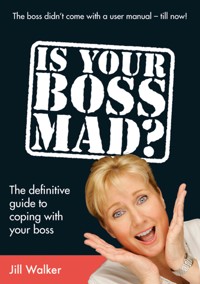
This is a book written with a passion born of experience. The author sincerely wishes to empower employees who can be, despite the plethora of management gurus and training courses, manipulated and who are seemingly powerless at the hands of their desperately inadequate managers.
Sie lesen das E-Book in den Legimi-Apps auf:
Seitenzahl: 366
Veröffentlichungsjahr: 2007
Das E-Book (TTS) können Sie hören im Abo „Legimi Premium” in Legimi-Apps auf:
Ähnliche




















Contents
Title Page
Preface
Acknowledgments
Introduction
Chapter One The World of Work
Chapter Two What is a Boss?
Chapter Three The Nine Profiles
Chapter Four Friend Then Foe Then Friend Again
Chapter Five Mr Long Hours
Chapter Six Power Crazy Boss
Chapter Seven No Power Boss
Chapter Eight I Hired You, Now I Hate You
Chapter Nine Sales Manager
Chapter Ten Fear Merchant
Chapter Eleven Small Business Owner
Chapter Twelve Boss In Love
Chapter Thirteen Interviews
Chapter Fourteen Stress
Chapter Fifteen Fun Stuff
Chapter Sixteen Saying Goodbye
Further information
Index
Copyright
Preface
This book is not aimed at work-shy, soap dodging, unambitious couch potatoes. I have assumed at least that you: (a) need to be employed, and (b) believe that the swapping of time for money, which constitutes the basis for ‘employment’, sit with you as a fair exchange. I am taking it for granted that you are interested in progressing your career, and that in some way, however basic or however complex, you bring certain skills to your workplace. Top of the list is the belief that you have the self-respect of wanting to do your job as well as you can.
What this book isn’t
This is not a smart-arse book that will help you trick your employers. Neither is this a ‘get out of stuff’ or ‘how to get even’ manifesto. It is not meant to help you sue your boss for situations that you manipulate, nor is it to make other people miserable. And in no way is this merely an exquisite example of negative thinking!
What this book is
This book is designed to put you in a positive state of mind for dealing with the wickedness that can manifest as an inevitable consequence of working for someone else. As an ‘employee’ you cannot just do what you want; you have to heed the wishes of others, and at times you will interpret these wishes as evidence of madness, or badness, or sheer incompetence. However, that person is probably getting paid more than you, has more clout than you, and unfortunately may have the power to relieve you of your position. These poor bosses will make the mistake of imagining there are plenty more where you came from.
It is a plain guide for coping in the face of madness – from others, and from your own madness if things are getting too much. To do this, you need strategies, and this book will give you practicable strategies.
Your success with these strategies will ensue if the following ‘hygiene factors’ are followed 100%. For example:
1. You turn up for work, on time (special, unplanned, emergency situations excluded) and are dressed appropriately.
2. You are not verbally or physically abusive.
3. You have established that you are qualified for the job as described in the hiring process.
I would like to say your skills should match the ‘job description’, but sadly such documents are not always available at the interview. Try requesting it! That is likely to be viewed positively and will help them make a decision about whether or not to hire you! If a job description does not exist, then offer to write it when you have been in the role for a while.
What the book has to offer
I am going to describe nine different profiles of mad bosses – the ‘pure types’. However, when you are dealing with real people, you often find a mixture of behaviours. Therefore, where appropriate, I’ll indicate how these pure types are typically combined in real characters. I describe these in chapters four to twelve.
The first type is the Friend Then Foe Then Friend Again boss. You will probably recognise his moodiness and inconsistent behaviour. I then explore the world of the Mr Long Hours boss who thinks that working all the hours of the day is a desirable trait. I next look into how power corrupts in the Power Crazy and No Power boss profiles.
If you have ever worked for someone who seemed to resent your existence then you will appreciate the I Hired You, Now I Hate You boss. Then I reveal what it’s really like working in sales, and how if you wish to stay sane in the mad world of the Sales Manager boss, it will require a great deal of resilience on your part.
You will find out about the differences between power corrupted bosses and those who manage with fear in the Fear Merchant. These mad bosses, like the Small Business Owner boss, are experts at creating and controlling their own immediate little world. And if all that is not enough to cope with at work, you may even have to endure the romantic attention of your boss, which is covered in the Boss In Love.
And then there are chapters which are more generally useful.
The interview scenario; use it to ask more than just about the company growth strategy Interview techniques to be aware of
Stress and the organisations that advise you …
Fun Stuff – bring fun to work
Saying Goodbye
Acknowledgments
Of course, I would like to be able to thank all the people who influenced and inspired me to write this book, however, given the circumstances I think that may not be appropriate! But I thank you all anyway, very, very much …
I would like to thank Caroline Lenton of Crown House for her faith in me. I am very grateful for Caroline’s generous support and guidance and her refreshing and positive attitude to this project. I would also like to thank my editor Peter Young and his patience with me. Peter, a tough task master, kept my feet on the ground. His challenges to my work have added clarity to my arguments, thank you Peter.
I would like to thank my wonderful daughters, Lauren, Naomi, Olivia, and Rianna for their patience with a mother with whom they had to share this work, this new baby, for many months. Thank you, my lovely girls.
Thanks also to the many people who told me their tales of their work experience, explaining the details of their mad boss, and how they coped, you may see your story here.
Is Your Boss Mad?
‘Successful business managers may share many of their personality traits with those found among incarcerated patients legally classified as having psychopathic disorder or mental illness.
Belinda Board and Katarina Fritzon (University of Surrey) found that a sample of senior British managers and chief executives averaged higher scores on self-reported measures of histrionic, narcissistic, and compulsive personality than did two samples of former and current patients at Broadmoor hospital.
These personality dimensions reflect characteristics such as superficial charm, lack of empathy and perfectionism. However, unlike the Broadmoor patients, the business managers scored significantly lower on antisocial, borderline, and paranoid personality dimensions.
These dimensions reflect characteristics such as aggression, impulsivity, and mistrust. “The senior business managers appear to possess … elements of psychopathic personality disorder that have been referred to as the emotional components, and they closely resemble characteristics known to be beneficial to achieving in a senior management role”, the authors said. These findings are consistent with the concept of ‘successful psychopaths’ – “people with personality disorder patterns, but without the characteristic history of arrest and incarceration”, they explained.
Board and Fritzon’s results were obtained by asking 39 business managers to complete the Minnesota Multiphasic Inventory for DSM III Personality Disorders, and by comparing their scores with those recorded for 1,085 current and former patients at Broadmoor. “The relatively small sample size of the business manager sample calls into question the reliability of these results”, the authors cautioned.’
Board, B.J. & Fritzon, Katarina, F. (2005). Disordered personalities at work. Psychology, Crime and Law, 11, 17–32.
A Company …
‘A company is like a tree full of monkeys. The ones at the top look down and all they see is lots of happy faces smiling up at them. The monkeys down below look up into the branches above and all they can see are arseholes …’
Introduction
The alarm clock rings loudly, your heart jumps; can it really be morning already? It feels like only a minute since your head hit the pillow. The dawn of a new day has arrived! You roll over in bed with the sound still ringing in your ears! And you lie there thinking, “I have to get up! Another day, another dollar.” But just like yesterday, and probably tomorrow, you are not leaping out of bed, full of joy, nor looking forward to the new day with all its challenges and satisfying effort. Of course, you could easily claim that we would all rather not work at all, but the hard reality is that most of us have to work, and most of us don’t enjoy it as much as we would like.
These are the days of your life. Every moment is precious. You must decide: are you going to rerun the bitter twisted memories of your so-called working life, focusing on the regrets and wishing you had had the guts to do something different; or are you going to bask in the happy memories of days spent in satisfying, productive toil, knowing that was a job well done?
You may not have realised that you have that choice. However things turn out, remember that in some way you are always in a position where you do have some power to make choices, even if that choice is to walk away. It may come to that, but first you need to be aware of the other options available.
What changed?
Once upon a time you attended a great interview. Suddenly the future offered you a glimpse of some of its richness, and you were only too eager to get going. And then … The interesting question is: what happens between that initial enthusiastic, “I want to do a good job! Be successful”, and the steady decline into despondency when your plans do not work out as expected (tip: they never do) and your work becomes the place you dread, so much so that you will do almost anything to avoid it? How does ‘an opportunity to work with a great team’ so often turn into a coronary-inducing scenario? What shift in the universe turns you from being a happy weekend person into a grizzly, unhappy weekday, work-mode person?
Can you imagine a world where work is satisfying? Where you feel valued and feel you want to give your employer your total loyalty? Maybe you did once? So what happened to erode that desire?
What makes the difference between the workplace you dread and the workplace you enjoy? To a certain extent, it is the company processes, possibly decided by distant decision-makers who may or may not have a total grasp of life ‘at the coalface’ that dictate your experience. The rules that govern your work-life can crush the creativity and personality you want to bring to your role in order to serve the requirements of the greater organisation. But it’s not just the place or the processes, it’s the people you work with who govern the mood of the workplace. And above all, it is that particular person who manages you, your BOSS, who exerts the greatest influence. Without doubt, the personality and behaviour of your boss carries the greatest impact on whether you enjoy your work or not.
The simple solution to solving this problem
I always advocate that every person involved in people management needs training. However, training is only the first step; it can help, but it does not ensure good management. As employees, we are still at the mercy of managers who can be abusive, bullying, sarcastic, aggressive, ineffectual or lazy. So another solution – one which you can be actively involved in yourself – is to find ways of learning how to deal with such bosses, who are there in great numbers in the real world of employment. What you need is a guide, which offers the help, the strategies and the tools you need to cope with managers, both trained and untrained.
It may seem obvious that your boss is a human being … but sometimes it is easy to forget! Bosses arrive at the workplace, more through luck than judgment, carrying, just like the rest of us, a huge invisible sack slung heavily over their multi-chipped shoulder, containing their bruised egos, paranoia and complicated neuroses. In addition, bosses carry with them the burden of having to live up to what we expect from them. This is the disconnect that we will be exploring. One place to start is to understand what motivates and drives your boss, and which human frailties they bring to work. Once you can recognise these factors, you are in a position to start to take action.
Unfortunately, bosses do not come with a user’s manual. You have to work it out for yourself: “Why does he make such strange requests? How come I can’t predict what mood she will be in today? How can I tell if he has a sense of humour? Why does she think I will perform under this amount of pressure? Why doesn’t he understand me? Why doesn’t she help me? Why can’t I talk to him? Why can’t things be more friendly…?”
This book seeks to examine the behaviour of nine kinds of bosses, through case studies, and in doing so create profiles. Some of these profiles may be familiar to you; they are all types that cause misery in the workplace. They are based on true stories recounted by friends, family, and colleagues. But don’t pay too much attention to the different companies or environments in which they are set; it is more important to recognise the profiles. (I have deliberately not enhanced the details of the companies or organisations involved.)
This is not a book about the particular personalities of some bosses, but a guide that will help you recognise generalities and deeper patterns, and how personal pressures, fears and drivers influence the ‘mad’ behaviour of bosses.
These case studies come not just from my personal experience of having bad bosses, but also from my headhunting and recruitment days. Sadly, working with many managers as candidates, I developed a healthy lack of respect for those people who called themselves ‘bosses’ – but a real appreciation of the good ones. The experience also taught me to be comfortable talking to anyone regardless of seniority, and confident enough to ask and probe them with what, on the surface, could have appeared inappropriate questions. It now seems second nature for me to ask about topics such as family and hobbies. Some people would think these are not necessarily the things one ‘should’ ask when meeting a business leader or boss, but they start to give you insight into the personality behind the title.
As with any kind of typology, few are pure types, most are mixtures. As your particular boss is almost certainly a combination of profiles, I will describe the range. This will help you sort out who you are dealing with, as this will be useful when creating your strategies. Having identified the profile(s) of your boss, I shall explore some of the possible causes of the particular traits they are exhibiting, and suggest some suitable strategies for coping for each profile. These strategies are designed to help you manage your workplace environment to your advantage and generally improve how you manage your working life.
Fluffy gurus
You have probably read or come across management books that talk in abstract terms, describing leadership or management styles, training methods and complicated methodology. Those books all assume that you are dealing with rational human beings. This book is different. It does not refer to lofty ideals that in our real world are beyond the reach or comprehension of your average boss (sadly the majority are average) or employee; instead, it deals with nuts-and-bolts tactics for coping. To help you manage your working situation, there are detailed instructions, and even, in some cases, the appropriate language forms to use. This isn’t an ‘ideal world’ theory manual; it throws a line down into the mire so that you can drag yourself out!
Above all else, remember that you are not alone. By sharing in the experiences of the people mentioned in this book you will realise the world is full of mad bosses and that it is possible to work for one and still have a life. With my help, you should be able to evolve a strategy to cope with or even improve your situation. Once you begin to understand why you have found yourself (or constantly find yourself) in a difficult, uncomfortable or unhappy work situation, you will be able to cope with things so much better. Once you are taking responsibility and behaving proactively, rather than playing victim, you will experience an immediate level of relief. I want you to enjoy your job, to be free of tension, and to be a part of helping your workplace become a happier environment.
Yes, it is possible to have harmony in your workplace, and it is possible for you to implement ways of creating the changes you would like, or at least start the process towards achieving them. And that means that one day you will look back at your working life, and smile …
Chapter One
The World of Work
I wish I’d spent more time at the office …
The epitaph no one wants on their tombstone.
Throughout my working life, the roles I have enjoyed most were those where, because I have had a good working relationship with my boss, I had access to the pressures and challenges that the company was facing. When you understand what the organisation is up against, when you can talk to your boss and offer helpful suggestions, you feel valued and develop an empathy for their situation. But those situations were relatively rare, and whenever the boss was ‘closed’ to discussing the wider company problems, I invariably felt frustrated. I am sure that this refusal or inability to share their mindset has been the cause of many an employee’s experience of a mad boss.
It was when I took on a recruitment and headhunting role that I gained many more insights into how bosses think. I developed the confidence to talk to them in their language, and to see things from their point of view. But not all the candidates were managers. On more than one occasion during the years I spent as a recruitment consultant, I found myself listening to drained candidates at the end of their tether, asking for my help to get them away from utterly miserable employment situations. It is their experiences that are discussed here – in addition to those of my family and friends.
My primary activity at that time was to place very senior people, including managing directors, chief executive officers, country and regional managers, sales directors and sales managers in new positions. It was always an exciting moment to finally get to speak to the man I was after, and to see his CV in all its glory before me!
Hey, just look at this guy! He speaks three languages, has ten years in the industry and is working for a market leader! What a find – it will be great to place him! Senior, experienced, educated, and interested in looking for a new role. Perfect!
I’d get mentally prepared, have all the details to hand, and call him, “Is that Mr X?” By way of an answer would come a thin, nervous little voice, “Hello”, and a wave of disappointment would sweep over me:
Can the person answering my call really be the god described on the CV that I was holding with anticipation in my trembling hand just a moment ago? Perhaps I shouldn’t really go on the sound of his voice … but honestly, he doesn’t sound up to much.
And from that point on it would all be downhill.
The process of placing a candidate reveals too much. In the course of several weeks you find out what they earn, what they aspire to, what they fear. You know about the details of their work history, including the details of where things ‘went wrong’. You learn about the places where there were ‘personality clashes’, the companies they had to leave before they had ‘a chance to prove themselves’.
Finding that perfect new role is a process that means a lot of time is spent talking through personal issues: where they want to live, which schools they want their kids to attend, personal details about their wife, husband, partner, dog … all the normal minutiae of life is laid bare.
A candidate’s ego is revealed in the questions they ask. And when it comes to ego, size really does matter. Some candidates struggle with the scope and responsibility of the job. Acceptable roles are selected not just on the basis of the salary, but in terms of status. The questions asked are: “Who will I report to?” “What will my title be?” “What car goes with the job?” “How many people will report to me?” Of course, there is nothing wrong with these questions; they are part of understanding the role. But as they were discussed, I began to get a view of the real man or woman, the real manager behind the CV. And at this point, I would start to wonder: What are they really worried about? What are the drivers behind the personality? How will these affect their success in a new role?
Fears about failure, pressures from other areas of their life, their hopes and weaknesses, their neurosis – I was privy to them all. They worried about their age, their weight, and about going bald! Over time I became less and less impressed with candidates simply because they revealed too much of themselves, and all I could see was their common humanity.
My thoughts would continue: “How will these worries manifest in the candidate’s new role?” I knew I would never see the people I placed in action, but I did start to notice patterns in the personality types, regularities in their work paths, in their behaviour, and even in the type of speech they used. On this basis, I was able to notice differences between the truly great managers and the far more common, average ones.
I am sure these bosses made a great impression on day one of their new jobs: arriving in their new, leather upholstered cars, clad in fine new suits, crisp white shirts, tasteful ties. They were sure to ‘cut it’ in front of their new employees. They would absolutely go on to make superb strategic decisions and start rolling out policies that would improve their new companies no end. But I would always wonder at what stage their personality traits would cut in, at what point their means of disguising their weaknesses and fears would fail.
This experience of being very ‘intimate’ with a lot of very senior leaders enabled me to see beyond the ‘public self’ behaviours that manifest at interview, to those which are lying hidden, waiting to emerge in all their glory when dealing with innocent employees! Have no doubt; every boss brings a mixture of insecurities and fears along to complement their management style. This book examines and explains the drivers of their decisions, their behaviours, and their moods.
There are any number of ways for describing personality (and many big businesses earning fortunes at profiling), so to keep things manageable, I am going to identify nine typical nightmare boss profiles. Some of the characteristics and behaviours you will recognise in your boss. Now you’ll understand why they are aggressive, defensive, lazy, or moody – and learn how best to communicate with them.
So when you hear that alarm clock, I want you to have a different response. I’d like you to get up willingly and enthusiastically, and really looking forward to going to work. With all these insights into what’s really going on in your work environment, you’ll be able to work towards creating an atmosphere in which work is a pleasure, and in which working with the boss is mutually satisfying.
Discrimination
This is not a legal publication. If you feel you have grounds for unfair dismissal, or have been discriminated against on grounds of age, race, sex, religion, and so on, then see a lawyer. Additionally I have not sought to explore sexual harassment in any depth as the work experience in this book is dealt with at a very much more general level. I, like many other women, have experienced it in varying degrees. Within the advice of this book, I explore how you can try to avoid it: the signs to read and some actions that can be taken. But in essence, as with all forms of bullying – don’t accept it!
People are in misery the world over – and I’m not talking about hunger, homelessness, or war. It’s a work thing. Millions of people are stressed, bullied and dread the prospect of going to work. It’s not because they are lazy, it’s not because they are stupid, it’s because they face an environment that causes them deep anxiety. They are the victims of bosses, supervisors, managers and team leaders who have achieved that position through no more planning than if they had picked a lottery ticket.
I believe this situation has to change. The minimum requirement has to be training for ‘people in charge of people’, whatever their level, and as an ongoing part of the job. In the meantime, the first action may be to give yourself some time. It is no wonder that ‘sickies’ can now be seen to have a serious economic impact, and a good indicator of working conditions across different countries. How many sick days does the average worker take off? Why do they do it? Because they need some balance in their lives, and, as a desperate measure, this seems like one way of coping. For many people, chucking it all in is not an option; but the alternative, the more common reality of having a continuous low-level of sickness rather than being well and happy is also not acceptable.
Consider how much time you spend with colleagues at your place of work. Perhaps more waking hours than you generally spend with your partner or family! If your time at work could be enjoyable (or at least tolerable), where you might feel valued and supported, would it change your perspective on work? Could work be fun for the employee as well as efficient and profitable for the employer?
How do you change your perspective? Essentially, the first thing to do is remove yourself from the intolerable situation – and that may mean throwing a sickie. Only by stepping back, by physically getting distance on the situation, can you become objective and learn how to make it work for you.
For bosses, training is available. Many will have completed a course of some description or another. But as you know, simply going on a course is not enough. Human personalities are usually resistant to change, and bosses need to be highly motivated if they are to implement any training they have received. Many undertake the training but are not able to carry it through to the workplace. Listing it on their CV as just another course attended is about the limit. Even then, despite the level of their training, most bosses quickly slip back to exerting control in the ingrained style demanded by their over-riding drivers. Whether from fear, laziness, anxiety, or other type of neurosis, their old style will seep through to the surface in the boss/employee scenario they inhabit. Personality – and inertia – can so easily prevail over the effect of training courses.
There are big challenges ahead. Barring the sudden rush of numerous enlightened, fully trained, inspiring managers and bosses hitting the world-wide workplace, this volume will useful. It will seek to help you take some control back into your work life, and through that control, enjoy it as you and the rest of the world’s work-force deserve.
What is your boss like?
Don’t tell me: your boss is serene, constantly approachable, a professional calm leader. A person who lights up your work environment, a mentor, someone you admire, aspire to be like, and from whom you learn. Someone you can rely on, who understands you and the challenges and frustrations you have in doing your job. Always ready with an encouraging word or a little joke. A fair, firm, and dazzling communicator; groomed, poised and truly worthy of their position; you can’t wait to see them and hope that you will get the chance to discuss a particular work issue that has arisen. Is this your boss?
No! Let’s get real. They drive you crazy, and really, deep down, you think they are mad!
How come this seems to be an almost universal syndrome? You turn up at work and find yourself in a situation where the person to whom you will be answerable for the next four, six, eight hours – or more – behaves like a recently escaped inmate from a public institution.
Think back to the heady days of your interview. When the company mission statement was revealed to you, you tingled with excitement at the prospect of being with such an enlightened organisation. This was it; the boss is a rational human being, he has plans, he is organised, he has picked me! I can tell I will be here for years and years! Fantastic!
And then you started work …
I have had extensive first-hand experience of this strange syndrome. The amazing experience of a new job! It’s not uncommon for this new position you have committed to stay with, to turn completely sour – amazingly quickly, even in only days or weeks. You find yourself tied to a place where it is possible for the behaviour, attitude, and mood of just a handful of individuals to bring a life of misery to so many. Too late, you realise that the interview presented an opportunity that now bears little or no resemblance to the experience you are actually having. “You will be part of a great team,” you distinctly remember them saying. Well, no. The reality of the situation is more, “I am part of a group of equally miserable people.”
The skill requirement may have been accurate, the payslip may reflect the agreed remuneration, but things are not right, not happy. Communication with the boss is difficult. You ask questions, but you also need the real answers. You may be finding it difficult to judge their strange behaviour. Maybe they are friendly but completely ineffectual, allowing other elements in your environment to get in the way and stop you from doing what needs to be done. They let you down – failing to deliver and failing to be boss-like. The promises of the interview or hiring process have long been forgotten, your expectations are unfulfilled; the picture you now have is not the picture you were sold.
With this goes the feeling that you just don’t want to do the job. Clouds hang over your life: bullying, mood swings, petulance, aggression, and sarcasm emanate from the person to whom, possibly only a few days or weeks before, you committed a significant proportion of your life.
Why can’t work be more fun? Why has the person who interviewed you with such attention manifested as the petty tyrant who now stands whining before you? Are companies who cite ‘a focus on work-life balance’ only paying lip service to entice us poor employees into their particular asylum?
So here’s the acid test. In your particular organisation, is there a palpable sigh of relief when the boss is absent? Does the thought of a day at work without your boss mean you sleep better, get up earlier, and feel calmer and happier? Moreover, conversely, does the thought of having to be in close proximity to your boss on a particular day fill you with panic, anxiety, and depression?
So admit it: this is not how it’s supposed to be. What can you do? Leave? Go sick? Go onto medication? Kill the boss? There may be another way …
Chapter Two
What is a Boss?
The boss may be the CEO of the company or the managing director of a business – but for the purposes of this book, the boss is that person who tells you what to do and maybe how to do it. The boss is the person you report to, who is monitoring your performance, checking you arrive on time and don’t leave too early. They may have the title ‘manager’, ‘supervisor’, ‘regional director’, ‘team leader’, or any one of a number of titles. All of which indicate a requirement for some activity involving people management – your management, your boss.
I have worked for men and women and I would state that the traits and behaviours described in this book are definitely not gender specific. It is just for simplicity that unless specifically ‘women’ related stories, all the bosses referred to in this volume are named ‘men’ or ‘he’, but as I say, it’s just for convenience. Just for the record, I am no shrinking violet. I have been the only female member of several sales teams which has meant having to be a little tough. It was part of a strategy I had to develop to survive in a man’s world.
To be perfectly honest, I have worked for mad female bosses as well, so please accept that the scenarios in the book are not based on sexual categorisation – the traits explored apply equally to male and female bosses.
Most bosses generally have the wrong slant on the reason for their existence. (I have only experienced one who truly understood the rule.) Contrary to popular belief, managers and bosses are not there to discipline you, tell you off, or check your punctuality, but are in fact there to support you and facilitate your success. They are there to make sure you have the tools, resources, environment, training, and qualifications to do your job. They are there to serve you, not the other way round.
They are there to enable you to provide the services the company has employed you for, and fulfil every requirement the business has of you. Their role is to communicate the requirements of the business – and the consequences should you fail to deliver. This is a universal rule: whatever your job – be it a sales or a technical role, whether you are a nurse, or a cleaner – your boss is there to help you, not to make your life difficult. They are there to serve you and provide all the help you need to fulfil your role successfully.
Given the route many bosses have taken to arrive at their boss position, it is, sadly, not unusual for them to totally fail to grasp that concept. They find themselves in their new role completely lacking in the skills necessary for carrying out the proper function. Many will not have received training, but may have been successful in the role they held before ‘promotion’. But that does not introduce them to their primary function, that is, to serve their ‘subordinates’. Instead, they really believe that they are there to ‘tell you what to do’. The fail to learn that only through your success will they ensure their own.
Discipline
An organisation needs discipline, but the discipline has to come from within. The wrong kind of discipline is that used against the employee. That way of applying discipline is not the primary function of a boss, but a consequence of a member of staff failing to deliver. The reason for the failure may not be effectively explored if it reflects badly on the boss’s behaviour. It is easier to blame it on a ‘general deterioration in communication’ or the employee’s rejection of wanting to work, rather than on the fact that the employee’s self-esteem and confidence has been undermined by a thoughtless boss. In any case, one common result is the breakdown of the relationship.
OK, so bad things happen and the boss needs to take action. But any communication which involves advising the employee of their failure to deliver should either not be delivered at all (a tough one, having to focus on the positive!), or said without sarcasm, aggression, or anger (also tough). In an ideal world, it would not surprise an employee if they were to receive a warning, as it would be the outcome of a recognised company process. For example, if you fail to arrive for work three days in a row without an explanation for your absence, expect a few questions! In this kind of ‘warning’ conversation the boss would tell the employee about their failure, and subsequent warnings will advise as to when it may mean dismissal or other punishment.
So hang on! Hell! Let’s get real! Who are we trying to kid? This situation rarely ever passes without raised voices and swearing. The political correctness book goes straight out the window, sometimes followed by items of furniture! Why do I highlight this at such an early stage? To illustrate the fact that even with all the management training in the world, education or experience, bosses are still human. Yes, they are! Disciplining an employee is just an example of a typical scenario where bosses, who may not have been trained, allow the situation to degenerate into an emotional screaming match, or even a physical punch-up. Such mishandled interventions make things worse. Check your own experience: how often has a boss become emotional, even abusive with you? So what triggered that initial anger? Where did the real responsibility lie? Sometimes anger is reasonable and used to make a point. But more often, it reflects an underlying, unresolved dis-ease within the angry person – which is in no way going to be resolved in a shouting match. Overall, if you only do your job because you are frightened of having someone shout at you, there is a serious problem.
Assume that your boss is motivated, just as you are, but is failing when it comes to controlling the impact of their emotional baggage of fears – their personal drivers in the workplace. A sales director, under pressure because of ‘poor figures’ and nursing a hangover, can exhibit all the behaviour traits of a two-year-old toddler whose mother has just put his comfort blanket in the wash.
Once you understand these issues, you will know how to deal with them. Of course, the best option may be to ensure that nothing unpleasant happens. If, however, confrontations are unavoidable, and from the boss’s point of view, necessary, then you need to know how to use the boss’s weaknesses to contain situations. Starting with yourself. Remember that you are going to become more skilled in being in control, because you are maintaining a healthy perspective on events and training yourself to learn and improve. So no longer will you be reacting in the way the boss expects. You will be gently exercising your real power and communicating with ease. Using more subtle techniques of speech and behaviour will smooth your day and make interaction more pleasant and effective. And that includes getting inside the boss’s mind (a place you may have previously dreaded going!) in order to get some idea of what goes on, and how that manifests in the behaviours you are familiar with. You will need some tools and techniques to do this, but they are easy to learn, and will pay dividends when it comes to effective communication. You may find that you can get closer to the boss, even tell them about their weak points, and sow the seeds for their improvement.
Why don’t you just leave?
Before continuing, let’s just check. If it’s really so bad, why haven’t you already left? Why are you still here if you hate it so much? Why don’t you just leave? You are a good, hard worker; you have some great skills. Why not find a new employer, one who deserves your commitment? You may well decide that leaving is the answer. Think about this: if you do decide to leave, jump when you are ready; don’t get pushed. Never let a work situation control your decision. (Later we will consider the benefits of being able to control your temper and learning to enjoy the amazing feelings of superiority it can bring.)
As your boss slowly loses the plot and you are able to stand looking calmly on, the feeling of power wells up in you. But use this power wisely. This is not the time to show your anger or tell a few home truths. Nor should you have to take the boss’s angry outpourings personally. The more you control yourself, the more you will be in control of the situation. When you decide to leave this job, this role, you will do it when you decide, not when someone else has dictated. Don’t leave just because you are so miserable you can’t take any more; that is not the time for slamming doors behind you.
Never just walk out. Take your time, because with your new insight into boss and management behaviours, you need time to find the right boss and a role that is sustainable, where you will be able to work with people who value and understand you. You are going to make a positive decision to move towards what you want, rather than run away, however tempting it might seem. Use the techniques in this book to cope through to the moment when you can leave – sweet moment indeed!
On a more practical note, you may well benefit from a reference for your new role. If there is a danger of losing your cool, any inappropriate behaviour could damage your reference. Also, you probably need to practise dealing with mad bosses in a place where you can leave your ‘mistakes’ behind. If you are going to change the way you react to bullying, aggression or paranoia, start straight away in relatively safe situations. You may even end up deciding not to leave your job. But at least you are making that choice. One of the worst things you can experience in life is a lack of choices. The more you practise thinking in a different way, the more choices will open up for you immediately.
If you have only been in a post for a short while, you may be unwilling to go through the job-changing process so soon, with all the stress that the interview scenario can bring. Again, take the opportunity to use the tools and techniques that will improve your personal power.
As you realise the true breadth of your choices, you will also become aware of the consequences. For the most part, they will be positive and give you the confidence to go on and make your future employment decisions.
Confidence
Think carefully when you are about to implement a strategy. Initially it may slightly raise your stress levels, but this will be a different kind of stress, more like excitement. Not all stress is negative. The excitement or stress you may feel now will be because you are doing something about your situation, and are no longer the bystander in the scene. Don’t confuse these emotions with the old feelings of stress you have historically felt.
The basis of many of the strategies depends on you exercising your confidence




