


10,07 €
Mehr erfahren.
- Herausgeber: Bookmundo
- Kategorie: Geisteswissenschaft
- Sprache: Englisch
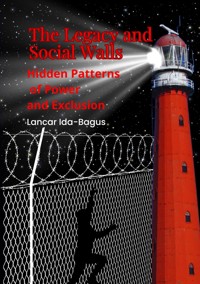
It Began in Den Helder by Gurubesar Lancar Ida-Bagus is an uncompromising and deeply personal indictment of the often-hidden forms of discrimination, social inequality, and mental enslavement in Den Helder and its surroundings. The author intertwines his own life experiences with a broader societal portrait, laying bare the prejudices, racial disparities, and bureaucratic indifference that pervade everyday life. From the education system to social services, from religion to law enforcement, nothing is left untouched. The book exposes how citizens, whether consciously or unconsciously, become complicit in exclusion and silent inequalities. At the same time, a powerful call resonates throughout: for self-awareness, civic courage, and spiritual liberation. Ida-Bagus demonstrates how inner strength, discipline, and truth equip individuals to navigate a harsh and unforgiving world. It Began in Den Helder is not a story designed to soothe—it is a wake-up call, urging all who are willing to truly see, feel, and act. Authentic. Defiant. Indispensable.
Das E-Book können Sie in Legimi-Apps oder einer beliebigen App lesen, die das folgende Format unterstützen:
Seitenzahl: 254
Veröffentlichungsjahr: 2026
Ähnliche










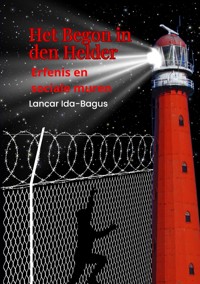





The Legacy and Social Walls
Hidden Patterns of Power and Exclusion
Lancar Ida-Bagus
© Foundation Vishnuh-Genootschap, Gurubesar R.R. Purperhart – Lancar Ida-Bagus, 2025
©All rights are hereby reserved and protected, unto the full extent of the authority vested in the author.
Be it proclaimed that no portion of this tome shall be reproduced, nor enshrined within any automated repository, nor made public by any means whatsoever by electronic device, mechanical contrivance, by photocopy, recording, or other manner—without the prior and explicit written consent of the author. Let it be known that any act of violation shall be deemed a transgression against the rights and solemn authority vested in the creator of this work and shall bear witness to the reckoning of justice past and yet to come.
Index
It Began in Den Helder
History as Foundation
The Old Guard: Families, Estates, Colonial Heritage, and the Legacy of Social Inequality
The Enduring Impact of the Colonial Past on Contemporary Structures
Oral Tradition and Local Memory
Concrete: Power and Exclusion in Daily Life
Education
The Impact on Identity and Community
Toward a Future of Recognition and Inclusivity
Beneath the Skin: The Unspoken Discrimination
The abyss approaches visibly.
Arrogance
It is high time for a fresh course, a new vision.
Honest People Do Exist
The Youth Between Two Worlds
Integrity as Inner Resistance
The Breath of Change
When Knowledge Fails to Bring Awareness
Youth Rewriting History
My Youth
The Power of a Name, and the Fear It Evokes
What Rejection Does to a Soul
A Rejection That Runs Through the Whole Country
Two Worlds Within One City
Forced “Volunteering”: Modern Coerced Labor
Against the Current – Strength Beyond the System
Street Hunters – Police and Enforcement
The Silence of Den Helder – Fearful of the System
The Moral Void of Bureaucracy
The Rooted Structure of Indifference
Divide and Rule
The Resilience of the Citizen—Standing Firm in Spirit
My Role as Gurubesar – Observer and Guide in a Complex Society
Civil Disobedience – The Quiet Resistance to Injustice
A New Sense of Purpose: Beyond the Church, Within the Human
Purpose in Practice: Silent Builders in Den Helder and Beyond
The Role of a Gurubesar in Times of Confusion
WE ARE HUMAN
Awareness and Penetrating Insight
Where Institutions Fail, the Gurubesar Intervenes
Become a Voice Yourself — The Path of the Small Gurubesar
Inner Strength — The Armor of the Conscious Human
Mental Strength — The Armor of the Conscious Human
The Vishnuh-Society — A Home for Awakening and Strength
This martial discipline is no game.
Short Practice Routine for Strengthening Mind and Body
331
Epilogue
It Began in Den Helder
Heritage and Social Walls—The Hidden Patterns of Power and Exclusion
Preface
In a world where people lose themselves in rituals devoid of spirit, in systems bereft of justice, and in words stripped of their truth, I choose to speak.
Not in the name of religion.
Not in the name of power.
But in the name of humanity.
In the name of the Vishnuh-Society.
In the name of you, of me, of us — those who refuse to turn away from what has been hidden, silenced, or distorted.
The Vishnuh-Society is not a religious order, but a living tapestry of culture, philosophy, and human encounter. Once shaped by the descendants of Javanese and Balinese noble lineages — preserved in the lontar manuscripts that safeguard our history — it has grown into a community where diversity is not a threat but a gift. Our members carry within them Indian, Javanese, Guyanese, Brazilian, African, and Dutch roots. Their origins may differ, yet their bond is the same: the recognition that spiritual kinship outweighs bloodlines, and that unity is the true inheritance we cherish.
Our poesaka — the chronicles, heirlooms, and literature passed down through generations — form the beating heart of our memory. They remind us that identity is not found in race or color, but in the power of stories and values. For whom we are transcends outward appearance. Within the Vishnuh-Society, we acknowledge only one ancestry: that of humankind itself.
The old Java of centuries past no longer exists in its pure form. Its descendants have become part of new communities: Indonesians, Surinamese, Antilleans, Filipinos, Dutch. I, too, am a child of mingling: Javanese on my mother’s side, Creole on my father’s. Yet the Vishnuh-Society has been my true foundation. It offered clarity where superstition sowed confusion, and values where fear once prevailed.
We are all inhabitants of the same earth. This is no poetic metaphor, but a simple truth and a shared responsibility. To live together means more than to exist side by side: it asks of us loyalty, support, and the willingness to carry one another’s burdens — in times of prosperity and in times of trial.
Within our Society there are no dogmas, no idols, no sealed secrets. What we do have are people who open their eyes to the quiet truth that whispers beneath the surface. People who understand that change begins not in systems, but in the individual — in the courage to take responsibility for one’s own thinking, speaking, and acting.
As Gurubesar of the Vishnuh-Society, I do not stand above society but within it. I am one of you. I believe in a world worthy of human dignity, a world in which we learn again to listen to the voice of nature, of one another, and of ourselves.
The Vishnuh-Society is the tangible expression of that belief. Not a temple, not an institution, but a space of silence and dialogue, of reflection and engagement. A beacon for all who seek meaning without coercion, growth without judgment, and connection without exclusion.
This book you hold in your hands is not a textbook. Not a manual, not a manifesto, not a battle cry. It is a testimony. A voice from within. Written with simplicity yet rooted in lived experience and carried by service.
In an age where many shout but few truly listen, this work invites you to slow down. To feel. To remember what it means to be human: awake, connected, responsible.
Here you will find no spectacle, but direction. No absolute truths, but mirrors — mirrors that invite you to rediscover yourself, to reclaim your strength, and to bring your actions into harmony.
Whether you are part of the Society, or whether you touch these words only for a fleeting moment — may this book be for you an anchor, a reminder, a gentle light. Not to follow, but to illuminate your own path.
Lancar Ida-Bagus, Gurubesar of the Vishnuh-Society
History as Foundation
The region around Den Helder and Texel carries a history deeply entwined with the Dutch colonial past. Texel, with its strategic position on the North Sea, played a pivotal role in this history. From its ports, countless ships departed, transporting enslaved Africans to overseas colonies. This dark chapter of human suffering is often overlooked, yet it is an undeniable part of the region’s story.
At the same time, the families of Den Helder and nearby villages formed an elite whose wealth and power were rooted in this colonial legacy. Generational estates and grand houses tell a story of concentrated wealth and authority, derived from trade, exploitation, and the social structures that sustained it.
The mental inheritance of this past is palpable: a culture of insularity, conservatism, and the passing down of privilege within tight-knit circles. The past is never distant; it lives on in social structures and in the ways, people relate to one another.
By acknowledging this foundation, we can better understand why change in this region is so difficult and why a stark social divide persists between “us” and “them.” This history lays bare the hidden patterns of exclusion and discrimination that continue to shape daily life. It is a vision that must be uprooted from human experience.
As long as we ignore this invisible inheritance, we continue to build on fractured ground—a soil in which mistrust, suspicion, and pain have taken root. Generations have grown up believing their place was already fixed, that their voice mattered less, that progress was a privilege reserved for others.
Yet this history need not dictate an unchangeable fate. We can refuse to carry the legacy of injustice as though it defines us forever. We can learn to see with new eyes, listen with open ears, and speak with the courage that truth demands.
By naming injustice, we shatter the imposed silence. By seeking connection, we build bridges across the deep fault lines carved by power and inequality over generations.
Only then can we truly live together—not trapped in the shadow of a past filled with wrongdoing, but in the light of shared humanity and justice, no longer a mere mask, but finally lived and embodied.
The Old Guard: Families, Estates, Colonial Heritage, and the Legacy of Social Inequality
In the surrounding villages of Den Helder stand grand estates and manor houses that have remained in the hands of the same families for centuries. These homes are more than brick and timber; they are monuments to power, wealth, and social status, passed down from generation to generation. Often, entry into these circles was barred to outsiders, preserving a legacy of exclusivity.
These estates serve as tangible reminders of a time when colonial trade and slavery formed the foundation of economic prosperity for these families. This history is not confined to archives; it lives within the walls of these homes and continues to shape the daily life of the region.
The concentration of property within a few families ensures that power and influence often remain tightly circumscribed. Social and economic opportunities are deeply affected, with jobs, contracts, and even political positions frequently distributed through these networks—often invisible, yet profoundly effective.
Moreover, this exclusivity sends a clear message to the wider community: there is a distinct line between those who belong to the elite and those who do not. Such distinctions erect social barriers, limiting access to positions of power and opportunity for many.
Examining the heritage and influence of the so-called “old guard” makes painfully clear how deeply entrenched social inequality is—in this region, in the former colonies, and in the Netherlands itself. This inequality was maintained not only by the political and economic structures of the time but also actively reinforced through education.
The very institutions that would later proclaim the abolition of slavery were complicit for centuries in protecting and legitimizing colonial crimes. They offered not only moral cover for exploitation and violence but did so through religious justifications, deeply embedded in the societal consciousness.
The Bible, for example, was deliberately invoked to defend slavery as a divine order. Verses such as Ephesians 6:5” Slaves, obey your earthly masters with deep respect and reverence"—and Colossians 3:22—"Slaves, obey your earthly masters in everything"—were cited as godly endorsements of subjugation. Even Titus 2:9, which commands slaves to “be submissive to their masters and please them in everything,” was repeatedly used to portray moral resistance as sinful.
Faith itself was confiscated, hijacked, and repurposed as an instrument of control. Religion, once a means of false peace, manipulation, justification of war, and blessing of injustice, became seamlessly incorporated into the colonial toolkit, wielded as an instrument of slavery.
The teachings were proclaimed from pulpits overseen by church and crown, in foreign tongues, saturated with norms alien to those they governed—all designed to elevate obedience to the status of virtue.
What remains is not a living spiritual heritage but a moral scar, seeping into laws, governmental agencies, institutions, and even the hidden contours of self-perception. It is a wound that stretches across generations—often unnamed, yet palpable in the convictions of the faithful, in the silence of those who inherit it without words.
This harm is not confined to the annals of history. It lingers in the present, shaping how we imagine ourselves and how we measure one another. It whispers through education, through policy, through the stories families tell and the silences they maintain. It molds identity in ways both subtle and profound, pressing upon the conscience with a weight that is felt, even when unacknowledged.
To speak of it is not to reopen an old injury but to recognize the truth of its persistence: the past is not gone, but alive in the patterns of thought and power that continue to govern daily life. Only by naming the scar for what it is can healing begin—slowly, imperfectly, but necessarily—if future generations are to inherit something more than the residue of pain.
The Enduring Impact of the Colonial Past on Contemporary Structures
In former colonies such as Suriname and the Dutch Caribbean, the shadow of colonialism lingers with a quiet persistence, taking shape not in chains, whips, or the sprawling plantations of a bygone era, but in subtler, insidious forms.
This modernized legacy of oppression endures as structural inequality, economic marginalization, and the systematic exclusion of certain ethnic groups from full participation in society. Racial stereotypes, long etched into the cultural consciousness, continue to shape perceptions and opportunities, often unnoticed, yet profoundly felt.
Where once religion was brandished to sanctify domination and enshrine hierarchy, today the instruments of inequality are less conspicuous, yet no less forceful. The very institutions of society—its schools, its economies, its political orders—sustain disparities that echo the old hierarchies. What was once enforced through dogma is now perpetuated through systems that present themselves as neutral, even benevolent.
Their workings are often veiled in the language of bureaucracy and policy, hidden behind statistics, regulations, and promises of progress. The inequality they generate may not bear the visible scars of chains or decrees, yet its weight is no less crushing. It shapes access to opportunity, determines who thrives and who merely survives, and quietly scripts the boundaries of what people dare to imagine for themselves.
Thus, the chains of the past have not disappeared; they have merely been refined into subtler forms of control, woven seamlessly into the fabric of daily life. They live on in cultural assumptions, in economic imbalance, in the silent privileges that some inherit and others are denied. And so, the legacy of yesterday’s hierarchies continues to haunt the present, demanding of each generation the courage not only to confront what was, but to unravel what still is.
During the Dutch Golden Age, the Netherlands amassed wealth through land appropriation and oppression in regions such as Indonesia, South Africa, Sri Lanka, parts of India, and even portions of Brazil. What was presented as trade was, in reality, often brutal domination, uprooting entire societies and systematically plundering natural resources.
Millions of people were exploited, displaced, or exterminated, while the economic profits flowed to European trading elites. The consequences of this history still resonate today, both in the socio-economic structures of these nations and in the collective memory of their peoples.
The legacy of these colonial crimes endures in subtle forms—through language, education, imagery, and the persistent tendency to soften the past. It was nothing less than organized land theft and dehumanizing subjugation.
Invisible mechanisms of disadvantage in these countries become visible in slow and inaccessible bureaucracies, in infrastructure that fails to meet basic needs, in educational systems that reproduce social inequality rather than dismantle it, and in labor markets where social background outweighs individual merit.
These mechanisms are not isolated phenomena; they are echoes of a system rooted in centuries of colonial domination, in which land was seized, cultures suppressed, and societies reorganized to serve the colonizer’s interests.
They continue to be reproduced in everyday interactions—in subtle social cues, in appeals to “neutrality,” and in laws and regulations that, though ostensibly objective, systematically disadvantage certain groups—just as colonial law once upheld order for the benefit of foreign power rather than justice.
Colonial logic has transformed. Where it once operated openly and violently, it now presents itself as policy, budgetary allocation, or statistical norm. Yet its effects are still felt in the lives of those who grow up with diminished access to opportunity, recognition, and protection—not because of any lack of value or ability, but because the social order continues to implicitly signal that their place is one of disadvantage.
Misery such as famine, illiteracy, pollution, and deforestation are not mere tragedies—they are the direct consequence of a people who have been kept in ignorance for centuries: first by the colonial system, and now, ironically, by their own. Those who rose to continue colonial rule, now cloaked in local guise, have institutionalized oppression, normalized exploitation, and monopolized knowledge. The local elite—often educated within the very systems that once enslaved their ancestors—now reproduces that same model.
What was once imposed by force is now maintained through policy, bureaucracy, and hollow pride. The structures of domination imported during Dutch expansion into regions such as Indonesia, Suriname, and the Caribbean proved so effective that they persisted long after formal independence—new faces, but the same framework.
The people remain dependent—not by nature, but by design. For a thinking populace is a resisting populace. And that is precisely what is suppressed. Education is designed for conformity, not liberation; history is taught as anecdote, not confrontation; and language is regulated to neutralize criticism before it can even be spoken.
In this context, the role of religion cannot be overlooked. The faiths of the colonizers did not vanish with the formal end of domination; they remain embedded in communities, perpetuated by unscrupulous religious actors who keep their own people small, dependent, and systematically exploited under the guise of faith.
Often, these movements operate under the influence of—or in collaboration with—Dutch religious institutions, the very same that once facilitated and morally justified slavery under colonial rule. These institutions still shape thought, spiritual life, and social consciousness in the former colonies, encouraging people to cling to beliefs that do not improve their real existence, but instead paralyze it.
These are the same institutions that preached the superiority of the white man from colonial pulpits, wielded baptism as a tool of subjugation, and labeled indigenous spiritual traditions as pagan or demonic. Generations later, their descendants carry forward the same message—repackaged in modern language, with the same devastating effect: obedience, submission, and dependence disguised as faith, hope, and love.
The result is a form of mental captivity, where critical thinking is discouraged or never cultivated. Many have never learned to reflect independently on their circumstances, to question, to doubt, or to seek their own truth. Emancipation is thus delayed, even structurally undermined. The people remain mired in a state of dependence and resignation, trained to obey, molded to compliance. While external systems may change, internal enslavement persists.
This is no accident, but the legacy of deliberate dehumanization, imposed by colonizers who understood that the spiritually free cannot be subjected. In the colonies, educational systems were structured to place obedience above insight, and religious dogma was preached to portray doubt as sin. Thought was shackled before it could mature, self-confidence undermined before it could grow. What remained was a people conditioned to shrink themselves—not because they must, but because they have never known otherwise.
Without profound awareness and liberation from these mental chains—without cultivating independent thought, historical consciousness, and social confidence, there is no future. A people who cannot think for themselves lose not only their freedom, but their direction. Their demise is already in view, not because they desire it, but because they have been taught to see no alternatives.
It is therefore insufficient to regard slavery as merely a closed chapter in history books. Its spirit endures in today’s social and economic relations. The colonial ideology once enforced by Bible and bayonet in places such as Suriname, Indonesia, and the Caribbean has left deep traces—not only in institutions, but in the self-image of peoples. Until this reality is explicitly recognized and addressed, we remain trapped in a world where structural injustice is normalized.
The process of restoration and justice begins with naming this injustice, acknowledging the lived colonial trauma, and refusing to accept such forms of inequality—whether external or internal—as “normal.” For what is seen as normal remains invisible, and what is invisible rules are unchecked.
It may take millennia before formerly oppressed peoples fully recover from the profound trauma inflicted over generations. Perhaps that healing will never come—and they will remain imprisoned in an identity alien to them, estranged from their roots, their ancestors, and their own strength. This fate traces directly to the colonial processes of uprooting and cultural suppression, in which languages, traditions, and belief systems were forbidden or minimized in favor of the colonizer’s tongue and values.
Most have already become traitors to their ancestors: they have no native language, speak the tongue of their oppressors, bow to foreign authorities, think within imposed frameworks, and honor values that are not their own.
The contrast between animals and these people is painfully stark. Animals have their own language, ancient, pure, unchanging. They speak through their bodies, rhythms, instincts. Yet humans have taken their habitats. They cannot defend themselves with words or law, and yet they resist—silently, courageously, with every breath they are still allowed in a world that pushes them further away.
These humans, by contrast, have no language of their own. What they speak is borrowed, imposed, distorted. Their thinking is an echo of what they were taught, not of what they once knew themselves. This loss is a direct result of colonial uprooting, in which languages were banned or marginalized and cultures replaced by those of the oppressors. Everything they possess, carry, or pursue is not born of their own roots, but imported, mimicked, imposed.
No language, no story, no possession that is truly theirs. And thus, it is that, despite their vulnerability, animals are closer to freedom than humans who have forgotten themselves.
What these peoples appear to possess are forest spirits, yorka’s, bakroes, libbas, apoekoes, guna-gunas, kuntilanaks, genderuwos, polder spirits, spectral white women, and a procession of phantoms—twisted, malevolent figures born from a mind long without direction. These are not untouched ancient treasures, but echoes of fear, passed down through generations under colonial oppression, cultural uprooting, and the prohibition of authentic traditions. No language, no science, no structure—only mistrust and superstition suppressing true thought.
These fantasies, elevated into Winti culture, are but the meager remnants of what was once a source of pride, profound knowledge, and wisdom. Where clarity and connectedness once reigned, now only the shadows of a lost identity wander. As long as these shadows are embraced as truth, the spirit remains imprisoned—not in chains of steel, but in the suffocating void of forgetting.
It may seem futile to attach counsel here, yet the seed must be sown for those willing to struggle:
"True liberation begins in the mind. Not with flags or laws, but with the recovery of thought, dignity, and the future. Only when a people reclaim their inner sovereignty can they truly free themselves from the colonial past—not just in name, but in essence."
The Vishnuh-Society, in contrast, has never needed to borrow or imitate. It possesses its own languages, its own ways of life, its own writings—deeply rooted, original, and untouched. These foundations were not forged from a hunger for power, nor were they born of a drive to dominate. They arose from inner development, from pure observation of nature, and from an unwavering dedication to truth and justice.
Where others lose themselves in copies of copies—in models endlessly repeated, adapted, or repackaged, the Society lives within an unbroken line of knowledge transmission. This lineage is not based on fashion, prestige, or political influence, but on direct experience, historical continuity, and spiritual discipline. It is this quiet strength that grants the Society a unique place in a world where much original knowledge has been lost or misused.
Much of what the modern world today embraces as progressive—in medicine, philosophy, social structures, and organizational methods—finds its roots in insights and practices that the Vishnuh-Society has embodied for centuries. These wisdoms are often misappropriated, distorted, or presented under another banner as supposedly “Western” ideas. Yet the source remains uncorrupted. Those who truly seek will discover where the roots lie and understand that their origin is richer and deeper than superficial trends suggest.
What the Vishnuh-Society produces transcends fleeting fashions or ephemeral cultural trends. It is living heritage—independent, visionary, and inseparably connected to its original essence. It stands as proof that human autonomy, knowledge, and spiritual strength, even after centuries of oppression and misinterpretation, cannot be destroyed as long as they remain firmly anchored in truth, inner fidelity, and selfless dedication to the greater whole.
This heritage calls upon us not merely to witness, but to engage with it fully—to study, to absorb, and to internalize its lessons, allowing them to shape the very way we live and relate to one another. It reminds us that the enduring qualities of authenticity, wisdom, and interconnectedness are not optional adornments, nor quaint relics of the past; they are the very scaffolding upon which a just and resilient society must be built. In a world dazzled by superficial innovation, transient trends, and the ephemeral allure of modernity, these values serve as the anchor, guiding us toward decisions, behaviors, and institutions that endure. They teach us that true progress is measured not in novelty alone, but in the depth of understanding, the capacity for empathy, and the courage to act with integrity.
The teaching of Vishnuh proclaims:
"That which is rooted in truth needs nothing to prove, nothing to borrow, nothing to fear.Truth is not a temporary veil drawn across the face to impress or conceal. It is an inner core, an unshakable foundation, independent of the whims of time and opinion. Whoever possesses it carries no burden of doubt, for it needs no validation from others—or from itself. It is like the sun, shining ceaselessly without asking whether anyone will receive its light.
To borrow nothing means to be dependent on nothing outside oneself. Truth is complete and autonomous; it requires no external confirmation to legitimize its existence. It whispers its own name, regardless of the voices that deny or embrace it. In this self-sufficiency lies its power: a spring that never runs dry, flowing without ever seeking recognition.
To fear nothing does not imply the absence of danger, but the transcendence of it. Truth transcends fear because it is rooted in the deep awareness of connection to the essence of all that exists. Fear is merely a shadow born of ignorance; truth is the light that pierces this shadow. Those grounded in this truth stand like an ancient tree in the storm: feeling the wind, bending, but not breaking.
In life’s practice, this means that true strength does not shout for attention, does not fight to be right, and does not seek power over others. Its power lies in silence, in presence, in the calm knowing that all that will be. This truth is a revolution from within, a gentle yet unstoppable force that tears down walls and builds bridges. It invites awakening, a return to essence, to the self-free from illusion and attachment.
Thus, truth is not merely an abstract concept or an ideal to pursue, but a living reality that permeates every breath. Those who find it will discover that liberation is not a goal to be reached, but a state to be recognized—a homecoming to oneself, an eternal dance with existence."
Today, the colonial ideology of distinction based on innate traits and race—albeit in altered form—remains alive and present. Particularly among segments of the older, now dwindling generations in the Netherlands and across Europe, racism often persists—sometimes overtly and shamelessly, but more often subtly, cloaked in seemingly innocent remarks or behaviors.
Under the guise of tradition, cultural distinctiveness, or so-called pragmatic reasoning, the same discriminatory ideas are passed down to younger generations. In this way, a hidden structure of inequality endures, disguised as healthy conservatism, while its roots stretch back to a past in which injustice was sanctified.
Yet we must not judge these elderly people solely as individuals; we must also understand them within a broader context. They were shaped in an era when the Dutch educational system not only tolerated colonial thinking but actively reinforced it. Racist ideas were presented as self-evident truths, as facts. What we now recognize as prejudice was then regarded as the norm.
The consequences of this legacy continue to resonate, unmistakable and persistent, in the rhythms of daily life. Racism is not a capricious anomaly, a fleeting outburst, nor simply the product of individual prejudice or ignorance. It is a vast and enduring system—a network of historically forged power relations that has woven itself into the very fabric of society. It persists in laws and regulations, in curricula and classrooms, in the subtleties of language and expression, in the selective telling of history, and in the invisible mechanics of institutions that govern our lives. Its influence is so deeply embedded that it often goes unnoticed, yet its presence shapes opportunities, perceptions, and experiences, dictating who is seen, who is heard, and who is allowed to flourish.
Meaning:Search the pockets of that naughty nigger,for they stand so round and swell, growing ever bigger.Soot-face, give here arm and ear, and is afraid of blows.Yet little Jan strikes him hard, in anger at all that filching.
This system did not arise spontaneously, nor will it vanish on its own. It is the product of generations of conditioning, of deliberate policies and unconscious assumptions, of silent acceptance and active resistance to change. And precisely for that reason, a responsibility rests upon us. A moral duty to confront this system, to name it, to probe its layers and manifestations—and ultimately, to dismantle it. For only when we acknowledge and confront injustice can we begin to build a society in which justice is not selective, but a shared principle.
The Legacy
In books, the sacred scripture,Became a chain, a strict lecture.Where slaves would kneel before the Lord,And masters’ voice was law and sword.
They read aloud the ancient pages,“Obey, bow, resist,” through ages.Called it divine, a righteous plan,While blood ran deep through field and land.
Centuries traced a path of pain,The whip turned pen, the chain became reign.Language soothed, yet veiled the threat,A net of rules we can’t forget.
Ideas and structures hid the truth,Inequality confined our youth.In lessons, buildings, gifts withheld,A quiet world where power dwelled.
But now the heirs of shadowed past,Stand tall, aware, their eyes steadfast.They hold the torch of truth on high,Refusing lies that time will dry.
Racism is more than hate or mind,It’s centuries of chains entwined.A construct old, yet dare we break,Through speech and act, a stand we take.
We fight the system, voice, and pen,To lift humanity again.Till justice reigns, and hearts are free,A world restored in dignity.
The Forgotten Cruelty—Slavery and Violence in North Holland and BeyondIn colonial times, the lives of Black people were often regarded as worthless by Europeans. A poignant example of this is the story of the slave ship De Leusden. On March 10, 1737, De Leusden




