


5,49 €
Mehr erfahren.
- Herausgeber: Books on Demand
- Kategorie: Lebensstil
- Sprache: Englisch
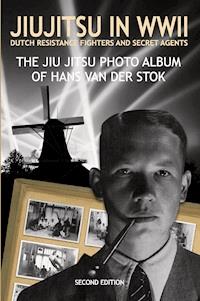
The author has been researching the role of jiu jitsu and of its practitioners in the Dutch resistance during the Second World War. This publication is a first result of that research, in which the entire jiu jitsu photo album of Hans van der Stok is included. Another volume on several other Dutch practitioners of jiu jitsu who also were involved in resistance activities in Holland during the War will be published in the near future.
Das E-Book können Sie in Legimi-Apps oder einer beliebigen App lesen, die das folgende Format unterstützen:
Seitenzahl: 31
Veröffentlichungsjahr: 2017
Ähnliche



















Contents
Preface
Preface to the second edition
Jiu Jitsu in The Netherlands
Johan van der Bruggen
Biographical sketch
Bram Grisnigt’s reminiscences
Photo Album
Notes
Acknowledgements
Bibliography
Preface
For more than a decade I have been researching the history of jiu jitsu in the Netherlands from 1900 to 1945, and I have always had a particular interest in the Second World War years. Owing perhaps to a prevailing sense of peril and uncertainty, jiu jitsu became increasingly popular in the Netherlands during those dark days.
While researching another book, I stumbled upon a photo album which had been a gift to a well-known Dutch jiu jitsu master, Johan van der Bruggen. In the war years, Van der Bruggen was also the only teacher of judo in the Netherlands.
The album had belonged to one of his jiu jitsu students, Hans van der Stok, and it contains a note that Van der Stok died in captivity in 1945 in Mauthausen concentration camp. Further research revealed that Hans, an ardent practitioner of jiu jitsu, had escaped from occupied Holland to England, trained as a secret service agent and returned to Holland to join the Dutch resistance. While resisting the occupation of his homeland he was captured, imprisoned and eventually executed.
Reflecting on this I was deeply moved. At first I planned to devote a chapter of my history of jiu jitsu in the Netherlands to Hans van der Stok. Eventually, I decided to publish the photo album in its entirety to give present-day practitioners and other readers the chance to get acquainted with this remarkable young man.
This publication is the result of that decision.
Thanks to its unique photographic material, this album gives us a clearer picture of the history of jiu jitsu in the Netherlands. Although it is intended primarily as a tribute to Hans van der Stok, I felt that the album’s historical importance gave me licence to add my own explanatory notes to the photographs. In the original album the photographs appeared without commentary.
For this publication I have maintained the order of the photographs as they appeared in the original album. However, I have taken the liberty of enlarging certain photos, and in some cases I have dedicated a full page to a single photo while the original album featured two or even four photos to a page.
Hans van der Stok’s story fully deserves to be told and I hope this publication will give him some of the recognition he deserves.
J.H.G. Smits
Zoetermeer, 4 January 2011
Preface to the second edition
Since the first publication of the Jiu Jitsu Photo Album of Hans van der Stok, I have been researching the role of jiu jitsu and its practitioners in the Dutch resistance during the Second World War. This expanded second edition of the photo album contains the results of that research. A further volume on several other Dutch practitioners of jiu jitsu who were involved in resistance activities during the War will be published in the near future.
Jiu jitsu in The Netherlands
At the start of the 20th century, the practice of jiu jitsu spread from Japan to Europe. In the United Kingdom, France and Germany it was taught by a select number of practitioners.




