


Erhalten Sie Zugang zu diesem und mehr als 300000 Büchern ab EUR 5,99 monatlich.
- Herausgeber: Crown House Publishing
- Kategorie: Ratgeber
- Sprache: Englisch
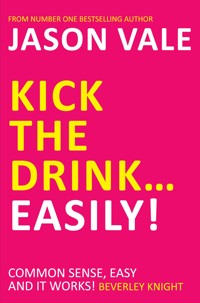
There is no such thing as an alcoholic and there is no such disease as alcoholism! (as society understands it). Whether you agree with this statement or not, one thing is for sure, you will never see alcohol in the same light ever again after reading this book. Jason Vale takes an honest and hard hitting look at people's conceptions of our most widely consumed drug. Jason's major argument is there is no such thing as an 'alcoholic' and that we are conditioned to accept alcohol as a 'normal' substance in today's society despite the fact that it is the major cause of many of today's social problems and a wide range of health issues. This book is much more than a simple eye opener, it will: change the way you see alcohol forever; show you how to stop drinking; help you enjoy the process and enjoy your life so much more than you do now without having to drink alcohol. So open your mind and take a journey with Jason to explore the myths about the most used and accepted drug addiction in the world!
Sie lesen das E-Book in den Legimi-Apps auf:
Seitenzahl: 394
Veröffentlichungsjahr: 2011
Das E-Book (TTS) können Sie hören im Abo „Legimi Premium” in Legimi-Apps auf:
Ähnliche
















A Special Dedication to … My Beautiful Mother
While I was in the process of updating this book, my beautiful mother passed away. It is impossible to convey in words what this amazing woman meant to me and the void left by her departure. Having no brothers, sisters or a father, my mother was much more than simply my Mum or a great friend. What my mother did leave was a clear message to me – keep doing whatever you can to help lift people from their addictions, as well as always telling me, ‘turn your lemons into lemonade.’
My mother always taught me that if you can help just one person then it has all been worth it. So here is the updated version of this book, designed to help just one person. I sincerely hope that person is you.
I love you Mum and I miss you every single day.
Contents
Title Page
A Special Dedication to … My Beautiful Mother
Please read before you start
What People Say
There is No Such Thing as an Alcoholic
Am I an Alcoholic?
It’s Easy to Stop Drinking
Why Do People Drink Alcohol?
It’s a Habit
Taste Has Nothing to Do With It
Quenching Your Thirst
Marvellous and Pleasurable Effect
You Are Never Really You
Under the Influence
It Helps Me to Relax
Dutch Courage
Stress
Concentrate
Boredom
Social Pastime
Liquid Asset
A Little of What You Fancy Does You Good
Passive Drinking
Barrel of Laughs
Clear Head
Truman Show
Am I a Man or a Mouse?
Lose Your Bottle and Gain Your Courage
‘Recovery’
The Advertising
Other Drinkers
Take It or Leave It
Binge Drinkers
Cut Down
‘OK, Just the One’
Curiosity vs. Craving
‘Time Please, Ladies and Gentlemen’
The Adjustment Period
Think Drink
Tempting Situations
Replacements
The Final Drink
The True Steps to Freedom
Biggest Buzz in the World
End This Madness
LIFE
The Final Warning
Copyright
Please read before you start …
I am better known for my books on juicing and nutrition these days but what many people aren’t aware of is that my first book was in fact the one you are holding right now.
I first wrote and self-published this book in 1999 and it has taken over ten years finally to get it officially published. Despite the fact that it was not available in any bookshops, word spread and, over the years, the book has had several print runs. It has helped thousands of people free themselves of the addiction to what is the most widely used legal drug in the world and I have yet to meet anyone who has read the book and not changed his or her relationship with alcohol at least to some degree. This is evidence that the message in the original version works, so the new, fully updated version has, in essence, changed little from the original edition. This means there are a few old references, but the book worked so well I didn’t wish to change it that much.
Having said that, many things have changed over the last ten years with regard to alcohol. One of the biggest changes was of course the government of the time’s crazy decision to bring in twenty-four-hour drinking in the UK. They believed, in their ignorance, that this would somehow help with alcohol related crime. Of course it didn’t. What a shocker!
The other major change has been in the perception of alcohol. Although it still remains the only drug on earth you have to justify not taking, there are more and more people opening their eyes to the realities of this liquid drug. Just as smoking has seen an incredible paradigm shift over the past twenty years, I believe we are on the verge of a similar shift in attitudes to alcohol. There doesn’t appear to be a week that passes by where alcohol related social problems aren’t reported. More and more we see front-page headlines about ‘Booze Britain’ and how so many people are exceeding the recommended ‘units.’
Over 90 per cent of the UK’s population at one time smoked something containing tobacco and that figure is now below 30 per cent. As I write the updated version of this book, around 80 per cent of the UK’s adult population still drinks alcohol but when I first wrote this book the figure was over 90 per cent. With the help of Kick the Drink … Easily and other books like it, I feel we are on the brink of reducing incidences of excessive drinking and mass addiction as happened with smoking. It may take time but I am sure it will happen.
The approach I use is not for everyone as not everyone will agree with my views or the methodology. Similarly, not everyone will like the way I write, my language or the repetition in the book. However, if you allow yourself to be open and get past any prejudices you may have about the tone and my views on conventional treatment for those who want to stop drinking, you will find this book incredibly useful and, more importantly, effective.
If you are reading this page, I feel it is safe to say you do so because you wish to change your relationship with alcohol to some extent at least. If this is your goal, let your mind be free and relaxed while reading it. As I say with all my books, I write but I am not an author. I will never win a literary award and I don’t have an Oxbridge education. What I do have is an incredibly simple way for you to understand the nature of the trap you are in and a ridiculously easy route out if you choose to take it. Please make a point of reading the short selection of testimonials taken from many who have used this approach before reading the book.
I love to hear from people who have benefitted from the book. Please feel free to write to me at the email address at the end but if, for whatever reason, the book doesn’t have the desired effect, you may be interested to know that I still run alcohol sessions at my Ultimate Mind and Body Retreats in Turkey.
I wish you well on your journey.
Jason Vale
What People Say …
This is an excellent book. I didn’t feel a compulsion to give up alcohol when I started reading it. I only read it really because I have several of Jason Vale’s books and was interested to hear what he had to say on this subject.
Before reading this book I would have described myself as a social drinker (a glass or two of wine most nights, lots more on a big night), although I have drunk significantly less than I used to over the last four years, having been either pregnant or breastfeeding two children! My main motivation for reading it was to lose weight by cutting down on alcohol.
However, I was fascinated by Jason’s assertion that there is no such thing as an alcoholic and that everyone who drinks alcohol is an alcohol addict. Jason challenges the way that we view alcohol and the way that many people who consider themselves to be in control of their drinking simply aren’t. As Jason points out, if someone said that they only eat bananas after midday, they only eat so many a week and limit overdosing on bananas to the weekend you would surely assume that they have a problem with bananas so why not with alcohol? As over 90 per cent of the population drinks alcohol it is considered normal and we assume that anyone who is teetotal is not normal or must have had a problem in the past.
Jason finds ways to challenge many of our long held perceptions or beliefs about alcohol. As I said earlier, I had no intention of giving up alcohol altogether when I startedreading but, since finishing the book, I find that the last drink I had was on New Year’s Eve and I have had absolutely no desire to touch a drop since. I have been to a couple of dinner parties and a black tie event since then; occasions where previously not drinking would have been inconceivable. My husband is incredulous, as are most of my friends. I must stress, I do not feel as though I am missing out being on the wagon; I simply do not want to drink and feel absolutely free of all the control I had to exercise in the past (i.e. I won’t have one till Friday, won’t have more than a quarter of a bottle of wine, etc.). That’s all gone. It’s an amazing book – open your mind!
Rachel
I haven’t quite finished reading this book but it has already stopped me drinking. I can’t see any reason why I would want to drink any longer. Jason gives very compelling reasons why drinking is not a good thing and the damage it actually does to your body and mind and why most people who drink don’t think that they are actually addicted. Great reading, written in Jason’s usual, fun style, it has changed my total perspective on alcohol, even though I wasn’t thinking of giving up totally when I bought this book. I just wanted to cut down. Now I realise that it is very difficult to do this and that I would be better off just stopping and not giving in to this drug at all! Thanks Jase, you have changed my life!
Julie M
This book will definitely free you from having to put alcohol in your body … If only everyone would read it, our society would be transformed for the better. It deserves to sell more copies than any other book ever written! If you need to cut down or stop drinking then look no further. This is the book you need.
James M
I think I was like many people out there who enjoyed the odd drink, but found that the odd one was becoming a daily routine. Either socially or alone I was becoming reliant on a bottle or two of wine a day. I managed to get hold of Jason’s book and cannot believe that I have not or wanted to have a drink for over a week now (I know this seems a tad feeble but believe me, it’s a huge step in my world). I even had a dream last night that I did have a drink and was truly upset that I had succumbed but, on awakening, I realised it was just a dream and felt joyous once again. I have felt so much healthier, aware and alive (not just hazing through each day!). I would recommend this book to anyone who realises that booze is having an adverse effect on your life and well-being. Thank you Jason.
Mrs K. D. Wooldridge
I used to drink a couple of glasses of wine each day with a bit more at the weekend and social events. The book is very easy to read and is written in a ‘brainwashing’ style. It worked. I haven’t drunk alcohol since the day I read it, i.e. 19th July and it’s now 30th Nov. The interesting part isother people’s reactions. It would almost be easier to drink alcohol to fit in (especially in the beginning until people accept your decision) but the book gives you the strength to be your own person and do what you want. I would certainly recommend it.
Prior to reading this, in June 2009 read The Simple Way to Stop Eating Chocolate also by Jason Vale. I haven’t fancied a chocolate since then. Not many vices left now!
Karen B
It’s difficult to know exactly where to start, so I guess simplest is best:
THANK YOU.
It seems such a small word for what you’ve helped me achieve – TOTAL FREEDOM from alcohol. I had for quite some time (a few years if I am honest) before I read your book started to suspect that I was an alcoholic in the understood sense and I was terrified of all the implications that went with it, i.e.:
the ‘fact’ that it is an incurable illness;
the ‘fact’ that you have to take one day at a time and decide not to drink today;
the ‘fact’ that you are vulnerable for the rest of your life.
Thanks to your enlightened way of thinking I can now see how wrong the ‘experts’ are and how, although there are many whose lives have been saved by AA and other suchorganisations, these tormented souls live every moment of every day in fear. Whereas with your way I really do live Life In Fearless Excitement. I am proud to be in the real world and the real me (not the alcohol soaked version) is there to enjoy all of it.
There are home truths in your book which felt as though you had found my own personal life script and were exposing them, not with contempt or in order to shame, but with a gentle thought-provoking persuasiveness which enabled me, and I know will help anyone who drinks, to get free. Thanks again.
Angela
There is No Such Thing as an Alcoholic
For many people reading the first page of this book, the statement ‘There is No Such Thing as an Alcoholic’ may seem incredible or certainly difficult to accept, particularly if you have been labelled an ‘alcoholic.’ However controversial, I intend to prove without any doubt that there is no such thing as an alcoholic, as society understands it, and that there is no such disease as alcoholism.
I would like to take you on a journey to discover the truth behind the most used and generally accepted drug in the world. It is time for us all to take our heads out of the sand and finally to face up to the truth about alcohol. Alcohol addiction has never been seen for what it really is as the subject of a drink problem and the possibility of a person being addicted to alcohol are rarely addressed or all too often swept under the carpet. We have been conditioned to believe that you are either a ‘normal’ drinker or that you have lost control and are an ‘alcoholic.’ As a result, people who have finally woken up to the fact that they are not in control have to keep quiet about it for fear of being made an outcast. If they are brave enough to voice a desire to stop drinking, they are called alcoholics which suggests they have an incurable disease and would have to ‘give up’ drinking forever. This is an unwelcome and frightening thought for anybody who drinks.
The truth is that is the vast majority of people are never in genuine control of their alcohol intake as I will attempt to prove beyond doubt in this book. With any other form of drug addiction, the addict who wants to quit is applauded for realising that they were never in control but the alcohol addict is given a label and made to feel inferior. In reality the person who realises they are not in control is far from inferior. In fact, they are well ahead of the game. After all, you can only escape a trap when you know you are in one and the majority of people who drink alcohol have no idea that they are. It is one of the subtlest traps ever devised and one that has fooled millions for generations.
You can only escape a trap when you know you are in one.
Alcohol has always been seen as very different from any other form of drug taking; so much so that drinking alcohol is rarely described as drug taking at all. But, for a significant majority, drug taking it is and drug addiction it is. What is more, it is the only drug in the world where, when you stop taking it, you are seen as having a problem.
… it is the only drug in the world where, when you stop taking it, you are seen as having a problem.
As you read this book, you will soon begin to realise that alcohol addiction is exactly the same as any other drug addiction. It will become clear that the amount people drink has very little to do with their genes, character or personality. You will realise that the only difference between alcohol and all other drugs is the conditioning and brainwashing that we have been subjected to from a very early stage. This book will be much more than a simple eye opener and will change the way you see alcohol forever. It will show you not only how to stop drinking, should you choose to, but how you will enjoy the process and enjoy your life so much more without having to drink alcohol. I will also show you why nobody ever needs alcohol and that all the reasons given for drinking are part of one of the most ingenious confidence tricks ever to dupe mankind.
They say you can fool some of the people some of the time but not all the people all of the time. However, I believe that is exactly what alcohol has done. We have all been conned into believing there are genuine benefits to drinking alcohol. Many of you will be convinced that this is the case. However, I would like a chance to prove that there are no genuine benefits whatsoever. I do not expect you to accept or believe what I say at this stage. After all, we all have thousands of references to back up our belief that there are good and bad aspects to alcohol. Nonetheless, I would like you to turn a page in your mind, open it as wide as you possibly can, so that we can begin the process of removing years of conditioning and brainwashing. It is about time we all woke up to the truth and stopped kidding ourselves. Alcohol drinking is alcohol addiction and alcohol addiction is drug addiction and drug addiction is a form of disease which gets worse and worse – unless you cure it.
Now that I have your attention please let me introduce myself. My name is Jason Vale and I am a non-drinker. Now in case you start having images of a holier than thou non-drinker whose idea of a good night out is having a cup of cocoa while watching bowls, then you would be very much mistaken. Nor am I a person who hates alcohol drinkers, cannot socialise with them or wants to judge them in any way. Yes, I am a non-drinker but I am also a non-heroin addict and a non-crackhead but you wouldn’t think any less of me for that and you certainly wouldn’t pre-judge me for not taking heroin or crack. However, alcohol is seen very differently. It is the only drug that people will question you not taking.
… alcohol is seen very differently. It is the only drug that people will question you not taking.
Now to be fair, I have never been a heroin addict or a crackhead but, just so you fully understand where I am coming from, I have been a drinker. Well, not just a drinker believe me; I was no slouch when it came to drinking! I was a very heavy drinker and very badly hooked (or so I thought). I was, at one stage in my life, possibly one of the world’s worst alcohol addicts you could ever meet. Even then I knew all the reasons why I shouldn’t drink and at times I actually wished that I didn’t need to drink. But what was my alternative? To become a non-drinker? To be honest that sounded like a disease in itself. I really wouldn’t have wanted to suffer that as my life seemed bad enough as a drinker.
Even today I hate using the terms non-drinker or teetotaller because they have such negative connotations. That is why most of us pre-judge people who don’t drink. I don’t know about you but, when I was drinking and heard that someone was a non-drinker or had given up the booze, I immediately thought things along the lines of ‘boring bastard’! I apologise for the language but one of my main fears about stopping drinking was the thought that I would turn into one of them. I believed that if I stopped drinking, I would be missing out. I thought I would feel deprived of the wonderful pleasures of alcohol; the calming effect, the relaxation, the sociable aspect of having a few beers with the lads or a bottle of wine with dinner. The warm glow of a brandy, the crisp bite of a glass of chilled white wine, the hot toddy, the banter, the chatter, the laughter, the fun all added up to my idea of a good time. In short, if I stopped drinking altogether, I would no longer have a life. Until, that is, I realised it was all nonsense.
I am pleased to say that stopping drinking certainly hasn’t turned me into a bore or a social hermit. On the contrary, it has enhanced my social life and given me back my courage, confidence and a quality of life that I had forgotten even existed. I am now in full control of my drinking for the first time in my adult life. I now drink as much as I want, as often as I want and whenever I want to. I no longer have to exercise willpower, self-discipline and control to avoid drinking too much. Every single day I have the quantity of drink I choose without worrying about work, what people will think of me or even how I am going to feel. That is true control.
The reason why I have such control now is because I do not drink alcohol any more. Not because I cannot drink it but because I just don’t want to. Of course I could drink alcohol whenever I want and there is nothing stopping me. I simply have no desire to do so.
A few years ago I would have thought that impossible. Me, a non-drinker? Never! I could not imagine what life would be like without alcohol. I didn’t even want to contemplate the idea of never drinking again. The mere thought of stopping altogether would be far too scary even to consider. Who would want to spend the rest of their life without drink? Not me! Whenever I started to realise that I was drinking a little too much, I would look for ways to exercise more control over my drinking without having to stop completely. I would think of ways to cut down and all the different methods of reducing my intake including going ‘on the wagon’ and abstaining for a while or making every other drink a soft one. I would drink water with alcohol to reduce the dehydration or even discipline myself not to go out on certain nights to help reduce my intake. But to stop altogether for the rest of my life? Never.
I once managed to go on the wagon for three months. It was one of the worst periods of my life. I felt miserable and deprived and stayed in most of the time. I thought, what is the point of going out to a social gathering if I am not drinking? How can you possibly enjoy yourself at a get-together without alcohol?
I have been a non-drinker for over ten years now and it has been without question the best ten years of my life. I have never once missed alcohol since I stopped and now socialise more than ever before. I do not feel miserable and depressed when I am not drinking because there is nothing to feel miserable about. In fact, I feel elated to be free from what was a constant struggle to gain control. I feel so relieved to be mentally and physically free.
So just how badly addicted was I? When I was in my late teens I would get through sixteen pints of lager every day. At weekends I would drink even more. Sometimes I would even drink Special Brew and Thunderbird for breakfast! This went on for a couple of years and I was warned that I might be an alcoholic. Personally, I did not think I was. After all, I was only enjoying a drink just like everybody else, only I drank a little more than most. However, the more people told me I was drinking too much, the more conscious I became of it. At this stage you may agree that I was an alcoholic as such is the power of social conditioning. After all, if you drink in the morning, you must be.
One day I decided that enough was enough and I had to reduce my intake. This should have been impossible were I an alcoholic. After all, that is the difference isn’t it? Drinkers are in control and alcoholics are out of control. I went from being what society would call an alcoholic to being a normal drinker. This obviously meant that I wasn’t an alcoholic after all and didn’t really have a problem as I was now back in control because if you are in control, there is no problem. I made a point of only drinking at weekends. Oh, and at birthday parties. Oh yes, and at weddings and restaurants, not to mention Easter, Christmas, New Year, christenings, as well as holidays, barbecues, parties and any social events. I would drink when watching the football, drink to relieve stress, to help me calm down and relax after a hard day. I would drink with meals, the odd glass of wine in the bath, not forgetting the ones for a little ‘Dutch courage.’ As you see, I only drank as ‘little’ as any other normal drinker who is in control.
Was I ever really choosing to drink on these occasions or did I have to in order to have a good time? Had my freedom of choice already been taken from me? It was this thought that led me to question whether I even wanted to be in control. I started to realise that I was using some degree of willpower and discipline on a weekly, if not daily, basis to avoid drinking too much. Did this mean that I was in control of my alcohol intake because I could apparently control it at times or did it simply mean that I was in a constant battle to gain control? I started to ask myself ‘if you consciously have be in control to make sure you don’t drink too much, then surely you cannot really be in control?’ I now realise that I was never actually in full control of my alcohol intake and that very few people who drink alcohol are ever really in control.
YOU CANNOT HAVE FREEDOM OF CHOICE WITHOUT THE FREEDOM TO REFUSE.
For the first time since just before I started drinking, I now have full control once more. The reason is because I no longer have to exercise willpower. It is the having to exercise control that proves the addict is not in control. I will repeat this point as I believe it to be a vital one. You cannot have freedom of choice without the freedom to also refuse.
Confused? I apologise. I’m racing ahead of myself. There is a lot of brainwashing and conditioning to be removed before you can even start to understand, let alone accept what I am saying. In fact some of my statements may be quite bewildering but all I ask while you read this book is that you open your mind as much as possible and come with me as we explore the myths about the most used and accepted drug addiction in the world.
Alcohol Addiction
You may be asking yourself at this stage what makes me, Jason Vale, so qualified to write such a book? What reasons should you have for acting on my advice, following my instructions or even listening to what I have to say? What qualifications do I have? What is my medical background? After all, there are many books written by ex-drinkers offering advice on how to give up. What makes me so different? Why should you follow my advice when I am not as medically or perhaps even as academically qualified as many of them?
The difference is that I am genuinely free! Yes, FREE. Let me be very clear on this point. I am not ‘in recovery,’ not missing out, not pining for drink or feeling deprived. I am not feeling miserable because I am not drinking, opting out of life, or attending sessions every week, and I haven’t found religion. I mean that I am free, really FREE.
The freedom that I now enjoy and the mental tools that helped me achieve it are what make me so qualified to help all ‘alcohol addicts’ which I have now done for years. I read several books on how to stop drinking when I was a drinker but they contained diatribes and messages of doom and gloom. In fact, if non-drinkers were to read some of them it would probably have driven them to drink. Every single book was written either by an ex-alcoholic (their term, not mine) or by a doctor who was still a drinker. The ex-alcoholic would be complaining from the start, informing you from page one that you have an incurable disease and describing how you would have to spend the rest of your life in something called ‘recovery.’ It’s hardly inspiring. As for the doctor or anyone giving advice on how to do something they haven’t done themselves, it’s hard to swallow. How can anybody offer advice on how to stop drinking when they are still drinking? It would be equivalent to The Easy Way to Sparkling Wit and Repartee by Gordon Brown. It just wouldn’t wash. I realise you don’t have to be the best football player in order to be a good coach but I do feel it helps if you can at least kick a ball.
We need to understand that, however well intentioned, many doctors belong to what I call the ‘state the obvious’ brigade when they pronounce: ‘You’re drinking too much. You really should cut down or perhaps stop altogether. Alcohol is killing you, destroying your life and causing you and your family all kinds of heartache.’
Telling the drinker what they are already fully aware of insults their intelligence. Imagine sinking in quicksand while somebody walks past saying, ‘You should get out of there you know, you’re sinking. Unless you get out you will probably die.’ That sounds ridiculous I know, but it’s no more ridiculous than the doctor who tells somebody who already knows that they are drinking too much. One of the times when a drinker will reach for a drink is when they feel under pressure or stressed out, so pressurising people to stop drinking usually has precisely the opposite effect.
I must emphasise that I am not condemning doctors who are in their profession to help people. Some may believe strongly that by listing the reasons might help someone quit or at least to cut down on their consumption. This approach may sound logical but, as you will discover in this book, everything about alcohol that appears logical is, in reality, the complete opposite. For example, Drinkline, at the time the first edition of this book was published, was considered to be one of the leading organisations offering expert help to those who want to stop drinking. They offer one recommendation which, on the surface sounds like good logical advice but is in fact the opposite: ‘Note down all the reasons you can think of for stopping drinking.’ If we question it for just a second, we soon discover that, because addiction is not logical, it is far from good advice. Listing all the reasons why you shouldn’t drink will not make it easier for you to stop, just as writing down all the reasons why you shouldn’t be in quicksand will not make it easier for you to stop sinking. Alcohol addicts already know all the reasons why they shouldn’t drink. Bringing these facts into focus will not make it easier to stop and usually will have the opposite effect. Let me explain why.
ADDICTION ISN’T LOGICAL.
First, people who are in the advanced stages of alcohol addiction are constantly being pressured by loved ones, their doctors or society in general into stopping drinking, or at least cutting down their alcohol intake. All this does is cause resentment. Nobody likes being told what to do. The prospect of giving up immediately gives the drinker a feeling of self-sacrifice and a strong sense of deprivation. The more deprived they feel, the more they will want a drink. The more they want the drink, the more deprived they feel. It’s a vicious circle.
Second, a common mistake that people make when they try to stop drinking is to focus on all the reasons why they should not drink. They come up with list after list of reasons why they should not be doing it, like health, money, children, family, hangovers, slavery to drinking and violence. Add to that the other reasons such as arguments, lethargy, weight and employment problems and so on, there are plenty.
Drinkers already know all the reasons why they should not drink. The truth is that people do not drink alcohol for these reasons but for what they feel are the positive benefits like the pleasure, as a crutch, to help them calm down, to relax, to give them confidence and courage, to make them happy and merry and so on.
Just so you know what is in store, this book is not going to be a long drawn out lecture on why people should not drink as you already know the reasons. This book will be very different from the usual ‘doom and gloom’ approach to giving up drinking. By this, I mean the approach where the horrors of drink are explained so the addict will hopefully stop out of fear. Once they have stopped they are then told that they are never really cured but will have to spend the rest of their lives in something called ‘recovery.’ No wonder they feel all doom and gloomy when they stop. So would I if I thought I would have to suffer forever and that freedom was unachievable.
Not only is freedom possible but it is also easy and extremely enjoyable to achieve. Once you understand fully how the confidence trick works, not only will you not envy people who drink but you will look at them as you might a heroin addict and genuinely pity them. I am fully aware that there will be many people reading this book who have lost a great deal, suffered greatly at the hands of alcohol and desperately need to stop. However, if that is you, you are not unique or alone. I have had best friends die because of alcohol. I have seen mental and physical abuse in my own family because of alcohol. I have had two family members literally drink their lives away, one in their prime at forty-nine. I have spent nights in prison because of alcohol. I have lost relationships because of alcohol. I have also lost jobs because of alcohol. I have watched friends and family suffer physically and mentally because of alcohol. I have seen people lose their eyes, literally, because of alcohol. I have seen people disfigured for life by broken bottles as a direct result of drinking. We all know the horror stories and, as you will discover, there is hardly anyone on this planet (in communities where drink is allowed) who hasn’t been either directly or indirectly affected by the drug called alcohol.
FEAR KEEPS YOU DRINKING.
Despite my previous experience, I now hold the view that the past is the past and that, no matter what alcohol has done, it is now time to move on. I am also aware that there are many people reading this book who are not that desperate, have never really thought about stopping drinking forever and believe they are in control.
For years I never thought about stopping drinking for one reason and one reason alone – FEAR. As I have mentioned, the thought of never drinking again didn’t just make me nervous, it petrified me. I now know that the majority of alcohol addicts are just as scared as I was and it is fear that actually keeps them hooked. Whether it’s a drinker who is desperate to stop, or someone who just wants to stop because they are fed up with drinking, the fears are the same for everyone. It is only fear that prevents them from doing the very simple task of stopping drinking. It was not the physical withdrawal that scared me but the fear that I would never be able to enjoy or cope with my life in the same way again without alcohol. All kinds of ideas went through my mind when I thought ‘I should give up drinking.’ I would get butterflies in my stomach and my mind would race. I would think of every possible future scenario involving me and no alcohol. It was not a pretty picture. Every image was of me standing with a soft drink, feeling miserable and deprived. I feared that social occasions would never be the same again. I feared becoming an outcast. I felt that I wouldn’t even want to go out if I couldn’t drink. What would I do on my birthday? What about Christmas, New Year, holidays? The biggest fear I had was that the craving for alcohol would never go. I thought that I would forever have to use willpower and discipline not to drink. The truth was that I thought I wanted to stop drinking but I wanted to drink as well. That is why I was never sure if I really wanted to stop altogether. I was as confused as hell.
Since I stopped drinking I see very clearly that it is fear that prevents people from breaking free. Don’t you have some of these fears too? Doesn’t the thought of never having a drink again fill you with fear or maybe even complete and utter terror? Maybe you picked up this book just to ‘cut down’ and that sentence alone makes you want to shut the book and run! These fears keep people drinking and make them block their minds to the health, money, hangovers, slavery and the effects on their families and friends caused by drink.
However, what alcohol addicts fail to realise (and what I failed to realise a few years ago) is that all those fears are only caused by one thing and one thing alone: the alcohol itself. People who do not drink do not have these fears. Before you started drinking you did not have these fears and I no longer have these fears. I now want to scream from the rooftops and tell the world that they really do not need to drink alcohol; they just think they do. The need for alcohol is caused by alcohol and it’s easy to stop once you realise that there are no genuine benefits to drinking the stuff and that life is infinitely better without it.
Come with me on an exciting journey to remove the brainwashing, conditioning and all the illusions surrounding the alcohol trap so that once you understand them fully, all your fears will be removed forever.
… remove the brainwashing, conditioning and all the illusions surrounding the alcohol trap …
At this stage you may firmly believe that you do not want to become a non-drinker. I fully understand this. All I ask is that you read this book with an open mind and you just may start to think differently. You have nothing to lose. When I say an open mind, I mean really open, as wide as possible. A few years ago I would probably have dismissed most of this book. The only way your perception of the drug called alcohol can possibly change is if, just while you read this book, you put aside all your preconceptions. Forget everything you have ever been taught about alcohol. Forget everything your parents taught you, everything that your doctor told you and everything you have told yourself about alcohol. Most people believed that the world was flat at one stage; it took somebody with an open mind to see through that misconception and discover the truth. Once the illusions and brainwashing have been eliminated you will enjoy your life so much more without alcohol. I do not mean that you will be richer and healthier, simply that you will not miss drinking. You will have more courage and confidence and, far from having a void in your life when you stop, you will feel more fulfilled than you have felt in years. As impossible or daunting as that may sound at the moment, once you understand the nature of the trap, it would be hard to convince you otherwise. In fact it would be hard to persuade you to drink again.
However, there is so much brainwashing and conditioning to be removed before we reach that stage and in order for you to find your way out of the alcohol trap that you need to do a few things:
Read this book with a very open mind.Read the whole book through; don’t just dip in.Follow my ‘Steps to Freedom.’The first step is to continue drinking until you have finished reading this book. Now do let me make myself clear here. I don’t mean get plastered every time you read the book! It just means do not attempt to stop drinking until all the brainwashing has been completely removed. If you had already stopped drinking before you picked up this book but don’t feel free or still miss drinking and feel deprived, it will enable you to get truly free. However, if you have stopped already for a length of time then do not – I repeat – DO NOT start drinking again. Read the book with an open mind and your mental cravings will gradually be destroyed as you make your way through the chapters. If you are still drinking, then continue as normal until you have finished the book.
As you read, there may well be several points that make you see the light but please do not stop until you have completely finished as you need to have a full understanding of all the possible pitfalls. For this reason, perhaps the most important step of all is actually to finish the book. Do not let fear prevent you from completing it as it is time to break through your fears and find your freedom. Read at least a chapter a day to keep the momentum. It is so easy to start a book, but over 80 per cent of people who buy a ‘self-help’ book don’t finish it.
Every point I make is for a reason to make absolutely certain that you succeed permanently. Success means freedom and freedom means not pining for a drink, not feeling deprived, not opting out of life and not getting angry or upset that you are not drinking ever again. If you read this book with your mind as open as the universe and follow my Steps to Freedom you will achieve what I have achieved:
TRUE FREEDOM FROM HAVING TO DRINK ALCOHOL.
You will find that some of the points in the book are repeated. I make no apologies for this at all. The message is very simple. Understanding the alcohol trap is simplicity itself but, in order for it to gel fully in your mind, some of the key fundamental points are repeated throughout the book almost as a form of hypnosis and they are repeated on purpose. We have a lot to get through so let’s get started right away by removing a huge chunk of the brainwashing: the belief that if people are not alcoholics, then they are in control of their drinking. So, the first question that people ask themselves when they think they can no longer control their drinking is …
Am I an Alcoholic?
The simple answer is no, you are not; never have been and never will be. The reason I know this is because, as mentioned already, there is no such thing as an alcoholic, as society understands it, and there is no such illness as alcoholism.
I realise that is a pretty bold and probably controversial statement to make but I assure you that it is an accurate one. In fact it’s organisations like AA (Alcoholics Anonymous) that create the myth that there is a disease called alcoholism. I am more than aware that such a bold statement will make many of your hackles rise but please do not misread what I am saying. AA have without question saved the lives of thousands, if not millions, of people. The commitment, help and support they give to alcohol addicts around the world, around the clock, is beyond admirable. I also believe there will always be a need for organisations like AA as no one single approach works for everyone and not everyone will be in a position to take in fully the concept outlined in this book. So if you have been to AA or are still going, please, please do not misunderstand what I am saying. There will always be a need for such organisations and they will always save lives. No, the bone of contention I have with organisations like AA is that, however well intentioned their motives, they suggest that there is no cure for the disease known as alcoholism. By its own admission, AA has never cured a single alcoholic.
Try thinking of yourself as an alcoholic. You need help. So where do you go? Well, first of all you need to know for certain if you have the disease called alcoholism. The first thing you do is consult your doctor. Your physician cannot tell you if you are an alcoholic but may refer you to AA, Drinkline, Alcohol Concern or whatever specialist organisation happens to be at hand. Next, you phone one of these organisations to find out if you have the disease. The problem is that nobody can tell you if you are an alcoholic. AA, for example, simply states the following in one of their official booklets:
‘If you repeatedly drink more than you intend or want to, or if you get into trouble when you drink, you may be an alcoholic. Only you can decide. No one in AA will tell you whether you are or not.’




