


Erhalten Sie Zugang zu diesem und mehr als 300000 Büchern ab EUR 5,99 monatlich.
- Herausgeber: Forum
- Kategorie: Geisteswissenschaft
- Sprache: Englisch
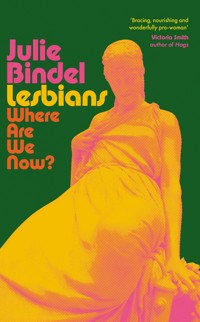
'Bracing, nourishing and wonderfully pro-woman'Victoria Smith, author of Hags 'A big-hearted, infuriating, clever and highly entertaining read, just like the woman who wrote it' Kathleen Stock, author of Material Girls 'Personal, passionate memoir-cum-cultural commentary' New Statesman 'Excellent ... Discursive and engaging' Susanna Rustin, author of Sexed: A History of British Feminism What does it mean to be a lesbian now? Has the quest for lesbian liberation stalled, and if so, why? Part-memoir, part frontline reportage and part cultural commentary, Julie Bindel examines what defines lesbian culture, love, friendship and happiness today. She distinguishes the particular challenges facing lesbians from the very different experiences of gay men, and asks: why do lesbians so often seem to face particular hostility? Comparing past attitudes to today, she argues that lesbians continue to suffer from bigotry and discrimination because sexism and enforced gendered roles are still left unchallenged. She explores why many of the biggest assaults on lesbian freedom and wellbeing around the world now come, not just from conservatives, but also from so-called progressives, who are often antagonistic to lesbians organising and socialising autonomously. Rooted in her own remarkable story, this personal and passionate book is both an investigation into the obstacles to lesbian flourishing, and a testament to the particular delights of being a lesbian.
Sie lesen das E-Book in den Legimi-Apps auf:
Seitenzahl: 265
Veröffentlichungsjahr: 2025
Das E-Book (TTS) können Sie hören im Abo „Legimi Premium” in Legimi-Apps auf:
Ähnliche



















This book is lovingly dedicated to the late Lee Lakeman. Lee made a huge, positive difference to the world she inhabited, and leaves behind a blueprint for future generations of feminists.
Contents
Note on TerminologyIntroduction 1 What Does ‘Lesbian’ Mean to Me? 2 What’s Feminism Got to Do with It? Why Lesbians Are Central to Women’s Liberation 3 Why and How We Are Hated 4 The Trans Trojan Horse Trots Into Town 5 Brothers in Arms 6 Lesbian Activism Epilogue: An Ending and a New Beginning NotesAcknowledgementsNote on Terminology
I am a feminist and therefore reject the notion that gender is in any way innate. It is the product of patriarchy and amounts to the imposition of sex stereotypes on women and girls.
Until fairly recently, there was a consensus among feminists that gender was a social construct and sex a biological reality. In rejecting the notion that ‘femininity’ and ‘masculinity’ are part of our DNA, we were acknowledging that this was an excuse to treat females as a subordinate sex class compared to males.
As a consequence of all this, although I may sometimes (depending on the circumstances) refer to trans-identified individuals by their preferred pronouns and using terms such as ‘trans man/woman’ (a biological woman and man, respectively), I mostly try to use the correct sex. Today, it is seen as an act of aggression and extreme insensitivity to ‘misgender’ an individual, but as I say, I consider gender to be a social construct.
I do make exceptions. Occasionally it feels unnecessarily rude to refer to a person as their birth sex, for example someone who acknowledges their own biological sex but has lived as the opposite sex for some time and is not antagonistic about the issue. I’m aware this can be seen as hypocritical, but sometimes it’s just good manners to not upset a person when there are no stakes involved, in other words when it’s a personal exchange.
But for lesbians in particular I would argue it is hugely important to be realistic about biological sex. We have rejected male bodies and sexuality, and that boundary is crucial to maintain, partly because we are so regularly and often threateningly challenged on this.
Introduction
When I first came out in 1977, I was full of self-hatred, self-doubt and confusion. And now, almost 50 years later, when I still see lesbians coming under pressure to apologise for their existence, I cannot stay silent. Shutting up has never been my biggest strength; an old school friend, Kate, still talks about the time I entered the school beauty contest as protest candidate Fag-Ash Lil – and won.
There is a new and insidious version of lesbian hatred emerging in the UK. An example: a recent article,1 one of many covering the now-holy month of Pride, entitled ‘Reclaiming lesbian: Why the label ISN’T problematic & the TERFs2 can’t have it’. It was co-written by a lesbian and a man claiming to be a lesbian, Mey Rude, who has worked in lesbian media for a decade. In it, Rude states: ‘For me… coming out as a lesbian meant freedom, joy, and self-acceptance, but for many these days it seems to mean policing, transphobia, and division. We’re not going to stand for that.’ This is a straight man telling actual lesbians who are critical of gender ideology that we are less worthy of the word than he is. How did we get here?
The founders of the lesbian and gay liberation movement of the 1960s and 1970s defined themselves as an oppressed minority. Theirs was not a movement for revolutionary social change. But there also existed a movement led by lesbian feminists which demanded the total liberation of all women, including the right to sexual self-determination.
In 1981, aged 19, I saw Town Bloody Hall, a film of a debate held at the Town Hall Theatre in Manhattan a decade earlier. The film did not have a cinematic release until 1979 – the original director, D. A. Pennebaker, thought the footage unusable, but his wife, the award-winning documentary maker Chris Hegedus, rescued it in the mid-1970s, and the pair edited it together. A feminist group I belonged to got hold of a copy and held a screening as part of a fundraiser to pay for legal advice for one of our number who had been charged with driving a car through the window of a sex shop. In a room above a pub, we watched the film on a cranky projector with awe and amusement as what started out as the apotheosis of liberal, apologetic feminism exploded into a full-blown display of lesbian feminist pride.
The subtitle of Town Bloody Hall was ‘A Dialogue on Women’s Liberation’, the implied question being Is there any need for a feminist movement? The panel was made up of four high-profile feminist writers, chaired by the notoriously macho Norman Mailer. In his recently published book The Prisoner of Sex, Mailer had railed against the new generation of feminist thinkers that included lesbians such as Kate Millett, author of Sexual Politics, an account of the subjugation of women in literature and art which included an unflattering reference to Mailer, and which had caused a sensation on its publication a year previously. Panellists Jacqueline Ceballos, Germaine Greer and Diana Trilling gave various presentations about sexism in literature, while Mailer preened for the cameras.
Then it was Jill Johnston’s turn. Johnston was a lesbian feminist activist who wrote for the downtown newspaper the Village Voice. As she strode to the podium, it was obvious that she was very different from her heterosexual, liberal co-panellists. Clearly not giving a damn what Norman Mailer thought, she began to speak, and was immediately met with both whoops of joy and shrieks of disapproval. In her patchwork jeans, her face devoid of make-up, she began:
‘All women are lesbians, except those who don’t know it, naturally. They are but don’t know it yet.’
Other highlights from her speech, which ignored the boring conventions of grammar and syntax, included:
‘I am a woman and therefore a lesbian, I am a woman who is a lesbian because I am a woman, and a woman who loves herself naturally, who is other women is a lesbian. A woman who loves women loves herself. Naturally, this is the case. A woman is herself, is all woman, is a natural born lesbian. So we don’t mind using the name like any name it is quite meaningless. It means naturally, I am a woman and whatever I am we are, we affirm being what we are…
‘There is in every perfect love a law to be accomplished, too, that the lover should resemble the beloved and be the same, and the greater is the likeness, the brighter will the rapture flame. To be equal we have to become who we really are, and women, we will never be equal women until we love one another, women.
‘I want men… to adore me as a lesborated woman.
‘Until all women are lesbians, there will be no true political revolution.’
When she ran over her allotted time, Mailer, looking as though his scrotum had shrunk all the way up into his abdomen, started to tell her, rather aggressively, that she had to stop. At that point, Johnston’s girlfriend and another woman leapt up on the stage, and the three women began kissing and rolling around on the floor. The audience was gasping with a combination of horror and delight, as Johnston ignored pleas from Mailer to ‘be a lady’. As the three of them cavorted, he sneered, ‘It’s great that you pay 25 bucks to see three dirty overalls on the floor, when you can see lots of cock and cunt for four bucks just down the street.’ A woman in the audience shouted, ‘What’s wrong with you, Mailer, have you found a woman you can’t fuck?’, to which he replied, ‘Hey cunty, I’ve been threatened all my life, take it easy.’
What happened on stage between Johnston and the two other lesbianshad a huge impact on everyone who saw it. It has been described as the very first public display of lesbianism that was totally irreverent and all about celebratory fun.
In sharp contrast to Greer, who was sporting a – quickly discarded – fur wrap, slinky sleeveless black dress, sultry eye make-up and a classic early seventies shag haircut, talking a hard feminist line while flirting with Mailer and playing to the men in the audience, Johnston exuded pride, irreverence and a complete disdain for male approval. The other women on the panel, selected for their intellectual rigour and ability to articulate unpopular feminist views challenging male supremacy, paled into insignificance next to Johnston’s magnificent defiance. As her widow Ingrid Nyeboe told me, ‘Jill gave us permission to be who we are. Without feeling bad about it, without thinking that something was wrong with us. And as she always said, we were the most radical, we were the most revolutionary.’ That moment in Town Bloody Hall was full of joy and rebellion. And the resulting outrage at unapologetic lesbian existence being celebrated in a public sphere told its own story.
It is important to understand the context in which Johnston was operating. Betty Friedan, author of The Feminine Mystique, a book sometimes credited as the catalyst for second-wave feminism, and co-founder and first president of the National Organization for Women (NOW), was in the audience at the Town Bloody Hall debate. The previous year, she had referred to lesbians in NOW who wanted to come out of the closet and champion their cause as ‘the lavender menace’. She was convinced that lesbians were giving the women’s movement a bad name and even attempted to purge them from the organisation. Later that same year, Kate Millett was on a panel at an event at Columbia University. In attendance was a woman from the group called the radicalesbians, set up to oppose the bigotry of Friedan’s comments and her subsequent actions. This woman stood up and asked Millett why she had not yet come out as a lesbian – implying that, by remaining in the closet, Millett had handed ammunition to Friedan.
Two weeks later, Time magazine, which had featured Millett on its front cover and lauded Sexual Politics as ‘groundbreaking’, referred to her as a ‘bisexual’ whose sexuality would fragment the Women’s Liberation Movement, thus lending credibility to Friedan and her allies who were unhappy about the growing prominence of lesbians. A rally was organised in support of Millett, and the attendees, including Friedan, were asked to wear a lavender armband in solidarity. One story goes that Friedan threw hers to the floor and stamped on it. It’s difficult to believe a so-called feminist would treat lesbians in that way now, with insults and attempts at censorship. But the question remains: where are today’s lesbian heroes, our very own Jill Johnstons?
Received wisdom has it that we are fully integrated into society and enjoy full legal equality – particularly if we live in the global north. But have we really progressed beyond that, to the point of true liberation from prejudice, discrimination and anti-lesbian tropes?
I was constantly told as a young lesbian that lesbianism was ‘unnatural’ and that it was impossible for two women to have sex without a man. The bad old days indeed. But then in 2021, Nancy Kelley, former CEO of Stonewall, described as bigots lesbians who exclude ‘trans women’, i.e. men who say they are women, from our dating pool, which equally translates into pressure to have sex with men. (According to Kelley, lesbians who are ‘trans exclusionary’ are akin to ‘sexual racists’.)3
As I write, it is 51 years since the publication of Johnston’s book, Lesbian Nation: The Feminist Solution, a key feminist text in which she set out her revolutionary and joyful vision of radical lesbian feminism. And 20 years ago I would have stated, confidently and unequivocally, that lesbians were never going back in the closet – that there had been a cultural revolution when it came to lesbian lives. But today, I believe that lesbians are facing a tidal wave of misogyny, and a backlash that threatens to return us to a life on the margins and in the shadows. In this book I describe this threat to lesbian existence and propose ways for us to clear these hurdles and get us back on the path to true liberation.
We all need to face up to the fact that women’s and lesbian liberation cannot exist without each other. The past 20 years have seen a sea change in sexual politics with the emergence of the so-called ‘gender wars’. There are several reasons why I have spoken out against gender ideology – in an infamous newspaper article in 2004, entitled ‘Gender Benders, Beware’, in which I argued that transsexuality is nothing but the promotion of sexist stereotypes,4 as well as around the kitchen table and at public events. One is the continuing prevalence of male violence against all women and girls, irrespective of how they ‘identify’, recently described by the UK National Police Chiefs’ Council as ‘a national emergency’.5 Another is how difficult it is now for lesbians to find women-only spaces where we can meet, socialise and organise. And yet another is that I see more and more women who refuse to bow to the demands of gender ideologues hounded out of jobs, thrown off college courses and frozen out of friendship networks. I cannot help but note that many of those most targeted are lesbians. Our demands for autonomy are met with particularly vicious hatred and misogyny from trans activists. They come after us that bit harder. Unless we agree to include men in our spaces, we are denounced as bigots and even taken to court. We are denied our place on Pride marches if we are deemed ‘trans exclusionary’. We are told that our right to use the word ‘lesbian’ depends on our accepting that some women have penises.
For this book,I have interviewed lesbians of all ages in countries around the world and uncovered fascinating historical and contemporary stories that show how lesbians have always, always resisted male dominance. By our very existence, we present a threat to the patriarchy. And as such, we are key to the achievement of genuine liberation for all women.
This all crystallised for me in 2020. Lesbians were being kicked off Pride marches; black, working-class lesbian barrister Allison Bailey was subjected to a formal investigation by her chambers for a tweet welcoming the formation of the LGB Alliance; Nancy Kelley said that it is ‘exclusionary’ for lesbians to refuse to date men who say they are women. It was then that I had the idea of setting up a new organisation aimed at improving the wellbeing of same-sex-attracted females. I asked Kathleen Stock, a philosophy professor and lesbian feminist who was being subjected to harassment at her university, Sussex, because of her views on sex and gender, to be my collaborator. During the Covid lockdown, Kathleen and I spent countless hours talking about the vilification of lesbians who dared to speak out against gender ideology and thought it important to uphold the law on single-sex spaces and services. We were both aware of the erasure of lesbians as a separate category within the ‘queer’ rainbow and wanted to do something to put lesbians back on the map. Both Kathleen and I also wanted to challenge the damaging, defamatory lies that were being told about us and the slurs that were being hurled at us.
When Kathleen’s book Material Girls: Why Reality Matters for Feminism was published in May 2021, trans activists upped the ante, and, following the most horrendous, frightening harassment by students, who received the tacit support of some of her colleagues, Kathleen resigned her post. We now had time to make our ideas a reality, and The Lesbian Project was formally founded in March 2023. One of our first initiatives was a weekly podcast where Kathleen and I, and sometimes special guests, talk about all things lesbian, have a laugh, and get down to some serious business. It has quickly established itself as a fixture for thousands of listeners around the world.
I have been lucky in life: since finding feminism and meeting other lesbians at a fairly young age, I’ve been completely content with my sexuality. I have been in an extremely happy and fulfilling relationship since I was 25. Having travelled the world investigating crimes against women, in particular those involving male violence, I have met many lesbians who have been severely punished both for being who they are and for rejecting men sexually and emotionally. I am well aware that there are many lesbians, including in the UK, whose lives are much more difficult than anything I could now imagine for myself.
Have lesbians always been hated, looked upon with suspicion and derision, and considered less than ‘real’ women? Yes. But now is the time to take what is ours – the freedom and liberation we deluded ourselves into believing we had already won.
This book is neither a personal memoir nor a history lesson on lesbians through the ages. It will, I hope, bring some clarity to an extremely contested sexual identity; we are in new territory, with the word ‘lesbian’ up for grabs, even as it is being rejected by lesbians, particularly the young. But the attack on lesbians is the sharp end of the attack on women. The way lesbians are treated is a yardstick for society’s misogyny. If we are free, then all women are free.
1
What Does ‘Lesbian’ Mean to Me?
While all identities and sexualities are welcome at La Cam, [the owners] were intentional in labelling the bar ‘lesbian’, as both a reclamation and a celebration. While some people tend to think lesbian means cis women who love other cis women, for Loveless and Solis it is ‘open to whoever wants to claim it’… They are also happy with Flinta (female, lesbian, intersex, nonbinary, trans and agender)… thanks to its inclusive overtones.
La Camionera: this lesbian bar in Hackney is London’s new hotspot’, Hattie Collins, The Times, 8 June 2024
If I didn’t define myself, I would be crunched into other people’s fantasies for me and eaten alive.
From a 1982 address given by Audre Lorde as part of the Celebration of Malcolm X Weekend at Harvard University
In 1982, I was 20 and living in Leeds with a job on a Youth Opportunities Programme at a National Health Service project. My manager there, Lesley, was an out lesbian and proud feminist, which is what bonded us, despite significant differences in age (she was about fifteen years older than me), class background and social status. She asked me to help her set up a Lesbian Line for the region, a helpline for lesbians equivalent to the Gay Switchboard.
Having no premises, we asked the men who ran the Gay Switchboard if we could use theirs every Tuesday between 7 and 9pm. Lesley explained to them why this was necessary: even though they advertised their service as being open to both men and women, we knew that lesbians would not want to speak to gay men about their lives, no matter how warm and friendly they were. The gay men resisted this argument, telling us that there was no such thing as a ‘typical lesbian’; the women calling the helpline would come from every walk of life, and could have as much in common with gay men as with other lesbians. We explained that there are certain issues that bind lesbians together, and that only we could really understand one another. We asked them if they thought the gay men would find it reassuring to speak to a lesbian on the switchboard about some of their problems. They looked bewildered – but they gave us a set of keys.
Every Tuesday evening from then on, whoever was on shift would sit in a dingy basement for two hours to take calls from women of all ages and circumstances. To raise funds for the line, and to give callers desperate to meet other lesbians a place to go, we persuaded the landlord of a pub called the Dock Green to let us use his (otherwise empty) upstairs bar to host a fortnightly women-only disco. Given how much the Leeds lesbians drank, it was a very good business move on his part.
Word got around, and local lesbians were soon joined by those from neighbouring towns and cities – Todmorden, Hebden Bridge and Manchester – turning up every two weeks to talk, dance, plot and connect. I’d find myself in conversations with self-described ‘gay women’ who would tell me why they were voting Tory as I sat there aghast. There were women who would spend all evening talking about who they fancied, and explaining that when a butch takes a femme out, she never allows her to pay. I was appalled: to me it sounded just the same as staying at home on my housing estate and marrying a local boy. Except it wasn’t – because it was being said by another woman.
When running Lesbian Line, the importance of a specific lesbian-only support network became clear to me through the women who needed our help. Carrie first called us in great distress because her violent ex-husband was applying for full custody of their little boy. She had felt she had to hide the fact that she was now in a relationship with a woman, but had eventually told her parents and a few close friends. She then turned up at the Dock Green, distraught, after the court granted full custody of her child to his father. She was worried both that she would never see her son again and that his father would abuse and neglect him. She said something I have never forgotten: ‘He only wants him to punish me.’ Among the Dock Green regulars was a solicitor who had dealt with similar terrible cases in the family court, who on hearing the story sat down beside Carrie, offering both reassurance and immediate advice. Members of a feminist group supporting lesbian mothers came over to speak to her. The bar dykes (working-class lesbians, often butch identified) bought her a drink, and one of them talked her into a couple of games of pool. When I next saw Carrie, a few months later, she told me that there was a hearing in a week’s time, and that she was hoping to regain custody of her child. ‘I’ve joined the club,’ she said bashfully. ‘I’m one of you now.’ She meant, of course, that she had become a feminist.
On another occasion, a young woman, Mary, who was probably still in her teens, turned up and told the women working the door that she couldn’t afford the entrance fee, but please could we let her in because she desperately needed to talk to her friends. She explained that a neighbour had spotted her kissing a girl and told her parents. They threw her out because their religious beliefs were the kind that didn’t hold with same-sex attraction, and they didn’t want her influencing her younger sister. It turned out that in reality she had no friends at the disco, but she had known that we would look after her. Between us – the bar dykes (again), the older feminists and everyone else – we found her a place to stay, gave her some money and took her for a curry. We had all, to some extent, been through what she had: every single one of us had at some point faced rejection, homelessness, self-exclusion or stigmatisation. The next time I saw Mary was at a demonstration organised by Women Against Violence Against Women, a protest group I was involved in, outside a new strip club on its opening night. Most of us were lesbians. There was a fairly big crowd, and there was Mary with her new girlfriend. She was living in a squat with a lesbian collective and having a great time.
Both Carrie and Mary had, through our work on the Lesbian Line, discovered what we all knew: our only way forward was through feminist support, solidarity and connections.
◆
How I define a lesbian
My definition of a lesbian is a woman (i.e. female) who is sexually attracted to other women (i.e. other females). It is not a requirement to be sexually active or in a relationship with another woman to claim that identity of ‘lesbian’; you don’t stop being a lesbian because your relationship ends, and there are women who have never had a sexual encounter or relationship who nevertheless use this term to describe themselves. As far as I am concerned, the only requirement for a woman to define herself as a lesbian is that she prioritises other women in her personal life and does not seek out and consensually engage in sexual relationships with men. I recognise of course that many lesbians are in relationships with men because they have not yet come out, for whatever reason. And there are others who have chosen to remain in a relationship that does not sexually or emotionally fulfil them for the sake of financial security, or a desire for family unity. And there are others still who are coerced into heterosexual lives because the alternative is total rejection by family and other punitive consequences. Some women may well have lesbian tendencies, feelings or aspirations, but the element of choice in being an out lesbian is crucial to lesbian feminism. If you could choose to be a lesbian, would you willingly make that choice?
There are endless discussions around lesbian sexuality. Are babies born with a sexual orientation that emerges around the time of puberty, or is the way our sexuality evolves more complicated than that? Is there such a thing as a ‘gay gene’, or does sexual attraction and orientation develop through a nexus of circumstances, opportunity and other factors not connected to our genes or DNA? Is there a bisexual gene? Is everyone who doesn’t conform to the norm some type of rebel or, as some now would have it, ‘queer’? To what extent is lesbianism a political identity?
In my experience, being a lesbian is not just about sexual orientation; it is about belonging to a community in which women prioritise each other, where there is a sense of political solidarity with other women, and particularly with other lesbians. As the only sexual orientation that excludes men, we are a danger to the established social and political order, and as I pointed out earlier, we are the first group to be targeted in the backlash against feminism.
My beginnings
I was raised by loving parents in Darlington in the north-east of England. We lived on a council estate, and I attended a failing comprehensive school. When I was 12, I developed a crush on a school friend. It wasn’t about sex – I was too young for that; it was more of a puppy-love sort of thing. I wanted her to be my friend. I thought everything about her was wonderful. She was less interested in me than I was in her, which broke my heart a bit.
I was never interested in boys, and the ones at my school – most of them horrible bullies – informed me that I was a lesbian before I even knew what a lesbian was. There were only two types of girls at my school – ‘slags’ and ‘lezzers’. It was the boys who decided who fell into which category. To be a slag, you had to have had sex (or it had to be rumoured that you had), whether consensual or not, with at least one boy. All you had to do to be a lezzer was avoid having sex with boys and show no interest in them at all.
At 15, I fell madly in love with a schoolmate called Josie – we were also both Saturday girls at a hair salon in town. This time it was reciprocated, and we spent some blissful times together. But it was too hard for us not to be found out. There was no way we could be open as lesbians. We could not even use the word – which was repulsive even to us. We drifted apart, and I started hanging out with David, a gay boy from the salon, who took me to my first gay club.
The clientele of Rockshots in Newcastle was largely made up of male go-go dancers and amazing butch women. I loved it, and felt at home there. There were also drag queens, transvestites and cross-dressing women, as well as older lesbians and gay men who had grown up in much harder times. Every night, as we left, groups of thuggish men would shout obscenities at us – presumably their idea of a fun post-closing-time leisure activity. The gay men, including the drag queens, would protect us women, and they often got a pasting for it. One time, I found myself surrounded by a gang of five or six of these bullies, and honestly feared for my life. Once I had been rescued, we went to the local greasy spoon to calm down and sober up, but the owner refused to serve us, calling us dirty perverts as he chucked us out.
When I left school, I had no qualifications and no idea what I was going to do with my life. I knew that I had to get out of Darlington, and began writing to lesbians who’d placed ads in the ‘Seeking Friends’ section of Gay News. Eventually, I made contact with a handful of young women in nearby towns and cities and met Diane, a young woman who had recently escaped a relationship with a violent man. Diane was the daughter of an Italian mother and a black (heritage unknown) father and had been adopted at the age of four by a white Catholic couple from Selby, North Yorkshire. She had suffered years of racist abuse at the hands of her schoolmates in the almost all-white town, and had been sexually abused by her adoptive grandfather. Her horrific childhood and adolescence took its toll on her mental health and at 17, when she came out as a lesbian, her adoptive parents kicked her out. Finding herself homeless and in a very vulnerable state, Diane ended up living with the father of a school friend. Four years later, still in a controlling and violent relationship with this man, Diane answered my letter to Gay News.
At 21, Diane was four years older than me, and was doing an apprenticeship at a high-end hair salon in Leeds. The commute from York, where she was living, and her dire situation with her friend’s horrible father were wearing her down. Having begun a relationship, we both decided to move to Leeds: this proved to be a major turning point in my life. Although our relationship ended after four years, we stayed close, and more than 40 years later we remain in each other’s lives, like family.
Finding feminism, understanding lesbians
Diane and I moved together into the YMCA hostel in Headingley, close to the university. Over the road was the Corner Bookshop, a leftist, ‘alternative’ hangout. On its noticeboard, I spotted a poster advertising something called a consciousness-raising group, which I eventually worked out was a place for women to discuss issues normally off limits: childhood sexual abuse, domestic violence, rape and sexual assault. I went along to a meeting, where something called ‘female sexuality and pleasure’ was on the agenda. Heterosexual feminists dominated the conversation, speaking very openly about the lack of sexual excitement in their relationships with men. ‘My husband wouldn’t be able to tell a clitoris from an elbow’, said one. The lesbians, on the other hand, when they got to speak, talked about how wonderful it was to be intimate with other women. All my life I had been told that being a lesbian meant something was wrong with me; suddenly it was being described as something positive – even wonderful.
Rockshots aside, my only forays into lesbian culture had been in the working-class bars of Newcastle. I would turn up, terrified of being kidnapped by the predatory butch lesbians I had heard so much about. In fact, the first young woman who ever approached me and asked me to dance was dressed as a Bay City Roller.1




