


Erhalten Sie Zugang zu diesem und mehr als 300000 Büchern ab EUR 5,99 monatlich.
- Herausgeber: Crown House Publishing
- Kategorie: Ratgeber
- Sprache: Englisch
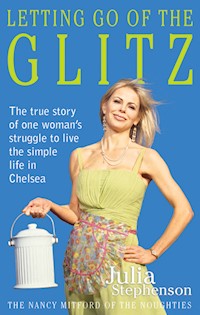
Help! I'm Married Alive!Julia Stephenson, struggling to cope with life as a Surrey housewife, grimly welded to her electric floor polisher and fed up with her golf-addicted, BMW-driving husband, bolts to the fleshpots of London. Here she forges a new life as single girl about town in her Chelsea eyrie, a short walk from Peter Jones. Bemused to find herself an 'It-girl' life soon becomes a ritzy blur of parties, popping corks and flashbulbs, while handsome aristocratic boyfriends come and go. Realising she isn't cut out for this she reinvents herself as a femme serieuse representing the Green Party at the general election and begins to convert her fl at into the first carbon-neutral dwelling in Sloane Square.Giving up her usual dating fodder of Old Etonians and bankers she embarks on a tempestuous love affair with her builder. Who wants to be driven around in a Porsche when you can be ferried about in a spacious white van that runs on waste cooking oil? Life is so much better in every way when you let go of the glitz ...
Sie lesen das E-Book in den Legimi-Apps auf:
Seitenzahl: 314
Veröffentlichungsjahr: 2009
Das E-Book (TTS) können Sie hören im Abo „Legimi Premium” in Legimi-Apps auf:
Ähnliche



















To Steve
Acknowledgements
A CHAIN of good luck made this book possible.
First of all, thanks to SHE magazine which commissioned me to write an article about recycling, excitingly entitled ‘She gave up the champagne lifestyle to go green’ (I lied about giving up champagne of course — there are limits). Also thanks to GMTV, which on the back of this article filmed me dispensing string-saving tips at home. Somehow they talked my long-suffering inamorato, S, into peeing on our compost heap, replaying the footage twice (in case anyone missed it the first time) in front of six million viewers. One of those watching was my prospective publisher, Caroline Lenton, to whom I am eternally grateful, for she is the one who tracked me down and commissioned me to write this book. I am also hugely indebted to my endlessly patient and inspired editor, Emma Tuck, who tactfully steered things to their final conclusion. And of course thanks to S, who in the line of a Kate Bush song, makes me laugh and cry (and everything else in between) at the same time. It wouldn’t have been half as much fun without you.
If the minds of living beings are impure, their land is also impure, but if their minds are pure, so is their land. There are not two lands, pure or impure in themselves. The difference lies solely in the good or evil of our minds.
Nichiren Daishonin
Every one of us can make a contribution. And quite often we are looking for the big things and forget that, wherever we are, we can make a contribution. … Sometimes I tell myself, I may only be planting a tree here, but just imagine what’s happening if there are billions of people out there doing something. Just imagine the power of what we can do.
Dr Wangari Maathai
Contents
Title PageDedicationAcknowledgementsEpigraphPrologueChapter 1: The good life goes horribly wrong …Chapter 2: Spiritual shopping can damage your wealthChapter 3: Help, I’ve become an ‘It-girl’!Chapter 4: You don’t have to shave your head to become a BuddhistChapter 5: The dating jungleChapter 6: No good deed goes unpunishedChapter 7: Lemons are pretty goodChapter 8: I’m trying to give up flying, really I am …Chapter 9: A flirtation in the Far EastChapter 10: My love life lifts offChapter 11: Tempted by a telecommunications tycoonChapter 12: Electrosmog shockChapter 13: Cheese is good for youChapter 14: The joys of my wood-burning stoveChapter 15: Green celebrity hubrisChapter 16: Fortune favours the boldChapter 17: CarmageddonChapter 18: I’m a cyclist — don’t hate meChapter 19: My Vogue momentChapter 20: Greenwash in ChelseaChapter 21: Protect me from what I want!Chapter 22: Festive meltdownChapter 23: What’s the point?EpilogueAbout the AuthorCopyright
Prologue
NOW the recession has kicked in, I look back to the boom years and wonder, what were we thinking? For many years I, like so many others, was caught up in an extravagant consumer spiral — buying stuff I didn’t need, stressing myself out by moving house every year in a constant attempt to trade up the property ladder (oh, the misery!) and taking long-distance holidays that left me more exhausted than if I’d stayed at home. I witnessed those around me working round the clock and falling apart to fund the extravagant, unaffordable lifestyle to which so many of us aspired.
With man-made climate instability the biggest threat facing us, it’s timely that popular new movements are reflecting the thrifty zeitgeist without even needing to mention words like eco, green or sustainable. We have the mouth-watering Slow Food movement which promotes local food produced in rhythm with the seasons and fair pay for all those involved in the supply chain. Slow Travel eschews the misery of the modern airport and encourages us to enjoy travelling by train, ferry and foot, and to see the journey as part of the holiday.
Tom Hodgkinson similarly embraces the joys of slowing down in his politely revolutionary magazine The Idler which argues that idleness is eco-friendly and that to save the planet we need to relax and do less. Meanwhile, elusive groups such as the Cloud Appreciation Society and the Lying Around in Fields Society suggest that by being less driven we will be happier and save money in the process. It’s a revolution in thinking — after years of being driven to achieve, to acquire, to shop till we dropped, the new wisdom is less is more. Hurrah!
Practising Buddhism for seventeen years has also changed my perspective. As Buddhist philosopher Dr Daisaku Ikeda explains: ‘A barren, destructive mind produces a barren, devastated natural environment. The desertification of our planet is created by the desertification of the human spirit.’
Thus living a green life means we have to change from the inside first. Unless we transform our belief systems about what constitutes happiness we will go on grabbing and plundering what we can’t afford until both we and the planet are extinguished.
This book is a description of my journey to reach these same conclusions through various incarnations — from sports car driving Stepford wife, married alive in the Surrey suburbs, wrestling with my hostess trolley and incompatible BMW-driving husband, to someone who, fifteen years down the line, is finally happy in her own skin and in a relationship I could only have dreamt of back then.
I took some strange detours along the way.
Attempts to cope with the fallout of my hideous divorce turned me into a frantic spiritual shopper and dolphin bothererpar extraordinaire, trying to find happiness with feng shui, crystals, ruinously expensive Tony Robbins fire-walking courses and a trip to the Himalayas ‘to find myself’. I ended up with a bright red apartment, a broken heart, burnt feet and dysentery — not to say a depleted bank account and enough carbon emissions to make me hang my head in shame.
Chakras still confused, I threw myself into the heady nineties and the ritzy life of an It-girl. Flashbulbs and champagne corks popped while aristocratic boyfriends came and went. On paper my life looked glamorous but inside I was often heartbroken, racing around chasing my tail, never feeling I fitted in. We live in a world where money, glitz, status and celebrity are seen as prerequisites for happiness but as those who have acquired these baubles of ‘success’ will attest they are no guarantee of contentment. A cliché but true. Sadly, many of us will have to learn through bitter experience that while material benefits are not to be sniffed at, the structure of your life must be sound before you can fully enjoy them.
Truly, I’ve served my time shopping, going to openings of envelopes, endlessly pursuing designer bags on eBay, enduring cultural events in an attempt to appear intellectual, falling in love with unsuitable Porsche-driving men and taking fancy holidays in the sun.
One day I woke up and realised I hate parties, shopping is tiring and boring, Birkin bags are impossibly heavy (and don’t even fit over your shoulder so you can’t keep your hands free), vacations in the sun mean enduring airport hell, and prematurely wrinkled skin and men in fast cars are compensating for inadequacies in other areas (see Chapter 12). Give me a man on a bike any day of the week.
Changing my values and living at a slower pace is a huge relief. Now I get my kicks from writing about the ups and downs of greening my life, fighting and losing elections on behalf of the Green Party and forcibly indoctrinating my long-suffering boyfriend S — a builder not a banker, thank goodness — into the joys of a green life.
He has taken to peeing on the compost heap (it speeds decomposition if you were wondering), making briquettes from old newspapers and chopping wood for our zero-emission wood-burning stove with some enthusiasm — but he still forgets to take off the tops of bottles before recycling (sacre bleu!), is yet to wear the cheery Kermit-green hemp boxer shorts foisted on him at Christmas, and retains an unhealthy attachment to a vile diesel-belching white van.
Sometimes, after a particularly enthusiastic lesson on the joys of greenery, his screams can be heard all over Chelsea, but he is sticking with it despite many lapses (as I write he is booking himself an all-you-can-eat-and-drink-for-£199 package holiday in Mexico), but he’s a grown man, what can I do?
Chapter 1
The good life goes horribly wrong …
I LIVE in a top floor flat in Chelsea, slap bang next to Peter Jones, department store and Mother Ship to all Sloanes within a six hundred mile radius, give or take the odd mile. I’m so close that sitting at my desk on my four foot by five foot patio writing this I’m eyeball to eyeball with the haberdashery department.
I live firmly in the urban jungle — not the easiest location you might think for someone wanting to live a simpler, greener life. But these days, living in a city is often far greener than living in a distant rural outpost. For starters I don’t need a car, and buses and tubes are within easy striking distance. I can walk to local shops, there is a farmers’ market around the corner at weekends and I have a farm box of authentically misshapen veg delivered every week.
But I did give the whole Good Life thing a go once. When I married in the 1990s, like thousands of other equally misguided townies, I went through a ‘let’s move to the country and grow our own vegetables’ phase. The trouble is, my generation grew up watching The Good Life on telly and we thought self-sufficiency might be fun. I had also been much taken during a visit to a country fair — unsuitably hosted in a small piece of grubby parkland in Fulham — by the magical but elusive organisation called the Lying Around in Fields Society which proposes that we should all spend more time lying around in fields instead of rushing around chasing our tails. Their premise is that by lying around in fields you are doing no harm whatsoever to the planet and you are doing yourself a whole load of good by connecting yourself with the earth and giving yourself time to reflect.
I thought this a marvellous idea but as a multi-tasking townie I knew I’d never manage it: I’d end up taking along a laptop, mobile phone, my teach-yourself-German textbooks and quite possibly my ‘how to make your own soya milk’ DVDs, and disturbing all the other lying around in fields people. However, once I moved to the country I determined to really throw myself into the whole field thing. I couldn’t wait to stop ‘doing’ and practise ‘being’ — yeahhh!
The trouble is, it is even noisier in the countryside now than it is in London. Chainsaws, busy airports, roads and the growth of ghastly leisure pursuits like paintballing, clay pigeon shooting and off-road driving make rural life an aural onslaught. Occasionally at Christmas some of the headscarved ladies in Peter Jones might lose it a bit but that’s about as noisy as it gets in my urban eyrie.
But I didn’t know this when I persuaded Paul, my then husband, to exchange my cosy Fulham house where we were very happy for a concrete house in the darkest depths of the Sussex countryside. Here we would lie around romantically in fields and, away from the city at last, have time to smell the flowers.
I had vague dreams of recreating the Home Counties tranquillity of childhood, before my father pushed off, my mother went blonde and everything fell apart. In those distant days the only noise was from the occasional splash as Pimms-sodden guests crashed into the swimming pool.
No one talks much about feng shui any more, but it occurred to me that whilst Paul and I had been very happy in London, soon after moving to the concrete house things unravelled quickly. It may seem superstitious blaming a house for one’s circumstances but there’s no denying the place had a bad atmosphere.
Many people are seduced by the dream of living in a house with no near neighbours, but this is a mistake. Humans are pack animals and don’t thrive in isolation. In a stroke we exchanged a tube station and two bus routes on our doorstep for zero public transport. In London I rarely used my car, as everything was within walking distance, but Haslemere was another story — buying a pint of milk or a newspaper meant a six-mile round trip.
In the 1990s there was no organic food to be had for miles but this didn’t bother me as I was going to grow my own scrumptious biodynamic vegetables from seed. Miserably my dreams of self-sufficiency soon fell on stony ground as the poor soil yielded nothing but weeds.
People complain of misspent youth in bars and nightclubs, but my early twenties were squandered slaving over wheelbarrows of stinking pig manure desperately trying to coax growth from the barren ground. Whilst I’d been the one envied by single girlfriends for fulfilling the Bridget Jones dream — getting hitched and moving to the country to live in rustic bliss — the tables soon turned and I was the one envying them. I was knee-deep in Aga catalogues, making jam that never set, trying to play golf and other hideous suburban pursuits that I followed with dogged determination. I was hopeless at all of them, and while Paul’s star rose — reaching dizzy heights in the accounting profession as well as becoming the lynchpin of the Liphook Golf Club — I grew increasingly depressed. I had no time to lie around around in fields and I had no time to smell the flowers, either as I was too busy with my domestic responsibilities.
To be fair, my Martha Stewart aspirations were entirely self-imposed. Paul wasn’t the one demanding that I bake my own bread or shine the wooden floors with an ancient 1930s floor polisher using homemade beeswax polish. I had been infected by Martha madness and it was exhausting. It irritated me that Paul had embraced country life with gusto. He was good at chopping down trees, driving around the steep, narrow lanes and even enjoyed the long, pointless country walks that drove me mad with boredom. He was even good at relaxing — something I couldn’t get the hang of at all.
How I longed to give it all up and step into my city friends’ Jimmy Choos. I wanted to be wined and dined by glossy Italian bankers and whisked off to exciting European cities by them. I dreamt of escaping the demands of the unwieldy concrete house, its huge barren garden and, most of all, Paul and his great band of golfing cronies who descended like starving locusts every weekend. I realised I’d rather boil my own head than face another interminable weekend wheeling out my matching avocado bowls and gleaming hostess trolley.
I would spend days preparing for these feasts. Many people think that the Galloping Gourmet — the cookery writer famous for his extravagant creamy cooking — is dead, but let me tell you, his candle still burns brightly in this distant outpost of the Surrey suburbs.
The efforts I went to! I made bread, cakes and yogurt. I even baked my own wholemeal croissants, encrusted with organic toasted sesame seeds. I foraged in the garden and local woods for wild food. Foraging is fashionable now, but in the early nineties was unheard of. No wonder my nettle and nutmeg soufflés, which I had cunningly passed off as spinach, caused panic in my guests while my chickweed rissoles were the talk of Haslemere, but not in a good way. I realised regretfully that my lean green cuisine was just too outré for the Home Counties.
In a rare trip to London to visit Peter Jones (their range of organic cleaning fluids was far more comprehensive than anything I could find in Haslemere), I gazed up at the sooty city skyline, fantasising about living in a rooftop eyrie (like the one I live in now — this story does have a happy ending) quite alone and unconstricted by Stepford Wife constraints. But I didn’t have the courage to leave. Muddled and not knowing which way to turn, should I stay or should I go, I consulted a psychiatrist at the Priory who was kind and sympathetic: ‘If you don’t know what to do, do nothing.’ Wise counsel.
I didn’t know what to do so I stayed put. The psychiatrist also said that I’d know when to leave because I wouldn’t be able to face having sex with Paul any more. At the time, like most married women, I did what I could to put it off for as long as possible but I could still just about manage once a week — if I gritted my teeth. It seemed a bit mean not to when he was so keen and it stopped me feeling guilty for being so horrible to him.
But, sensing something was wrong, he had begun suggesting we ‘try for a baby’. Until then we had relied on condoms but fearing he might sabotage them I’d invested in an organic honey cap — honey being an exceptionally powerful spermicide — and tried to put him off wherever possible.
I splashed out on an unappetising selection of heavy flame-resistant hemp nightgowns I had spotted in an organic catalogue, reasoning that if they were sturdy enough to resist fire perhaps they would repel husbands too. Indeed the fabric was so unyielding that on several occasions trying to remove it had proved such hard work that we had both given up and gone to sleep.
But I did start to hatch an escape route with new interests that Paul didn’t share. I joined the local Friends of the Earth group and began attending meetings in the musty village hall. Being green wasn’t the glamorous occupation of fashionistas and movie stars that it is today. No, back then the clichés were all true and our hempy group was as beardy, sandal-clad and resolutely gluten-free as it’s possible to get. But I liked them all, and had finally found a tribe that I had more in common with than the grisly materialistic golfers and bankers that made up our usual social circle.
Thus emboldened I joined a writing class to vent my suburban spleen. There, alongside a vast number of similarly bored housewives, their expensive Mont Blanc pens (gifts from their exhausted Goldman Sachs husbands) speeding across the page, we would compose terrible poems about our inner turmoil.
I began an autobiographical novel and, to Paul’s chagrin, worked feverishly on it day and night. The compost heap suffered similar neglect and refused to decompose, leaving a terrible stench and blot on the landscape. The neighbours were incandescent.
Desperately miserable I began a doomed misalliance with an unemployed vegan drummer I met in the local health food shop. Skulking around Haslemere engaged in adulterous pursuits provided inspiration for my tales of marital misery. I saw myself as a modern Madame Bovary and began quoting chunks of the novel at my bemused husband. If I’m honest I found Flaubert as impenetrable as he did, but it did at least inspire me to persevere with my own bored housewife novel which was now well underway.
My writing schedule was intense, so domestic standards slipped, dust gathered and cobwebs appeared. The vacuum broke and I never got round to mending it. The healthy home-cooked meals were replaced by takeaways from the notorious but convenient Haslemere-Hot-Dogz. When it was closed down by an environmental health officer, I fed Paul on frozen TV dinners from FreezaWorld and the fridge soon toppled with arctic rolls, oven chips and raspberry ripple ice cream. My green dreams had collapsed in smithereens — for now at least.
One day, faced with the ghastly realisation that the face on the pillow next to me would stay the same till one of us died, I packed my bags and bolted to the fleshpots of Knightsbridge.
On my own at last, having disentangled myself from the clutches of the musician who was becoming increasingly possessive, I went blonde with relief and, without gainful employment, embarked on an intensive self-help odyssey. During divorce some people turn to drink and drugs but these were of no interest to me. My crutch was spiritual shopping — Princess Diana had nothing on me. No numerologist, shaman, soothsayer, dowser or astrologer (Ayurvedic or Western) was safe from my call. Bells were bonged, whale music murmured, feng shui consultants shuffled in and out bearing wind chimes and crystals and my bookshelves heaved with self-help tomes. I embraced a macrobiotic diet, travelled to Nantucket and Ireland to consult psychics, one of whom insisted I must visit the Himalayas which would enable me to find the true peace and happiness I was seeking.
This suggestion couldn’t have come at a better time. I was desperate to escape London and a sexual obsession with a heartless but devastatingly handsome German banker called Holst. He was tall, blond and wore crisp cornflower blue shirts that matched his cold cobalt eyes — I’m sure this was intentional. He would torture me with late night phone calls during which he would discuss existentialism while playing ‘Riders on the Storm’ softly in the background — I’m convinced he timed the ebbs and flows of our meaningful conversations with the crashing of waves in the song. Whoosh, crash, trickle, whoosh, whoosh … It was all very sexy and phallic, cunning bastard, but the cruel thing was he’d talk about sex all the time but had decided our relationship should remain celibate, as I was still married. This was maddeningly true because the decree nisi still hadn’t come through and Paul was always coming round to pick up stuff. After years of making excuses to get out of sex, it was a cruel irony to have the tables turned on me by the tantalising Teuton, but no more than I deserved.
Soon after my consultation with the Nantucket psychic I booked myself onto a flight to Nepal, impulsively pitching up at Kathmandu airport with nowhere to stay. This was an oversight as the place was teeming with shifty looking hawkers and tuk-tuk drivers. Clutching my Lonely Planet guidebook I ignored the hustlers and took a cab to the recommended Kathmandu Inn, reputedly a haven for weary, besieged Europeans. It sounded perfect; however, it was a dark, dank and dismal place, full of ancient libidinous hippies strumming tuneless guitars and smoking pot. After one night I escaped to the countryside and spent a further two weeks travelling round this chaotic, exasperating and beautiful country which had absolutely bewitched me. As the days rolled by I became aware that the anxieties of the past and my fears of the future were falling away, leaving me feeling happy and excited. I barely thought about Holst, except to wonder why on earth I’d been so keen.
Returning to Kathmandu I checked into a glorious airy colonial hotel and began chatting to one of the receptionists, Naju, a slightly built Nepali with sparkling dark eyes and a quick sense of humour. We immediately hit it off and, despite strict hotel rules forbidding fraternisation with the guests, embarked on a secretive and romantic affair, made all the more bittersweet because I only had a week before returning home. On our first evening together we hired (rather I did — he had no money) a tuk-tuk to visit Swayambhunath Stupa, an ancient, magical temple bathed in moonlight and teeming with pilgrims, families and wild monkeys swinging and swooping around us. Candles flickered in the darkness and devout Buddhists spun prayer wheels and kneeled inside a number of small chapels that made up the temple. The air was heavy with burning incense, the chatter of monkeys and the endless murmuring of prayers. It was also crowded, grubby and noisy, all the things I usually abhor, but something in the spirit of the place swept me along with it.
But by the end of the week the romance, which had started off so promisingly, was going downhill fast. As I got ripped off every time I tried to buy something I’d quickly realised that it was much easier for Naju to take care of the paltry amounts needed to buy drinks and pay for tuk-tuks, so I handed him my purse. Within a few days he took it upon himself to start distributing its contents to the many beggars that thronged our path — maddeningly he dished out my small change with the superior and benevolent air of a mini pasha. The following day when he took me to the airport I realised on checking in that due to ‘his’ largesse I had no money left to pay the airport tax. Grrr!
But all thoughts of the grasping Naju soon left me as the plane took off and tears streamed down my cheeks. A sensible Nepalese steward dispensed tissues and sat down on the armrest to chat. ‘Are you missing someone?’ he asked, noting I was travelling alone. I glanced out of the window catching a final glimpse of the glorious Himalayas as they faded from view. I knew that my love affair had been with a country, not a man, but the ache in my heart was like leaving a lover all the same.
‘You may leave Nepal,’ he said, ‘but Nepal will never leave you.’ I knew exactly what he meant. My visit had been utterly extraordinary and I wondered if I would ever experience anything quite like it again.
I would never forget the mountains, the temples, the chaos, the spirit of the country. And contrarily, despite my misty eyes, I felt incredibly irritated about Naju. Imagine, he had left me with no Nepalese money for the airport. The cheek of it! However, despite all this, he had brought a magical quality to my trip. By introducing me to his friends and taking me to places I would never have visited alone he had shown me a glimpse of the country that otherwise would have remained hidden to me.
Soon after my return I was lying on my bed feeling misty eyed about the trip when the phone rang. It was a Nepalese operator asking if I would accept a reverse charge call from Naju. ‘Most certainly not!’ I replied and slammed down the receiver.
But Naju was tenacious. Emails and phone calls followed. ‘Do not forget your poor brother in Nepal,’ he pleaded. ‘Please sponsor me. I want to come to London and live with you!’
‘Oh do get a grip!’ I replied tersely, ‘I’ve got quite enough brothers as it is’ (due to my parents’ various marriages this is indeed true), but my irritation seemed lost on him. ‘You must stop contacting me. I’m getting married’ I lied firmly, ‘and my fiancé insists you stop!’
This did the trick and I never heard from him again. But in time my irritation faded. That’s Nepal — maddening, awful and wonderful, all at the same time.
Chapter 2
Spiritual shopping can damage your wealth
I HADN’T been home very long when I was soon knee-deep in tantalising self-help catalogues. Although I was deeply tempted by the Landmark Forum and the Hoffman Process I was put off by having to share small carpeted bedrooms with strangers — for the prices they were charging ‘patients’ should get a luxurious bedroom, v-spring mattress and marble bathroom full of delicious unguents at the very least.
But caution flew out of the window after listening to a Tony Robbins CD called Awaken the Giant Within and I impulsively signed up for a round-the-world self-help extravaganza starting with fire walking in Frankfurt. Tony Robbins has been enormously successful — his books and DVDs sell in their millions and he attracts a huge following at his courses.
The brochure promised that the course would ‘vanquish everything that may be holding you back from utilising the force that can instantly change your life’ and that I would learn to ‘instantly place yourself in peak emotional, mental and physical states and achieve results beyond your wildest dreams!’
Truly, how could any spiritual shopper resist? Could you? But if I’d known what a nightmare it was all going to be I’d have stayed at home.
The following weekend I arrived in Frankfurt and with great trepidation crept into the enormous city auditorium, jam-packed with four thousand jostling, flag-waving Germans. As Tony swung confidently towards the stage on a rope he got stuck and was left swinging for several terrifying minutes. Members of his entourage dashed onto the stage and deposited him gingerly on the ground, from where he immediately began to boost us with positive life strategies. As he warbled on late into the night I got chatting to the chap next to me. He was called Hans and we immediately bonded through boredom — everyone was getting so much out of Tony’s bon mots, but like the emperor with no clothes, we just didn’t get it at all.
Eventually Tony ran out of steam, groovy music blared and we were encouraged to dance and hug as many people as possible. This turned into a sort of mass grope, sexual confidence being a core part of the Tony ethos. I couldn’t face it. The Germans invented the naked mixed sauna experience so they really get into this sort of thing — at similar courses in the UK everyone just shakes hands — so I stayed with Hans and snogged him instead. Not for long though — next up was the dreaded fire walking.
Fires had been lit, tribal music throbbed. Drums pounded and adrenaline surged through our terrified veins as we stood in line waiting for our turn to run over the red-hot burning coals. Terror had engendered a primal wartime lust in the participants, many of whom were locked in steamy embraces. Indeed, Hans and I had become so bored and disillusioned with the whole thing we were now similarly enmeshed. Unfortunately this meant we missed some of the pep talk teaching us how to ‘get in state’ by chanting ‘cool moss, cool moss’ (a physiological ploy to cool us down) as we ran over the sizzling coals. We did try this but we still ended up burning our feet.
As we had our feet bandaged later, along with hundreds of other positive thinking failures, I was downcast but quickly revived when Hans suggested he’d ‘had enough of this bollocks’ (his English was impressive) and did I want to come with him to the South of France where he was doing some business.
We spent a fairly chaste night at our respective hotels and the next morning he picked me up in his Vorsprung durch Technik Audi with its self-warming seats and air con. We were both dizzy with relief at escaping the day’s challenges which included jumping off a one hundred-foot telegraph pole ‘to conquer our fear of life’.
We enjoyed an epic drive through Germany, stopping off at a luxurious chateau for the night. But a shadow soon clouded our thrilling escape when the following morning his suitcase spilled open and all the towels from our hotel bathroom fell out.
I was dumbfounded — did he have no towels at home? A pall descended on our journey. At the next service station his credit card was refused. I’d assumed he was comfortably off but he admitted business was not going so well. But I found him hugely attractive so I put the towels and imminent penury out of my mind.
On the outskirts of Cannes we stopped at a service station for a snack where my bag, containing my credit card, passport, diary and phone, was snatched. I was devastated. Disconsolately we made our way to a hotel run by a friend of his, the authoress of several conspiracy theory novels. It was dark, freezing and pouring with rain when we arrived. Hans was in a foul mood and there was an unspoken feeling that my bag theft was karmic retribution for his towel thieving. The hotelier/conspiracy theorist, a dour, paranoid German woman who had some kind of crush on Hans, wasn’t happy to see me at all. Utterly exhausted we had a blistering row during which he accused me of being a spoiled rich girl who would only stay in luxury hotels and who had no conception of the real world.
‘Tell me something I don’t know!’ I scowled. ‘At least I don’t go round pinching towels!’ My outburst was so violent I couldn’t help noticing that the MDF walls juddered quite noticeably.
Hans stomped off to discuss the latest political plots with our hostess, whilst I tossed and turned in the cold hard bed. Neither of us slept a wink. The following morning we arranged for him to drop me back at the station. I was longing to return to London but was ridiculously disappointed when he agreed so readily to my departure. Strangely enough, I’d become quite keen on him again. Anyway, we both apologised and bid a teary farewell but I never heard from him again.
Before all this I’d been feeling quite cheerful, what with the new flat and the relief of being separated from Paul, but the whole Tony Robbins debacle had sunk me into a terrible gloom. I was so depressed my doctor prescribed Prozac, but in a triumph of hope over experience I decided to go on another Tony Robbins course — this time in Fiji. I’d paid for all the trips up front so I thought I may as well get on with it — and surely Tony’s positive life strategies would kick in for me soon?
Before I left I remember traipsing round the shops with my mother, too depressed to speak. She’d had a low impression of Hans ever since I’d confessed the towel pinching episode. ‘At least he’ll have plenty of towels to bag his space by the swimming pool on his next summer holiday,’ she sniffed. The thought of Hans and the rest of his country folk energetically rising at 6 a.m. to bag the best sunloungers in the Canaries and other Teutonic hotspots with their stolen towels was indeed deeply unappealing.
I could have saved my carbon emissions and stayed at home, for Fiji was no more successful than fire walking in Germany. I had expected that everyone would be staying at the luxurious Fijian resort owned by Tony Robbins, where the course was being held, but to my horror some sort of bizarre singleton apartheid was in operation and the single participants were bussed out every night while the couples stayed put in the sumptuous resort.
When I complained I was told that the selection for who slept where was random and that I had just ‘got unlucky’. Apparently it was to do with my ‘karma’. Huh, as if! My karma regarding luxurious accommodation had always been tip-top until now — what were they on about?
The singletons’ lodgings were a mosquito-infested swampy hotel forty minutes away and I found myself sharing with a beautiful but nutty American heiress who became increasingly deranged as the week went on. Every night she tried to get into my bed but she wasn’t exclusive in her favours and quickly developed a crush on Robbins, regularly throwing herself onto the stage during his monologues. The fire walking soon sent her right over the top and she threatened suicide which resulted in the Fijian National Guard having to stand sentry outside our room to stop her drowning herself. Eventually she was sedated and carted back to LA.
Although I could see that Robbins had integrity and I was impressed by his ‘can do’ ethos, his energy and the way he inspired those around him, his courses left me feeling strangely depressed. I realised I would have gained far more by just reading his boosting books and watching his inspirational DVDs in the comfort of my own home.
Ironically, on all the courses I attended, despite the fact that we were apparently being trained to be ‘leaders’, any sort of independent thought was firmly suppressed and there seemed an unhealthy focus on consumerism and money. This was symbolised by the Platinum Club. At this time it cost about US$30,000 to join and enabled the lucky member to wear a tacky platinum-coloured medallion and share meals with Tony (quite honestly, once you’d witnessed his table manners you’d pay US$30,000 not to dine with him).
The lucky medallion men were terribly libidinous and confident in their right to exercise droit de seigneur with any girl who took their fancy. Stomping around, clanging their tiny gongs, many of the girls thought they were quite a catch. During one endless seminar Robbins encouraged us to join up by outlining the amazing boundless pleasures that awaited those who could afford the fee. The Platinum website is packed with glossy, grinning people in mouth-watering locations — they frolic on camels in deserts, swim through waterfalls and are pictured boarding private jets. The site gushes ‘the world is our playground’ (Grrr! I wanted to shout at these grinning gas-guzzlers that the world is not our playground to trash at will!). During one of our lectures Robbins described escorting some members to a top nightclub in Paris where the doorman had chucked a group off their table so that the superior Platinum gang could sit in comfort. What sort of person does this appeal to?
If this wasn’t bad enough I had to endure endless seminars




