


Erhalten Sie Zugang zu diesem und mehr als 300000 Büchern ab EUR 5,99 monatlich.
- Herausgeber: Clube de Autores
- Kategorie: Ratgeber
- Sprache: Englisch
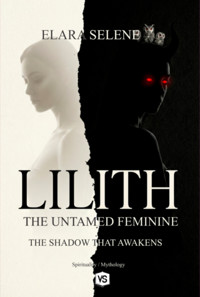
"Lilith: The Untamed Feminine: The Shadow that Awakens" by Elara Selene There are encounters with certain books that feel like an inner calling: something within you knows the time has come to face your own shadow. Lilith: The Untameable Feminine guides the reader through a journey that begins in ancient mythology and culminates in very contemporary dilemmas: freedom, desire, guilt, autonomy, body, and spirituality. Far from being merely a study of a demonised figure, the work reveals Lilith as a radical mirror of the soul: that which you have repressed, silenced, or felt ashamed to feel. Interweaving history, depth psychology, and symbolic spirituality, the text invites the reader to reframe anger, fears, desires, and boundaries, offering ritualistic and reflective tools so that each reader may reclaim sovereignty over their own body, their voice, and their spiritual sensitivity. From this perspective, the book delves into the archetype of Lilith as a key to understanding the feminine shadow and awakening the untameable feminine through a structured shadow work process, featuring practices, journalling, and rituals. It explores sacred sexuality and sexual magic as conscious pathways for feminine healing, integrating trauma, pleasure, and spirituality within a body that once again becomes a temple.
Sie lesen das E-Book in den Legimi-Apps auf:
Seitenzahl: 244
Veröffentlichungsjahr: 2025
Das E-Book (TTS) können Sie hören im Abo „Legimi Premium” in Legimi-Apps auf:
Ähnliche




















Lilith: The Untamed Feminine
The Shadow that Awakens
Elara Selene
Copyright © 2025, published by Virginia Santos
Original Title: Lilith: O Feminino Indomável
This book is a non-fiction work that explores feminine archetypes, mythology, depth psychology, and symbolic spirituality. Through a mythopoetic and historical lens, the author guides readers on a journey into the collective unconscious, unveiling the power of the Shadow and the symbolic path of Lilith as an archetypal force of freedom and authenticity.
1st Edition
Production Team
Author:Elara Selene
Editor: Virginia Santos
Cover Design: Studios VS / Alenna Yvrin
Consultant: Dr. Thalos Varnen
Researchers: Maelis Oryn, Daven Thier, Lyra Tress
Layout Design: Kaelen Dryst
Translation: Nyla Verin
Publication & Identification
Lilith: The Untamed Feminine
VS Publishing, 2025
Categories: Psychology / Spirituality / Mythology
DDC: 155.633 – Women as archetypes (in psychology and mythology)
UDC: 398.22:159.964.23 – Feminine myths / Psychological female archetypes
All rights reserved to:
VS Publishing / Virginia Moreira dos Santos
No part of this book may be reproduced, stored in a retrieval system, or transmitted in any form or by any means — electronic, mechanical, photocopying, recording, or otherwise — without prior and express permission from the copyright holder.
Table of Contents
Introduction
Chapter 1 Ancient Origins
Chapter 2 Lilith and the Judaic Legends
Chapter 3 Medieval Demonization
Chapter 4 The Archetype of Rebellion
Chapter 5 Lilith in Astrology
Chapter 6 Night, Moon, and Darkness
Chapter 7 Lilith as Psychological Shadow
Chapter 8 Shadow Work
Chapter 9 The Lilith Journal
Chapter 10 Rites of Severance
Chapter 11 Guided Practice
Chapter 12 Fierce Protection and Psychic Defense
Chapter 13 Lilith’s Mirror
Chapter 14 Glamour Practice
Chapter 15 Sacred Sexuality
Chapter 16 Sexual Magic
Chapter 17 Solo Sexual Magic
Chapter 18 Sexual Magic for Manifestation
Chapter 19 Invocation and Dialogue with the Archetype
Chapter 20 Shadow Integration
Chapter 21 Ritual of Rebirth and Sovereignty
Chapter 22 Lilith in Modern Culture
Chapter 23 Criticism, Dangers, and Controversies
Chapter 24 The Path of the Owl
Epilogue
Introduction
There is a type of literary encounter that is not born merely from the desire to read, but from a subtle — almost ancestral — intuition that certain words arrive precisely when the soul is ready to hear them. Lilith: The Untamed Feminine belongs to this rare space. Not as a doctrinal manual, nor as a mythical narrative isolated in time, but as a carefully constructed passage for those who sense that something in their own story — spiritual, emotional, or existential — is calling for reframing.
The book before you does not speak only of Lilith; it stirs what Lilith symbolizes. The work guides the reader through a journey that spans millennia, yet paradoxically echoes within dilemmas that are entirely contemporary: identity, freedom, boundaries, belonging, Shadow, desire, and healing. It is no exaggeration to say that this reading carries transformative potential. Not through the easy promise of ready-made answers — the text is far too mature for that — but through its capacity to open inner spaces that often remain sealed for years.
From its first pages, the author approaches the myth with historical rigor and psychological depth, yet without disconnecting it from concrete human experience. The reader is guided to understand how Lilith was born as wind, Shadow, breath, indomitable force — and how this archetype traveled across cultures, eras, and religions until it became a living presence in the collective imagination. In each chapter, a clear intention emerges: to restore to the myth its original complexity so that, within it, the reader may find instruments of self-knowledge, spiritual protection, and personal restructuring.
Whatever your search may be — emotional clarity, inner strength, complementary treatment for psychological pain, or simply a path to better understand your own spiritual sensitivity — this text offers a kind of silent holding that does not promise immediate healing but invites you to reorganize your own soul. The author does not state this explicitly, for that would be superficial; instead, she builds an atmosphere that allows this perception to arise spontaneously within you. As you move through the pages, it is common to notice that certain parts of the work “speak” directly to the reader, creating that intimate recognition that no rational explanation can contain.
Perhaps because Lilith, here, is not reduced to moralistic caricatures. She is presented as a vital principle, as a psychic force, as a legitimate — and forgotten — part of human nature. The work makes it clear that the Shadow is not an enemy to be fought, but a fertile territory that can be understood, integrated, and transformed. This perspective opens the door to profound change: to rediscover parts of oneself that were repressed, silenced, or misinterpreted throughout life.
Each chapter advances like a spiral, widening the perspective without breaking the thread that binds it. The author weaves together mythology, Jungian psychology, symbolic spirituality, astrology, and historical analysis without becoming confusing or overly technical. What emerges is firm, elegant, and at the same time sensitive writing — able to touch both those seeking knowledge and those seeking healing. And, more importantly, the reading does not demand absolute agreement, only openness. It is within this openness that the book encounters the reader.
Do not be surprised if, during the reading, you feel that certain parts of yourself are being named for the first time. Myths do this — they offer language for internal experiences that have accompanied us for years, yet rarely find the opportunity to be understood in depth. In times of emotional exhaustion, rising anxiety, and mental overload, having access to a work that reintroduces the sacred in a lucid way is almost an act of protection. Not of escape, but of reconnection.
The richness of this book also lies in its sincerity. There are no explicit persuasion strategies, but there is clear care in creating conditions for the reader to recognize their own strength. The narrative does not infantilize, underestimate, or dramatize. It accompanies, supports, challenges, and awakens — always with a quiet respect for the one who reads. In this way, the author manages to approach delicate themes such as autonomy, oppression, sexuality, spirituality, and the unconscious without invading the reader’s emotional space. Instead, she invites the reader to enter their own depth with safety.
This is, therefore, a book for those who do not fear knowing themselves. For those who wish to understand the invisible roots of their fears and their strength. For those who sense an inner calling, difficult to explain yet impossible to ignore. Many come to this work seeking spiritual protection; others, psychological balance; some seek clarity for important life transitions. Regardless of intention, the reading tends to offer precisely what each reader is emotionally prepared to receive.
Perhaps this is the true power of this work: it does not attempt to shape the reader; it allows the reader to rediscover themselves. This is rare. And when it happens, reading ceases to be merely an intellectual act and becomes a transformative experience.
Now that you are about to cross the pages ahead, my only recommendation is this: read without haste. Allow the text to breathe within you. Some passages illuminate; others unsettle — and it is precisely within this contrast that the movement of healing and integration resides.
Welcome to the journey.
Virginia Santos, Editor
Chapter 1 Ancient Origins
At the dawn of civilization, the Mesopotamian region emerged as one of the earliest great stages of human development, home to pioneering cities, writing systems, codes of law, and agricultural innovations that would give rise to complex society. Between the Tigris and the Euphrates, peoples such as the Sumerians, Akkadians, and Babylonians built empires and inaugurated the foundations of urban life, marking the transition from nomadism to territorial settlement and organized social coexistence. Yet, even in the presence of solid walls and elaborate civic rituals, a sense of vulnerability before the unknown persisted. Beyond the limits of the cities began the realm of invisible and uncontrollable forces — a wild nature inhabited by beings whose existence was both feared and revered.
It is within this tension between the civilized and the wild that the primordial archetype of Lilith emerges. Long before she was associated with Hebrew legends as Adam’s first woman, Lilith already had her roots carried on the winds of Mesopotamia. The etymology of her name points to the Sumerian word Lil, which referred not only to wind in its physical aspect but also to the vital breath, the spirit that permeates the space between heaven and earth. In that region, wind was both a gift and a threat — it could bring the rains that ensured survival or devastating sandstorms that reduced everything to ruin. For this reason, wind was perceived as the expression of divine or demonic will, a living entity endowed with intention and power.
From this linguistic root, the Sumerians and later the Akkadians and Babylonians named a class of spiritual beings: the Lilitu. Unlike traditional gods, who received temples, offerings, and defined roles within the pantheon, the Lilitu were manifestations of raw nature, liminal forces dwelling in desolate zones, abandoned fields, and forgotten ruins. There were variations within this category: the masculine Lilu, the feminine Lilitu, and Ardat Lili, the ghostly maiden destined never to marry. What they shared was a central characteristic: sexuality dissociated from fertility. Whereas goddesses of fertility represented the continuity of life, the class of Lilitu symbolized a burning and barren desire, the vital impulse that bears no fruit but consumes and exhausts.
In Sumerian and Babylonian myths, the Lilitu were often described as spirits of the wind — and later as spirits of the night — wandering without rest, seducing men and threatening small children. To understand this image, it is essential to enter the mindset of the ancient Mesopotamians. Infant death was a frequent and inexplicable reality, and in the absence of medical knowledge, these tragedies were attributed to supernatural agents. Lilitu thus became the answer to the inexplicable: she personified the hidden danger of the nights, the treacherous breath that took the lives of the innocent. Her role did not stem from a moral choice, but from her nature, comparable to the blind force of a storm or flood.
Among the oldest accounts foreshadowing the complexity of the Lilith myth, the Epic of Gilgamesh stands out, particularly the Sumerian poem “Gilgamesh, Enkidu and the Netherworld”. In it appears the symbolic Huluppu tree, found by Inanna, queen of the heavens, on the banks of the Euphrates after having been uprooted by a south wind. Inanna replants it in her sacred garden with the intention of transforming it into a throne and a bed. However, the tree becomes occupied by three beings: in the roots, an uncharmable serpent; at the top, the Anzu bird and its fledglings; in the trunk, the ki-sikil-lil-la-ke, often translated as “the maiden of the wind spirit” or “the ghostly maiden”. Scholars see in this figure one of the direct precursors of Lilith. Her presence in the tree represents the intrusion of the untamed into the sacred space of civilization, in opposition to the order embodied by Inanna.
The appearance of the ki-sikil-lil-la-ke in the Sumerian narrative, though brief, carries profound symbolic weight. The Huluppu tree was not an ordinary plant but a world-axis, a symbol of connection between heaven, earth, and the underworld. By occupying the trunk, the ghostly maiden positions herself as a force of transgression, an element of disorder inserted at the center of Inanna’s civilizing space. Whereas the goddess represents sovereignty, fertility, and order, the ki-sikil-lil-la-ke embodies the refusal to be tamed, the insistence of the wild on asserting itself in the heart of civilization. When Gilgamesh, the hero of the poem, is summoned to restore order, he performs a decisive sequence: he kills the serpent in the roots, drives away the bird from the top, and compels the mysterious inhabitant of the trunk to flee to the desert. There is no direct battle, no resistance; the maiden laughs and disappears, carrying with her the indomitable energy that cannot be enclosed. It is this exile that forever marks the dynamics of the myth: the expulsion of autonomous femininity, of free and dangerous desire, beyond the borders of organized society.
The iconography of ancient Mesopotamia deepens this image further. One of the most notable examples is the Burney Relief, or “Queen of the Night”, a terracotta plaque dated to around 1800 BCE. In this piece, we find a naked female figure with outstretched wings and a powerful expression, whose feet end in the talons of a bird of prey. She stands upon two lions, symbols of strength and dominion, while two owls flank her. This set of attributes distances the figure from traditional paradigms of the fertility goddess. The frontal nudity, devoid of royal adornments, suggests an ancestral and defiant power, while the talons and owls reinforce her connection with the night, mystery, and silent hunt. Debate continues about the identity of the Queen of the Night — Ereshkigal, Inanna/Ishtar, or Lilitu — but many scholars lean towards recognizing in this relief one of the primordial faces of the Lilith archetype: the queen of the nocturnal realm, of dangerous fascination, and of wild sovereignty.
The transition of Lilitu from wind spirit to demon of the night occurred with the influence of Semitic languages and the transformation of Sumerian myths over the centuries. The Akkadian Lilitu and Hebrew Lilith became associated with the Semitic word layl, “night”. This linguistic shift is far from trivial; it marks the symbolic displacement of the figure into the domain of darkness, the unknown, the period when the borders of social order dissolve. For the ancients, night was not merely the absence of light, but the time of chaos, when dangers lurked and city walls could not guarantee safety. In this context, Lilith becomes the lady of the night, the one who governs the space where fear and mystery reign, and where human order is suspended.
Archaeological evidence of this fear and reverence appears in objects such as the Aramaic incantation bowls found in ancient Babylonian ruins. These bowls, buried upside down beneath houses and beds, bore magical inscriptions in spirals intended to capture and imprison demons — among them, Lilith. The engraved texts contained pleas for her to stay away from the home, the marital bed, and the children, portraying her as an unwelcome presence, a spiritual and invisible rival, bearer of envy and destruction. The image of Lilith as a jealous neighbor or spiritual ex-wife reveals her role as a destabilizing force, ever on the margins of daily life, watching for the moment to intervene and disrupt domestic happiness.
Lilith’s sterility, far from being a mere biological attribute, carries profound social and psychological implications. In ancient Mesopotamia, the feminine ideal was inseparable from motherhood and household management. Lilith, as antimother and antiwife, symbolizes all that threatened this paradigm: autonomous sexuality detached from reproduction, pleasure without social function, and freedom that rejects the constraints of familial responsibility. Thus, she was perceived as a threat to the established order, to the continuity of the clan, and to the prosperity of the community.
Despite the fear and repeated attempts to exorcise her, Lilith was always more than a simple personification of evil. Mesopotamian cultures recognized, albeit ambiguously, the sacred character concealed within her aura of danger. For them, chaos was not solely destructive but also a vital force, a source of renewal and creativity. Like Tiamat, the primordial ocean that simultaneously threatened and generated all things, Lilith formed part of an essential balance between order and disorder. She inhabited the border between the world of the living and the world of spirits, playing a fundamental role in testing and punishing those who crossed boundaries or disobeyed unspoken rules.
In her association with ritual purity, Lilith performed an inverse role to that of protective goddesses. In Mesopotamian accounts, men visited by her in dreams — often experiencing nocturnal emissions — were considered impure and touched by dangerous energy. This aspect reveals how Lilith governed zones of the unconscious, dominating desires, fears, and impulses that eluded the control of the civilized man. Even priests and kings, protected by rites and amulets, were not safe from her nocturnal influence. Lilith exposed human fragility before instinctive and uncontrollable forces, demonstrating that no wall or law could contain the entirety of human experience.
Mesopotamian tradition also included other female demonic figures, among them Lamashtu, often confused with Lilitu. Lamashtu possessed ferocious attributes, such as a lion’s head, and was known to attack pregnant women and children. Yet while Lamashtu was essentially monstrous, Lilitu — and later Lilith — retained seduction and beauty as central elements of her myth. This distinction is fundamental, for it positions Lilith as a danger not through brute force but through irresistible desire and fascination. She represented the forbidden, that which attracts precisely because it is prohibited, functioning as a constant reminder that desire, when ignored or repressed, may become a threat.
An analysis of the Mesopotamian pantheon reveals that Lilith occupied a liminal place of sacred transgression. In the perspective of ancient religions, the sacred was not synonymous with the benign: it was that which evoked fear, respect, and caution for being powerful and, at times, dangerous. Lilith was, in this sense, the embodiment of what cannot be tamed, of the wind that blows where it wills, and of the night that refuses to be banished. Magical practices such as the use of incantation bowls demonstrated that, despite efforts to banish her, her presence remained an inescapable constant in the spiritual life of ancient peoples. She was the unwanted visitor, the persistent Shadow that never disappeared entirely.
Lilith’s legacy consolidated fundamental elements of the archetype that would endure across centuries: air and wind as symbols of freedom and intellect, night as the realm of the hidden and the unconscious, sexuality detached from reproduction, and the refusal to be integrated into the established order. In the Sumerian narrative, the ghostly maiden who flees to the desert when expelled by Gilgamesh is not destroyed; she merely withdraws to the margins, preserving her existence and power untouched, ready to re-emerge in other mythical and cultural contexts.
These ancestral origins form the foundation upon which Lilith would later be reinvented in various traditions, including the Hebrew tradition, where she would acquire new contours and challenges. Without an understanding of this original figure — the spirit of the storm, of untamed desire, of the unsettling presence that resists domestication — it is impossible to grasp the full complexity of the Lilith myth. In Mesopotamia, she was not a rebellious woman but a force prior to submission, an entity that never belonged to the world of obedience. Lilith was conceived free, daughter of wind and Shadow, preceding Eden itself, and she persists, watching from the margins of stories, guardian of a feminine power that oscillates between fear and fascination, threat and inspiration.
Chapter 2 Lilith and the Judaic Legends
In the transition from the Mesopotamian world to the Judaic context, Lilith ceases to be merely a restless wind and becomes endowed with body, voice, and her own narrative. The invisible spirit of the storms that once swept between adobe walls on the plains of ancient Babylon now takes on human contours and ethical motivations, becoming a character capable of acting, choosing, and, above all, challenging. This passage from impersonal force to moral subject represents a profound shift in the construction of the myth, for it transforms her into a figure capable of enacting the primordial rebellion.
In the traditional biblical text, Lilith is not named explicitly, yet her absence is almost as eloquent as a presence. Genesis offers two accounts of creation which, when read attentively, reveal an unresolved tension. The first, in Genesis 1:27, states: “God created humankind in His image; in the image of God He created him; male and female He created them.” Here, creation is simultaneous, and man and woman appear together, equal and complete. There are no removed ribs and no imposed hierarchy. However, in the following chapter the narrative shifts: Adam is formed from dust, and only afterwards, from his rib, a woman is shaped to be a “suitable helper.” This contrast left an interpretative breach that enabled the emergence of Lilith as a mythical figure, arising from the first narrative as the “First Eve,” the woman made from the same clay, the same principle, the same vital breath as the man.
This gap between the accounts fueled the creativity of Jewish exegetes and storytellers, especially from the medieval period onwards. It is in the Alphabet of Ben Sira, a work situated between folklore and satire, composed between the eighth and tenth centuries, that Lilith receives her classical configuration. In this text, God creates Lilith from the same dust from which Adam was formed, making them essentially equal. Yet life together becomes rapidly conflictual: the text focuses particularly on the sexual dynamic, as Adam demands that Lilith lie beneath him, a symbol of feminine submission. Lilith, however, refuses, asserting: “We were both created from the earth; we are equal.”
Lilith’s argument is revolutionary not only for the Judaic tradition but for the whole of Western literature: she claims equality of origin and therefore equality of rights. Adam, inflexible, insists on the dominant position, prompting Lilith to break away. In an act of supreme insubordination, she pronounces the Ineffable Name of God — bearer of immense power in Jewish mystical tradition — and thus takes flight, abandoning Eden. Rather than being expelled, Lilith exiles herself voluntarily, relinquishing Paradise in exchange for freedom. This gesture of absolute refusal of submission inaugurates a new paradigm: it is not a matter of error or temptation, but of an assertion of autonomy, a will that anticipates every notion of biblical fall.
Lilith’s exile leads her to the shores of the Red Sea, a space laden with symbolic meaning of boundary, where she indulges in freedom and unrestrained pleasure, uniting with demonic spirits and giving birth to countless lilim. In the Garden, Adam mourns her loss and cries out to God, who, moved, sends three angels — Senoy, Sansenoy, and Semangelof — in search of the fugitive. The angels propose a pact: if Lilith agrees to return, all shall be resolved; if not, one hundred of her children will die each day. Lilith refuses to return and accepts the punishment, claiming, however, dominion over newborn human children for a certain period — a legendary explanation for infant mortality and for the custom of protecting babies with amulets bearing the names of the angels.
The negotiation between Lilith and the angels, recorded in the Alphabet of Ben Sira, consolidates a fundamental characteristic of the myth: the contractual power and magical rules governing the Judaic spiritual world. Lilith, even in exile and under punishment, establishes clear limits for her action, linking her interference to the absence of ritual protection. Thus emerged the custom, widely spread in Judaism, of hanging amulets in the rooms of newborns or inscribing the names of the three angels on the walls, aiming to ward off Lilith’s influence and ensure the safety of children. The fear she inspires is real, yet manageable, provided certain protective practices are observed. This magical dimension of the myth highlights the extent to which the Judaic imagination recognizes and integrates the sacred, the dangerous, and the transgressive within a single field of forces.
Lilith’s refusal to return to Eden and her choice of a marginal existence confer upon her a unique role in the Judaic tradition: she is the first woman to choose voluntary exile over compulsory submission. In contrast with Eve, created from Adam’s rib and destined to occupy a position of complementarity, Lilith is the antiwife, the antimother — the woman who does not accept hierarchy and is therefore demonized. God intervenes once more: He causes Adam to fall into deep sleep and, from his rib, creates Eve, ensuring a companion who, by her very origin, cannot claim the same equality. This reinterpretation reinforces the message that equality is not part of the established order: it is the exception that must be banished or reconfigured.
The figure of Lilith, however, does not remain static in folklore. Over the centuries, especially with the development of Kabbalah — the Jewish mystical tradition — she is re-signified and acquires still more complex contours. In the Zohar, a foundational work of medieval Jewish mysticism, Lilith attains cosmic status. She comes to be seen as the dark counterpart of the Shekhinah, the feminine face of the divine, becoming the consort of Samael, the fallen angel. This symbolic relationship establishes Lilith as the queen of the “Other Side” (Sitra Achra), the realm of the husks (Qliphoth), which stands in opposition to holiness and divine order.
In the Kabbalistic imagination, Lilith is depicted as an irresistible seductress, capable of diverting the righteous from the path of the Torah. She appears adorned in red garments with painted eyes, occupying nocturnal crossroads awaiting the unwary. Her seduction, however, is only the first face; once fallen, men encounter her terrible form, made of fire and destruction. Here, the narrative takes on a dual tone: Lilith is both an instrument of divine punishment and an expression of inescapable temptation, of the desire that threatens social and spiritual order. In some versions, God even castrates Samael to prevent him, together with Lilith, from filling the world with demons. Thus, Lilith remains associated with frustration, mourning, and the quest for a completeness eternally denied to her.
The tension between Lilith and the Shekhinah also illustrates an essential conflict: the clash between the maternal, protective, integrated woman and the wild, devouring, independent woman. When the Shekhinah weakens, Lilith ascends, suggesting that moments of crisis, exile, and spiritual suffering foster the return of the chaotic, marginalized element. Thus Lilith is constantly demonized, yet her presence is essential to the equilibrium of the cosmos: there is no light without Shadow, nor purity without the challenge of desire and transgression.
Lilith’s trajectory in the Judaic tradition reflects acutely the anxieties, expectations, and fears of the societies that invoked and transformed her over the centuries. The woman who refuses to submit to her husband’s authority, who possesses hidden secrets, and who expresses her sexuality outside the parameters of legitimate reproduction embodies the ultimate threat to patriarchal order. Turning Lilith into a child-devouring monster and a seductress of men is not merely a religious response; it is a direct reflection of social tensions, of the need to control the female body, and of the fear of autonomy and difference.
Even so, there is something irreducible and almost heroic in Lilith’s figure. At no point does she repent or attempt to return to Eden. Her stance is one of implacable dignity: she accepts the consequences of her choices, however painful, and does not relinquish her freedom — neither before the angels nor under divine condemnation. This integrity of character is rare in traditional folklore, in which most dissenters end up subdued or redeemed. Lilith remains unbroken, bearing loss and solitude as the price of her self-determination.
In Jewish mysticism, Lilith symbolizes “will,” the impulse that rejects both imposed order and passive obedience. Whereas Adam represents obedience to the law and Eve vulnerability to temptation, Lilith stands as the embodiment of radical freedom, of the refusal to accept any role not chosen by herself. She is the first exile, the patroness of the misfits, of those who live on the margins of established social models. Her story imposes upon the collective consciousness an unsettling question: what must be sacrificed to guarantee the safety and acceptance of the group? What is the price of autonomy in the face of the promises of Paradise?
Across the centuries, the demonization of Lilith ultimately preserved the core of her myth: the existence of an alternative to submission, the remembrance of an untamed feminine that predates Eden itself. Even turned into a frightening figure, she carries the secret that equality was possible and was lost by choice, not by divine decree. This detail travels through time like an uncomfortable whisper, a reminder that other forms of relationship and coexistence might have existed — and, in some sense, still can.
In the later development of the Judaic tradition, Lilith is also associated with night, with the unconscious, and with nonconformity. She personifies that which cannot be fully tamed or erased: desire, mystery, rebellion, and creative force. Beneath the tales of terror, the protective amulets, and the magical formulas lies the intuition that chaos, doubt, and the impulse to question are inevitable and necessary components of human experience. In certain Kabbalistic versions, it is even suggested that Lilith is indispensable for the balance of the universe, functioning as a limit and counterpoint to the utopian perfection of the established order.
Ultimately, Lilith in the Judaic tradition is more than a mere warning or threat. She is the personification of the price of freedom, the voice that refuses to fall silent, the memory of the possibility of equality and the right to self-determination. By challenging Adam, she also challenges every mechanism of power, becoming a symbol of the potential for resistance in the face of oppression. The question posed by her legend remains open and alive: how much of our individuality are we willing to sacrifice in order to remain in Paradise?




