


13,99 €
Mehr erfahren.
- Herausgeber: The History Press
- Kategorie: Geisteswissenschaft
- Sprache: Englisch
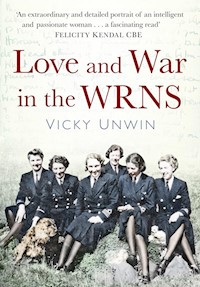
Sheila Mills's story is a unique perspective of the Second World War. She is a clever, middle-class Norfolk girl with a yen for adventure and joins the WRNS in 1940 to escape the shackles of secretarial work in London, her unhappy childhood and her social-climbing mother. From a first posting in Scotland in 1940, she progresses through the ranks, first to Egypt and later to a vanquished Germany. Extraordinary and fascinating encounters and personalities are seen through the eyes of a young Wren officer: Admiral Ramsay, the Invasion of Sicily and Operation Mincemeat that triggered it, The Flap, the sinking of the Medway, the surrender of the Italian fleet and the Belsen Trials. These observations are peppered with humorous insights into the humdrum preoccupations of a typical Wren – boys, appearance and having fun, while worrying about home and family. This treasure trove of hundreds of letters, along with scrapbooks and memorabilia, some of which are reproduced here, was discovered in bin liners shortly after Sheila died. Her daughter, Vicky, has pieced together a fascinating and unusual record of the Second World War from a woman's perspective.
Das E-Book können Sie in Legimi-Apps oder einer beliebigen App lesen, die das folgende Format unterstützen:
Veröffentlichungsjahr: 2015
Ähnliche




















About the Author
Vicky Unwin is the only child of Sheila Unwin (née Mills). She writes regular health and travel blogs and serves on the trustee boards of several charities. Her second book, The Boy from Boskovice: A Father’s Secret Life (Unbound, 2021), takes up the story of her parents and completes Sheila Mills’ extraordinary life story. She lives in London with her husband.
First published 2015
This paperback edition first published 2022
The History Press
97 St George’s Place, Cheltenham,
Gloucestershire, GL50 3QB
www.thehistorypress.co.uk
© Vicky Unwin, 2015, 2022
The right of Vicky Unwin to be identified as the Author of this work has been asserted in accordance with the Copyright, Designs and Patents Act 1988.
All rights reserved. No part of this book may be reprinted or reproduced or utilised in any form or by any electronic, mechanical or other means, now known or hereafter invented, including photocopying and recording, or in any information storage or retrieval system, without the permission in writing from the Publishers.
British Library Cataloguing in Publication Data.
A catalogue record for this book is available from the British Library.
ISBN 978 0 75096 467 8
Typesetting and origination by The History Press
Printed and bound in Great Britain by TJ Books Limited, Padstow, Cornwall.
eBook converted by Geethik Technologies
Contents
Acknowledgements
Foreword by Felicity Kendal CBE
Chronology
Introduction
1940
‘Disappointed with it all’
1941
‘It would be marvellous to feel one was doing something’
1942
‘Work, sleep … and a little pleasure thrown in’
1943
‘I am bursting with pride’
1944
‘How are the mighty fallen’
1945
‘Oh it’s all such a stupid muddle’
1946
‘These men!’
Postscript
Bibliography and Sources
Acknowledgements
This book is a tribute to my remarkable mother, and also to all those women in the Second World War who, in many ways, took a greater risk than the men in leaving the sanctuary of their homes and country in order to serve.
When I found Sheila’s letters bundled up in black bin liners after her death in 2009, I decided to fulfill her final wish, which was to write her memoirs. She had often told me that she was immensely proud of her war years: she had even begun to sort the letters herself, using recycled envelopes. However, our daughter’s sudden death in 2011 put a temporary stop to the project. Louise and her Granny had always enjoyed a close relationship and so it became the clichéd labour of love to complete this book in honour of both of them.
I thank them for inspiring me: writing the book was the perfect antidote to the grieving caused by this double bereavement.
Thanks also to my friends and family – especially my husband, Ross, and our son, Tommy, who have supported me during the painstaking process of pulling the book together. And special thanks to Charlotte Blundy who transcribed the letters, cleverly deciphering my mother’s difficult handwriting, and to Joanna Frank who gave me some excellent advice on an early draft.
Finally, thank you to Felicity Kendal for agreeing to write the foreword: I feel we share a bond via our two sets of eccentric parents. Felicity – your empathy through these difficult times has been a great solace.
Foreword by Felicity Kendal CBE
It is no exaggeration to say that what we have in this volume is a treasure chest of letters.
They start with Sheila, as an innocent ‘green girl’, joining the WRNS at the beginning of World War Two. She writes home to her mother, begging for parcels to be sent, for silk stockings, nail polish, and her old fur coat. She seems from the start to be obsessed with dances, dates and young men, and is determined not to have her hair cut short. But as these letters, like a journal, continue through the war, we see her grow into the feisty, ambitious and independent woman she will become.
Assigned to the important work of monitoring via cyphers and signals the enemy and British fleets, she travels to Egypt, and in her words becomes an ‘Invasion Addict’. She is promoted to Cypher Officer and as such has the knowledge of planned invasions and attacks. Her details of so many – now famous – turning points of the war are intriguing.
She lives a giddy life full of romance, hard work and danger, yet never loses her almost childlike wonder and excitement of the day-to-day social scene, the work she is doing, and her wonder at the Exotic East.
This is a chronicle of a time gone by, when in the midst of death and destruction so many women like Sheila, passionately committed to serving King and Country, were nonetheless equally committed to the important job of securing a suitable husband.
Sheila seems oblivious to her beauty, but not to the staggering number of young men who constantly pursue her. Like a modern-day Emily Eden, she enthrals us with details of her journey and adventures:
Saturday
Dinner at the Mena Hotel. It was just perfect – dining and dancing in the moonlight by the side of the swimming pool, all very gay – At about midnight we decided to walk up a hill to see the Pyramids, it was rather glorious – you walk out of the hotel garden up a hill which slopes round the foot of the Big Pyramid … which I climbed … and all in the bright moonlight … beautifully cool!
Her letters chart the war almost weekly. By the end she has met ‘unconventional’ Tom. He is the opposite of the social and gregarious Sheila, yet he seems to see off with ease any competition for her hand and heart. At the end of the war they plan to marry, as she writes to her mother:
Dear Ma,
Please don’t make too much fuss about anything – Tom hates it so – we shall get married I expect in a Registry Office – I honestly don’t think Tom would survive a proper wedding with relatives and guests – he’d probably get up and say something awful or shocking – he’s quite liable to!! And please don’t rush around telling everyone I am marrying a Czech!!
This is an extraordinary and detailed portrait of an intelligent and passionate woman, and a fascinating read.
Felicity Kendal CBE
Chronology
1939
September
Hitler invades Poland on 1 September; Britain and France declare war two days later
1940
January
Rationing starts in the UK
March
Bombing of Scapa Flow naval base in Scotland
April
Germany invades Denmark and Norway
May
Germany invades Belgium, Holland and France
Churchill becomes Prime Minister
Holland surrenders
Belgium surrenders
June
Evacuation from Dunkirk
Italy declares war on Britain and France
Norway surrenders
France signs armistice with Germany
July
German U-boats attack Atlantic convoys
Battle of Britain begins
August
First German air raids on London
September
Operation Sea Lion (invasion of Britain) planned by Germany with Blitzkrieg bombing of British cities
Italy invades Egypt
British victory in Battle of Britain
Germany, Italy and Japan sign pact
Sheila joins up and goes to Dunfermline for training
October
Sheila moves to Dundee
Germany invades Romania
Italy invades Greece and Albania
Hungary and Romania join the Axis
December
Britain begins desert offensive against the Axis
1941
January
Tobruk falls to the British
February
Afrika Korps arrives in Tripoli, led by Rommel
Benghazi falls to the British
March
Benghazi falls to Rommel
Tripoli falls to Rommel
Rommel besieges Tobruk, the only part of Cyrenaica to remain in British hands
Stalemate in the desert
British forces land in Greece
Sheila goes to Greenwich Naval College for Officers’ Training Course
Germany invades Greece and Yugoslavia
Greece and Yugoslavia surrender
May
British counterattack in Egypt
Fall of Greece and Crete
Sheila goes to Methil, Lundin Links, Fife
Sinking of the Hood by the Bismarck, and then the Bismarck is sunk
June
General Auchinleck takes over as Commander-in-Chief from General Wavell
Allies invade Syria and Lebanon
Germany attacks Russia
July
Britain and Russia agree pact of mutual assistance
August
Fall of Persia to British forces
Battle for Western Desert begins
Russia joins the war
Siege of Leningrad begins
September
First use of gas chambers at Auschwitz
October
Germans advance on Moscow
November
Aircraft carrier Ark Royal sunk off Malta by U-boat
December
Bad period for the navy: loss of Repulse and Prince of Wales in Far east; Ark Royal and Barham hit by U-boats in the Mediterranean; Valiant and Queen Elizabeth sunk by human torpedoes in Alexandria harbour
Mid-1941 – mid-1942
Eighth Army in retreat in Western Desert
Japan attacks Pearl Harbor
US joins the war after Pearl Harbor
Britain surrenders Hong Kong
1942
January
Sheila receives order that she is to report to Overseas Service Office in London
Early February
Sheila sets sail from England, destination Egypt via the Cape
End February
Sheila meets Robin Chater on board ship
Fall of Singapore
Tobruk taken by Rommel
May
Sheila arrives in Alexandria and is attached to Office of the Commander-in-Chief Mediterranean
Sheila meets John Pritty
June
US Navy wins Battle of the Midway – turning point in the Pacific
Sinking of the Medway at Port Said
Germans advance on Alamein Line and two hours from Alexandria
‘The Flap’ in Cairo and Alexandria, accompanied by mass evacuations of civilians and staff
July
First Battle of El Alamein begins
British Army in the Western Desert in retreat: General Auchinleck replaced by General Montgomery
Low point of war: Japanese sweeping through Malaya, Java, Burma, Philippines, Papua New Guinea and Borneo (1941–2)
October
Second Battle of El Alamein begins
November
Eighth Army wins Battle of El Alamein; turning point of the war
Operation Torch, combined landing of US First Army and Eighth Army begins offensive in North Africa with the aim of meeting in Tunis
Axis forces defeated at Stalingrad – Germany’s first major defeat
1943
January
Tripoli recaptured; Tunis falls to First (US) and Eighth Armies and Battle for Africa is won
Casablanca Conference: Roosevelt and Churchill call for ‘unconditional surrender’
March
Sheila moves to Cairo to join Admiral Ramsay’s planning team for Operation Husky, Royal Navy General Headquarters
May
Sheila meets Major Bruce Booth-Mason
German and Italian troops surrender in North Africa
June
Sheila is promoted to 2nd Officer
Sheila moves back to Alexandria now that Operation Husky planning is completed
July
Allies invade Sicily, Operation Husky, the beginning of the Second Front agreed by Churchill and Roosevelt at Casablanca Conference in Jan 1943
Sheila goes on leave to Beirut
September
Eighth Army lands in Italy
Italy surrenders but Germans rescue Mussolini
October
Sheila moves back to Cairo to work for Admiral Waller, director of Combined Operations
Rome falls to the Allies and Italy declares war on Germany
November
Allied leaders meet in Tehran
1944
January
Allied landings in Anzio
End of the Siege of Leningrad
March
Sheila is transferred to Suez as Principal Cypher Officer
Hungary occupied by Germany
May
Germans surrender in Crimea
Germans retreat from Anzio
June
Allies enter Rome
Operation Overlord: D-Day landings in Normandy
July
Operation Cobra: Allies break out from Normandy
Sheila goes on leave in Palestine with John Pritty
August
Sheila on leave in Beirut, Baalbek and Damascus with Aenid Brothers
Allies liberate Paris
Germans abandon Bulgaria
September
Sheila returns to England by sea; she remains in England for the rest of the war, stationed at Harwich
Athens liberated; Rommel commits suicide
October
Soviet army enters Prussia
November
Surrender of Axis forces in Greece
December
Germans attack Ardennes: Battle of the Bulge begins
1945
January
Germans withdraw from Ardennes
Soviets capture Warsaw
Auschwitz liberated by Soviets
Japanese retreat to Chinese coast
February
Yalta conference: the Big Three leaders meet
US lands at Iwo Jima
April
US army encircles Germans in the Ruhr
Allies liberate Belsen, Buchenwald and Ravensbrück
Roosevelt dies and Truman becomes US President
May
Germany surrenders in Europe on 7 May
Sheila is posted to Kiel to help with supervising the peace
June
Sheila meets my father, Sub. Lieut. Tom Unwin, RNVR based in Kiel
Leave in England
July
Back to England for a three-week course at Petersfield Signal School
September
Sheila is back in Germany: Hamburg, not clear what the job is
October
Sheila moves to Plön; Bruce Booth-Mason awarded MBE
November
New relationship with Captain Ken Millar of the Tanks
1946
Feb–March
Sheila is on leave in England
April
Sheila is on leave in Brussels with Ken Millar
Sheila moves to Kiel to do secretarial work
June
Sheila celebrates the anniversary of V-Day sailing with Tom Unwin
July
Sheila is on leave in England
August
Japan surrenders after the US drop nuclear bombs on Hiroshima and Nagasaki
September
Tom Unwin drives Sheila into a tree in Kiel
October
The Nuremburg Trials
Sheila announces her engagement to Tom Unwin
Sheila goes on a three-week domestic science course to prepare for being demobbed
Tom returns to London, having been demobbed
November
Sheila is still in Germany but preparing to depart for England
December
Sheila marries Tom Unwin in Durham on 23 December
Introduction
By the time of her death, aged 89, my mother had achieved her lifelong ambition: to be a respected member of the academic community. Recognised as the world’s expert on Arab chests and Swahili culture, following the publication of her book The Arab Chest (Arabian Publishing, 2006), she had been invited to lecture at conferences and symposia and basked in the late recognition of her talents. It was an extraordinary achievement for a Norfolk girl whose education finished with the Higher School Certificate and a secretarial course.
But what was it that transformed her from a gauche, air-headed and rather vain, even if clever, young girl, into an intrepid adventurer, archaeologist and a collector of African artefacts, who travelled solo around India, the Persian Gulf and Saudi Arabia in the 1960s and ’70s, like her heroine Freya Stark?
The Second World War proved to be a life-changing event for many young women, and for Sheila it was no exception. This collection of letters charts her rite of passage from childhood into womanhood. The letters sparkle with humour and observation, and paint vivid portraits of the hectic wartime social life – parties, riding, sailing, dancing – juxtaposed with gruelling night watches in both Egypt and Germany. Underlying this gaiety are undercurrents of mortality, combined with feelings of guilt at the forces’ opulent lifestyle, and her passion for her work, for instance her pride in helping to plan the invasion of Sicily under Admiral Ramsay, a man she held in the highest esteem. Her first-hand accounts of ‘The Flap’, the sinking of the Medway and the Belsen Trials offer insights from a rare personal perspective.
Finding love and a husband seem to have been a major preoccupation – she had at least three admirers on the go at any one time – and her 1946 whirlwind love affair and marriage to my father, a young Czech-born intelligence officer in the RNVR, also based in Kiel, underscores the desperation of many young women to emerge from the war with a ring on their finger, negating a return to a home life of suburban values and bourgeois boredom. The final letters on the subject of the wedding fascinatingly reveal the often hinted-at ambivalence of her relationship with her domineering and critical mother.
Sheila’s mother, Grace, the recipient of these letters, was one of ten children born to a middle-class Norfolk farmer, William Kemp Proctor Sexton (1847–1946). The family grew up in Downham Market; Grace, unlike her other sisters, did not marry immediately and, as was the way, became a governess/companion, to Canon Harris’s two children, Monica and Jack, from Appleby in Westmorland. The fate of her first fiancé is unclear, although I was always told that she sued him for breach of promise.
At some point, while travelling with the Harrises in Scotland, she became engaged to a quiet and well-educated Scottish captain from the Royal Engineers, who had been awarded the Military Cross in the First World War, but who had been heavily gassed. Invalided out of the army in 1922, he had the greatest of difficulty in finding a job – he sold dictionaries and vacuum cleaners among other things, much to his wife’s chagrin. Eventually they moved to Durham in 1938, where he was Deputy Controller of the ARP (Air Raid Precautions) and, later, secretary to the Durham County Hospital. As my aunt Rosemary said, ‘Daddy was never brought up to earn money.’ Indeed he was rumoured to be an illegitimate grandchild of the Sackville-West family, the most likely candidate being Lionel, 2nd Lord Sackville, who had a string of children with his Spanish mistress, Pepita, among them Victoria Sackville-West (b.1862), Vita’s mother.
This is quite possible: his father was born in Worthing in 1858 to Harriet Mills, and baptised William Thomas Greenland (Greenland being the name or, more likely, pseudonym, for his father). Sergeant Major William Mills married Helen Horn Findlay from Rhynie, Aberdeen, and together they moved with the army: first to Malta, where my grandfather Percival Findlay Mills was born in 1890. From there they set sail to join the regiment in Hong Kong, but William Mills died at sea two days out of Malta and was buried at Port Said (this strange coincidence was not lost on my mother when she discovered this fact in the 1990s). Helen and the young Findlay, as my grandfather was known, returned to Scotland, where a mysterious benefactor paid for his education at Edinburgh High School, before he joined the Royal Engineers as an officer. Quite an achievement for the son of a poor widow – unless he received help.
If you look at the photograph of him you will notice a great likeness to Vita Sackville-West, who was born only a couple of years later than him, in 1892. The mystery will never be solved, according to my mother, who spent years trying to track down her forebears. ‘I can only comment that he physically resembled Vita Sackville-West, quite strikingly so, and was tall, with a long face and large high-bridged nose. He was tall, quiet and reclusive, and certainly no match for mother who was overbearing and strong-willed. No wonder he didn’t talk of his origins, which is annoying to us.’
Grace was a bossy, social-climbing bridge player, and in order to make ends meet she ran a boarding house in Glebe Avenue, Hunstanton (it had seven bedrooms and a live-in servant girl) which catered for summer visitors. During these months the girls were packed off to rich relatives. Two of Grace’s sisters had married well: one, Aunt Rose, was childless and was keen to adopt Sheila (but Grace refused to agree as it was not the done thing), and the other aunt, Dorothy, had three children and would take the two young sisters on holiday with them to Skegness, Scotland and, once, to Jersey. Sheila was very close to her cousin Hazel as they were exactly the same age; Hazel told me that Grace had a ‘terrible temper’ and used to hit Sheila, but never Rosemary. I believe Rosemary was jealous of this friendship.
Sheila adored her father, who was bullied mercilessly by his wife. Before the First World War he had been an employee of the Crown Agents and had travelled widely, including to Iraq and West Africa. He was an intellectual and I think she felt a great empathy for him and a solidarity born out of their shared victim status. Her occasional letters to him are warm, loving and more considered than those to her mother.
Both girls were bright, and attended Rhianver College; some of Sheila’s schoolbooks survive, showing a talent for painting and art – something that she was to return to in later life and, indeed, in the occasional sketches contained in her letters – in the beautifully executed and coloured drawings of historical and Shakespearean figures amid the copperplate writing. Both girls won scholarships to St James’s Secretarial College in London, where they went just before the outbreak of war to earn a living. Sheila excelled at shorthand and won the top prize of 140wpm, something she remained proud of for the rest of her life. Rosemary became secretary to the head of the department store Bourne & Hollingsworth.
Unwanted and unloved by her mother, bullied by her sister – Rosemary was pampered and adored – the sisters were never close. Sheila is frequently disparaging about Rosemary’s tardiness at joining up and loose behaviour: perhaps she was trying to get her own back? Little wonder she escaped and joined up as soon as she was old enough, just after finishing college and a month after her 18th birthday.
Knowing this, I wonder why she devotedly wrote to her mother every week until the mid 1970s: Sheila certainly never forgave her for her unhappy childhood and, later, for taking my father’s side in their messy divorce. This latent antipathy towards her mother surfaces occasionally as she chastises her for gossiping and not reading her letters properly. Her marriage to an idealist with no social standing in Britain may well have been a subconscious put-down for her mother’s snobbery.
And yet Sheila confides in her mother and seeks her advice, perhaps out of a particularly British wartime sense of duty that we find hard to understand today. Maybe the sight of all her fellow Wrens devotedly writing to their parents influenced her notion of ‘home’ during the six years she was away, and undoubtedly she wanted to make her mother proud of her, to prove that she was the more worthwhile daughter. She is homesick too, frequently reminiscing about England and the countryside, contrasting the heat and dust of Egypt with the cool, green fields of home.
And, like many members of the forces posted overseas, there was a real sense of guilt at escaping the privations of the war at home. Ever the dutiful daughter and feeling ashamed about the abundance and excess of food, fabrics, cosmetics and all sorts of items scarce in England, she devotes hours to buying basics and packaging up parcels home. Given the ferocity of the naval battles raging in the Mediterranean, and the frequent sinking of the convoys carrying supplies and mail, there are frequent anxious mentions of letters and parcels going astray.
There are small hints of her future social conscience and liberal ideas – she visits injured sailors in hospital and is horrified by the extent of the destruction and suffering of the civilians in post-war conditions in Germany. Her letters demonstrate a growing fascination with archaeology and gift for travel-writing. She paints vivid portraits of the Musky in Cairo, of visits to the citadel, the pyramids, the City of the Dead, its mosques and ancient houses, and of her excursions to Beirut, Damascus and Palestine.
I believe this whetted her appetite for her later forays into the early Islamic culture of the Swahili coast, where she participated in several archeological digs, and her lifelong quest to discover the origins of the Arab chest.
Her rather unhappy childhood explains her yearning to be loved and to be happy, and the dominance of affairs of the heart in the letters often seem to put her work in the shade. But careful reading shows that she took her work and the war extremely seriously and was proud of her contribution. Censorship will have prevented her from writing much of the detail of her work, but there is a real sense of the long hours and the exhaustion, juxtaposed with absolute necessity of living every moment.
To the memory of my feisty mother, Sheila, and my equally spirited daughter, Louise.
Give sorrow words; the grief that does not speak knits up the o’er wrought heart and bids it break.William Shakespeare, Macbeth
I have kept to Sheila’s spelling and punctuation, changing absolutely nothing. Sometimes this gives rise to inconsistency or some political incorrectness, but I wished to retain the letters’ charm and authenticity. Obviously I had to cut the letters down by about two-thirds; nevertheless I think what remains gives a real flavour of Sheila’s war.
1940
‘Disappointed with it all’
My mother, Sheila Mills, joined the Wrens just two weeks after her 20th birthday. She had only just graduated from St James’s Secretarial College, and was working at Currey & Co, a law firm. By September 1940 the Blitzkrieg was in full swing; although the Battle of Britain had been won, London was suffering from air raids, France had capitulated, merchant ships were being torpedoed, Scapa Flow had been bombed, Italy had invaded North Africa, and the Axis – consisting of the Germans, the Italians and the Japanese – had been formed. Rationing had been in force since January. The future did not look bright.
To Sheila, as to many young people, it must have seemed logical to join up before being called up. In her case, as a well-educated girl with excellent typing and shorthand skills, she must have hoped for an early commission, something her letters reveal more or less from day one. Inheriting her father’s wanderlust and, with her childhood sweetheart, Paul, already a naval officer, joining the Wrens must have been a natural choice.
Nevertheless on arrival in Scotland on 1 October, the enormity of what she has done begins to dawn on her. Her first letters from Dunfermline are a childlike mix of excitement, impatience and apprehension, and reflect her middle-class upbringing and values inherited from her snobbish mother:
W.R.N.S Quarters
St Leonards Hill
Dunfermline
Fife
2.10.40
My dear Mummy and Daddy
This is my second day here and all goes well. So far! I went into the town last night and bought an enormous torch, then got lost and had to ask twice before getting home. The 3 other girls seem most kind and helpful. They all LOVE the Wrens, say they have a super time, and wouldn’t be out for the world. They seem to fraternise freely with all and tho’ not a fast type really, pick up all kinds of people!
Yes Mama, we have to wear knickers ‘closed in at the knees’ for the morals of the Navy must be kept up! Also we have to have ‘hussifs’ to keep sewing in. Could you please send me the sleeve I knitted and which I left behind – and also my pale nail polishes (thick and clear) as we can’t wear coloured polish. Hope I can use the Barbara Gould! I slept very well but was woken by furious snores from next door neighbour, which seemed strange after sleeping through all the guns of London. We had to get up about 7, had breakfast at 7.45 and then made our beds. At present I’m sitting in the rest room which is a huge, high windowed room, with wireless going. We’re on a hill and the trees look marvellous – everything is very bright and light. I’m expecting to be called at any moment to be told where I’m going. I rather wish I wasn’t a writer because you have to work from 9–6 every day, with one free day a week. As a telephonist, coder or a telegrapher you work half every day from 9–1 or 1–6, which seems much better.
Two rather nice girls have just spoken to me and they Signal. They work at C. in C. as I may do. They tell me they are going to be moved to some place or other where they will have to work underground. But then they have to work on during raids. Everyone seems terribly young. When they hear I type and do shorthand they think I’m most accomplished, which makes me laugh, and I feel quite a grandmother – at 20!
On top of this she is not impressed with her fellow Wrens:
… I’m told that most of the Wrens are nice but some are pretty queer. They all appear to be honest I’m told … They are very young, or about 25 or 40 and missed their chances! I’m afraid I must be rather blasé or a terrible snob because I don’t feel inclined to run around with any Tom Dick and Harry like these girls do. Any soldier or sailor does for them. But we shall see.
Please don’t think I’m wet blanketing it altogether; doubtless when I’ve sorted my friends and got my job sorted all will be well. People have been most kind, really, but they are terribly mixed. They keep coming and going, I believe, as this is a training and drafting depot.
Tons of love
Sheila
She is most amused to meet up with Miss Kidd, the secretary from St James’s who ‘remembered both me and R [sister Rosemary], that we had got scholarships and told the office, which may be useful. She also remembered we lived in Norfolk!’
Her work gets off to a rocky start, working in the Wren office part time and doing coding the rest. We should remember that this is only day 4, so she is showing an unreasonable amount of frustration and disappointment, probably exacerbated by anxiety.
This is compounded by an unpleasant incident soon after she arrives:
W.R.N.S. Quarters
St. Leonards Hill,
Dunfermeline
5.10.40
My dear Mummy,
I was reassured to get your letter and the papers. I had a simply horrid day and was feeling most depressed and they cheered me up no end. Yesterday I went to Mrs Henselgrew’s office and worked there a bit (she’s secretary to the Wren Superintendent) then I was transferred to coding which is rather fun but might be boring later on – not sure. Well I did that all this morning and then went to the Signals office (S.D.O) to help this afternoon. It was awful. All I did from 2:30–7 was file papers in pigeon holes. I nearly died of sheer boredom and fatigue for I had to stand up the whole time and had no tea at all. Then I had to go back to coding at the last minute as they were short. I don’t know whether I’m going to code for good, but some of the Wrens here are awfully jealous, because they applied for coding and were told it was full and would they do telephone. This doesn’t make me very popular, as you can see. But I’ve met several people I do like. Two Irish girls, the O’Neils, from Newcastle (I believe they were receptionists at the Turks Head and another girl from Darlington. (Funny they should all come from Durham!) On the whole I hate the girls here – Mary Diamond, whom I liked at first, is most queer now, hardly speaks to me at all. Nancy is quite nice tho’. But a most unfortunate thing happened last night which I’ll tell you about.
We had a dance for members at the dockyard and Cochrane I. One horrible spotty man I was dancing with said he’d got some gin and lime and would I like some. I completely forgot Wrens and teetotal dances and said yes. Silly of me really, but I didn’t think. We were in a small room downstairs and unfortunately a girl I dislike saw us there. The sum of the matter was that Mrs Crawley found a whiskey later in that room, made enquiries, heard I had been there and sent for me. She was very nice, but I felt such a fool, especially as he wasn’t at all a nice man and on the face of it, it must have looked rather bad. I told her I had had gin and lime and she asked if I knew the difference between that and whiskey. Then she explained (!) why they mustn’t have drink at parties and what might happen if men got drunk and made me feel a 2 year old. She was certainly nice and told me she knew that I wouldn’t get up to tricks, and was surprised to hear such tales of me (!) but that she was afraid I might earn myself a bad reputation. Of course, I apologised and said how silly I was – inwardly feeling furious, both with myself and that stinking girl. I bet a ghastly tale gets round to all the people I don’t like, and they can be horrid I can tell you. However I may not remain here, but may be drafted.
I’m wondering if I should apply to be drafted as coder back to Newcastle. I think I’d like it better than this, or try for Glasgow. You see, I’m in such a muddle – no one knows what I’m meant to be doing and I can’t see there’s any chance of promotion (let alone a commission) for ages. Why lots of people who have been here in a year are still Wrens. I don’t want to be pessimistic, or anything in these early stages, but I must say I’m terribly disappointed with it all. Any girl can do any of these jobs I’m doing, coding too, and I didn’t like working on the Wren side at all. I much prefer messages about ships etc. I don’t like being one of the hundreds doing work that hundreds could do, and it’s horrid being ignored by people, whom, in ordinary life, one would fraternise with. No, I cannot mix with Mrs Kidd, or any of the officers. Quite taboo. And the men absolutely look through you. You might be dust. After a fortnight’s probation, you are invited to enroll, provided they like you and you them. Well, if my work isn’t settled, or I haven’t found my particular type of work, and I still dislike all these people so, I shall seriously consider not signing on. It’s an absolute waste of one’s abilities, really. I feel I could be more useful elsewhere – and anyway, it’s the dullest type of office work. Tho’ I find messages about ships, and sending out real coded messages to them rather fun. It’s all very secret tho’ and one must be careful not to say anything.
I’m awfully sorry I find it all this way. I simply hate people who always grumble, but I think I really have cause to – for I’ve been brought up here under false pretences. Whether this coding will lead to anything remains to be seen. I worked from 9 until 7 today, I am terribly weary. I came home to go to bed, and am now told I’ve got tomorrow off. Thank heavens. Therefore I shall probably go to Church with Ines in the morning (there’s a military service at the abbey) and ring up these people to see if I can go and see them later on. I’ve not done anything about Rosemary’s Clive, but I had better do something quickly, before I develop an acute inferiority complex. I should probably be calling him ‘sir’! Mrs Crawley married a Crawley from Brancepeth. Surtees doesn’t come into it.
I’m keeping a diary which ought to be rather fun, only I mustn’t let it fall into enemy hands! Oh dear me no – I must keep it as safely as the codes! (Can’t write any more tonight – eyes much too tired!)
Ines and Hayne came in last night very hilarious and we had a tremendous laugh. They had been on the spree and had had a very gay time. It really cheered me up no end and now I’ve got the day off which is a good thing. And it’s a lovely day too. Mrs Crawley has just asked us all if we’d like to go to church and so we are most of us going. I’m told that that horrid girl who made all the row is most hated here, and has been shifted around a lot because she is a bad character. There’s a girl in this room called Kinloch who knows Durham very well and all the people we know. She is rather a queer girl – and I’m rather surprised.
I’ve been sewing on my name tapes. We are allowed to send 8 articles to the laundry every Sunday. I haven’t sent anything off this week. We can do most of our personal washing here, but I don’t like to put it out in the drying room.
I’m writing this in the ironing room for peace and quiet. There’s a terrific gale brewing, but it’s a lovely sunny day.
You never told me if you knew anyone in the D.L.I [Durham Light Infantry] up here. I’m told it’s the 14th. Do find out because it would be terribly nice to know someone here. Please, also, rack your brains and try and think of anyone you know in Edinburgh or near here. We have to pay 2/5d to get there which seems a lot to me, but as soon as we get into uniform and present a pay book we get a reduction.
What do you think about this whole thing? I think it seems most unsatisfactory. Do you think it would be a good idea to ask for a transfer to down to Newcastle? It would be nice to be near home and come home more often. It is 3 months before we get 7 days leave with free pass. I don’t know how weekends run, but people always seem to be getting home (those who live here) and I feel most envious. Or do you think I ought to stick it out here? I expect I shall make some friends, in time … Please don’t think I’m being frightfully down on the place. I really loathe grumblers, but what worries me is loathing it so and having to sign up for duration. I think I should tire if it stays on at this rate and I have no chance of getting out. You can buy yourself out of the W.A.A.F.s so I’m told, but not the Wrens! Senior Service and all that. That obnoxious girl has come in and asked me if I got into a row. I told her quietly and firmly that it was an unfortunate mistake. So hope she knows she’s squashed.
We’ve just been to church and then walked to get coffee, but couldn’t. Rather a jolly girl came with us. I was most annoyed. Had to clean silver this morning. Oh, I rang up the people in Dunfermline and I’m going to see them this afternoon. She sounded rather Scotch. I hope she’s nice. I get very tired of Scotch voices around, and long for even a few Cockneys. There’s a YMCA concert tonight I may go to. Now do write soon and let me know all the news – try and find out some people around here – I’m sorry if this has been rather a horrid letter – I just feel I run out of steam sometimes and doubtless shall settle down again soon.
It’s very pretty round here – must do some exploring.
Lots of love to you both –
Sheila
She does make one friend, a girl from Doncaster, Ines Gillespie:
… blonde and very kind, looks like Aunty Maud. I’m told she’s 40 tho’ looks 20 … and like me, doesn’t seem to cotton on with the other girls much … She has made lots of friends up here (mostly officers) and we are going to have some fun – I hope – but all the other girls are terribly jealous of her and therefore not awfully pleasant … I like Ines very much, but she’s what you might call ‘man mad’ which is rather sickening. However, she seems to meet with great success even among the Scotties[?].
Sheila is desperate for company from a similar social background, and pesters her mother for contacts, especially among the Durham Light Infantry who are stationed in Dunfermline. But, for whatever reason, Grace fails to produce results until Sheila moves to Dundee at the end of October when she effects an introduction to a friend of the owner of respectable Durham coffee shop, Greenwells. This turns out to be Elizabeth Clayhill, who lives with her wealthy uncle at Invergowrie house ‘almost a castle, with turrets … and a bed Bonnie Prince Charlie slept in’. Elizabeth in turn introduces Sheila to some of the local people, and together they go out to supper and to the cinema.
After Ines is posted to Methil (where Sheila goes herself in 1941), she makes friends with 18-year-old Maureen Pritty:
a very attractive dark girl … She’s definitely a cut above most Wrens, and feels she ought to have a commission too, but is only 18 … Tall, like me, she knows a girl whose brother is on the same ship as Paul and she tells me she puts into Rosyth very frequently, which, if true should be grand.
By strange coincidence Maureen is the sister of John Pritty, destined to be Sheila’s great love in Egypt.
This dissatisfaction and uncertainty with life in the Wrens is set to continue throughout her career – always hankering after promotion and a desire to be anywhere but where she is – with the exception of Cairo as we shall see. For the first couple of weeks in Dunfermline she agonises over what to do, asking her mother over and over what she thinks: should she transfer to Newcastle or elsewhere in Scotland or chuck it all in? She is loath to return to Durham and for everyone say ‘I told you so’.
Then ‘just as prospects were brightening’, and as she is beginning to resign herself to staying, she is sent to Dundee ‘rather to my grief’ to help them with secretarial work.
Life in the Wrens is a bit of a culture shock for pretty Sheila Mills. First of all the ‘diet is unbalanced … a lot of bread and potatoes … lunch, soup, stewed steak, beans and potatoes, rice, apples and prunes and weak coffee’ and she asks for apples to be sent from home, where there is a glut, although she seems to enjoy a slap-up tea given half a chance (I counted no fewer than twenty-three mentions of ‘having tea’ in her first three months in Scotland). Scotland is ‘the land of cakes. The shops are full of the most marvellous buns, scones etc – much more than iced, or cream cakes. I always buy something for tea,’ although the ‘cake shops aren’t so good in Dundee as in Dunfermline, mediocre’ even, with the exception of ‘such nice cakes and scones’ and ‘marvellous hot pancakes with maple syrup’, good for ‘cold feet’. No wonder she put on weight!
Like all young girls she wants to look good and the delay in getting kitted out in uniform means she can wear mufti:
Today I’ve been wearing my red jumper, lipstick and nail varnish to match. Miss Overy [her boss] at once asked me when my uniform was coming. She doesn’t like to have her Wrens looking at all glamorous … When I am in uniform life will be hell, tho! No lipstick or nail polish, hair cut short; even tho’ it’s very tidy now, and skirt to my ankles, and you’re not even allowed to wear your hat at an angle. Oh, I’m thoroughly fed up with them all. Surely, if you’re willing to serve your country they should let you look at attractive as possible?
She is highly amused by the rumour going round at Dundee that she is an ex-chorus girl and puts it down to her red jumper and lipstick.
There is a constant to-ing and fro-ing between her and her mother requesting clothes be sent, in particular evening dresses for the dances, and an ongoing saga over her beaver lamb fur coat (which I still have):
13.10
As I shall be in uniform soon, I don’t suppose I shall want any more clothes. Though I’m getting rather tired of these, I’d better have my pink frock sometime tho’ because if you go away for the night, or anything, you can change if you like.
17.10
I wonder if my pink frock is ready yet. Please let me know how much it is, and also my watch. You see, if Roddy [friend from home] comes up here, we might have parties, and I should be able to change to go to them. Do you think I’d better have an evening dress sent up? If so, which? Do you think I could get into my black? I do love it so, and it is still very smart. My blue is very pretty, but rather summery. I might need my fur coat then – I really think it ought to be out of London, but can’t get R. to say anything about it.
18.10
Yes, I believe I’d better have an evening dress and coat, would you have my fur coat or evening coat if you were I? Some of the girls are going for a dance (dressed) tonight. I’d love to go dancing again.
29.10
About my evening frock – Joy and I have been discussing it and we came to the conclusion evening dresses don’t date very much. No, I wouldn’t like mauve feathers, they wouldn’t go with the silver very well. I would like some clip-on black velvet straps, not very wide, and some more white flowers, I think. Yes, I agree about lace frocks, but why bother about buying another? This will do if it’s let out a bit. Do you think the dressmaker can manage all right?
When the evening dress finally arrives the ‘swine’ of a dressmaker has removed the gardenia flowers, much to Sheila’s annoyance: ‘Yes, I’m rather disappointed about the frock – the flowers on the skirt were so sweet – can you get them back for me, please? I’ve tried it on and it doesn’t look too bad, but not so nice as before’; she now knows what became of the missing lamé on another frock!
In wartime, because of clothes rationing there was a lot of mending and making do, so this obsession with repairing and altering clothes and sending them around the country is quite understandable. The pay in the Wrens was 18s a fortnight, ‘which isn’t bad really’, rising to 23s or 24s as a Leading Wren, the rank below 3rd Officer. If you think that the cheapest pair of stockings – not silk – were 3/4d per pair, it must have been quite hard to make ends meet. The beaver lamb coat would have been an extremely expensive garment and it is little wonder that so much anxiety is attached to its whereabouts. Apart from anything else, Sheila must have worried about it going up in smoke in the London bombing:
30.10
About my fur coat – I’m not sure what to do. I wondered if you would have liked to borrow it, but now I hear I may not have my uniform for ages – they are very short here because the store has been bombed in Deptford. So I may need lots more clothes, as these are getting worn out, but I’ll let you know as soon as I hear what is happening to me. I left quite a lot at St. Leonard’s [Dunfermline], including my costume skirt, so it’s lucky I’ve got these two navy ones. I exist on only two jumpers, a navy one and a pink one, which is miraculous for me. Stockings are indeed a problem, because all mine have gone at once, and I’ve only got two pairs left and can’t get any more. So I’m having some of them mended … I think I may need my pink frock, if it is finished. I can always pack things up in a box and send them to myself, if I get switched suddenly. I wonder if my nice brown American shoes would be useful. The only thing is I haven’t got anything else brown. I don’t know what to say. No, I think my new navy ones (which have been mended very well) will be enough.
29.11
I’ve asked Rosemary to have my fur coat sent here. It’s very cold and I need it to go out in, if and when I’m asked again! How shall I manage at Xmas I can’t imagine!
2.12
Rosemary had my fur coat sent up here last week, and it really is a great boon; it’s so useful to have to slip on when dashing out in the evenings, and really it’s got quite cold lately
10.12
I can’t believe it’s Xmas time – I’m still running about in my little check jacket and shirt, though it has been very nasty, and I’ve been glad of my fur coat. No sign of uniform yet, thank heavens! I shall look a frump.
What with all this stodgy food, Sheila seems to be putting on weight (later letters reveal she was a buxom 11 stone!) and takes great offence to her uniform fitting sessions:
Mayfield
7/11
We were having kitting, of course, and had to tear in and out of clothes at the rate of about 10 a minute. Really, everyone did look funny. Joy and I nearly passed out with laughter. Everything was so big. I was given a WX suit to begin with, which annoyed me intensely.
The jacket’s not bad, but I could nearly get into the skirt twice. Then everyone said ‘that’s just the size for you’ and I nearly passed out. I was given 7 shoes, broad, when I have a narrow foot and a 15 shirt, but I jibbed at these, and also my hat – 7 1/4! I will not have these – but shall wait until the next issue. I did get some very thick Lisle stockings, 10 1/2, and some gloves. Which I’m hanging on to – but apart from the suit, nothing else – and, whilst all this chopping and changing was going on, my arm was hurting like hell [she had just had her inoculations]. It was all terribly funny – I haven’t laughed so much for years. Working at an orphanage1 and then dressed in navy from head to foot (I had a navy jumper on) and everything too big – I really looked like an orphan. The hats are terrible – so cheap looking …
I took my Wrens costume to be altered to Hector Powe – and now learn is will cost over £1! Isn’t that dreadful? I’m sure I could have worn a smaller size and shall investigate. And, to crown all the A/C officer isn’t paying more than 10/- for any alternations, but Miss Overy has let mine go through, luckily.
Stockings were in short supply during the war, and silks were particularly prized:
28.10
There’s a little puppy here belonging to a Dutch officer. He is very fond of tearing stockings and laddered 2 very fine pairs of Joy’s. She was very annoyed and told the officer to keep the dog under control. He said he’d give her 2 more pairs, which he did, lovely Aristoc ones – black – and wanted her to go out and celebrate, but she pretended not to hear. Very amusing.
1.11
I’m terribly worried about stockings because you can’t buy any here and mine are all dying fast.
7.11
About those stockings. I don’t think I’d be allowed to wear them in black. The girls here are wearing fine cut silk ones which look very nice – if they have them in my size. I do like the ribbed ones though.
10.11
I bought some silk stockings yesterday. Not black, so don’t think I shall need any more ordinary ones – just black as and when I can get hold of them. We have very nice fine cut SMK ones in shops here at 3/3d but only in 10’s, and as they don’t give like silk, I don’t think they’d be much good for me. I may try a pair to see.
14.11
I haven’t done anything about the stockings but have bought another pair of black silk. It’s quite easy to get anything you want here in 10’s. They have excellent stocks – so if you want any Mummy, let me know, but I don’t think you can get anything under 5/11 now. I shall get some ribbed Lisle – they’d be nice to wear with my suit.
17.11
I’ve been buying up black stockings. I’ve got six pairs now, hope they last me out!
2.12
I’m simply furious; one of those nice pairs of stockings Rosemary gave me has disappeared. I thought I’d tracked it down, in fact I’m sure I have, but there’s no evidence beyond the fact that I know that it’s mine. The person in question was very clever about it and beyond saying I know it’s mine and you’re telling a lie, I can’t very well get my stockings back. It’s funny isn’t it, that people like that always have eyes very close together? The infuriating part is that they were only 10 1/2 pair I had, all my others being 10’s as no one seems to stock the big ones up here. I did her [Rosemary] a very good turn, I consider; I got Draffens to reserve her four pairs of Aristoc 258 stockings until she sent them a cheque. They are very difficult to get just now. I just can’t get anything in 10 1/2 in black so expect I shall have to wear Lisle in the end. Artificial silk is all right, but unless they make them large enough I can’t wear them.
13.12
Another thing, which will prove most useful – [Paul’s] promised to get me all the stockings I need from Canada, so I won’t have to be a plain Jane in lisle after all. Oh goody goody!
It is hard to imagine that a letter posted in the morning would sometimes arrive on the same evening, hence the habit of writing daily which give the letters a conversational stream-of-consciousness quality. One thing my grandmother was good at sending was parcels. She used to send me her famous Be-ro (a type of flour from Newcastle) fruit-cake to boarding school, completely forbidden, and we would have midnight feasts. It must have been immensely cheering for Sheila to have parcels from home at this rather bleak time:
St Leonards Hill, Dunfermline
9.10.40
My Dear Mummy,
I was terribly thrilled to have the parcel, and everyone was most inquisitive and jealous. The cake went down well (we had some last night) and the apples are just what I’ve been wanting – I adore chocolate fingers too! Now I can go skating which will be great fun; the rink is half ice and half dancing. Another great thrill was to have a letter from Paul. He’s still working hard, and doesn’t think there’s much chance of having leave yet a while; however, it will be quite easy to come and see me if I am still here. So these two things cheered me up no end, and I felt very gay the whole afternoon and evening. But somehow getting up at 7 o’clock dims one’s high spirits!
St Leonards Hill
Dunfermline Fife
11.10.40
My dear Mummy –
I don’t know whether I thanked you for everything you sent me, corselette etc. But here goes! I know I’ve asked for my slacks but I’m wondering whether they are suitable for hockey and should I have my navy blue shorts as well (if I can get into them) and my hockey pads. Not stick also, as Ines has. I think I’d better send you some laundry tomorrow, when Ines is free and can post it. I may not though because we can send laundry to a place here.
It is extraordinary to think of sending washing home by post!
St Leonards Hill,
Dunfermline.
17-10-40
My dear Mummy –
Thank you very much for your two parcels and notes. The skirt I wore this afternoon. I shall take the biscuits with me when I go on early watch. As for the stockings, I don’t wear any at all for hockey so far, but anyway, they’ll be useful to wear with uniform. I think that’s all but if I have left anything out, don’t get worried – it’s only my bad memory.
Mayfield
Arbroath Road




