


Erhalten Sie Zugang zu diesem und mehr als 300000 Büchern ab EUR 5,99 monatlich.
- Herausgeber: The Crowood Press
- Kategorie: Lebensstil
- Sprache: Englisch
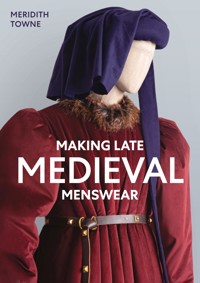
This practical book highlights the key garments essential for late medieval men as seen in pictorial, archaeological and written sources. Each project makes the construction of a medieval capsule wardrobe accessible to everyone interested in this fascinating period of history. Written by a leading dress historian and costume maker, the book also explains the historical context of England's textile industries and the international trade networks they were part of.
Sie lesen das E-Book in den Legimi-Apps auf:
Seitenzahl: 258
Veröffentlichungsjahr: 2024
Das E-Book (TTS) können Sie hören im Abo „Legimi Premium” in Legimi-Apps auf:
Ähnliche


















CONTENTS
Introduction
1 The Textile Trades of England
2 Equipment and Materials
3 Using the Patterns and Sewing Techniques
4 Finishing Touches
5 Underwear
6 Hose
7 Cote
8 Doublet
9 Cotehardie
10 Pleated Gown
11 Quilted Garments
12 Religious Orders
13 Headwear
Glossary
Further Reading
Organisations
Suppliers
Index
INTRODUCTION
This book highlights a period of England’s history (c.1300–c.1485) featuring great social, political and economic change, which I find fascinating. It was the era of Chaucer, the Black Death, the Hundred Years War, the Peasants’ Revolt, a royal abdication, mystery plays travelling the country, the English Bible being published, the introduction of printing presses, the Wars of the Roses and, most importantly of all (in my opinion), the creation of fashion!
Saint Martin Dividing his Cloak, The J. Paul Getty Museum (Ms. 73, fol. 34v).
The fourteenth century saw the birth of ‘young fashion’, which loved the outlined and showy shapes, the often explosive colours, the novelty at all costs, as opposed to the traditional and repetitive clothing typical of the elderly. And yesterday, as it is today, it was suddenly an international phenomenon.
Roberta Orsi Landini, Textiles and Wealth in 14th Century Florence: Wool, Silk, Painting
This ‘young fashion’ trend was not necessarily just the desire for constant change and novelty found in today’s fashion industry, though there are indications that at the highest levels, styles could change even within a few years. For me it is the change in how clothes were made, bought and worn. From the relatively simple manipulation of squares, rectangles and triangles comes a development to something much more complicated, with a tailored fit, shaped armholes and new centre-front closures requiring a sophistication of cutting and fitting. These changes are often cited as revolutionising England’s clothing in the space of a single decade in the mid-fourteenth century, but such changes rarely develop so quickly. Evidence from surviving examples across Northern Europe show armhole shaping developing at the end of the thirteenth century, and the fourteenth century saw the increasingly improved fit of clothes, alongside the continuation of looser styles.
These new shapes created fabric wastage when cutting and revealed (or helped create) the curves of the body, an ostentatious celebration of the ideal male form. There were more styles to choose from, and by the end of the period an increasing number of clothes owned, were split into styles worn for particular social and working situations, with even those items falling out of fashion retained for ceremonial or professional use. A sense of identity is revealed both on a personal level, but also as part of social groups, such as the liveries, worn as part of a household, to show allegiance to noble families or as part of the powerful livery companies – the guilds.
The fourteenth and fifteenth centuries were a glorious riot of colour and extravagance (for some) where fashion created a desire which spread across the social divide for the kind of sartorial individuality and frivolity frowned upon by the Church and moralists. The oft-repeated complaints and regulations citing the clothing misdemeanours of the religious orders highlights that even monks were not immune to the mesmerising temptations of fashion!
In order to recreate the medieval clothes featured in this book, it is important to know a little of the context in which they were worn. Whether your interest is re-enactment, and you are keen to make each garment as close as possible to the originals, or you are keen to produce medieval-style costumes for the stage, understanding how and where the fabrics were made, and by whom, leads to a better and more accurate depiction of men’s medieval fashion.
Technological innovations introduced in the thirteenth century came into their own in the following years and the combination of large-scale fibre production, developments in dyeing and prosperous trading routes, led to superior-quality textiles reaching the market on an unprecedented scale. Clothing styles were adapted to use new fabrics, such as luxurious broadcloths, to their best advantage. Velvet influenced the change from the tight-fitting garments of the late fourteenth century to the wider, heavier, more voluminous styles of the fifteenth century, which so beautifully showcased this magnificent fabric.
Away from the bustling markets and prosperous warehouses selling vast amounts of new cloth, there is evidence of second-hand, mended and recycled clothing, not restricted to the poorest members of society, but seen across the board. The Bocksten Man, discovered in Sweden, was wearing good-quality, well-made clothes, worn for some time and mended. A lucrative formal trade in second-hand clothing appeared in urban centres, though undoubtedly it happened on an informal, local basis for much of history. Some guilds even put their own limitations on what could be resold, though the restrictions were usually because of nefarious traders trying to pass off old as new!
The political landscape, both domestic and international, was shaped by the textile industries. They were major employers and the biggest export commodity for the country. Numerous regulations and charters were introduced to protect their interests, including a law passed by Edward III of 1326 forbidding the wearing of foreign fabrics, unless you had an income above £30 a year (the wealthy), and the export of English wool. He went on to encourage immigration to bring skilled artisans to the country to boost this lucrative industry. The Parliamentary Rolls of medieval England provide examples of standardisation of length, width, weights and so on, of cloth in order to facilitate easy trade. International partners’ loyalties were tested by the drawn-out Hundred Years War with Flanders, another major textile centre, choosing to side with England to ensure an undisrupted supply of the high-quality wool for which England was famed.
Medieval Europe, and further afield was closely interconnected by trade, shared manufacturing enterprise and technology. Influential merchants and rulers installed representatives in major textile cities to oversee the sourcing and supply of cloth, or the investments of their wealthy employers. Fairs, ports and urban centres welcomed traders from across Europe, with Italian and Flemish merchants mingling with the wool traders across England. Large warehouses sprang up, becoming showrooms for merchants to show off their wares, as fairs were heavily affected by the Hundred Years War. Orders could be taken and sent out to be delivered or collected at fairs and brother warehouses in England or abroad. The large and increasingly wealthy and powerful textile families became dynasties of their own, undertaking prestigious and advantaged marriages between themselves to shore up their status and place in the world. This intermingling and travel amongst merchants no doubt helped introduce and bolster the demand for new fabrics and clothing styles to England.
Such was the increasing affluence seen across the country, particularly amongst the merchant classes, that ‘sumptuary laws’ were introduced as an attempt at controlling the traditional social orders through clothing. The first record of sumptuary legislation is an ordinance of the City of London in 1281, which regulated the apparel, or clothing, of workmen supplied by their employers. In 1337 there was a ban on anyone with an income under £100 wearing furs. A further series of comprehensive laws introduced from 1363 attempted to curtail the purchasing and wearing of certain materials, the quantity and quality of materials and forms of ornament and dress to specific ranks and protect trade. They are a wonderful source for understanding what clothes and materials were in production, though perhaps less useful as an indicator of what people were wearing as, if they were abided by, then why the need to keep introducing the laws year after year? Concern was repeatedly expressed that the ‘lower orders’ were dressing inappropriately for their station and emulating their ‘betters’. Though certainly not sparked directly by a desire for better clothing, the various peasant uprisings seen across Europe in the fourteenth century, including in England in 1381, were led by demands for better living conditions, which included social mobility. For many this is shown, directly or indirectly, in their clothes, whether this is better cloth, warmer clothes or the expression of individuality. The sumptuary laws were an attempt to curtail this sort of social movement, even if you had the money to spend.
Many of the artistic and written sources beautifully depict and inform us about the clothing choices of the wealthiest inhabitants of England and abroad, but some also provide glimpses of working people. Although the Hundred Years War and the Black Death impacted the number of illuminated manuscripts produced, prolific production in the following years certainly makes up for it. However, it must be remembered that these sources often show the ‘ideal’ or overemphasise particular styles. Written sources can often be those of the clergy or moralists who chose to focus on the extremes of fashion they deemed so vulgar, which were unlikely to be worn by the majority. One of the best sources are surviving textiles, which provide a tantalising glimpse of the styles and construction methods of actual medieval clothing. Unfortunately, very few from the period survive, with many found outside England. They are incredibly fragile and no written sewing or clothing guides have been found, whether due to a devastating survival rate or because they were not written in the first place. Even so, they are a wonderful window into the working practices of medieval makers and – with considerations of geographical style differences taken into account – the fashions of the period. An increasing amount of archaeological evidence is joining this fascinating debate, alongside the written and artistic sources, creating an ever more well-rounded understanding of the role of clothing in medieval life.
Having combined my archaeology and history degree with training at The Northern College of Costume in York, I chose to specialise in the reconstruction of historical garments as I feel they are one of, if not the best, indicator of wealth, taste, moral values, innovation and productivity in any period of history. On being asked to write this book, I planned to travel to study original garments and extensive primary sources, but the Covid pandemic severely limited my opportunities to do so, with much of my research limited to online and local visits. Even so, it has been an opportunity to bring together my experience as a historical costume maker working with the Royal Armouries, English Heritage, National Trust, Historic Scotland and numerous independent museums and institutions, with the wealth of research undertaken by a whole host of dedicated, experienced professionals and passionate history and sewing enthusiasts, without which I could not have created this book.
Border detail initial E: Two Prophets, The J. Paul Getty Museum (Ms. Ludwig IX 2, fol. 108).
CHAPTER 1
THE TEXTILE TRADES OF ENGLAND
By means of an industrial revolution hardly less momentous than the later and more familiar one, England has transformed herself, between 1350 and 1450, into a large-scale producer and exporter of woollen cloth.
Cambridge Urban History of Britain, p.478
Innovation and technology, combined with the devastating effects of the Black Death, conversely led to a period of prosperity for many, centred on the wool industry and its effect on the rest of the country. Linen, though produced across the country, was on a more localised scale for domestic trade and imported silk was processed by a select group of highly skilled silkwomen supplying England’s luxury market. The country thrived on its booming wool trade, becoming one of the major players on the international stage, famed for its high-quality broadcloths with towns like York, Beverley, Coventry, Lincoln and Bristol associated with specific colours or cloth types. Whole villages could be dominated by one trade, such as weaving or dyeing, so residents had to travel long distances to access other services or wait for fairs or travelling merchants and mercers to visit the area.
The cloth trading floor of the early fifteenth-century Dragon Hall, Norwich, owned by the wealthy merchant Robert Toppes.
Understanding medieval textiles
To fully comprehend the use and significance of cloth in the late medieval period, we need to put it into the more familiar modern context of cars. Fundamentally all cars are the same. They have four wheels, a body, an engine and so on. They are widely in use and easily identifiable, in the same way that wool cloth would have been in the medieval period. However, we all know that cars are not born equal. The modern observer when looking at a car will be able to quickly judge if it is a cheap or expensive model, a domestic or imported brand, the latest or a dated design. They know the cost is influenced by the quality of the materials, the skills of those making it, where it was imported from, the rarity and even the colour. The costliest are sought after due to how they feel, how they sound, how comfortable they are, how suitable for a particular purpose, the status it provides, and so on. Both a Vauxhall Corsa and a Ferrari are cars but they are immediately identifiable as being poles apart in terms of cost and performance. This is how we must look at the use and availability of cloth, particularly wool, in the late medieval period. It could be the finest and costliest cloth rivalling the expense of silks or the most humble and modest homespun. The late medieval observer would be able to read the wealth and status of the individual not just on the style and embellishment of their clothes, but the cloth itself.
Overview of the wool industry
The mid-fourteenth century saw the industry become the most valuable for England’s economy, becoming the chief producer and exporter of wool in Europe after Flanders moved to making only luxury cloths. It generated huge revenues both in its local and international trade, and became the biggest employer nationally, both directly and indirectly. Not only were people employed to spin, weave, dye, full and finish the cloth, but there were also those involved in the making of clothes and textile products and yet more people involved in the transportation, storage and trade of this valuable commodity. Clothiers appear – a new type of merchant, acting as a middleman between each production stage, buying the raw product and selling on to the next trade so their capital was not vulnerable, and arranging transport and export. If the middleman could not afford to buy it back after processing, the tradesperson would find another buyer. Still cottage or workshop-based industries, some clothiers were extremely wealthy and influential individuals who controlled large swathes of the production process – just not under one roof in what we would think of as a factory.
The house of a fifteenth-century wool merchant in King’s Lynn, located close to the large marketplace.
The house sign for the wool merchant’s house in King’s Lynn, unsurprisingly known as Woolmarket House.
Add to these participants those indirectly involved, such as those extracting or growing the raw materials for dyeing and fulling, for example alum and fuller’s earth; farmers breeding the sheep for better fleece, growing and harvesting teasels for the finishing of cloth, producers of butters and oils to treat the fleece, joiners and builders making the looms and fulling mills, plus the structures to house the finished cloth and the people working on them. It was the wool trade that financed the building and improvement to cranes, dock infrastructure and ships, plus improvements to roads used in the movement and export of cloth. More movement meant an increase in demand for inns servicing the needs of travelling merchants. The wool trade, though concentrated in certain urban areas, was by the end of the fourteenth century entrenched across the country. However, by the mid-fifteenth century, it started to move out to more rural locations and England gradually lost much of its dominance, although it continued to be a successful industry in the country throughout later centuries.
How big was the industry?
The leading areas for wool production in the fourteenth century were centred around the urban centres of Winchester, Bristol, London, Wells, Bath, Norwich, Lincoln, Canterbury, Salisbury and York. Over half the cloth sold in the country was produced in the South West region (Southampton, through to Salisbury and Bristol, to Gloucester). By the end of the fifteenth century, Somerset was producing the largest amount of cloth alongside Suffolk. John Lee, a leading historian on the medieval cloth trade, describes the West Country of East Somerset, West Wiltshire and Gloucestershire as a ‘Silicon Valley’ of the medieval period! His research estimates that exports grew dramatically from around 8,000 cloths in 1360 to over 50,000 by 1440. He goes on to highlight that these figures may even underestimate the size of the export market, as cheaper narrow cloths were not subject to customs and therefore not included in the records.
Though the ‘boom’ era was the fourteenth and fifteenth centuries, England continued producing very fine wools into the seventeenth century on a lesser scale. It would take the developments of the Industrial Revolution to jump-start it once more and put England at the forefront of global production again. Today there are still at least ten working mills in Yorkshire.
Who was involved?
The wool trade in England had been in decline at the end of the thirteenth century with increasing competition from abroad, particularly Flanders. The Black Death hit in the mid-fourteenth century, wiping out an estimated 40–50 per cent of the population of England. This meant a huge depletion in the labour force available, directly causing a change in industry. Landowners switched from labour-intensive crops to sheep farming. It also led to a steady rise in the wages of working people due to the labour shortage and opportunities to train. With a little disposable income, alongside the development of the wool trade creating a wealth of choice in the market, workers were able to dress better than they had been able to in earlier centuries, though the scale of this impact across the country is still debated. Complaints that lower classes were wearing expensive cloth and luxurious ornaments led to sumptuary laws being introduced. The concentration of labour increased the development of specialists in each of the stages of cloth production which, along with the rise of clothiers and equipment developments, all led to the dominance of England as a producer and exporter of wool cloth.
This decline in the population and rise of the wool trade created a void in the labour force filled by women as the processes of shearing, cleaning, and spinning the raw wool became dominated by the female population. The boom years around 1400 did not last, but the dominance of women in these areas stayed. The most likely reasoning for this is due to the domestic nature of these processes. They do not take up a lot of room, nor require large equipment and can be picked up and worked on when available between the demands of children and the home. Though the long hours of daylight in the summer would be advantageous, skilled spinners can even work in little light, as working by feel and repetitive motion make it almost second nature. The demand for spinners was constant and high to supply the wool trade so work was nearly always available, accommodating breaks naturally required by women due to childbirth or other responsibilities. Though weaving had traditionally been the preserve of women in communities, the changes in production and the more lucrative nature of the trade meant it quickly became dominated and controlled by men.
Silk industry
This was an industry dominated by women at every stage in Northern Europe, with repeated efforts by most countries to entice skilled workers of both sexes to leave Italy. In the first half of the fourteenth century Lucca lost its place as the premier silk producer due to prolonged political problems prompting many workers to leave. Venice, concerned this would be repeated, introduced laws to prevent workers from leaving.
The silkwomen of London controlled the processing of the raw silk, thread production, dyeing and weaving of fringes, ribbons, belts and laces. Their position was so respected that aristocratic families and wealthy merchants would send their daughters to silkwomen as apprentices. In Paris they had their own craft regulations, something that may have influenced workers in England, concentrated in London. The costly nature of the products and the high-born nature of many of its workers meant they were a wealthy and often politically powerful group; so much so that in 1368, the silkwomen of London petitioned the crown in protest of competition from Italian (male) silkworkers, and won, protecting their industry.
Embroidery industry
England is for us surely a garden of delights, truly an inexhaustible well.
Matthew Paris of St Albans, a thirteenth century Benedictine monk, recounts the admiration Pope Innocent IV had for English embroidery
The years 1350–1450 saw a boom in the popularity of embroidery produced in England. Known as Opus Anglicanum (work of the English), its reputation for high quality was unsurpassed across Europe. Lavish in its use of costly gold and silk threads and enhanced with precious gems, it was hugely expensive, with the labour a small fraction of the cost. Highly sought after by royal courts and the Church, the Vatican even paid a representative called Gregory to stay in London to organise the supply of embroidered goods back to Rome in the thirteenth century.
Professional embroiderers were brought together by wealthy mercers to work in workshops alongside artists, who drew the designs onto the fabric, and tailors. Substantial capital and high-level security were required to maintain these workshops due to the cost of the ground materials, threads and precious gems involved. The number of embroiderers working is unclear as the terminology overlaps in the written sources. Mercer workshop owners are also referred to as ‘embroiderers’. In 1317 Queen Isabella, wife of Edward III, paid 100 marks (approximately £4,000 today) to a female embroiderer, Rose Romayn, for an embroidered cope for the choir. She had taken over the running of her husband’s (Thomas de Burford) business upon his death and, as a hugely successful and wealthy businesswoman and owner of an embroidery workshop, it is unlikely she made the embroidery herself. As a very successful mercer, she sourced and provided the capital for its production. Though the workforce is predominantly male from the mid-fourteenth century, female apprentices are still being recorded late in the century. With many named male embroiderers in the written records being the mercer workshop owners and commission takers, much of the female labour remains hidden.
London was the main focus of production, clustered around the parish of St Paul’s, with the Tower of London hosting one workshop. The mercers had easy access to the finest materials imported from France, the Low Countries, Spain and Italy, who in turn traded with the Persian Gulf, India and China. Here highly skilled workers could be hired and the most influential clients found. Though workshops in towns outside the capital also flourished, the work was generally of a lower standard.
As the trade flourished, embroiderers were relatively well paid and in constant demand. Mercers accumulated huge wealth with many leaving substantial sums in their wills to establish almshouses. Such was the international importance of the production of embroidery, it is unsurprising that a ‘Guild of Broiderers’ was created, though it did not gain its royal charter until the sixteenth century.
The supply of materials to produce metal threads for embroidery was another thriving industry of the period. The silver and copper mines, employing both sexes, prospered. Workshops supported apprentices for four years to learn the preparing and beating of the metal strips, shearers were employed to cut the strips and workers wrapped them around the silk cores. One such worker was Matilda le Goldsherer, whose name suggests her role as a cutter of the metal strips. She worked for Alice Prince making items commissioned by Edward III.
Though the medieval period saw prolific output of embroidery, disrupted trade due to wars, loss of workers to the plague and a demand for speedier output led to a decline in favour of other styles. Expensive figured silk fabrics were increasingly popular from the late fourteenth century and did not require such elaborate embroidery. Instead, by the late fifteenth century, the creation of embroidery was concentrated on the production of applied motifs, which could be added to garments, with considerable repetition inferring the use of ‘stock’ designs across workshops. These motifs were easier to trade across the country and could be picked up by provincial workshops.
Guilds
By the end of the fifteenth century, these institutions dominated the urban environment of England and craftworkers were bound to join one or risk their place in the industry. In large towns and cities guilds were formed guildhalls were built, and regulations put into place to organise all aspects of the industry. Many of these buildings are still standing, dotted around urban centres across the country.
The early fifteenth-century Guildhall of the Holy and Undivided Trinity, King’s Lynn, dominating the Saturday Market Place.
The fourteenth-century guildhall built by The Company of Merchant Adventurers’ Hall, York, many of whom were mercers by the early fifteenth century.
Guilds originated in the thirteenth century; the earliest is The Company of Merchants of the Staple of England from c.1282, formed by wool merchants. The early guilds were mainly merchant organisations with strong religious ties, bringing together various groups to facilitate, particularly overseas, trade. Merchant Adventurers, mainly working in the trade of textiles, became hugely influential. By 1430, the Merchant Adventurers of York were mainly mercers; others were dominated by clothiers. By 1355 there were 32 guilds in London and by 1377 this number had risen to 48, with numerous others concentrated in urban centres across the country. It was around this time that the guilds or companies began to adopt a distinctive style of dress, so they became known as ‘livery companies’.
So powerful and rich were they that royalty borrowed from them and they gained significant political influence. Such an unbalanced relationship with the ruling elite could not continue indefinitely. In 1516 the guilds of London were ranked by order of precedence, mostly based on wealth. From the forty-eight registered there came the ‘Great Twelve’. Six of the twelve (seven if you include goldsmiths working with gold threads) were in the textile industries, showing just how important textiles were to the economy. This was the start of a suppression of the guilds, bar a few (mainly the ‘Great Twelve’) who continued in a modified way with reduced influence.
The early fifteenth-century guildhall in the centre of Norwich, built as a meeting place for merchants in the city.
Most of the guilds admitted both sexes, a trait shared in other Northern European countries, though women (in line with societal thinking of the time) were still in general considered second to the male members. Elynore Sampton is recorded as paying her quarterly fee for the Guild of Drapers in 1493. In some circumstances women could rise to Master-Director, though this was usually when replacing a male guild member when widowed, and there is reference to at least one woman holding the rank of Merchant of the Staple, trading wool to Calais.
Members would start by becoming apprentices under a master of the guild, usually for a period of seven years, though this could vary. Both boys and girls could undertake apprenticeships and, although the numbers were significantly lower for girls, they were on the same terms. If the master died, many allocated their wives to finish the training of apprentices, or the guild may allow them to keep the workshop open to complete the training. Once complete, they would become independent journeymen or women, which required them to travel extensively to gain experience. Most women remained with the master until marriage rather than journey, perhaps a reflection on the safety of a woman travelling alone rather than their skills, or due to marriage, gaining them further status within the guild. As the wife of a master, she would gain status and guild privileges.
As a skilled, experienced worker the status of master could be applied for, and with it came further protection under law and position within the guild, and the opportunity to open a workshop, take on apprentices and attract higher paid work. Though it is not unheard of for women within the textile trades to become masters, again this is often due to the death of a husband. However, if a woman decided to remarry someone outside the guild, she could be barred from it. When married, a woman was legally femme coverte (a woman under coverture), the opposite being femme sole (woman alone or single). In the chantry records, they are referred to as sole merchants and could be married or unmarried. It was an option for women keeping workshops and apprentices, running a business, or working independently of their husbands. A woman with this status would control her own finances and paying of taxes, but also be liable for any lawsuit or debts. There are few recorded examples of women taking this legal status. In 1457, a London silkwoman named Agnes, wife of John Gower, appeared before the mayor and aldermen to ask to be permitted to act as ‘sole merchant’, and it was only available in urban environments. Most seemingly preferred the legal protection of coverture, with any debts being the husband’s responsibility and likelihood of gaining credit more likely with a husband’s backing. The laws of coverture, however, do not allow for a woman to purchase or enter contracts without the husband’s permission. Clearly, this was not always adhered to, otherwise trade would have ground to a halt, but the principle remained. In wills, women could be designated as femme sole or sole merchants by their husbands, to allow them to continue the business on their death. Examples include Rose de Burford, who took over her merchant husband’s business in 1322, and ran an embroidery business; or Margery Kempe, made a member of the influential merchant Guild of Holy Trinity of King’s Lynn in 1438; and who could forget the voluble character of the Wife of Bath in Chaucer’s Canterbury Tales, who boasts of her many marriages and affluence due to the wool trade.
Most masters would work from a workshop attached to their own living quarters, housing their apprentices, journeymen or women and their own family. The close proximity meant that the family inevitably became part of the workforce. Rather than view them as workers, they were seen as part of the household and therefore did not count in the capped number of workers allowed by the guild. Due to the demands of family life, women often did work on a more informal basis – another reason guilds were quick to give them secondary status. When hardship or economic downturn came, it was often the restriction of the employment of women that was the first thing to be introduced, to protect the jobs of male guild members.




