


9,59 €
Mehr erfahren.
- Herausgeber: Saqi Books
- Kategorie: Geisteswissenschaft
- Sprache: Englisch
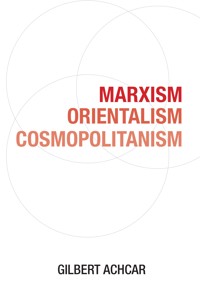
In this collection of essays, Gilbert Achcar examines the controversial relationship of Marxism to religion, to Orientalism and its critique by Edward Said, and to the concept of cosmopolitanism. A compelling range of issues is discussed within these pages, including a comparative assessment of Christian liberation theology and Islamic fundamentalism; "Orientalism in reverse", which can take the form of an apology for Islamic fundamentalism; the evolution of Marx's appraisal of non-Western societies; and the vagaries of "cosmopolitanism" up to our present era of globalisation. Erudite and incisive, these essays provide a major contribution to the critical discussion of Marxism, Orientalism and cosmopolitanism, and illuminate the relationships between all three.
Das E-Book können Sie in Legimi-Apps oder einer beliebigen App lesen, die das folgende Format unterstützen:
Veröffentlichungsjahr: 2013
Ähnliche














MARXISM, ORIENTALISM, COSMOPOLITANISM
GILBERT ACHCAR is Professor at the School of Oriental and African Studies, University of London. His most recent book is The People Want: A Radical Exploration of the Arab Uprising. His other previous works include the highly acclaimed The Arabs and the Holocaust: The Arab–Israeli War of Narratives, The Clash of Barbarisms: The Making of the New World Disorder and, with Noam Chomsky, Perilous Power: The Middle East and US Foreign Policy.
Gilbert Achcar
MARXISM,
ORIENTALISM,
COSMOPOLITANISM
SAQI
Published 2013 by Saqi Books
Copyright © Gilbert Achcar 2013
ISBN 978-0-86356-793-3
eISBN 978-0-86356-798-8
Gilbert Achcar has asserted his right under the Copyright, Designs and Patents Act, 1988, to be identified as the author of this work.
This book is sold subject to the condition that it shall not, by way of trade or otherwise, be lent, resold, hired out, or otherwise circulated without the publisher’s prior consent in any form of binding or cover other than that in which it is published and without a similar condition including this condition being imposed on the subsequent purchaser.
First published 2013 in Great Britain
Saqi Books
26 Westbourne Grove
London W2 5RH
www.saqibooks.co.uk
A full CIP record for this book is available from the British Library.
Printed and bound by CPI Mackays, Chatham ME5 8TD
Contents
Foreword
Religion and Politics Today from a Marxian Perspective
Marx’s view of religion
Religion and radicalism today: liberation theology
Religion and radicalism today: Islamic fundamentalism
For a Marxian comparative sociology of religions
Political conclusions
Orientalism in Reverse: Post-1979 Trends in French Orientalism
“Orientalism in reverse”
Post-1979 French Orientalists
French “Orientalism in reverse”
The meanderings of French “Orientalism in reverse”
Marx, Engels and “Orientalism”: On Marx’s Epistemological Evolution
Said’s Orientalism and its Marxist critique
Orientalism, essentialism and idealism
Marx and Engels’ radical break with historical idealism
Were Marx and Engels Eurocentric?
The political/epistemological evolution of Marx and Engels
Critical Marxism and Orientalism
Marxism and Cosmopolitanism
Four conceptions of cosmopolitanism
Marx and Engels’ initial conception of cosmopolitanism
The maturation of Marx and Engels’ conception of cosmopolitanism
Cosmopolitanism and internationalism
“Cosmopolitanism” after Marx and Engels: Kautsky, Gramsci and the Comintern
“Cosmopolitanism” as anathema: the Stalinist perversion
Cosmopolitanism and “globalisation”
Bibliography and References
Foreword
This book is a collection of four essays, two of which are published here in English for the first time and comprise the largest part of the book. One of the new essays was written especially for this collection; the other has, until now, been published only in German translation.
The first essay, “Religion and Politics Today from a Marxist Perspective”, examines Marx’s view of religion as a prelude to a comparative assessment of Christian liberation theology and Islamic fundamentalism in the spirit of a Marxian comparative sociology of religions. It was first published in the 2008 edition of the annual journal Socialist Register.1
The second essay, “Orientalism in Reverse: Post-1979 Trends in French Orientalism”, is the text of the fourth Edward Said Memorial Lecture, which I had the honour of delivering at the University of Warwick on 20 November 2007 at the invitation of the Department of English and Comparative Studies. On that occasion I chose to speak on a peculiar instance of “Orientalism” in the Saidian sense with regard to Islam: not the usual denigration informed by a colonial mentality that despises the Muslims, but the reverse attitude of uncritical apology, not only of Islam as a religion but of Islamic fundamentalism itself represented as the sui generis path of Muslims to modernity. Both attitudes share a common essentialist assumption of religion as the natural ideology of Muslim peoples, and of secularism as a “Western” ideology alien to them. The essay focuses on French authors because this tradition was born and developed in France, for reasons explained in the text. However, it has certainly spread to the English-speaking world, both in the form of political attitudes paved with good antiracist, anti-Islamophobic intentions and in the form of academic stances widely encountered in the fields of Islamic Studies, anthropology, post-colonial studies, etc. The text of the lecture was first published in the journal Radical Philosophy in 2008.2
The third essay, “Marx, Engels, and ‘Orientalism’: On Marx’s Epistemological Evolution”, was written especially for this collection. It discusses the controversial issue of classifying Marx among the Orientalists in the Saidian sense, begun by Said himself in his famous book. While acknowledging the huge importance of Said’s contribution to the debunking of “Orientalist” attitudes, I take as a starting point a criticism of his rather uninformed characterisation of Marx in Orientalism in order to examine the evolution of Marx and Engels’ attitude towards the Orient. The essay is based on an epistemological appraisal of their thinking in historical context, and pays due attention to its development along with the progress of their own knowledge and experience.
The fourth and last essay in the collection, “Marxism and Cosmopolitanism”, was initially written as a long entry in the German Historical-Critical Dictionary of Marxism (HKWM) and was published as such in German translation.3 It begins by assessing the general idea of cosmopolitanism, distinguishing between four general conceptions thereof. It then examines the use of the notion in the writings of Marx and Engels and its evolution, as well the vagaries of its use in the history of Marxism up to contemporary discussions within the broader left, in our era of globalisation.
My thanks go first of all to the editors of each of the three publications mentioned above. In the case of the HKWM, the editors’ input went beyond mere copy-editing/translating into a fruitful exchange on the topic. I am also very grateful to my good friend Michael Löwy, who read and commented on the drafts of three of the four essays included in this collection (except “Orientalism in Reverse”). I am also thankful to another of my good friends, Enzo Traverso, who sent me detailed comments on the draft of the piece on cosmopolitanism. Needless to say, none of those to whom I am indebted for this book bears any responsibility for the views that it expresses.
The two essays that were published previously are here reproduced in their original version, unaltered but for editing improvements.4 Mitchell Albert, the commissioning editor at Saqi Books, was very helpful in nicely editing all four essays. It is worth noting in this respect that this book is my first ever directly written in English, my third language after Arabic and French.
London, 15 June 2013
Notes
1 “Religion and Politics Today from a Marxist Perspective” in Global Flashpoints: Reactions to Imperialism and Neoliberalism, Socialist Register 2008, Halifax (Canada): Fernwood Publishing, New York: Monthly Review Press, and London: Merlin Press, pp. 55–76.
2 “Orientalism in Reverse: Post-1979 Trends in French Orientalism” in Radical Philosophy, no. 151, September–October 2008, pp.20–30.
3 “Kosmopolitismus, moderner” in Historisch-kritisches Wörterbuch des Marxismus, 7 II, Berlin: Institut für kritische Theorie (Inkrit), 2010, pp. 1892–1926.
4 For the sake of homogeneity, most references to the works of Karl Marx and Friedrich Engels in this book have been located in their Collected Works (see bibliography), designated by the acronym MECW.
Religion and Politics Today from a Marxian Perspective
We had an excellent history teacher in my penultimate year of high school in Beirut. I still remember listening to him with bated breath as he told us the story of the Russian Revolution. That was in 1967: revolution was in the air, and I had been freshly “converted” to Marxism. Like any good history teacher, ours used to discuss with us various matters of past, present and future, after classes as well as during them.
One of these discussions remains engraved on my memory: a chat during a break about the issue of religion. I can’t remember what brought us to this topic, but what I do remember is my deep frustration when the teacher contradicted my youthful Marxist positivism. At that time, I was fully convinced that the progress of science and education would wipe out religion in the twenty-first century. Needless to say, I imagined this century as the outcome of the worldwide triumph of socialist revolution, which I expected to happen during the next few decades.
Our teacher held the view that the continuous material enrichment of society would actually enhance the search for spirituality. If memory serves me right, he quoted approvingly the famous statement attributed to André Malraux, and much discussed since, that the twenty-first century would be “religious”.1
Was my teacher right after all? Is the present vigour of religious creeds, movements and sects testimony to the religiosity of the twenty-first century? What is beyond doubt is that my own youthful expectation was proved wrong; but I do not concede victory to the opposite view for all that. The truth is that we were all proved wrong, as the common assumption of our different expectations was that society in the twenty-first century would be one of abundance. Whether it would be atheistic or religious was a question deriving from that basic assumption. The question under debate could be phrased in the following terms: Does the satisfaction of material needs enhance a (supposed) need of religious spirituality?
We will not know the answer to this last question anytime soon, as the prospect of a world “free from want” is as remote as the prospect of one “free from fear” – the last two of the famous “Four Freedoms” defined by Franklin Roosevelt in 1941 as the pillars of the world to which he aspired. The first of Roosevelt’s Freedoms – freedom of speech – has surely expanded greatly, though it is still far from a complete triumph. The second – freedom to “worship God in one’s own way” – is no longer chiefly threatened by Stalinist-imposed dogmatic “atheism”, as people supposed back in Roosevelt’s time, but rather by fanatic-imposed single ways of worshipping God, or any deity for that matter – i.e. by various brands of religious fundamentalism. Nowadays, the freedom that appears to be most wanting and most threatened in major parts of the world is actually the freedom not to worship any deity and to live in one’s own way. That is surely not progress, but the sign of an ideological regression of historic proportions.
The resilience of religion at the dawn of the fifth century after the “scientific revolution” is an enigma to anyone holding a positivist view of the world, but not for an authentic Marxian understanding, as I have come to realise since my first steps in Marxist theory. This essay aims not only to provide a clue to the resilience of religion in general, but also to account for the various religious ideologies to which history gives rise at different epochs, and their specificities. For not only did religion survive into our times as part of the “dominant ideology”, it is also still producing combative ideologies contesting the prevailing social and/or political conditions. Two of these have received a lot of attention in recent years: Christian liberation theology and Islamic fundamentalism. A comparative assessment of these two phenomena from the standpoint of Marxist theory, enriched by further inputs from the sociology of religions, is a particularly challenging and politically enlightening endeavour, as I hope to establish.
Marx’s view of religion
Marx announced the boundaries of his thinking on the issue of religion in the programme he set himself when starting his transition from “Young Hegelian” philosophy to class-struggle radical materialism – which is what we call Marxism. His much-quoted passage on religion in the “Introduction” to On the Critique of Hegel’s Philosophy of Right is the expression of a decisive moment in the formation of his thought. After having drafted the Critique in the summer of 1843 (it remained unpublished during his lifetime), Marx wrote the “Introduction” at the end of the same year and the beginning of the next, and published it in 1844 in the Deutsch-Französische Jahrbücher. The fact that he deemed it good enough for publication is telling, as throughout his life Marx displayed a reluctance to publish any theoretical writing with which he was not fully satisfied. Along with his famous “Theses on Feuerbach” written the following year, the 1844 “Introduction” maps out brilliantly his course towards what Antonio Labriola was to call the “philosophy of praxis”.2 In it, Marx wrote:
The foundation of irreligious criticism is: The human being makes religion; religion does not make the human being. Religion is, indeed, the self-consciousness and self-esteem of the human who has either not yet won through to himself, or has already lost himself again. But the human is no abstract being squatting outside the world. The human is the world of the human – state, society. This state and this society produce religion, which is an inverted consciousness of the world, because they are an inverted world. Religion is the general theory of this world, its encyclopaedic compendium, its logic in popular form, its spiritual point d’honneur, its enthusiasm, its moral sanction, its solemn complement, and its universal basis of consolation and justification. It is the fantastic realisation of the human essence since the human essence has not acquired any true reality. The struggle against religion is, therefore, indirectly the struggle against that world whose spiritual aroma is religion.3
Here Marx, after stating one of the key ideas of Ludwig Feuerbach’s critique of religion (“The human being makes religion; religion does not make the human being”), draws out the full implication of this statement, reproaching Feuerbach for his inability to do precisely that. The next statement, that “the human is no abstract being squatting outside the world”, is a direct rebuff to Feuerbach. Religion is an “inverted consciousness of the world” only because the human world itself, i.e. society and the state, is “inverted”: it stands on its head, to borrow another metaphor used by Marx in relation to Hegel’s dialectics.
Following Feuerbach, and with Christianity mainly in mind, the young Marx fully acknowledged the psychological (spiritual) role played by religion, alongside its essence as a vulgar “false consciousness”: “Religion is the general theory of this world ... its logic in popular form ... its enthusiasm ... its universal basis of consolation and justification.” However, if one can find in religion a form of humanism – “the fantastic realisation of the human essence” – it is only because “the human essence has not acquired any true reality”. Thus, “the struggle against religion is, therefore, indirectly the struggle against that world whose spiritual aroma is religion.”
Marx then goes on to develop this insight:
Religious misery is, at one and the same time, the expression of real misery and the protest against real misery. Religion is the sigh of the oppressed creature, the soul of a heartless world, as well as the spirit of spiritless conditions. It is the opium of the people.
To supersede religion [Die Aufhebung der Religion] as the illusory happiness of the people is to require their real happiness. To require that they give up their illusions about their condition is to require that they give up a condition that necessitates illusions. The criticism of religion is, therefore, in embryo, the criticism of that vale of tears of which religion is the halo.




