


9,59 €
Mehr erfahren.
- Herausgeber: Saqi Books
- Kategorie: Geisteswissenschaft
- Sprache: Englisch
Since the first wave of uprisings in 2011, the euphoria of the "Arab Spring" has given way to the gloom of backlash and a descent into mayhem and war. The revolution has been overwhelmed by clashes between rival counter-revolutionary forces: resilient old regimes on the one hand and Islamic fundamentalist contenders on the other.In this eagerly awaited book, foremost Middle East and international affairs specialist Gilbert Achcar analyzes the factors of the regional relapse. Focusing on Syria and Egypt, Achcar assesses the present stage of the uprising and the main obstacles, both regional and international, that prevent any resolution. In Syria, the regime's brutality has fostered the rise of jihadist forces, among which the so-called Islamic State emerged as the most ruthless and powerful. In Egypt, the Muslim Brotherhood's year in power was ultimately terminated by the contradictory conjunction of a second revolutionary wave and a bloody reactionary coup. Events in Syria and Egypt offer salient examples of a pattern of events happening across the Middle East.Morbid Symptoms offers a timely analysis of the ongoing Arab uprising that will engage experts and general readers alike.Drawing on a unique combination of scholarly and political knowledge of the Arab region, Achcar argues that, short of radical social change, the region will not reach stability any time soon.
Das E-Book können Sie in Legimi-Apps oder einer beliebigen App lesen, die das folgende Format unterstützen:
Veröffentlichungsjahr: 2016
Ähnliche


















MORBID SYMPTOMS
ALSO BY GILBERT ACHCAR
The People Want: A Radical Exploration of the Arab Uprising
Marxism, Orientalism, Cosmopolitanism
The Arabs and the Holocaust:The Arab–Israeli War of Narratives
Perilous Power:The Middle East and U.S. Foreign Policy(with Noam Chomsky)
The 33-Day War:Israel’s War on Hezbollah in Lebanon and its Consequences(with Michel Warschawski)
The Clash of Barbarisms:The Making of the New World Disorder
Eastern Cauldron:Islam, Afghanistan, Palestine, and Iraq in a Marxist Mirror
Morbid Symptoms
Relapse in the Arab Uprising
Gilbert Achcar
SAQI
Published 2016 by Saqi Books
Copyright © Gilbert Achcar 2016
Gilbert Achcar has asserted his right under the Copyright, Designs and Patents Act, 1988, to be identified as the author of this work.
This book is sold subject to the condition that it shall not, by way of trade or otherwise, be lent, resold, hired out, or otherwise circulated without the publisher’s prior consent in any form of binding or cover other than that in which it is published and without a similar condition including this condition being imposed on the subsequent purchaser.
ISBN 978-0-86356-183-2eISBN 978-0-86356-178-8
A full CIP record for this book is available from the British Library.
Printed and bound by CPI Mackays, Chatham, ME5 8TD
SAQI BOOKS26 Westbourne GroveLondon W2 5RHwww.saqibooks.com
The crisis consists precisely in the fact that the old is dying and the new cannot be born; in this interregnum a great variety of morbid symptoms appear.
Antonio Gramsci, Prison Notebooks (1930)
With this system I’ll make my fortune quickly; then I will kill everybody and leave.
Alfred Jarry, King Ubu (1896)
Contents
Foreword
Acknowledgements
Introduction: Of Revolutionary Cycles and Seasons
“Democratic Transition” and Revolutionary Process
One Revolution, Two Counter-Revolutions
Syria: The Clash of Barbarisms 15
The Abandonment of the Syrian People
The Making of the Syrian Disaster
The Assad Regime’s Preferred Enemy
Turkey’s and the Gulf Monarchies’ Preferred Friends
The Syrian Predicament
Russian Intervention and Western Wavering
Whither Syria?
Egypt: The “23 July” of Abdul-Fattah al-Sisi
How the Muslim Brotherhood’s Bid for Power Unfolded
Neither Lion Nor Fox
Incensing the Country
Enter Tamarrod
Nasserist Illusions
The Military’s Second Hijacking of the People’s Will
The Ruthless Rise of Abdul-Fattah al-Sisi
The Tailoring of Sisi’s Presidential Suit
The Farcical Aspect of Egypt’s Tragedy
Neoliberal Constancy
Megalomania and Megaprojects
The Military’s Takeover of Egypt
Whither Egypt?
Conclusion: “Arab Winter” And Hope
Libya and Yemen: Two Variations on the Same Tune
The Tunisian “Model” and Its Limits
The Arab Left and the Strategic Challenge
Notes
References and Sources
Index
Foreword
As happens quite often, this book did not start as a full book project. My initial intention was to write an update chapter for a second edition of my The People Want: A Radical Exploration of the Arab Uprising (2013). I therefore embarked on drafting an assessment of the developments that had occurred since I finished writing that previous book in October 2012. In order not to exceed the limits of a chapter, I decided to focus my assessment on the tragic developments in two key countries – Syria and Egypt – with a brief survey of the other theatres of the 2011 regional uprising.
Unsurprisingly, the chapter soon turned into much more than could be accommodated as an appendix to a book that is already quite thick. I therefore decided to go for a new book, and thus use all the space I needed for a thorough assessment of the most recent events. The People Want will be reprinted as it is: a book dedicated to explaining the economic, social and political roots and causes of the upheaval that engulfed the whole Arab region in 2011, and is not anywhere near ending, as well as examining the determinants and parameters of the revolutionary dynamics that it unleashed, with a balance sheet of its first two years. As such, it can surely be discussed, but it did not become obsolete. Readers will judge whether or not I am right in my contention that none of the diagnoses and prognoses I made in 2012 were contradicted by subsequent events.
This new book is therefore both a sequel to The People Want and a book that stands on its own, written on the assumption that the reader may not have read the former. For this reason, I have briefly summarised for each of the cases that I discuss here what my assessment was in the autumn of 2012, taking the analysis from there – or from an earlier stage when needed, in order to make the developments that I am describing fully understandable – and assessing the prospects as they seem after five years of upheaval.
I hope that this new book will stand the test of time as the previous one has. But I would be very much happier if ongoing events were to disprove the pessimism of my assessment.
London, 21 December 2015
On Transliteration of Arabic
The transcription of Arabic words and names in the Latin alphabet in this book is a simplified version of the transliteration in use in specialised literature. This is in order to make it easier for non-specialists to read the text, while allowing Arabic-readers to recognise the original. Special characters and diacritical marks have been avoided, except for the inverted apostrophe representing the Arabic letter ‘ayn. The common spellings of the names of the best-known individuals and groups have been retained. Finally, Arab authors’ and organisations’ own transliterations of their names in the Latin alphabet have been respected.
Acknowledgements
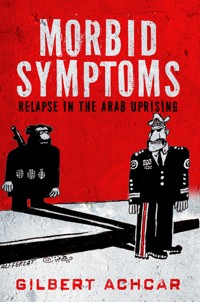
I am deeply grateful to Ali Ferzat for having graciously authorised me to adorn the cover of this book with one of his drawings. The recipient of many awards, Ali Ferzat has become one of the world’s most famous political cartoonists. Circumventing censorship, his drawings have provided a radical critique of injustice and oppression over decades in Syria, his homeland, and across the Arab world. In 2011, he was assaulted by pro-regime gunmen who beat him up, breaking his hands and fingers.
Special thanks are due to Sarah Cleave at Saqi Books and Kate Wahl at Stanford University Press with whom it was my pleasure to prepare this book. I am also thankful to my good friend Omar El Shafei and the two anonymous reviewers solicited by SUP for their useful remarks on the manuscript.
INTRODUCTION
Of Revolutionary Cycles and Seasons
Lo, Winter comes! – the grief of many graves, The frost of death, the tempest of the sword, The flood of tyranny, whose sanguine waves Stagnate like ice at Faith, the enchanter’s word, And bind all human hearts in its repose abhorred.
Percy Bysshe Shelley, The Revolt of Islam (1818)
The designation “Arab Spring” was most often used sarcastically during the fifth year since the Arab uprising commenced. Such sarcasms had actually started multiplying ever since the regional revolutionary upheaval began turning sour, in the autumn of 2011. They were facilitated by the fact that “Arab Spring”, in the mind of most of its users at the early stage of the uprising, was not meant to designate one phase in an open-ended sequence of revolutionary seasons, where autumn and winter were to follow spring and summer. It was rather meant as a one-time political mutation; to use a word related to the same metaphor, it was seen as the long-overdue “blossoming” of democracy in the Arab region. According to this view, Arab-speaking countries were finally, albeit belatedly, joining what Samuel Huntington had identified as the “third wave of democratization” – a chain of political mutations that started in the 1970s.1
“Democratic Transition” and Revolutionary Process
The mood was all the more euphoric in 2011 because the Arab uprising happened at a time when the cautious pessimism of the arch-“realist” Huntington looked more and more vindicated. Countering the blissful optimism and Western triumphalism encapsulated in Francis Fukuyama’s 1989 “end of history” delusion,2 Huntington – in his 1991 The Third Wave – had warned of the possibility of what he called a “third reverse wave”, enumerating its potential causes with much perspicacity.3 Indeed, on the eve of the Arab upheaval most indicators pointed in that very direction. The 2008 annual report on Freedom in the World, produced by the veteran US-based organisation Freedom House, had already asked worriedly: “Freedom in retreat: is the tide turning?”4 The question soon became a gloomy assertion: in 2010, the same organisation noted that 2009 was the fourth consecutive year during which “global declines in freedom outweighed gains”.5 This, were we told, constituted “the longest continuous period of decline for global freedom in the nearly 40-year history of the report”. A fifth consecutive year, 2010, confirmed the sad record.6
Hence the deep sigh of relief that the “Arab Spring” occasioned in 2011. The discussion thereafter turned on whether this dramatic sequence of democratic upheavals represented a continuation of the “third wave of democratization”, or the beginning of a fourth wave, after a short reverse interlude. For not only did “the political uprisings that swept across the Arab world over [that] year represent the most significant challenge to authoritarian rule since the collapse of Soviet communism”, as Freedom House’s report stated, but they were taking place moreover “in a region that had seemed immune to democratic change”.7 This purported immunity of Arab countries to democracy was widely held by Western pundits to be due to Islam. Huntington himself made that very tendentious observation in his later best-selling book upholding the Bernard Lewis-inspired “clash of civilizations” thesis, where he asserted that “Islamic culture explains in large part the failure of democracy to emerge in much of the Muslim world.”8
In 1991, however, the same Huntington could still conjecture that “the wave of democratization that had swept about the world from region to region in the 1970s and 1980s could become a dominant feature of Middle Eastern and North African politics in the 1990s.”9 This is because The Third Wave’s author was still heedful in his appraisal of Islam, asserting that the Islamic doctrine “contains elements that may be both congenial and uncongenial to democracy”.10 By contrast, Fukuyama, his former student turned challenger, did not bother with nuances: in the 1992 book in which he developed his “end of history” thesis, one finds statements on “Islam” of a staggeringly crude “Orientalist”, i.e. essentialist, character. Islam, without qualification, is said to constitute “a systematic and coherent ideology, just like liberalism and communism” (sic) that “has indeed defeated liberal democracy in many parts of the Islamic world, posing a grave threat to liberal practices even in countries where it has not achieved political power directly.”11 The author sought consolation, however, in the fact that Islam has “virtually no appeal outside those areas that were culturally Islamic to begin with” and that “the Islamic world would seem more vulnerable to liberal ideas in the long run than the reverse.”12
In the immediate wake of the attacks of 11 September 2001, Fukuyama went yet further. He observed candidly: “There does seem to be something about Islam, or at least the fundamentalist versions of Islam that have been dominant in recent years, that makes Muslim societies particularly resistant to modernity.”13 More candid yet in its reproduction of Islamophobic clichés was his dismissal of the “politically correct” view that only a tiny minority of Muslims supported “terrorism”:
The answer that politicians East and West have been putting out since Sept. 11 is that those sympathetic with the terrorists are a “tiny minority” of Muslims, and that the vast majority are appalled by what happened. It is important for them to say this to prevent Muslims as a group from becoming targets of hatred. The problem is that dislike and hatred of America and what it stands for are clearly much more widespread than that.
Certainly the group of people willing to go on suicide missions and actively conspire against the US is tiny. But sympathy may be manifest in nothing more than initial feelings of Schadenfreude at the sight of the collapsing towers, an immediate sense of satisfaction that the US was getting what it deserved, to be followed only later by pro forma expressions of disapproval. By this standard, sympathy for the terrorists is characteristic of much more than a “tiny minority” of Muslims, extending from the middle classes in countries like Egypt to immigrants in the West.14
The Arab uprising saw Fukuyama, like many others, swing back from that essentialist and demeaning view of Muslims. He suddenly sounded as if he was repudiating what he himself had written over the years. “This change in the Middle East has been incredibly rapid, and it has trumped, for now, old verities about the supposed passivity of Arab culture and the resistance of Islam to modernization”, he asserted in March 2011.15 In a radio interview two months later, he sounded again as if he was recanting his own previous views, yet without acknowledging it, preferring instead to boast that he was proved right after all in his initial universal optimism:
The one part of the world that did not participate in the global resurgence of democracy – that began in the 70s and continued in the 80s and 90s – was the Middle East. A lot of people said that was (because of) culture – that there was something about the nature of Arab culture that made that part of the world different – and they would not embrace democracy. If you look at the situation in Tunisia and the way it spread to Egypt and other parts of the region, it turns out people there don’t like authoritarian governments that don’t respect their dignity any more than people in Eastern Europe or Latin America or India or other parts of the world. The basic impulse to live in a country that respects you by granting you basic political rights is in fact universal.16
My quoting Fukuyama here should not be misconstrued as a tribute to the importance of his thinking for our topic. His relevance is rather due to the fact that, since 1989, he has been particularly successful at expressing the mainstream Western Zeitgeist. The same ingenuous observation offered above was enunciated innumerable times by countless Western commentators during the first months of 2011. Western academia also joined the fray: theories of “Arab exceptionalism” were widely “revisited”, while the field of “democratisation theory” and “democratic transition” studies entered a period of severe turbulence.17
The truth, however, is that the Arab uprising was not – or not only or even primarily – a “democratic transition”. The latter turns into a flawed superficial concept when applied indiscriminately to radically different situations, ranging from instances of mere political change to all-encompassing metamorphoses – even though, at first sight, the outcomes of the various sequences of events under scrutiny can be labelled, in part or on the whole, as “democratisation”. There is indeed a huge qualitative difference between processes of political regime adaptation to sustained socio-economic capitalist development eventually requiring and generating a bourgeois-liberal order – such as the processes that took place in Southern Europe, Latin America or East Asia – and a thorough social–political revolution overturning a whole socioeconomic order after a protracted state of developmental blockage, such as happened in Eastern Europe.
And yet, the world was stunned by the great smoothness with which, in general, the overturning of the “Communist” bureaucratic regimes in Eastern Europe happened, although it brought about a metamorphosis of the whole region’s socio-economic order from state-bureaucratic to market-capitalist. The amazement was made all the greater because this happened after decades during which a certain kind of “political science” had decreed that those “totalitarian” regimes were “irreversible”.18 Thus, when it looked as if the Arab regimes were about to crumble in their turn, by a domino effect similar to the one that was set off by the fall of the Berlin Wall, the lingering memory of the “Revolutions of 1989” led observers and actors alike to believe initially that the “Arab Spring” was going to be similarly brief and “peaceful”. Silmiyya, silmiyya! shouted hopeful demonstrators in Egypt, as well as in Syria – a rallying cry that Barack Obama cited, along with a quote from Martin Luther King, in the short, lyrical speech he gave on the occasion of Hosni Mubarak’s downfall.19
Regrettably, however, the happy surprise of relative smoothness in 1989 was not repeated in 2011, in spite of all the wishful thinking. Bitter disappointment soon prevailed. Like pre-1989 Eastern Europe, but for longer and with much more acute tensions, the Arab region had experienced a protracted blockage of economic development, but with much direr social consequences.20 From that angle, the uprisings that started in 2011 in the Arab region were indeed pointing to the pressing need for a thorough social revolution that would overthrow the whole socio-economic order of the region. Ideally, this would come through radical democratic political change. However, a crucial qualitative difference made it impossible for the Arab uprising to reproduce the pattern of “Velvet Revolution” (as the 1989 revolution in Czechoslovakia was called), which had characterised most of the Eastern European transformation. And that crucial factor is neither religious nor cultural.
The crux of the matter is that the state system that ruled Eastern Europe was very exceptional historically, in that it was dominated not by propertied classes but by party and state bureaucrats, i.e. functionaries and civil servants. The vast majority of those bureaucrats – especially at the lower tiers of the pyramid – could envisage keeping their jobs or finding new ones, and even improving their purchasing power, under market capitalism, while a significant portion of the upper tier could contemplate their own transformation into capitalist entrepreneurs, taking advantage of the privatisation of the economy.21 Hence the smoothness – astonishing for most observers – with which the socio-economic order was overturned; however, it should not be confused with political democratisation, whose unevenness across the region is determined by a complex set of national and international factors.22
Conversely, the pre-2011 Arab region was characterised by the preponderance of patrimonial states in a general economic setting of crony capitalism: not “neopatrimonial” regimes – the mantra of “political science” and international institutions when this concept is correlated with the view that nepotism and corruption are non-intrinsic diseases of Arab governments, which can be cured and replaced with “good governance” without radically transforming the state – but patrimonial states indeed, be they monarchical or “republican”; in other words, states that have more in common with the European absolutism of yesteryear, the ancien régime in the strict historical sense, than with the modern bourgeois state.23
In such patrimonial states – the eight Arab monarchies, along with pre-2011 Libya and Syria – ruling families “own” the state to all intents and purposes; they will fight to the last soldier in their praetorian guard in order to preserve their reign. True, most of the region’s other pre-2011 regimes could be labelled neopatrimonial, like a majority of states in developing countries. But the regional preponderance of plainly patrimonial states, along with the rentier character that is widely shared among Arab states, induced the development within the Arab neopatrimonial states themselves of a deeply corrupt trilateral “power elite”: a “triangle of power” constituted by the interlocking pinnacles of the military apparatus, the political institutions and a politically determined capitalist class (a state bourgeoisie), all three bent on fiercely defending their access to state power, the main source of their privileges and profits.24
Under such conditions, it was perfectly deluded to expect a repetition of the Eastern European pattern of relatively peaceful radical change in the Arab region. This is indeed why I insisted early on that the region was embarking on a long-term revolutionaryprocess that would go on for years, even decades, while I anticipated “new episodes of revolution and counter-revolution in the countries that have already experienced upheavals, and in others as well”.25 The fall of the tip of the icebergs in Tunisia and Egypt – Ben Ali’s flight to Jeddah and the proclamation of Mubarak’s “resignation” by the Egyptian military junta – not to mention the sham of Saleh’s handover in Yemen, was in no way comparable to the popular overthrow of the whole socio-political “communist” order to the east of the Iron Curtain. Libya is the only Arab country where, in 2011, the state did disintegrate altogether. However, decades of “divide and rule” and suppression of political freedoms, with the formation of any stable institutions precluded by the extreme political fickleness of a Caligula-like autocrat, made a smooth transition into a new social and political order highly improbable – still less so in a conflict-ridden regional environment.
One Revolution, Two Counter-Revolutions
The situation was considerably complicated by another distinctive feature of the Arab region, a feature that it shared to varying degrees with other Muslim-majority countries. Decades prior to the uprising, the region had witnessed the development of a mass opposition to the regional order in the form of Islamic fundamentalist movements whose deeply reactionary character is most conspicuous when measured by the yardstick of the progressive aspirations of the “Arab Spring”.26 This reactionary alternative to the reactionary order – whose oppressive agenda differs from the latter only in its accentuation of its religious character – is fostered, funded and promoted, not by one state, but by no less than three oil-rich states. The Saudi kingdom, the emirate of Qatar, and the “Islamic Republic” of Iran all compete in supporting various brands of movements covering the full spectrum of Islamic fundamentalism, from conservative Salafism and the Muslim Brotherhood to Khomeinism and fanatical “Jihadism”. These three states – the linchpins of regional religion-based despotism, one of them linked to the West, another opposed to it, and the third (Qatar) opportunistically linking up with both sides prior to 2011, before antagonising them both – devised different strategies to exorcise the demons represented by the radical progressive and emancipatory potential manifested in the Arab uprising.
The Saudi rulers carried on with the role they have been playing in Arab politics since the upsurge of the nationalist movement, followed by its leftward radicalisation in the 1950s and 1960s: that of the main regional bastion of Western-backed reaction. They actively supported the old regime at the regional level, except in Libya, Syria and Yemen. In Yemen, they acted as compromise brokers between the two reactionary camps: that of the president and that of the dominant forces in the opposition. In Libya, they had long wished to be rid of the unfathomable Muammar Gaddafi, and hoped that he would be easily replaced with conservative Muslims in the absence of any discernible progressive opposition after decades of totalitarian rule that purported to be “revolutionary”. They nevertheless refused to intervene militarily along with NATO in 2011, due to their general reluctance to engage in “regime change” and wariness of the role of Qatar in backing the Libyan insurgency. In Syria, it was out of the question that they would support the Alawite Bashar al-Assad against his mostly Sunni opposition, as that would have clashed with their own fervent Sunni-sectarian Wahhabi ideology and the powerful religious establishment that fosters it in their kingdom. Across the whole region, however, the Saudi rulers reached out systematically to the most conservative Islamic movements, Salafists in particular, increasing their funding to them and prompting them to buttress the existing regimes, or otherwise – in Libya, Syria and Yemen, and likewise in Egypt under Morsi – to reinforce the reactionary wing of the opposition, to the detriment of any progressive forces.
Qatar’s emir, in alliance with Turkey’s Recep Tayyip Erdogan, bet on the Muslim Brotherhood, whose regional organisation he had been sponsoring for many years, in an attempt to co-opt the Arab uprising for the benefit of all three of them, and that of Washington.27 Neither Doha nor Ankara hesitated, however, to maintain open channels of communication and occasional facilitation with more radical brands of Sunni-sectarian fundamentalists – up to al-Qaida and even its most dreadful mutant, Abu Bakr al-Baghdadi’s “Islamic State”.28 As for Iran, after reacting in unison with Qatar and Turkey in the early weeks of the Arab uprising, its main concern quickly became to shore up Bashar al-Assad’s regime against Syria’s popular opposition, when the latter joined the regional uprising in its turn. The Iranian rulers espoused Assad’s repressive cause all the more resolutely, as they had themselves faced and crushed a popular democratic movement only two years earlier, in 2009. In support of the Assad regime, Tehran mobilised its Shi‘i-sectarian fundamentalist satellites and allies in Iraq and Lebanon. The same sectarian logic led it to support the camp of former president Saleh, with whom Iran’s Houthi friends allied in Yemen’s civil war, which began to unfold in 2014. Thus, Tehran ended up siding with two of the six Arab rulers who had been the target of the 2011 “Arab Spring”.
This very complex regional political setting led to the highly convoluted development of the Arab revolutionary crisis, compared to which most other revolutionary upheavals in history look rather uncomplicated. It gave rise to what was potentially, when not immediately, a three-cornered struggle: not a binary confrontation between revolution and counter-revolution, as in most revolutionary upheavals in history, but a triangular conflict between one revolutionary pole and two rival counter-revolutionary camps – the regional ancien régime and its reactionary antagonists – both equally inimical to the emancipatory aspirations of the “Arab Spring”.29
Anyone aware of this complexity should have had no illusion that the Arab uprising might be brief and peaceful. In the absence of forces strong enough organisationally to embody the revolutionary pole and/or able politically to lead a socio-political transformation that would conform with “the people’s will” as it was expressed in the squares of Arab cities, the binary clash between the two counter-revolutionary camps was fated to take over, relegating the revolutionary pole to the background. The situation thus created was fraught with the dangerous possibilities represented by two dreadful outcomes: either a repressive backlash driven by the old regime or a descent into bloody mayhem, with each of these two outcomes feeding the possibility of the other. It is in light of this assessment that I concluded The People Want in 2012 with a “prophecy” – in the sense emphasised by my good friend, the late Daniel Bensaïd, of announcing not what will be but what might happen if, which he described as the hallmark of strategic discourse.30 I warned then: “Unless there is a radical turn in the region’s political trajectory, one capable of erasing the reactionary developments of the last few decades and reviving progressive social projects on a profoundly democratic basis, the whole region runs the risk of plunging into barbarism.”31
Alas indeed, in the absence of a radical and sustainable shift in the region’s political trajectory, which could only have resulted from the emergence of an organised and determined progressive popular leadership, the euphoria of the “Arab Spring” was soon overwhelmed by the gloom of what was most predictably called an “Arab Winter”. Indeed, the later each country joined the regional revolutionary wave, the bloodier were the initial consequences of its upheaval. There is of course a simple logic at work here: that of “snowballing”. It played a key role in the spread of the uprising to the whole of the Arabic-speaking region in the manner identified by Huntington when, discussing the “third wave of democratization”, he defined “snowballing” as “demonstration effects, enhanced by new means of international communication … providing models for subsequent efforts at regime change in other countries”.32
However, all too predictably, lessons from the same “demonstration effects” have also been drawn by the regimes (still) in place: the fall of Ben Ali and Mubarak despite their belated promises of reform was attributed by the other regional despots to the fact that the protesters had not been sufficiently deterred from carrying on their rebellion. There had been no determined attempt at drowning the uprising in a bloodbath when it had begun to unfold in either Tunisia or Egypt.33 In Yemen, the general armament of the populace, and the fact that the country’s dominant political fault-line ran through the armed forces themselves, meant that a frontal military attack on the protesters would have led to a civil war, the consequences of which looked costlier for Saleh at the time than what he hoped to achieve through political manoeuvring. In Bahrain, the uprising was dissuaded from organising its self-defence against brutal state repression by the intervention of troops from the Saudi kingdom and other Gulf monarchies.
In both Libya and Syria, however, the repression of the uprisings was much bloodier from the outset than in any of those four countries: a fact directly related to the patrimonial character of both regimes and their accurate conviction that any substantial compromise – any breach in their armour – would spell their end. Moreover, unlike the Bahraini monarchy, the Libyan jumlukiyya (the Arabic popular neologism combining “monarchy” and “republic”) that pretended to be a jamahiriyya (“state of the masses”) was not actively supported by any outside power, be it regional or international. Gaddafi was such a lunatic maverick, indeed, that no influential state was willing to support him. On the other hand, the Libyan opposition seemed so reassuringly conservative that military intervention against Gaddafi’s forces came to be seen by the alliance of NATO and the three Arab monarchies of Qatar, the UAE and Jordan as a good opportunity to co-opt the Libyan uprising, and thereby to try to hijack the regional uprising as a whole in order to exorcise its emancipatory potential. The Syrian dissidents believed that this UN-greenlighted foreign military intervention against Gaddafi would dissuade the Syrian regime from resorting to full force, and that it might even push a section of the regime to remove Assad, just as the Egyptian military had removed Mubarak, rather than take the risk of a war like the one that had erupted in Libya.
The persistence of the Libyan uprising, thanks partly to Western support, the successful insurrection in the capital, Tripoli, in August 2011 and the speed at which it led the Libyan state apparatuses to collapse – taking NATO itself by surprise – with the final exit of Gaddafi himself in October, all served strongly to galvanise the Syrian uprising. But the eventual fate of the Gaddafi family and their cronies also convinced the Assad family and their cronies that it was for them literally a matter of life or death. From November 2011 onwards, the Syrian regime went on a full-scale offensive, starting with its onslaught on the city of Homs. Backed by Russia and Iran, unlike Gaddafi, the Assad clan knew that the odds were very poor that the United States and its Western allies would intervene militarily in Syria, as they had in Libya. The Libyan fiasco – in which direct Western intervention ended with the complete dismantlement of a second Arab (oil) state after that of Saddam Hussein in Iraq, with similarly chaotic results – would soon come to constitute a further reason for Washington not to risk repeating such a mistake in Syria.
The Assad regime’s offensive, and its resort to systematic, bloody repression on an increasingly horrific scale, engaged Syria inexorably on the path of a civil war that would soon turn into the most tragic conflict that the world has witnessed since the Rwandan Genocide and the horrendous wars in Central Africa. In response to the regime’s murderous escalation, the Syrian insurgency went into high gear, launching a counter-offensive in various regions, with cumulative successes. The regime began to lose ground increasingly to the opposition. By the spring of 2013, signs of regime exhaustion had multiplied: the Assad regime was in dire need of support. At that point, Iran massively stepped up its support to the regime through its regional Lebanese and Iraqi proxies. The tipping point was the al-Qusayr offensive, begun in April 2013, during which Lebanese Hezbollah troops, along with the Iranian-instructed regime’s auxiliary militias, called National Defence Forces, played the major role in recapturing this strategic area close to the border with Northern Lebanon. From that moment, the Syrian regime and its allies continued a counter-insurgency campaign that scored several successes – signalling a turning point in the regional momentum, which switched from the initial revolutionary phase to a counter-revolutionary phase, in a reversal soon to be underlined by developments in Egypt.
The two chapters that follow assess the situation that has unfolded since the end of October 2012 – when I completed writing The People Want – in Syria and Egypt, the two countries whose trajectories most strongly determine the fate of the regional revolutionary process as a whole. Tunisia, Yemen and Libya – the other three countries where uprisings achieved initial victories, and which remained in turmoil up to the time of writing (unlike Bahrain) – will be briefly discussed in the Conclusion. My aim here is to identify the key issues that made the “Arab Spring” turn into an “Arab Winter”, in order to formulate a new forecast, to use a term that fits well with this now ubiquitous seasonal metaphor.
ONE
Syria: The Clash of Barbarisms
If one side uses force without compunction, undeterred by the bloodshed it involves, while the other side refrains, the first will gain the upper hand. That side will force the other to follow suit; each will drive its opponent toward extremes …
Lesen Sie weiter in der vollständigen Ausgabe!
Lesen Sie weiter in der vollständigen Ausgabe!
Lesen Sie weiter in der vollständigen Ausgabe!
Lesen Sie weiter in der vollständigen Ausgabe!
Lesen Sie weiter in der vollständigen Ausgabe!




