


41,99 €
Mehr erfahren.
- Herausgeber: John Wiley & Sons
- Kategorie: Fachliteratur
- Sprache: Englisch
Discover the strategies, tools, and technologies necessary for developing successful mobile learning programs
In the modern, rapidly-expanding mobile learning environment, only clear guidelines and state-of-the-art technologies will stand up to the challenges that lie ahead. With a smart focus that combines a proven process with all-important strategies and practical applications, Mastering Mobile Learning stands as the most modern, comprehensive resource on the subject. It also features unique technical content previously unavailable among the literature of the mobile learning field. This book will help you turn concept into reality.
This book will show you best practices for obtaining and providing educational, training, and professional development content on devices like smartphones, tablets and other mobile devices. Trainers, educators, designers, instructional technologists, workplace learning professionals, and HR professionals will learn how mobile learning differs from other forms of e-learning, and will be introduced to the challenges and—more importantly—the advantages of mobile learning strategies and technologies for 21st century business environments. The book provides:
- An overview of mobile learning, including evolving definitions and reasons for executives to embrace this approach
- A discussion of the business drivers of mobile learning, advice for creating a mobile learning content strategy, and easy ways to inexpensively launch mobile learning
- Valuable tips on how to use unique affordances of mobile devices to better serve your learners while they are on the go
- Information on the ROI of mobile learning, using mobile devices as research tools, and why training in mobile development is critical
- An overview of the technical aspects of the design and development of mobile learning
Written by experts in this burgeoning field, Mastering Mobile Learning provides a roadmap for creating the most effective learning content, strategies, and applications possible.
Sie lesen das E-Book in den Legimi-Apps auf:
Seitenzahl: 465
Veröffentlichungsjahr: 2014
Ähnliche


















Contents
Foreword
Preface
Introduction
Part 1: Understanding Mobile Learning
Chapter 1: Enterprise Mobile Learning: A Primer
Business Drivers of Mobile Learning
The Mobile Learning Ecosystem
Mobile Learning Applications
Designing and Creating Mobile Learning Content
Chapter 2: The Seven Shifts in Enterprise Learning
1. A Shift in the Location of Learning
2. A Shift in Time
3. A Shift in Context
4. A Shift in the Amount of Information
5. A Shift in the Location of Information
6. A Shift in Learning Experiences
7. A Shift in Control
Reference
Chapter 3: The Disruptive Nature of Mobile Learning
What Is Meant by Disruptive?
How Is Mobile Learning Disruptive?
The Impact on Organizations
Conclusion
Reference
Chapter 4: Why Executives Should Care About Mobile Learning
Chapter 5: mLearning Is
Not
e-Learning on a Mobile Device
Timing
Information Access
Context
Assessment
Performance Support
User-Generated Content
The Unique Affordances of Mobile
Different Doesn’t Necessarily Mean Better
Conclusion
Reference
Part 2: Strategic Thinking About Mobile Learning
Chapter 6: The Six Ps of Mobile Learning Strategy
Choose the Most Appropriate Mobile Platform
Implement Proper Procurement
Adopt Sound Policies
Properly Provision Your Devices
Publish Content for Your Users
Standardize Your Procedures
Chapter 7: The Business Case for Mobile Learning
Mobile Learning and Increasing Revenue
How You Sell
Supporting Your Sales Force
What You Sell
Cutting Costs
Applications for Your Company
Conclusion
Chapter 8: The New “Nomadism” as a Driver of Mobile Learning
Reference
Chapter 9: Creating a Mobile Learning Content Strategy
Reference
Chapter 10: Seven Easy and Inexpensive Ways to Launch Mobile Learning
1. Micro-Blogging
2. Create a WordPress Website or Blog
3. Start a YouTube Channel
4. SMS (Text) Message Alerts
5. Create a Mobile Version of Your PowerPoint Slides
6. Audio Podcasting
7. Poll Everywhere
Chapter 11: Building Brand Advocacy Through Mobile Learning
A Case Study of Brand Advocacy: State Farm Insurance
References
Chapter 12: Developing a Mobile Management Strategy
Bring Your Own Device (BYOD)
Security and Bring Your Own Technology (BYOT)
Lost/Stolen Devices and Ex-Employees
Software and Information Homogeneity and Control
Private Property, Corporate Property
Circling the Wagons: Mobile Management Strategy
Mobile Device Management Strategy
Mobile Application Management Strategy
Making a Decision
References
Chapter 13: Change Management Strategies for Mobile Learning
Immerse Yourself in the Field
Start Using Your Own Mobile Device—A Lot
Do Some Informal Polling
Part 3: The Varieties of Mobile Learning Experiences
Chapter 14: Categories of Mobile Learning Content
Chapter 15: Unique Affordances of Mobile Learning
Camera(s)
Clocks
Cloud Storage
Computing Functions/Apps
Document Production and Viewing
Embodiment
External Sensors
Geospatial Data
Individual Addressability
Input/Output Peripherals
Internal Sensors
Internet Connectivity/Search
Media Viewer/Playback Function
Memory
Messaging
Microphone and Audio Recording
Microprojection
Networking
Notifications and Alerts
Portability/Mobility
Short-Range Communications
Touchscreens
Ubiquity
Voice/Phone Communications
Wearability
New Possibilities by Combining Affordances
References
Chapter 16: Leveraging Geolocation to Make Your Content More Relevant
Give Your Learners “Just Enough”
Make Sure Your Information Is “Just in Time”
Take Advantage of “Just for Me”
Taking Geolocation Further
Chapter 17: Incorporating Multi-Touch and Gestures into Mobile Learning
Creating a Mobile-First Experience
Designing for Multi-Touch and Gestural Metaphors
Sample Gestures
Supporting Gestural Input in Your Development Workflow
Summary
References
Chapter 18: Storing Preferences and Inferring Intent in Mobile Learning Experiences
References
Chapter 19: Using a Mobile Camera as a Powerful Learning Tool
Exploring in More Detail
Chapter 20: Employing Mobile Device Sensors for Enhanced Learning Experiences
I Sense Something, a Presence I’ve Not Felt Since. . . .
We’re Just Warming Up
What’s Next, and How Do I Start?
Reference
Chapter 21: Alternative Reality Games as Mobile Learning
Examples
The Applicability of ARGs in Organizational Learning
Getting Started
Key Components of a Successful Learning ARG
Conclusion
Chapter 22: Using Mobile Games for Sales Training and Assessment
References
Chapter 23: Voice and Messaging for Mobile Learning
Reference
Chapter 24: Using Mobile Devices as Research Tools
Research on Mobile Phone Use
Mobile Devices for Market Research
Mobile Research in the Human Sciences
Mobile Field Research in Agriculture
Mobile Research in Healthcare
Mobile Research and Citizen Science
References
Chapter 25: Performance Support as a Form of Mobile Learning
References
Chapter 26: Mobile Learning in “Third Spaces”: The Move to Alternative Workspaces
Chapter 27: The Impact of Mobile Learning on Assessment and Evaluation
Advantages of Mobile Assessment
The Near Future of Mobile Assessment
References
Part 4: Design and Development Processes for Mobile Learning
Chapter 28: Mysteries, Heuristics, and Algorithms: Design Thinking for Mobile Learning
References
Chapter 29: Ubiquity and Mobility as Design Considerations for Mobile Learning
Always On
Always with You
Always Connected
Entering the World of the “Three Always”
References
Chapter 30: Design Considerations in Converting e-Learning to mLearning
A Plan for Transitioning Content
Assess Your Existing Content
Redesign Your Experiences
Be Mindful of Key Design Considerations
What Not to Do
The Last Word
Chapter 31: The Importance of Curation for Successful Mobile Experiences
Consider Your Focus
Research Paper Equivalents
Cull the Content
Chapter 32: Selecting Tools for Mobile Learning Development
References
Chapter 33: Instructional Design Patterns for Mobile Learning
Background
Analyzing a Mobile Learning Case Study
Conclusion
References
Chapter 34: Creating Digital Publications for Mobile Learning
EPUB
Digital Publications
Authoring Tools
Content and Best Practices
Tying It All Together
Chapter 35: Designing for Multiple Screens in iOS
Superviews and Subviews
View Autoresizing
Using Autoresizing to Design for Multiple Screens
Chapter 36: Designing for Context
Chapter 37: Using Mobile Devices to Leverage Social Media for Learning
What Is Social Learning?
Constructivist Theories of Social Learning
Learning Using Social Media
Social Learning Is Not Dead
References
Chapter 38: Responsive Design for Multiple Screen Formats
Diving Into Responsive Design
References
Chapter 39: Design Choices for Mobile Learning Management Systems
The LMS Spectrum
Chapter 40: Maps 3.0: The New Route to Learning with Social Geospatial Data
Understanding the Technology of Place
Geolocation Graphics
Map View
List View
Where Am I?
How Do I Get There?
How Am I Progressing?
Mapping Your Personal Narrative
Designing and Building the App
Other Supporting Technology
Use Cases for Wayfiler
Reference
Chapter 41: Using Push Notifications to Make Mobile Learning More Useful
Chapter 42: Improving Performance for Mobile Web and HTML5-Based Apps
The Reflow
Reducing the Cost of a Reflow
Reducing the Number of Reflows
Conclusion
Chapter 43: Understanding the Experience API
Chapter 44: Implementing Mobile Learning Metrics
Measuring Results
Covering Other Aspects of Learning
Putting This into Action
Reference
Part 5: Managing and Delivering Mobile Learning Projects
Chapter 45: Managing a Mobile Learning Project Implementation
Start with Business Strategy
Decide on the Types of Mobile Learning Experiences
Make Decisions About Which Technologies to Use
Prepare and Present a Business Case
Put Your Implementation Team in Place
Follow Project Documents and Procedures
Transfer the Mobile Learning System to an Operations Group
Chapter 46: Security in a Mobile World
Chapter 47: Education and Training for Mobile Development
Chapter 48: Integrating Mobile Learning with Social Media
The Informal Basis of Learning
Social Media and Learning in the Real World
Putting It into Practice
Leveraging the Effects
References
Chapter 49: Budgeting for Social and Mobile Learning
References
Chapter 50: Keeping Up with New Developments in Mobile Learning
Look for the Ripple Effects of Mobile Learning Technologies
References
About the Authors
About the Contributors
About the Association for Talent Development
Index
End User License Agreement
List of Tables
Table 15.1. Comparison of Three Learning Technologies
Table 33.1. Matching Desired Learning Outcomes with Specific Design Approaches and Sample Mobile Applications
Table 34.1. Summary of Differences
Table 50.1. Sources of Information to Develop a Personal Radar System on Changes in Mobile Learning
Pages
iii
iv
xi
xii
xiii
xv
xvi
1
2
3
4
5
6
7
8
9
10
11
12
13
14
15
16
17
18
19
20
21
22
23
24
25
26
27
28
29
30
31
32
33
34
35
36
37
38
39
40
41
42
43
44
45
46
47
48
49
50
51
52
53
54
55
56
57
58
59
60
61
62
63
64
65
66
67
68
69
70
71
72
73
74
75
76
77
78
79
80
81
82
83
84
85
86
87
88
89
90
91
92
93
94
95
96
97
98
99
100
101
102
103
104
105
106
107
108
109
110
111
112
113
114
115
116
117
118
119
120
121
122
123
124
125
126
127
128
129
130
131
132
133
134
135
136
137
138
139
140
141
142
143
144
145
146
147
148
149
150
151
152
153
154
155
156
157
158
159
160
161
162
163
164
165
166
167
168
169
170
171
172
173
174
175
176
177
178
179
180
181
182
183
184
185
186
187
188
189
190
191
192
193
194
195
196
197
198
199
200
201
202
203
204
205
206
207
208
209
210
211
212
213
214
215
216
217
218
219
220
221
222
223
224
225
226
227
228
229
230
231
232
233
234
235
236
237
238
239
240
241
242
243
244
245
246
247
248
249
250
251
252
253
254
255
256
257
258
259
260
261
262
263
264
265
266
267
268
269
270
271
272
273
274
275
276
277
278
279
280
281
282
283
284
285
286
287
288
289
290
291
292
293
294
295
296
297
298
299
300
301
302
303
304
305
306
307
308
309
310
311
312
313
314
315
316
317
318
319
320
321
322
323
324
325
326
327
328
329
330
331
332
333
334
335
336
337
338
339
340
341
342
343
Guide
Cover
Table of Contents
Begin Reading
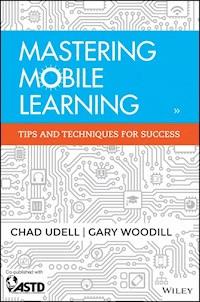
MASTERING MOBILE LEARNING
TIPS AND TECHNIQUES FOR SUCCESS
Chad Udell
Gary Woodill
EDITORS
Foreword by Tony Bingham
Copyright © 2015 by John Wiley & Sons, Inc. All Rights Reserved.
Published by John Wiley & Sons, Inc., Hoboken, New Jersey.
www.wiley.com
Cover image: © Glyphish Pro
Cover design: Wiley
No part of this publication may be reproduced, stored in a retrieval system, or transmitted in any form or by any means, electronic, mechanical, photocopying, recording, scanning, or otherwise, except as permitted under Section 107 or 108 of the 1976 United States Copyright Act, without either the prior written permission of the Publisher, or authorization through payment of the appropriate per-copy fee to the Copyright Clearance Center, Inc., 222 Rosewood Drive, Danvers, MA 01923, 978-750-8400, fax 978-646-8600, or on the web at www.copyright.com. Requests to the Publisher for permission should be addressed to the Permissions Department, John Wiley & Sons, Inc., 111 River Street, Hoboken, NJ 07030, 201-748-6011, fax 201-748-6008, or online at http://www.wiley.com/go/permissions.
Limit of Liability/Disclaimer of Warranty: While the publisher and author have used their best efforts in preparing this book, they make no representations or warranties with respect to the accuracy or completeness of the contents of this book and specifically disclaim any implied warranties of merchantability or fitness for a particular purpose. No warranty may be created or extended by sales representatives or written sales materials. The advice and strategies contained herein may not be suitable for your situation. You should consult with a professional where appropriate. Neither the publisher nor author shall be liable for any loss of profit or any other commercial damages, including but not limited to special, incidental, consequential, or other damages. Readers should be aware that Internet websites offered as citations and/or sources for further information may have changed or disappeared between the time this was written and when it is read.
For general information about our other products and services, please contact our Customer Care Department within the United States at (800) 762-2974, outside the United States at (317) 572-3993 or fax (317) 572-4002.
Wiley also publishes its books in a variety of electronic formats and by print-on-demand. Some material included with standard print versions of this book may not be included in e-books or in print-on-demand. If the version of this book that you purchased references media such as a CD or DVD that was not included in your purchase, you may download this material at http://booksupport.wiley.com. For more information about Wiley products, visit www.wiley.com.
Library of Congress Cataloging-in-Publication Data
Mastering mobile learning/editors, Chad Udell, Gary Woodill; foreword by Tony Bingham.
pages cm
Includes index.
ISBN 978-1-118-88491-1 (hardback); ISBN 978-1-118-88507-9 (pdf);
ISBN 978-1-118-88502-4 (epub)
1. Employees—Training of—Computer-assisted instruction. 2. Mobile communication systems in education. 3. Information technology—Management. I. Udell, Chad, 1976- II. Woodill, Gary.
HF5549.5.T7M357 2014
658.3’12402854678—dc23
2014022658
Lesen Sie weiter in der vollständigen Ausgabe!
Lesen Sie weiter in der vollständigen Ausgabe!
Lesen Sie weiter in der vollständigen Ausgabe!
Lesen Sie weiter in der vollständigen Ausgabe!
Lesen Sie weiter in der vollständigen Ausgabe!
Lesen Sie weiter in der vollständigen Ausgabe!
Lesen Sie weiter in der vollständigen Ausgabe!
Lesen Sie weiter in der vollständigen Ausgabe!
Lesen Sie weiter in der vollständigen Ausgabe!
Lesen Sie weiter in der vollständigen Ausgabe!
Lesen Sie weiter in der vollständigen Ausgabe!
Lesen Sie weiter in der vollständigen Ausgabe!
Lesen Sie weiter in der vollständigen Ausgabe!
Lesen Sie weiter in der vollständigen Ausgabe!
Lesen Sie weiter in der vollständigen Ausgabe!
Lesen Sie weiter in der vollständigen Ausgabe!
Lesen Sie weiter in der vollständigen Ausgabe!
Lesen Sie weiter in der vollständigen Ausgabe!
Lesen Sie weiter in der vollständigen Ausgabe!
Lesen Sie weiter in der vollständigen Ausgabe!
Lesen Sie weiter in der vollständigen Ausgabe!
Lesen Sie weiter in der vollständigen Ausgabe!
Lesen Sie weiter in der vollständigen Ausgabe!
Lesen Sie weiter in der vollständigen Ausgabe!
Lesen Sie weiter in der vollständigen Ausgabe!
Lesen Sie weiter in der vollständigen Ausgabe!
Lesen Sie weiter in der vollständigen Ausgabe!
Lesen Sie weiter in der vollständigen Ausgabe!
Lesen Sie weiter in der vollständigen Ausgabe!
Lesen Sie weiter in der vollständigen Ausgabe!
Lesen Sie weiter in der vollständigen Ausgabe!
Lesen Sie weiter in der vollständigen Ausgabe!
Lesen Sie weiter in der vollständigen Ausgabe!
Lesen Sie weiter in der vollständigen Ausgabe!
Lesen Sie weiter in der vollständigen Ausgabe!
Lesen Sie weiter in der vollständigen Ausgabe!
Lesen Sie weiter in der vollständigen Ausgabe!
Lesen Sie weiter in der vollständigen Ausgabe!
Lesen Sie weiter in der vollständigen Ausgabe!
Lesen Sie weiter in der vollständigen Ausgabe!
Lesen Sie weiter in der vollständigen Ausgabe!
Lesen Sie weiter in der vollständigen Ausgabe!
Lesen Sie weiter in der vollständigen Ausgabe!
Lesen Sie weiter in der vollständigen Ausgabe!
Lesen Sie weiter in der vollständigen Ausgabe!
Lesen Sie weiter in der vollständigen Ausgabe!
Lesen Sie weiter in der vollständigen Ausgabe!
Lesen Sie weiter in der vollständigen Ausgabe!
Lesen Sie weiter in der vollständigen Ausgabe!
Lesen Sie weiter in der vollständigen Ausgabe!
Lesen Sie weiter in der vollständigen Ausgabe!
Lesen Sie weiter in der vollständigen Ausgabe!
Lesen Sie weiter in der vollständigen Ausgabe!
Lesen Sie weiter in der vollständigen Ausgabe!
Lesen Sie weiter in der vollständigen Ausgabe!
Lesen Sie weiter in der vollständigen Ausgabe!
Lesen Sie weiter in der vollständigen Ausgabe!
Lesen Sie weiter in der vollständigen Ausgabe!
Lesen Sie weiter in der vollständigen Ausgabe!
Lesen Sie weiter in der vollständigen Ausgabe!
Lesen Sie weiter in der vollständigen Ausgabe!
Lesen Sie weiter in der vollständigen Ausgabe!
Lesen Sie weiter in der vollständigen Ausgabe!




