


94,99 €
Mehr erfahren.
- Herausgeber: John Wiley & Sons
- Kategorie: Fachliteratur
- Sprache: Englisch
Comprehensively covers the fundamental scientific principles and technologies that are used in the design of modern computer-controlled machines and processes.
- Covers embedded microcontroller based design of machines
- Includes MATLAB®/Simulink®-based embedded control software development
- Considers electrohydraulic motion control systems, with extensive applications in construction equipment industry
- Discusses electric motion control, servo systems, and coordinated multi-axis automated motion control for factory automation applications
- Accompanied by a website hosting a solution manual
Sie lesen das E-Book in den Legimi-Apps auf:
Seitenzahl: 1521
Veröffentlichungsjahr: 2014
Ähnliche


















SECOND EDITION
MECHATRONICS
with Experiments
SABRI CETINKUNT
University of Illinois at Chicago, USA
This edition first published 2015 © 2015 John Wiley & Sons Ltd
Registered officeJohn Wiley & Sons Ltd, The Atrium, Southern Gate, Chichester, West Sussex, PO19 8SQ, United Kingdom For details of our global editorial offices, for customer services and for information about how to apply for permission to reuse the copyright material in this book please see our website at www.wiley.com.
The right of the author to be identified as the author of this work has been asserted in accordance with the Copyright, Designs and Patents Act 1988.
All rights reserved. No part of this publication may be reproduced, stored in a retrieval system, or transmitted, in any form or by any means, electronic, mechanical, photocopying, recording or otherwise, except as permitted by the UK Copyright, Designs and Patents Act 1988, without the prior permission of the publisher.
Wiley also publishes its books in a variety of electronic formats. Some content that appears in print may not be available in electronic books.
Designations used by companies to distinguish their products are often claimed as trademarks. All brand names and product names used in this book are trade names, service marks, trademarks or registered trademarks of their respective owners. The publisher is not associated with any product or vendor mentioned in this book.
Limit of Liability/Disclaimer of Warranty: While the publisher and author have used their best efforts in preparing this book, they make no representations or warranties with respect to the accuracy or completeness of the contents of this book and specifically disclaim any implied warranties of merchantability or fitness for a particular purpose. It is sold on the understanding that the publisher is not engaged in rendering professional services and neither the publisher nor the author shall be liable for damages arising herefrom. If professional advice or other expert assistance is required, the services of a competent professional should be sought.
MATLAB® is a trademark of The MathWorks, Inc. and is used with permission. The MathWorks does not warrant the accuracy of the text or exercises in this book. This book's use or discussion of MATLAB® software or related products does not constitute endorsement or sponsorship by The MathWorks of a particular pedagogical approach or particular use of the MATLAB® software.
Library of Congress Cataloging-in-Publication Data
Cetinkunt, Sabri. [Mechatronics] Mechatronics with experiments / Sabri Cetinkunt. – Second edition. pages cm Revised edition of Mechatronics / Sabri Cetinkunt. 2007 Includes bibliographical references and index. ISBN 978-1-118-80246-5 (cloth) 1. Mechatronics. I. Title. TJ163.12.C43 2015 621.381–dc23
2014032267
A catalogue record for this book is available from the British Library.
ISBN: 9781118802465
CONTENTS
Preface
About the Companion Website
Chapter 1: Introduction
1.1 Case Study: Modeling and Control of Combustion Engines
1.2 Example: Electro-hydraulic Flight Control Systems for Commercial Airplanes
1.3 Embedded Control Software Development for Mechatronic Systems
1.4 Problems
Note
Chapter 2: Closed Loop Control
2.1 Components of a Digital Control System
2.2 The Sampling Operation and Signal Reconstruction
2.3 Open Loop Control Versus Closed Loop Control
2.4 Performance Specifications for Control Systems
2.5 Time Domain and
S
-domain Correlation of Signals
2.6 Transient Response Specifications: Selection of Pole Locations
2.7 Steady-State Response Specifications
2.8 Stability of Dynamic Systems
2.9 Experimental Determination of Frequency Response
2.10 The Root Locus Method
2.11 Correlation Between Time Domain and Frequency Domain Information
2.12 Basic Feedback Control Types
2.13 Translation of Analog Control to Digital Control
2.14 Problems
Chapter 3: Mechanisms for Motion Transmission
3.1 Introduction
3.2 Rotary to Rotary Motion Transmission Mechanisms
3.3 Rotary to Translational Motion Transmission Mechanisms
3.4 Cyclic Motion Transmission Mechanisms
3.5 Shaft Misalignments and Flexible Couplings
3.6 Actuator Sizing
3.7 Homogeneous Transformation Matrices
3.8 A Case Study: Automotive Transmission as a “Gear Reducer”
3.9 Problems
Note
Chapter 4: Microcontrollers
4.1 Embedded Computers versus Non-Embedded Computers
4.2 Basic Computer Model
4.3 Microcontroller Hardware and Software: PIC 18F452
4.4 Interrupts
4.5 Problems
Chapter 5: Electronic Components for Mechatronic Systems
5.1 Introduction
5.2 Basics of Linear Circuits
5.3 Equivalent Electrical Circuit Methods
5.4 Impedance
5.5 Semiconductor Electronic Devices
5.6 Operational Amplifiers
5.7 Digital Electronic Devices
5.8 Digital and Analog I/O and Their Computer Interface
5.9 D/A and A/D Converters and Their Computer Interface
5.10 Problems
Note
Chapter 6: Sensors
6.1 Introduction to Measurement Devices
6.2 Measurement Device Loading Errors
6.3 Wheatstone Bridge Circuit
6.4 Position Sensors
6.5 Velocity Sensors
6.6 Acceleration Sensors
6.7 Strain, Force, and Torque Sensors
6.8 Pressure Sensors
6.9 Temperature Sensors
6.10 Flow Rate Sensors
6.11 Humidity Sensors
6.12 Vision Systems
6.13 GPS: Global Positioning System
6.14 Problems
Notes
Chapter 7: Electrohydraulic Motion Control Systems
7.1 Introduction
7.2 Fundamental Physical Principles
7.3 Hydraulic Pumps
7.4 Hydraulic Actuators: Hydraulic Cylinder and Rotary Motor
7.5 Hydraulic Valves
7.6 Sizing of Hydraulic Motion System Components
7.7 Hydraulic Motion Axis Natural Frequency and Bandwidth Limit
7.8 Linear Dynamic Model of a One-Axis Hydraulic Motion System
7.9 Nonlinear Dynamic Model of One-Axis Hydraulic Motion System
7.10 Example: Open Center Hydraulic System – Force and Speed Modulation Curves in Steady State
7.11 Example: Hydrostatic Transmissions
7.12 Current Trends in Electrohydraulics
7.13 Case Studies
7.14 Problems
Notes
Chapter 8: Electric Actuators: Motor and Drive Technology
8.1 Introduction
8.2 Energy Losses in Electric Motors
8.3 Solenoids
8.4 DC Servo Motors and Drives
8.5 AC Induction Motors and Drives
8.6 Step Motors
8.7 Linear Motors
8.8 DC Motor: Electromechanical Dynamic Model
8.9 Problems
Note
Chapter 9: Programmable Logic Controllers
9.1 Introduction
9.2 Hardware Components of PLCs
9.3 Programming of PLCs
9.4 PLC Control System Applications
9.5 PLC Application Example: Conveyor and Furnace Control
9.6 Problems
Chapter 10: Programmable Motion Control Systems
10.1 Introduction
10.2 Design Methodology for PMC Systems
10.3 Motion Controller Hardware and Software
10.4 Basic Single-Axis Motions
10.5 Coordinated Motion Control Methods
10.6 Coordinated Motion Applications
10.7 Problems
Chapter 11: Laboratory Experiments
11.1 Experiment 1: Basic Electrical Circuit Components and Kirchoff’s Voltage and Current Laws
11.2 Experiment 2: Transistor Operation: ON/OFF Mode and Linear Mode of Operation
11.3 Experiment 3: Passive First-Order RC Filters. Low Pass Filter and High Pass Filter
11.4 Experiment 4: Active First-Order Low Pass Filter with Op-Amps
11.5 Experiment 5: Schmitt Trigger With Variable Hysteresis using an Op-Amp Circuit
11.6 Experiment 6: Analog PID Control Using Op-Amps
11.7 Experiment 7: LED Control Using the PIC Microcontroller
11.8 Experiment 8: Force and Strain Measurement Using a Strain Gauge and PIC-ADC Interface
11.9 Experiment 9: Solenoid Control Using a Transistor and PIC Microcontroller
11.10 Experiment 10: Stepper Motor Motion Control Using a PIC Microcontroller
11.11 Experiment 11: DC Motor Speed Control Using PWM
11.12 Experiment 12: Closed Loop DC Motor Position Control
Appendix : MATLAB
®
, Simulink
®
, Stateflow, and Auto-Code Generation
A.1 MATLAB
®
Overview
A.2 Simulink
®
A.3 Stateflow
A.4 Auto Code Generation
References
Further Readings
Suppliers of Mechatronic Systems and Components
Suppliers of Industrial Robots
Index
End User License Agreement
List of Tables
Chapter 3
Table 3.1
Chapter 6
Table 6.1
Table 6.2
Chapter 7
Table 7.1
Chapter 8
Table 8.1
Table 8.2
Table 8.3
Chapter 11
Table 11.1
List of Illustrations
Chapter 1
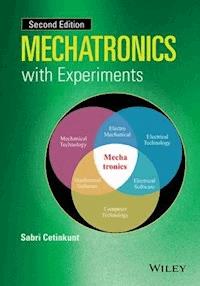
Figure 1.1 The field of mechatronics: intersection of mechanical engineering, electrical engineering, and computer science.
Figure 1.2 Manual and automatic control system analogy: (a) human controlled, (b) computer controlled.
Figure 1.3 Main components of any mechatronic system: mechanical structure, sensors, actuators, decision making component (microcontroller), power source, human/supervisory interfaces.
Figure 1.4 A completely mechanical closed loop control system for liquid level regulation.
Figure 1.5 Mechanical “governor” concept for automatic engine speed control using all mechanical components.
Figure 1.6 Closed loop cylinder position control system with mechanical feedback used in the actuation of the main valve.
Figure 1.7 A web handling motion control system. The web is moved at high speed while maintaining the desired tension. The tension control system can be considered a mechatronic system, where the control decision is made by an analog op-amp, not a digital computer.
Figure 1.8 A furnace or room temperature control system and its components using analog op-amp as the controller. Notice that a fan driven by an electric motor is used to force the air circulation from the heater to the room. A timer is used to delay the turn ON and turn OFF time of the fan motor by a specified amount of time after the heater is turned ON or OFF. A microcontroller-based digital controller can replace the op-amp and timer components.
Figure 1.9 Electronic “governor” concept for engine control using embedded microcontrollers. The electronic control unit decides on fuel injection timing and amount in real time based on sensor information.
Figure 1.10 Three major robotic manipulator mechanisms: Cartesian, cylindrical, spherical coordinate axes.
Figure 1.11 Gantry, SCARA, and parallel linkage drive robotic manipulators.
Figure 1.12 Block diagram of the components of a computer controlled robotic manipulator.
Figure 1.13 Computer numeric controlled (CNC) machine tool: (a) picture of a vertical CNC machine tools, reproduced with permission from Yamazaki Mazak Corporation, (b)
x-y-z
axes of motion, actuated by servo motors, (c) closed loop control system block diagram for one of the axis motion control system, where two position sensors per axis (motor-connected and load-connected) are shown (also known as dual position feedback).
Figure 1.14 Block diagram controlled power flow in a construction equipment. Power flow in automotive applications is similar. Notice that modern construction equipment has electronic control modules (ECMs) for most major sub-systems such as engine, transmission, brake, steering, implement sub-systems.
Figure 1.15 Semi-autonomous construction equipment operation using global positioning system (GPS), local sensors and on-vehicle sensors for closed loop sub-system control.
Lesen Sie weiter in der vollständigen Ausgabe!
Lesen Sie weiter in der vollständigen Ausgabe!
Lesen Sie weiter in der vollständigen Ausgabe!
Lesen Sie weiter in der vollständigen Ausgabe!
Lesen Sie weiter in der vollständigen Ausgabe!
Lesen Sie weiter in der vollständigen Ausgabe!
Lesen Sie weiter in der vollständigen Ausgabe!
Lesen Sie weiter in der vollständigen Ausgabe!
Lesen Sie weiter in der vollständigen Ausgabe!
Lesen Sie weiter in der vollständigen Ausgabe!
Lesen Sie weiter in der vollständigen Ausgabe!
Lesen Sie weiter in der vollständigen Ausgabe!
Lesen Sie weiter in der vollständigen Ausgabe!
Lesen Sie weiter in der vollständigen Ausgabe!
Lesen Sie weiter in der vollständigen Ausgabe!
Lesen Sie weiter in der vollständigen Ausgabe!
Lesen Sie weiter in der vollständigen Ausgabe!




