


4,99 €
Mehr erfahren.
- Herausgeber: Stefano Olivari & Giulia Brasca
- Kategorie: Lebensstil
- Sprache: Englisch
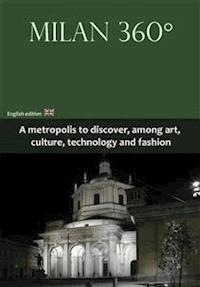
Milan, known worldwide as the economic and fashion capital of Italy, is one of the most advanced cities in the world which, in its completely urbanized area of almost 181.76km², includes also wonderful shops and a great social life, besides, of course, art, a university culture, excellent food and traditions recognizable in everyday life and in daily habits; for example, the rediscovery of the small markets as a place to meet and have a chat, or going for a walk with the family in the streets of the centre. It is not at all easy to determine what is in the name “Milan”: first of all, it refers to a municipality with about 1,300,000 inhabitants, but also to an urban area with about 3,900,000 inhabitants also known as the “Greater Milan” and finally, to a metropolitan area of 7,400,000 inhabitants. Nevertheless, the city is identified by its symbols, and our intention is to introduce you to every aspect of the city of Milan through virtual photographs, texts and some curiosities. It is worth visiting Milan to learn the many realities that surround this city, from the entrepreneurial vocation to the connection with tradition: only by knowing the richness of the past can we confront the present. Enjoy your visit!
Das E-Book können Sie in Legimi-Apps oder einer beliebigen App lesen, die das folgende Format unterstützen:
Veröffentlichungsjahr: 2015
Ähnliche


















Milan 360°
A metropolis to discover, among art, culture, technology and fashion
OlliService Multimedia
© Copyright 2014 - All Rights Reserved
Milan, known worldwide as the economic and fashion capital of Italy, is one of the most advanced cities in the world which, in its completely urbanized area of almost 181.76km², includes also wonderful shops and a great social life, besides, of course, art, a university culture, excellent food and traditions recognizable in everyday life and in daily habits; for example, the rediscovery of the small markets as a place to meet and have a chat, or going for a walk with the family in the streets of the centre. It is not at all easy to determine what is in the name “Milan”: first of all, it refers to a municipality with about 1,300,000 inhabitants, but also to an urban area with about 3,900,000 inhabitants also known as the “Greater Milan” and finally, to a metropolitan area of 7,400,000 inhabitants.
Nevertheless, the city is identified by its symbols, and our intention is to introduce you to every aspect of the city of Milan through virtual photographs, texts and some curiosities.
It is worth visiting Milan to learn the many realities that surround this city, from the entrepreneurial vocation to the connection with tradition: only by knowing the richness of the past can we confront the present.
Enjoy your visit!
The History of Milan
In the 4th century B.C. the Insubres founded the settlement which today corresponds to the city, named Mediolanum, in the region between the rivers Ticino and Adda, after the Roman conquest that took place earlier in 222 B.C., and soon after confirmed in 189 B.C., following the revolt of the Insubria Gauls, allied with Cartagine during the Second Punic War. Along with the Latin name, the urban structure and the extremely rigorous organization of the territory, typical of the colonies subject of the Roman Imperium, were configured, and Milan went from castrum to the colonial layout (89 BC) until it became, according to the Lex Roscia, by will of Julius Caesar, a municipality, whose citizens enjoyed the privileges derived from the Roman citizenship. At the end of the first century B.C., the city saw its first city wall built and was appointed by Ottaviano Augusto, as the imperial capital of the 11th region of Transpadana.
The gradual spread of Christianity, and its persecution during the Imperial Age, is evidenced by the many martyrs in Milan that have left their mark till this day in many place names of the city: San Vitale, Valeria, Gervaso, Protaso, Vittore, and Felice are just a few of these.
In 130 A.D. it became a Roman colony by decree of Emperor Hadrian, and Milan
was chosen as the imperial seat for the Western Augustus, Massmiano, by Diocletian in 286 BC. The new role as a centre of power and not only a commercial and manufacturing centre, brought with it a strong enthusiasm that was evidenced in the architecture of the construction of the buildings of representation that hosted the imperial offices including the Basilica Palatina, today called St. Lorenzo, the amphitheatre and the imperial palaces in the area of the Carrobbio. Before the Edict of Milan, issued by Emperor Constantine in 313, granted freedom of worship in the dominions of the Empire, the Christians in the city had already
built, in a hidden way, some of the churches that became the core of the current San Nazzaro Maggiore, San Simpliciano and the Basilica of the Apostles (where St. Ambrogio now stands) and the Maior Basilica of Santa Tecla which a thousand years later became the starting point for the construction of the Duomo. The city, which experienced a thriving period from 374 to 397 A.D., welcomed one of its most important figures, the Patron Saint of Milan, Bishop Ambrogio, who was appointed by acclamation by the people, he who held administrative positions on behalf of the emperor.
At the beginning of the 5th century, however, the capital of the Empire was moved to Ravenna, and Milan, a far cry from the pomp of the imperial
Burgundians (489 AD) and the Ostrogoths (539 AD), who devastated its territory. In 569 it was the Langobards’ turn, whose King Alboino, entered the city in triumph, thus forcing into exile in the land of Genoa, the diocese and the bishop who remained there for 70 years. From 774 A.D., the concept that most sums up the history of the city is domination: there was the frenetic changeover of conquerors who aspired to the rich territory of Milan, first of whom, the Emperor of the Holy Roman Empire, Charlemagne, who defeated the last Langobard King Desiderius and his son Adelchi in the battles of Pavia and Verona (a piece of history that was sublimely translated in tragedy in the Adelchi by Manzoni).
The episcopal authority in the Middle Ages is certainly the most important in the city, and soon after the year 1000, Ariberto da Intimiano sat in that chair, leading the people during the siege of Emperor Conrad II, the Salico’s army, only to be forced to exile in Monza after the expulsion of the nobles of the city.
The first conserved document which gives evidence of the existence of the City of Milan is dated 1097, and tells the story of a city governed by two Consuls Civium, at first subordinated to the bishop, but which became independent since the 12th century. However the internal strifes were not enough, another war was coming, this time against the invading Germanic,
period, succumbed to the attacks of the Frederick Barbarossa, who, after conquering the city and expelling its local adversaries, was subjected by the counter-offensive of the Lombard League, led by the City of Milan, and was defeated at Legnano on May 29th of the year 1176, in the famous Battle of the Carroccio.
Having become the largest and most populated of all the Italian municipalities, also Milan, during the Middle Ages, had two factions that were opposed: the Guelphs and Ghibellines, led respectively by the families of Dalla Torre (Torriani) and Visconti; the latter prevailed in 1277, when Ottone Visconti defeated Napo Torriani in Desio, ending the communal experience that had brought a wide citizen participation in public life, as evidenced by the plan of that time, such as the new Broletto and Piazza dei Mercanti between Piazza del Duomo and the Cordusio.
The Visconti family dominated the city from 1277 to 1447 with Matteo, who succeeded Ottone who obtained the position of Imperial Vicar, and his successors, until the year 1395, when Gian Galeazzo obtained the nomination of the Duke of Milan by inheritance. During this period great artists such as Giotto were active in Milan, the construction of the Duomo was started, and the city was fortified with a second circle of wall.
After the brief experience of the
power, as at the time of Ambrogio,had Ambrosian Republic, which lasted only a central role with, still in 1560, Carlo Borromeo ascending to the position of Archdiocese, appointed for life and the reformer of the Ambrosiana church, according to the dictates of the Council of Trent, regent until 1584 and made saint in 1610, under the episcopate of his cousin Federigo (1595- 1631).
A portrait of the society of the time, ranging from the corruption of officials of the King of Spain and the epidemic of plague that sowed death in Europe and that struck Milan, halving the population, is offered in 1628 in the masterpiece “The Betrothed” by Alessandro Manzoni, which also refers to the cultural revolutionary of the time, of Cardinal Federigo: the public opening of the Ambrosian Library and the adjoining art gallery that still preserves traces of Caravaggio in the Milanese territory.
It’s the time of Austria which took control of Milan during the War of the Spanish Succession in 1706; but it was only since 1740 that, with Maria Teresa at the head of the empire, that in the Duchy numerous reforms in enlightenment key bloom to a new nobility, space is made to a ferment of ideas: it is the Milan of Beccaria, Parini, the Verri brothers, the cultural and artistic centre that has the Brera Academy founded in 1776 as its heart, and where the largest theatre in Italy is built: La Scala.
three years, it was Francesco Sforzato who restored noble order and to claim the title of Duke of Milan, to be recognized as duke by the Empire only in 1454. Under his principality began the construction of the Maggiore Hospital and the Sforzesco Castle began, entrusted to the architect Filarete. His incompetent heirs were overwhelmed by Ludovico il Moro’s personality, who took control of the city and settled his court at the castle. During this period (1450-150) great artists of the Italian Renaissance such as Foppa and Bramante were resident and working in Milan, producing masterpieces such as Santa Maria delle Grazie and Santa Maria at San Satiro to the city, and especially Leonardo da Vinci, whose fame is due to the genius shown at the court of the Moro in the military camp as well as the sublime works that are still in the city (Cenacolo, Sala dell’Asse...) and that were painted in Milan (the Virgin of the Rocks).
From 1499 the following wars saw the domination of Milan by the French, Swiss, then Sforza, again the French and the Spaniards who supported Francesco II Sforza; the Spanish Crown retained direct control of the Duchy of Milan until Sforza’s death in 1535.
Thus began the Spanish rule that ended in 1706. The symbol of this change of domain is the construction of the imposing Spanish Walls completed in 1560: the city expanded and the religious
back under the control of the Habsburg Empire becoming part of the Kingdom of Lombardy-Venetia, with the dual capital and seat of the viceroy in Milan. It was the Europe of a technological revolution and in Milan the first public gas lighting service was created, a horse omnibus service, and the Milan-Monza and Milan-Treviglio railroads were inaugurated, but it was also the Europe of romance, and a large group of intellectuals and artists of this movement animated the city of Milan, among whom Silvio Pellico, Federico Confalonieri, Carlo Cattaneo and the same Alessandro Manzoni.
These movements concretized in an explosive way during the Five Days of Milan (18th -22nd March 1848) with at short the expulsion of the Austrian ruler who returned the following year, but the word ‘domination’ seems to have found the end of its road: on the 8th June 1859, Vittorio Emmanuele II and Napoleon III, made their entrance into the city, and with the proclamation two years after the Kingdom of Italy, Milan became part of the national state. The first census of the Kingdom found a population of 196,000 inhabitants, and important urban works were started to celebrate the unification of Italy: the Vittorio Emanuele II Gallery was inserted to connect the renovated Piazza Duomo with a statue of the sovereign in the centre, a statue that represents the sovereign, and also the Monumental Cemetery was built at Porta Volta.
A great interpreter of neoclassicism is the architect Giuseppe Piermarini who worked not only at the Scala, but alsoon urban development in the area of Porta Venezia, Piazza Fontana and the plan of the Belgioso Palace in the square of the same name. And it is in that square that Alessandro Manzoni was born in 1785, another of the personalities whose fame is connected to the city and who made it immortal with their masterpieces.
The Austrian rule was interrupted 11 years later, with Napoleon Bonaparte’s arrival in the city on 15th May 1796. The following year it was proclaimed the Cisalpine Republic, which became the Italian Republic in 1802 as its Milan its capital; Napoleon commissioned the architect Antolini to expand the territory of the city around the Castello Sforzesco with an ambitious project that was interrupted, but the setting of which can be found in the imperial architecture of the Foro Bonaparte and the complex of the Civica Bonaparte commissioned to the Canonica.
A historical moment of great importance to the city in 1805, was the coronation of Napoleon, proclaimed Emperor, King of Italy, with the symbol of Langobard power: the Iron Crown, now kept in the Duomo of Monza. The Academy and the Art Gallery of Brera were renewed and enriched by great artists and works, including those by Canova.
Napoleon’s splendour was ephemeral, and in 1814 Lombardy and Milan were
Milan, in the second half of the 19th century was the centre of Italy during the second industrial revolution that was shown in its entirety in the National Industrial Exhibition of 1881 at the Public Gardens. In the same years the large industries connected to the city for their prestige were Pirelli, Breda, Bianchi, Marelli, Riva and Carlo Erba.
The air of protest was felt in the pages of the magazine founded in Milan in 1891 by Filippo Turati, “Critica Sociale”, and was concentrated in the Labour Chamber,he first built in Italy in the same year, until 1898, when the general strike erupted against the increases in the price of bread, sadly famous for Bava Beccaris’ brutal repression of the riots.
At the turn of the 19th and 20th centuries, the area between Cordusio and Simplon Park was reorganized by the architect Pietro Beruto and assumed its present aspect, ready, after the inauguration in 1904, of the Filarete tower, to host the International Exposition in 1906 that celebrated the opening of the Simplon Tunnel.
The industrial and cultural history proceeded in Milan with the founding, in 1906, of the Alfa Romeo, the Italian Touring Club, the first tour of Italy that had the civic arena as its arrival point, and incorporated the ideas of the futurist Filippo Tommaso Marinetti and other members of the Manifesto.
After the First World War, Benito
Mussolini, director of the People of
Italy, founded in Milan the Italian Fascists of combat in Milan that occupied Palazzo Marino in 1922 during a general strike.
The Trade Fair and the Association of Italian Industrials, today Confindustria, were also created in this period.
The city was growing, and in 1923, the neighbouring municipalities become part of the territory of Milan, with a total of 865,000 inhabitants.
The universities were inaugurated, first the Cattolica del Sacro Cuore (1921) and then the Statale (1924), infrastructures were built, including the first motorway in the world, the Milan-Varese, and then the Milan-Turin, the Central Station (inaugurated in 1931), the airport of Linate (1936), the San Siro Stadium (1926), the Building of Art which houses the Triennale, and the Building of Justice by Piacentini.
It is the ideological and artistic renewal to drive the style of the architecture of this period, that has its most significant examples in the Bocconi University and the Maggiore Hospital of Niguarda, inaugurated in 1939 on the eve of World War II.
This will bring devastation and desolation in the Milan area that was the scene of the last days of Benito Mussolini, who was killed in Piazzale Loreto; the patrimony of the many aerial bombardments is still visible in the architectural fractures that characterize
the streets of the city centre, where surviving historic buildings are sometimes in harmony, and sometimes not, with buildings dating back to the reconstruction of the fifties and sixties.
The Five Days of Milan
On 28th March 1848, only six days after the flight of Radetzky and the Austrian troops from the city, Ignazio Cantù published, dedicated to Pope Pius IX, the pamphlet “The last five days of the Austrians in Milan, Relations and Reminiscences of the Citizen Ignazio Cantù”, a pleasant short story that has the merit of explaining what happened in those days of glory, blood, confusion, dust and fear.
Cantù talks about a miracle and transformation of a new arms race of the youth, undressed of the stylish clothes that distinguished them. Insurgents and foreigners fought in the city, unlike what happened in Paris, where the clash was between insurgents against countrymen loyal to the regime.
Reconstructing the events that followed between 18th and 22nd March 1848, emphasis was put on some dispatches announcing uprisings in Milan that were taking place on the same days in Vienna, capital of the ruling Empire of Milan.
On Saturday, 18th March, the viceroy hung up the Imperial account of the revolt in the capital, and a proclamation announcing an imminent change of the
law on the freedom of the press and the summons of the council of its territories. It was the spark that was expected, and as remembered by Cantù, it was the Emperor who “helped” the people of Milan, risen and gathered in Piazza Fontana and Corsia de’ Servi, to free themselves from the domination that had lasted for 33 years.
The firm demands of the people were to dismantle the imperial police force, to free political prisoners, to abolish the laws of blood, regarding the freedom of the press, and to summon the Citizens’ Council as soon as possible. In the afternoon, the crowd, led by the Mayor, went to the Government Palace, seat of the Austrian power, and broke in, killing the Hungarian guards at the entrance. Count O’Donnell was forced to sign by the crowd, and the decrees providing for the abolition of the Police Force and the establishment of the Civic Guard, with the convocation of the Role for all citizens between twenty and sixty years of age. The motto that drove the revolutionists was Order! and the symbol was the three-colour flag that coloured all the quarters while the uprising was expanding.
The Imperial Guard stationed at Sforzesco Castle, racing to arm the cannons and the people armed themselves with what they could: barricades of boards and furniture, the paving stones as bullets, oil and boiling water to fight a powerful enemy.
They fought in all the city centre streets.
The second day was fought in the rain, with the people who were short of weapons and the Austrian Guard that had occupied and patrolled in the Piazza del Duomo.
The day was marked by the army firing muskets, however they caused few casualties; in the afternoon the rebels took over the barracks of Piazza dei Mercanti; the riflemen were in disarray and fired repeatedly without aiming at a specific target, meanwhile romantic heroes who came from France and the neighbouring regions were distinguished among the insurgents.
Field Marshal Radetzky remained barricaded inside the castle while the news of the revolt in Milan encouraged the riots in Bergamo, Pavia and on the way to Legnano. Meanwhile the crowd wanted to vent their hatred accumulated during the regime with acts of reprisal, but the officials of the Empire were taken unharmed to the Borromeo Palace, seat of the provisional government.
The recruitment of the civic guards continued, and also the availability of weapons for the people to whom the Guardia di Finanza sided. The insurgents in Milan in the meanwhile sought the support of neighbouring municipalities with dispatches and messengers sent wherever there was revolt, pressing reinforcements to the national cause.
The armistice offered by Radetzky on
21st March was rejected in view of the people’s almost certain victory, who had found another support in the order of Firemen, and organized in the legion town, rushed to attack the barracks in Via degli Andegari and from there to the office of the Genio.
Having taken possession of these, thanks to the heroic actions of patriots like Pasquale Sottocorno, the victorious siege moved to the barracks of St. Apollinaris, to St. Celso; and then from there to St. Antonio, office of the Trial Court, to the police garrison of Porta Ticino, where the rebels were pulled into the trap of a false surrender, but under the guidance of Vitaliano Borromeo they were reorganized, and after a night of fighting, stormed the barracks putting it to iron and fire.
St. Ambrogio’s hospital, St. Francesco, remained in enemy hands, and Marshal Radeztky’s house, the latter was attacked at the dawn of 22nd March, and came under the control of the people, the furniture was used to make barricades, his sword was carried into Piazza Borromeo as a symbol of the victory of the revolution.
It was then the turn of the Military Hospital of St. Ambrogio to fall into the hands of the insurgents, which was tempested with the cannon balls fired from the fort under the command of the Field Marshal, but which were then scarce.
The victory ended with the arrival in
Saint Ambrogio
Ambrogio, who became the patron saint of Milan, was born in Treviri, in Gaul, around 339 A.D. He was the son of a Roman officer in service beyond the Alps as praetorian prefect of Gaul, and of a noble woman, belonging to the gens Aurelia, one of the most prominent families of Rome. After the death of his father he moved to Rome with his mother and brothers Marcellina and Satiro, where he studied law and rhetoric, and began his legal career. Marcellina consecrated herself to God by taking the veil of the virgins and Satiro, to whom Ambrogio was very attached, for a time covered a high state charge, and died in 378. Destined to an administrative career in his father’s footsteps, he attended the best schools in Rome, where he performed the traditional studies of the trivium and the quadrivium (he learned Greek and studied law, literature and rhetoric), then participating in the public life of the city. After five years of advocacy at Sirmium in 370 he was appointed as
the city of insurgents from Lecco, who had stormed the town of Monza, they headed into the city from Porta Comasina, today Porta Garibaldi.
At midnight on 23rd March, the fighting ended at dawn on the same day, the Marshal and his troops were forced to flee, taking with them only 17 of the many prisoners. Milan was free.
Proclamations signed by C. Casati, President of the provisional government, were posted In the city, that chanted: Long live Italy!
Governor of the Roman province of Aemilia et Liguria, including, in addition to the existing regions, much of Piedmont and Lombardy, and also Milan. Here he became a major figure in the court of Emperor Valentinian I, in particular, in 374, when the Arian bishop Aussenzio died, causing a collapse of the delicate balance between Catholics and Arians, and thus causing a series of a riots for the appointment of successor.
The Arians were the majority, and in particular they challenged the primacy of the Roman Church and the ecclesiastical hierarchy, and hoped for a church of the people with a government entrusted to the bishops. His skill as an official in the peaceful settlement of the strong contrasts between Arians and Catholics won him a wide appreciation of the two factions.
He then attempted to avoid these disorders often caused by turbulent ecclesiastical elections, meeting with the faithful, speaking with wisdom and firmness, so that everything was done according to conscience and respect for freedom. It was right after these speeches that the assembly lifted a cry, ‘’Bishop Ambrogio!’’. Ambrogio, who was at that meeting as an imperial official, was not even baptized, being only a catechumen. Surprised and even frightened, he proclaimed his unworthiness. He professed himself a sinner ordering tortures, meeting prostitutes and quoting Platonic
philosophers as a challenge to the Church. He even tried to escape riding on his trusted mule, one time in the direction of Pavia, the second time aiming for Magenta, but all in vain.
So he was baptized, and eight days later (7th December 374), he received the consecration of bishops. “Removed from the courts and the public administration - said the new Bishop - to pass to the episcopate, I had to begin to teach what I had never learned.”
He therefore started reading the Bible, studied the “Church Fathers and the Doctors” under the direction of Simpliciano. He learned how to preach, becoming one of the most famous orators of his time, able to enchant even a refined intellectual such as Agostino of Tagaste, who, ten years later, he himself baptized. His current position as bishop of the city of residence of the imperial court, and his previous career as a lawyer, administrator and politician, brought him to intervene on several occasions at the forefront of political events, to have a close relationship with the environment of the court and of the Roman aristocracy, and sometimes he covered special diplomatic assignments on behalf of the emperors. In particular he was at the forefront in the fight against Arianism, which had many followers in Milan and in the imperial court. It is for this reason that he clashed with the Empress Justina, of Arian faith and probably influenced the religious
policy of the Emperor Graziano who, in 380, made harsher penalties for heretics and, with the Edict of Thessalonica, declared Christianity the state religion. The time of maximum tension occurred in 385-386 when, after the death of Graziano, the Arians, with the support of the imperial court, asked insistently for a church to practice their religion in.
Ambrogio’s opposition was determined and decisive, causing the famous episode in which, together with the faithful Catholics, he “occupied” the basilica intended for Arians until the other party was forced to surrender. It was on this occasion, it is said, that Ambrogio introduced the practice of antiphonal singing and prayer sung in the form of a hymn, in order to avoid that the faithful, who occupied the church, fell asleep. It was also instrumental in Ambrogio’s victory in the controversy with the Arians on the discovery of the bodies of the Saints Gervaso and Protaso, which occurred exactly in 386 under the leadership of the Bishop of Milan, who in this way, won the consent of the majority of the faithful of the city.
The discovery of the bodies is narrated by the same Ambrogio, who credits the discovery to an omen, for which reason he dug the earth at the gates of the church of the saints Felice and Nabore (now destroyed). The discovery of the bodies was followed by their translation (according to a ritual imported by the Eastern Church) to the Basilica
Martyrum; during the translation it is said (by the same Ambrogio) that a blind man named Severo regained his sight.
Ambrogio also had an effect on the religious policy of Teodosio I, when in 390 A.D., he sternly rebuked the Emperor, who had ordered a massacre of the population of Thessalonica, guilty of having lynched the head of the Roman garrison of the city in a bloodbath lasting three hours, thousands of people were murdered, drawn into the arena under the pretence of a horse race.
Ambrogio, aware of the incident, avoided an open confrontation with the imperial power (under the pretext of an illness, he avoided meeting Teodosio in a public dispute) however he wrote to request, in a reserved but decisive way, the Emperor’s “public penance” as he was guilty of a serious crime while declaring himself Christian, which would exclude him from the sacred rites.
Teodosio accepted to submit to the bishop’s will and made an act of public penance on Christmas Eve that year, when he was absolved and readmitted to the sacraments.
After this episode, the religious policy of the Emperor stiffened considerably: between 391 and 392 a series of decrees were issued (Theodosian decrees) which implemented in full the Edict of Thessalonica, the entrance to pagan temples was denied and the prohibition of all forms of worship was emphasized, including the worship of statues,
administrative punishments for Christians who converted back to paganism were tightened, and the decree made in 392 by Constantinople, the immolation of victims in the sacrifices and the consultation of the innards were equivalent to the crime of treason, punishable by the death sentence.
In 393 Milan was involved in the struggle for power between Emperor Teodosio I, and the usurper Flavio Eugenio. In April, Eugenio crossed the Alps and aimed at the conquest of the city, as the capital of the West.
Ambrogio left and went to retire in Bologna. During a short stay in Faenza he wrote a letter to Eugene. Then he accepted the invitation of the community of Florence, where he remained for about a year.
The war for the control of the empire was won by Teodosio In the autumn of 394 Ambrogio returned to Milan.
Although Ambrogio was physically small and delicate, he appeared taller than all for his apostolic work and was great in spirit. A man of great charity, his door was always open, working tirelessly for the good of the people entrusted to his care.
He distributed his considerable fortune among the poor, giving away his land holdings (except for his sister Marcellina’s needs), and dedicated his life to a strict ascesis, practicing charity towards all, as a great shepherd
and doctor of his people. As already mentioned, his influence was decisive in the ecclesiastical and political situation of his time.
He fought for the exclusive recognition of the Church against paganism, Arianism and other heresies, as well as for its freedom and independence from political power.
Moreover, he strenuously supported not only the rights of the Church before the Emperor, but also the authority of its pastors, and defended with his writings and actions, the doctrine of the true faith against the Arians.
Ambrogio also had several churches built, including four on either side of the city, as if to form a protective square, probably thinking of the shape of a cross. They correspond to the current basilicas of St. Nazaro (on the decuman at the Porta Romana, then it was the Basilica Apostolorum), of San Simpliciano (on the opposite side), of Saint Ambrogio (located in the south-west, which was originally called Basilica Martyrum as it housed the bodies of the holy martyrs Gervasio and Protasio, found by Ambrogio himself, it now houses the relics of the saint) and of St. Dionigi.
He was also the author of several prayer hymns, carrying out fundamental reforms in the worship and sacred songs, which he first introduced in the Christian liturgy, and even today in Milan there is a school that hands this ancient singing down through the millennium.
Ambrogio died on Holy Saturday, 4th April 397. His memorial is celebrated on 7th December, the day of his ordination. St. Ambrogio’s work in Milan left deep marks in the diocese and in the city. Back in September of 600, Pope Gregorio Magno spoke of the newly elected Bishop of Milan, Deodato, not so much as a successor, but rather as “vicar” of St. Ambrogio (equating to almost a second “Bishop of Rome”). In the year 881, instead, Pope John VIII called the diocese “Ambrosian” for the first time, a term that has remained today, to identify not only the Church of Milan, but sometimes even the city.
Ambrogio’s patrimony emerged mainly from his pastoral activities: preaching the Word of God combined with the doctrine of the Catholic Church, paying attention to issues of social justice, giving hospitality to people arriving from distant countries, the denunciation of the errors in the civic and political life.
Ambrogio’s work left a deep mark on the liturgy in particular. He introduced many elements from the Eastern liturgies in the Western church, especially songs and hymns.
The hymn Te Deum laudamus is attributed to Ambrogio. The liturgical reforms were maintained in the diocese of Milan also by their successors and formed the core of the Ambrosian Rite, surviving the uniform of the rituals and the establishment of the one Roman rite by Pope Gregorio I and the Council
of Trent. His figure inspired the “Gold Ambrogino” award, the unofficial name by which the honours awarded by the city of Milan are commonly referred to. In Milanese dialect, “Ambrogio” is called “sant Ambroes (classical spelling) or sant Ambros (both pronounced “sant’ambrœs”).
The Ambrosino
Ambrosino is the name of some coins minted in Milan during the Middle Ages, and it was coined for the entire second half of the 13th century, with different symbols.
Both gold and silver Ambrosino coins could be found. The gold Ambrosino corresponded to the minted florin of the first republic (1250-1310) and bore the image of St. Gervasio and St. Protasio. Probably issued around 1301, only three examples are known of. On the inside is the word “AMBROSIVS”, while on all the silver Ambrosini coins, issued by the municipality during the First Republic, from 1250 to 1310, is found the shortened version of “AMBROSIV”.
Besides the Ambrosino, the half Ambrosino was also minted, with St. Ambrogio on the head side and the letter M in Gothic style, on the tail side.
Another gold Ambrosino was issued during the Ambrosian Republic of 1447-1450.
Various sizes were minted:
- the small Ambrosino, worth a soldo of Terzuoli.
- the large Ambrosino, worth a soldo and a half (weighing 2.8 g of fine silver).
- the great Ambrosino: worth 4 soldi.
Also during the Ambrosian Republic (1447-1450) a large coin was minted with this name, weighing 2.3 grams.
The last Ambrosino was minted in the name of Emperor Henry VII, weighing 1.89 grams, less than the others but increased by the nominal value to a soldo. The marks were left unaltered, but the name of the emperor was on the head side and that of the city was on the tail side. The multiple of two soldi was also minted. Having practically the same marks as this, the previous Ambrosini of 2.10 grams, still in circulation, were cut, and the two coins circulated together for several decades.
Free time
To the contrary of what one might imagine, although the Milanese love to walk on the streets of the city during the day, setting off from piazza San Babila, passing by the Duomo, going all the way along Via Torino, until they get to the Columns of San Lorenzo, going from one shop to another, in the evening this area is totally deserted. There are other places that attract young and old, to spend their evenings.
Milan is often cited by the media for its vibrant night life, so much so, that at the beginning of the Eighties it nicknamed “Milan to drink”.
The city has a wealth of social events that are often intertwined in international events relating in particular to Fashion and Design, where this principal city of the Lombardy Region excels. Many Milanese places are distinguished mainly by the originality and innovativeness of their events as well as the numerous and varied offers they propose to their customers. The areas with the highest concentration of places to go in the evening are: Porta Garibaldi, especially Corso Como, Porta Ticinese, in particular the Columns of San Lorenzo, Porta Sempione, especially near the Arch of Peace, Porta Romana, in particular near Luigi Bocconi University, Piazza della Repubblica, near the Milano Centrale station, Porta Magenta, Porta Vittoria, the quadrilateral of
Column of Verziere
fashion, in addition to the two nightlife areas par excellence, the Navigli and Brera.
The streets along the banks of the Naviglio Grande and the Naviglio Pavese, by day mainly animated by antique shops, bookstores and painters’ studios, have always been the streets delegated to evening entertainment. In fact, in the evening they totally change: the bar tables invade the streets and thousands of people come outside.
Along these streets you can find some of the most beautiful and characteristic restaurants in Milan (like the Osteria di Porta Cicca, Al Pont De Ferr, El Brellin, Fabbrica, Officina 12, the pizzeria La Tradizionale or the intimate Posto di Conversazione, only to mention a few) alongside the most popular places for the Happy Hour ritual in the evening or for a drink of beer with friends, at the Fanfula, Luca & Andrea, the Farmacia Alcolica, Le Trottoir, Le Scimmie and many, many more.
Over time, the movida of these areas has spread, and restaurants and bars have begun to invade other streets. The first was the Corso di Porta Ticinese, which connects the Navigli with the other great heart of the Milanese nightlife, the Colonne di San Lorenzo. Here, especially in summer months, thousands of young people love to meet to spend the evening outdoors, often accompanied by the sound of bongos and guitars improvised for the occasion, with a
beer or a cocktail.
The air that you breathe in the area of Corso Como and Corso Garibaldi is totally different. This area can be described as the heart of the chic Milanese nightlife, with historical bars and clubs such as the Hollywood, the Shocking Club, The Executive Lounge. The Club, or 10 Corso Como; they undoubtedly raise the proposed level and quality.
If instead you plan to spend a quieter evening, perhaps preceded by a cocktail in a lounge, very fashionable among the young Milanese people, it’s a good idea to move to Corso Sempione, especially near the Arco della Pace. This area is full of cocktail bars that can satisfy any request. Among the most famous: the Bhangrabar, the Etniko, the Deseo, the Cream, the Kitsch.
If you don’t have any particular preferences, the Brera district contains a bit of all kinds, from the most chic mundane to the most peaceful and Spartan ones. Here there are also fabulous wine bars. Among the most well-known bars: El Beverin, ‘Ombradevin, Bento Bar, Le Barrique.
The Zona Tortona is also very interesting, that is, the streets that wind around Via Tortona through Porta Genova and Via Solari. Here, in conjunction with the Milan Furniture Fair, which has been moved to the halls of the new Rho-Pero Fair, the “Fuori Salone” takes place.
Many studios open their doors, and the streets are filled with installations of all
kinds. People love to walk along these streets, enjoying the very interesting design works on display and participating in initiatives, often free of charge, for the launch of new projects related to new brands. The Furniture Fair, and consequently the Fuori Salone, usually take place in the second half of April.
Worth mentioning are three places that are distinguished in this city for their quality and elegance, that host music: the Blue Note, in Via Pietro Borsieri 37, an ideal place to enjoy local and international jazz artists; Le Scimmie in Via Ascanio Sforza 49, a cocktail bar where live music is the strong point.
Originated as a Jazz Club, over time it has opened its doors to different genres, such as rock, blues and fusion, in particular by providing space for emerging artists; the Salumeria della Musica, in Via Pasinetti 4, a former factory producing gold chains, transformed into a Jazz Club. The location still conserves some of the machinery used in the old factory. Here you can also listen to good music, rock, pop and fusion. Here instead we have a list of some of the most famous bars and restaurants in Milan, where you can spend a few hours during the day, tasting local and non local specialties, much appreciated by everyone.
* Bar Cova, Via Montenapoleone 8, known throughout the world for its high quality pastries, in particular the panettone prepared with the recipe of “the good old times”: simple, natural and genuine.
* Bar Biffi, Galleria Vittorio Emanuele II, offers a very convenient bar-restaurant for those who need a lunch break at a few steps from the Duomo
* Gastronomia Luini, Via Santa Radegonda 16, landmark of the city centre, famous for the panzerotti of Signora Giuseppina, founder, original of Puglia. Her reputation earned her the Gold Ambrogino in 1988. At lunchtime, the queue to get a panzerotto lines up along the entire street. Here you can also find other typical products of Signora Giuseppina’s land of origin.
* Gastronomia Peck, via Spadari 9, offers products of Italian gastronomy of the highest quality.
* Pasticceria Sant’Ambroeus, Corso Matteotti 7, with class and elegance, offers local products including a wide range of chocolate , according to the tradition of the shop.
* Ristorante Boeucc, Piazza Belgioioso 2, a landmark for the locals, offers a fairly traditional cuisine, but with intrusions of other parts of Italy. Great selection of wines.
* Ristorante Savini, Galleria Vittorio Emanuele II, owned by Virgilio Savini, was built to coincide with the inauguration of the Galleria, and was completely renovated in 1943, because of the bombing. Today the restaurant management is entrusted to the Turin Hotels International and the dishes proposed are of the typical Milanese cuisine, ranging from saffron risotto and veal chop.
* Ristorante Spontini, Corso Buenos Aires 60, Via Marghera 3, Viale Papiniano 43, pizza of the single-product strategy, is famous for its pizza slices with just tomato, mozzarella and some anchovies. Founded as a pizza take-away, later people could sit down and eat a pizza in the room.
Sport
The city of Milan can boast of having a strong sports tradition, which still expresses itself in many disciplines in the area, both at amateur and, above all, professional level. There are more than 200 thousand citizens who practise competitive or amateur sports every week in the 5,000 Milanese sports clubs.
As for the competitive activities, in addition to the great football tradition, represented by Milan A.C. and Inter, Milan can boast of being represented by large teams both in the world of basketball, such as the Olimpia Milano, now known as the “EA7- Emporio Armani”, and in the world of volleyball, such as Che Banca! Milano.
The sportive Milan opens its horizons also to less known sports like hockey, with the Hockey Milano RossoBlu; rugby, with the A.S. Rugby Milano, and American football with the Seamen and Rhinos Milano American Football Team.
Milan can be considered the right place for every sport. In fact, the city offers a wide panorama of facilities suitable for a large number of disciplines, addressed both to those who simply want to get closer to sport, and to those who want to practice it professionally. The Palalido of Piazza Stuparich, the San Siro Racecourse, the swimming pools, the ice rink stadiums, such as the Agorà, the Centro Saini and the “Giuriati”, or the more suburban Forum di Assago, are
just a few of the places dedicated to sport in Milan. There is also the temple of football, the “Giuseppe Meazza” Stadium, an international showcase of the game, and especially the scene of in-city challenges between Milan A.C. and Inter, such as those played on 19th September 1926, on the occasion of its inauguration. Initially known as the San Siro, the stadium was the desire of Piero Pirelli, president of the Milan A.C., and was built according to the architects Alberto Cugini and Ulisse Stacchini’ project.
It was originally composed of four rectilinear stands that could accommodate about 35,000 spectators. The project foresaw a structure exclusively for football, unlike the Arena, the other stadium in Milan, which at the time also hosted track and field events, meetings and various events.
Initially only the matches of Milan A.C. were played here, because Inter preferred to train and play its matches in the Arena Civica, so the team wouldn’t have to meet the hated rivals on the same pitch.
Only in 1947 Inter moved to San Siro. The first interventions were carried out in 1935 when it was decided to add four curves connecting to the existing grandstand, increasing the seating capacity to over 55,000 people. In 1955, the stadium was completely renovated according to the Armando Ronca’s project, with the addition of a new ring,
and a few years later also lighting for
night games was added. The real upheaval occurred in 1990, with the FIFAA World Cup, with the addition of the outer pillars designed to hold the massive structure of the third ring and cover all the seats, up to about 90,000. The new project was of Charles Ragazzi, Enrico Hoffer, and the engineer Leo Finzi. With the latest restoration, some of the journalists’ stands were also completely renovated, as well as the new grandstand, besides two video displays were added, a new lighting system and the heating system of the grass to avoid the formation of ice.
Since 1980, the stadium was named after Giuseppe Meazza, the outstanding Inter and National champion, who also played several seasons with the Milan A.C. shirt. Inside the stadium there is a museum that tells the story of the two Milanese teams through cups, medals, awards, photographs and newspaper pages that accompanied their football successes.
Still in Milan, there is the Arena Civica, one of the oldest buildings for sport. For years it has brought prestige to cycling and athletic events, hosting also shows and disciplines of all kinds.
In the annals of cycling, the historic Velodromo Vigorelli also has a place of honour.
Celebrities who have made Milan famous
Giorgio Gaber(Milan, 25th January, 1939 - Montemagno di Camaiore, 1st January 2003), Italian singer-songwrit-er, actor and playwright.
Giorgio Gaberscik, in art Giorgio Gaber, was born in Milan on January 25, 1939, in a house in Via Londonio 28, in a middle-class family. As a child, he approached the world of music thanks to his passion for the guitar, inherited from his older brother, inspired mainly by American jazz guitarists such as Barney Kessel, Tal Farlow, Billy Bauer.
During his first years as a university student (he attended the Bocconi University), he began composing his first songs and performed in the historic bar Santa Tecla. Here he met Adriano Celentano, with whom he became part of the Rock Boys as the guitarist, while Enzo Jannacci played the piano. At the same time he met Luigi Tenco who he formed his first band with (The Rocky Mountains Old Times Stompers), made up of Jannacci at the piano, Tenco and Paolo Tomelleri playing the sax, Gaber
and Gianfranco Reverberi playing guitars.
Discovered by Mogol, he made his first rock records at the recording studio Ricordi. From that moment onwards he began his career as a solo, with the recording of four songs (1958), two Italian originals: Ciao ti dirò (rock) and Da te era bello restar (slow), two American hits: Be-bop-a-lula and Love Me Forever. The following year, he formed a duo with Enzo Jannacc, I Due Corsari, and made their debut with the 45 disc 24 ore /Ehi! Stella. At the end of 1959 Gaber registered in the SIAE, as melodist and lyricist.
During the sixties Gaber reached success with the slow Non arrossire. In the same year he recorded his best-known song among those of the first period, La Ballata del Cerutti, written by Umberto Simonetta, who then wrote the texts of other Gaber’s hits, such as Trani Gogò, Goganga, Porta Romana. These texts refer to the views of the “other Milan”, the one of the suburbs and minor areas. Gaber also dedicated the ironic Risposta al ragazzo della via Gluck and Com’è bella la città, to his city. This period saw the beginning of his television business as creator, singer and host of music and chat shows.
In 1961, together with Maria Monti (who he had already formed a trio cabaret with, along with Jannacci) brought his first show on stage: Il Giorgio e La Maria. During those years his popularity grew
thanks to four editions of Sanremo, in which Gaber sang Benzina e Cerini in 1961, in Così Felice in 1964, Mai, Mai, Mai in 1966, and ... E allora dài! in 1967 .
On April 12, 1965 Gaber married Ombretta Colli, and the following year they had a baby girl, Dahlia Deborah, known as Dalia.
At the end of the sixties, Gaber began to mature a more cultured and committed musical style, as shown by the album L’asse di equilibrio e Sexus et politica of 1970. At the height of his popularity in 1970, he presented his last variety show on television: E noi qui, del sabato sera. Then he left the TV screens and started a new career on the stage. Between 1969 and 1970, in fact, he began a theatre tour with Mina, who convinced him to leave the small screen, preferring the theatre.
From here onwards, he began his new artistic career, bringing “songs to the theatre”, or rather “the theatre-song.” Artistic ideas were born, such as “Signor G”, “ Dialogo tra un impiegato e un non so cosa” and “ Far finta di essere sani.”
For nearly thirty years Gaber was dedicated entirely to the theatre, limiting therefore his record production. Gaber felt freer in the theatre: his texts are characterized by the intelligent development of many social and political issues, often going against the tide. Gaber became more aggressive and angry, and using his artistic skill, he railed against the hypocrisy and the
false consciousness of the people.
In 1980 he returned to the recording studio and released the album Pressione Bassa. This year also saw the explosive Io se fossi Dio, condemned by the critics, a song of 14 minutes written after Aldo Moro was killed. Gaber said that this song is a sort of “personal outlet of a man who has had enough of politics that are being inserted in all areas of our lives, the great all-presence of politicians [...]”. Gaber confirmed himself definitively as a free thinker, fighting against any political party.
Later Gaber experienced the “evocative theatre” in which the actor brought to life the characters and scenes from his memoires, like Parlami d’amore Mariù, The Theater- song and Storie del Signor G.
After spending some time again with Jannacci at the beginning of the nineties, he returned to the theatre-songs, with lyrics more and more focused on individual investigation such as Il Dio Bambino (1993), E pensare che c’era il pensiero (1995), and Un’idiozia conquistata a fatica.
On 13th April 2001, Gaber produced a new album, La mia generazione ha perso. This new work had both some re-recorded songs from previous shows (Destra-Sinistra and Quando sarò capace d’amare), as well as some previously unpublished songs, the most significant being La razza in estinzione, the song that contains the phrase that
gives the title to disc.
Despite his poor health, Gaber appeared in the same year in the program 125 milioni di caz..te, with his old friends Adriano Celentano, Antonio Albanese, Dario Fo, Enzo Jannacci, in a surreal card game: the five singing together Ho visto un re.
Then he started working on the new album, Io non mi sento italiano, but it was published posthumously, because Gaber died on New Year’s Day of 2003, in his country home in Montemagno, a town in the province of Lucca. He had been ill with cancer for a long time.
His body lies in the memorial chapel at the Monumental Cemetery in Milan, as desired by his wife Ombretta Colli.
The renovated auditorium on the 31st floor of the Pirelli Tower in Milan was dedicated to Giorgio Gaber.
Angelo Rizzoli(Milan, 31st October 1889 - Milan, 24th September 1970), entrepreneur, publisher and Italian film producer, founder of the Rizzoli Editore.
Angelo Rizzoli was born on 31st October 1889 in Via Manzoni, Milan. He grew up in the College of Martinitt as he was orphan of his father; here he learned the art of typography. When he was only sixteen he was hired as a worker by a printer of Milan, and with his first savings he decided to buy a Linotype in order to start his own business. When he was twenty, he began his career as entrepreneur in publishing, in the premises in Via Cerva.
His first objective was to recover his wages spent on the purchase of the machinery, and Rizzoli decided to print everything from leaflets to the notepads for the taverns, anything to quickly reach the amount. The following earnings allowed Rizzoli to purchase additional equipment to print in colours and so increase his income.
Soon after, however, Angelo Rizzoli was forced to temporarily close the business to go to war. At the end of World War I, the Rizzoli&Co. continued to expand and was reopened in the new premises in Via Broggi, making his reputation grow as it was the only typography in Italy which did gravure printing.
So the typography was transformed into a publishing house, and in 1927 it purchased the bi-weekly publication Novella, as well as the production of Donna, Commedia and Il Secolo Illustrato, from the Mondadori. They were followed by Annabella, Bertoldo, Candido, Omnibus, Oggi and L’Europeo,
declaring a real turning point.
After a short time the first books in installments were added, like the Storia del Risorgimento, and especially the L’Enciclopedia Italiana of the Giovanni Treccani Institute.
In 1934, Rizzoli became the first “multimedia” publisher, taking part in the co-production of the film La Signora di tutti with Isa Miranda, which unfortunately wasn’t very successful. He tried again six years later, with the production of Rose Scarlatte, which marks the debut of Vittorio De Sica as a film maker.
Once again the war interrupted the publisher’s activities. The Anglo-American bombing of 1943 reduced the business premises to ashes. In just ten days, however, the publications were being produced again.
In 1949 Rizzoli began to publish books as well: in particular the BUR series (Biblioteca Universale Rizzoli) and the classics at low prices, were very successful. A few years later, precisely in 1954, he completed the purchase of the Paper Mill of Marzabotto (Bologna), further expanding the Rizzoli publishing empire. As a result, he could control the entire production process, from a blank sheet of paper to a newspaper in a newsagent’s or a volume in a bookshop.
The editor scored big hits even in the world of cinema. He produced Don Camillo in 1950, with the Cineriz production company, and later
collaborated in the production of La Dolce Vita and Federico Fellini’s 8½. His commitment in the cinema world helped to expand the publishing and economic empire of the publishing house.
From 1954 to 1963 he was also president of the Milan A.C., and the following year, having resigned as president, he decided to open a Rizzoli bookstore in New York, the first in the United States. In 1966 he gave way to the umpteenth colossal opera, The Rizzoli-Larousse Universal Encyclopedia.
Angelo Rizzoli died in Milan in 1970, at the age of 81.
When he was still alive he was awarded the title of Cavaliere del Lavoro in recognition of his entrepreneurial merits, and on 6th April 1967, the title of Count by the former King Umberto II of Italy, from his exile in Cascais.
Arnoldo Mondadori(Poggio Rusco, 2nd November 1889 - Milan, 8th June 1971), Italian publisher, he founded the publishing house Arnoldo Mondadori Editore, still the largest in Italy.
Arnoldo Mondadori was born in Poggio Rusco, in the Bassa Mantovana, in 1889. After the fifth grade, he interrupted his studies and started working first in a grocery store, and then as a salesman in Mantova. His career as a salesman began this way, in direct contact with people. Because of his ability as a salesman, he was nicknamed Incantabiss (snake charmer).
Very soon however, he started working in a stationery store as a printer, and in 1907 he made his first publication, starting the activity that would make him famous in Italy and the world.
Here he produced his first publication called Light!, a magazine of socialist inspiration. Instead the first book he published was Aia Madama by Tomaso Monicelli, who represented the young Mondadori in the world of children’s literature. Very soon his first collection, The Lamp, was published.
In 1912, in Ostiglia, “La Sociale” was founded, the seed of what would become the publishing house Arnoldo Mondadori Editore. Due to his friendship and assiduous collaboration with Monicelli, he also meets the sister of the latter, Andreina, who he married in 1913.
In the early years of activity, Mondadori specialized in the production of scholastic textbooks which continued until the establishment, by will of Mussolini, of the “State Book”, unified for primary schools, and on the eve
of Caporetto he gave to the press illustrated “giornali di trincea”, such as La Ghirba or La Tradotta, destined for troops at the front.
After the war, in 1921, the publishing house was moved to Milan, considered the cultural capital of the country.
Its reputation was increasingly growing, and between 1920 and 1930 it managed to issue various series of books, such as Le Grazie, Romanzi d’oggi, Le Scie, La Biblioteca Romantica and the magazines Novella, La Donna, Romanzo Film which were followed, during the 30’s, by Il Milione, Grazia, Tempo and the illustrated Il Secolo.
In the same period he also published the Gialli, the first series dedicated to police stories, and The Enciclopedia dei Ragazzi.
In 1933 he created the Medusa series, open to the works of the great authors of international literature.
Two years later, Arnoldo Mondadori came into contact with the famous Walt Disney, stipulating the first major international agreement signed by an Italian company in the publishing field. From then onwards, in Italy the name of Mondadori was associated with the famous Disney creations for children.
With the outbreak of World War II, the Mondadori was forced to relocate its premises in Arona, and Arnoldo took refuge with his children in Lugano.
It was only after 25th April 1945 that he was able to return to Italy, thanks to the
approval of the Committee of National Liberation. Then new series were issued, like the contemporary Italian Classics and the contemporary foreign Classics. In 1948 he founded the Biblioteca Moderna Mondadori, the first experiment of publishing quality classics, and the following year, Mondadori opened the first office of his publishing company in New York.
In 1965 the Mondadori gave rise to a true revolution, that of the Oscars. For the first time pocket-sized books could be bought at the newsagent’s with a new title every week. It was a great commercial success. In 1968 he resigned as president of the publishing company, leaving it to his son Giorgio.
Arnoldo Mondadori died on 8th June 1971, at the age of eighty. “He has left his dear ones. With love, Arnoldo Mondadori Editore”, this is the text of his obituary that he wrote by himself, to be published in the newspapers.
Gian Galeazzo Visconti (Pavia, 15th October 1347 - Melegnano, 3rd September 1402) was an Italian politician, Lord of Milan, Verona, Crema, Cremona, Bergamo, Brescia, Belluno Pieve di Cadore, Feltre, Pavia, Novara, Como, Lodi, Vercelli, Alba, Asti, Pontremoli, Tortona, Alessandria, Valenza, Piacenza, Parma, Reggio Emilia, Vicenza, Perugia, Vigevano, Borgo San Donnino and the valleys of the Boite, as well as the first Duke of Milan.
Gian Galeazzo Visconti lived between 1351 and 1402, he was a great leader, a conqueror, and skilled in the intertwining of political relations. Galeazzo II and Bianca of Savoy’s son, when he was only 10 years old he was forced into marriage by his father for political reasons, with Isabella of Valois, daughter of the French King John II. His father had entrusted the political leadership of the duchy to his brother, Bernabò, but Gian Galeazzo had the administration of the western part of the domain surrendered to him in 1377, which included the city of Novara, Alessandria, Tortona, Casale and Vercelli.
Then the following year, he conquered Asti, first subject to the Marquis of Monferrato. His wife, Countess of Vertus, died in 1373, and he gained the title of Count of Virtù. His father also died in 1378, while Gian




