


Erhalten Sie Zugang zu diesem und mehr als 300000 Büchern ab EUR 5,99 monatlich.
- Herausgeber: Konsensus Network
- Kategorie: Ratgeber
- Sprache: Englisch
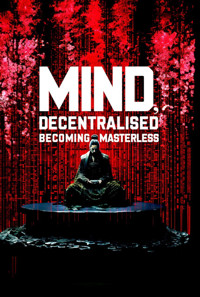
In his debut writing, Rob Brinded shares the results of his 30-year journey to discover the source of optimal health and well-being. Rob begins by recounting a realization he had while analyzing one of the world's best athletes. This pivotal epiphany sent him tumbling down a rabbit hole of research into the realm where the true nature of physical pain resides. In this concise work, Rob: - Reveals that the greatest tyrant in our lives is our own mind, and that the smarter we are, the harder it is to see. - Explains how our minds create deep programs in our unconscious that are glitchy by design, and how these programs can lead to physical pain, emotional distress, and even disease. - Explores how to access flow state, or "no mind," where our bodies can heal and repair themselves naturally, reaching beyond normal meditation while activating an MMA-styled Meditation OS. - Shows us how to change our behavior by changing our minds, and how to take control of our health by clearing the thought programs that drain you. This book is a must-read for anyone who is serious about achieving optimal health and well-being. It is a powerful and transformative guide that will help you to break free from the tyranny of your mind and live a life of greater freedom, joy, and peace.
Sie lesen das E-Book in den Legimi-Apps auf:
Seitenzahl: 106
Veröffentlichungsjahr: 2023
Das E-Book (TTS) können Sie hören im Abo „Legimi Premium” in Legimi-Apps auf:
Ähnliche















Mind, Decentralized
Becoming Masterless
Edited by Mel Shilling and Niko Laamanen
©
All rights reserved
Edited by Mel Shilling and Niko Laamanen
Cover design and typesetting by Konsensus Network
Rob’s photo on page — Hormos Carls @tatsatoshi
Illustrations not otherwise marked — .
ISBN 978-9916-723-34-0 Hardcover
978-9916-723-35-7 Paperback
978-9916-723-36-4 E-book
https://konsensus.networkhttps://konsensus.network
Foreword
“What’s the best sex you’ve ever had?”
Imagine that being the question that changed your life’s work!
And no, it didn’t come from a sleazy porn director in the basement of a dingy house directed towards the person sitting on the casting couch. It was asked by Rob Brinded at Chelsea FC’s state-of-the-art Sports and Injury Prevention Medical facility and directed at one of the best Football players in the world at that time.
Why did Rob ask that question? What did it reveal to him, and how did that lead to him quitting his ‘perfect life’?
Even before the athlete answered, Rob knew he had unlocked an incredibly important discovery. A discovery that would change the trajectory of his life. One that would trigger him to walk away from a high-paying job, get dumped by his girlfriend, and be shunned by his professional peers while facing the inner demons and self-torture of disappointment.
During this time, Rob forged a new mindset, armed himself with the tools to cure himself, and extended that healing touch to anyone who had the fortune of interacting with him.
Like many of my new friends, I first met Rob on Twitter. He approached me after I had been the featured guest on The Bitcoin Standard Podcast. My discussion with host Saifedean Ammous centred around the intricacies of the current education system and the benefits of homeschooling. Rob had been particularly intrigued by my insights about teaching versus learning and how our education system is designed to mould kids rather than nurture and inspire them. But what truly piqued Rob’s curiosity was what I didn’t say. Throughout the podcast conversation, he wanted to ask about certain nuances, the pauses. Because, well, that’s the way Rob’s mind works now!
Over the next few months, Rob and I stayed in contact and eventually had the pleasure of meeting each other in Madeira when we received an invitation to assemble with other bitcoiners to meet the President, as he and his cabinet wanted to learn more about bitcoin and the opportunities it might bring to their island.
Extended, in-person conversations with Rob about his work are truly fascinating. During our first meet-up, I found myself open to everything he shared. Some people he has encountered have brushed him off as a ‘Guru’ or too ‘Woo-Woo’ and thought his ideas were too far out there. The irony here is that their feelings are triggered by the very conditioning and programming that these people have been subjected to and have been running from their whole lives. As Rob would explain, the only way to step off the hamster wheel is to realise you are on it in the first place. Most people don’t and will forever be trapped, running the same self-deprecating programmes for their whole lives.
I was so captivated by Rob’s ideas that I booked him for a few sessions (paid in bitcoin) to learn more about his work and, of course, myself. My goal was to understand why I thought the way I thought and why I acted the way I acted under certain stressors. With a spirit of open exploration, we embarked on a journey through my past, present and future, engaging in candid conversations that flowed effortlessly. Rob’s guidance helped me decipher the programs I had been running in my head (my OS system) and how to close them down. I can best surmise it with the analogy of ‘force-quitting’ a program on your computer when you get the ‘spinning beach ball of death’.
Once you do this simple visualisation exercise, a remarkable transformation occurs — you feel lighter and think clearer. Like our minds, our bodies can react in the most incredible ways. Lifelong ailments, aches, or pains can feel instantly better and even disappear completely.
Rob’s conviction in his work is not from blind luck; it’s rooted in decades of deep introspection mixed with theoretical and practical study — and, importantly, from results. The outcomes Rob has seen and shared in this book are beyond remarkable and worth everyone’s attention. As you journey through these pages and into this rabbit hole, remember to note what emotions are triggered within YOU carefully. Because that, dear reader, is your personal hamster wheel. Those triggered emotions have been programmed into your OS since you were born, and those programs are what hold you back mentally and physically from being your best self and living a happier and freer life.
So, sit back and enjoy the ride. Welcome to the rabbit hole of decentralising your mind!
Daniel Prince
Host of The Once Bitten Podcast and Author of Choose Life
Block Height 800,608 — SW France
Preface
Writing this book made me acutely aware of my conditioning around able and unable. This book became my teacher. I realised that I started this book off as a way to feel more able — to be recognised by others as capable, intelligent and smart. I knew this because when I told people about this project, I got a buzz of excitement not from the work of writing but from how people perceived me as an “author.” This slowly took hold of me. Writing became hard. I was blocked and started to dread the idea of writing further.
It was a wonderful opportunity to discover this hamster wheel I was on that I hadn’t seen for 50 years. I observed the thought pop in my head that “I should be writing the book,” and then the guilt and shame that followed. I watched and looked deeper at these emotions, following the smoke until I could see the flames.
It took two months of observing, the longest a behaviour had stayed around for me. As time passed, I could see the behaviour becoming increasingly panicked, but I didn’t jump back on the hamster wheel. I just observed.
Then, one day, I saw the unable and able pattern on my balcony. It was everywhere, and it shocked me. I immediately felt immense grief and sadness. This was and is, for most, a behaviour conditioned from a very early age. It has driven me in every aspect of my life. Unpacking this discovery was one of the greatest reliefs of my life.
As if now magnetically drawn to being able, I walked calmly into my office that day and finished the book. The way to be more able is not in striving but in watching how unable we truly are, and in seeing it, we dissolve it.
As Snoop Dogg so eloquently said in a speech, “I would like to thank me for being me” and for spending the last 30 years looking for why I was so deeply insecure and not content and why I had so much pain in my body.
Throughout my career, I have always focused on results for myself and my clients. I was compulsively driven to be as able as possible, bringing with it the deepest usableness. However, from this journey, I have discovered the greatest riches I now share as a guide for others to become like me: masterless through a decentralised mind.
The significance of my logo lies in its depiction of the ronin or warrior, symbolising the internal struggle we all must face to become masterless. To become truly masterless, one must first embrace decentralised money — bitcoin. In doing so, we can reject government control and central bank digital currencies, which enable control of our spending habits and imposition of fines if we do not obey their commands. Becoming masterless also requires decentralised health. For instance, if you do not want to take the next experimental drug that is coming, you must have decentralised your approach to your wellness so that you do not succumb to the doctor’s authority or the pharmaceutical industry. You can make informed choices aligned with your values. Finally and critically, we must cultivate and fortify our decentralised mind to free us from the incessant hamster wheel and experience lasting peace.
With no external authority controlling us, especially not our minds, we are empowered to live life on our own terms. Only then can we become masterless.
Layers of Becoming Masterless
Imagine this figure represents the layers of becoming masterless. The bottom layer symbolised the soil. Akin to the foundational layer of bitcoin, it is slow and difficult to change. This is where Meditation OS and self-observation reside. They allow us to observe our conditioning and to see our internal prison. Through this awareness, we can revolutionise the known within our minds.
Moving up to the next layer, which is smaller, we encounter lightning meditation. Here, we find the activity monitor, helping us identify and switch off things that drain our systems.
At the top and smallest portion of the triad lies exercise, food, water, and enjoyment of your way of life. Outside, we see nature’s code, electrical ones and zeros as in The Matrix. For example, the colour yellow1 signifies the sun, emphasising the need to embrace natural light. Just as plants and animals do, we need to be energised by that life force emanating from the sun’s energy.
These three essential elements show the path to becoming masterless and cultivating a decentralised mind. Navigating this triad allows us to experience peace and harmony within our bodies, maintain good health, and relish life’s pleasures while maximising our journey while we relish our heaven on earth. And at the core of all three rests truth.
See the back cover of the book for a colour version of the logo ↩︎
1The Mind Decentralised
O n a warm summer’s afternoon in 1998 at the Chelsea Football Club training ground, I was in my strength and conditioning gym when an “aha” moment shook me off of my ‘central mind’ cliff — the fragile intellectual mountain’s edge where I had been teetering for the past year. There, I discovered my first real ‘red pill’ that transported me down a spiritual rabbit hole.
And with that, my way of looking at the body as a collection of separate parts, like a physical robot, unintelligent and fully understood by our superior intellect, was obliterated. Instead, I embarked on a quest to comprehend how the mind, its emotions, and fundamental consciousness affected the body and its environment. It is a journey I am still walking today.
Before I explain further, here is some background for this fateful day.
From the outside, I had the perfect life. One of the highest-paid strength and conditioning experts in Europe, I had developed my own Injury Prevention Centre in Chelsea FC, which was tasked with analysing players and working out which players had a higher risk of injury. I had created a simple ‘traffic light’ evaluation protocol to assess risk. I would argue that the system was advanced for its time and is still advanced now. Drawing on the mystery-solving techniques learned from my childhood hero, Sherlock Holmes, I regarded each athlete’s body as a unique puzzle to be solved. Unlocking the secrets to their bodies produced my trademark product — peak athletic performances.
The playing squad at the time was worth over £250 million, so there was an incentive to keep those players available to José Mourinho, the charismatic Portuguese manager. Mourinho put huge pressure on the medical team to get players to recover as fast as possible. At the time, we had the best medical team performance for injury recoveries in Europe.
In my personal life, I had a beautiful girlfriend and a little house in the countryside where I could glimpse deer or foxes throughout the day on the rare moments when I wasn’t working. While I looked healthy from the outside, I’d started losing energy, had constant back pain, and lived on five to six cups of coffee daily. I still remember the polystyrene cups I would nibble to ensure no one else drank them.
Looking back now, I was on a slippery slope to metabolic syndrome and fatigue. I was doing my best and kept my mask on tight so people thought I had my shit together.
I felt completely empty. I was wracked with insecurity and easily hurt emotionally at work. I worked in an excessively male-dominant and aggressive environment that made me uncomfortable. Of course, I realise now that the deeply competitive, on-field, athletic culture carried over to all aspects of club management. I was naive and trusted everyone, but I learned the hard way that ‘trust’ was perceived as weak. Someone was always looking to take advantage of my work or put it down. One story encapsulates this well.




