


Erhalten Sie Zugang zu diesem und mehr als 300000 Büchern ab EUR 5,99 monatlich.
- Herausgeber: The Crowood Press
- Kategorie: Lebensstil
- Sprache: Englisch
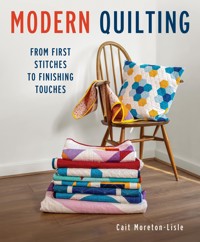
This practical book is for everyone who wants to make bright, bold, modern quilts. It celebrates the essence of this joyful craft and explains it through clear step-by-step guides. Whether you are a complete novice or an experienced quilter, this book will show you everything you need to develop your quilting expertise and will inspire you to explore the exciting world of modern quilting design.
Sie lesen das E-Book in den Legimi-Apps auf:
Seitenzahl: 239
Veröffentlichungsjahr: 2024
Das E-Book (TTS) können Sie hören im Abo „Legimi Premium” in Legimi-Apps auf:
Ähnliche













CONTENTS
1 Introduction
2 Quilter’s Dictionary
3 Materials and Equipment
4 Getting Started
5 Blocks and Techniques
6 Finishing your Quilt
7 The Quilts
8 Block Tables and Formula
Templates
Index
CHAPTER 1
INTRODUCTION
This book is for anyone who wants to make modern quilts or learn more about quilting. From demystifying the language of quilting with a comprehensive dictionary, to step-by-step guides walking you through all the stages of making a quilt alongside discussions of which materials and equipment are most helpful for each task, to block tables with all the formulae you need to design and create your own block-based quilts, Modern Quilting is a one-stop reference guide you’ll want to keep by your side throughout your quilting journey.
Have you never touched a needle and thread? No problem! This book will give you the confidence you need to take your very first steps into the quilting world by building a solid foundation of core skills that will enable you to make not just your first quilt but everything beyond.
Do you have a few quilts under your belt but still feel like there’s room to improve? Welcome! This book will support you in using and developing the skills you’ve already acquired while encouraging you to explore a variety of quilt patterns and helping you to develop your own unique style.
Are you an experienced quilter looking for a handy reference guide paired with some exciting modern quilt patterns? Come on in! Whether you’ve never quite built up the courage to attempt curves or Foundation Paper Piecing is your foe, this book will guide you through everything you feel you should know.
Constellations is an example of modern traditionalism using bright solid colours to update classic quilt blocks.
Flowers is an example of minimalism, with bold use of colour and negative space being employed to create a simple yet impactful design.
WHAT IS A MODERN QUILT?
To start, what makes a quilt a ‘modern’ quilt? At its most basic, a quilt is two layers of fabric separated by a thick layer of batting and sewn together, typically with a bound edge enclosing the layers. The Oxford Dictionary describes a quilt as ‘a warm bed covering made of padding enclosed between layers of fabric and kept in place by lines of stitching, typically applied in a decorative design.’ While this is of course one way of describing a quilt, a quilt is so much more than that. It’s a warm hug. It’s an expression of creativity. It’s a piece of art. A quilt can be whatever its maker wants it to be. One thing quilters universally agree on, however, is that a quilt is decidedly not a blanket.
The term ‘modern quilting’ encompasses a huge range of quilting styles which have been inspired by modern design principles, colours and fabrics. There is no universally accepted definition but the Modern Quilt Guild (MQG), a global group dedicated to supporting and encouraging the growth and development of modern quilting, has a certain authority on the matter. Rather than giving a specific definition, the MQG gives a broad and non-definitive list of characteristics that they see as common in many modern quilts:
• Bold use of colour.
• High contrast and graphic areas of colour.
• Improvisational piecing.
• Minimalism.
• Maximalism.
• Expansive negative space.
• Alternate grid work (non-traditional arrangement of blocks – for example, not a 4×4 grid).
• Modern traditionalism (in which traditional quilt blocks and styles are reimagined using modern quilting elements, such as asymmetry, colour, and scale).
Orange Blossoms uses alternative grid work in combination with modern traditionalism to create a unique quilt.
In contrast, the Festival of Quilts (Europe’s largest quilting show) defines modern quilts more specifically as: ‘[Q]uilts that are minimalist with clean, modern design and a strong visual impact. They often use asymmetry, improvisational piecing, a reinterpretation of traditional blocks or the lack of a visible block structure. A feeling of space is often achieved [using] negative space. They are machine or hand quilted in a way that is sympathetic to the design.’
The differences and overlaps between these definitions show just how fluid and hard to define modern quilting is. At their core though, modern quilts reflect the styles and influences of the time: they are frequently bold, usually colourful and often use graphic design elements. To borrow a popular proverb, ‘modern is in the eye of the quilter’.
THERE ARE NO QUILT POLICE
There are no quilt police so don’t worry if your first, second or even hundredth tries at making a quilt aren’t perfect.
They are all perfectly imperfect and all that matters is that you enjoy making them. Not every point has to be exact for a quilt to be beautiful and not every stitch has to be faultless for it to be worthy of gifting to a loved one or taking pride of place on your wall.
No quilt is perfect and these misaligned points in Blue Days do not detract from the overall visual impact.
Do not be afraid of flaws. Quilting is a creative hobby, and you are making something beautiful by hand – errors are natural and even the best quilters are quick to point out the mistakes in their work. Don’t become your own quilt police by immediately pointing out the flaws when showing off your hard work – most people can’t even see them! When viewing a piece of art, the best distance is often thought to be two to three times the diagonal length of the piece – if you can’t see any mistakes clearly from that distance, the odds are no-one else can either. Remember that the little quirks are what makes something unique and precious, and your quilts are no exception.
MYTH BUSTING
There are lots of assumptions about quilting that can make it seem very intimidating. However, many of them are nothing more than stories in need of some myth busting:
It’s too hard
Everything can seem hard when you first start out, but this book is here to walk you through every stage of making a quilt step by step. If you find it overwhelming, try not to focus on the big picture and instead focus on just the current step.
Quilting is old fashioned
Despite being rooted in centuries-old traditions, quilting is only as old fashioned as the fabrics and quilt patterns you choose to use.
I need to have a sewing room to be a quilter
Whether you’re lucky enough to have a dedicated craft room or you can only carve out a corner of the dining table after putting the kids to bed, anywhere can be a quilting space.
I need to buy lots of expensive equipment to start
While you will need some gear to get started, it doesn’t have to break the bank. Chapter 3 helps you pick out the absolute essentials alongside discussion of some of the many nice-tohave options available.
I have to make the quilt exactly as the pattern says I should Quilt patterns should be viewed as recipes for you to tweak and adjust according to your personal taste. Change colours, switch solids for patterns, go scrappy, you should feel free to make it your own. It is your quilt after all.
I’m not a real quilter, I haven’t even finished one quilt
It doesn’t matter if you’ve just started, have been working on one quilt for years or have a pile of partly made projects: you’re a quilter.
Quilts take too long to make
Yes, quilts can take a long time to make but if you choose a simple pattern and put aside a weekend or two, you can achieve a lot in a small amount of time. If you’re really pushed for time, consider trying a quilted cushion.
I’m too slow
It doesn’t matter how long it takes you: many quilters work on projects for years. Quilting is a slow craft and is about enjoying the process – some quilters have projects decades old that they still enjoy chipping away at now and again.
I’m doing it the wrong way
You don’t have to follow the rules – if you want to do something a different way, go for it. Remember, there are no quilt police.
SUSTAINABLE SEWING
How to be sustainable while quilting is a growing area of concern for many as people become more environmentally minded and conscious of the impact their hobby has on the planet. While it’s tempting to think that you’re just one quilter and how big an impact can you have, when you look at the $4billion+ quilting industry it forms a huge part of the textile industry with widespread global impact including textile waste, water consumption and increased carbon emissions. This is not to say you shouldn’t ever buy new fabric or indulge in the latest gadget, but there are small things you can do to incorporate more sustainable quilting practices with relative ease.
Using leftover scraps and fabrics from other projects is an excellent way to start incorporating sustainable practices into your quilting.
Please remember that the following are simply suggestions. Not everyone will be able to afford or access organic fabrics and while spray basting may not be great environmentally, it could be the best option for someone with arthritis or a limb difference. Making quilting more sustainable is a community effort and no-one should be made to feel bad if they don’t (or can’t) do everything suggested here.
Reduce
The easiest way to start incorporating sustainability into your quilting practice is with mindful consumption. Simply put, mindful consumption is about being more conscious of your choices as a consumer and making more informed purchasing decisions.
Shop your collection first
Most quilters quickly build up more fabric than they could use in years, yet many often choose to buy new for each project instead of using what they have. Try challenging yourself to only shop from your collection for your next project – you might be surprised at how easily you can do this.
Shop for specific projects
The temptation to buy a few cute fat quarters or a half yard of that must-have fabric whenever visiting your local quilt shop is strong. Instead, try challenging yourself to only buy fabric for a particular project – if you find the temptation is hard to resist, consider treating yourself to a fancy coffee as a reward for being so restrained.
Choose organic
Look out for fabrics labelled with the Global Organic Textile Standard certification. Organic fabric production uses no chemicals, pesticides or fertilisers to protect local habitats and uses less water than traditional fabric production which in turn limits soil erosion and preserves soil quality for future crops.
This colourful quilt was made from one single Jelly Roll that had been languishing unused for over a year.
Reuse
Once you’ve reduced your consumption, it’s time to start reusing what you already have. Quilters have long been advocates of making the most of left-over fabric and repurposing old clothes and sheets to make something new and functional yet still aesthetically pleasing.
Sew scrappy
Very few quilt projects produce absolutely no scraps or left-over cuts of fabric that can’t be repurposed in a new block or quilt. Just because you’re using leftovers doesn’t mean you can’t produce a beautiful quilt: scrappy sewing is incredibly popular among modern quilters who love the fun and eclectic aesthetic built around bold and bright scraps combined in new and exciting ways. Many quilting guilds host fabric and scrap swaps at their meet-ups, which are great places to share fabrics you no longer want.
Even seemingly mismatched scraps can combine to create something beautiful from fabric that would otherwise be thrown away.
Repurpose old fabric
From old work shirts to vintage sheets, you may have more fabric available than you initially realised. Deconstructing a cotton shirt produces a surprisingly large amount of ‘new’ fabric perfect for making quilt blocks and old sheets are perfect for backing quilts without having to piece fabric to the required size. If you don’t happen to have a handy pile of hand-me-down sheets available, charity shops can be a great source of affordable second-hand materials.
The popularity of this approach to reducing the environmental impact of quilting was celebrated in 2023 by the Festival of Quilts’ introduction of a new competition category for sustainable quilts made from reused materials. They define a sustainable quilt as one made with minimal negative environmental impact and at least 75 per cent reused fabric.
Recycle
Some scraps and offcuts just can’t be reused, either because they are too small or because they’re no longer in a state suitable for sewing. If this is the case, try one of the following options:
• Use tiny scraps for stuffing cushions and toys.
• Check if your local recycling centre accepts scrap fabric and thread trimmings. If not, there are various online schemes that accept posted scraps.
• If your fabric is made purely of natural fibres, you can compost small scraps.
• Talk to your local charity shop. Some are paid to fill rag bags with unusable fabrics/clothes and may be happy to add your scraps.
• Try another craft. Tiny offcuts of fabric can make a great addition to a collage or a cute Christmas garland for a doll’s house.
LET’S GO!
People quilt for lots of reasons. From the simple utility of wanting a warming quilt, to wanting a fun and creative outlet, to reducing stress and anxiety through the calming motions of working with your hands – whatever your reason, hopefully this book will aid you on your journey.
You can work through this book in order, making all the suggested blocks and quilts as you go, or you can go freestyle and dip in and out as you want – there are no quilt police looking over your shoulder telling you how to use this book. Even if you’re making your first ever quilt, you don’t have to start with the Modern Sampler quilt pattern – start with whichever you want to make the most. One or two of the quilt patterns are a little more advanced, but if you go slowly and refer to the relevant blocks and techniques you will be able to make any quilt you wish to.
CHAPTER 2
QUILTER’S DICTIONARY
When you first step into the world of quilting it can feel a little like stepping off an aeroplane in a foreign country and being surrounded by a completely alien language. This dictionary includes the most commonly used quilting terms, tools and techniques and will act as your guide as you work through this book and beyond.
BACKING The fabric used on the back or reverse of a quilt.
BASTING Used interchangeably with tacking, basting is the process of temporarily securing the three layers of your quilt sandwich ready for quilting.
BATTING Used interchangeably with wadding, batting is the hidden middle layer of a quilt that adds warmth and stability and determines the thickness of the finished quilt. Commonly made from cotton, bamboo, wool or polyester, each brand will have a recommended maximum space between quilting lines to prevent the fibres coming apart when washed.
BEARDING The effect of batting fibres passing through to the top of a quilt, leaving a pale fuzz across the surface.
BETWEENS See Quilting needle.
BIAS The grain of fabric 45 degrees to the warp and weft threads. It has the greatest stretch of any woven fabric grain.
BIAS BINDING Binding that is cut on the bias, giving it smaller sub-blocks. greater flexibility for curved or scalloped quilt edges.
BIAS TAPE MAKER A device that helps easily make single-fold binding in a set width.
BIG BLOCK QUILTS A quilt made of large blocks (typically 9–12in plus) to create a high-impact and generally fast-to-assemble quilt top.
BIG STITCH BINDING Binding that is sewn down using the big stitch hand-quilting technique for a decorative finish.
BIG STITCH QUILTING A hand-quilting technique that uses thick quilting or embroidery threads to make large decorative stitches.
BINDING A long strip of fabric which is sewn over the edges of a trimmed quilt as a border to hide and secure the raw edges. Typically, the binding strip is attached to one side of the quilt before being wrapped around the edge to the other side and stitched down.
BINDING CLIPS Also known by the brand name Wonder Clips, these are small plastic clips used when attaching binding to hold the layers in place while moving through your machine or hand stitching in place.
BLIND STITCH Also known as a slip stitch or invisible stitch, a blind stitch is used when you want your stitches to be hidden when joining fabrics.
BLOCK A pieced section of patchwork that is joined with other blocks to form a quilt top. Can be made from smaller sub-blocks.
BOBBIN A small plastic or metal cylinder with a flared top and bottom used to hold and feed the bottom thread when machine stitching.
BOBBIN CHICKEN The act of trying to sew to the end of a seam or quilting line before the bobbin thread runs out.
BURYING THREADS The process of securing and hiding threads when stopping or starting a quilting line in the middle of your quilt (used in both machine and hand quilting).
CHAIN PIECING The process of sewing prepared pieces of fabric continuously without stopping to cut your threads between blocks.
CHARM PACK A small pre-cut of fabric measuring 5 × 5in. Often sold in packs including samples from a whole fabric collection, they are useful for scrappy-look quilts or when you only need a little of a lot of different fabrics (for example English Paper Piecing).
COURTHOUSE STEPS A classic quilt block made by adding strips to opposite sides of a central square.
CREWEL NEEDLE See Embroidery needle.
CROSS GRAIN The grain of fabric running perpendicular to the selvedge and parallel to the weft threads.
CUTTING MAT A durable mat for cutting fabric and trimming blocks.
D9P Disappearing Nine-Patch, a classic pieced quilt block.
DOG EARS The long points that extend beyond the seam allowance once a block is pieced and pressed.
DOMESTIC MACHINE A sewing machine designed for the myriad of projects undertaken by home sewists.
DOMESTIC QUILTING The process of using a domestic machine to quilt your quilt.
DOUBLE-FOLD BINDING A type of binding where two layers of fabric cover the edge of the quilt.
DRUNKARD’S PATH A common name for a classic quarter circle quilt block.
DUAL FEED FOOT See Walking foot.
ECHO QUILTING Quilting lines that follow the edge of a shape and echo like ripples in a pond.
EDGE-TO-EDGE QUILTING A quilting design that goes continuously from edge to edge of a quilt, removing the need to bury threads.
EMBROIDERY NEEDLE With a slightly elongated eye, embroidery needles allow for multiple strands of thread or thicker threads to pass through easily and are well suited to big stitch hand quilting.
EMBROIDERY SCISSORS Small, sharp scissors designed for cutting loose threads.
ENGLISH PAPER PIECING (EPP) A traditional handpiecing technique that dates back to the 1700s. Fabric is folded around paper templates to create crisp and precise shapes before later removing the papers.
EVEN FEED FOOT See Walking foot.
EYE The hole in a sewing needle through which thread moves while stitching.
FABRIC PEN A temporary marker to show cutting, stitching or quilting lines. Most commonly they are water, air or heat erasable.
FABRIC SCISSORS Scissors with extremely sharp blades made specifically for cutting fabric. Typically, they measure 8¼in from handle to tip and should never be used for paper or other materials to avoid blunting the blades.
FACING A method of binding that gives a quilt a crisp edge with no visual border by turning the edge to the back of the quilt.
FAT EIGHTH (F8) A small cut of fabric made by cutting a fat quarter in half again. If cutting down from a yard (typical in the US) the fat eighth will measure 9 × 21in. If cutting down from a metre (typical in the UK and Europe) it will measure 9¾ × 21in.
FAT QUARTER (FQ) The most commonly used cut of quilting cotton made by cutting a yard or metre into four squares. If cutting a half yard the fat quarter will measure 18 × 21in. If cutting a metre the FQ will measure 19½ × 21in.
FAT SIXTEENTH (F16) A small cut of fabric made by cutting a fat eighth in half again. If cutting down from a yard the fat sixteenth will measure 9 × 10½in. If cutting down from a metre it will measure 9¾ × 10½in.
FEED DOGS The teeth under your sewing machine’s presser foot that help to move the fabric through at an even rate.
FINGER PRESSING Using the heat and pressure from your fingers to press a seam or fold into fabric instead of an iron. Often used to mark the middle of a block or piece of fabric.
FINISHED SIZE The size of a finished block or quilt when the seam allowance is taken away.
FLIMSY Another name for a finished quilt top.
FLYING GEESE The common name for a 2:1 rectangle block containing a triangle like the V shape made by a flock of geese in flight. It is twice as wide as it is high.
FOUNDATION PAPER PIECING (FPP) A machine length yourself. stitching technique used to create precise and detailed shapes. Fabric is sewn to paper templates to create intricate shapes with ease while avoiding potentially tricky Y or partial seams (the paper is later removed).
FRAME A large structure that holds the layers of your very popular in English Paper Piecing. quilt sandwich in position while you quilt. Often used for hand quilting large quilts, they are also used in long arm quilting.
FREE-MOTION QUILTING (FMQ) The technique of quilting with lowered feed dogs so that you can move the quilt freely in all directions and control stitch length yourself.
FUSSY CUTTING Also called meticulous cutting or precision cutting, fussy cutting is the careful cutting of fabric to include a specific section or motif. This technique can be used to great effect in creating kaleidoscopes and is very popular in English Paper Piecing.
GLUE BASTING Using a temporary fabric adhesive spray to baste your quilt sandwich.
GRAIN The orientation of the warp and weft threads in a woven fabric (such as quilting cotton).
HALF-RECTANGLE TRIANGLE (HRT) A common rectangular quilt block (usually in a 2:1 ratio) formed of two right-angled triangles.
HALF-SQUARE TRIANGLE (HST) A very common square quilt block formed of two right-angled triangles.
HAND QUILTING The process of quilting a quilt by hand.
HANGING SLEEVE A long tube attached to the back of a quilt to facilitate hanging and display. The standard width required by most quilt shows is approximately 4–5in.
HERA MARKER A piece of hard plastic or wood with a rounded edge used to create light crease lines to guide you while quilting. Sometimes called a sewing crease marker.
INSET CIRCLES The process of inserting a whole circle background fabric. into a quilt or block.
INVISIBLE STITCH See Blind stitch.
JELLY ROLL A pre-cut of fabric measuring 2½ × WOFin (width of fabric in inches). Often sold in rolled packs including samples from a whole fabric collection. Jelly Roll is a brand name for this fabric cut; other brand names include Roll Up, Rolie Polie and Strip Sets.
LAYER CAKE A pre-cut of fabric measuring 10 × 10in. Often sold in packs including samples from a whole fabric collection.
LEADER A small scrap of fabric placed under the needle at the beginning of machine sewing to prevent thread tangles when stitching blocks together.
LOCAL QUILT SHOP (LQS) A term used for independent fabric and haberdashery shops that specialise in quilting fabric, threads and accessories. They may not be truly local as many sell online as well as in bricks-and-mortar stores.
LOFT The weight or thickness of batting that determines the overall puffiness of your quilt.
LOG CABIN A classic quilt block made by adding strips in a clockwise direction around a central square.
LONG ARM MACHINE A specialist quilting machine consisting of a sewing machine head and large frame that can be computerised or manually operated.
LONG ARM QUILTING The process of using a long arm machine to quilt your quilt sandwich.
LONG QUARTER (LQ) A cut of fabric made by cutting a yard or metre into four long rectangles. If cutting a half yard the long quarter will measure 9 × WOFin. If cutting a metre the long quarter will measure 9¾ × WOFin.
LOW VOLUME FABRIC Pale fabrics with cream or neutral backgrounds and a subtle design. The design will usually be printed in a colour the same or similar to the background fabric.
MACHINE QUILTING The process of quilting your quilt with a domestic machine.
MACHINE STITCHING The process of sewing with a machine. Top and bottom (bobbin) thread are used by a machine to create even and regular stitches.
METICULOUS CUTTING See Fussy cutting.
MILLINERS’ NEEDLES A needle with a longer length, milliners’ needles are popular with many English Paper Piecing enthusiasts.
MITRED CORNER A 90-degree corner where two edges meet at a 45-degree angle. Usually used to create crisp and sharp corners when binding or adding borders to a quilt.
MODERN QUILTING The term modern quilting encompasses a huge range of quilting styles which have been inspired by modern design principles, colours and fabrics.
NESTING SEAMS The process of pressing adjoining seams in opposite directions so that they fit snugly together when sewn together and give crisp corners or points.
NO-WASTE FLYING GEESE A method of making multiple Flying Geese blocks at a time that involves no excess discarded fabric. Sometimes called four-at-a-time Flying Geese.
NOTIONS These are the various extra supplies needed to complete a quilt. Examples include thread, needles and scissors.
ON POINT A square block set diagonally (standing on its ‘point’) so that it represents a diamond shape.
ONE PATCH QUILT A quilt made with one block shape repeated throughout.
ORANGE PEEL A common quilt block made by sewing two curved seams from corner to corner of a square to create a leaf or petal shape in the centre of the block.
PANTOGRAPH Also called a panto, a pantograph is a continuous line edge-to-edge quilting design that covers the entire quilt top. Typically used to guide complex designs with many curves or sharp angles.
PARTIAL SEAMS A partial seam is used when a block has unevenly placed pieces that cannot be joined along a straight line.
PATCHWORK The traditional name for piecing fabric together to make a quilt top. These days the term is often used interchangeably with quilting, with many sewists referring to this piecing stage as quilting.
PIECING The process of joining fabric pieces together by piecing and construction instructions. either machine or hand to make a larger piece.
PIN BASTING Using curved safety pins to baste your quilt sandwich.
PRE-CUT A pre-cut piece of fabric in a standardised size, typically available in bundles or as packs.
PRECISION CUTTING See Fussy cutting.
PRESSER FOOT A sewing machine attachment used to hold fabric flat as it is fed through the machine.
PRESSING The process of setting the fabric of your seam allowance either to one side or open to help merge your stitches into the fabric and create permanent folds in the fabric along the seam.
QUARTER-INCH FOOT Also known as a quilting foot, a quarter-inch foot is a specialist presser foot for domestic machines that has a guide for placing your fabric to sew precise ¼in seams. It is often included with the supplies for more expensive machines but can easily be bought as an optional extra for most domestic machines.
QUARTER-SQUARE TRIANGLE (QST) A common square quilt block formed of four right-angled triangles arranged in an X shape.
QUICK UNPICK See Seam ripper.
QUILT A multi-layered textile made of two layers of fabric either side of a layer of batting and secured by stitching (quilting) through all three layers. Typically, it has a bound edge.
QUILT DESIGN The arrangement of fabric, colour or blocks to form a specific overall design. Not to be confused with Quilting Design.
QUILT MARKING The process of marking your quilting lines to act as a guide when quilting.
QUILT PATTERN Instructions on how to make a specific quilt design, typically including fabric requirements, piecing and construction instructions.
QUILT SANDWICH The three layers of a quilt when assembled ready for basting: the quilt top, the batting and the backing.
QUILT TOP The front or top layer of a quilt, it can be pieced or a single wholecloth piece of fabric.
QUILTING FOOT See Quarter-inch foot.
QUILTING COTTON A medium-weight fabric made using 100 per cent cotton and a plain weave that is hardwearing and stable to sew with.
QUILTING DESIGN The line pattern created by stitching the quilt sandwich together either by machine or by hand. Not to be confused with Quilt Design.
QUILTING HOOP




