


Erhalten Sie Zugang zu diesem und mehr als 300000 Büchern ab EUR 5,99 monatlich.
- Herausgeber: The History Press
- Kategorie: Geisteswissenschaft
- Serie: Espionage
- Sprache: Englisch
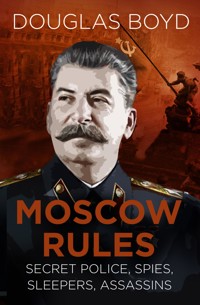
After the guns fell silent in May 1945, the USSR resumed its clandestine warfare against the western democracies. Stalin installed secret police services in the satellite countries of Central and Eastern Europe. Trained by his NKVD officers of the Polish UB, the Czech StB, the Hungarian AVO, Romania's Securitate, Bulgaria's KDS, Albania's Sigurimi and the Stasi of the German Democratic Republic spied on and ruthlessly repressed their fellow citizens on the Soviet model. When the resultant hatred exploded in uprisings they were put down by brutality, bloodshed and Soviet tanks. Not so obvious was that these state terror organisations were also designed for military and commercial espionage in the West, to conceal the real case officers in Moscow. Specially trained operatives undertook 'wet jobs', including the assassinations. Perhaps the most menacing were the sleepers who who married and raised families in the west while waiting to strike against their host countries; many are still among us. In Moscow Rules Douglas Boyd explores the relationship between the KGB and its ghastly brood – a family from hell.
Sie lesen das E-Book in den Legimi-Apps auf:
Seitenzahl: 450
Veröffentlichungsjahr: 2015
Das E-Book (TTS) können Sie hören im Abo „Legimi Premium” in Legimi-Apps auf:
Ähnliche
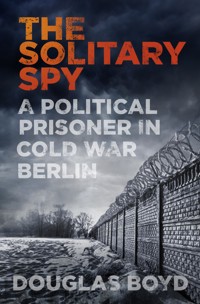










This book is dedicated to all the political prisoners
and others who suffered in the Stasi prison
on the Lindenstrasse in Potsdam,
and to our predecessors there under the KGB 1945–1952
and under the Gestapo 1933–1945
‘Those who do not remember the past are compelled to repeat it.’
George Santayana
ACKNOWLEDGEMENTS
Despite the two and a half decades since the collapse of the USSR, a surprising number of people who assisted my research asked not to be mentioned as sources, some giving no reason and others pleading that there might be repercussions against family members still living in their countries of birth. Others still were helpful initially and then said, ‘I’m sorry. I can’t help you any more.’ I never argued or tried to persuade them because it seemed this was not from personal guilt for anything, but rather that even thinking about those years will always be too painful for millions of people who lived through them. Who could blame them for that?
Among those I can thank for their help are Stella Dvoraková, William Sirben and Jiri Dubnicka for insights into the Cold War period in Czechoslovakia; Nikolai Karailiev for reading the Bulgarian pages and Gabriele Schnell, whom I first met in the former Lindenstrasse prison in Potsdam, for the work she has done to document the experiences of the Stasi’s victims in the so-called German Democratic Republic.
At The History Press, I can also thank commissioning editor Mark Beynon, project editor Rebecca Newton, designer Katie Beard and cover designer Martin Latham.
CONTENTS
Title
Dedications
Acknowledgements
List of Abbreviations
Part 1: Setting the Scene
1 Through a Glass Darkly
2 Life is a Game of Chess
Part 2: The Stasi in German Democratic Republic
3 Deutschland Unter Russland
4 Creating a New Class of Criminals
5 Fear as a Political Tool
6 The New Class Enemy
7 Lies, Spies and More Spies
8 War on the West
9 War in the Air
10 HVA Versus MI5
11 Death of the Stasi
Part 3: State Terror in Central Europe
12 The Polish UB – Crushing a Suffering Nation
13 Betrayal, Beatings, Elections and Executions
14 The Horizontal Spy
15 The StB Versus the Czechs and Slovaks
16 The ABC of Espionage – Agents, Blackmail, Codes
17 The AVO and Bloodshed in Budapest
18 Magyars on Mission Abroad
Part 4: State Terror in Eastern Europe
19 The KDS – Dimitrov’s Lethal Homecoming Present to Bulgaria
20 A Different Umbrella in Bucharest
21 Albania – From Serfdom to the Sigurimi Secret Police
Author Note
Plates
By the Same Author
Copyright
LIST OF ABBREVIATIONS
AAP
Australian Associated Press news agency
ABLT
Állambiztonsági Szolgálatok Történeti Levéltára (Hungarian state intelligence archives)
ABW
Agencja Bezpieczenstwa Wewnetrznego (Polish counter-espionage service)
AK
Armia Krajowa (Polosh Home Army)
AL
Armia Ludowa (People’s Army)
AVH
Allamvédelmi Hatósag (second name of Hungarian secret police)
AVO
Allamvédelmi Osztálya (first name of Hungarian secret police)
BA
Belügyminisztérium Állambiztonsági (Hungarian intelligence agency)
BfV
Bundesamt für Verfassungsschutz (Federal German security service)
BIRN
Balkan Investigative Reporting Network
BIS
Bezpecnostní Informacní Služba (Czech post-Communist security service)
BKP
Bulgarska Komunisticheska Partia (Bulgarian Communist Party)
BND
Bundesnachrichtendienst (Federal German intelligence service)
BStU
Bundesbeauftragte der Unterlagen des Staatssicherheitsministeriums der ehemaligen Deutschen Demokratischen Republik (Stasi archives)
CIA
Central Intelligence Agency
CIC
US Counter-Intelligence Corps
CIO
Anti-Communist Czech Intelligence Office
CNSAS
Conciliul National pentru Studearea Archivelor Securitâtii (Romanian post-Communist intelligence archives)
CPGB
Communist Party of Great Britain
CSSR
Ceskoslovenská Socialistická Republika (Czechoslovak Socialist Republic)
DM
Deutsche Mark (West German currency)
DST
Direction de la Surveillance du Territoire (French security service)
EAM/ELAS
Left-wing Greek resistance
FDJ
Freie Deutsche Jugend (Communist equivalent of the Hitler Youth organisation)
GCHQ
Government Communications Headquarters
GDR
German Democratic Republic
GRU
Glavnoye Razvedatelnoye Upravleniye (Soviet military intelligence)
GZI
Glowny Zarzad Informacji (Polish military intelligence)
HVA
Hauptverwaltung Aufklärung (East German foreign intelligence service)
IGM
Internationale Gesellschaft für Menschenrechte (International Association for Human Rights)
IM
inoffizielle Mitarbeiter (informer working for the Stasi)
IWF
Institut für wirtschaftliche Forschung (Institute for Scientific Research, a cover name for HVA)
KDS
Komitet za Darzhavna Sigurnost (Bulgarian Committee of State Security)
KdSBP
Komitet do Spraw Bezpieczenstwa Publicznego (Polish Committee for Public Security)
KGB
Komityet Gosudrarstvennoi Bezopacnosti (Committee of State Security of USSR)
KgU
Kampfgruppe gegen Unmenschlichkeit (West German anti-Stasi group)
KKE
Kommunistikó Kómma Elládas (Greek Communist Party)
KPD
Kommunistiche Partei Deutschlands (German Communist Party)
KSC
Komunistická Strana Ceskoslovenska (Czechoslovakian Communist Party)
LSK
Luftstreitkräfte (East German air force)
MBP
Ministerstwo Bezpieczenstwa Publicznego (Polish Ministry of Public Security)
MDP
Magyar Dolgozók Párt (Hungarian Workers’ Party, i.e. Communist Party)
MfS
Ministerium für Staatssicherheit (Ministry of State Security)
MI5
British Security Service
MI6
British Intelligence Service
MIG
Mikoyan i Gurevitch (names of two Soviet aircraft designers)
MKP
Magyar Komunista Párt (Hungarian Communist Party)
MNVK2
Magyar Néphadsereg Vezérkara 2 Csoportfonöksege (Hungarian military intelligence)
MSW
Ministerstwo Spraw Wewnetrznych (Polish Ministry of Internal Affairs)
MSzMP
Magyar Szocialista Munkáspárt (Hungarian Socialist Workers’ Party)
MVD
Ministerstvo Vnutrennikh Dyel (Soviet successor to NKVD)
NICSMA
NATO Integrated Systems Management Agency
NKVD
Narodny Komissariat Vnukhtrennikh Dyel (Soviet forerunner of KGB)
NSA
US National Security Agency
NSDAP
Nazionalsozialistische Deutsche Arbeiterpartei (full name of Hitler’s Nazi party)
NVA
Nazionale Volksarmee (East German army)
OKW
Oberkommando der Wehrmacht (German General Staff in Second World War)
OSI
US Air Force Office of Special Investigations
OSS
US Office of Strategic Services (in Second World War)
PCF
Parti Communiste Français (French Communist Party)
PCI
Partito Comunista Italiano (Italian Communist Party)
PCR
Partidul Comunist Român (Romanian Communist Party)
PKSh
Partia Komuniste e Shqiperisë (Albanian Communist Party)
PKWN
Polski Komitet Wyzwolenia Narodowego (Polish Committee of National Liberation)
POW
Prisoner of war
PPSh
Partia e Punës e Shqipërisë (Albanian Workers’ Party)
PSL
Polski Stronnictwo Ludowe (Polish Christian Democrat agrarian party)
PZPR
Polska Zjednoczona Partia Robotnicza (Polish United Workers’ Party, i.e. Communist Party)
RAF
Royal Air Force
RBP
Resort Bezpieczenstwa Publicznego (Polish Department of Public Security)
RHSA
Reichssicherheitshauptamt (Chief Administration of Third Reich Security)
RIAS
Rundfunk im Amerikanischen Sektor (US-financed propaganda station in West Berlin)
RTRP
Rzad Tymczasowy Rzeczyoospolitej Polskiej (Provisional Government of Poland)
SB (MSW)
Słuzba Bezpieczenstwa Ministerstwa Spraw Wewnetrznych (Polish Security Service of Ministry of Internal Affairs)
SDECE
Service de Documentation Extérieure et de Contre-Espionage (French intelligence service)
SDP
Sozialistische Demokratische Partei (German Social Democratic Party)
SED
Sozialistische Einheitspartei Deutschlands (East German Communist Party)
SHAPE
Supreme Headquarters, Allied Powers in Europe
ShIK
Shërbimi Informativ Kombëtar (Albanian successor to Sigurimi)
ShISh
Shërbimi Informativ Shtetëror (successor to ShIK)
SIE
Serviciul de Informatii Externe (Romanian post-Communist intelligence service)
Sigint
Signals intelligence (electronic eavesdropping)
SIS
Secret Intelligence Service
SOE
Special Operations Executive
SRI
Serviciul Rôman de Informatii (Romanian post-Communist security service)
SSR
Soviet socialist republic
Stasi
Ministerium für Staatssicherheit (East German Ministry of State Security)
StB
Státní Bezpecnost / Státna Bezpecnost (Czechoslovakian State Security service)
SWT
Sektor für Wissenschaft und Technik (HVA Section for technological espionage)
TVO
Trudovo-Vazpritatelni Obshchezhitiya (Bulgarian gulag)
UB
Urzad Bezpieczenstwa (Polish state security)
UPA
Ukraïnska Povstanska Armiya (Ukrainian underground army)
ZAIG
Zentrale Auswertungs und Informationsgruppe (evaluation department of HVA)
PART 1
SETTING THE SCENE
1
THROUGH A GLASS DARKLY
Each year, 3 October is a German national holiday known as der Tag der deutschen Einheit – the day of German Unity. It celebrates the reunification of the country in 1989 after forty-four years of being split in two by the front line of the Cold War. The date is not an exact anniversary of any particular event, but was carefully chosen to avoid reminding people of embarrassing events in recent German history.
On 3 October 2008 several thousand people were celebrating the reunification at what had been the border crossing-point between Marienborn in the so-called German Democratic Republic (GDR) and Helmstedt in the Federal Republic when the country was divided roughly north to south by the Iron Curtain after the Second World War. Living conditions to the east of the ‘inner German frontier’ were so grim under the neo-Stalinist government implanted by, and controlled from, Moscow that a total of 3.5 million GDR citizens fled to the West between the end of the war in 1945 and the building of the Berlin Wall in 1961.1
By 1952 the population haemorrhage threatened the economic survival of Stalin’s German puppet state and the green border was made increasingly escape-proof by barbed wire, watch-towers, minefields, searchlights, trip-wires connected to locked-off machine guns and SM-70 Claymore-type mines with a lethal range of 25m. There were also stretches where attack dogs roamed free and the foot patrols of border guards had orders to shoot to kill – the infamous Schiessbefehl that cost so many lives.
★★★
To the many thousand troops of the Western Allies who drove along the autobahn to Berlin during the Cold War, the Marienborn–Helmstedt crossing was known as Checkpoint Able; Baker was at the other end of the autobahn, where it entered West Berlin; the more famous Checkpoint Charlie was on the line where the American sector of ‘the divided city’ confronted Communist East Berlin.
On that sunny, rather windy, autumn afternoon in 2008 at Marienborn/Helmstedt family groups were picnicking on the grass and people of all ages queued to visit the small museum at this former flash-point where World War III might have begun. The motorway having been diverted once the checkpoint was redundant after the reunification of Germany, people wandered across the vehicle lanes that had often been clogged with Allied military convoys and commercial traffic deliberately delayed by Soviet troops or GDR border police. Others photographed a solitary watch-tower that had been left standing to remind visitors that Checkpoint Able had been one of the few tightly controlled gaps in the long internal German border stretching 866 miles from the shores of the Baltic all the way to the Czech frontier. Whereas two-thirds of escape attempts had previously taken place across this ‘green border’, the number of documented attempts there after the border was closed in 1952 plummeted to fewer than 100 per year, of which only about six were successful. 2 Many of the other would-be refugees paid with their lives.
For most of the Germans present on that day in 2008, the occasion was a pleasant family day out. Doubtless, some of the older visitors had unhappy memories, having lived im Osten – to the east of the border – under the most repressive Communist regime in Europe. I shared their mixed feelings, walking with my wife away from the crowds towards a small, rather temporary-looking building to the left of the traffic lanes. For other visitors curious enough to peer through the grimy windows, there was no evidence of the crushing bureaucracy of which this had been the westernmost outpost, but looking through that glass darkly took me back nearly half a century.
On 12 May 1959, aged 20, I was sitting in that office on a wooden chair facing an officer of the Ministerium für Staatssicherheit – the Ministry of State Security, usually abbreviated to ‘Stasi’ – who had been interrogating me for six long weeks. Also present were his escort of two Stasi heavies in ill-fitting suits and a distinguished-looking English lady in the smart blue uniform of the International Red Cross, who had come to escort me back to the free world. For twenty minutes, she fielded all attempts to get her to make any political remark by her ready stream of small talk about the weather, the pleasure of drinking tea as opposed to coffee and so on. As the clock on the wall showed the agreed handover time of midday, she rose to return to the Helmstedt side of the crossing, in what was then the British zone of occupied Germany.
With nothing against him personally, I shook hands with my interrogator. It was the Cold War that had made us enemies. If he had sometimes had me hauled out of my cell for questioning in the middle of the night or very early in the morning, it was not often enough to constitute harassment, but it did make me wonder whatever sort of life he led, if those were his normal working hours.
Walking with the Red Cross lady, whose name I never learned, out of the door and towards the western side of the checkpoint, time slowed down. It seemed a long walk, and I was frightened that this was a dream, a delusion or some kind of psychological trick that would end with a sudden shout of ‘Halt! Stehenbleiben!’ at which I would turn round to see a frontier guard with his machine pistol levelled at me – and raise my hands, waiting to be taken back to my cell.
That whole morning seemed unreal. Woken in my cell at 6 a.m. by a prison guard bearing the usual breakfast of black bread, some brown jam of unidentifiable fruit and a mug of ersatz coffee suitably called Muckefuck, I had been marched along the echoing corridors of the political prison in Potsdam’s Lindenstrasse, known ironically to its unfortunate inmates as das Lindenhotel. Instead of conducting me into the usual interrogation room, the guard escorted me to a small courtyard just inside the main gate of the prison. There my Stasi interrogator, Lieutenant Becker – I learned his name fifty years later – stood by an ancient black Mercedes saloon with the two heavies. Without a word being exchanged, they got into the front seats, with Becker and me in the rear. The double gates of the prison swung open, the driver accelerated though the archway and, with tyres screaming on the cobbled street, drove out of Potsdam and headed westwards along the autobahn, overtaking every other vehicle because there were no speed limits for a car belonging to the Stasi.
‘Where are we going?’ It seemed a normal enough question to ask, for a prisoner who had been in solitary confinement for six weeks with only a few brief sorties for exercise in a prison yard surrounded by walls 5m high, topped by a sentry post, in which stood a guard with loaded sub-machine gun. No answer, but Becker did produce from his plastic briefcase a paper bag containing a sandwich of sliced garlic sausage on pumpernickel, which tasted like manna to me after six weeks of bland prison food.
‘Hat’s geschmekt?’ he asked. I replied that the after-taste of garlic was delicious, which led to a surreal discussion in which Becker explained that the German word Nachgeschmack means a bad after-taste. It is strange, the details that stay in the memory.
But, at midday, there was no challenge as my elegant lady escort and I crossed from the Marienborn side to the Helmstedt checkpoint. In 2008 I could see that my ‘long walk’ had only been about 200 yards. Safely on the British side of the crossing, I looked back to see Becker and the two other Stasi men getting into their car for the return to Potsdam. The Red Cross lady was thanked for her help by two men in civilian clothes standing by an unmarked car, and then she left us. One of the men was from the British security services; the other said, ‘Welcome back, Boyd. I am Flight Lieutenant Burton of the RAF Police.’
He could have said, ‘You are guilty of high treason and we are going to shoot you.’ I was so dazed, I would probably not have protested.
During my debriefing interrogations by Flight Lieutenant Burton and others in the British occupation forces’ headquarters at München-Gladbach, I had to admit that the first days and nights of my solitary confinement in Potsdam were – and still are – burned into my memory. The last few days were also clear, but the long and occasionally terrifying weeks between, during which I was held incommunicado, were mostly just a blur. As it was entirely possible that I had been injected with a truth drug and betrayed classified information about the top secret work on which I had been employed in the Signals Section at RAF Gatow, there was some talk during my debriefing at München-Gladbach of sentencing me to several years’ imprisonment on my return to the UK.
I was instead flown back to Britain and debriefed for a second time by the very perceptive Air Chief Marshal Sir Hubert Patch, who rightly considered that, although I had been criminally foolish to get myself caught on the wrong side of a hostile frontier, I had to some extent redeemed myself by foiling an attempt by the KGB to get their hands on me. He also gave me a reference for my first job application. Was that goodwill, or a way of keeping tabs on me? In addition, Burton gave me a London telephone number belonging to the security services. He said I was to ‘ring it and ask for Mr Shepherd, if contacted by any peace-loving people’ as the Soviets called their sympathisers and undercover agents in the West.
As a Russian linguist, trained for real-time interception of VHF transmissions of Soviet fighter pilots over-flying the GDR and Poland, I had signed the Official Secrets Act and undertaken not to visit any Warsaw Pact country. Not only had I been into the GDR – a hostile police state, where I had no right to be – but I had been arrested on the wrong side of the border in the middle of the night by Grenzpolizei border troops and Soviet soldiers pointing loaded guns at me on the otherwise deserted railway station of Albrechtshof, a north-western suburb of Berlin.
Several hours after my arrest, the heavy door of cell No. 20 in the Stasi interrogation prison on Potsdam’s Lindenstrasse closed behind me, leaving me to reflect on my situation. I was a prisoner, held in solitary confinement in a political prison in a country with which the United Kingdom had no diplomatic relations. There were no consular or other British officials to visit me and advise me about my rights. Not that it made much difference. Nobody in that prison had any rights. The reader who has grown up in a Western democracy, however imperfect in some aspects, will find it impossible to understand what it feels like to have no rights at all.
In 2006, seventeen years after the collapse of the so-called German Democratic Republic, Florian Henckel von Donnersmarck’s award-winning film Das Leben der Anderen – The Lives of Others – was acclaimed as a shatteringly accurate portrayal of the four decades of grey and depressing life in the GDR. Its central character is Georg Dreyman, a highly privileged playwright. After the fall of the Berlin Wall, he goes to the Bundesbeauftragte der Unterlagen des Staatssicherheitsministeriums der ehemaligen Deutschen Demokratischen Republik – the office of the Federal Commissioner for the Archives of the Ministry of State Security of the Former German Democratic Republic, understandably abbreviated to ‘BStU’. The fall of the Berlin Wall spurred hundreds of anxious Stasi officers to burn and shred thousands of files containing details of their own activities and those of their undercover agents in the West. Also, thousands of the surveillance files covering most of the population of the GDR were destroyed by delirious crowds invading the Stasi’s offices and prisons after the fall of the Wall, but Dreyman is hoping to find his file intact. He wants to examine it for clues why his lover killed herself. In the BStU reading room, a clerk wheels in a trolley piled high with 2in-thick dossiers.
‘Which one is mine?’ Dreyman asks.
The clerk replies, ‘They all are.’
And so are all the files piled high on two more trolleys. That brief scene lasting only a few seconds is a measure of the relentless spying on everyone in the GDR, for Dreyman had belonged to the elite stratum of society, being a personal friend of Margot Honecker, whose husband, Erich, ruled the GDR. Even that had not saved him from the Stasi’s scrutiny.
Watching Donnersmarck’s gripping film gave me the idea of requesting my own Stasi file.
On the day before my 2008 trip to Marienborn–Helmstedt I visited the former political prison in which I had been held in solitary confinement, to find that it is now a memorial to the 4,000 people sentenced there to forcible sterilisation in the Nazi era and the thousands imprisoned there by the Gestapo prior to 1945, by the KGB 1945–52 and by the Stasi 1952–89. Fortunately, during my incarceration I was unaware of the appalling suffering of many inmates because I was held in a separate wing as a pawn to be traded in due course for some political advantage. Had I then known how brutally the Stasi treated citizens of the GDR undergoing interrogation elsewhere in the prison, I should have been far more frightened.
Revisiting the interrogation room where I had verbally fenced with Becker at all hours of the day and night, I clearly recalled one episode towards the end of my spell in ‘the Lindenhotel’. One morning, I was shown into the interrogation room and there found, instead of Becker, two men and a woman seated at the desk. As soon as the door was closed behind me, the woman said in Russian, ‘My predstaviteli praviteltsva sovietskovo soyuza.’ The sentence meant, We are representatives of the government of the Soviet Union.
Until then I had succeeded in bluffing Becker and his masters that I was a clerk in charge of a bedding store in Gatow. As I read in my Stasi file fifty years later, Becker’s streng geheim telex dated 31 March 1959 announcing the arrest and detention of the author was sent over a secure teleprinter link from Potsdam District Office to Stasi Centre in Berlin. It included this passage: ‘[Boyd] explained that his work (in RAF Gatow) consists of filling in forms for catering supplies and equipment and making tea, polishing floors, etc.’3
The three Russians from the KGB or GRU – Soviet military intelligence – confronting me in the interrogation room knew very well what went on in the Signals Section of RAF Gatow. I tried to keep from showing on my face the fear that the Russian words inspired. The interpreter repeated the introduction in English. For the next couple of hours, the two men fired questions at me in rapid succession. From time to time, she pretended to forget to translate a simple question and simply repeated it in Russian. ‘Zanimayetyes sportom?’ Do you play sport? ‘U vas skolko let?’ How old are you? And so on. Each time, pulse racing, I smiled as though it were all a joke while I waited for her to put the question into English.
By the end of the 2-hour grilling, I pretended to believe they had a plan to ‘spring’ me from the prison and release me on the border of the British sector of Berlin, to make my own way back to Gatow. They said they would do this because our countries had been allies during the Second World War. I was warned that I must on no account tell Becker that they had talked to me, in case he spoiled the plan.
In the West, we thought at the time that all the Warsaw Pact countries were united against us, but I took a chance in the belief that the Russians’ warning meant that even the neo-Stalinist Stasi did not like being pushed around by the Soviet forces, whose HQ was at Karlshorst outside Berlin. I kicked up such a fuss with the guards after being returned to my cell that Becker made a visit, to see what was wrong. His angry reaction when I informed him of the Russians’ intrusion told me that I had guessed right and that the half-million Russian troops stationed in the GDR were regarded as occupation forces, not brothers-in-arms.
My Stasi file indicates that, to spite the KGB team for its intrusion, Department 3 of the Stasi’s 7th Directorate recommended on the day after their visit that I be handed over through the East German Red Cross to the British Red Cross – a back-channel used by the two governments from time to time. But I was not informed. As the days and sleepless nights passed without any further visit from Becker, I became increasingly uneasy, and stayed on an adrenalin high until my release.
On the day prior to my return to Potsdam in 2008, I collected my Stasi file, reference Allg/P 11626/62, from the BStU in Berlin’s Karl-Liebknecht-Strasse, near the Alexanderplatz. At last, after all those years of wondering, I could check how much, if anything, I had given away. And there it was, in black and white: ‘[Boyd] gave no further information about his work [in RAF Gatow] or his unit. Even the little [personal] information was given reluctantly because it is forbidden [for him] to give military information.’4
★★★
At the time of my unsought adventure, most people believed that there was no political censorship in Britain, whereas the system introduced in 1912 and still in force today enabled Admiral George Thompson, then Secretary of the D Notice Committee, to drop a note to the press and broadcasting organisations ‘requesting’ no mention be made of my youthful misadventure. Thus, few people had any idea that I had been through the Stasi mill and was fortunate enough to come out in one piece. Nor did I volunteer the information, even to my own family, because during the debriefing I had been told not to talk about it to anyone until I had grandchildren. Now I do have that blessing. In any case, the collapse of the USSR makes it all irrelevant today – or does it?
On return to civilian life, the desire to find a job using my fluency in several European languages led me into the international film business, where my Russian and German brought frequent contacts with representatives of East European state companies like Film Polski, Hungarofilm, Ceskoslovenský Filmexport and Moscow’s Sovexportfilm. When I moved on to head the BBC Eurovision office, my contacts there included officials of the Eastern European television services. Since, during the Cold War, all these privileged visitors to the West were routinely debriefed by their national security services on their return home and some were full-time intelligence officers working under commercial cover, this could have been awkward. It never was, so there was no need to call the mysterious telephone number and ‘ask for Mr Shepherd’. Many a pleasurable evening was spent with these colleagues from behind the Iron Curtain, drinking their wine, vodka and slivovitz and eating their national delicacies in smoky restaurants filled with the smells and the sounds of their homelands: folk music and voices arguing.
Did we talk politics? Never. I think they enjoyed being off-duty with someone who could speak their languages, or at least a common tongue more familiar to them than English. I certainly enjoyed their company and kept in touch with some of them for years. Thus, from a little hint here and another there, I experienced the Cold War from both sides. As I had sensed during my time in ‘the Lindenhotel’, they were pursuing the difficult path of occupied peoples who did not love their Soviet occupiers, but had to comply with Moscow’s orders most of the time or risk dire consequences.
Douglas Boyd,
South-west France, March 2015
Notes
1. E. Sheffer, Burned Bridge, Oxford, OUP 2011, p. 67
2. For a more detailed breakdown, see Sheffer, Burned Bridge, pp. 175–8
3. Scans of the file may be found in D. Boyd, The Kremlin Conspiracy, Hersham, Ian Allen 2010, pp. 9, 10
4. Ibid
2
LIFE IS A GAME OF CHESS
The Russian term vozhd corresponds with der Führer in German. As vozhd, or dictator of the USSR, Josef Vissarionovich Djugashvili, aka Stalin, had every reason to feel pleased with himself after the German surrender in May 1945. Despite his pre-war purges that decimated the senior ranks of the Soviet armed forces, Russia had come out of the war in a stronger geopolitical position than before it. That this was largely due to massive American supplies of materiel shipped on the dangerous Arctic convoys to Murmansk and delivered through British-occupied Iran, and to the second front opening with the Normandy invasion in June 1944, did not allay his satisfaction that Russian armies had penetrated farther west than since Cossack troops had pursued Napoleon’s defeated Grande Armée all the way to Paris after the war of 1812. In the process of forcing Hitler’s retreat, Stalin’s armies had repossessed the Baltic states and steamrolled a path through Poland, Czechoslovakia and Hungary to occupy more than a third of the Third Reich, in which Austria – renamed Ostmark after the Anschluss of 1938 – had been reduced to the status of a province. The presence of eight entire Soviet armies on German and Austrian soil changed the political map of Europe. But this was far from being the only change since 1939.
Enjoying a break in the mild Crimean weather at Sochi that autumn, Stalin called for maps after a dinner at which his Foreign Minister Vyacheslav Molotov was present. ‘Dinner’ was at any time he chose, usually late. Although the bluff Georgian peasant who ruled the vast Soviet Union by terror had little else in common with the late Führer of the Third Reich, he too enjoyed forcing his close associates to stay up far into the night as an audience for his lengthy monologues, ignoring their need to be at work in their offices early next day while he slumbered on.
Gloating over the enormous expansion of territory overrun by Soviet forces during the war, he used the stem of his favourite Dunhill pipe as a pointer. ‘In the North,’ he said, ‘everything’s okay. Finland wronged us, so we’ve moved the frontier further back from Leningrad.’1Wronged us was a typically paranoid way of putting it: the far outnumbered Finns had fought courageously for months to repulse the Red Army’s massive invasion of their country in November 1939.
‘The Baltic states,’ Stalin continued, ‘which were Russian territory from ancient times, are ours again. All the Byelorussians are ours now, Ukrainians too – and the Moldavians [by which he meant Romania] are back with us. So, to the west, everything’s okay. [In the Far East] the Kurile Islands are ours and all of Sakhalin. [In] China and Mongolia, all is as it should be.’ He prodded the Dardanelles at the bottom of the map with his pipe. ‘Now, this frontier I don’t like at all. We also have claims on Turkish territory and to Libya.’
The ‘claim on Turkish territory’ was a reference to a centuries-old obsession of Russian rulers: to grab control of the Dardanelles and Bosporus, so that the Russian Black Sea fleet could freely come and go into the Adriatic and Mediterranean without having the agreement of the Turks who lived on both sides of the narrow waterway.
Molotov’s own wife was shortly to be sentenced by Stalin to five years incomunicada in a prison camp. He already knew how dangerous making a joke with the vozhd could be, yet was unable to resist quipping, ‘And I wouldn’t mind getting Alaska back.’2
Had they been compiling an alphabetical gazetteer, the next country to be mentioned would have been Albania. This primitive, largely mountainous, country was ruled by Enver Hoxha, son of a prosperous cloth merchant in the southern city of Gjirokastër, who had become a Communist activist during studies in French universities after being sent there by his father, aged 18.
Although Britain had supported with arms deliveries and liaison officers Hoxha’s partisans fighting the Italian occupiers of their country during the Second World War, the Soviet Union had contributed little. Hoxha was, nevertheless, an admirer of Stalin, whom he was taking as a model for his post-Liberation policies. In his capacity as secretary-general of Partia Komuniste e Shqiperisë (PKS), the Albanian Communist Party, he was pushing through agrarian reform in line with Bolshevik collectivisation policy of 1917. ‘All land to the peasants,’ Lenin had proclaimed, before dispossessing them along with the landlords. Hoxha was also ruthlessly eliminating all political opposition. The country’s monarch, King Zog I, had spent most of the war exiled in England with a large amount of his nation’s gold reserves. Britain’s post-war attempt to restore him to the throne by smuggling in armed anti-Communist resistance groups was to end in disaster when MI6 mole Kim Philby betrayed to Moscow not only the plan but the actual timing and coordinates of each group’s arrival, resulting in at least 300 returning Albanian patriots being rounded up at gunpoint, arrested, tortured and executed shortly after setting foot on their native soil.
In neighbouring Greece, the Communist Party – Kommunistikó Kómma Elládas (KKE) – was controlled by Nikos Zachariadis, an alumnus of the Comintern’s Lenin School who had spent most of the war in Dachau concentration camp. In his absence, KKE members under the umbrella of EAM/ELAS – the Greek Liberation Front – fought a guerrilla war against the German, Italian and Bulgarian occupying forces. They had overrun the whole country after the withdrawal of Axis forces in October 1944, and then gone underground after British intervention to restore King George II of the Hellenes to his throne in December 1944. Freed when US troops liberated Dachau in late April 1945, Zachariadis resumed control of KKE. He fought a subsequent bloody civil war with atrocities on both sides, in which the KKE looked likely to come out on top after the departure of the British interventionist forces.
On the eastern border of Greece lies Bulgaria. During the country’s inter-war political unrest, lifelong Communist activist Georgi Dimitrov had been exiled under sentence of death after an attempted coup in 1922. After fleeing to Moscow, this shrewd operator was appointed by Stalin to head the Central European office of the Comintern, based in Weimar Germany. There, after the Nazis came to power in January 1933, Dimitrov was accused of complicity in the Reichstag fire, together with two other émigré Bulgarian Communists and Ernst Torgler, chairman of the German Communist Party – Kommunistiche Partei Deutschlands (KPD). At the trial in Leipzig before judges of the Reichsgericht – the Imperial German Supreme Court – Dimitrov refused counsel and conducted his own defence brilliantly. His calm and measured courtroom cross-examination of police supremo Hermann Göring, whom he reduced to shouting invective and insults, won Dimitrov international acclaim and so angered Reichskanzler Adolf Hitler that he decreed future such cases be tried by a new court, the Volksgericht, whose judges would be fanatical Nazis. Freed, Dimitrov returned to the USSR, took Russian citizenship and was made boss of the Comintern worldwide by Stalin from 1934–43; he survived the purges with impunity.
Bulgaria had not formally declared war on the USSR but was invaded by Soviet forces anyway in October 1944. After twenty-two years in exile, Dimitrov returned to Bulgaria as a protégé of the Red Army, to be appointed prime minister of a Communist-dominated coalition government. He was already assuming dictatorial powers, including the ruthless purging of all political opponents. So close was their relationship that Stalin had as near total confidence in Bulgaria’s new ruler as was possible for so paranoid a man as the vozhd.
Romania was the missing link between Bulgaria and the Soviet Socialist Republic of Ukraine. In 1940, when France and Britain had ceased being able to guarantee the country’s independence and territorial integrity, the Romanian government of King Carol II turned to Nazi Germany as a replacement guarantor, only to find that the German–Soviet Non-Aggression Treaty of 1939 had given back to the USSR large Romanian-speaking regions in the north and east of the country that had been awarded to Romania after the First World War. After King Carol was deposed by pro-German Maresal Ion Antonescu, then supported by the anti-Semitic Iron Guards, Antonescu appointed Carol’s son Prince Michael as puppet monarch in his stead. Declaring for the Axis powers, Romanian forces that peaked at 1.2 million men joined Hitler’s Operation Barbarossa – the invasion of the USSR in summer 1941. Their contribution to the long and ultimately unsuccessful siege of Stalingrad was to cost the country dearly after the Axis surrender.
Since one-third of Hitler’s oil came from the heavily defended oilfields at Ploesti, these attracted massive Allied bombing raids in 1943. The retreat of Romanian forces from occupied Soviet territory in the summer of 1944 led naturally to the invasion of Romanian territory by the pursuing Red Army. This in turn led to a coup d’état that nominally put young King Michael on the throne. One of his first acts was to declare war on the Axis powers, but this was too little and too late to deflect Stalin’s understandable lust for revenge – and for the oil at Ploesti. The indigenous Communist party Partidul Comunist Român (PCR) was not popular among Michael’s Russophobe subjects, who knew that Moscow would exact a terrible revenge for the country’s role in Operation Barbarossa, but the Soviet intervention brought it to power under hard-line Stalinists Gheorghe Gheorghiu-Dej and Anna Pauker, who had spent the war years in Moscow preparing for this moment.
Thus, with eastern Germany and Austria occupied by Soviet soldiery, a cordonsanitaire had been established from the Baltic Sea all the way to the Adriatic and Black Seas, leaving Hungary, Czechoslovakia and Poland geographically cut off from the West and vulnerable to Soviet takeovers, whether by military power from outside or domestic political parties controlled by Soviet protégés – with nothing, or very little, that the Western democracies could do to interfere.
In the Balkans – an area coveted by the tsars for several centuries before the October Revolution – Stalin could also be pleased that Major James Klugman, a pre-war member of the Communist Party of Great Britain (CPGB), had managed to get himself parachuted into German-occupied Yugoslavia as deputy head of Churchill’s Special Operations Executive (SOE). Once in-country, he and other SOE officers there persuaded the British Political Warfare Executive, MI6 and the Foreign Office in London that the predominantly Serbian royalist irregulars known as Cetniki should not receive any arms drops. As a result, Allied weapons and supplies went exclusively to their bitter enemies, the predominantly Croatian bands commanded by lifelong Communist Josip Broz, a former officer of the Comintern and member of the Narodny Komissariat Vnukhtrennikh Dyel (NKVD) secret police who had taken the nom de guerre Tito. The result was that, after the Axis retreat from the Balkans, Russia had an apparently secure foothold in Yugoslavia, where the Communist-dominated Federal People’s Republic was about to be proclaimed by Tito, a man Stalin thought at the time would be an obedient, even manipulable, puppet.3
However, ever since the October Revolution that brought Lenin, Trotsky and Stalin to power in 1917, the Kremlin’s aim had been a worldwide expansionism of Soviet power under the pretence of liberating the working classes in the capitalist countries. Much had been achieved during the inter-war years, especially through the Comintern’s campaign of espionage, massive financing of dissident factions and manipulation of industrial unrest, but Stalin was now preoccupied with continuing that expansion by exploiting the huge industrial problems of the European states whose infrastructure had been severely damaged in the war.
Italy seemed almost certain to fall under Soviet influence since the Partito Comunista Italiano (PCI) under Palmiro Togliatti had been the strongest single faction among the anti-German partisans. Togliatti was another European Communist who had spent many years in exile from his native land and passed the war safely in Moscow. Although a general election was planned for the following summer, the several centrist and right-wing Italian political parties were too busy squabbling with each other to concert their opposition to the PCI.
Similarly in France the Parti Communiste Français (PCF) had been the most numerous and best-disciplined armed element in the resistance, preparing to seize the reins of government in the power vacuum after the German retreat. After the liberation, although the other political parties resumed their internecine struggles that had weakened the country during the Third Republic and laid the foundation of the French defeat in 1940, the PCF’s strategy had been foiled by General Charles de Gaulle, the country’s first post-war head of government.4 He had amnestied Maurice Thorez, General Secretary of the PCF, a deserter under sentence of death who had spent the war safely in Moscow, and allowed him to return to France as a quid pro quo for the PCF’s temporary ‘good behaviour’.
De Gaulle was perfectly aware that the PCF had obeyed the instructions of Dimitrov’s Comintern to be pro-German for the first twenty-two months of the war, including the first year of German occupation of France – this in accordance with the Nazi–Soviet Non-Aggression Pact. The party’s daily newspaper, L’Humanité, printed editorials that were saccharinely pro-German: ‘It is particularly comforting in these times of misfortune to see numerous Parisian workers striking up friendships with German soldiers.’5
Articles in the paper urged PCF members to remember that German soldiers were workers like themselves who just happened to be in uniform. Party members should invite them into their homes and organise works’ picnics, to make them feel welcome.
Only after Hitler launched Operation Barbarossa in June 1941 did the PCF go underground and launch a campaign of assassinations of off-duty Wehrmacht personnel in France. This had nothing to do with the French war effort and everything to do with obliging the occupation authorities to take reprisals that alienated the previously passive mass of the population, encouraged resistance in all its forms and forced the Oberkommando der Wehrmacht (OKW; German General Staff) to keep in France on garrison duty whole divisions that could otherwise swiftly have been transferred to the eastern front. Since the liberation, the PCF had reinvented itself as le parti des fusillés and claimed 75,000 martyrs shot by German firing squads, causing satirical journalist Jean Galtier-Boissière to remark scathingly, ‘Tiens! Of the 29,000 French victims (of the occupation), we now learn that 75,000 were apparently PCF members!’6
Notwithstanding the volte-face of 1941 and the transparent lie of 1944, both Moscow and the PCF placed their faith in the shortness of most people’s memories and the power of the oft-repeated lie. So, the party was still a powerful force in French politics.
Stalin prided himself on being a chess-player of Grand Master level. In the geopolitical game he was playing, he knew that his next move must be to isolate permanently the liberated territories of Poland, Czechoslovakia and Hungary – each of which had good historical reasons to mistrust and resist Russian moves – from the influence and support of the democratic countries of Western Europe, and particularly from American interference. Then, he could take them out of the game, one by one, while their shaky post-war coalition governments were grappling with the social problems of reintegrating their demoralised populations and facing the challenge of rebuilding their much-damaged industrial and commercial infrastructures.
The best way to do that without alerting the Western democracies too early was to impose on the Russian-occupied eastern regions of Germany and Austria superficially democratic governments in which the real power lay with pro-Soviet factions that would gradually assume the same total control over their citizens as had the government of the USSR. Perversely, Hitler’s dictatorship would make this easier: for twelve years in Germany and seven years in Austria the populations had been habituated to a slavish obedience to authority, with any sign of dissent brutally suppressed by the Gestapo.
It was no secret that the democratically elected British, French and US governments were under great domestic political pressure to demobilise the men who made up the bulk of the armies occupying their zones of Germany and Austria – a problem that did not arise in the USSR. In Stalin’s mind, free and secret elections were among the many weaknesses that would ultimately bring down the democracies.
At the Big Three summit conferences during the Second World War, he had taken the measure of the Western leaders and planned his moves accordingly, dividing the UK–USA alliance by bringing US President Franklin D. Roosevelt completely under his thrall and thus isolating the junior partner of the Atlantic Alliance, Britain’s wartime premier Winston Churchill, who certainly had no illusions about Soviet long-term aims. Roosevelt had for years been confined to a wheelchair as a result of polio, but was by this time also suffering from a complex of other health issues that seriously impaired his judgement, while leaving him convinced that he could ‘handle Stalin better than the [British] Foreign Office or my State Department’.7 This was a dangerous delusion.
A shrewd, although usually silent, observer at the wartime summit conferences was Churchill’s Scotland Yard-trained bodyguard Walter Thompson. He saw clearly what was going on at the Teheran Conference in November–December 1943 and the Yalta Conference in February 1945:
[Roosevelt’s] view of Stalin was emphasised on the occasion he remarked to Mr Bullitt, the American ambassador in Moscow, ‘Stalin doesn’t want anything but security for his country, and I think that if I give him everything I possibly can and ask for nothing in return, he won’t try to annex anything and will work for a world of democracy and peace.’8
Roosevelt’s ignorance of Russian history, which is a tale of constant expansion for the past thousand years, was to cost the inhabitants of Central and Eastern Europe and the Balkans dearly. The Russian term blizhneye zarubezhye translates as ‘the near abroad’. Although the expression may be modern, the idea that neighbouring states are the natural space which Russia – under tsarist, Soviet or post-Soviet governments – has a right to control and expand into, has been the motor of this millennial expansionism. A retired US diplomat, given a copy of the author’s history of Russian expansionism,9 commented that the implied right to independence of Poland and the other states falling within this area should be disregarded by Western leaders in order ‘not to rattle the bars of the bear’s cage’.10
Konstantin Rokossovsky, although a Soviet general, had a Polish father. Arrested during Stalin’s purges, he was lucky not to be shot along with many fellow officers. Instead, he suffered nine teeth knocked out, three ribs broken and his toes smashed by hammer blows in torture sessions during thirty months of imprisonment in Siberia before being released at Stalin’s whim to command six Soviet divisions that helped surround and force the surrender of General Friedrich Paulus’s 6th German Army at Stalingrad. Subsequently, when the men and women of the Polish Home Army or Resistance were fighting for their lives in summer 1944, while German troops razed Warsaw to the ground around them, Rokossovsky commanded the Soviet forces to halt on the opposite bank of the Vistula. Obedient to orders from the Kremlin, he made no serious attempt to interfere, and his forces did not enter what remained of the devastated capital until January 1945.
Roosevelt might have rethought his conciliatory policies in August 1944 when RAF and USAF aircraft flew from airfields in Italy at the limit of their range to drop arms to the beleaguered Polish Home Army men and women fighting for their lives in Warsaw. After one flight of American aircraft was allowed to refuel behind the Russian lines, Stalin refused further refuelling facilities. On 18 August the official reply to a British request from the Soviet Commissariat for Foreign Affairs contained the following statements:
The Soviet government cannot, of course, object to English [sic] or American aircraft dropping supplies in the region of Warsaw, since this is an American and British affair. But it decidedly objects to British or American aircraft, after dropping arms in the Warsaw region, landing on Soviet territory, since the Soviet government does not wish to associate itself either directly or indirectly with the adventure in Warsaw.11
A Polish-born colleague of the author’s BBC years named Andy Wiseman, then flying in RAF uniform, was forced to land in Soviet-occupied territory. To the amazement of the aircrew, they were not only refused refuelling facilities by their Russian ‘allies’, but saw their aircraft impounded and found themselves locked up behind the wire in a concentration camp. Wiseman had no way of knowing at the time that it was only his British uniform which saved him from being shot, as had happened to so many thousands of fellow Poles in Stalin’s deliberate campaign to emasculate the Polish nation so that the troubled country could more easily be controlled by its Soviet ‘liberators’ after the war.
Few people in the West knew at the time that, after the Russian invasion of Poland in 1940 and the occupation of the eastern half of the country under the German–Soviet Non-Aggression Pact, Stalin had decided to kill some 26,000 Polish officers and civilian intellectuals, held in three concentration camps after being taken prisoner while fighting in uniform against Soviet troops during the invasion. His decision was partially implemented at Katyn, near Smolensk, during April and May 1940, where 4,443 Poles held in the Kosielsk concentration camp on the Polish–Russian border were herded to the edge of mass graves and machine-gunned into them. A further 3,896 officers held in a camp at Kharkov/Kharkiv in Ukraine were also murdered by security troops of the NKVD, one of the several forerunners of the KGB.12 In a way, the most gruesome executions of the captured Poles was effected at the camp of Ostrakhov, where Stalin’s favourite executioner, Vasili M. Blokhin, dressed in a slaughterhouse apron, rubber boots and leather gauntlets before arming himself with a 9mm Walther automatic pistol to shoot up to 250 Polish prisoners in the back of the head inside a specially soundproofed killing room on each of twenty-eight consecutive nights. For the shocking total of 6,287 murders in his month’s work, Blokhin was awarded the Order of the Red Banner and given a small cash bonus. Also executed at this time were 7,800 other Poles – some for no other reason than being osadniki or settlers, whose parents had moved into formerly Russian-occupied regions of their country that were awarded to Poland after the First World War. Tens of thousands more were imprisoned and tortured for no obvious reason at all.13
As far as the Western Allies were concerned, any help that enabled the Poles in Warsaw to hold at bay the German forces razing their city to the ground during August 1944 was also a way of tying down divisions that Hitler could otherwise employ against the advancing Allies in France or the Soviet forces on the eastern front. Churchill therefore desperately tried to gain Roosevelt’s support in the matter, having put in writing to Foreign Secretary Anthony Eden in 1942 that permanent Soviet occupation of Poland would be a violation of the principles of freedom and democracy set forth in the Atlantic Charter signed by Roosevelt. Cold-shouldered by the US president, the British prime minister was obliged instead to inform the Free Polish leader General Władysław Anders that Britain could not longer guarantee the territorial integrity of the country on whose behalf it had declared war in 1939.
Like most Poles, Anders had no illusions about Stalin’s intentions after the war, having already personally suffered as a prisoner in Moscow’s Lubyanka prison. He warned Churchill that the Red Army advancing into Poland was systematically arresting all Poles in the occupied areas who had shown any resistance to the Germans on the grounds that they might also resist the Russian occupation of their country. Many of them were never seen again. Churchill then assured Anders that Britain would not abandon its Polish allies. It was a promise that was not kept by Britain’s post-war governments.14
So, Stalin had good reason to think that, after the withdrawal of the British, French and US troops from the western zones of occupied Germany and Austria, the Soviet-occupied zones under their Communist governments controlled in Moscow were bound to subvert, and come to dominate, the western zones when reunified with them, changing the political shape of Europe for ever.
On that balmy autumn night in Sochi, it seemed to the vozhd that he was bound to be the victor in the most momentous game of chess to be played out in the twentieth century.
Although it was too late to save the European satellite states from a half-century of state terror, Stalin’s intention to grab Turkish territory and the Dardanelles was blocked by President Truman’s secretary of state informing the Kremlin that such a move would be resisted by the Western Allies even at the risk of starting a third world war. Similarly, when Stalin announced that he was not going to withdraw Soviet occupation forces from northern Iran, he was told in plain language that this would not be accepted by the West. On both occasions he gave way. As Winston Churchill remarked at the time, ‘There is nothing [the Soviets] admire so much as strength.’15
Notes
1. S. Sebag Montefiore, Stalin, the court of the Red Tsar, London, Phoenix 2004, p. 524
2. Russia sold its North American colony to the United States in 1867 for $7.2m
3. For more detail see Boyd, Kremlin, p. 174
4. The full story is told in D. Boyd, De Gaulle, the man who defied six US presidents, Stroud, The History Press 2014
5. Quoted in D. Pryce-Jones, Paris in the Third Reich, London, Collins 1981, p. 64
6. Boyd, De Gaulle, p. 176
7. L. Rees, Behind Closed Doors, London, BBC Books 2008, p. 130
8. T. Hickman, Churchill’s Bodyguard, London, Headline 2005, pp. 167–74
9. Boyd, Kremlin
10. He wished, understandably, to remain anonymous
11. Rees, Behind Closed Doors, p. 345; also Boyd, Kremlin, pp. 160–2
12




