


Erhalten Sie Zugang zu diesem und mehr als 300000 Büchern ab EUR 5,99 monatlich.
- Herausgeber: The History Press
- Kategorie: Geisteswissenschaft
- Sprache: Englisch
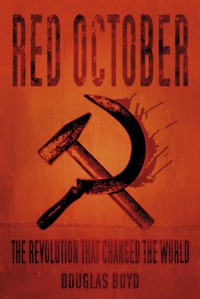
The October Revolution happened in November 1917. Later Soviet propaganda pretended for several decades that it was 'the will of the people', but in reality the brutal rebellion, which killed millions and raised the numerically tiny Bolshevik Party to power, was made possible by massive injections of German money laundered through a Swedish bank. The so-called 'workers' and peasants' revolution' had a cast of millions, of which the three stars were neither workers nor peasants. Nor were they Russian. Josef V. Djugashvili – Stalin – was a Georgian who never did speak perfect Russian; Leiba Bronstein – Trotsky – was a Jewish Ukrainian; Vladimir I. Ulyanov – Lenin – was a mixture of Tatar and other Asiatic bloodlines. Karl Marx had thought that the Communist revolution would happen in an industrialised country like Germany. Instead, German cash enabled Lenin, Trotsky, Stalin and Co. to destroy ineffective tsarist rule and declare war on the whole world. This is how they did it, told largely in the words of people who were there.
Sie lesen das E-Book in den Legimi-Apps auf:
Seitenzahl: 375
Veröffentlichungsjahr: 2017
Das E-Book (TTS) können Sie hören im Abo „Legimi Premium” in Legimi-Apps auf:
Ähnliche










RED OCTOBER
First published in 2017
The History Press
The Mill, Brimscombe Port
Stroud, Gloucestershire, GL5 2QG
www.thehistorypress.co.uk
This ebook edition first published in 2017
All rights reserved
© Douglas Boyd, 2017
The right of Douglas Boyd to be identified as the Author of this work has been asserted in accordance with the Copyright, Designs and Patents Act 1988.
This ebook is copyright material and must not be copied, reproduced, transferred, distributed, leased, licensed or publicly performed or used in any way except as specifically permitted in writing by the publishers, as allowed under the terms and conditions under which it was purchased or as strictly permitted by applicable copyright law. Any unauthorised distribution or use of this text may be a direct infringement of the author’s and publisher’s rights, and those responsible may be liable in law accordingly.
EPUB ISBN 978 0 7509 8508 6
Original typesetting by The History Press
eBook converted by Geethik Technologies
CONTENTS
List of Abbreviations and Acronyms
Author’s Notes
Part 1
1. In the Beginning Were the Words
2. Who was Lenin?
3. Who was Trotsky?
4. Who was Stalin?
5. Rehearsal for a Revolution
6. Russian Roulette
Part 2
7. Two Shots – 38 Million Dead
8. Arms and the Woman
9. The Great Retreat
10. Letters from Hell
11. God Help Russia!
12. White Nights, Red Days
13. Peace?
Part 3
14. The Struggle for Power
15. Enemies at the Gates
16. Bloody Murder
17. The Enemies Within
18. Declaring War on the World
19. The Inadmissible Letter
Notes
Further Reading in English
LIST OF ABBREVIATIONS AND ACRONYMS
AOK
Armeeoberkomando (Austro-Hungarian Supreme Command in 1914–18 war)
ARA
American Relief Administration
BMO
Bolshevik Military Organisation
Cheka
Chrezvechainaya komissiya (literally, the extraordinary commission – the first Soviet security organisation)
C-in-C
Commander-in-chief
Comintern
Communist International
CP
Central Powers
CPGB
Communist Party of Great Britain
CPSU
Communist Party of the Soviet Union
FBI
Federal Bureau of Investigation (US)
Gensek
Generalny Sekretar (General Secretary of the CPSU)
GPU
Gosudarstvennoye Politicheskoye Upravleniye (Soviet security organisation 1922–23)
HQ
headquarters
KGB
Komitet Gosudarstvennoi Bezopasnosti (last Soviet state security organisation)
LSR
Left Socialist Revolutionary (Party)
NCO
non-comissioned officer
NEP
Novy Ekonomicheski Politik (New Economic Policy)
NKVD
Narodny Komitet Vnukhtrennikh Del (Soviet state security organisation 1934–46)
NRZ
Neue Rheinische zeitung
OGPU
Obyedinonnoye Gosudarstvennoye Polititicheskoye Upravleniye (Soviet state security organisation 1923–34
OHL
Oberste Heeresleitung (German Supreme Command in 1914–18 war)
Okhrana
Otedleniye po Okhraneniyu Obshchestvennoi Bezopasnosti i Poryadki (Tsarist secret police)
Orgburo
organisational office of the CPSU
Politburo
governing body of CPSU Central Committee (literally policy office)
POUM
Partit Obrer d’Unificació Marxista (Catalan Marxist Party in Spanish Civil War)
POW
prisoner of war
PR
public relations
RSDLP
Russian Social Democratic Labour Party
RSFSR
Russian Soviet Federative Socialist Republic
SDLP
Social Democratic Labour Party
SIGINT
signals interception
Sovnarkom
Soviet Narodnikh Komissarov (Council of National Commissars)
SR
Socialist Revolutionary (Party)
Stavka
Stavka Verkhovnovo Glavnokomanduyushchevo (Russian Supreme Command 1914–18)
Tseka
Tsentralny Komitet (Central Committee of CPSU)
US/USA
United States of America
USSR
Union of Soviet Socialist Republics (1922–91)
AUTHOR’S NOTES
1. All translations by the author, unless otherwise attributed.
2. With the exception of the last Tsar, referred to throughout by the English form of his name as Nicholas to distinguish him from all other Russians called Nikolai, Russian first names are in their transliterated form of e.g. Yevgeni A. Tchaikovsky, with the middle initial standing for the patronymic.
3. Until February 1918 Russia used the Julian calendar, which by then was thirteen days behind the modern or Gregorian calendar introduced under Pope Gregory in 1582 and subsequently used elsewhere in Christian countries. This is why the October Revolution took place in November 1917. Dates here are according to the modern calendar, except where noted otherwise.
4. Russian being gender-sensitive, the wife of Mr Ranevsky is Mrs or Madame Ranevskaya, etc.
PART 1
1
IN THE BEGINNING WERE THE WORDS
Karl Marx’s Manifest der Kommunistischen Partei was published in German in 1867 and subsequently translated into a number of other languages. Its English title was The Manifesto of the Communist Party. In the original, it began‘Ein Gespenst geht um in Europa’ – ‘a spectre is haunting Europe, the spectre of the communism.’ It continued with the assertion that all the governments in Europe were afraid of a virtually non-existent political party, ending with the exhortation, ‘Proletarier aller Länder, vereinigt Euch!’ – which is commonly rendered in English as, ‘Workers of the World, Unite!’ The manifesto did not include the formula ‘Jeder nach seinen Fähigkeiten, jedem nach seinen Bedürfnissen’ – ‘From each according to his ability, to each according to his need’. Outside of a few religious communities this utopian formula has never been known to work for very long. Marx quoted it in his 1875 Critique of the Gotha Programme, but it had previously been used by French socialist Louis Blanc in 1839, whose version of communist philosophy was named Blanquism. In less succinct form, it can be traced back as early as 1755 to express the ideal of communism, not its practice.
The year 1848, in which Marx began to write the Manifesto,1 was the Year of Revolution throughout Europe. It began in Sicily in January, followed by France in February and spread to more than fifty other countries in Europe and elsewhere. There were many factors in this coincidence, which included the dissatisfaction of the rapidly growing working class employed in the vast factories of the time and badly paid, fed and housed in slums of towns whose expansion was too rapid for a proper infrastructure of paved streets and sanitation. Their anger was often harnessed and given direction by middle-class educated leaders like Marx, himself raised in a prosperous German-Jewish family, and his collaborator Friedrich Engels, who came from a rich German Protestant background. Engels had contributed to the drafting of the manifesto, but was not credited as co-author or contributor on publication.
The March revolution of 1848 in the thirty-nine states of the German Confederation – it was not a united country until 1871 – was followed by an uprising in Denmark and Schleswig-Holstein at the end of the month. Further north in Sweden, the riots collectively called Marsoroligheterna were suppressed in Stockholm by mounted police troops. The breakaway cantons in Switzerland were brought to heel in the Swiss Confederation. Poland, the Danubian principalities, Wallachia, Moravia and Ukrainian Galicia all saw riots in the streets and damage to property. The Great Irish Famine led to an uprising by the Young Irelander group, which ended in bloodshed. The Austrian Empire was riven by various revolutionary movements of socialist and nationalistic character, trying to break away from Vienna’s hegemony. In Hungary, it seemed that the self-determination uprising had been successful, until it was put down, with concessions, by Russian and Austrian troops. In that one year, tens of thousands of strikers and demonstrators were killed across the continent; many others were obliged to flee into exile, with France the destination of choice because of its tradition of welcoming political refugees since the revolution in 1789. For several years thereafter, echoes of the ‘spirit of ’48’ inspired uprisings in many countries across the world.
It seemed to Marx that all this unrest proved the time had come to demolish the bourgeois-industrial society created by the Industrial Revolution, which had enticed into the cities and factories millions of workers and their families whose forebears had been free wage-labourers or serfs under feudalism. As far as Russia was concerned, although Catherine the Great had issued the nakaz Kateriny Velikei, or Instruction of Catherine the Great, in 1767, envisaging a Russia in which all men were equal and banning capital punishment, torture or serfdom, in fact feudal serfdom was still widespread in Russia in 1848, and was only abolished there nearly a century after the nakaz, in 1861.
On the land, working alone or in small groups, the widely dispersed labouring classes had been unable to organise themselves into a position of power, from which to negotiate better terms for their labour. Once herded together in those temples of nineteenth-century industry that were the factories – the largest employing several thousand men and women in one place – ease of communication made possible the organisation of all who shared a common resentment at the conditions of their lives: long hours, sometimes dangerous work, poor pay, accommodation in slums, no health care, high infant mortality and inadequate clothing and diet. The growth of a free press also contributed; while most newspaper owners and editors supported the moneyed classes, some socialist periodicals were also published cheaply for the working masses.
Marx was a classically educated man approaching his fiftieth birthday when the first edition of his verbose and slightly confusing manifesto was published. In it, he traced the development of human society from the first cities to the feudal period when hereditary nobles had absolute power over the common people, and from there to the medieval guilds that empowered the burgesses of independent cities to form a new class, the bourgeoisie of artisans, merchants and speculators that became the driving force of the Industrial Revolution. In nineteenth-century Europe, he argued, the time was ripe for the next massive upheaval in social relations: the vast majority of workers or proletarians2 should seize power from the numerically inferior members of the bourgeoisie that exploited them. Private property, inheritance and ownership of land must be abolished; the means of production must be vested in the workers who should all share equally in the wealth this produced. However, since the bourgeoisie controlled the forces of law and order, it would not easily relinquish its monopoly of power, which would therefore have to be seized by violent revolution.
Considering the millions of people who have suffered and died under various forms of applied Communism, it is worth comparing the utopian aspirations of the political philosophy with the lifestyle of its originator. Born in Trier, Prussia, in May 1818, Marx attended a Gymnasium or grammar school and was subsidised by his prosperous family during his extended dilettante student years after being exempted on the grounds of poor health from Prussia’s obligatory military service for young men. Although descended both maternally and paternally from generations of rabbis, his father Heinrich3 was a lawyer, who had converted to Protestantism and ran a successful practice that financed the purchase of several vineyards and a prestigious ten-room residence near Trier’s still extant Roman town gate, known as Porta Nigra. Frau Marx, who had not converted to Christianity and remained in every sense a Jewish mother, came from a Dutch business family related to the founders of the Phillips electrical empire. While still a student of eighteen, their son Karl began a seven-year engagement to Jenny von Westphalen, a girl from an aristocratic family that strongly disapproved of her choice, partly because he was Jewish although baptised in a Protestant church, but also because he showed no inclination either to work at his studies or to earn money to support a wife and family. He was, and remained throughout his life, totally self-obsessed, many times accepting money from the Dutch relations of his mother, which he knew came from what revolutionary socialists called ‘the exploitation of the workers’.
The other ‘name’ in early Communism was Friedrich Engels. In 1842, at the age of 22, his parents sent him to Manchester, to work as a clerk in one of his affluent family’s several textile mills. This was done in the hope that their son would ‘come to his senses’ and settle down to serious work. Instead, Friedrich met there a radical young working woman named Mary Burns, who did her very adequate best to ensure that he did not identify too closely with the cause of the bosses by showing him the sordid underside of Manchester’s prosperity. As the eponymous poet Robert Burns might have said, the best-laid plans of parents ‘gang aft agley’. Although never marrying because they despised the bourgeois institution of marriage, the couple produced under Engels’ name Outlines of a Critique of Political Economy, which was sent to Paris, to which city Marx had moved shortly after marrying Jenny von Westphalen in 1843. Heading a group of young German émigré socialists, he edited a periodical titled die Deutsch-Französische Jahrbücher or German-French Yearbooks – not that French contributors were very evident. Engels’ critique was published, as were three later articles by him exposing the evils of child labour, industrial pollution and the overworked and underpaid labour force in Britain. These articles were incorporated into his first book The Condition of the Working Class in England, published in German in 1845 and in English in 1887.
Marx’s magazine in Paris ceased publication when his single patron became disillusioned and withdrew his financial support, but when he met Engels there in 1844 – they both shared a predilection for reading the Russian newspapers free-of-charge in the fashionable bistro Le Dome – a rather unequal partnership was born. After Engels left to pursue his political career in Germany, Marx was expelled from France in February 1845. He and his family moved to Brussels, where Engels joined them, both he and Marx becoming involved for three years in an undercover dissident organisation calling itself the League of the Just, which later became the Communist League. During this period, Engels contributed to Marx’s thought and writing, although Marx did not acknowledge this publicly. Expelled from Belgium for giving money to arm anti-government extremists, he moved back to Cologne, obsessed with his theory that the bourgeoisie of his homeland would cast off the feudal monarchies of the several German kingdoms and principalities so that the proletariat could then in its turn overthrow the bourgeoisie. Using a legacy from his father’s estate, he edited and published a new left-wing daily die Neue Rheinische Zeitung (NRZ). Although there were other contributors to the paper, even its nominally joint editor Engels had to admit that the tyrannical 30-year-old chief editor of the NRZ was an absolute dictator. Unsurprisingly, Marx was several times put on trial for disturbing public order and insulting public functionaries. Expelled from Germany with a pregnant wife who had already produced three children, he returned to Paris, to find the City of Light4 in the throes of a repressive counter-revolution and a cholera outbreak. Deprived of his Prussian citizenship in 1849, he immigrated to London in June, where he would fall out with most other members of the Communist League, which had transferred its headquarters there.
Although Marx occasionally wrote articles for the leftist New York Daily Tribune and other socialist newspapers, after the move to England his family lived for several years in abject poverty in a three-room Soho slum, while he spent long hours every day in the warmth and comfort of the new, centrally heated British Museum reading room. On at least one occasion in 1850, Jenny and the children were evicted for non-payment of rent and their belongings thrown into the street – not that there was much to throw. A visitor commented on the disorder, squalor and filth in which they lived with broken furniture, inadequate clothing for the children and a near-starvation diet, confirmed by Marx, who wrote in the summer of 1851:
My son is ill, little Jenny is ill, Lenchen is ill … I cannot call the doctor because I have no money for medicine. For the last eight to ten days I have been feeding the family on bread and potatoes.5
Lenchen was the family nickname of Helène Demuth, a servant employed by the von Westphalen family, who was sent by them to put some order into the chaotic living conditions of their daughter’s household. Helène soon gave birth to an illegitimate son christened Frederick Lewis Demuth, an embarrassment who was put out to a working-class foster family shortly after birth. Marx and Engels tried to convince Jenny that Engels was the father, but it seems likely that the unwanted boy child was fathered by Marx himself.
To prove that he was a man of action, as well as a gentleman at ease in several languages and a lover of literature, art and music, Engels actually took up arms in anti-government uprisings in Germany, so alarming his parents that they threatened to terminate his allowance unless he emigrated to America for his own safety and to avoid disgracing the family. Escaping into Switzerland one step ahead of an arrest warrant, he negotiated a compromise whereby he was not cut off from their financial support in return for returning to England, to manage a family textile enterprise in England. Turning up in London, he lived in a pleasant house in Primrose Hill, very unlike the Marx family’s sordid accommodation, and siphoned money from the family coffers to subsidise his impoverished friend, while himself enjoying fox hunting with people of his own leisured class and hosting generously catered Sunday parties, which lasted into the small hours of Monday morning.
Somehow caring for her husband, Lenchen and the children, despite the chronic shortage of cash, Jenny lived through the deaths of three of the children in infancy and a still birth in 1856 – all partly caused by malnutrition and lack of medical treatment. In 1856 the family moved to less insalubrious quarters in Kentish Town, and moved up-market again in 1864 after Jenny came into a family inheritance of £1,600.
The year 1871 saw France’s defeat in the Franco-Prussian war produce the short-lived Paris Commune,6 which raised the hopes of European revolutionary socialists until it was brutally suppressed by French government forces with Prussian assistance after two months with 30,000 executions and 40,000 communards imprisoned, many to be deported to penal colonies overseas.7 Although ending in tragedy, it may have been the Commune that connected in Marx’s and Engels’ minds the idea of a disastrous national defeat producing the chaos necessary for a revolution in Germany, a country at the stage of social development which they considered ripe for a radical socialist revolution. As early as 1853, they also talked of a revolution starting in St Petersburg that would unleash a civil war across Russia, despite this contradicting the premise in the manifesto that a period of bourgeois society was necessary before the workers’ revolution could take place; the bourgeoisie in Russia was a small minority living mainly in the few big cities that were dotted widely apart across the vast Romanov empire.
Caused largely by his irregular sleep pattern, excessive use of tobacco and unsuitable diet, Marx suffered increasingly from insomnia, which he self-medicated with narcotics that could then be freely purchased over the counter. He had always fallen out with his collaborators, with the exception of Engels. As painful boils and other skin problems, and abscesses that prevented him sleeping or even sitting comfortably, eye trouble and neuralgia contributed to his increasing irascibility, he alienated even his closest admirers.8 In 1881 his long-suffering wife died and a decline into worse health brought Marx’s death on 14 March 1883. His sociopathic attitudes were the reason why just nine mourners attended the burial of the great prophet of Communism in Highgate cemetery.9 In 1956 the Communist Party of Great Britain (CPGB) paid for the present grand tombstone, under which his remains were reinterred, to make a shrine to which a dwindling throng of left-wing tourists flocks every year. The only happy note on which to end, is that Friedrich Engels on his death in 1895 provided reasonably generously for Marx’s two surviving daughters out of his estate, worth roughly in the region of £120 million in today’s values.10
2
WHO WAS LENIN?
The city of Simbirsk was founded on the western bank of the mighty Volga river in 1648 some 555 miles south-east of Moscow at what was then the fringe of Russian territory. Its function was to implant several thousand settlers and to serve as a military base for troops to keep at bay the nomadic tribes living across the Volga and to the east. Looking for it on a modern map is fruitless because it was renamed Ulyanovsk in honour of its most famous son after his death in 1924. He was born to Ilya Nikolayevich Ulyanov – a respectable teacher and school inspector – and his wife Maria Alexandrovna Ulyanova, who ranked as minor nobility in the strictly hierarchical tsarist society due to Ilya’s position in the administration. The Ulyanov family’s impeccable record was irretrievably blotted just a year after his death when his eldest son Alexander was arrested in March 1887 for plotting with other members of the Narodnaya Volya, or People’s Will, terrorist group at St Petersburg University to assassinate Tsar Alexander III on the capital’s famous Nevsky Prospect. Ten of the conspirators were saved from the gallows by the Tsar’s clemency, but 21-year-old Alexander Ilyich had not only used his knowledge of chemistry to make the ‘infernal machine’ or bomb they were intending to use, but was also arrogant enough to make a defiant political rant in court instead of pleading for his life. He and four of the other students were hanged in the grim fortress-prison of Shlisselburg on an island in Lake Ladoga – the Alcatraz of St Petersburg.
Alexander Ulyanov’s 17-year-old brother Vladimir had hero-worshipped him, but returned to his studies and graduated one month later as the Simbirsk Gymnasium’s best pupil. Further education should have been barred to him as the brother of an executed terrorist, but his school’s director had been named guardian of the family in Ilya’s will. He vouched for Vladimir’s good behaviour so that he could commence studies at Kazan University in the autumn of 1887. Once there, the formerly ‘best pupil’ gravitated to the company of extremist students, a group of whom protested in December at the expulsion of some professors who expressed liberal political views and demanded a new and more relaxed regime. At the confrontation between the student activists and the dean, Vladimir Ilyich and forty others were briefly arrested and then expelled.
Internal unrest had seen the tsarist secret police reorganised in 1881 – the year Alexander II was assassinated – as Otdeleniye po Okhraneniyu Obshchestvennoi Bezopasnosti i Poryadki, or the Department for Defence of Public Security and Order. Under the acronym of Okhranka or Okhrana, this forerunner of the KGB was tasked with infiltrating and subverting trade unions, political parties and discussion groups – and generally spying on the whole population, for the last generations of Romanovs were fatally intent on maintaining the quasi-feudal old order. Schools and universities excluded the lower classes and the judiciary was brought back under central control; Russian was imposed as the sole official language throughout the Empire; and other branches of Christianity were disadvantaged vis-à-vis the Orthodox Church. Under the ‘Temporary Laws’, Jews were more strictly confined to the Pale of Settlement.
Thanks to his mother’s persistence in lobbying for her problem son, although banned from Kazan University Vladimir Ulyanov was permitted to complete his law studies at St Petersburg University, where he graduated with honours. Going through the motions of starting a law practice in the city of Samara, where Maria Alexandrovna and her younger children were then living, he actually devoted more energy to reading the writings of Karl Marx and disseminating them clandestinely. This was tolerated initially because the Okhrana considered the Marxists likely to draw support away from Narodnaya Volya, already responsible for many assassinations, and judged their publications too boringly abstruse to influence many people anyway. ‘Nothing will come of them for at least fifty years,’ remarked the Samara chief of police in 1894.11
At 24, Vladimir I. Ulyanov was already called ‘the old man’. With his bald head and slit eyes that rarely gave away what he was thinking, that was understandable. All work and no play made this Jack an ill boy. After nearly dying of pneumonia early in 1895, he did what middle-class Russians did to recover their health, going abroad for a European tour – in his case to meet influential extreme socialists living in exile, including the so-called fathers of Russian Marxism, Georgi Plekhanov and Pinchas Borutch, who had taken the Russian name Pavel Axelrod. Both were impressed by a week of debate with Ulyanov, which demonstrated his unshakeable belief in the need for revolution.
Returning to St Petersburg in September 1895 Ulyanov joined Julius Tsederbaum, who used the Russian name Jules Martov, and other revolutionary socialists in Soyuz Borby za Osvobozhdenie Rabochevo Klassa – literally, the Union for the Struggle for the Liberation of the Working Class. Tracked by Okhrana agents and informers, they were arrested on 20 December. Conditions in the prison were far from the repressive regime that Lenin would impose after the revolution: young Ulyanov was allowed visits twice weekly, when relatives might bring in books and other publications. When leaving, they were not checked for outgoing messages, so that Ulyanov’s mother and sister Maria Ulanova acted as postmen for his intensive correspondence with comrades outside. During his fourteen months’ incarceration, Ulyanov managed to organise from his cell at least one major strike involving 35,000 workers.
The sting in the tail of his sentence was a three-year exile to Shushenskoye, a village on the mighty Yenisei river in the Siberian province of Krasnoyarsk, more than 2,000 miles east of Moscow. With a weekly allowance12 that was adequate for his needs, he used the time and lack of civilised distractions for studying, thinking and writing. Although this may be partly Soviet propaganda, the record is that the local people respected and liked him after he gave free legal advice based on his law studies and even the gendarmes charged with watching the exiles came to treat him with respect. Love – at least in one direction – entered his life when a female comrade from St Petersburg arrived in Shushenskoye. Nadezhda Konstantinovna Krupskaya had been exiled to Ufa. Although also in Siberia, it was still 1,500 miles away, but the tolerant tsarist authorities accepted her story that she was Ulyanov’s fiancée and allowed her to join him in May 1898. Married in a local church, Krupskaya, as she was generally known, settled down to married life as Ulyanov’s tireless confidante and secretary for his extensive correspondence with other extreme socialists both at liberty in Russia, in internal exile all over Siberia and abroad. It was a busy life. During this period, the manuscript of one political text by Ulyanov was smuggled back to St Petersburg for publication there under a pseudonym and another – The Aims of Russian Socialism – was published in Switzerland under the name of Lenin, a name he took from the Siberian river Lena, and under which he would achieve worldwide fame.
The period was also crucial as it marked his absolute rejection of revisionist Marxist factions and the beginning of a war of words with them first evidenced in a periodical titled Iskra – meaning the ‘spark’ that Lenin intended to ignite worldwide revolution. The first edition, printed in Leipzig on thin onionskin paper in December 1900, was stored in Berlin by the German Social Democratic Party and inserted into small parcels sent to addressees near to the Russian frontier, then passed on to professional smugglers for onward transmission into the Russian Empire. Krupskaya, having been left behind in Ufa to complete her exile, and released at its end, did not find it easy to track down her absent husband, who used many aliases, changed his address frequently and did nothing to help her. Eventually catching up with him in Munich, she became again his maid-of-all-work, writing to his mother in August 1901:
Volodya [affectionate diminutive of Vladimir] is working diligently. I am very pleased with him. When completely engrossed in a certain work, he is in excellent spirits. His health is very good, no trace of his cold remains, nor does he suffer from insomnia. He invigorates himself every day with a cold water rub-down. In addition we go bathing almost every day.13
It reads like a message from the overprotective mother of a fragile child. By the following spring, the political risks of publishing Iskra had frightened off two printers. Among the expat revolutionaries, Plekhanov and Axelrod chose to move to Switzerland, while Lenin and Krupskaya opted for London, where he used the Reading Room of the British Museum as his office, as Marx had done, to produce another book titled Chto dyelat’? – Nabolevshie voprosy nashevo Dvizheniya, in English What is to be done? Urgent problems of our movement.
The revolution, as Lenin emphasised in the book, would have to be led by a single omnipotent leader, i.e. himself, controlling a rigid party structure. Also rejecting Marx’s philosophy of a classless society, Lenin was already more like Orwell’s Napoleon in Animal Farm, believing that the most important people in post-revolutionary society should be better treated than the mass. Equally intransigent on land ownership, although some colleagues considered that agriculture should be left to the peasants doing what they did best – growing food and raising beasts – Lenin insisted that all land be nationalised and collectivised, which was to prove a disastrous policy when put into force, condemning millions to death by starvation, since the political commissars who made all the decisions had no idea what they were doing.
Although Iskra and What is to be done? had focussed the attention of many revolutionary socialists inside Russia on what Lenin considered the right way to apply Marxism to existing social problems, his elders like Plekhanov and Axelrod were still stuck in the nineteenth-century intellectual style of writing and thinking – unlike Lenin whose style was that of the demagogue, hammering away at a few simple slogans, as he would later do to win over live audiences. A split in the editorial board between Lenin in London and the others in Geneva led Lenin to move there in April 1903, swiftly alienating even the comrades who admired his thinking and wished to work with him, but could not accept his demand for total, unquestioning obedience. One of them named Alexander Potresov summed up the problem, as did many others, by saying, ‘It is impossible to work with him.’14 But Lenin refused to deviate from his blueprint: a corps of lieutenants controlled with military discipline by their unquestioned leader, i.e. himself.
On 30 July 1903 an Iskra-organised conference of Russian and expat revolutionary socialists began in Geneva, but so heated were the debates that the Swiss police ordered the expulsion of four delegates, after which the venue was moved to London. Of the forty-three participants, only three or four were workers; all the others were what the police of the time termed ‘professional revolutionists’, whose socialist philosophies differed widely. Since they refused entirely to bow down to Lenin and the Iskra group, the Jewish Socialist Bund members and the Economists all walked out when Plekhanov demanded a coherent party structure. A new word for the world’s political vocabulary was coined after Lenin’s Iskra group won the debate of a slight majority of the motions tabled at the conference and grabbed the name Bolsheviki from the Russian bolshinstvo, meaning majority. By implication, their opponents were labelled Menshiviki – the minority. From then on, these two labels divided the movement. Essentially, the Bolsheviks were prepared to destroy every vestige of social infrastructure in Russia to achieve their ends, while the Mensheviks considered that socialism could be implemented by building on, and modifying, the framework of bourgeois society. Before long, the mere label Menshevik was enough to see thousands of sincere socialists executed for the crime of failing to agree with Lenin.
One of Lenin’s most enthusiastic supporters, a Belorussian doctor and political theorist named Alexander Alexandrovich Bogdanov, visited Finland in 1906 to meet Lenin, who already had a cast-iron vision of what a revolutionary socialist party should be: the ordinary members should pay dues, which would support himself and a few other important full-time activists. He had, in fact, a cast-iron opinion about everything, refusing to accept anyone else’s ideas, which made it very difficult for Bogdanov or anyone else to work with him for long. Initially regarded by Lenin as his political ‘favourite son’, well versed in the history of revolution, Trotsky later agreed with Plekhanov that: ‘[Lenin is] a despot and terrorist who sought to turn the Central Committee of the party into a Committee of Public Safety in order to be able to play the role of Robespierre.’15Le comité du salut public was Robespierre’s tool for dictatorship during the bloody months of the Terror 1793–94. It was a pertinent comparison that caused Lenin, in a fit of pique, to resign all his offices and sever all connection with party colleagues, isolating himself totally. Instead of bringing the others to their senses, as he had hoped, he found himself without supporters, comrades or even friends except the ever-loyal Krupskaya. A man who sees himself obsessively as a leader is no good to himself, or anyone else, when he has driven away all his followers. The result was a disabling neurasthenia, as a severe mental breakdown was then called. His therapist was, as so often, the adoring and ever-faithful Krupskaya, who took him away for a month-long walking holiday across Switzerland staying in small, cheap country inns with nothing but rucksacks, in which to carry the barest necessities. The remote Swiss valleys were a wonderful sanatorium and health spa where he could forget the ungrateful world. Krupskaya wrote to Lenin’s mother on 2 July 1904:
Volodya and I have made a pact not to discuss [political] affairs. We sleep ten hours a day, swim and walk. Volodya doesn’t even read the papers properly.16
3
WHO WAS TROTSKY?
Leiba Davidovich Bronstein17 was the fifth of eight children born to a family of prosperous Jewish farmers near the city of Kherson in the Pale of Settlement. His parents were discreet about their non-observance of religious ritual, not wishing to alienate their Sabbath- and diet-observant neighbours, whose Yiddish they understood, although themselves preferring to speak the local dialect, which was a mixture of Ukrainian and Russian, and in which they could also converse with their non-Jewish labourers on the farm. The Pale – a vast area that stretched from the shores of the Baltic all the way south to the Black Sea across stretches of modern Latvia, Lithuania, Poland, Belarus, Ukraine and Moldova – was Catherine the Great’s solution for keeping the Jews of her empire out of Russia proper, and most certainly out of the cities, where only a few very rich or socially useful Jews were tolerated, and the only single Jewish women allowed were registered prostitutes or schoolteachers.
An academically bright child, at the age of 9 Leiba was sent 200 miles away to be schooled at a German Gymnasium, or grammar school, in Odessa, where he lodged with a family of older cousins as a paying guest. The town-dwelling cousins taught the farm boy about personal hygiene and careful dressing, to the point that he became rather a dandy, liking to be neatly dressed and keep his fingernails trimmed. In childhood, and sometimes in later life, he suffered from fainting fits, which he seems to have inherited from his mother. To complete his schooling, he was sent to the riverine port city of Nikolaev,18 constructed on a peninsula in a bend of the mighty Southern Bug river, 50 miles from the Black Sea. This was already an important shipbuilding centre and had been the homeport of the Russian Black Sea fleet when the sea was demilitarised after the Crimean War.
Leiba abandoned the study of mathematics after becoming embroiled with a group of radical socialist students at the Nikolaev Realschule. At first using the nom de guerre Lyov, he moved out of the comfortable lodgings for which his father was paying in order to live in a student commune, where he participated in the production of revolutionary publications. None of the students seem to have realised that they were being watched by the Okhrana. Getting himself arrested at the age of 18 in 1897, Leiba was locked up with the others in Nikolaev prison before being transferred to prison in Odessa, where they languished for a year until transported to Moscow Transit Prison. There, he married a fellow student political detainee named Aleksandra Lvovna Sokolovskaya, so that they would not be separated when exiled to Siberia under the reasonably humane tsarist prison regime of internal exile for political prisoners.
In the summer of 1900 they were transported by rail some 3,000 miles eastwards to Irkutsk in distant Siberia, where the temperature then touching 40ºC gave no idea what life would be like when it would plunge to –50ºC in winter. Aleksandra, already pregnant, then had to endure a slow voyage of 400 miles northward along the mighty Lena river. Lodging in a remote village in the house of a Polish cobbler and later allowed to move to another town, where they had exiled friends, the young couple had an intermittent income from Leiba’s articles and book reviews written for the Irkutsk magazine Vostochnoe Obozrenie (Eastern Review). In 1902 Alexandra gave birth to their second daughter. There is no evidence of the father’s profound dissatisfaction with life until in 1902 when he started receiving, hidden in the binding of some books, copies of Marxist publications printed on thin paper abroad, as well as a copy of Lenin’s recently published book What is to be done?.19
He already knew that he had a talent for writing and always wanted the largest possible stage on which to perform. Reading Lenin’s book gave him the idea of escaping from Siberia to join its author in attacking ‘revisionists’ of Marx’s doctrine in front of an international audience. On 21 August 1902, having bought a passport in the name of Lev Trotsky from a free local resident, he abandoned his birth identity, his wife and their daughters in Verkholensk, travelling with a female fellow-Marxist on the first of many clandestine stages of the journey back to Irkutsk, where political sympathisers equipped him with clothes and money for the long journey back to European Russia. From there, the fake Mr Trotsky travelled via Vienna and Geneva to London, where Lenin co-opted him onto the editorial board of the revolutionary newspaper Iskra – the Spark – which was also the name of Lenin’s group of young Marxists. By March 1903 Trotsky had become the ‘favourite son’ of Lenin, in the face of the hostility of mistrustful older expat socialists like Plekhanov.
Revolutionaries are essentially dissidents: the characteristics that impel them to fight established authority, by illicit or illegal means, also cause them to disagree with each other. Although the revolutionary socialists and the anarchists in the émigré Russian population all shared the Marxists’ interest in getting rid of the tsarist regime, they also spent much energy in demolishing each other. While in London, Trotsky outmatched two important anarchist speakers in a debate and then travelled to Paris to attack the revolutionary socialists there with similar success, in spite of the fact that some veteran Marxists thought his grasp of political essentials was sketchy – to put it mildly. From the City of Light, he wrote to Alexandra, telling her what a success he had been in the West, omitting to inform her that he had also found a younger woman named Natalya Ivanovna Sedova to share his bed. Aleksandra ended her life in a Soviet labour camp in the far north of Siberia in 1938.
The next stop on Trotsky’s travels was Brussels for the Second Party Congress of the Social Democratic Workers’ Party in July 1903. Founded in 1898, the party was already split into two main factions: Lenin’s Bolsheviks and the Mensheviks. Despite the implication of the labels – which referred only to the motions carried at the congress – their numbers were equal, not exceeding a total membership of approximately 8,400 people in each faction. Three-quarters of the active members were under 30 years old and Lenin himself was only 35. Some of those attending the Second Party Congress changed sides during the meeting. These included Georgi Plekhanov, who distanced himself from Lenin’s hardliners, as did Trotsky, in a split from his formerly admired mentor that was to last for fifteen years.20
In 1903 Trotsky married Natalya Ivanovna Sedova bigamously and formed a close political partnership with Israel Lazarevich Gelfand21 in Munich. Although born of Jewish parents in Russia, Gelfand had joined the German Social Democrats and wrote articles in the Left press under the pseudonym Alexander Parvus – parvus being the Latin for ‘poor man’. Belying the nom de plume, he was to make a considerable fortune dealing in armaments during the Balkan wars of 1912–13. Siding with the Mensheviks, in 1904 Trotsky turned on Lenin personally, accusing him of clinging to an outdated political philosophy and failing to realise that the essential dynamic element of militant Marxism was the mass of workers, not the few educated theoreticians. His own writing did not bring in enough to support himself and Natalya, so from time to time he accepted money from his father, whose way of life he despised. Some people close to him at that time had reason to believe that undercover Okhrana agents helped out with anonymous contributions, to fuel the dissension between him and Lenin.
Although it was not obvious then, Lenin and Trotsky were to be the two key players in the 1917 revolution. One man who knew them both was Robert Bruce Lockhart, then the British Consul in Moscow. He summed up Lenin thus:
There was nothing in his personal appearance to suggest the super-man. Short of stature, rather plump, with short thick neck, broad shoulders, round red face, high intellectual forehead, nose slightly turned up, brownish moustache and short stubbly beard, he looked at the first glance more like a provincial grocer than a leader of men. Yet in those steely eyes there was something that arrested my attention, something in that quizzing, half-contemptuous, half-smiling look which spoke of boundless self-confidence and conscious superiority. Later I was to acquire a considerable respect for his intellectual capacity, but at that [first] meeting I was more impressed by his tremendous will-power, his relentless determination and his lack of emotion.22
Of Trotsky, Bruce Lockhart wrote:
[He has] a wonderfully quick mind and a rich, deep voice. With his broad chest, his huge forehead, surmounted by great masses of black waving hair, his strong, fierce [blue] eyes and his heavy protruding lips, he is the very incarnation of the revolutionary. He strikes me as a man who would willingly die fighting for Russia, provided there was a big enough audience to see him do it. He is neat about his dress. He [wears] a clean soft collar and his nails [are] carefully manicured.23
A St Petersburg politician named Roman Gul compared the public speaking techniques of Lenin and Trotsky, considering Trotsky the master:24
In his manner of speaking Trotsky was the polar opposite of Lenin. Lenin moved around the platform. Trotsky stood still. Lenin offered none of the flowers of eloquence. Trotsky showered the public with them. Lenin did not listen to himself. Trotsky not only listened to himself but also surely admired himself.25
Like Bruce Lockhart, Gul also commented on Trotsky’s sartorial vanity: a revolutionary who dressed like a bourgeois professional and who would, after the revolution adopt a military cap and greatcoat for his role as creator and commanding general of the Red Army. Another Marxist militant named Lunacharsky wrote: ‘Trotsky had practically no wholehearted supporters at all; if he succeeded in imposing himself on the party, it was entirely though his personality.’26
In short, Lenin was a cold, disciplined theorist, Trotsky a flamboyant performer. Meeting both men together after the revolution, Bruce Lockhart wrote:
[Lenin] furnished a complete antithesis to Trotsky, who was all temperament – an individualist and an artist, on whose vanity even I could play with some success. Lenin was impersonal and almost inhuman. His vanity was proof against all flattery. The only appeal that one could make to him was to his sense of humour, which, if sardonic, was highly developed. During the next few months I was to be pestered with various requests from [the government in] London to verify rumours of serious dissensions between Lenin and Trotsky. I could have given the answer after that first meeting. Trotsky was a man of immense physical courage. But morally, he was as incapable of standing against Lenin as a flea would be against an elephant. In the Council of Commissars [after the Revolution], there was not a man who did not consider himself the equal of Trotsky, yet regarded Lenin as a demi-god, whose decisions were to be accepted without question.
I remember [Georgi] Chicherin27




