



2,99 €
Mehr erfahren.
- Herausgeber: Edizioni Savine
- Kategorie: Lebensstil
- Sprache: Englisch
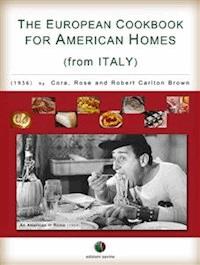
ORIGINAL DESCRIPTION (1938) - These famous culinary Browns have literally eaten their way around the world. They have lived and cooked in Spain, France, Germany, Hungary, Russia, China, Japan. They have discovered the secret of excellent food, which does not lie in elaborate or expensive dishes, but in making the most of your market— and your budget. In this new book the authors of The Wine Cook Book, The Country Cook Book and Ten Thousand Snacks tell you how to make inexpensive materials into delicious dishes, all kinds of new tricks to lend glamour to conventional meals. Many of the recipes which are prized possessions of the Browns have never appeared in a cookbook before.
Das E-Book können Sie in Legimi-Apps oder einer beliebigen App lesen, die das folgende Format unterstützen:
Veröffentlichungsjahr: 2016
Ähnliche


















COOKBOOK
by Cora, Rose and Bob Brown
WITH DECORATIONS BY
Julian Brazelton
New digital edition of:
Most For Your Money - Cookbook
by Cora, Rose and Bob Brown
© 1938 by Cora, Rose and Robert Carlton Brown
Published by Modern Age Books, inc.
Copyright © 2016 - Edizioni Savine
email: [email protected]
ISBN 978-88-96365-81-6
FOREWORD - Stretching the Food Dollar
(Skip this if you're hungry; the real recipes begin in the next chapter)
Since a third of the average family income goes for food, that's a logical front on which to combat the high cost of living. But it's ridiculous even to consider reducing or unbalancing the diet by skimping or cutting it, especially the vitamins and calories. It should, instead, be expanded to include everything our bodies need all the way from the high chair to the coffin. And this can be done without enlarging the food budget, which in most cases can't take it anyway. For true cooking economy doesn't mean being tight or following the fallacious old Scotch maxim “ Cook less and the family will eat less,” but in learning the fullest use of all available foods and methods of getting the most out of them. Thrifty Europeans, who, as a rule, live better than we do on less, claim that we throw away more than we eat, and that comes too close to the truth to be any comfort to our intelligence. But even if we won't stop wasting and listening to the siren call of radio experts who sell us foodless food, blown up bran at half a dollar a pound and readymixed gingerbread that costs more to make than the finished cake would be at an honest baker's, we certainly can stretch the food dollar by countless culinary tricks, all of which are appetizing, healthful and interesting.
For instance, few cooks know the advantage of snow as an ingredient, yet a cup of freshly fallen snow actually takes the place of two eggs in making a pudding light and toothsome. Likewise, snow saves on milk in mixing Snow Waffles and Pancakes which have a finer texture because of the chemicals released in melting — some say it's the ammonia.
And anybody with access to a sunny window can cook jam and preserves at no cost, by using the sun's heat for fuel. Also, a costless, fireless cooker supplements the stove for dishes requiring long cooking.
In lavish pioneer days our ancestors naturally went for the prime cuts, tenderloin and chops, and threw away the equally valuable giblets, kidneys, hearts and tidbits, all of which are quite as good for us as the calves' liver which doctors discovered a few years back and which, as a result of their prescribing it for anemia and such, shot up in price from ten to seventy cents a pound. The same thing happened with the sweetbreads butchers used to throw away because it was so hard to give them away. As for liver, lambs' liver still sells for 30¢ a pound and is just as succulent as calves' at more than twice the price — we honestly prefer it, and get added satisfaction out of the saving. But calves' hearts, all meat and no waste and even tastier than the liver when well cooked, are still a drug on the butcher's block. For a dime we buy two of them, weighing well over a pound, and make them into ritzy dishes we wouldn’t be ashamed to set before Oscar of the Waldorf. As a matter of fact, he'd probably prefer our Braised Hearts to Capon à la Financière, for chefs know what's what and their favorite food is raw hamburger — Beef Tartar, the fresh uncooked meat that can't be faked by cooking it “high” with onions.
The insular English who never knew our abundance have always enjoyed frugal meat dishes such as “Bubble and Squeak” and “Toad in the Hole,” while the epicurean French go for a dish of lungs, which we throw away. Kidneys, which we also neglect, are almost as much of a fetish with Englishmen as calves' liver with us, and when Englishmen travel — those who can afford to — they have frozen kidneys shipped out to them even in Egypt.
We throw away chicken feet, while in Europe they’re made into the very best Strassburg aspic we ever tasted. No other aspic is a scratch on it, even though it may cost ten times as much. Likewise blood sausage is popular abroad, while here they say pig’s blood is used chiefly to adulterate milk chocolate. And few of us believe what good Jewish cooks know, that chicken fat spread on bread is even tastier than butter. Pig’s feet we eat, but the cheaper and tastier French dish of “sheep’s trotters” is still to be discovered. When common food prejudices are overcome, as they were recently in Iowa when roast crow went on the menu after “Make him eat crow” had been an insult for centuries, we increase our scope enormously. The “pickled green plums” our fathers turned up their noses at are now indispensable olives, shipped fresh, too, from California and pickled at home at a fraction of the bottled cost. And ever so much livelier. The wings of a skate, which we throw away, mean “rai au beurre noir” to Parisians and Londoners who are delighted to get them at a dollar a plate. While eels, of course, anywhere but here, sell for prohibitive prices, especially when smoked, in Dutch style.
Honey, which needn’t cost more per pound than plain sugar if bought at the source in family quantities, serves as a cheaper sweetener because you’re likely to use less, or maybe because it’s sweeter, and there’s the added value of the flavor given to many cereals and desserts. The honey-handlers advise us to use less of it and get the full flavor by “drizzling” from a spoon instead of just pouring. This more appetizing method makes the honey jug do double duty for the same cost and can be extended to any syrup. Once you’ve drizzled you’ll never go back to pouring.
As for cereals, wheat frumenty and cornmeal mush stretch the breakfast dollar like rubber. In the wheatless and meatless days of the war, books came out with 150 different ways to cook corn, cheapest of our grains, and as a change, especially with new top-o’-the-table griddles and ovens, we can be our own hot biscuit bakers and put the saving on in the form of butter and maple syrup.
A few grains of buttered popcorn in a cream soup make it a different dish and the possibilities of a-dime-a-pound peanuts are practically unexplored. (One book contains 105 recipes for making fine peanut dishes.) And if you live where pecans are cheap, get a copy of 800 Proved Pecan Recipes. Lentils and Jerusalem artichokes are neglected but economical. Grade A buttermilk at ½ the price of Grade B fresh milk in many places is a wholesome substitute. Canned ripe pineapple is a better buy than fresh. Potatoes baked in their jackets are more nourishing than boiled (the roasted skin is the best part, once you learn to like it). The new spaghetti squash makes a big platter of vegetable spaghetti for half price and furnishes table talk for a week; even its tender seeds are more than edible. There’s a free clamjuice cocktail in the juice of every half dozen clams, and besides, this juice and the soft parts of clams serve as oyster sauce at 50% discount, and many like it better. But mussels, tender and more digestible than clams, are disdained. Frogs and crayfish are used chiefly in creole and French-influenced sections. Broiled salt codfish with garlic is a gourmetic delight. Evaporated milk is just as good as cream in some recipes, or in coffee — we know a woman’s bowling team that voted 90% for this preference. By crushing a clove of garlic you release more flavor than by using two or three uncrushed. Inexpensive Chinese soy sauce is the basis of most expensive bottled sauces. You can make your own anchovy essence for next to nothing, have green garnishings, bean sprouts and such growing without earth in a kitchen pan all winter. By saving celery leaves and drying them you’ve got something better than celery salt, and half the value of watermelon is thrown away in the rind, a cinch to pickle — and do they like it! Same goes for orange and lemon skins to be kept for drinks and seasoning; kumquat skins actually are finer than, the fruit. You can double the bulk of a fine butter to go with seafood by using cast off crayfish, crab and lobster shells.
But by now you should be convinced, so let’s to recipes, with one last word of explanation:
Since this book aims to give the tastiest and most nourishing dishes at the lowest cost, the recipes are arranged under each heading according to their value in economy and quality combined.
Thus the first recipes in each division are the best all around bargains, the most for your money, and the last ones, while just as acceptable and practical, will cost more, take more time and trouble, but may better please some individual tastes. In this way there should be enough variety to go around.
The Authors
Lesen Sie weiter in der vollständigen Ausgabe!
Lesen Sie weiter in der vollständigen Ausgabe!
Lesen Sie weiter in der vollständigen Ausgabe!
Lesen Sie weiter in der vollständigen Ausgabe!
Lesen Sie weiter in der vollständigen Ausgabe!
Lesen Sie weiter in der vollständigen Ausgabe!
Lesen Sie weiter in der vollständigen Ausgabe!
Lesen Sie weiter in der vollständigen Ausgabe!
Lesen Sie weiter in der vollständigen Ausgabe!
Lesen Sie weiter in der vollständigen Ausgabe!
Lesen Sie weiter in der vollständigen Ausgabe!
Lesen Sie weiter in der vollständigen Ausgabe!
Lesen Sie weiter in der vollständigen Ausgabe!
Lesen Sie weiter in der vollständigen Ausgabe!
Lesen Sie weiter in der vollständigen Ausgabe!
Lesen Sie weiter in der vollständigen Ausgabe!
Lesen Sie weiter in der vollständigen Ausgabe!
Lesen Sie weiter in der vollständigen Ausgabe!
Lesen Sie weiter in der vollständigen Ausgabe!
Lesen Sie weiter in der vollständigen Ausgabe!
Lesen Sie weiter in der vollständigen Ausgabe!
Lesen Sie weiter in der vollständigen Ausgabe!
Lesen Sie weiter in der vollständigen Ausgabe!
Lesen Sie weiter in der vollständigen Ausgabe!
Lesen Sie weiter in der vollständigen Ausgabe!
Lesen Sie weiter in der vollständigen Ausgabe!
Lesen Sie weiter in der vollständigen Ausgabe!
Lesen Sie weiter in der vollständigen Ausgabe!




