



Erhalten Sie Zugang zu diesem und mehr als 300000 Büchern ab EUR 5,99 monatlich.
- Herausgeber: Pushkin Press
- Kategorie: Gesellschafts- und Liebesromane
- Sprache: Englisch
An internationally acclaimed debut novel about war, family, love and belonging - and a talking cat Yugoslavia, 1980s: a 16-year-old Muslim girl named Emine is married off to a man she hardly knows. But what was meant to be a happy match soon goes terribly wrong. Her country is torn apart by war and she flees with her family. Decades later Emine's son, Bekim, has grown up a social outcast in Finland; both an immigrant in a country suspicious of foreigners, and a gay man in an unaccepting society. Aside from casual hookups, his only friend is a boa constrictor whom he lets roam his apartment - even though he is terrified of snakes. But one night in a gay bar, Bekim meets a talking cat who moves in with him and his snake. This witty, charming, manipulative creature starts Bekim on a journey back to Kosovo to confront his demons and make sense of the remarkable, cruel history of his family. It is a journey that will eventually lead him to love. Pajtim Statovci was born in 1990 and moved from Kosovo to Finland with his family when he was two years old. Published in Finland in 2014, his debut novel, My Cat Yugoslavia, received widespread acclaim among critics and readers alike, and won the Helsingin Sanomat Literature Prize in the category Best Debut. The novel has so far been translated into eleven languages. At present, Pajtim Statovci is undertaking master's degrees in comparative literature at the University of Helsinki and in screenwriting at Aalto University School of Arts, Design and Architecture.
Sie lesen das E-Book in den Legimi-Apps auf:
Seitenzahl: 387
Veröffentlichungsjahr: 2018
Das E-Book (TTS) können Sie hören im Abo „Legimi Premium” in Legimi-Apps auf:
Ähnliche
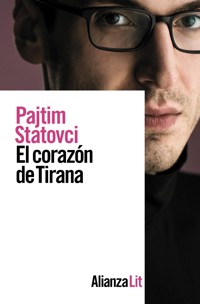

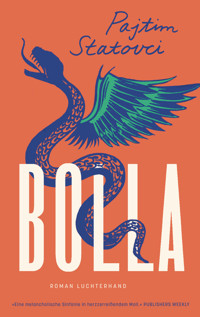
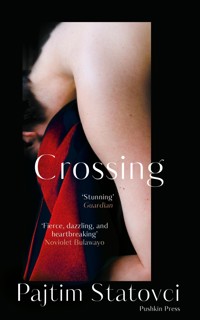
















PUSHKIN PRESS
MY CAT YUGOSLAVIA
“Fearless, delicate, beautiful, sad, haunting, and wonderful. A brilliant novel that mesmerizes with both its humanity and its utter uniqueness. A novel you’ll be thinking about long after you’ve turned the last page”
Jeff VanderMeer, author of Borne
“This beautiful novel is about a great many things: a snake and a sexy, sadistic talking cat; online cruising and Balkan weddings; the surreal mess of identity; the things that change when we change our country and the things that never change; the heartbreaking antagonism between fathers and sons; the bewilderment of love. Pajtim Statovci is a writer of brilliant originality and power, and his debut novel conveys as few books can what life feels like now”
Garth Greenwell, author of What Belongs to You
“A strange, haunting, and utterly original exploration of displacement and desire … a marvel, a remarkable achievement, and a world apart from anything you are likely to read this year”
Téa Obreht, New York Times Book Review
“Strange and exquisite, the book is a meditation on exile, dislocation, and loneliness”
New Yorker
“Every once in a while, but not often, a book and author come along so original, so mature, and so timeless you might think you’re discovering a classic from the past. But My Cat Yugoslavia by Pajtim Statovci is very much a novel of and for today. It asks urgent questions about identity and family, humanity and nationality, symbols and metaphors, but refuses to give any simple answers. By embracing the complexity of our present world, Statovci has created a work of literature, and a work of art”
David Ebershoff, author of The Danish Girl
“A compelling and altogether beautiful debut novel… Inventive and playful… At a time when there is a shortage of empathy for refugees both here and in Europe, Statovci’s queer perspective on the search of rootedness in My Cat Yugoslavia is wonderful and original - and much welcome, too”
Slate
“An elegant, allegorical portrait of lives lived at the margin, minorities within minorities in a new land … a fine debut, layered with meaning and shades of sorrow”
Kirkus Reviews (starred review)
“Powerful … Statovci is a tremendous talent … [My Cat Yugoslavia] has an intensity and power that demands a second reading”
Library Journal (starred review)
“Compelling … [an] important exploration of the aftershocks of war”
Publishers Weekly
“After this superb debut it’s safe to say: this is a literary voice to follow”
Sofi Oksanen, author of When the Doves Disappeared
“Take one part Bulgakov, one part Kafka, one part Proust, and one part Murakami, shake and pour over an icy wit, and you have the devastatingly tart My Cat Yugoslavia. This book marks the debut of an irresistible new talent. I cannot wait to see what Pajtim Statovci does next”
Rakesh Satyal, author of No One Can Pronounce My Name
“An utterly brilliant debut … This little gem truly does have everything. Intelligence, warmth, love and pain woven together into an elegantly composed novel about solitude, pets, and the tragic fate of the Kosovo Albanians during the Balkan war in the nineties”
Sydsvenskan, Sweden
“A gripping and ambitious novel … explores refreshing literary paths, and Pajtim Statovci is a voice to remember”
Elle, France
“A lion of a writer … Pajtim Statovci’s first novel will be remembered. We can expect great things from him”
Helsingin Sanomat, Finland
Da bi se jasno videla i potpuno razumela slika kasabe i priroda njenog odnosa prema mostu, treba znati da u varoši postoji još jedna ćuprija, kao što postoji još jedna reka.
In order to see a picture of the town and understand it and its relation to the bridge clearly, it must be said that there was another bridge in the town and another river.
—Ivo Andrić,Na Drini ćuprija (The Bridge on the Drina), translated by Lovett F. Edwards
Contents
I
The first time I met the cat was something so utterly mind-boggling, like seeing the bodies of a hundred handsome men all at once, that I painted it on a thick sheet of watercolor paper, and when the painting was finally ready and had dried properly, I carried it with me everywhere I went, and not a single person walked past me in the street without answering the question, “Your Highness, may I introduce you to my cat?”
0:01 blackhetero-helsinki: anyone up for some fun and games???????
0:01 Chubby-Sub28: mature dom—wanna chat dirty?
0:01 sneakerboy-jyväskylä*: …
0:02 OuluTop_tomorrow: skinny guy for meet?
0:02 Kalle42_Helsinki: younger in Turku? bj next week?
0:02 Järvenpää: anyone nearby?
0:02 Helsinki_Tourist: butch guy to fuck my face …? NOW!
0:02 Rauma_BTM: porcelain cheeks need stiff cock. any takers?
0:02 Tampere_guy for younger: tampere
0:02 N-Oulu: three-way fun? couple in Oulu
0:02 Tampere_guy for younger: tampere city center
0:02 Cam30: chat / cam2cam?
0:03 EasternLad_btm24: HOOK-UP?? MY PLACE!!
0:03 VilleHelsinki: fit top/vers guy 185/72/18/5 looking for fit vers/btm guy for meet NOW
When Ville’s message popped up on the screen, I stopped reading. An hour later Ville was standing at my door saying hi, and I said hi, and he eyed me up and down from my toes to my hairline. Only then did he pluck up the courage to step inside.
“You’re good-looking,” I said.
Ville mumbled something. His movements were awkward. He took a step backward. At times he leaned against his right arm and at others he held it behind his back. But I knew how to play this game. No, I mean it, I said, you’re really good-looking, I was a bit surprised when you turned up, I’d imagined something else altogether, imagined everything you’d said about yourself was a lie. That’s what I would have done.
“I can go if you want.”
His voice was timid and bashful, as though it belonged to a small child, and he turned his eyes away and gave a somewhat demonstrative huff, as though he was trying to convince me of something. I don’t normally do this kind of thing, perhaps, or I only signed in to the chatroom on a whim, I don’t know what I was thinking. As though he wanted me to know that he’d already thought of everything that could happen. He might have an STD, he could be anybody, he might hurt me, you never know.
“I don’t want you to go,” I said and tried to grab him by the hand, but he snatched it away and hid it behind his back.
I understood him better than anyone else. Why would a man like him do something like this? Why didn’t he go back where he’d come from? He was a successful-looking man of just over thirty, he had combed his hair back, and his handsome, angular face appeared from the folds of his scarf and coat collar in such a way that he could have had anyone, he could walk into any room and choose whomever pleased him the most. He took off his shiny new leather shoes and expensive-looking coat and hung it on the rack. His clothes smelled clean, his pin-striped shirt was made of thick, smooth fabric, and his jeans hadn’t even creased around the knees, though they fitted his legs like a pair of tights.
For a moment he stood in front of me without saying anything, until the forced silence began to bother him and he slipped his hand around my lower back, pressed me firmly against the wall, and kissed me roughly. He gripped my wrists in his palms and pressed his thigh against my groin, as though he was afraid I might say something like I fancied him or that I knew how angry all this can make you feel, how I understand him and the world he came from: professional parents, I know, you can’t tell them you like men, oh I know, it’s not the kind of thing you just tell people.
I hate this too, all of it, I wanted to tell him, ask him how we ended up here and why it has to be like this, but that’s not something to say to a remorseful man, because loathing is so much stronger than anger. You can give in to anger, you can get over it or let it take over your life, but loathing works in a different way. It burrows down under your nails, and even if you bite your fingers off, it won’t go away. But I didn’t say anything to him, because between men there are no questions. There’s no abuse, no reasoning.
His long nails scratched my back and shoulders, his neat row of teeth knocked against mine; I caught the smell of strong cologne on his neck, the feel of moist deodorant in his armpits. He pressed himself tightly against me and wrapped his legs around mine, his muscular thighs squeezed at my sides, and there was a sense of determination in his rounded shoulders. How beautiful he is, I thought for a moment, and how lucky I am that he’s come. His wrists with fair, downy hair, the backs of his hands covered in bulging veins, his straight, smooth fingers and well-groomed nails, the fitted shirt, its top buttons undone and beneath which I fill my nose with his scent, his collarbone propping up his chiseled pectoral muscles, the elegance of his tapering chest and the seduction of his waist, his tight but well-fitting jeans that sit so snugly round his thighs that the contours of his leg muscles look like they were etched with a blade. I thought, How perfect a man can be.
He kissed my neck in the dark hallway, and though nobody could see us, though we could barely see each other, I started to see him differently as he slid a warm hand beneath my shirt. I wanted to believe that I could let go of my inhibitions because ultimately we’re all animals, we can’t do anything about it, it’s what we’re programmed to do. And judging by the strength of his grasp and his short, agitated breathing, he thought so too.
He tore off his shirt in the hallway and nipped at my shirt so that I could feel the warmth of his breath through the fabric. I pushed him away for a moment, pulled myself from his hands; he staggered against the wall and stood looking at me with his large blue eyes. Then I pulled him with me over to the bed, my sheets still smelling of detergent, and I looked at Ville and forced myself to take from this encounter everything I could. Now that it was finally going to happen.
He took off the rest of his clothes and started to smile. D’you want it, he asked, winked at me, held my shoulders, and pushed me down.
“Everything okay?” he asked once I’d finished.
“Everything’s okay,” I said and thought of all the messages Ville must have received after posting in the chatroom. And of all of those messages, he chose me, because my message was the most striking, the most desirable, my strategic measurements the most alluring. Everybody wanted him, but he wanted only me, and I loved that.
He turned me upside down to return the favor.
“Does it feel good?” he asked, his sharp tongue almost dangling from the corner of his mouth.
“It feels really good,” I said and instinctively pushed his head down.
“You’re good-looking,” he said.
“What was that?”
“You’re a good-looking guy,” he repeated.
Afterward the room began to smell. He and I. We smelled. What we had just done smelled, our thoughts smelled. The whiff of latex was on our skin, the sheets, every surface, it clung to the air throughout the flat. The sheets were damp with sweat. As he stretched his arm behind his head, I noticed that his deodorant had faltered, and his breath was different now. Heavier, smelling of meat and onion.
“Thanks,” he began, eventually.
“No problem.”
“You okay?”
“Yep.”
“Good,” he said and gave a cough. “I’d like to see you again.”
“Yeah, maybe … Coffee?” I asked quickly and stood up even more quickly, wrenched the window open by the handle, kicked into a pile the clothes he’d shed across the floor, picked up the duvet, which had fallen beneath the bed, and switched on the lights.
“At this time of night?” he said, sat up almost startled, and pulled the covers over his legs, pressed a hand against his abdomen, and squinted his eyes, somewhat bewildered.
His skin gleamed against the bright light like a freshly roasted joint of pork. He scratched his shoulder and asked me to turn the lights off.
“Yes, at this time of night. Want some?”
“I can’t,” he said, seeming to judge me again.
“You’ll have to go now,” I said.
“What?”
“I want you to leave.”
He stood there gathering his clothes as I went into the kitchen to put the kettle on. I placed a coffee mug on the drain board, measured two teaspoons of instant coffee, two sweeteners, and a drop of milk.
“Could you go, please?” I asked.
He’d switched off the lights and seemed to flinch at the question, at the voice that broke the silence, or at how quickly I’d appeared at the bedroom door.
“I’m going, all right?” he said as he pulled a sock over his big toe.
I went back to the kitchen, poured water into the mug, mixed the coffee until it was smooth, and tasted it. Then I poured it down the drain.
1
I proceeded with barely perceptible steps, as though I wasn’t quite sure what I was looking for. I’d been there once before but hadn’t dared venture farther than the entrance. But there they were for anyone who wanted them. You could buy them, just like that. Anyone could acquire one and do with it as he pleased. Nobody was asked to explain why he was buying one, or what for; was it a spur-of-the-moment decision or had he been thinking about the project for a while already?
Anyone could lie once he reached the desk: Yes, I’ve already got all the equipment. It’ll be coming to a good, loving home, a terrarium three feet by three feet by six feet. I’ve got everything it needs: a climbing tree, a water bowl, places to hide and plenty of wood chips, everything you can think of, mice too. I’ve been thinking about this for as long as I can remember.
I could feel their presence in the soles of my feet, which were tense and clenched. There’s no mistaking that sensation—the shudder that runs from the base of your spine and down your legs, that winds its way along your neck into the back of your head, the muscles as they tense until they are numb and unresponsive, the hairs on your skin as they stand on end as if to attack.
The woman behind the counter quickly appeared beside me. I was standing by the gerbil enclosure and looked in bewilderment—no, in admiration—at the creatures’ complex silhouettes and wondered how they got through life with their stumpy legs and long tails.
“Been thinking about a gerbil, have you?” she asked. “It’s a nice, low-maintenance pet, doesn’t need much looking after. You’ll have it easy.”
“No. A snake, actually,” I replied. “A large snake.” I watched her face and expected a different kind of reaction, surprise or astonishment, but she simply asked me to follow her.
We walked down into the basement, past freezers and shelves of dried food, past cages and specially designed toys, past glass cubes of terrarium animals, cockroaches, locusts, banana flies, and field crickets. The smell of death hung everywhere, hidden beneath the cold-warm aromas of wood and hay and metal.
They were kept in a darkened cellar space because the air was damper and the conditions imitated their natural habitat. The door wasn’t opened and closed all that often, and they weren’t on display. Many customers might have declined to go down there for fear of stumbling across one of them. Their mere shape was enough to drive many people into a panic.
The snake department was divided into two sections: poisonous snakes and constrictors. There were dozens of them, an entire storage unit full of them, stacked one on top of the other, the bulkiest and strongest on the lower shelves and the smaller ones on top. They came in all different colors: the lime-green tree pythons gleamed like bright neon lights; the thick yellow-striped Jamaican boas appeared before my eyes like the tastiest cake at a banquet; and the small orange corn snakes and brown-striped tiger boas had wrapped themselves into tight knots.
They were in glass terrariums, stripped of their might, wrapped round their climbing trees. Some of them had stretched out along the length of the terrarium, bathing their skin in the water bowl and digesting their food. They all shared a sense of profound melancholy. Their lazy heads turned slowly as though they were bored, almost humbled. It was sad. To think that they had never known anything else.
“These have been imported from a breeder abroad; you can’t catch these in the wild,” the woman began. “So you can handle them freely, but bear in mind that snakes generally enjoy being left to their own devices.”
An image of the place they had come from appeared in my mind, because I’d seen videos on the Internet of the factories in which they were bred. They looked like the back rooms at fast-food joints: full of tall shelving units, stacked tightly with black, lidded boxes where the snakes lived until they grew large enough to be sold. At the bottom of each box was a small layer of dust-free wood chips and a single branch. They had never seen daylight or felt the touch of the earth, and now they were put on display in spaces mimicking natural conditions. Do they ever learn that all lives are not equal?
I ordered one there and then. A boa constrictor.
The terrarium arrived first, and I assembled it myself. Its new resident was delivered to my apartment separately in a temporary box. Where do you want it? Yes, that’s what the driver asked. Where do you want it? As if it was of no significance whatsoever, as if the delivery box contained a flat-pack bookcase and not an almost fully grown boa constrictor. I asked him to leave it in the middle of the living room.
For a long time the snake remained silent and still. It hissed faintly and moved cautiously as I prized open the lid, letting in some light, and I caught a glimpse of its lazy, clammy body, the triangular black patterns along its brown skin, its noble movements. As it squeezed against itself, its dry skin rattled like a broken amplifier.
I’d imagined it would be somehow different, stronger, noisier, and bigger. But it seemed more afraid of me than I was of it.
I own you now, I said. Eventually I built up the courage to open the lid fully. And when I finally opened it, the snake began writhing so frantically that I couldn’t tell where the movement started and where it ended. Its forked tongue jabbed back and forth on both sides of its triangular head and it began to tremble as though it had been left out in the frost. Soon it poked its head out of the box, and its small black eyes flickered as though plagued by a relentless twitch.
Once it had slowly lowered its head to the floor, I lifted the box and tilted it, the quicker to get the snake out. It slumped to the floor like a length of play dough and froze on the spot.
It took a moment for the snake to start moving. It glided smoothly forward in calm, even waves. The motion seemed unreal, timid and slow but purposeful and vivacious all at once. It explored the table and sofa legs, raised its head to look at the plants on the windowsill, the wintry landscape opening up behind the window, the snow-covered trees, the brightly colored houses, and the undulating gray blanket of cloud across the sky.
Welcome home, I said and smiled at it. That’s right, welcome to your new home. When the snake withdrew beneath the table and coiled itself up, as though it was afraid of my voice, I felt almost ashamed of the place into which I had brought it. What if it didn’t feel at home here? What if it felt shackled, threatened, sad, and lonely? Would what I could offer it be enough? This pokey apartment, these cold floors, and a few pieces of furniture. It was a living creature for which I was now responsible, a creature that didn’t speak a language I could understand.
Then I began to approach it. I checked from the reflection in its small dark eyes many times that I was in its line of sight, before slowly sitting down on the sofa in front of it and waiting for it to come to me.
. . .
And eventually it unraveled itself and slithered up to my feet, sniffed my toes, and finally twined itself round my legs. Then it raised its head into my lap, pressed it into my groin, under my armpit, and behind my back. Everywhere.
I gripped the snake with both hands and wound it round my neck, and as its scaly sides touched my bare skin, as it touched my neck with the tip of its tongue, goose bumps appeared all over my body. Its slow progression across my bare skin felt like a long, warm lick.
And for a while we remained there, sitting on the sofa, its head beneath my chin, its body around my body like metal armor, my arms extended to the sides, the rhythmic, tense, considered movements of its forked tongue against my quivering skin.
We will be together forever, I thought, me and it. We would never stop loving each other. Nobody must ever find out about this. I will guard this like I do my own life, I thought. I will give it a home, everything it needs, and it will be content with me, because I know what it wants. I will learn to understand it so well that it won’t have to say a single word, and I will feed it and watch as it digests its food, watch as it grows and grows and grows.
Spring 1980
PEOPLE ON A MOUNTAIN
As someone well respected by the locals in our village, my father assured me that love for the man with the beautiful smile and the stubble that barely showed against the light, the man whom I was to marry at the age of seventeen and who strode along a dirt track winding away from the main road toward a cluster of three houses, that love for that man would come later if it wasn’t there to start with. And as the eldest of seven children, I trusted my father.
Because my father was like fathers in the cinema: handsome, western features and a face that narrowed toward the chin, a commanding voice and a military posture. He was loved and admired, a Kosovan man of the highest caliber, a man people trusted and valued, burrë me respekt, and his face was always clean, he changed his undershirt daily, he never allowed his beard to grow beyond a thin stubble, and his feet never stank, like those of men who have lost their self-respect or care nothing for it.
He was well mannered and handsome. One of his many good quirks was the way he always said, Everything will be fine. He said this even when he knew things were going badly, when it was perfectly clear to everyone that we were in for a long winter and that the pickled vegetables would barely last until April. Another quirk was his habit of stroking my hair, of smoothing and straightening any stray strands of hair and massaging my scalp with his long, chunky fingers. He did this a lot, because doing household chores had started giving me the same headaches as Mother always had.
My father didn’t so much speak with his mouth but with his face, which was glorious and expressive. You never tired of a face like that. You could sink into it, stare at it forever. You could always forgive a face like that. He only ever began talking once he’d decided what to say. For instance, he used to say that the poor have the best and the most imaginative dreams. There was no use wasting time daydreaming if you were too close to your own dreams, because there was a greater likelihood that those dreams would come true, and then you’d have to accept that making those dreams come true wasn’t quite everything you’d imagined. And that—the disappointment, the anger, the bitterness and greed—that was a fate far worse than never making your dreams come true at all. A man should always strive for something he can never achieve, my father used to say.
He told me that when he was younger he’d wanted to be a musician, to perform on great stages, or to study hard and become a respected brain surgeon, because his large, steady hands were made for detailed, painstaking work. Then he held out his hands and winked at me. That’s right, his hands were like two sculptures, strong and unfaltering.
After getting married at the age of eighteen and having his first child at the age of nineteen, he gave up dreaming and began hoping instead. He hoped for the small things in life, fatted calves, muscular horses and hens that shot out eggs, a rainier summer, and the sea, because he believed it was the only thing that everyone should see in his lifetime. The only thing that truly bothered him was that Kosovo was nothing but a little blob of land in the middle of the Balkans without even a sliver of coastline to call its own.
Over time he learned the same thing everyone had learned before him: people from villages like ours didn’t move to the cities through hard work or by immersing themselves in learning. That only happened in the movies.
I would wake up at five in the morning to take care of the animals on our farm. After that I’d help my parents in the field. The field was enormous, as we grew almost everything by ourselves: lettuce, cabbage, watermelon, peppers, onions, leeks, tomatoes, cucumbers, potatoes, and beans. In fact, the field was so big and hard to look after that it was no surprise my mother had had her work cut out having seven children in twelve years. After my chores I left for school and I was always home again by half past two. Each day was precisely the same.
My mother was a typical Kosovan mother and housewife. She was hardworking, good to her husband, and strict with her children. And my siblings were typical, daydreaming Kosovan children. My sister Hana was a year younger than me, a sensitive and emotional girl who always looked as though she had a secret that nobody would ever find out, while Fatime, eighteen months younger than Hana, was the polar opposite.
I spent my evenings dreaming. I would sit on a large boulder on the cliffside and dream, lean against the oak tree in the copse behind our house and think, listen to the radio and fantasize. Listening to my favorite songs I imagined I could have become a singer for all I knew. Or an actress. I could learn to act, I thought, and they’d show pictures of me on the television, people would talk about me on the radio, and my life would be so interesting that people would write about it in the newspaper, talk of my red dress would be on everyone’s lips, my legs would be long, slender, and smooth as a baby’s. Nothing would be impossible or beyond my reach, just as long as I made the right choices, and that’s why I dreamed so hard that I was moved to tears by my own imaginings.
On Sunday evenings we gathered round the television to watch music programs on the Radio Televizioni i Prishtinës channel. These programs usually consisted of men sitting cross-legged on mattresses on the floor and singing, dressed in national costume: tëlinat, long trousers ringed with black stripes, a xhamadan, an embroidered vest, a shokë, a red scarf round their waist, and a plis, a white felt hat on their head. They sang songs about love, war heroes, and honor, and accompanied themselves on the çifteli.
We watched lots of films too, mostly war films about the partisans during the Second World War. One of them was set during the Battle of Sutjeska in Bosnia, when the Nazis besieged Tito’s partisans on the plains near the village of Sutjeska. We sat in a row in front of the television, crying our eyes out as we saw what longing and agony can do to a person, and how we empathized as the partisans’ honor turned first to patriotic spirit and then to rage.
But more than anything I was waiting for Zdravko Čolić, quite possibly the most handsome man in the universe, to start singing, or for the station to show videos of his songs. I knew every song on his album Ako priđeš bliže by heart, though I didn’t understand the Serbian lyrics in the least. But it was the emotion with which he sang the song “Nevjerna žena” that convinced me he was singing about a woman who had broken his heart. “Produži dalje,” on the other hand, was a more upbeat song, his voice so much more self-assured that it must have been about something more fleeting and superficial than love. Only love can make a voice quaver like that.
When Zdravko Čolić finally started to sing, we all fell silent and sang along in our minds. I was jealous of his background dancers who could all talk to him after the performance, of the photographers who could return home and tell people they’d seen Zdravko in the flesh, of the male TV hosts whom Zdravko embraced after the show.
Then one perfectly normal day, when I was about fifteen years old, I awoke to the realization that I lived in the middle of the countryside, that I was at best an average student, and that I wasn’t even a very good singer, though I wanted to be the best in the world. I realized that I couldn’t speak convincingly and that I couldn’t write my own thoughts clearly enough. I couldn’t draw or count, because I found it hard to concentrate on prolonged activities. I couldn’t run very far, and I couldn’t cut hair. I was only pretty and good at housework, or so I’d been told, and after writing down the things I was good at I shuddered, because neither of them was an achievement but rather a self-evident truth.
I looked at myself in the mirror and wondered whether I was stupid. It was a hard question to ask, but asking it wasn’t half as hard as the later realization that I probably was, a stupid and unimportant person. I didn’t understand anything about politics or society; I didn’t know how Yugoslavia worked or what had happened during the Second World War, though I’d watched all those films about the partisans. I could only barely remember which nations made up Yugoslavia at all.
When people on the television talked about the disputes between the Albanians and the Serbs, I didn’t bother listening; the news anchor might as well have been speaking Chinese. What’s more, I felt as though I lacked the potential to become any the wiser, lacked a teacher to tell me about politics, lacked parents who wanted their daughter to become a singer.
I’d spent my entire life until then on altogether the wrong things—chatting with friends, gossiping about the boys, learning to do housework and cook food, fretting about what I looked like at school and at parties. When I realized the only reason I went to school in the first place was because an illiterate woman had no chance of marrying a decent husband, the bile rose up to the back of my throat and my food no longer tasted of anything. And when I realized my life would be no more extraordinary even if I got top grades in all my subjects, I started to feel physically ill. I had never heard of a single female politician, a female teacher or lawyer, I realized, and I gripped the edge of the table and took deep breaths through my nose.
I shook my head and began wondering what I could hope for instead of dreams. And with that I hoped that my future husband would be good to me. And I hoped he would be handsome, that he’d organize the biggest, most beautiful wedding anyone had seen, and that his family would treat me just as well as he did, and once I had gone through this list of hopes in my mind, I ran into the kitchen, grabbed the mixing bowl, and vomited.
Our village nestled at the foot of a mountain. The road leading to the village didn’t run between the mountains but wound its way back and forth across the mountainside. On one side of the mountain the road was long and winding, and on the other side, our side, it descended almost in a straight line. My father was in the habit of cursing the people who had built this road every time he drove along it.
On one occasion—as he kept a tight grip on the narrow steering wheel of his red Yugo Skala and wondered out loud why on earth the road was so badly built, so that people heading for the village first had to drive all the way round the mountain—I bit my lip and answered his question, though it was never intended as a question.
“Maybe it’s because it was built by an Albanian,” I said and turned to look right at him.
At that he got angry. I knew he would, I knew it before I’d even decided to answer him. He raised his hand between us, as if to strike me, and pulled his lips tightly together. He said I shouldn’t use language like that, shouldn’t speak ill of my own countrymen, because Allah is great and he makes a note of everything I do for the final day of judgment.
But I knew why he was really angry. He didn’t care for the road or who had built it any more than I did. We had spent the day at the Old Bazaar in Prishtina, where my father used to buy great quantities of wheat and corn flour, sugar, oil, salt, and meat. I always tried to give the impression I didn’t care for our trips to Prishtina. When we came home I would tell my siblings that the city was a dangerous place, that the rickety stalls looked like they might collapse at any moment, and that the entire bazaar area was covered in thick tarpaulins, which brought the temperature up to almost 120 degrees Fahrenheit, making the air thick and muggy.
I was afraid that, if I showed him how much I enjoyed our trips to Prishtina, he would no longer ask me to accompany him. And I had nothing else to look forward to except those visits when I could watch all those city folk, those handsome young men, those beautiful young women who went to work and wore such stylish clothes. I wanted to be just like them, I wanted their lives, their clothes and looks.
I held my father tightly by the hand as he walked through the city, always dressed in the only suit he had, and looked inquisitively around me, though I was scared to death of accidentally tripping over people’s toes. The stalls were full of wares—black leather shoes, shirts, trousers, an array of spices, fresh vegetables, and meats—and some stalls held items designed for girls and women, such as lipsticks, eyeliners, and pretty dresses. The bazaar succeeded in smelling of everything all at once, but in the baking heat the only smells that stood out were fake leather, tobacco, and sweat. Small flies swarmed around the meat, and the vegetables’ skins were damp and shriveled, so that the vendor had to wipe them dry with a paper towel. All around there was the drone of loud, emphatic speech, arguments, the clink of coins, the creaking of wood under heavy piles of goods.
When my father stopped to negotiate with the owner of a meat stall, I slipped a few stalls farther on. I imagined I’d have plenty of time to look at the items on the stall, the tights and the beautifully cut gold-embroidered dresses, because haggling with a stall owner could take anything up to half an hour. Giving way always meant losing—even when it meant that the stall owner ended up getting more than he’d asked for. I’d be back by my father’s side before he even noticed I was gone.
I picked up a small handheld compact from the stall table and looked at myself in the mirror on its lid, adjusted my hair, and turned my face from side to side, until I noticed that the stall owner, a man of about twenty, had been eyeing me for an unsuitably long time. I raised my eyes from the mirror, the better to see him. All of a sudden he winked at me. Po ku je moj bukuroshe, he said in a loud voice and licked his lower lip. I didn’t understand quite what he meant—nobody spoke to little girls like that, and it was highly improper to refer to them as bukuroshe. The man lowered his eyes to my chest, raised both hands to his cheeks, shook his head, and shouted, “O-paa!”
I froze on the spot. My back curled and my shoulders hunched up toward the corners of my chin so that the small mounds, which had been growing on my chest for the last year, might be hidden. I gripped the compact in my hand and tried to pull the long sleeves of my blouse down, but my body wasn’t listening. I began to tremble, hot sweat started trickling from my scalp, and my knees quivered like those of an old woman. When the man licked his lower lip for a second time, I dropped the compact to the ground. I crouched down to pick it up, and at that the man gave a loud whistle—and all at once the attention of the men standing at the surrounding stalls turned to me.
“O-paa!” he shouted between wolf whistles. “So young?” he continued and burst into a volley of laughter.
It was then that I noticed my father, who had left the haggling behind and now wrenched me by the wrist. Pthui, he spat on the items the young man was selling and dragged me bullishly out of the bazaar. The journey seemed to take forever. He yanked my hand, and in his rage it seemed he had momentarily lost his sense of direction. I stumbled over people’s feet and apologized. I didn’t try to resist him, but above all the noise I tried to apologize to him too, to tell him how sorry I was, but he didn’t hear me.
When we came out of the bazaar the sun was beating down above Prishtina like an immense spotlight. I tried to commit to memory everything that I saw around me, because I knew this would be the last time I went to Prishtina with my father. The tall, ten-story buildings, their façades painted with white slogans. The men and women with their shopping bags striding past little children selling tobacco, chewing gum, and lighters on the street. Long lines of one and the same car, the Yugo Skala 101, the car that my father and every Yugoslav adored. The newly paved roads, the smell of asphalt, the small newspaper and tobacco kiosks, the gardens outside great shopping complexes, the old men sitting in cafés playing chess and zhol.
My father bundled me into the car, then walked round to sit down in the driver’s seat. Before starting the engine, he asked me, “Do you know what happens after death?”
He started the car just as I opened my mouth to give him the answer he wanted to hear.
“I’m sorry, Father,” I said and lowered my head. “I know what happens after death.”
“Never do anything like that again,” he said.
We drove for a long time without speaking to each other. The city and all its people fell into the distance behind us, and ahead of us was nothing but a long straight road with orange-roofed houses on both sides and behind them tall mountains that looked almost as though they had been etched into the landscape. Only once the city was long behind us did he stop grinding his teeth.
He allowed me to open the window. A cool breeze fluttered inside. The chill felt liberating, my sweaty forehead soon dried, and the sun’s warmth wrapped around my skin and face like soothing music.
“I’ll never do anything like that again,” I swore.
I knew that making excuses would have been pointless, because it wouldn’t have changed his mind in the slightest. For a long time he’d talked to me about how unfair it was to my siblings that he always took me with him on these trips.
If I’d had the courage to defend myself the way I would today, I would have said that after death we meet God, but that meeting God means the absence or lack of God, because you cannot describe God, you can’t fit him onto a sheet of paper, into the universe. God is something so immense that his presence actually means his absence, and his absence his presence. God will decide whether or not to reach out his hand to the dead; that is the correct answer. God will decide where the deceased shall spend the rest of eternity, for all this, these roads and these trees and these mountains, this time and this land, are simply an illusion, they are a test in which, according to my father, there is only one question: Have you been dutiful to your God?
My father smiled and placed his hand on my thigh. It was warm and clammy; I could feel the damp of his hand seeping into the fabric of my trousers. The wind whipped my hair around my head; cars driving past beeped their horns as they saw my father.
I don’t know why, but I thought of the man at the bazaar. Everything about him, his expressive face, the confidence of his gestures, his brown shining eyes, his masculine shoulders, what his short stubble, his strong hands would feel like against my skin.
There was a tingling at the bottom of my stomach, something I couldn’t have imagined in my wildest dreams. I closed my eyes, and for the rest of the journey I thought only of him, and I thought of him throughout the following years, for after that I never again visited Prishtina with my father. Every night and every morning I thought of the man at the bazaar, until one day I met another man.
Spring 1980
THE FIRST MEETING
From my vantage point on the boulder you could see the whole small village, its unfinished houses and fields, their edges marked with razor-sharp precision. Behind them the low-standing mountains rose up like soft pillows covered with dark-green forests. There were clusters of houses, small orange-roofed houses. It was my favorite place in the whole world, and I’ve never found anything to match it.
One April morning, when the sun was still rising and I’d finished my morning chores earlier than usual, I climbed up the mountainside and sat down on the boulder on my way to school. A moment later a car pulled up on a dirt track a short distance away. I couldn’t see the driver’s face. All I could see were his hands, his muscular, hairless, sturdy hands.




