


9,59 €
Mehr erfahren.
- Herausgeber: Pushkin Press
- Kategorie: Gesellschafts- und Liebesromane
- Sprache: Englisch
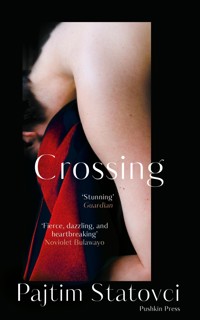
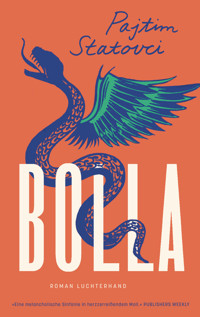
The critically acclaimed novel about two young men on a fearless journey across cities, borders and identities Imagine . . . we can do anything now, we can be anyone, we can go anywhere Bujar's world is collapsing. His father is dying and his homeland, Albania, bristles with hunger and unrest. When his fearless friend Agim is discovered wearing his mother's red dress and beaten with his father's belt, he persuades Bujar that there is no place for them in their country. Desperate for a chance to shape their own lives, they flee. This is the beginning of a journey across cities, borders and identities, from the bazaars of Tirana to the monuments of Rome and the drag bars of New York. It is also a search through shifting gender and social personae, for acceptance and love. But faced with marginalization at home and only precarious means of escape and survival, what chance do the young pair have of forging a new life? Pursued by memories of home and echoes of folk tales, they risk losing themselves in the struggle to leave their pasts behind. Pajtim Statovci (b. 1990) is a Finnish-Kosovan novelist. He moved from Kosovo to Finland with his family when he was two years old. He is currently a Ph.D candidate at the University of Helsinki. His first novel, My Cat Yugoslavia, also published by Pushkin Press, won the prestigious Helsingin Sanomat Literature Prize. Crossing won the Toisinkoinen Literature Prize in 2016 and, Statovci also won the 2018 Helsinki Writer of the Year Award.
Das E-Book können Sie in Legimi-Apps oder einer beliebigen App lesen, die das folgende Format unterstützen:
Veröffentlichungsjahr: 2019
Ähnliche















Sometimes the facts threaten the truth.
— AMOS OZ, A Tale of Love and Darkness
(trans. Nicholas de Lange)
CONTENTS
GOD’S RIB
ROME, 1998
When I think about my own death, the moment it happens is always the same. I’m wearing a plain, colored shirt and a matching pair of pants, cut from thin material that’s easy to pull on. It’s early in the morning and I am happy, I feel the same sense of contentment and satisfaction as I do at the first mouthfuls of my favorite meal. There are certain people around me, I don’t know them yet, but one day I will, and I’m in a certain place, lying on my hospital bed in my own room, nobody is dying around me, outside the day is slowly struggling to its feet like a rheumatic old man, I hear certain words from the mouths of my loved ones, a certain touch on my hand, and the kiss on my cheek feels like the home I have built around me like a shrine.
Then one by one my organs give up and my bodily functions begin to close down: my brain no longer sends messages to the rest of my body, the flow of blood is cut off, and my heart stops, mercilessly and irreparably, and just like that I no longer exist. Where my body once was now there is only skin and tissue, and beneath the tissue there are fluids, bones, and meaningless organs. Dying is as easy as a gentle downhill stroll.
I am a twenty-two-year-old man who at times behaves like the men of my imagination: my name could be Anton or Adam or Gideon, whatever pleases my ear at any given moment. I am French or German or Greek, but never Albanian, and I walk in a particular way, the way my father taught me to walk, to follow his example, flat-footed and with a wide gait, aware of how to hold my chest and shoulders, my jaw tight, as though to ensure nobody trespasses on my territory. At times like this the woman within me burns on a pyre. When I’m sitting at a café or a restaurant and the waiter brings me the bill and doesn’t ask why I’m eating alone, the woman inside me smolders. When I look for flaws in my dish and send it back to the kitchen or when I walk into a store and the assistants approach me, she bursts once again into flames, becoming part of a continuum that started at the moment we were told that woman was born of man’s rib, not as a man but to live alongside him, at his left-hand side.
Sometimes I am a twenty-two-year-old woman who behaves however she pleases. I am Amina or Anastasia, the name is irrelevant, and I move the way I remember my mother moving, my heels not touching the ground. I never argue with men, I paint my face with foundation, dust my cheeks with powder, carefully etch eyeliner around my eyes, fill in my brows, dab on some mascara and coif my lashes, put in a set of blue contact lenses to be born again, and at that moment the man within me does not burn, not at all, but joins me as I walk around the town. When I go into the same restaurant, order the same dish, and make the same complaint about the food the waiter does not take it back to the kitchen but tells me the meat is cooked just the way I asked, and when he brings me the check he watches me as if I were a child as I rummage in my handbag and pull out the correct sum of money, then disappears into the kitchen with a cursory Thank you. The man within me wants to follow him, but when I look at what I’m wearing, my black summer dress and dark-brown flats, I see that such behavior would be inappropriate for a woman, and so I leave the restaurant and step out onto the street, where Italian men shout and whistle at me, at times so much that the man inside me curses at them in a low, gruff voice, and at that they shut up and raise their hands into the air as though they have come face-to-face with a challenger of equal stature.
I am a man who cannot be a woman but who can sometimes look like a woman. This is my greatest quality, the game of dress up that I can start and stop whenever it suits me. Some-times the game begins when I pull on an androgynous garment, a formless cape, and step outside, and then people start making assumptions, they find it disconcerting that they don’t know one way or the other, sitting on public transport and in restaurants, cafés, it irritates them like a splinter beneath their fingernail, and they whisper among themselves or ask me directly: Are you a man or a woman? Sometimes I tell them I am a man, sometimes I say I’m a woman. Sometimes I don’t answer them at all, sometimes I ask them what they think I am, and they are happy to answer, as though this were a game to them too, they are eager to construct me, and once I’ve given them an answer order is finally restored to the world. I can choose what I am, I can choose my gender, choose my nationality and my name, my place of birth, all simply by opening my mouth. Nobody has to remain the person they were born; we can put ourselves together like a jigsaw.
But you have to prepare yourself. To live so many lives, you have to cover up the lies you’ve already told with new lies to avoid being caught up in the maelstrom that ensues when your lies are uncovered. I believe that people in my country grow old beyond their years and die so young precisely because of their lies. They hide their faces the way a mother shields her newly born child and avoid being seen in an unflattering light with almost military precision: there is no falsehood, no story they won’t tell about themselves to maintain the façade and ensure that their dignity and honor remain intact and untarnished until they are in their graves. Throughout my childhood I hated this about my parents, despised it like the sting of an atopic rash or the feeling of being consumed with anxiety, and I swore I would never become like them, I would never care what other people think of me, never invite the neighbors for dinner simply to feed them with food I could never afford for myself. I would not be an Albanian, not in any way, but someone else, anyone else.
At my weakest moments I feel a crushing sense of sorrow, because I know I mean nothing to other people, I am nobody, and this is like death itself. If death were a sensation, it would be this: invisibility, living your life in ill-fitting clothes, walking in shoes that pinch.
In the evenings I sometimes hold my hands out before me, clasp them together, and pray, because everybody in Rome prays and asks God to help them resolve difficult situations. A thing like that can catch on so easily, and so I pray that I might wake up the next morning in a different life, even though I don’t even believe in God. I do, however, believe that a person’s desire to look a particular way and behave in a certain manner can directly impact the breadth of a shoulder, the amount of body hair, the size of a foot, one’s talent and choice of profession. Everything else can be learned, acquired—a new way of walking, a new body language, you can practice speaking at a higher pitch or dressing differently, telling lies in such a way that it’s not lying at all. It’s just a way of being. That’s why it’s best to focus on wanting things and never on what might happen once you’ve got them.
When I first arrived in Italy I was sure I would be able to secure a job I enjoyed, I would meet a partner who loved me and start a family for whom I would be prepared to give my life. I was convinced that somebody would find me and see the potential I had, appreciate everything I could give to the world. I waited and waited, a year, a second and third, waited for these things to start happening, waited for someone to see my uniqueness, but the authorities and social workers didn’t care for my plans and hopes, they scoffed at my dreams of studying psychology at the University of Rome, though I explained I’d read the basic texts many times. Shouldn’t you study a vocation instead? they asked. You don’t even have a high-school diploma; most people your age have one of those, some even have a university degree, they argued and sent me home to consider my limited options: a career in the construction or customer-service industry, a life not significantly better than the one I had left behind.
As time passed I realized that I no longer considered myself special or unique, and this is perhaps the worst thing that can happen, for this if anything will make a person passionless, this if anything forces one to believe in God. You clutch the branches you can reach, and settle for your destiny. Only then will you see the light, the fact that the lack of rights and opportunities very rarely leads someone to the fight for them.
Every day I spend in this city, in these different lives, is meaningless and insignificant, and for that reason all those years I have spent learning new skills and foreign languages I might as well flush down the drain. The most ridiculous thing of all is that throughout my childhood and my youth, I considered myself beautiful, talented, and intelligent—a combination of qualities that ought to guarantee success. I am quick to absorb information, I’ve never feared going the extra mile, I’ve always enjoyed the fact that the things I have studied are challenging, and I derive great satisfaction at being able to solve a tricky conundrum. I have never doubted myself or questioned my future success, because I have always practiced long and hard until I become the best at anything and everything I turn my mind to.
Yet instead I have entered a life in which I wonder how to erase myself from the world in the least painful manner. There are days during which I barely open my mouth, not even to thank someone or to say hello, days during which the only thing I am capable of doing is appearing like I know where I am going, looking like I belong in this city. This is not my life, these days are not mine. It is not me who obsessively washes stains of urine and excrement from around the toilet bowl in cafés and restaurants simply so that nobody using the toilet after me might think I’d left such a mess. That is someone else, a ghost living at the edge of my shadows.
. . .
One day I walk through the city center, along Via della Minerva, and to my left, the Pantheon looks like the hunched figure of an old Albanian man. The long, uneven cobbles plague my feet, making me step to the side and wobble along the streets like a millipede. Endless herds of tourists move through the city like a bubbling stream, it’s always sunny, the street cafés are open all day long, impatient children stand scattered in front of the ice-cream stands like plastic bags in a junkyard.
I can’t breathe because the air gathers into a sodden ball of wool at the back of my throat and the incessant noise of the piazza makes my concentration come in fits and starts, and when I place a hand on my moist cheek and scratch off the sweat with my fingernail it feels like peeling away a layer of skin.
I walk to the other side of the square, away from the crush of tourists, and wonder what the people in front of me are talking about. The few words of their conversation that I understand always sound like the ravings of a madman. They are probably talking about the same things as everyone else. One of them, perhaps the mother in her late thirties, is explaining that it’s been a year since her mother died, and another one, her friend who is about the same age, explains that she has had a row with her partner because they disagreed about how best to discipline their children, then they weep and console each other, together they wonder what to do next, how to cope with their respective misfortunes.
People here have time to lick their wounds, to be traumatized for years about something utterly trivial—they have all the time in the world to think about the meaning of life from one day, one month, one year to the next, to wonder what they want to do, what kind of profession they wish to have, while in my homeland newborn babies die of a fever and malnourishment, men die of shots fired to uphold the family honor, and women fleeing from their husbands are killed by the bullets given to their husbands by family during their wedding celebrations. They are buried, and a new day dawns, and nobody has time to mourn for them, nobody will worry for a second about such matters, because nobody has the time to think any farther than tomorrow, and it would never occur to anyone to wonder whether I became like this because my father died when I was sixteen, or perhaps because my parents divorced when I was little, or maybe because I only learned as an adult that I was adopted. Because a hungry man thinks of other things altogether—the fat, the salt and sugar of his next meal—and when there is no food he starts to think about a time when suddenly standing up makes his vision blurry, leads to fainting and eventually death.
Are the Italians happier than the Albanians because they think so profoundly about themselves and their dreams, because they argue with such passion, with the kind of verve that carries them from one day to the next, a verve that doesn’t even seem genuine but rather an attempt to conceal the fact that they don’t know who they are or what they want though they spend their entire lives chewing over the same questions? It is this that forms the underlying power and the depth of their lives, and I can do nothing but despise it.
On the move again, I pull my tight polo sweater farther down, adjust the position of my padded bra, and tug up my denim shorts, which stretch halfway down my thighs. I look at the thin, beautiful women walking side by side, proudly wearing their summer dresses, and I envy them. I envy their names, Julia or Celia or Laura; I envy the way they walk in their stilettos, envy the pitch of their voices, the way they talk as though they have not a care in the world, their ability to give their current or future husbands children—things I will never be able to achieve, neither with all the hope in the world nor with the readiness to give anything for them. All I can ever have is a copy of their life, a photograph in which I look almost like them but not quite, a lie that must be created from nothing.
I arrive at the Piazza Navona, an oblong square with three ornately decorated fountains, the center one of which looks like a delicate Italian woman with its tapered obelisk standing proudly in the middle. This square too is full of tourists throwing coins into the fountains, though the things they wish for are probably laughable: they want their former beloved back or their partner to pay them more attention. Still, I understand them, because that is the way the old curse goes: everybody wants something they do not have, and everybody feels as though the lack of this one thing cannot bear the light of a single new day.
The Piazza Navona looks the same as the other squares in Rome: faded buildings erected around the cobbled square, the streets between them just big enough to fit through without suffocating; buildings that are lined so close to one another that the whole city seems like one enormous barrack; and the motorways surrounding it resembling barbed-wire fences designed to keep people apart. All of a sudden the buildings around me seem ominous, and the stones beneath my shoes seem to lick the soles of my feet as though they were ready to bite them off.
I manage to gasp a handful of air and continue on my way, tears falling from my eyes as though through a still, and for a moment I think it must be raining until I realize there is not a cloud in the sky. I arrive at the Ponte Umberto I; I stand at the top of the bridge and look first right, then left, at the Castel Sant’Angelo, which resembles a moldy orange; at the people incessantly taking photographs; at the green trees planted along the riverbank; at the flowing, almost misty waters of the Tiber, then I cross the street leading to the Piazza dei Tribunali and walk a short way forward until I reach the long tongue of steps leading up to the Castel, the only place where there are no longer any pedestrian crossings and the drivers dare to go a little faster.
I glance briefly over my shoulder and imagine that I won’t have to wait for long, but several minutes pass until the tires of a large enough car whistle in my ears and I lunge into the road.
I
Tirana
1990–1991
THE MARBLES
SUMMER 1990
I am fourteen years old, not very young but not old enough to be taken too seriously. I walk through the center of Tirana with my father, who smells of sweat. We pass Skanderbeg Square and Tirana’s National Historical Museum with the mosaic on its façade depicting a group of Albanians in national costume holding high the Albanian flag and carrying guns, bows, and arrows. We arrive at an enormous intersection and before long we are scuttling along the side of the bazaar. Roasted-looking men have set up rickety stalls lining the streets, trying to sell passersby counterfeit watches, tobacco, Skanderbeg liqueur, and useless knickknacks: cigarette lighters, decorative souvenirs, mouth organs, and traditional instruments like the çifteli and the tupan.
My father pulls me along like a reluctant dog and I glance at the bazaar, which looks like a giant, colorful rug beneath which the merchants, their meat and wares, have been swept. Heat and moisture flood in from above and beneath, from all sides, and as I imagine the people pressing into the bowels of the bazaar about to suffocate, I am relieved that I don’t need to be in there myself. The merchants address my father as Sir, and they call me a little sweetheart, trying to show off their wares, but we move quickly because we both know that anything can happen these days. I could disappear and never be found, snatched away in the clutches of a complete stranger, bundled into a strange van or sucked into the heat of the bazaar, where the hungry hawkers will tear out my organs and sell them in desperation, or something equally savage.
We walk on a few kilometers and arrive at another square, its edges lined with litter, and my father grips the back of his head. He is wearing a dark suit, complete with a waistcoat, the same suit he wears every day. He takes off his jacket and places it across his arm and continues rubbing the back of his head. I notice his white shirt is wet around the armpits and shoulders. The bus may arrive soon or it may arrive a while later, but we will wait, because I want to show you the fortress at Krujë, he says, squinting his eyes, clacking his jaw, and exhaling heavily.
My father looks handsome, smart, and dignified though the sweat is dripping off him as if someone has wrung a wet towel over his head. He has shaved and the light hitting his shiny leather shoes almost dazzles me, and when the bus finally pulls into the square my father seems startled; he grabs my hand and starts hauling me toward the bus. He gives the driver some money, then we walk to the back and sit.
I think about how happy I am in my father’s company, and I can’t for the life of me remember when we last spent time together, just the two of us. As I sit beside him I guess my happiness must have something to do with the fact that people are so rarely happy these days, that Enver Hoxha is dead and the city isn’t the same anymore, that people in Tirana are so desperate that their woes crowd the walls and ceilings of their houses like the wrapping paper and empty cigarette packs that fill the gutters, that they spew from the drains and through the floorboards, out into the streets and into strangers’ homes like floodwater.
My head aches, my father says eventually and he tries to open the window, but it is jammed shut. He slumps back into his seat and I sit quietly beside him. I am too afraid to tell him I feel terrified because the driver is accelerating like a madman with a death wish, up and up along the serpentine road winding its way across the mountainside. The narrow dust track is dotted with small rocks, dips, and bumps, and I am convinced the tires of the bus will burst at any moment. Every turn in the path is steep, and the driver seems to speed up as he approaches them, though he can’t see if there are any cars coming in the opposite direction. But the ravines, maybe fifty meters deep, into which the bus is in danger of plummeting he most certainly can see. Doesn’t he realize how close we are to dying? I wonder, looking at my father. He has closed his eyes and opened his mouth, and the onion-smelling stink of his breath fills the air between us.
We finally arrive, and my father grips me by the hand and sets off toward the fortress at the top of the hill, pulling me behind him, along a steep, cobbled path buzzing with visitors. A few stalls have been set up selling all manner of junk, handicrafts, sweets, rugs, and postcards. Once we have reached the top, my father wipes the sweat from his brow on his sleeve and begins pointing out the collapsed fortifications and isolated boulders, a mosque that I recognize from photographs, and the Skanderbeg museum standing like a gigantic cow, and we start walking toward it.
A white statue in the foyer depicts Skanderbeg and his troops. I notice that Skanderbeg has huge, thick legs that bulge from beneath his chain mail like two barrels, he has a metallic helmet with an insignia portraying a goat’s head, he is wearing a long cloak, his sword rests in his left hand, he has a thick beard. My father points at the men standing behind Skanderbeg and tells me that his army had more than ten thousand soldiers, among them one Lekë Dukagjini. The rules and commandments of the Kanun, which bears Dukagjini’s name, need not even be written down since they flow through the veins of every self-respecting Albanian.
The museum is packed with artifacts, suits of armor hanging from the walls alongside crests and coats of arms from the time of Skanderbeg himself, tables and glass cabinets full of weapons that have taken human lives. Despite his headache and ever-increasing sweating, my father talks incessantly, like a deranged swarm of wasps. Hundreds of years ago the Turkish Ottomans forced their way into Albania and ruined our beautiful country, he explains, his voice booming. According to the practice of the devşirme infantry, the Ottomans rounded up reinforcements for the regiments of the Janissaries, and Albanian dukes were forced to recruit their own sons as a sign that they were prepared to obey the orders of the sultan. If they did not, the sultan might decide to snap the dukes’ sons’ spines.
One of the recruited boys was Gjergj Kastrioti, my father explains, and it was from this very place, the fortress at Krujë, that the Kastrioti clan ruled the land, he adds. Gjergj Kastrioti eventually took the name of Skanderbeg and succeeded in liberating his city from Ottoman occupation and defended it not once, not twice, but on three separate occasions. When my father recounts the story of how, as a sign of his victory, Skanderbeg raised a flag bearing his family’s crest, a two-headed eagle, above the fortress at Krujë, I feel a profound sense of pride in my homeland and in Skanderbeg, and when my father tells me that we Albanians are the descendants of Skanderbeg and the ancient Illyrians, I give him my proudest smile.
Then my father says that Skanderbeg is the most famous Albanian in the world because he was less than ten years old—far younger than you are now, he adds—when he and his three brothers were sent to Edirne to enter the service of the sultan Mehmed the First and to be trained by the Ottoman army. The sultan wanted to school his prisoners, to raise them to be Turkish soldiers, and to convert them to Islam, but Gjergj Kastrioti did not yield to the sultan’s will. He became a soldier the like of which had never been seen before, a military strategist, a warrior without equal who in a quarter of a century lost only two battles. Before long Skanderbeg returned to Albania with the intention of freeing the country from the Turkish occupation, something he naturally succeeded in doing, and nowadays, my father adds, his spirit rests across the land of Albania, the heart of an immortal man beats in the breast of the black two-headed eagle on the flag, and the red surrounding the eagle is the color of the endlessly shed blood of an immortal people.
My father also mentions Skanderbeg’s wise and heroic horse, which loyally battled along with its master and which, legend has it, could gallop faster and farther than any horse has ever galloped. According to my father, after Skanderbeg’s death the horse would not allow anyone else on its back, and for some reason this part of the story makes the greatest impression upon me. Perhaps the horse could see into the future and knew it had borne a man like no other, a man who will never die.
First the Turks came here, my father says, his voice and head lowered as if weighed down by a heavy crown, then the Italians when that fat guinea pig of a man Mussolini banished the cowardly Albanian king Zog, who took with him all the gold he could steal and fled to England, France, the United States, where he lived a life of luxury, and now my father seems almost angry. Then came the Germans, and then the rest of them. Everybody wanted to occupy this country, because this beautiful mountainous land is rugged and because the serrated ridge of its mountain peaks is—what else—the jaws of a predator, and oh how ready those jaws are to bite down on the neck of any people or nation. He stops and swipes his hands as though drawing himself an invisible path through the air.
We come to a halt at the top of the hill and admire the landscape, and the views from the fortress are breathtaking. Krujë looks like a rusty platter, the concrete bunkers built into the surrounding green meadows look like spaceships, and farther off the roads wind their way along the sides of the mountains like ribbons. My father says if we climb a bit higher we’ll be able to see the sea, then he stops and scuffs the dusty path with the tip of his shoe. You won’t believe how many good men have lost their lives here, how much blood this sand has sucked up, he begins, you cannot yet imagine how much bloodshed has taken place here, how many gods have died here, how many gods have disappeared in these mountains, buried by the interminable winter. He stops, and the pompous tone of his voice is starting to frighten me, because now I am trying to imagine what all those dead men must have looked like: they are lying one on top of the other, their limbs severed and their guts spilled on the ground like sticky, oily dough, the sand dusting their bodies like carelessly scattered flour.
As we walk hand in hand back down the hillside, my father stops at one of the vendors’ stalls and buys me a set of marbles wrapped in a small cotton bag with a drawstring around its neck. To me, they seem outlandishly expensive, but my father doesn’t care; he knows what he is doing and he is determined to get them for me, though for that money he could buy flour, salt, and sugar for a long time. As he hands over the money, he lets go of my hand, and all of a sudden I feel as though I’m very far away from home and my father is farther away still. Fool, whispers the man who took my father’s money. My father doesn’t seem to notice how he is being mocked, and it makes me so angry that I almost feel like leaping onto that despicable man’s shoulders and clawing his eyes out, but instead I just glare.
I press the marbles into my pocket, feel their accusatory weight against my thigh as we waddle toward the town center like ducks, and when we sit down for a moment on the boulder near the bus stop, I give in to my desire and take the marbles out of my pocket. My father’s brow looks like a joint of ham roasting in the oven. I examine the marbles: there are twelve in total, completely round, colored in shades of blue, green, turquoise, and yellow, and if you hold them up to the light all those colors shine at once. My father tells me that every marble in the world is unique. I nod and clench the marbles in my fist. My head hurts, my father says again, and he grips my hand between his own. His skin is rough, his short, stumpy fingers are moist like freshly harvested potatoes.
I’m not well, he says eventually, coughing, and I notice that he must be very hot because sometimes it looks as though steam comes out of his mouth every time he exhales. He pulls back his hand and props his elbows against his knees, and at that moment the marbles fall from my fingers and scatter across the ground, though I am not particularly surprised by what my father has told me. The marbles rattle against one another and strike the pathway, roll between the cobbles and across the sand surrounding the bus stop, and when my father says I have to be brave I understand why he has brought me here to tell me all these stories about Skanderbeg.
My father gives another cough. I begin gathering up the marbles and putting them back in their cotton bag, and when I cannot find the last one I turn my head to look the other way, burst into tears, and cover my face with my hands, for never in my life have I wanted so ardently not to cry. I stare at my shoes and look up at the women walking hand in hand in the distance, at the forest where I would like to flee, and suddenly I am unsure what to do with my arms and legs. I grip my father’s hand and haul myself up against him, so close that I can feel the fever in his body. I am about to suffocate and I cry utterly inconsolably, against him, upon him, but my father isn’t crying at all, he simply breathes in and out and coughs and pants and pushes me away with heavy hands, because he can’t concentrate, and the bus back to Tirana pulls up to the stop.
In the bus my father is silent and his eyes are closed. I press my head against the back of the chair and bathe in the red of the setting sun, my mind as clear as the surface of the sea after a storm, and with an inexplicable sense of calm I look past my father and out of the window at the villages as they pass, at the bunkers built at the edges of the villages and along the valleys and mountains, and I no longer fear anything at all. I pull the marbles from my pocket, and when I remember the missing marble and the vendor’s whisper I burst into tears once again, and for a moment the force of my sobs is almost too much to bear, but when my initial feeling of bottomless guilt eventually subsides and I tuck the marbles away, I am consumed by an urgent desire to say to the boy sitting across the aisle by himself, a boy far younger than me, that we are all going to die on this bus.
The boy looks at me as though I were deranged, then turns to look out the window. I watch him with the hungry eyes of a vulture: I can feel his body warming up, see as his imagination turns his thoughts to menacing visions, and a moment later I tell the boy that hundreds of people have died on these roads, some of them in traffic accidents caused by either the driver’s mental instability or general lack of driving skills, while others perish from thirst after wandering across the mountains for days and weeks. The sand on these roads is ground from human carcasses and the foundations of the mountains are human bones, I say, and the boy looks up at me again.
This time his gaze is querying and helpless, his eyes dazed and glassy like those of a beaten animal. He buries his hands deep into his moist armpits. I’m certain we’re going to die today, I tell him, my father said so too before falling asleep, we’re all going to die, I say again, and I realize how thrilling it is to see the boy press his hands even farther into his armpits, to look at the way his feet are bulging from the tops of his dirty white sneakers as he clenches his toes, at the way he sits there biting his upper lip. You’ll never see your family again, I continue as with one hand I grip my chin and with the other I hold the boy’s shoulder.
At this the boy starts to cry, and his sobs are so ugly and grotesque that they attract the attention of an old man sitting a few rows in front of us. It appears the man has heard our conversation, as he fetches the boy, tells him to sit next to him, and slaps me square in the face as he might an attacking boar.
I taste the blood as it gathers in my mouth; my entire head is dizzied and I can still feel the force of the thump in my jaw. I slip a hand into my pocket and squeeze the marbles with all my strength and press my other hand over my nose and mouth so that the rage consuming me doesn’t wake my father. When we arrive my father finally wakes up and the man who slapped me walks up to him, tells him about what happened, and grips me by the shoulder. If this little runt was my child I’d knock his teeth so far down his throat he wouldn’t utter another sound.
As the man shoves my head to one side, I can feel the bitterness on my face and I am unsure whether it is because of my disgust at the man’s touch or my shame at being caught. When my father answers the man by staring past me and asking in nothing but a whisper for me to be a good boy, I feel light and clear, though the marbles rolling between my fingers and palm are slippery with sweat.
We step off the bus; it is as dark as the far side of the moon and my father seems almost unconscious as he clambers from the bus and staggers along the streets of the black city like a disoriented drunk, and he doesn’t care to hold out his hand for me anymore, and I realize, too, that I would not take it if he did—so ashamed I am of him.
My mother has made peppers stuffed with rice and ground beef. There’s homemade yogurt, olives marinated in lemon juice, fresh cucumber, and boiled eggs pickled in vinegar, but my father barely takes any, even though we never eat so lavishly. He grabs a chunk of bread and pulls it to small pieces but still scarcely touches his food.




