


3,99 €
Mehr erfahren.
- Herausgeber: Chelsea House Press
- Kategorie: Ratgeber
- Sprache: Englisch
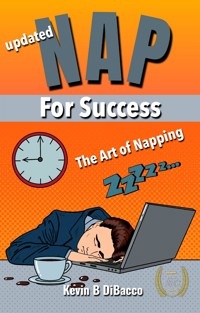
In his groundbreaking book "NAP for Success," author Kevin B DiBacco reveals the hidden key to elevating performance and productivity - the strategic power nap. Drawing on scientific research, DiBacco illuminates how brief naps can boost brain function, enhance memory and learning, spur creativity, improve mood, reduce stress and boost immunity.
Napping is an ancient habit that predates modern society by thousands of years. Records show that midday rest periods were the norm across numerous ancient cultures, from Egypt to Rome. Siestas remain ingrained in European, Latin and Mediterranean lifestyles. Though America diverged from this tradition in the 20th century, the benefits of napping are once again acknowledged. Brief midday rest breaks appear innately aligned with our natural circadian rhythms. The enduring practice of napping throughout history speaks to its value in energizing the mind and body.
Das E-Book können Sie in Legimi-Apps oder einer beliebigen App lesen, die das folgende Format unterstützen:
Veröffentlichungsjahr: 2024
Ähnliche
















NAP
FOR SUCCESS
Kevin B DiBacco
Copyright © 2024 by Kevin B. DiBacco All rights reserved.No portion of this book may be reproduced in any form without written permission from the publisher or author,
except as permitted by U.S. copyright law. Published by Chelsea House Press Inc.
DISCLAIMER
No part of this publication may be reproduced in any form or by any means, including printing, scanning, photocopying, or otherwise, without the prior written permission of the copyright holder. The author has tried to present information that is as correct and concrete as possible. The author is not a medical doctor and does not write in any medical capacity. All medical decisions should be made under the guidance and care of your primary physician. The author will not be held liable for any injury or loss that is incurred to the reader through the application of the information here contained in this book. The author points out that the medical field is fast evolving with newer studies being done continuously, therefore the information in this book is only a researched collaboration of accurate information at the time of writing. With the ever-changing nature of the subjects included, the author hopes that the reader will be able to appreciate the content that has been covered in this book. While all attempts have been made to verify each piece of information provided in this publication, the author assumes no responsibility for any error, omission, or contrary interpretation of the subject present in this book. Please note that any help or advice given hereof is not a substitution for licensed medical advice. The reader accepts responsibility in the use of any information and takes advice given in this book at their own risk. If the reader is under medication supervision or has had complications with health-related risks, consult your primary care physician as soon as possible before taking any advice given in this book.
“The information and advice contained in this book are based upon the research and the personal and professional experiences of the author. They are not intended as a substitute for consulting with a healthcare professional. The publisher and author are not responsible for any adverse effects or consequences resulting from the use of any of the suggestions, preparations, or procedures discussed in this book. All matters pertaining to your physical health should be supervised by a healthcare professional.”
Table of Contents
The Long History of the Midday Nap
The Science Behind Napping
Naps overall effect on the body
The Power of Napping for Healing
Historical Perspective on Napping
Napping Techniques and Strategies
Why is napping such a powerful tool?
Napping for Creative Problem-Solving
Napping as a catalyst for innovation
Napping for Energy Restoration
Napping as a sustainable energy source
Implementing Strategic Napping:
The Role of Napping in Regulating Cortisol Levels
Light Napping of 20–30 Minutes Ideal
Napping Techniques:
How napping improves memory consolidation
The Healing Power of Naps: How Napping Promotes Physical Health
Napping's impact on cardiovascular health
Napping as a Lifestyle Choice
Advocating for napping rights in the workplace
Napping habits for different age groups
Napping etiquette in public spaces
The Future of Napping
Napping as a Catalyst for Societal Change
The NAP Effect how it makes us feel
Napping's role in redefining societal norms around sleep
ABOUT THE AUTHOR
Kevin understands adversity and the temptation to quit better than most. His life has been a testament to the power of perseverance despite severe hardship. Now, he shares his story and tools to inspire others to get off the mat when knocked down by life.
Kevin’s health struggles began early, needing major surgery at just 16 years old. In his 20s and 30s, he endured 6 knee operations, 2 back surgeries, including spinal fusion, 2 hip replacements, and treatment for an aggressive brain tumor. Enduring over 10 major medical procedures would be enough to make anyone feel like giving up. Even as he was writing this, Kevin was struck by Covid-19. As if that wasn’t another setback, Kevin developed Pneumonia and spent the spring of 2022 and the summer of 2023 having to get daily nebulizer treatments. Once again, his theories were put to the test. Once again, they worked!
But Kevin refused to see himself as a victim of circumstance. Through each diagnosis and rehabilitation, he consciously worked to reframe adversity as an opportunity for growth. Instead of sadly ruminating on limitations, he focused positively on each small win: standing, walking, and climbing stairs: during recovery. He visualized himself healed and happy against all odds.
Kevin leaned on his deep faith and the support of loved ones during the darkest times. When fear or hopelessness crept in, he prayed for the strength to take the next step forward. He turned to uplifting books and sayings for encouragement. Slowly but surely, he reclaimed his active lifestyle step by step.
Through his journey, Kevin realized firsthand the power of mindset to determine one’s life experience. He discovered that he could transform his outer reality by controlling his inner world: his thoughts, beliefs, and visualizations. Now, he hopes to share these lessons with others facing major life challenges.
Kevin’s book recounts his medical battles, along with the techniques he used to stay grounded in positivity. He provides exercises to overcome negative self-talk, face fears, and visualize desired outcomes. Kevin believes we can all learn to reframe difficulties as growth opportunities. Wherever we feel like quitting, he urges us to proclaim, “I will keep going!”
Kevin’s dramatic story provides living proof that, regardless of what knocks us down, we can choose to get back up. We all have access to inner reserves of strength to endure the unendurable. Kevin hopes his book will inspire others to fight major life battles to find their power to keep progressing. By committing to personal growth, we can overcome any obstacle, including those within our minds.
The Long History of the Midday Nap
The midday nap is an ancient practice that has existed for thousands of years across numerous cultures. This brief rest period provides renewed energy and clarity for continued productivity. Though nap habits have evolved, the afternoon siesta persists in many parts of the world. Examining the origins and chronology of the midday nap provides insights into its enduring popularity and health benefits.
Early Origins
While it is difficult to pinpoint exactly when and where the tradition of napping first emerged, early references date back as far as Ancient Egypt. Around 1500 BC, Egyptians are recorded to have slept on pillows made of stone in order to cool down in the afternoon heat. This practice signaled the emergence of the afternoon nap as a cultural habit.
Ancient Greek and Roman societies also widely embraced the midday nap. Greek philosophers like Aristotle and Plato advocated taking two sleeps per day. Romans had two words in their vocabulary to describe the afternoon nap: sexta hora and meridiatio. Wealthy Roman families took lengthy afternoon rests, lasting 3–4 hours. Beds and couches were designed specifically for post-lunch napping.
The siesta tradition continued in early Islamic cultures. Muslims observe scheduled prayer times, which create natural breaks for rest. Records strongly suggest that merchants in Medina took naps in the afternoon that extended between two of the five daily prayers.
By the Middle Ages, the influence of the Roman Catholic Church had further solidified the nap's place in Western culture. Monks slept after the midday meal according to regimented schedules. The upper class adopted this monastic schedule, and napping became closely tied to feasting.
Nap Traditions Around the World
Most Southern European, Latin American, and Mediterranean cultures have strong nap traditions that persist today. The modern conception of the midday nap or “siesta” originated in Spain, where it is called the sobremesa or “over-the-table.” Spaniards typically eat lunch from 2-4pm, which is later followed by a nap.
In Italy, the riposo is considered a civilized practice and essential for proper digestion. The streets of Italy become quiet each afternoon around 1pm as people retreat indoors for a rest. Italian workers are entitled to a 2-3 hour break in the afternoon.
Greeks sleep immediately after lunch and prioritize the midday nap. In fact, some work contracts in Greece expressly mandate afternoon nap breaks. Portuguese and French cultures also maintain robust nap habits rooted in their histories.
The siesta remains integral to family life in Latin America. In Mexico, parents and children return home for the comida and a 2–3-hour nap. Bolivians and Peruvians take naps called hierba before returning to work in the afternoon.
In China, workers traditionally sleep for 30 minutes after lunch. The Chinese characters for noon literally translate to “middle of day rest.” Japanese culture also promotes the benefits of afternoon naps, which rejuvenate the mind and soul.
Napping in America
Napping was common in early American life, when long days of intense physical labor were the norm. Farmers and workers napped in the afternoons to replenish their energy levels. As modern office culture emerged in the 20th century, attitudes toward napping became more negative. Napping was linked to laziness and considered incompatible with a strong work ethic.
The tide began to turn in the 1980s and 1990s as more research confirmed the benefits of short midday naps. NASA studies indicated that short naps enhanced cognitive functioning for pilots. Companies like Google, Zappos and Ben & Jerry’s installed dedicated nap spaces. Despite growing acceptance, a lingering stigma continues to prevent regular napping in most American workplaces.
Current Nap Habits
Culturally ingrained nap habits remain in the early 21st century. Workplace policies largely determine how these customs have adapted over time. In China and Spain, modern office workers struggle to take traditional naps due to increasing work pressures. New mothers in Spain fight to maintain the daily nap as an essential child-rearing practice.
Elsewhere, traditional napping endures. Greek workers still savor a siesta after lunch. Costa Rica recently passed a law guaranteeing all employees a 30-minute nap break. Some Italian offices have “nap pods” for employees to rest in. Though customs vary slightly by region, the midday nap remains treasured in these cultures for productivity, health, and happiness.
Napping is an ancient habit that predates modern society by thousands of years. Records show that midday rest periods were the norm across numerous ancient cultures, from Egypt to Rome. Siestas remain ingrained in European, Latin and Mediterranean lifestyles. Though America diverged from this tradition in the 20th century, the benefits of napping are once again acknowledged. Brief midday rest breaks appear innately aligned with our natural circadian rhythms. The enduring practice of napping throughout history speaks to its value in energizing the mind and body.
The Science Behind Napping
Napping has been a part of human culture for centuries, and the benefits of a good nap are well-documented. But what exactly happens in our bodies and minds when we take a nap? In this subchapter, we will explore the science behind napping and shed light on how it can have a profound impact on our productivity and well-being.
When we sleep, our brain goes through different stages, including REM (rapid eye movement) and non-REM sleep. Napping, depending on its duration, can help us enter these stages and experience their unique benefits. For instance, a short power nap of 10–20 minutes can enhance alertness and improve motor skills. This is because it primarily involves non-REM sleep, which helps in memory consolidation and rejuvenation of the mind.
On the other hand, longer naps of 60–90 minutes can include REM sleep, which is associated with dreaming and emotional processing. These naps can enhance creativity, problem-solving abilities, and boost overall mood. The inclusion of both REM and non-REM sleep in longer naps allows for a more comprehensive recovery of the body and mind.
Furthermore, napping can also positively impact our physical health. It has been shown to reduce the risk of heart disease, lower blood pressure, and improve immune system function. This is because during sleep, our body repairs and regenerates cells, resulting in improved overall health and well-being.
Napping also plays a crucial role in combating sleep deprivation, a prevalent issue Today. By taking a nap, we can compensate for lost sleep and recharge our energy levels. This, in turn, can lead to increased focus, enhanced cognitive abilities, and improved memory retention.
The benefits of napping are backed by extensive research. Scientists have utilized tools like EEGs, fMRIs, and PET scans to understand what is happening in the brain during nap periods. These studies have shed light on the unique brain wave patterns and changes in neurochemistry that underlie the restorative powers of napping.
For example, researchers at the University of California, Berkeley found that napping can improve the brain's ability to integrate new information and enhance memory processes. Their studies using electroencephalography (EEG) demonstrated that naps as short as 10 minutes could induce brain wave patterns key for solidifying memories and integrating knowledge.
Other neuroimaging studies have revealed how napping can reduce levels of specific neurotransmitters linked to stress, while boosting neurotransmitters involved in memory consolidation. The changes in these brain chemicals may explain the stress-busting and brain-boosting benefits of napping.
Genetic research has also provided insights into the biological bases of napping. Scientists have identified several genes related to sleep and circadian rhythms that may influence individual differences in optimal nap durations and responses. This emerging field sheds light on why some people get greater cognitive boosts from brief power naps, while others benefit more from longer naps.
Understanding these biological mechanisms helps validate why napping feels restorative and clarifies the science behind harnessing naps for improved well-being. The research makes clear that napping is not a sign of laziness, but rather a way of optimizing brain function, enhancing alertness, consolidating memories, and regulating stress.
While more research is still needed, the existing science gives us a window into the measurable physical and neurological effects that enable napping to elevate our productivity and wellness. The field of napping neuroscience continues to evolve as researchers utilize new technologies and genetic insights.
But the takeaway is clear: napping is far more than just sleep. It is a precise tool to recalibrate our minds, support cognitive functioning, aid memory and learning, energize the body, and regulate emotion. Understanding the science empowers us to strategically use naps to enhance our health, productivity, and happiness, as well as support the well-being of our communities.
The science behind napping reveals measurable benefits for bodies, brains, and lives. Research continues to affirm napping's remarkable power to restore mental clarity, solidify memories, improve learning, enhance creativity, uplift mood, boost immunity and reduce stress. By understanding the biological mechanisms at play, we can optimize napping and harness this practice that has been part of human history for millennia. The science is our guide to using naps as a precise tool for enhancing productivity, health, and wellness in the modern world.
Understanding the Sleep Cycle
To fully grasp the POWER of a NAP, it is crucial to understand the intricacies of the sleep cycle. Sleep is an essential part of our daily routine, allowing our bodies and minds to rest, repair, and rejuvenate. But what exactly happens during this seemingly passive state? Let's delve into the fascinating world of the sleep cycle.
The sleep cycle consists of several distinct stages that repeat throughout the night, each with its purpose and characteristics. The first stage is known as the non-rapid eye movement (NREM) stage. During this initial phase, our brain activity slows down, and we gradually enter a relaxed state. This is the time when our body repairs itself, and our immune system strengthens.
As we progress into the deeper stages of NREM sleep, our brain waves become slower, and our breathing and heart rate decrease. It is during this period that our body releases growth hormones, promoting physical development and repair. Moreover, our brain consolidates memories and processes information, enhancing our cognitive abilities.
After approximately 90 minutes, we enter the rapid eye movement (REM) stage of sleep, which is characterized by increased brain activity and vivid dreaming. This stage is crucial for our emotional well-being, as it helps regulate our emotions and process experiences from the day. REM sleep also plays a vital role in learning and creativity, as it aids in problem-solving and critical thinking.
The sleep cycle is not linear; it repeats several times throughout the night. In the early cycles, we spend more time in deep NREM sleep, while REM sleep becomes more prominent in later cycles. This is why it is essential to have a sufficient amount of uninterrupted sleep, as it allows us to complete multiple sleep cycles and reap the maximum benefits of each stage.




