


9,99 €
Mehr erfahren.
- Herausgeber: Matteo Festo
- Kategorie: Lebensstil
- Sprache: Englisch
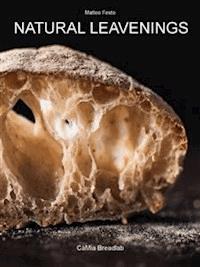
New sourdough natural breads recipes and techniques for the enthusiast baker!
Das E-Book können Sie in Legimi-Apps oder einer beliebigen App lesen, die das folgende Format unterstützen:
Veröffentlichungsjahr: 2017
Ähnliche


















Indice dei contenuti
REMARKS BY THE AUTHOR
FROM THE IDEA TO THE BOOK
THE BAKER IN ME
NATURAL BAKING and some considerations on baker's yeast
TYPES OF LEAVEN AND STARTERS IN NATURAL BAKING
THE ADVANTAGES OF LONG FERMENTATION
CLASSIFICATION OF FLOURS IN ITALY
THE 25 C RULE
DOUGH PREPARATION METHODS
HOW TO MAKE A “STRONG” DOUGH
BAKING
NOTES ON QUANTITIES AND THE MATHS OF BAKING
Chapter 1
Chapter 2
White bread with low gluten flour
Rustic white bread
Bread from type 2 wheat flour
Barley loaf
Buckwheat bread
100% durum wheat bread (re-milled semolina) with grape must
Rye and spelt bread with natural fresh fig ferment
Wholegrain durum bread with extra virgin olive oil
Durum wheat with wholegrain spelt
Chapter 3
100% wholewheat
100% whole tritordeum
Rustic Filone made with biga starter dough
White country bread
Spelt bread made with refrigerated sourdough
Semi-wholegrain bread made with refrigerated sourdough starter
Hemp bread
Whole wheat ciabatta with poppy seeds
Cereal ciabatta
Beetroot bread
Soft dough white bread
Soft dough turmeric bread
Rustic filone made with soft dough
Double buckwheat loaf
White sorghum and oat bread
Mountain bread
Mountain bread (second version)
Fresh quinoa flour bread
Bread with toasted linseed and wholegrain spelt
Old style bread with mixed seeds
Chapter 4
Three barley bread
High hydration bread with chia gel
Psilium seed bread
Chestnut bread
Bread with sundried tomatoes and wild fennel
100% semi-whole rye bread
100% whole rye bread
100% buckwheat bread
Chapter 5
Chapter 6
High hydration rustic ciabatta
High hydration rustic bread
High hydration bread with poolish
Pumpkin bread with liquid starter
ACKNOWLEDGEMENTS
For
Daniela Sala, Elisa Festorazzi and
Pierluigi Festorazzi who is looking down on us from above
REMARKS BY THE AUTHOR
It was only after working for years as a cook that I turned my attention to Breadmaking.
This passion for the White Art was lying dormant inside me when I found myself, against my own will, working as a pizza chef for a few seasons (I was living abroad and work was hard to find).
Even then I was utterly fascinated by the fermentation of water, yeast and flour. However I could tell that I was going to specialise in another field entirely: Bread.
I had the good fortune to get a solid foundation when I met and got to spend time working with some bakers who had twenty years' of experience.
Later, through a relatively quick succession of developments, I came to focus my energy on the study and use of “natural leavening”.
FROM THE IDEA TO THE BOOK
A book? That was what inevitably crossed my mind on reading some of the comments on my Instagram profile dedicated to bread making: https://www.instagram.com/ca_mia_breadlab/
So many times members of our the community on the social networks had asked me where they could find recipes, tips on methods and more detailed information on the breads I was showing every day in my photos on the web...
...But a specialist book!
After studying all the best material available, tracked down on every possible medium, and five years of apprenticeship, the moment has come to share my work with somebody.
And that was where I got the idea to get out there and show the fruits of this passion to which I have devoted so much time on a day to day basis (losing out on sleep, time out from other commitments, from sports training, from time with friends… time out from my life).
The endless notes scribbled down on all kinds of scraps of paper or whatever was to hand at that particular moment, they have all come in handy now.
And here I want to give you a word of advice as a friend: go and buy yourself a diary where you can jot down every experiment and trial. You'll find it is well worth it!
There are so many writings available on the subject, so I wanted to come up with something a little different from the usual offering, something with a more practical bias and which also included some fo the “secrets” of the trade: little technical observations learnt through experience, which, in the right hands, can make all the difference in the world.
And presented in an easy to read format suited to any reader, not a boring, complicated academic text, and not just a soulless recipe book.
I know that some of you are already turning up your nose at this, but fear not, you will find here basic notions for the novice of the White Art but also methods and detailed methods for the more expert.
The recipes have all been tested a number of times in order to produce a standardised repeatable recipe, so there is no danger you will end up wasting precious time and ingredients on a recipe which seems to work on paper but fails to deliver in practice.
But all the same, always remember that bread making is not an exact science and there are really so many different variables!
Starting with the type of water used, never mind the characteristics of the yeasts and flours and even the type of salt.
So I advise those of you with more experience to always work on the basis of this experience and adjust everything accordingly if needed.
And for those of you who are new to bread making, I advise you to learn as much as possible from any mistakes you might make. This is where your diary will come in handy, so that each time you bake you can jot down your impressions and build up the experience so essential to getting consistent results.
And before leaving you to go on with your reading, here is another word of advice (aimed particularly at those who have a fair amount of previous experience).
This is advice which I always give during bread making courses, and I feel it is extremely important:
The best way to improve is to always be prepared to reinvent yourself! Have the courage to jettison all that you thought you knew, all your previous experience, start out from scratch, without fear of making mistakes, and then return to your way of doing things with new experience and a new awareness and to come full circle, new and surprising results!
THE BAKER IN ME
As far back as I can remember, I have been fascinated by cookery. As in the majority of old-style Italian families, I grew up with the tradition of Sunday Lunch, and from the earliest age started messing about with different types of flour, sheets of fresh pasta, sweet and savoury pies as well as all kinds of traditional dishes.
The rule was that on Sunday morning we all congregated at my grandparents' house where the work would have been under way since first light.
I can still remember the puffs of steam rising from the pots where the vegetables were simmering for the preparation of starters, the aroma of the sautéed ingredients for stuffing, or the smell of fish being fried for marinades.
I've lost count of the times I helped close the interminable rows of ravioli stuffed with “magro” (ricotta and spinach), or laid out the freshly made strips of tagliatelle egg pasta to dry!
Which is part of the reason why, aside from loving good food, I have always been extremely curious about food preparation and cooking methods. And this interest led me to work as a cook for a number of years, until finally…
I realised that my true passion was for something else:
Bread making.
But let's take things one at a time. I have to retrace my steps to find the exact moment when my obsession with the White Art of bread making took root.
Some years back, I was living abroad, working most of the time in Italian restaurants, and it was there that I found myself forced to learn the trade of the pizza chef.
Since I had to be able to take the place of my colleague who was in charge of the pizzeria, for the first time I had to start kneading dough.
Ever since then I have been truly fascinated by what is such a simple yet complex process, this blending of water, flour, yeast and salt.
I had other occasions to work as a pizza chef, but I felt I was far too occupied with “cooking”, working on the ingredients for the toppings, and forced by considerations of time to make certain choices as regards the fermentation process.
Only two years had passed, and meanwhile I had been lucky enough to get to know bakers and lovers of the White Art who helped lay the foundations of my current bread making philosophy.
And as chance would have it, once I returned to Italy, I opened a trattoria, in what had once been my grand parents' house. There, in the '70s, people used to sit around the fireplace, drinking and singing, and the fire was always burning.
During those years, I would make bread practically every single day and got plenty of feedback from my clients, both positive and negative, which was extremely valuable to me.
And it was here, among the pots and pans that my passion for bread making gradually grew to the point where it eclipsed my love of cookery.
There is something I often say (begging the pardon of cooks and everyone who loves cooki [...]




