


0,99 €
Mehr erfahren.
- Herausgeber: Linda DanUd
- Kategorie: Ratgeber
- Sprache: Englisch
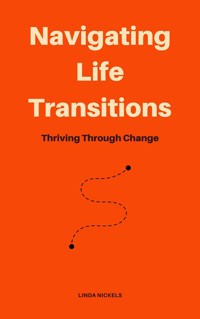
"Navigating Life Transitions: Thriving Through Change" is a concise guide designed to help readers gracefully manage the inevitable shifts that come with life's journey. From career changes and relationship dynamics to personal growth and loss, this book offers practical strategies and insights to not only adapt to change but to thrive during these periods. With a focus on resilience, mindfulness, and self-reflection, it encourages readers to see transitions as opportunities for growth and self-discovery. "Navigating Life Transitions" is an essential resource for anyone looking to navigate life's changes with confidence and positivity.
Das E-Book können Sie in Legimi-Apps oder einer beliebigen App lesen, die das folgende Format unterstützen:
Veröffentlichungsjahr: 2024
Ähnliche




















NAVIGATING LIFE TRANSITIONS
THRIVING THROUGH CHANGE
LINDA NICKELS
Copyright © 2024 by Linda Nickels
All rights reserved.
No part of this book may be reproduced in any form or by any electronic or mechanical means, including information storage and retrieval systems, without written permission from the author, except for the use of brief quotations in a book review.
CONTENTS
1. The Nature Of Change
2. Coping With Uncertainty
3. Growth Mindset
4. Building A Support Network
5. Embracing New Beginnings
THE NATURE OF CHANGE
Change, in its essence, is the only constant in our lives. It's a paradoxical truth that we all live with – from the gentle shift of seasons to the more profound transformations in our journeys. Understanding change is about acknowledging its presence and diving deep into its multifaceted nature, recognizing its luminous and shadowy aspects.
At the heart of understanding change is the recognition of its inevitability. Life is a series of chapters, each unfolding into the next, often without our consent or control. It's like the flow of a river – it moves, twists, and turns, sometimes calmly and at other times, turbulently. This flow represents the dynamic nature of our existence, where change is not just an occasional disruptor but a perpetual force. It comes in various forms: sometimes as a gentle nudge towards a new path and, at other times, as a formidable force reshaping our entire landscape.
This dynamism of change brings with it a spectrum of experiences. On one end, there's the exhilaration of new beginnings – a new career, a blossoming relationship, or the birth of a new idea. These moments fill us with hope and excitement, the kind of change that propels us forward, urging us to explore uncharted territories. In these moments, we often find our greatest joys and our most profound growth.
However, change can also mean loss and uncertainty on the other end of the spectrum. It could be the end of a long-standing job, the fading of a cherished relationship, or the unsettling feeling of not knowing what lies ahead. Change feels like a storm in these moments, uprooting our sense of stability and comfort. It can leave us feeling vulnerable, questioning our place and ability to navigate the uncertain waters ahead.
But it's essential to recognize that the negative aspects of change are as integral to our growth as the positive ones. We often discover our resilience and strength through challenges and discomfort. Think of it like a muscle that strengthens through resistance – our ability to adapt and thrive is honed through the experiences that test us.
Moreover, change, irrespective of its nature, catalyzescatalyzes self-discovery. It often prompts us to pause, reflect, and reevaluate our priorities and values. Amid change, we might ask fundamental questions: Who am I? What truly matters to me? What is the life I want to create? These questions are seeds of introspection, leading to deeper self-awareness and clarity.
Additionally, change is a teacher of flexibility and adaptability. In a constantly evolving world, the ability to adapt is not just a survival skill but a necessity for thriving. Embracing change teaches us to be flexible in our thinking, to let go of rigid expectations, and to be open to new possibilities. It's about learning to dance in the rain instead of biding their time till the storm passes.
Furthermore, change is often intertwined with innovation and creativity. It's the mother of invention, pushing us to find new solutions, think outside the box, and approach problems from fresh perspectives. In personal growth, this means developing new skills, exploring new hobbies, or finding new ways to approach everyday life.
However, understanding change is more than just an intellectual exercise. It's also an emotional journey. It requires us to cultivate a certain level of emotional intelligence – to manage our reactions to change, to process our feelings, and to seek support when needed. It's about building resilience to withstand the storms of change and emerge from them with newfound wisdom and strength.
Understanding change is about embracing life in all its complexity. It's about recognizing that our lives tapestry is woven with threads of joy and sorrow, beginnings and endings, stability and upheaval. By understanding the nature of change, we learn to navigate life's ebbs and flows with a sense of grace and resilience, making peace that while we may not always be in control of what happens to us, we can always choose how we respond to it. This understanding is not just a key to surviving the inevitable changes of life but a cornerstone of thriving in the midst of them.
TYPES OF LIFE TRANSITIONS
Life transitions are as diverse as life itself. Each carries unique challenges and opportunities, shaping our journey in profound ways. Understanding the various types of life transitions helps us navigate these changes with more awareness and preparedness.
One of the most common life transitions is career shifts. This could involve starting a new job, embarking on a different career path, or even retiring. A career shift can be exhilarating, offering a chance to pursue passions, learn new skills, and meet new people. But it can also be daunting, especially when it's not by choice. The fear of the unknown, the pressure to succeed, or the challenge of adapting to a new environment can be overwhelming. For many, their career is intertwined with their identity, and changing it can feel like altering a part of who they are.
Relationship changes are another significant type of transition. This could mean entering a new relationship, experiencing the growth of an existing one, or dealing with the end of a relationship. Relationships, in all their forms, are central to our emotional well-being. They can be a source of great joy and support but also of stress and sorrow. Navigating these changes requires emotional resilience, openness to learning and growing through relationships, and, sometimes, the strength to let go.
Personal growth is a transition often overlooked because it's not as visible as other life changes. But it's one of the most important. Personal growth involves evolving your understanding of yourself and the world around you. It can happen through life experiences, education, or a conscious effort to improve oneself. Personal growth is about developing new perspectives, challenging old beliefs, and becoming more adaptable and empathetic. It's a lifelong process that shapes how we interact with others and cope with the various life transitions.
Moving to a new place is another significant life transition. It can be moving to a new city, country, or even a different neighbourhood. Such a move can be exciting, offering a chance for a fresh start and unique experiences. But it can also be challenging, involving a period of adjustment and sometimes a sense of loss for what's left behind. It requires adapting to new environments, building new social circles, and navigating different cultural or social norms.
Educational transitions, such as starting school, attending university, or engaging in new training, are also vital. These transitions are times of significant personal development, where one gains knowledge and learns essential life skills. There are also periods where social relationships may significantly affect a person's well-being and self-esteem, either favourably or poorly.
Health-related changes, such as illness or injury, are life transitions that can be particularly challenging. They often come without warning and can significantly alter a person's lifestyle, sense of self, and plans. Navigating these changes requires physical resilience and emotional and mental strength. It involves adapting to new limitations, finding new ways to take care of oneself, and, often, reevaluating what's truly important in life.
Finally, family transitions, like the birth of a child, becoming a caretaker for an ageing parent, or experiencing the loss of a family member, are profound changes. These transitions can bring about some of the deepest joys and the most profound sorrows. They can redefine roles and relationships within the family and require adjustments in daily life and long-term plans.
Life transitions come in many forms and affect every aspect of our lives. Each transition brings unique challenges and opportunities for growth. Understanding the different types of transitions helps us approach these changes with empathy, resilience, and a willingness to learn and adapt. Through navigating these transitions, we grow as individuals, developing a deeper understanding of ourselves and the world around us. Life transitions, in all their complexity, are not just changes to be managed but opportunities to be embraced, each shaping life's rich, multifaceted journey.
CHANGE AS AN OPPORTUNITY
Change, often viewed through apprehension and fear, is a powerful catalyst for personal development and self-discovery. When we encounter change, it's like standing at the crossroads of our life's journey, where each path leads to new experiences and learning. Embracing change as an opportunity is about shifting our mindset to see the possibilities in what might initially seem like disruption or chaos.




