


Erhalten Sie Zugang zu diesem und mehr als 300000 Büchern ab EUR 5,99 monatlich.
- Herausgeber: Editora Griot
- Kategorie: Ratgeber
- Sprache: Englisch
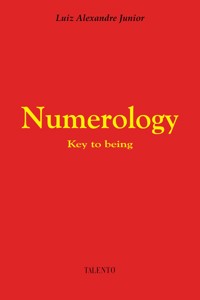
"The name is nothing more than a list of codes that has information related to the types of memory that will be available in this incarnation. It is passed by the reincarnated spirit through thought-waves to the minds of parents-to-be, especially the mother, and to those who are in the same vibratory rate as the spirit. In addition, the name identifies who the spirit was and how the new life of the reincarnated spirit will be on Earth. Reading this book, you will learn to interpret part of the information brought by your name, its numerological symbolism, how each number acts and interferes in the human behavior and social relations, and, I believe, make you think twice before naming your next child, choosing your companion and your business partner and even naming your company or project."
Sie lesen das E-Book in den Legimi-Apps auf:
Seitenzahl: 165
Veröffentlichungsjahr: 2019
Das E-Book (TTS) können Sie hören im Abo „Legimi Premium” in Legimi-Apps auf:
Ähnliche

















© 2014 Luiz Alexandre Junior
All rights reserved
The partial or total reproduction of this book is forbidden in any form, without the consent of the Publishers.
First Edition
Translation
Fabiana Morabito
Translation proofreading
Adriana Graciano
Graphic Design
Hulda Melo Santos
Illustrations
Sardinha 17
Produção do e-book:
Schaffer Editorial
Rua Des. Joaquim Celidônio, 33
01443-060 - Sao Paulo - SP - Brazil
Telephone / Fax: (55 11) 3816-1718
www.talento.com.br
Cataloguing in Publication (CIP) (Brazilian Book Chamber, SP, Brazil)
Alexandre Junior, Luiz
Numerology – Key to Being / Luiz Alexandre Junior. — São Paulo: Talento, 2002
Bibliography.
ISBN 978-85-85062-46-0
1. Numerology 1. Titl
02-4773
CDD-133.35
Index to systematic catalog:
1. Numerology: Occult sciences 133.35
Content
Introduction
Chapter 1 • The Philosophy of Pythagoras and Numerology
Chapter 2 • The Spirit
Chapter 3 • Reincarnation
Chapter 4 • The Number
Chapter 5 • Numerology
Chapter 6 • The interpretation of numbers
Chapter 7 • Analysis of the name matrix
Chapter 8 • Oracle, the numerology chart
Bibliography
Dedication
I dedicate this book to my daughter Huanayra and her generation. This book should not necessarily be used as a reference by her or any other person. As her father, I know that reading Pythagoras, Nietzsche, Jung, and Mário de Andrade will be more worthwhile. They will surely contribute more to her intellectual and moral education, and will certainly make her a more unfettered and evolved spirit. For my part, I can only leave her, other than my love, the legacy of my knowledge. Although translated into the postulates of numerology, I hope it can serve her as inspiration to continue passing on to future generations not only numerology, but also the attitude of not being accommodated before the imposed and apparent reality, fighting for her own and other people’s freedom.
Acknowledgments
I would like to thank three people in particular:
My father, Luiz Alexandre; my mother, Olivia Alexandre, for the lesson of love, fairness and spirituality; my teacher, Lúcia, to whom I am grateful for loving me and taking me out of the cave.
Preface
I thought a lot about what the most appropriate approach would be while writing the preface to this book, whose invitation I believe is the result of long conversations and incursions about the metaphysical subjects which I had the pleasure to share with the author.
Talking about the concept, seriousness and applicability of numerology might be mere redundancy, as the reader will have the opportunity to absorb these teachings didactically explained by one of its brightest researchers.
For this reason, after finishing this instructive and fascinating reading it occurred to me that one way to complete it would be with my own testimony, focusing on the practical aspect of numerology, that is, reporting here how people who get a numerological analysis acquire a deeper understanding of themselves and become aware of the psychological processes that guide their existence.
I had the opportunity to witness, and then follow, how many people, some of them great friends of mine, have developed a new way of understanding toward a series of situations in which the complexity of life presents us day after day. What seemed initially mere curiosity to listen to a numerological analysis, based on the knowledge which was completely unknown to these people, has turned into an extremely fast and efficient therapeutic process. Why was it possible to extract from the analysis such a beneficial result? They simply chose to receive this range of information with their mind and heart wide-opened, without prejudgment of a limited Cartesian reasoning, allowing it to illuminate part of the obscurity of their unconscious level and to calm the restlessness of a soul full of unanswered questions.
I shared with these people moments of uncertainty and anxiety for the new discoveries; I offered my shoulders to console the tears of emotion when the truth could no longer be hidden from reality and had to be faced; I shared the silence of the soul, assimilating the message and the fear of facing the knowledge of karma. However, before a new perspective, I could also notice a new glow emerging in the eyes of the people who were once depressed by the unconsciousness, unawareness and incomprehension of the unease feeling we call pain.
Certainly, to the author’s frustration, the majority of people he assists do not consider the information more closely, turning it into gifts that only contribute to self-knowledge.
However, the possibility of seeing life as a wider process, whose tentacles reach far beyond our egocentric reference because we are not the center of the universe, but part of it, creates a new perception in humans. The soul experiences a sense of relief due to this new awareness. This is the moment when we understand and believe that we will be happy if we assume our mission and exercise our abilities and talents, always flowing with life, never confronting it. It is the moment when everything becomes brighter, more logical. It is when we cease to feel abandoned by the Great Spirit as fragmented human beings that we still are at this point in human evolution. It is at this moment that we can make new choices and choose to face life within a new perspective.
We provoke changes in our lives when something really disturbs us. The depth of a numerological analysis, as many other available instruments, can be the way to help us face this disturbance. Thus, I hope that the synchronicity law of things, which I believe to be acting now, allows you, reader, to syntonize your inner questions in search of answers to your disturbance. Through the teachings of this divine millennial assumption, which is a gift to some illuminated people, you can open the doors to a new awareness based on the understanding of the past, the knowledge of the present and the opportunities of the future.
Introduction
This book is a result of my last 14 years of restlessness. Maybe more than a restlessness feeling, it represents an accumulated frustration after hundreds of numerological readings. Day after day, I saw many people leaving my office, even though they were perplexed with the information and some extremely grateful, without knowing absolutely anything about numerology, especially his or hers, its fundaments, its power, and mainly its practical use. I thought many times that the way of exposition was flawed and that if I had perhaps changed it I could have achieved better results. What a mistake! As time passed, I realized that they were there, before me, only to receive all the information, with no effort, without any mental work or psychological stress, and also to be given solutions to their immediate problems, almost always the same: love, infidelity, work, family.
They were not before me for self-knowledge, nor to find ways to improve the efficiency of their choices, which started long before their arrival on earthly life. Being here was already a choice; being here was acting under a predetermined plan they had drawn to themselves. Numerology was for me a clear proof of this, but the same thing did not happen to the people I analyzed. This information went unnoticed.
I always wondered if they had never questioned themselves from where I took all the information about them. Did they believe they were before an incorporated spirit, such as an old black slave or a gipsy warlock1? What could I do to make them understand that I was simply interpreting and reading the codes that were available in their names and date of birth, and, if they wished, they could do the same, even more efficiently than me?
The word “esoteric” and the expression “occult science”, which I constantly rejected, have always bothered me. For me, the occult does not exist. Everything is available in nature (material and spiritual). Knowledge is like a wave that is released to those who want to grab it. There is no need to be a magician or a guru; there is no need to be illuminated or chosen nor appeal to the supreme divinity. It is enough to read the world using all the mechanisms we have. Our spirit is endowed with all the necessary faculties that allow us to make a reading, and even those who are not spiritualists, or that simply do not believe in it, will agree that knowledge is an inborn condition to all humans.
I know that my questioning is neither punctual nor new; it has historical roots and has been out there for centuries. However, because of all these people that came to me for numerology analysis, I could reinforce the thesis that, in our context, each and every man, from birth to death, is impersonal. They do not question themselves as man or as I.
We question ourselves as urban men, immersed in the social context we inherit, but our identity (who am I?) depends on the correlation between the answers to the following questions: “Who am I as a man (spirit)” and “who is this particular man who exposes himself as I?” Many of us spend our whole life without realizing the existence and action of our spirit. We restrain ourselves to think, to live and to act as if there was only the social I. The context in which we are immersed acts as if this I was part of the truth and our reality, and that everything besides this was a result of religions, philosophers and fanatic spiritualists. Howsoever, the pretension that I can contribute to the solution of this problem, through this work and my numerological analysis, is utopic. It is also unnecessary to say this, but it is important to stress it to avoid future inquisitions. What I am trying to do on these pages is to demonstrate that numerology is not occultism, magic, mysticism nor an instrument for imposters to earn money, especially because some of the arguments that sustain and maintain intact their power and status are superstition and people’s ignorance on the subject. The reason is the obtuse and hermetic form, in which the “esoteric” knowledge is made available, and the meaning of “exoteric”, almost always carried with mysticism and miracle solutions to the point of stating that it is possible to change the name and put one more letter or number on your house door, car or office to change all your luck.
I intend to expose how I understand the Pythagorean numerology and what I have studied, learned and practiced during these 14 years. I will try to demonstrate its practical use and discuss postulates that have been long forgotten by numerologists, mostly due to the lack of historical and philosophical understandings and scientific updates. Also, for being subordinated to the low numerology (behavior), as wanted by some of the mystics and many psychologists responsible for the changes made on numerology during the last century, reducing it to a mere mystic interpretation of the behavior.
Firstly, numerology cannot be understood without four basic elements: philosophy, not only for the existence of the great philosopher Pythagoras and the great Pythagoreans as Socrates, Plato, Philolaus, Euclid and others but fundamentally for its ontological aspect, that is, the seek to understand the being that inhabits everyone; the spirit for being the intelligent entity that acts on the matter, that is, the being that inhabits the human entity; reincarnation as a mechanism used by the spirit to interact with the matter, objectifying evolution and redemption; and finally the numbers (arithmós) as intermediary entities between the supreme being (God), the One (vital principle, which is not numerical) and the other beings.
For the Pythagoreans, there is a number of count, calculation and measure, the immanent number, and another one of the forms or ideas, the transcendental number. Numerology deals with the latter. A number of rhythm, time, symmetry and essence that, besides allowing to make present what is absent (symbol) identifies the chord that every spirit plays in the Universe, as we will see throughout this book.
Numerology is simply an access code to the understanding of this entity we call spirit and the mathematical demonstration of its existence. The code – that marks your behavior, the way of acting with the world and people, as well as the lessons that will be learned – is in your name; the mission, the purpose of coming to earth and the future events are described in your date of birth. Differently from what we think about those who give us our names, the name is passed by you to your parents from the moment of conception until the end of pregnancy through a mediumistic communication (via thought-waves), that can be in the form of intuition, inspiration or dreams. These codes register the kind of spirit that is arriving on earth, its virtues and difficulties and how the parents can help it in the process of overcoming the faults and evolving, leaving the name engraved so you can have access, during your earthly life, to the memory devices that are available. You can imagine numerology as an exact code, and why not saying accurate, of your project of life during this new passage on earth.
Words as “spirit”, “reincarnation” and “mediumistic communication” are terms that sound, at first sight, as belief and mysticism, but I will try to demonstrate that these concepts are neither absurd nor religious beliefs. They are much more real and present in our everyday life than it seems. The absurdity is in not considering such elements which can deviate us from the understanding based on preconceived ideas and ignorance.
1 The old black slave (preto velho) and the gipsy warlock (feiticeiro cigano) are disincarnated spirits.
1
The Philosophy of Pythagoras and Numerology
Who among us has not asked ourselves about existence? Where do we come from? What are we? Where do we go afterlife? If you have made these questions before you were raised to the same condition as Pythagoras, Socrates, Plato, Nietzsche, and others. The term “philosophy” is attributed to Pythagoras. Philon means “I love” and Sophia, “wisdom”. To be a philosopher is to be a lover of knowledge (not only by knowing what exists and how it happens, but also knowing why it happens)2. Away from all the linguistic academic hermeticism, the root of philosophizing is synthetized in its etymology; therefore, you, all the other beings capable of the act of philosophizing and I do not need to fear it, thinking that it is designed to a few people or it is something unreachable, impracticable, and apart from our reality.
Even if the questions made above are quite simple, the answers are complex. If we take into account our inherited context (language, religion, sociocultural condition etc.), we can conclude how difficult it will be to answer these questions in a clean, impartial and accurate way, not to mention we are assuming that all questions have answers, although they have remained open in the history of humanity. When we wake up in the morning, it is not necessary to touch ourselves to make sure we are who we are. When we look in the mirror, at the floor or at everything that surrounds us we have no doubt that we and the things exist. This obvious and unsuspicious certainty deviates us from the need of constantly questioning about life.
For this reason, it is no wonder that man is a being capable of abandoning his identity (as a man) to live a social identity, without letting this covering cause embarrassment in replacing what we are with what is thought to be or with the ideal to be social. Man gets in return an apparent comfort, which is only disturbed in his moments of depression, and only realizes the presence of something else in extreme situations of life (pain, guilt, suffering and death). The act of philosophizing emerges from this anxiety, both in history of mankind and in everyone’s life. While we do not feel incommoded and we are safe in the arms of the social plot and attached to our own convictions, we do not look for answers, especially because they make no sense, considering we are sure we are the image that we make of things and of ourselves.
The distortion between real (what it is) and the representation (the ideal of a social being) in the modern world gives space to change the “be” into the “have”. The collective replaces the individual and the human being starts to be what he can possess. This statement can be easily proved with the innocent and frequent questions that we ask children and teenagers: “What do you want to do when you grow up?” We teach them when they are small that it is necessary to appropriate something before being someone, to possess it as the owner of knowledge, power, production, love, merchandise, morality etc. Being sent and sending our descendants toward this unbridled seek for power and consumption, we contribute not only to the identity fraud, but also to the covering of all feelings and humans attributes.
With this preamble, the relation between numerology and philosophy will not lack deepening, especially if we relate both of them to the name of Pythagoras, even though many of us can only mention his theorem, which we had a hard time learning at elementary school. Its importance in Western thought, of which we are heirs, goes far beyond that. Pythagoras founded a new way of thinking back in his time, a fact that enabled the development of Greek thought, immortalized by Socrates, Plato, Aristotle and others. Aristotle was responsible for distorting the Pythagorean thought, influencing and distancing many later thinkers due to his superficial interpretation because he based his critical view on minor Pythagoreans (disciples) and not on the thought of the master of Samos, as the philosopher Mário Ferreira dos Santos shows in his book Pitágoras e o tema dos números.
There are no writings left by Pythagoras. Much of what is available was written centuries after his death. Part of what is attributed to him was affirmed by disciples that did not even meet him. For a long time it was thought that he was a legend, a product of the imagination of his fanatical disciples that, with rare exceptions, always mystified his teachings. History also records many characters called Pythagoras who acted in other sectors and were often mistaken for the master of Samos. Another important and relevant fact is that he did not leave any record at a time when all his contemporaneous peers wrote something, what makes some schools dismiss his historical importance. In fact, his existence is based on the extensive work left by his followers and disciples that were influenced by his thought. In other cases, the proof of his existence comes from the vehement denial of his postulates by his critics, such as Aristotle.
Perhaps this is the fate of great avatars, as other entities as Socrates, Jesus and Buddha, that, like Pythagoras, did not leave written works. Much of his postulates, at least those which have reached our hands, were distorted by his disciples’ interpretations. It is certain that even to the most careful researcher it will be hard to distinguish the master’s thought from his disciples’. We cannot deny the fact that for centuries cultures and societies have been built and many people lead their lives and their children’s lives based on these teachings. We can conclude, even though people have Pythagoras as a reference, they are probably following the interpretations of his disciples.




