


Erhalten Sie Zugang zu diesem und mehr als 300000 Büchern ab EUR 5,99 monatlich.
- Herausgeber: Luath Press
- Kategorie: Lebensstil
- Sprache: Englisch
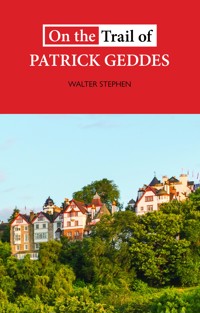
Part of a series of guides following key figures and themes, Walter Stephen explores the life and theories of the Scottish biologist, sociologist, geographer, philanthropist and urban planner, Sir Patrick Geddes. His renewal work in Edinburgh's Old Town is as visible and impressive today as it was in the 19th and 20th centuries and his concepts such as 'Think Global, Act Local' are just as relevant. The author is an authority on Patrick Geddes and this book forms part of the On the Trail series.
Sie lesen das E-Book in den Legimi-Apps auf:
Seitenzahl: 228
Veröffentlichungsjahr: 2020
Das E-Book (TTS) können Sie hören im Abo „Legimi Premium” in Legimi-Apps auf:
Ähnliche
















WALTER STEPHEN qualified as an academic jack of all trades with a lifelong devotion to environmental awareness and understanding, after being educated in Edinburgh and Glasgow schools and universities with degress in geography, economic history and education. One of his achievements was the establishment and operation for 20 years of Castlehill Urban Studies Centre in Cannonball House in Edinburgh, the first successful Urban Studies Centre in Britain.
As former Chairman of the Sir Patrick Geddes Memorial Trust, he has been responsible for several books about this famous polymath: Think Global, Act Local, A Vigorous Institution, Learning from the Lasses, Exploration and Where was Patrick Geddes Born?.
BY THE SAME AUTHOR
Willie Park Junior (Walter Stephen, 2005)
A Vigorous Institution: The Living Legacy of Patrick Geddes (Walter Stephen, 2007)
Learning from the Lasses: Women of the Patrick Geddes Circle (Walter Stephen, 2014)
Think Global, Act Local: The Life and Legacy of Patrick Geddes (Walter Stephen, 2015)
First published 2020
eISBN: 978-1-912387-77-9
The author’s right to be identified as author of this book under the Copyright, Designs and Patents Act 1988 has been asserted.
The paper used in this book is recyclable. It is made from low chlorine pulps produced in a low energy, low emission manner from renewable forests.
Printed and bound by Bell & Bain Ltd., Glasgow
Typeset in 10.5 point Sabon by Lapiz
© Walter Stephen 2020
Contents
Acknowledgements
Geddesiana
INTRODUCTION A Vigorous Institution
CHAPTER 1 The Back Story
CHAPTER 2 A Set of Curious Chances?
CHAPTER 3 Mount Tabor Days
CHAPTER 4 The Making of a Biologist
CHAPTER 5 Spreading His Wings
CHAPTER 6 A Peace Warrior and His Family in the Great War
CHAPTER 7 Mediterranean Sunset
CHAPTER 8 The Legacy
APPENDIX Extract from Who’s Who – 1930
Select Bibliography
Acknowledgements
PATRICK GEDDES was an extraordinarily active, complex, difficult and occasionally self-contradictory sage who operated across more than one continent. Trying to give an orderly account of his life and legacy is like Lewis Mumford’s description of tidying up after Geddes – ‘like trying to put the contents of Vesuvius back into the crater after an eruption’.
Firstly, I must record an enormous general acknowledgement to an array of people, living and dead, who have aroused my interest and told their stories. Many of them are listed in the Select Bibliography.
We are particularly fortunate in that, in respect of Patrick Geddes, there are substantial collections of primary source material, including: Geddes Family Archive; Geddes Family Correspondence, New Zealand; Geddes papers in the National Library of Scotland; the Papers of Sir Patrick Geddes in the Library Archive and Special Collections of Strathclyde University; Centre for Research Collections, University of Edinburgh; and the unpublished Memoir of Norah Geddes. My debt to all these agencies is gratefully acknowledged.
I am grateful to all who kindly allowed me to reproduce the photographs and figures throughout the book. Every reasonable attempt to obtain permission has been made in respect of Figs. 2, 9 and 15. Permission to reproduce the following in an earlier PGMT publication was given by the late JA Adams (Fig. 5), the late Norman Thomson (Fig. 1) and my dear late brother, Olrig (Fig. 11).
The Appendix from Who’s Who 1930 is reproduced by kind permission of A&C Black Publishers Ltd.
Geddesiana
While a man can win power over nature, there is magic; while he can stoutly confront life and death, there is romance.
...
What was decided among the prehistoric Protozoa cannot be annulled by Act of Parliament.
...
Those American superiorities which surprise and disconcert old Europe very largely turn, indirectly and directly, upon the superior culture and status of women.
...
The healthy curiosity of an intelligent child can always puzzle all the Doctors of the Temple.
...
The child’s desire of seeing and hearing, touching and handling, of smelling and tasting are all true and healthy hungers, and it can hardly be too strongly insisted that good teaching begins, neither with knowledge nor discipline, but through delight.
...
So, beyond working and playing comes remembering, in some ways the happiest of all.
...
There is no permanent reason for men to kill each other… Give them hope of a better land, of enough food for their families, and you remove a main cause of bloodshed.
...
Best way of aiding the great causes – national, European, human – for which our sons have died is to take our share in preparing others to live further.
...
Since the Industrial Revolution, there has gone on an organised sacrifice of men to things, a large-scale subordination of life to machinery.
...
It is but the common urban incapacity to govern agricultural populations, to deal with rustic questions.
...
‘Pure as a lily’ is not really a phrase of hackneyed sham-morals; for it does not mean weak, bloodless, sexless, like your moral philosopher’s books, your curate’s sermons. The lily’s Purity lies in that it has something to be pure; its Glory is in being the most frank and open manifestation of sex in all the organic world.
...
Well, you will probably think me considerably more plain than pleasant in my remarks.
...
Our Edinburgh legal idea of business (is one) which eliminates all considerations of feeling, individual or public, which attains the ideal of utmost coldness to all, thus coinciding with the lowest circle of the Inferno – that of Ice. For your own sake and that of others, why stay there?
...
Aha! Look at them – how clean and white and useless: the hands of a paper gentleman.
...
Town planning is not merely place-planning, nor even work planning. If it is to be successful it must be folk-planning.
...
Planning requires long and patient study. The work cannot be done in the office with ruler and parallels, for the plan must be sketched out on the spot, after wearying hours of perambulation.
...
I can’t and won’t keep accounts!
PATRICK GEDDES. 1854–1932
INTRODUCTION
A Vigorous Institution
THE OPENING OF THE FORTH RAILWAY BRIDGE IN 1890 did wonders for communication on the East Coast of Scotland and, indeed, for the whole country. Instead of a long detour around Perth and Stirling or an uncomfortable or even dangerous ferry passage, one could jump on a train, marvel at the great structure while clattering across it and step off, quite refreshed, at ‘Waverley Station, Edinburgh, Edinburgh, Waverley Station’, as the loudspeaker announcement used to say.
For many it might be their first visit to the capital and they would set off for the Castle, trudging up to the Lawnmarket. Slightly out of puff, bemused and perhaps a little overawed by the grey tenement blocks all around, you might have been accosted by a man with unruly hair and an intense gaze. Although not unduly tall, he appears to dominate the pavement and cobbled street as he begins to talk, and talk, and talk.
He talks about this ancient town of Edinburgh. Like the Pied Piper, he leads us up towards the Castle and shows us how ice moulded an old volcanic plug to provide a defensive site for the ancient settlers. He tells us how people were drawn in for security and built a town, with a wall, on the tail of the ridge. He brings to life again the sights, sounds and smells of the growing city and describes the great ones and the colourful pageantry that filled the narrow streets and closes.
His tale unfolds as he shows how the rich and powerful grew tired of their medieval home, where all lived hugger-mugger together, how a plan was made and a New Town began on the farmland on the other side of the Nor’ Loch and how all who could afford it – and some who could not – abandoned the Old Town for the New, leaving behind the poor and the inadequate.
He would show you what he was trying to do to bring back a good life to the Old Town, taking you up closes where he and his wife had helped families to clean up and decorate their slums. He would show you hostels where university students could live amicably next to tradesmen and craftsmen and new and restored blocks of houses that were luring professional people back to the Old Town for the first time in a century. He might leave you at his Outlook Tower where you might clamber up to the top tower and use the Camera Obscura to survey the area, before descending concentrically and fitting all the pieces together.
As the charismatic stranger made off to engage another group, with your brain reeling and the ideas falling all over each other, you might ask a passer-by: ‘Who was that?’ With a laugh would come the reply, ‘Och, that’s jist the Professor’. And this in a city with an ancient university with a great medical faculty whose strengths and specialisms were well known to the poor. Yet this man was not even at Edinburgh but was a part-time (summer term only) Professor of Biology at University College of Dundee, until recently a mere outstation of St Andrews and not really, for some, a proper university.
Fig. 1 The Geddes Experience of the Outlook Tower (The late Norman Thomson)
Patrick Geddes had the common touch and would teach anyone about the wonders of their world. He moved easily from city to city, from country to country, even from continent to continent, observing, teaching and irritating the complacent. This was Patrick Geddes, polymath. Philip Boardman, his disciple and biographer, summed him up as ‘Biologist, Town Planner, Re-educator, Peace Warrior’. Paddy Kitchen’s book about Geddes was entitled A Most Unsettling Person.
Lewis Mumford, probably the most influential American planner of the first half of the 20th century, published Geddes’s Talks from My Outlook Tower in 1925. In his foreword, Mumford asked: ‘Who is Patrick Geddes?’ and answered his own question thus:
If one dropped in on a luncheon group at the faculty club of a metropolitan university and asked a dozen scholars: ‘Who is Patrick Geddes?’ there would probably be a dozen answers, and though some of the answers would be hazy, they would all, I think, be different and one might get the impression that Professor Geddes is a vigorous institution, rather than a man.
Fig. 2 Patrick Geddes – Polymath (The Interpreter Geddes, 1927)
At a later date, Mumford summed up Geddes in these words:
Turn by turn – and even simultaneously – Geddes was a botanist, economist, sociologist, producer of pageants, public lecturer, writer of verse, art critic, publisher, civic reformer, town planner, Victorian moralist, provocative agnostic and academic revolutionary.
On the other hand, Alex Law, Professor of Sociology at the University of Abertay, Dundee, has described Geddes as ‘a failed sociologist’. There is a real discrepancy here, but perhaps we can begin to resolve it by looking back to the Geddesiana at the start of the book and to some of the triads so beloved by Geddes.
For his own time, he railed against ‘the organised sacrifice of men to things’ and the ‘common urban incapacity to govern agricultural populations, to deal with rustic questions’. At the same time, he hammered home ‘Vivendo discimus’ (By living we learn) and ‘By leaves we live’ – the absolute dependence of all humanity on plants and the soil.
For many years his work was in shadow, but the complacency of most of society began to be disturbed with the publication of 1962 of Silent Spring by Rachel Carson, an exposé of the devastation of the countryside by exploitative agriculture and urbanisation. The Reith Lectures – Wilderness and Plenty – of 1969, by Frank Fraser Darling, pointed out the growing danger of multiplying populations in a finite environment while, in 1972, The Economist published Blueprint for Survival, an apocalyptic review of the asset-stripping of the world’s resources.
Geddes had informed, even inspired, these people and this was recognised in 1973 when the Town and Country Planning Association started a Bulletin of Environmental Education with a ‘Geddesawareness’ campaign. In the same year the Sir Patrick Geddes Memorial Trust was set up in Edinburgh.
Schumacher’s Small is Beautiful: Economics as if People Mattered (1974) is not uniformly pessimistic, showing how small-scale locally based schemes can be more successful than grandiose topdown plans, in which the economies of scale may be countered by the human and material costs of major failures. This is pure Geddes, who time and again developed small projects tailored to the needs of local communities.
These individual advances were eventually formally recognised at the Earth Summit in Rio de Janeiro in 1992, whose outcome was Agenda 21 – ‘an action plan for sustainable development’. Kofi Annan, who took over as Secretary-General of the United Nations in 1997, brought into public use Geddes’s mantra ‘Think Global, Act Local’. We know that so much environmentalism is mere window-dressing – but the bottom line must be that we all now know what is expected of us, if we are to survive as a species.
Geddes was passionate about trees, for economic, environmental and aesthetic reasons. For every one of his plans or schemes the first step was to get the local people to plant trees or lay out a garden. As I write, I find it very amusing that, probably for the first time in our constitutional history, the two main political parties, in their election manifestos are trying to outbid each other in the number of millions of trees they are promising to plant – Geddes must be chuckling in his grave!
Geddes was also passionate about work-place-folk planning, which required long and patient study. His planning mantra of sympathy – synthesis – synergy demanded ‘wearying hours of perambulation’ and constant consultation with and persuasion of the people on the spot, the potential users. We are all familiar with the horror stories about avoidable top-down mistakes. Geddes was always up against strong vested interests in this field, but today we can detect that there are certainly moves in Britain, even if only tokenistic, to open up the offending systems – as has been done in other European countries.
Alex Law may well have been right in condemning Geddes as a failed sociologist. Indeed, on his death in 1932, many might have considered Geddes to have been a failed everything. But we must always remember what Geddes said of himself – ‘I am the little boy who rings the bell and runs away’. Let us see for ourselves whether he was merely an interesting figure in the margin or a creative thinker and doer on many issues which still concern us in our time. He certainly prepared the ground for major changes in our perception of how we are to live on earth.
The world has always been full of wise men saying ‘something must be done’. It is quite easy to ‘Think Global’. Geddes was unusual in that he would identify a problem and then try to do something about it. In other words, he would ‘Act Local’. Often his action would be under-funded, over-ambitious or under-managed – but it would serve as a model for others in his own time and as inspiration for others of a later generation.
Geddes has been accused of having a ‘butterfly mind’, rushing from project to project, never finishing anything. Perhaps he should have concentrated on doing one thing well, like Alexander Graham Bell and the telephone. But who reads Bell today? Or uses his invention? I see Geddes as being like the sower in Jesus’s parable, scattering seed. Some fell on stony ground but enough survived to make the whole operation valuable and successful. Geddes’s diversity of interests and breadth of vision may have been inefficient and wasteful – but they are so stimulating!
In a filmed interview in 1969 Mumford said that:
Patrick Geddes was one of those giants whose whole life is greater than any particular part of it. In this he is… not a specialist, nor confined to any one side of life, but able to master the whole of it as very few people in his time were able to even think of doing.
At that time there were, as we have seen, stirrings in the environmental world. Many environmentally sensitive people are outraged at the brutality of modern life and the way our planet is being degraded and it is not surprising that they should find in Geddes’s variety of plans and projects inspiration for action.
Why should a citizen in the year 2020 bother to read about ‘a failed sociologist’ today? Simply because he makes us think about our world and makes us want to make it better.
On the Trail…
Clearly, Geddes’s life was a complex affair, moving from place to place, from subject to subject, on to the next thing before the latest had been sewn up and tidied away. Anyone wishing to follow in the great man’s footsteps will have a tough time. Not only has almost a century eroded many of his achievements but so many of them were small-scale and doomed from the very beginning. And they are to be found in a dozen countries from India to Ireland.
As Robert Louis Stevenson said, it is ‘better to travel hopefully than to arrive’. Therefore, at the end of each chapter, as well as in the text, there will be guidance as to where one can see for oneself what influenced the great man, or what the great man created.
The ‘On the Trail…’ notes vary in length and complexity. In the case of Perth, for example, the trail is very detailed; whereas, in ‘Geddesland’, many of the references are embedded in the chapter and I offer guidance only for the three short walks, or trails.
CHAPTER 1
The Back Story
22 OCTOBER 1851 was a black day for Acting Sergeant Major Alexander Geddes. Born in Grantown-on-Spey in 1810, the son of a general merchant (shopkeeper), when both parents died, he moved to the Glasgow area. According to the Attestation of Regiments, in Paisley at aged 15, he enlisted in the 42nd Foot, the Royal Highlanders, better known as the Black Watch. His occupation was given as labourer and his first three years were spent as an underage drummer, non-pensionable.
A slow climb up the ladder of promotion started in 1829 when he began pensionable service as a drummer. He married in 1832, was promoted to Private in 1833, to Corporal in 1834 and to Sergeant in 1836.
Janet Stevenson was innately a serious person from Airdrie who worked doing Lowland Scottish tambouring (fine embroidery). Tambouring was notoriously hard on the eyes and the embroiderers traditionally bathed their eyes with whisky as a remedy. Janet’s great grandmother and grandmother were both reputed to have lost their sight as a result. Janet herself lost her sight latterly. Norah, her granddaughter, gave us a snapshot of Janet in old age:
Once, unknown to her, I was present when she changed her glass eye. She took it out of a box and I was fascinated. I was sure it was a real eye and told my nursemaid this when I went home, but she didn’t believe me.
When Janet was 17, she and her brother of 15 were sent for a holiday to Beith in Ayrshire. Kilbirnie Loch was frozen. Young John, like many others, played on the ice. He disappeared and, after several days, was found trapped in eight feet of water under the ice. Janet may have felt partially responsible for her brother’s death. After this tragedy, Janet’s father deserted her mother and went off to America, leaving her to bring up three daughters with only baking to support her – until she died from cholera.
It is not surprising that, after this succession of blows, Janet turned out to be serious and God-fearing. One would like to think that marriage to young Alexander Geddes and the Army was not just an escape but a union of two like-minded souls.
With the Highland regiments in the 19th century went women and children. In 1822, six women per 100 men were permitted to travel, 12 per 100 in India and New South Wales, but these quotas were often exceeded. As well as supporting their men, these women were paid for non-military duties as washerwomen and servants. Their daughters under 15 could be servants or pupil schoolmistresses.
Janet was a teacher, with three areas of operation. Firstly, there were the regimental children to be taught the Three R’s, long before the Education Acts of 1870 and 1872 brought in Education for All. Secondly, the main criteria for new recruits were physical fitness and absence of ruptures and many recruits had to be taught how to read and write. Thirdly, promotion in the Other Ranks became dependent on a degree of ‘book learning’ as shown by the possession of Army Education Certificates. Thus, in Standing Orders of the 42nd in 1833, the following rules were laid down:
Non-commissioned officers are required to attend the Regimental School if not sufficiently well taught in reading, writing and arithmetic… Sergeants are expected to learn at least the first four rules of arithmetic.
By 1857, the educational requirements for promotion from Lance Corporal to Corporal were:
Able to read, write and understand the first four rules of Arithmetic, with Division and Drill without arms.
Understand the Duties of Orderly, Fatigue and Guard Corporal.
We might be patronising about low standards in the bad old days, compared with the sophisticated technological infantryman of our own times, but at least there were standards. And what must it have been like in Marlborough’s time?
Alexander and Janet served for ten years ‘at home’ – which then included Ireland. Robert was born in Limerick in 1839. In accordance with Government policy to keep, as far as possible, the Highland regiments well away from the British mainland, the 42nd were then shipped out to Corfu, which was, at that time, a kind of British protectorate. In 1841, a daughter Janet (usually known as Jessie) was born there. After three years in Corfu, the regiment was moved on to Malta, a British colony with a long military history reflecting its strategic importance in the Mediterranean. Here, John was born in 1843 and Alexander in 1846.
After four years in Malta, the regiment was again on the move, this time to Bermuda, where they were to be for another four years. Of the voyage Alexander wrote:
My beloved child Alexander died at sea on board the Resistance Troop Ship and within sight of the Bermudas on 24 April 1847 and was interred in the Graveyard at Ireland Island, Bermuda.
On the face of it, Alexander Geddes’s military career was peaceful and uneventful. None of the kilted Highland battalions saw a major battle between 1815 (Waterloo) and 1854 (Crimea). As far as I know, there were no slave revolts nor any civil unrest in Bermuda. Today, Corfu, Malta and Bermuda are delightful sunshine destinations for the British tourist. Each must have been a ‘cushy number’. Not so, a few statistics prove the contrary.
All along the Mediterranean coasts, in the marshes and lagoons, the mosquito flourished and malaria was prevalent. (The very word ‘malaria’ is Italian). When the 42nd were in Fort St Elmo barracks in Malta, they had ‘a fine airy situation’ but they were ‘without any sort of sophisticated sanitary facilities’. The West Indies were even worse, with yellow fever on top. For many, plantation owners, workers and their families, a sojourn in these tropical islands was a guarantee of an early death. In Bermuda, although further north and less hostile than, for example, Jamaica, ‘in the heat… the kilt was abandoned by all ranks for practical purposes’.
In the Descriptive Roll Book, 1820–33 of the 93rd Sutherland Highlanders is a table of Recorded Casualties. The 93rd were stationed in British Guiana, Trinidad and the arc of smaller islands, including Barbados. In the 11 years from 1820–30, there were 244 deaths (22 per annum), surely a very heavy toll of healthy, fit young men. Under ‘Worn out, length of service, time expired, unfit, supernumerary’ there were 450 (41 per annum). In a decade, the battalion of less than a thousand men had lost almost 700.Thirty years later in Bermuda the situation would not have been so drastic – but would still be bad enough.
In 1851, the regiment transferred to Halifax, Nova Scotia, but not for long. Here, ‘the kilt was abandoned by all ranks for practical purposes’, this time because of the Canadian winter. Then it was back to Britain in 1852 and then off to the Crimea in 1854, where they distinguished themselves at the Alma, Balaclava and Sebastopol.
We do not know when Geddes, his wife and children left Bermuda, but I would like to think that they were still there when the regiment marched out of the barracks for the last time to The 79th’s Farewell to Gibraltar, written in 1848 but already the official pipe tune for a Highland regiment leaving its station for the last time. Janet must have wondered how it was all to end.
What we do know is that Acting Sergeant Major Alexander Geddes turned up at Aberdeen Barracks on 22 October 1851. On that day:
…a Regimental Board at Aberdeen Barracks recommended discharge of Acting Sergeant Major Alexander Geddes with 21 years 304 days of service, as per Medical Officer’s Certificate attached.
The Medical Report stated:
The nature of this man’s Disability is General Debility & Emaciation the result of long military service & Climate – has neither been induced nor increased by intemperance or other vice, he is ‘worn out’, likely to be permanently disqualified.
His Character and Conduct were Very Good and his intended Place of Residence was Airdrie in Lanarkshire, where his wife had a sister.
This was a black day indeed. Imagine the situation. Geddes had no trade, was certified as not fit to work and was about to be cast loose with no fixed abode and a wife and children of 12, ten and eight, too young to be sent out to work.
They must all have been in deep despair. What was to be done?
CHAPTER 2
A Set of Curious Chances?
FAST FORWARD A FEW YEARS and what do we find? According to the Valuation Roll for the parish of Glenmuick, in 1855–6 Alex Geddes and Alex Geddes were joint proprietors of two dwelling houses in Ballater, one with an Annual Value of £12.10 shillings, the other, smaller and with a shop, valued at £8. (The second ‘Alex Geddes’ was a mistake. It should have read ‘Mrs Janet Stevenson or Geddes’. Clearly a property-owning woman was a rarity in Aberdeenshire in the middle of the 19th century!)




