


7,49 €
Mehr erfahren.
- Herausgeber: A.J.Kingston
- Kategorie: Sachliteratur, Reportagen, Biografien
- Sprache: Englisch
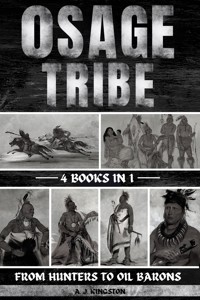
Introducing the "Osage Tribe: From Hunters to Oil Barons" Book Bundle
Delve into the captivating world of the Osage Tribe, a riveting journey through time, resilience, and cultural evolution. Embark on a comprehensive exploration of the Osage Nation's extraordinary history and the profound impact of their journey from ancient roots to becoming oil barons in the modern era. This unique book bundle offers a compelling collection of four meticulously researched volumes, each illuminating a crucial chapter in the Osage Tribe's captivating saga.
Book 1 - From Ancient Roots to Modern Horizons: The Osage Nation's Journey Through Time
Unearth the foundational roots of the Osage people as we take you on a thrilling expedition through their ancestral homeland and traditions. Discover how the Osage Nation navigated trials and tribulations, surviving colonial encroachments while fiercely preserving their cultural identity. Witness the transformation of a tribe whose roots run deep, shaping their modern horizons and aspirations.
Book 2 - Blood Money and Black Gold: The Osage Murders and the Birth of the FBI
Step into the shadows of a dark era in Osage history as we delve into the chilling tale of the Osage Murders. Uncover the disturbing consequences of their oil wealth and the ensuing birth of the Federal Bureau of Investigation. Explore a gripping narrative that unveils the indomitable spirit of the Osage people, seeking justice amidst a web of intrigue and betrayal.
Book 3 - Cultural Renaissance: Osage Art, Language, and Identity in the 21st Century
Witness the vibrant resurgence of Osage culture in the modern age. Immerse yourself in the reawakening of Osage art, language, and traditions as the tribe embraces their cultural heritage while adapting to the challenges of the 21st century. Experience a renaissance that celebrates their identity and artistic expressions, honoring the past while flourishing in the present.
Book 4 - Sovereignty and Struggles: The Osage Tribe's Legal Battles and Political Activism
Engage in the dynamic landscape of Osage sovereignty, where legal battles and political activism have shaped their destiny. Delve into the tribe's struggle to reclaim ancestral lands and navigate the complexities of federal policies. Witness their unwavering commitment to self-determination, ensuring their voice is heard in the corridors of power.
Why Choose the "Osage Tribe: From Hunters to Oil Barons" Book Bundle?
Comprehensive Exploration: This book bundle offers a comprehensive and in-depth journey through the Osage Tribe's history, providing a multifaceted understanding of their cultural evolution.
Engaging Storytelling: Each volume is meticulously crafted, presenting a captivating narrative that will keep you turning the pages, eager to uncover the next chapter.
Historical Accuracy: The Osage Tribe's history is carefully researched, ensuring that you gain accurate insights into their journey from the past to the present.
Cultural Appreciation: Immerse yourself in the rich cultural heritage of the Osage people, experiencing their traditions, art, and language through vivid storytelling.
Don't miss this opportunity to embark on a transformative literary journey through the Osage Tribe's history, from their ancient roots to the heights of oil wealth. Immerse yourself in a captivating narrative that highlights the indomitable spirit of a people who have shaped their destiny while preserving their cultural identity. Discover the enduring legacy of the Osage Tribe as they transition from hunters to oil barons in this exceptional book bundle.
Secure your copy of the "Osage Tribe: From Hunters to Oil Barons" Book Bundle today and experience the power of storytelling that celebrates the human spirit and the richness of cultural heritage.
Das E-Book können Sie in Legimi-Apps oder einer beliebigen App lesen, die das folgende Format unterstützen:
Veröffentlichungsjahr: 2023
Ähnliche














OSAGE TRIBE
FROM HUNTERS TO OIL BARONS
4 BOOKS IN 1
BOOK 1
FROM ANCIENT ROOTS TO MODERN HORIZONS: THE OSAGE NATION'S JOURNEY THROUGH TIME
BOOK 2
BLOOD MONEY AND BLACK GOLD: THE OSAGE MURDERS AND THE BIRTH OF THE FBI
BOOK 3
CULTURAL RENAISSANCE: OSAGE ART, LANGUAGE, AND IDENTITY IN THE 21ST CENTURY
BOOK 4
SOVEREIGNTY AND STRUGGLES: THE OSAGE TRIBE'S LEGAL BATTLES AND POLITICAL ACTIVISM
BY A.J. KINGSTON
Copyright © 2023 by A. J. Kingston
All rights reserved. No part of this book may be reproduced or transmitted in any form or by any means, electronic or mechanical, including photocopying, recording, or by any information storage and retrieval system, without permission in writing from the publisher.
Published by A. J. Kingston
Library of Congress Cataloging-in-Publication Data
ISBN 978-1-83938-413-4
Cover design by Rizzo
Disclaimer
The contents of this book are based on extensive research and the best available historical sources. However, the author and publisher make no claims, promises, or guarantees about the accuracy, completeness, or adequacy of the information contained herein. The information in this book is provided on an "as is" basis, and the author and publisher disclaim any and all liability for any errors, omissions, or inaccuracies in the information or for any actions taken in reliance on such information.
The opinions and views expressed in this book are those of the author and do not necessarily reflect the official policy or position of any organization or individual mentioned in this book. Any reference to specific people, places, or events is intended only to provide historical context and is not intended to defame or malign any group, individual, or entity.
The information in this book is intended for educational and entertainment purposes only. It is not intended to be a substitute for professional advice or judgment. Readers are encouraged to conduct their own research and to seek professional advice where appropriate.
Every effort has been made to obtain necessary permissions and acknowledgments for all images and other copyrighted material used in this book. Any errors or omissions in this regard are unintentional, and the author and publisher will correct them in future editions.
Join Our Productivity Group and Access your Bonus
If you're passionate about history books and want to connect with others who share your love of the subject, joining our Facebook group (search for “History Books by A.J.Kingston”) can be a great way to do so. By joining a group dedicated to history books, you'll have the opportunity to connect with like-minded individuals, share your thoughts and ideas, and even discover new books that you might not have come across otherwise. You can also access your FREE BONUS once you joined our Facebook group called “History Books by A.J.Kingston”.
>> Click Here to Join Our Productivity Group <<
One of the biggest advantages of joining our Facebook group is the sense of community it provides. You'll be able to interact with other history book enthusiasts, ask questions, and share your own knowledge and expertise. This can be especially valuable if you're a student or someone who is just starting to explore the world of history books.
>> Click Here to Follow A.J. Kingston <<
>> Click Here to Download your Free Bonus <<
If you love audiobooks, then joining our YouTube channel that offers free audiobooks on a weekly basis can be a great way to stay entertained and engaged. By subscribing to our channel, you'll have access to a range of audiobooks across different genres, all for free. Not only this is a great opportunity to enjoy some new audiobooks, but it's also a chance to discover new authors and titles that you might not have come across otherwise.
>> Click Here to Join our YouTube Channel <<
Lastly, don’t forget to follow us on Facebook and YouTube by searching for A.J. Kingston.
Table of Contents – Book 1 - From Ancient Roots To Modern Horizons: The Osage Nation's Journey Through Time
Introduction
Chapter 1: The Osage: Ancestral Homeland and Traditions
Chapter 2: Encounters with Explorers: Early Interactions with Europeans
Chapter 3: Trials and Tribulations: Surviving Colonial Encroachment
Chapter 4: In the Shadow of Conflict: Osage in the American Revolution
Chapter 5: Trails of Tears: Osage Removal and Resettlement
Chapter 6: Land and Riches: Oil Discoveries and the Osage Boom
Chapter 7: Reign of Terror: Investigating the Osage Murders
Chapter 8: Forging New Alliances: Osage Nation and Federal Government
Chapter 9: The Era of Self-Determination: Osage Sovereignty and Autonomy
Chapter 10: Preserving Heritage: Revival of Osage Culture in the Modern Age
Table of Contents – Book 2 - Blood Money And Black Gold: The Osage Murders And The Birth Of The FBI
Chapter 1: Prosperity and Peril: The Osage Oil Boom
Chapter 2: The Reign of Terror Begins: Mysterious Deaths and Suspicion
Chapter 3: Justice Denied: Local Law Enforcement's Failures
Chapter 4: A Nation in Grief: Impact on the Osage Community
Chapter 5: The Birth of the FBI: Hoover's Vision and Motivation
Chapter 6: Unraveling the Conspiracy: Investigating the Osage Murders
Chapter 7: Secrets and Betrayals: Unmasking the Culprits
Chapter 8: Chasing Justice: The Trial and its Aftermath
Chapter 9: Legacy of Tragedy: Healing and Redemption
Chapter 10: Changing Landscapes: The Osage Nation Today
Table of Contents – Book 3 - Cultural Renaissance: Osage Art, Language, And Identity In The 21st Century
Chapter 1: Resilience and Rediscovery: Reviving Osage Cultural Heritage
Chapter 2: Preserving the Past: Osage Artifacts and Museums
Chapter 3: Expressions of Identity: Osage Traditional Arts and Crafts
Chapter 4: Contemporary Visions: Osage Artists and Modern Artistry
Chapter 5: Guardians of Language: Efforts in Osage Language Revitalization
Chapter 6: Passing Down the Wisdom: Oral Traditions and Storytelling
Chapter 7: Dancing to the Beat of the Drum: Osage Powwows and Ceremonies
Chapter 8: Celebrating Community: Festivals and Cultural Events
Chapter 9: Cultural Exchange: Osage Interactions with Other Indigenous Peoples
Chapter 10: Sustaining the Flame: Ensuring the Future of Osage Culture
Table of Contents – Book 4 - Sovereignty And Struggles: The Osage Tribe's Legal Battles And Political Activism
Chapter 1: Land and Treaty Rights: Osage Sovereignty at Stake
Chapter 2: Allotment and Dispossession: The Dawes Act's Impact on the Osage
Chapter 3: From Courts to Congress: Early Legal Battles for Justice
Chapter 4: Emergence of Tribal Governance: Osage Political Leadership
Chapter 5: Challenges and Betrayals: Navigating Federal Policies
Chapter 6: Resisting Assimilation: Cultural Preservation and Activism
Chapter 7: Oil, Wealth, and Influence: The Power Struggle Within the Nation
Chapter 8: Empowerment through Education: Osage Advocacy in Schools
Chapter 9: Modern Litigation: Landmark Cases and Legal Victories
Chapter 10: Pathways to Empowerment: Shaping the Future of the Osage Tribe
Conclusion
About A. J. Kingston
Introduction
Welcome to the captivating world of the Osage Tribe, where history intertwines with courage, tragedy meets triumph, and cultural heritage resonates through the ages. In this illuminating book bundle titled "Osage Tribe: From Hunters to Oil Barons," we embark on an extraordinary journey, traversing the diverse landscapes of time to explore the profound evolution of the Osage Nation.
In Book 1, "From Ancient Roots to Modern Horizons: The Osage Nation's Journey Through Time," we delve into the origins of the Osage people, tracing their footsteps from the ancestral homeland and the emergence of their timeless traditions. We witness their steadfast resilience in the face of colonial encroachment, understanding the profound significance of their heritage as it transcends through generations to shape the modern identity of the Osage Nation.
Book 2, "Blood Money and Black Gold: The Osage Murders and the Birth of the FBI," takes us on an enthralling ride through an era of transformation. Unraveling the mysteries surrounding the Osage Murders, we confront the devastating impact of oil wealth on the tribe and the birth of the Federal Bureau of Investigation. Amidst the darkness, the Osage people's determination to seek justice serves as a beacon of hope, symbolizing their unwavering spirit in the face of adversity.
Continuing our expedition, Book 3, "Cultural Renaissance: Osage Art, Language, and Identity in the 21st Century," celebrates the flourishing revival of Osage culture in the modern age. As their art, language, and identity thrive, we witness the vibrant renaissance that celebrates their heritage while adapting to contemporary realities. This volume unveils the Osage Nation's unwavering commitment to preserving their traditions while embracing the opportunities of the 21st century.
Finally, Book 4, "Sovereignty and Struggles: The Osage Tribe's Legal Battles and Political Activism," invites readers to explore the dynamic landscape of Osage sovereignty, where legal battles and political activism have played pivotal roles in shaping their destiny. From the fight to reclaim their ancestral lands to navigating the complexities of federal policies, the Osage Tribe's indomitable spirit emerges, asserting their autonomy and demanding justice.
Through this multifaceted collection, we aim to honor the rich tapestry of the Osage Tribe's history and legacy. Their narrative transcends the pages, resonating with the stories of Indigenous communities worldwide, highlighting the enduring quest for self-determination, cultural preservation, and justice.
As we journey through the Osage Tribe's compelling story, may we deepen our understanding of their struggles and achievements, acknowledging the profound impact of historical injustices while celebrating the remarkable resilience and pride of Indigenous nations across the globe. The Osage people's path from hunters to oil barons is not just a historical account but an exploration of identity, heritage, and the timeless pursuit of a flourishing future.
Join us on this enlightening voyage as we unravel the captivating tale of the Osage Tribe: a journey of heartache and hope, courage and change, revealing the profound depth of the human spirit and the enduring power of cultural continuity.
BOOK 1
FROM ANCIENT ROOTS TO MODERN HORIZONS
THE OSAGE NATION'S JOURNEY THROUGH TIME
BY A.J. KINGSTON
Chapter 1: The Osage: Ancestral Homeland and Traditions
The ancient roots of the Osage tribe can be traced back through time to a distant past. Their journey begins with their ancestral homeland, a vast and lush region that spanned parts of present-day Missouri, Arkansas, Kansas, and Oklahoma. Within this bountiful land, the Osage people flourished, living in harmony with nature and thriving off its abundant resources.
The origins of the Osage tribe are steeped in mystery and oral tradition, passed down from generation to generation through storytelling. According to their accounts, they believe that they emerged from the womb of Mother Earth, with the creator's blessing and guidance shaping their destiny. These myths, filled with symbolism and spiritual significance, serve as the foundation of their cultural identity.
Migration played a significant role in shaping the early history of the Osage people. As nomadic hunters and gatherers, they followed the patterns of migrating game and the changing seasons. Their connection to the land was deeply rooted, as they relied on its resources for sustenance, shelter, and spiritual inspiration. This nomadic lifestyle led them on a journey across the heartland of North America, fostering connections with neighboring tribes and shaping their shared histories.
As the Osage people migrated, they encountered various indigenous groups, exchanging knowledge, traditions, and customs. These interactions facilitated the growth of rich cultural exchanges, contributing to the diverse tapestry of their identity. Their close ties with neighboring tribes, such as the Kansa and Quapaw, laid the groundwork for future alliances and trade relationships.
Over time, the Osage people established a well-defined social structure that reflected their communal values. Clans formed the basis of their social organization, with each clan having its own set of responsibilities and roles within the tribe. This structure promoted unity, cooperation, and the equitable distribution of resources among community members.
As their population grew, the Osage people developed sophisticated farming techniques, cultivating crops like corn, beans, and squash. Agriculture complemented their traditional hunting and gathering practices, ensuring a stable and diversified food supply. Their agrarian knowledge allowed them to establish permanent settlements, fostering a sense of territorial belonging and communal identity.
Spirituality held a central place in the lives of the Osage people. They revered the natural world, viewing animals, plants, and celestial bodies as sacred entities with profound spiritual significance. Rituals and ceremonies played an integral role in their daily lives, as they sought harmony with the cosmos and paid homage to their ancestors and deities.
As the centuries passed, external forces began to shape the Osage tribe's existence. The arrival of European explorers in the 17th century marked the beginning of significant changes. The Osage people navigated the complexities of colonial encounters, forging new relationships with European traders and settlers. These interactions brought both opportunities and challenges, as the Osage sought to maintain their autonomy and cultural integrity amidst the encroachment of foreign influences.
The Osage people's journey from their ancient roots to the present day is one of resilience, adaptation, and tenacity. Their heritage continues to be a source of pride and strength, passed down through the generations. As they face the complexities of the modern world, they carry with them the wisdom and experiences of their ancestors, ensuring that their ancient roots remain firmly grounded in the ever-changing landscape of time.
The spiritual beliefs and ceremonies of the Osage people are deeply intertwined with their cultural identity and worldview. At the core of their spirituality is a profound reverence for the natural world and a belief in the interconnectedness of all living beings. Their spiritual practices are not just religious rituals but are also woven into the fabric of their daily lives, guiding their interactions with nature and each other.
Central to Osage spiritual beliefs is the concept of a higher power or creator, often referred to as the "Wa-Kon-Tah" or the Great Mystery. The Great Mystery is seen as the source of all life and the force that governs the universe. It is believed that the creator imbued everything with a spirit, and this animistic perspective fosters a deep sense of respect for all living things.
The Osage people hold the land as sacred, viewing it as a gift from the Great Mystery. They believe that the creator assigned specific territories to different tribes, and they regard their ancestral homeland as a sacred space filled with spiritual significance. This deep connection to the land forms the foundation of their spiritual beliefs and is reflected in their ceremonies.
Ceremonies are essential in Osage spirituality, serving as a means of communication with the spiritual realm and as expressions of gratitude and reverence. Ceremonial practices are often communal, involving the entire tribe or specific clans. They are passed down through generations, preserving the wisdom and teachings of their ancestors.
One of the most significant Osage ceremonies is the In-Lon-Schka, commonly known as the "Hun-Ka," or "play." It is an annual event that typically takes place during the summer, lasting several days. The ceremony serves to renew and reaffirm the Osage people's relationship with the land, the Great Mystery, and each other. It includes feasting, dancing, singing, and prayer, all intended to honor the creator and seek guidance for the tribe's well-being.
Another essential ceremony is the Wa-Xo'-Be, or the "Big Moon" ceremony. This event is held during the full moon and involves fasting, purification rituals, and the honoring of women who have recently given birth. The Wa-Xo'-Be is considered a time of spiritual renewal and purification, strengthening the bonds within the community.
Dreams and visions play a crucial role in Osage spiritual life. They believe that dreams are a channel through which the spirits communicate with individuals, offering guidance, warnings, or instructions. Dream interpretation is an essential skill passed down through the generations, with elders often serving as interpreters and advisors.
The role of spiritual leaders, known as "shamans" or "medicine people," is significant in Osage society. These individuals are believed to have a unique ability to communicate with the spirit world and are consulted for guidance, healing, and ceremonies. Their wisdom and knowledge are highly respected, and they play a vital role in maintaining the spiritual well-being of the community.
In addition to these larger ceremonies, Osage spirituality encompasses various rituals, prayers, and observances related to daily life. Whether it's offering thanks for a successful hunt, seeking protection during a journey, or celebrating the changing seasons, their spiritual beliefs are woven into the fabric of their existence.
As the Osage people face the challenges of the modern world, their spiritual beliefs and ceremonies remain essential sources of strength and guidance. Their spiritual practices continue to be passed down through generations, ensuring the preservation of their rich cultural heritage and the perpetuation of their deep connection with the natural world and the Great Mystery.
The traditional social structure of the Osage tribe was carefully organized and reflected their deeply-rooted sense of community and cooperation. At the core of their society was a kinship-based system that fostered close bonds among family members and clans. This structure laid the foundation for their governance, economic activities, and daily interactions.
The Osage people organized themselves into several exogamous matrilineal clans, each with its own unique name and identity. These clans were the primary units of social organization and played a central role in their social structure. Membership in a clan was determined through the mother's line, and individuals were expected to marry outside of their own clan, thus promoting alliances and connections among different clans.
The authority within the Osage community was decentralized, with leadership distributed among different clans and individuals. Clan leaders held considerable influence and served as sources of wisdom, guidance, and decision-making. Their roles extended beyond political matters to include spiritual guidance, conflict resolution, and resource management.
The highest level of governance among the Osage people was the Council of Chiefs. This council consisted of representatives from each clan, and their primary function was to address matters of tribal importance and make collective decisions for the benefit of the entire community. Chiefs were chosen based on their leadership qualities, wisdom, and ability to foster unity among the clans.
The role of women in Osage society was highly respected and valued. Women played significant roles in decision-making processes, particularly in matters concerning the family and kinship ties. They were also active participants in ceremonies, serving as keepers of cultural knowledge and traditions. Matrilineal descent was crucial, and women played a pivotal role in transmitting cultural practices and clan affiliations to the next generation.
The Osage people maintained a strong emphasis on cooperation and communal ownership of resources. Land, for instance, was held collectively by the tribe, and its usage was managed by the Council of Chiefs and clan leaders. This communal approach to resource management ensured that all members of the community had access to the essentials for survival.
Elders held a position of great respect within the Osage society. Their wisdom, experience, and knowledge were revered, and they played vital roles in passing down cultural traditions, stories, and teachings to younger generations. The role of elders was not limited to preserving the past but extended to providing guidance in contemporary matters, ensuring continuity and cohesion within the tribe.
While the traditional social structure of the Osage tribe was integral to their identity and survival, it faced significant challenges with the arrival of European settlers and the subsequent imposition of colonial policies. Forced relocation, land dispossession, and the erosion of tribal sovereignty disrupted their traditional way of life. Despite these challenges, the Osage people have shown remarkable resilience, and their traditional social structure continues to influence their modern governance, cultural practices, and collective identity.
Chapter 2: Encounters with Explorers: Early Interactions with Europeans
The Osage people experienced a profound and transformative event with the arrival of European explorers on their ancestral lands. The early contact with these newcomers marked a pivotal moment in their history, shaping their interactions with the outside world and setting in motion a series of changes that would forever alter their way of life.
In the late 17th century, European explorers, most notably French traders and Spanish conquistadors, began venturing into the vast territory inhabited by the Osage people. Drawn by the prospect of new trade routes and valuable resources, these explorers brought with them a different worldview and cultural practices that clashed with the traditional Osage way of life.
Initially, the Osage people were curious about the strangers who had arrived on their shores. They engaged in trade, exchanging furs and other natural resources for European goods like metal tools, cloth, and weapons. These interactions opened up new possibilities for commerce and cultural exchange, as the Osage began to incorporate some European items into their daily lives.
As the frequency of contact increased, so did the complexities of the relationships between the Osage and the European newcomers. While some interactions were marked by mutual respect and cooperation, others were fraught with tension and conflict. The presence of Europeans brought new diseases to which the Osage had little immunity, leading to devastating epidemics that decimated their population.
European exploration also had an impact on the political dynamics within the region. Rivalries between European powers, particularly between France and Spain, spilled over into the interactions with the Osage. The Osage found themselves caught in the crossfire of these competing interests, with various European factions attempting to gain their favor and allegiance.
Despite these challenges, the Osage people demonstrated resilience in navigating the complexities of early contact with European explorers. They adapted to some aspects of the new cultural influences while fiercely preserving their own traditions and way of life. Their kinship-based social structure and deep connection to the land provided them with a strong foundation for maintaining their identity in the face of change.
Over time, the patterns of contact evolved as European colonization expanded across North America. The Osage people found themselves facing new challenges with the influx of settlers and the forced relocation of other tribes. They witnessed the transformation of their ancestral lands as more Europeans arrived, seeking to exploit the region's natural resources.
Early contact with European explorers marked the beginning of a complex and often turbulent chapter in Osage history. It set in motion a series of events that would shape their interactions with the outside world for generations to come. Through it all, the Osage people demonstrated resilience, adaptability, and a determination to preserve their cultural heritage and ancestral lands amidst the changing tides of history.
Trading and cultural exchange played a crucial role in the interactions between the Osage people and various European explorers and settlers. These exchanges facilitated the flow of goods, ideas, and traditions between the two worlds, leaving a lasting impact on both the Osage and the European newcomers.
For the Osage people, trade was not just a means of acquiring necessary goods; it was also a way to build relationships and establish alliances with neighboring tribes and foreign traders. The Osage inhabited a region rich in natural resources, including furs, hides, and agricultural products. They were skilled hunters, gatherers, and farmers, which made their products highly sought after in the expanding European markets.
European traders brought with them a wide array of goods, including metal tools, cloth, firearms, and other manufactured products that were previously unknown to the Osage. The introduction of these items led to significant changes in Osage daily life and material culture. Metal tools, for instance, replaced traditional stone and bone implements, making tasks such as farming, woodworking, and hunting more efficient.
The exchange of goods between the Osage and European traders also facilitated cultural interactions and knowledge-sharing. The Osage people were curious about the newcomers' way of life, and they observed and learned from their techniques in various domains. This cultural exchange led to the adoption of certain European practices, such as new forms of dress, some agricultural methods, and the use of firearms in warfare.
Similarly, European explorers and traders were intrigued by the Osage culture and traditions. They documented their observations of Osage customs, ceremonies, and daily life, providing valuable insights into the indigenous people of the Americas. These accounts would later be shared with the wider European audience, shaping popular perceptions and attitudes towards Native American tribes.
Cultural exchange went beyond material goods and included the sharing of stories, music, and art. The Osage people had a rich oral tradition, with storytellers and musicians playing a significant role in preserving and passing down their history and knowledge. European explorers, in turn, shared their own cultural traditions, including music, dances, and folklore. These exchanges created a rich tapestry of cross-cultural influences that enriched both societies.
Despite the benefits of cultural exchange, it also came with challenges and risks. As trade intensified, conflicts arose over resources and territorial claims. The competition between different European powers for control of the lucrative fur trade often entangled the Osage in geopolitical rivalries, leading to tensions and hostilities.
Over time, as European colonization expanded and settlers encroached on Osage lands, the dynamics of trade and cultural exchange shifted. The balance of power tilted in favor of the European settlers, and the Osage faced increasing pressure to adapt to the changing circumstances. Land dispossession and forced relocations further disrupted their way of life, leading to significant social and cultural changes.
Trading and cultural exchange between the Osage people and European explorers had far-reaching consequences on both societies. While it facilitated the acquisition of new goods and knowledge, it also introduced challenges and disruptions. Throughout this complex process, the Osage people demonstrated resilience in preserving their cultural identity while navigating the changing tides of history. The legacy of these early interactions continues to shape the cultural landscape of the Osage people and their relationship with the wider world.
The arrival of European explorers and settlers in the ancestral lands of the Osage tribe marked a significant shift in power dynamics within the region. The encounter with the outside world brought about a complex interplay of political, economic, and social changes that altered the balance of power between the Osage people and the expanding European colonial powers.
Prior to European contact, the Osage tribe had established themselves as a dominant force in the region. They possessed a strong social structure, a sophisticated agricultural system, and a strategic location that allowed them to control important trade routes. Their traditional way of life was deeply rooted in their ancestral lands, which they considered sacred and central to their cultural identity.
However, with the arrival of European settlers, the balance of power began to shift. The European newcomers brought advanced technologies, including firearms, metal tools, and sailing vessels, which gave them a significant advantage in terms of military capabilities and resource extraction. The Osage, who had previously relied on stone and wooden implements, found themselves facing a formidable adversary.
The European powers, particularly the French and Spanish, sought to establish footholds in the region to exploit its valuable resources, such as furs, timber, and agricultural produce. This led to a struggle for control over trade routes and access to indigenous territories, including those of the Osage tribe. The Osage were drawn into the geopolitical rivalries between European powers, impacting their autonomy and sovereignty.
As trade networks expanded and European demand for furs and other resources grew, the Osage people found themselves in a position of economic dependence on the European traders. This reliance on trade exposed them to new vulnerabilities, as their traditional way of life became entangled in the global economic system.
Moreover, the European settlers' introduction of new diseases, to which the Osage had little immunity, led to devastating epidemics that caused a significant reduction in their population. This demographic decline further weakened the Osage tribe's ability to resist the encroachment of European powers and settlers.
The shift in power dynamics also affected the social fabric of the Osage community. As European influence spread, intertribal conflicts escalated due to competition for resources and trade advantages. European traders often manipulated these conflicts to their advantage, exacerbating tensions among different indigenous groups.
As European settlers expanded their presence in the region, the Osage people faced increasing pressures to cede their ancestral lands through treaties and agreements that often favored the colonizers. Forced relocations and land dispossession disrupted the Osage way of life, further weakening their traditional power structures.
Despite these challenges, the Osage people displayed resilience and adaptability in the face of shifting power dynamics. They navigated the complexities of European contact by forging strategic alliances, adapting to changing economic conditions, and preserving their cultural heritage.
Over time, the Osage tribe faced further challenges as European colonization expanded and U.S. government policies sought to assimilate and relocate indigenous peoples. Nevertheless, the Osage people persisted in their efforts to maintain their cultural identity and tribal sovereignty, making important contributions to shaping the history of the region and the broader Native American experience.
Today, the Osage people continue to assert their cultural heritage and work towards empowering their community. They draw upon their rich history, resilience, and wisdom to navigate the ongoing challenges posed by contemporary power dynamics, ensuring that their unique legacy endures in the face of a rapidly changing world.
Chapter 3: Trials and Tribulations: Surviving Colonial Encroachment
Land disputes and encounters with settlers were central to the history of the Osage tribe as European colonization expanded in North America. The arrival of European settlers brought about significant challenges for the Osage people, including territorial conflicts, forced relocations, and the erosion of their ancestral lands and way of life.
As European settlers pushed westward, they sought to establish permanent settlements and exploit the region's abundant natural resources. This inevitably brought them into direct contact with indigenous tribes, including the Osage, who had inhabited these lands for generations.
The Osage people had a deep connection to their ancestral lands, which they considered sacred and central to their cultural identity. Their territories were extensive, encompassing vast areas across present-day Missouri, Arkansas, Kansas, and Oklahoma. However, European settlers often viewed these lands as untapped resources ripe for exploitation.
Land disputes between settlers and the Osage people emerged as European claims to the territory clashed with the Osage's ancestral rights. As settlers encroached on Osage lands, tensions escalated, leading to conflicts over land use, hunting grounds, and access to natural resources.
The U.S. government's policies further complicated the situation. The government sought to acquire Native American lands through treaties and agreements, often under the pretext of providing compensation or protection for the tribes. However, these treaties were often fraught with misunderstandings, deception, and coercion, leading to unfair land cessions and dispossession for the Osage people.
The Indian Removal Act of 1830 further exacerbated the situation. This legislation authorized the forced removal of Native American tribes from their ancestral lands to lands west of the Mississippi River. The Osage people, too, were affected by this policy, and they were forcibly relocated from their homelands to present-day Oklahoma in the 1830s.
The forced relocation had devastating consequences for the Osage people. It uprooted them from their traditional territories and disrupted their social structure, cultural practices, and way of life. Many Osage people suffered greatly during this time, facing hardships and loss of life as they adjusted to their new surroundings.
Despite these challenges, the Osage people continued to assert their rights and sovereignty over their remaining lands. They worked to maintain their cultural identity, preserve their traditions, and adapt to the changing circumstances brought about by settler encroachment.
In the latter half of the 19th century, the discovery of oil in Osage territory further complicated land disputes. Oil companies sought to exploit the valuable resource, leading to conflicts over land rights and royalties. The Osage people navigated these complexities, negotiating with companies and the U.S. government to protect their interests.
In the 20th century, the Osage tribe pursued legal avenues to regain control over their lands and resources. They sought compensation for land taken under unfair treaties and advocated for their right to self-governance and sovereignty.
Today, the Osage tribe continues to assert their rights and work towards preserving their cultural heritage and ancestral lands. Land disputes and encounters with settlers have left a lasting impact on the Osage people, shaping their history, resilience, and ongoing efforts to reclaim their heritage in the face of the challenges brought by a changing world.
The impact of European diseases on the Osage people, and indeed on many other indigenous tribes across the Americas, was devastating and profound. The arrival of European explorers and settlers brought with them a host of infectious diseases to which the indigenous populations had little to no immunity. These diseases spread rapidly among the native communities, leading to catastrophic demographic and social consequences.
European diseases such as smallpox, measles, influenza, and others had been present in Europe for centuries, leading to some level of immunity among European populations. However, the same diseases were entirely new to the Native Americans, including the Osage tribe, who had no natural defenses against them.
The lack of immunity meant that when these diseases were introduced to the indigenous communities, they spread like wildfire. Entire villages were decimated, and the death toll among the Osage and other tribes was staggering. Historians estimate that the population of Native Americans in North America plummeted by as much as 90% in some areas within a few decades of European contact.
The impact of these diseases went beyond just the loss of lives. It resulted in the collapse of social structures and traditional ways of life. With large numbers of their population dying, kinship networks were disrupted, and the balance of power within tribes shifted. Elders, who played important roles in passing down knowledge and traditions, were among the most vulnerable to these diseases, leading to a loss of cultural knowledge and practices.
Moreover, the devastation caused by European diseases weakened the ability of indigenous tribes to resist further European encroachment and colonization. With their populations severely reduced, many tribes were unable to mount effective defenses against the expansion of European settlements, leading to the loss of their ancestral lands and the erosion of their sovereignty.
The introduction of diseases also had psychological and emotional impacts on the survivors. Communities were traumatized by the loss of loved ones and the rapid decline of their way of life. The introduction of these deadly diseases was often seen as a mysterious and terrifying force, leading to fear and uncertainty about the future.
The effects of European diseases on the Osage people and other Native American tribes have had long-lasting repercussions. The scars of this tragic period in history are still felt today, as many tribes continue to grapple with the legacy of the loss of their ancestors, cultural knowledge, and traditional lands.
Despite the devastation caused by European diseases, the Osage people demonstrated resilience and determination to preserve their cultural heritage. They have worked tirelessly to maintain their identity, traditions, and language, passing down their history and knowledge to future generations. The impact of European diseases remains an essential part of their collective memory, influencing their contemporary challenges and their ongoing efforts to preserve their unique heritage in the face of a rapidly changing world.
Navigating colonial influences was a complex and challenging process for the Osage people as European colonization expanded in North America. The encounter with European explorers and settlers brought about profound changes to their way of life, including territorial disputes, forced relocations, cultural assimilation, and the erosion of their sovereignty.
As European settlers encroached on Osage lands, the tribe found itself in a position of negotiating power dynamics that were heavily tilted in favor of the colonizers. The Osage people faced pressures to adapt to the changing circumstances while striving to maintain their cultural identity and ancestral lands.
One strategy employed by the Osage people was to form strategic alliances with different European powers. By forging relationships with European traders and settlers, the Osage sought to gain advantages in trade, access to European goods, and some degree of protection against rival tribes.
At times, the Osage tribe leveraged their military prowess and territorial dominance to maintain a degree of autonomy and influence over their lands. They engaged in negotiations with European governments, seeking to protect their territories and ancestral rights. However, as European colonization intensified, the Osage often found themselves at a disadvantage due to the overwhelming military and economic power of the settlers.
The signing of treaties with European powers and the United States government became a common strategy for the Osage people to protect their interests and secure guarantees for their territorial rights. However, these treaties were often fraught with misunderstandings, mistranslations, and coercion, leading to the cession of vast tracts of Osage lands without fully informed consent.
Forced relocations, a hallmark of U.S. government policies in the 19th century, presented a significant challenge for the Osage people. The Indian Removal Act of 1830 led to the forced relocation of many Native American tribes, including the Osage, from their ancestral lands to lands west of the Mississippi River. This disruption of their traditional way of life had profound and lasting impacts on the Osage community.
Despite these challenges, the Osage people demonstrated resilience and adaptability in navigating colonial influences. They continued to preserve their cultural heritage and traditions, passing down their history and knowledge to future generations. The Osage also showed agency by negotiating with European traders, settlers, and the U.S. government to protect their interests and sovereignty.
In the 20th century, the Osage tribe pursued legal avenues to regain control over their lands and resources. They advocated for their right to self-governance and sovereignty, seeking compensation for land taken under unfair treaties. In 1906, the Osage Allotment Act granted individual ownership of land to Osage members, which eventually led to the discovery of oil on their lands, bringing both wealth and new challenges.
Today, the Osage people continue to assert their rights and work towards preserving their cultural heritage and ancestral lands. The legacy of navigating colonial influences is a fundamental part of their collective memory, influencing their contemporary challenges and their ongoing efforts to maintain their unique heritage in the face of a rapidly changing world.
Chapter 4: In the Shadow of Conflict: Osage in the American Revolution
During the Revolutionary War, the Osage people, like many other Native American tribes, faced complex decisions about choosing sides between the American colonists and the British. The war between the British and the American colonists presented a challenging situation for the Osage, as they had their own interests, alliances, and historical experiences to consider.
For the Osage tribe, the conflict between the British and the American colonists was a distant affair, geographically and culturally removed from their ancestral lands in the central part of North America. At the time, the Osage were primarily focused on their own internal affairs, including trade, alliances with neighboring tribes, and maintaining their territorial sovereignty.
Both the British and the American colonists sought alliances with Native American tribes during the Revolutionary War. They saw potential benefits in having Native American support, including military assistance, access to trade, and potential control over territories. As such, both sides approached various Native American tribes, including the Osage, with offers of alliance and support.
The British had longstanding relationships with some Native American tribes, having engaged in trade and diplomacy in the region for decades before the Revolutionary War. They saw an opportunity to use Native American allies to disrupt American supply lines and defend their own western frontier.
On the other hand, some American leaders, like George Washington, recognized the strategic importance of maintaining friendly relations with Native American tribes, including the Osage. They sought to avoid conflicts with indigenous peoples while securing their support against the British.
The Osage, however, did not take a unified stance during the Revolutionary War. Different factions within the tribe had differing opinions on which side to support. Some Osage leaders saw potential benefits in aligning with the British, particularly if it meant gaining access to trade goods or military support. Others were more cautious and preferred to remain neutral, as they did not see any direct benefits from getting involved in a distant conflict.
Ultimately, the Osage did not play a significant role in the Revolutionary War. Their focus remained on their internal affairs, trade, and maintaining their territorial sovereignty. While there were some individual Osage who may have chosen to fight alongside one side or the other, the tribe as a whole did not become heavily involved in the war.
After the Revolutionary War, the dynamics of relations between the Osage and the expanding United States government evolved. The Osage would later face challenges as the U.S. government sought to assert its control over indigenous lands and implement policies that would lead to forced removals and land dispossession in the 19th century.
The Osage people's decision-making during the Revolutionary War reflects their agency and independence as a sovereign nation. It also underscores the complexities and challenges Native American tribes faced during a period of significant upheaval and change in North America.
The consequences of the American Revolution on Osage lands were significant and far-reaching, as the conflict and subsequent establishment of the United States government had profound impacts on indigenous peoples across North America. The Osage tribe, like many others, experienced both immediate and long-term consequences that affected their lands, sovereignty, and way of life.
Territorial Losses: As the newly established United States sought to expand its borders, it encroached on Native American lands, including those of the Osage. The Treaty of Paris in 1783, which ended the Revolutionary War, confirmed the new nation's sovereignty over vast territories, including lands inhabited by Native American tribes. This led to territorial losses and the gradual erosion of the Osage people's ancestral lands.
Treaty-Making and Land Cessions: In the decades following the Revolution, the U.S. government engaged in numerous treaties and negotiations with Native American tribes, including the Osage. These treaties often resulted in land cessions and the forced relocation of tribes to smaller and less desirable territories. The Osage people were pressured into signing treaties that ceded large portions of their lands, further displacing them from their traditional territories.
Westward Expansion: The idea of "Manifest Destiny," the belief that it was the destiny of the United States to expand westward, played a significant role in the government's policies towards Native American tribes. As American settlers moved westward, they sought to acquire indigenous lands for agricultural, mining, and settlement purposes. The Osage were not immune to the pressures of westward expansion, leading to further loss of their lands.
Forced Relocations: The U.S. government's policy of Indian removal in the 19th century had devastating consequences for the Osage people. The Indian Removal Act of 1830 authorized the forced relocation of many tribes, including the Osage, to lands west of the Mississippi River. This removal disrupted their way of life, culture, and social structures.
Decline of Traditional Way of Life: The loss of their ancestral lands and the forced removals had a profound impact on the Osage way of life. They were uprooted from their traditional territories, disrupting their hunting and agricultural practices, and leading to cultural upheaval. Traditional social structures were also affected, as communities were scattered, and the kinship networks that held the Osage together were disrupted.
Economic Impact: The loss of their lands and resources had economic repercussions for the Osage people. Land dispossession meant they lost control over valuable natural resources, which could have been a source of economic prosperity. Additionally, they faced economic challenges as they were forced to adapt to new territories and environments.
Struggles for Sovereignty: Despite the challenges brought about by the Revolution and its aftermath, the Osage people continued to assert their sovereignty and work towards maintaining their cultural identity. They navigated the changing political landscape, advocated for their rights, and sought recognition of their nationhood.
Today, the Osage people continue to face the legacies of the American Revolution and subsequent historical events. They work towards preserving their cultural heritage, reclaiming their sovereignty, and addressing the ongoing challenges brought about by the consequences of the Revolution and westward expansion. The Osage's resilience and determination continue to shape their journey through history and their efforts to ensure their unique heritage endures in the face of contemporary challenges.
Throughout their history, the Osage people have demonstrated remarkable resilience and adaptability in the face of turbulent times. From encounters with European explorers to the challenges of colonization, forced relocations, and loss of their ancestral lands, the Osage have shown the ability to endure and adapt while maintaining their cultural heritage.
Cultural Preservation: Despite the significant pressures to assimilate into European-American culture, the Osage have tenaciously preserved their cultural heritage. They have kept their language, traditional arts, ceremonies, and oral history alive, passing them down through generations. This cultural resilience has allowed them to maintain a strong sense of identity and community.
Sovereignty and Governance: Throughout their history, the Osage people have worked to maintain their sovereignty and governance structures. They have negotiated with European powers and the U.S. government to protect their territorial rights and secure treaties that recognized their nationhood. Today, the Osage Nation continues to exercise self-governance and assert its sovereignty over its affairs.
Adaptation to Changing Circumstances: The Osage people have adapted to the changing circumstances brought about by colonization and westward expansion. They navigated the challenges of forced removals and relocation to new territories, adjusting their way of life to suit the new environments while preserving core elements of their culture.
Oil Discovery and Economic Empowerment: The discovery of oil on Osage lands in the late 19th and early 20th centuries brought newfound wealth to the tribe. The Osage Nation became one of the wealthiest tribes in the United States, and they established the first Native American-controlled oil company. This economic empowerment has provided resources to invest in education, healthcare, and cultural preservation.
Legal Battles and Land Reacquisition: The Osage people have engaged in legal battles to reclaim their ancestral lands and protect their resources. They have pursued cases to challenge unfair land cessions and assert their rights to the lands and resources that were taken from them. These legal efforts demonstrate their determination to secure justice and uphold their territorial rights.
Community Engagement and Advocacy: The Osage people have actively engaged with the wider community and advocacy efforts to promote understanding and recognition of their history and cultural heritage. They have participated in cultural exchanges, educational programs, and events to foster positive relationships and break down stereotypes.
Revival of Cultural Practices: Over the years, the Osage people have experienced a renaissance of cultural practices and traditions. They have revitalized their traditional arts, dances, and ceremonies, inviting younger generations to participate and learn about their heritage. This cultural revival ensures that their traditions remain vibrant and relevant in the modern age.
The resilience and adaptation of the Osage people are testaments to their strength as a community and their commitment to preserving their heritage and identity. Their journey through turbulent times has not been without challenges, but their ability to endure, adapt, and assert their rights continues to shape their story, inspiring others and securing a place for their unique cultural legacy in the modern world.
Chapter 5: Trails of Tears: Osage Removal and Resettlement
Forced relocation, often referred to as the Removal Policy, was a devastating chapter in the history of the Osage people and many other Native American tribes in the 19th century. The policy was a deliberate effort by the U.S. government to displace indigenous communities from their ancestral lands in the southeastern United States to lands west of the Mississippi River. The Removal Policy was a result of the belief in "Manifest Destiny," the idea that the expansion of the United States was inevitable and divinely ordained.
The Indian Removal Act of 1830, signed into law by President Andrew Jackson, authorized the forced removal of Native American tribes to lands in present-day Oklahoma and other parts of the West. Under this policy, the U.S. government pressured, coerced, and, in some cases, forcibly removed tribes from their homes, disrupting their way of life and traditional connections to their lands.
The Osage people, who had inhabited parts of present-day Arkansas, Missouri, Kansas, and Oklahoma, were among the tribes impacted by the Removal Policy. They were forced to leave their ancestral lands, which held deep spiritual, cultural, and historical significance, and move to unfamiliar territories.
The forced removals were carried out through a series of treaties, often negotiated under duress and with little regard for the wishes of the tribes involved. The treaties typically exchanged the tribes' eastern lands for new territories in the West. The most infamous of these removals was the Trail of Tears, which affected tribes such as the Cherokee, Creek, Choctaw, Chickasaw, and Seminole.
The consequences of forced relocation were devastating for the Osage people. Many died during the arduous journey to their new lands due to harsh conditions, disease, and malnutrition. The disruption of their traditional way of life led to the loss of their cultural practices, social structures, and community cohesion. Families were separated, and ancestral ties to the land were severed.
Despite the immense challenges, the Osage people demonstrated resilience and adaptability. They worked to rebuild their communities in their new territories, preserving aspects of their cultural heritage and establishing new connections with other tribes in the region.
In 1870, the Osage Reservation in present-day Oklahoma was established as a result of the Osage Allotment Act, which granted individual ownership of land to tribal members. This period brought newfound wealth to the Osage people with the discovery of oil on their lands in the early 20th century. However, this also brought new challenges as the tribe had to navigate the complexities of oil leases and royalties.
Today, the legacy of forced relocation remains a part of the Osage people's collective memory, influencing their efforts to preserve their cultural identity, reclaim their sovereignty, and advocate for their rights. The forced relocation of the 19th century is a poignant reminder of the enduring impact of government policies on Native American tribes and their ongoing journey toward healing and empowerment.
The forced removal of Native American tribes, including the Osage, from their ancestral lands to new territories in the West, such as present-day Oklahoma, was a harrowing and traumatic experience. The journey, often referred to as the Trail of Tears, was marked by numerous challenges and hardships that had a profound impact on the people involved.
Long and Difficult Journey: The journey on the trail was long and grueling, covering hundreds of miles on foot or in overcrowded wagons. The process of moving entire communities, along with their belongings, livestock, and elderly and sick members, was physically and emotionally taxing.
Harsh Weather Conditions: Many tribes were forced to embark on the journey during the fall and winter months, adding to the difficulty. They faced harsh weather conditions, including freezing temperatures, heavy rain, and snow, without adequate shelter or provisions.
Scarcity of Food and Resources: The U.S. government failed to provide sufficient supplies, leaving the tribes to fend for themselves. The scarcity of food and resources forced the Osage and other tribes to rely on meager rations or forage for food along the way, leading to malnutrition and hunger.
Disease and Illness: The forced removal and crowded conditions on the trail facilitated the spread of diseases, such as smallpox, measles, and cholera, among the already weakened and vulnerable populations. Many Osage and other Native Americans succumbed to these illnesses during the journey.
Forced Separation: Families and communities were often separated during the forced removal, as individuals struggled to keep up with the pace or fell ill along the way. The forced separation caused immense emotional distress and disrupted the social fabric of the tribes.
Loss of Lives: The journey on the trail resulted in the loss of thousands of lives among the Osage and other tribes. The death toll was particularly high among the elderly, the sick, and the very young.
Emotional and Psychological Trauma: The forced removal and the loss of loved ones, combined with the uncertainty of the future in unfamiliar lands, caused immense emotional and psychological trauma for the Osage people. The effects of this trauma were passed down through generations.
Loss of Cultural Knowledge: The journey disrupted the passing down of cultural knowledge and traditions from one generation to another. The loss of elders during the removal resulted in the disappearance of valuable cultural practices and teachings.




