


11,99 €
Mehr erfahren.
- Herausgeber: Luath Press
- Kategorie: Fachliteratur
- Sprache: Englisch
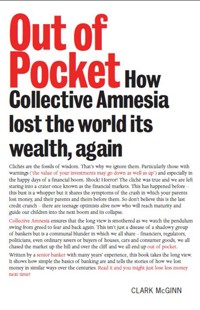
I started writing this book three years ago to amuse my fellow bankers. Little did we all know what was about to happen. But we should have. Sorry.' CLARK McGINN. Cliches are the fossils of wisdom. That's why we ignore them. Particularly those with warnings ('the value of your investments may go down as well as up') and especially in the happy days of a financial boom. Shock! Horror! The cliche was true and we are left staring into a crater once known as the financial markets. This has happened before - this bust is a whopper but it shares the symptoms of the crash in which your parents lost money, and their parents and theirs before them. So don't believe this is the last credit crunch - there are teenage optimists alive now who will reach maturity and guide our children into the next boom and its collapse. Collective Amnesia ensures that the long view is smothered as we watch the pendulum swing from greed to fear and back again. This isn't just a disease of a shadowy group of bankers but is a communal blunder in which we all share - financiers, regulators, politicians, even ordinary savers or buyers of houses, cars and consumer goods, we all chased the market up the hill and over the cliff and we all end up out of pocket. Written by a senior banker with many years' experience, this book takes the long view. It shows how simple the basics of banking are and tells the stories of how we lost money in similar ways over the centuries. Read it and you might just lose less money next time! BACK COVER: If only the world's finance ministers, bank CEOs, non execs, customers, borrowers, little old ladies, all of us had read this book 3 years ago, or 30 years ago, we wouldn't be in the mess we're in. But we are. So read this book and weep. And take solace in the fact that financial calamities have happened many many times before, and will happen again.
Das E-Book können Sie in Legimi-Apps oder einer beliebigen App lesen, die das folgende Format unterstützen:
Seitenzahl: 570
Veröffentlichungsjahr: 2013
Ähnliche















CLARK McGINN graduated in Philosophy at Glasgow University and then moved to London as a graduate trainee for one of the large clearing banks. Over 25 years later, he has a wide range of City experience having worked in branches and dealing rooms, for British and American institutions, in both commercial banks and investment banks in London and New York. He is currently Senior Director of an asset finance team in a large UK bank.
Professionally and philosophically, he has observed the ups and downs of the financial markets and has heard ‘never again’ once too often. He has watched greed and fear struggle for mastery of the financial world in a seemingly unbreakable cycle of booms and busts with each turning point coming as an apparent surprise to bankers, politicians, regulators and the public. The financial crisis we face now is only unique in its size, every other factor in its makeup has happened before – several times before – and over centuries.
Without understanding that, there will be no effective financial reform.
Clark lives in Harrow-on-the-Hill with his wife and family and in his spare time, when not commuting to the City, he writes and speaks on financial and Scottish topics. He is a renowned after dinner speaker on Robert Burns and has addressed audiences large and small – bankers and otherwise – all around the world. HisThe Ultimate Burns Supper BookandThe Ultimate Guide to Being Scottishare also published by Luath.
CLARK McGINN
LuathPress Limited
EDINBURGH
www.luath.co.uk
First published2010
eBook 2013
ISBN (print): 978-1-906307-82-0
ISBN (eBook): 978-1-909912-38-0
The author’s right to be identified as author of this book under theCopyright, Designs and Patents Act 1988 has been asserted.
© Clark McGinn 2010
To Ann, my own gold standard.
Greed and the lust for power are dangerous masters.
They breed impatience; for man’s life is short and he needs quick results. They breed jealousy and disloyalty; for offices and possessions are limited and it is impossible to satisfy every claimant.
Sir Steven Runciman,TheCrusades
...And we know what a rip-roaring success the Crusades were (!)
‘Can’t repeat the past?… Why of course you can!’
F Scott Fitzgerald,The Great Gatsby
Contents
Introduction
Part I: Case Studies – We’ve Been Here Before (And Still Haven’t Learned)
If it looks to be too good to be true, it is
One – South Sea Paradise
Two – Mississippi Blues
Three – Tiptoe Through the Tulips
Four – Sovereign’s Debt
Five – Robbing Peter to pay Paul by Ponzi
Six – Meum and Tuum
Seven – Dot Com or Dot Con? Technobubbles – A New Way To Lose Money Fast
Eight – Real Estate – Foundations of Sand
Nine – Spirals
Ten – Running Round in Cycles
Eleven – Weapons of Mass Hysteria
Part II: Banking Basics Gone Wrong – But How Does Banking Really Work?
The plumbing that underpins not just the financial world, but the whole world too
Risk and Reward
Three Kinds of Bank
Safe As Houses – A Prime Example
Investment Banking
What Happened This Time And Why?
The Turning of the Tide
Exposed on the Beach
Non Credereunt – I Just Don’t Believe It
Domino Day
The Big Domino Falls
The Curious Case Of The Dog In The Boomtime
That’s Another Fine Mess You’ve Gotten Me Into
What Next And When?
Part III: The Ten Laws of Banking and how they got broke
First Law of Banking – Cash is Sanity, Accounting is Vanity
Second Law of Banking – You Can’t Make Risk Disappear – You Can Only Change It Into A Risk With Which You Are Happier (Or Had Not Noticed, Or Had Forgotten About)
Third Law of Banking – Trust the Following Formula:3 + 3 + 3 < 10
Fourth Law of Banking (Sibley’s Law) – Giving a banker capital is like giving a drunk a gallon of beer. You know what’s going to happen, but you don’t know against which wall.
Fifth Law of Banking – Always Have Two Ways Out
Sixth Law of Banking – The Easiest Way To Buy A Small Bank Is To Buy A Big One And Wait For The Problems
Seventh Law of Banking – The Bonus Pool Does Not Reward Behaviour – It Sets It
Eighth Law of Banking – Everyone Has An Axe To Grind
Ninth Law of Banking – If your customer owes you £5 and defaults – he’s in trouble. If your customer owes you £5 billion and defaults – you’re in trouble.
Tenth Law of Banking – The Two Most Important Financial Factors Are Compound Interest And Self Interest – If You Don’t Know What’s Happening Then It’s Likely Happening To You And Mounting Up Fast
Part IV: Epilogue (Or Is It An Epitaph...) – The End Is Nigh
Part V: Glossary – New Meanings For Old Words (Or Your Money Back)
Part VI: Timeline – A Memorable Chronology of Collective Amnesia
Acknowledgements
This is a very personal look at the mess we are in and is entirely my view, not reflecting any position held by the bank I work for, nor the others who have employed me over the last 25 years of booms and busts. There are no solutions posited, for this (or something very similar) will inevitably happen again but I hope that this book reminds people of the simple truth that in any economy where you have the chance of making money, you have the opportunity to lose it all. It has happened many times before, so the righteous indignation of some of today’s commentators is hard to swallow.
My personal thanks are due to my friends and colleagues with whom I have worked and in particular those good friends who, usually over lunch, have joined in debate about the wisdom and folly of the financial centres of London and New York in particular through the cycle of bubble and inevitable correction.
I would also like to acknowledge the hard work of hundreds of thousands of ordinary men and women in banks across the world who provide a socially important function and who don’t share in the mega bonus pool. Those still in work have had to pick up the papers every day and see their lives and livelihood attacked, not without cause, but without proportion.
Like the biggest banks, I owe huge debts to many people, my specific thanks to John O’Neill and Siobhan Smyth who reviewed an early draft of the Glossary, to Andrew Merrifield and Peter Firth for their thoughts, to Alan Taylor for helping daily, to Ann and my girls for their constant support, to Gavin and the Luath team who were incredibly patient with me as the markets moved faster than the manuscript and especially to Cat Vernal who edited the book.
Finally, I’d like to say thank you to the people who are saying that this will never happen again. That’s the best chance I have for a second edition!
Clark McGinn
Harrow-on-the-Hill, November 2009
Introduction
How did this all happen again?
For we brought nothing into this world, and it is certain we can carry nothing out.
And having food and raiment let us be therewith content.
But they that will be rich fall into temptation and a snare, and into many foolish and hurtful lusts, which drown men in destruction and perdition.
For the love of money is the root of all evil: which while some coveted after, they have erred from the faith, and pierced themselves through with many sorrows.
I Timothy vi, 7–10
Can you remember that warm feeling of prosperity, of sound money, cash in your pocket and a comfortable life in a nice house in rising markets? Have you any idea where all that went? Here we all are on a downwardly spiralling rollercoaster with the whole world on board shrieking with financial pain and for financial retribution. This is already the greatest financial catastrophe in history – commentators bandy words like ‘unique’, ‘unprecedented’, ‘the worst’ and even despite the few green shoots purported to be found, we seem resigned to years of hardship ahead, in stark contrast to the happy lotus years of plenty.
And why are we all out of pocket today? For me the root of the problem is that it isnotunique or unprecedented. This may be the biggest crash, crunch or crisis (for the time being) but it is in no way the first. By the logic of the cycle, therefore, it is certainly not going to be the final word.
The very fact that we are all surprised proves that we all have a mechanism in the human brain which shelters us from bad memories – which the Jung at heart can call Collective Amnesia. This symptom of the human condition affects us all – whether we be bankers, regulators, investors, consumers, borrowers, politicians or lawyers – you, me, the butcher, the baker and the candlestick maker are all equally affected. The excitement of the boom years, the smell of money, the ability to upscale one’s business and personal wealth faster than any previous generation and, tragically, the belief that ‘this time is different’ combined to create a reckless disregard for the simple facts of history: Collective Amnesia trumped the simple fact thatevery boom has its bust.
All of us, our whole society across the developed world, chased the market up and up and over the top. Because we all forgot – or chose to forget – that the value of everything can godownas well asup.
How could this happen? The siren call is the easy one: it’s all the fault of those bankers! The mad scientists playing with financial fire and creating toxic debt waste which would engulf us all in monetary ruin. The cigar-chomping red-braces-wearing pin-striped BMW-driving titans whose bonuses dwarfed the GDP of small African nations; who fly from meeting to conference to summer holiday on a remote atoll by a gas-guzzling corporate jet; financial geniuses who probably only paused the deal flow to grind the faces of the poor in the dust from time to time.
Those reprobate bankers who forced us consumers to consume. Those bankers who forced us to run up store card bills and then to refinance them out of home equity. Those bankers who forced us to stop saving for a rainy day and spend our savings to fly off for a sunny day’s holiday on the credit card instead. JM Keynes warned us in the aftermath of the Great Depression that five shillings saved put a man out of work for a day – and certainly the long march of credit meant that in our boom £5 not borrowed would put a banker off his target! As the financial author Bill Bonner predicted in 2003:
The entire world economy rests on the consumer; if he ever stops spending money he doesn’t have on things he doesn’t need – we’re done for.
He sounds pretty insightful now. But in 2003 he was virtually alone with his opinion. Of course, as hindsight is a wonderful thing, more commentators are inclined to remember his prophecies. This is Collective Amnesia at its best in the creation of the boom and its relentless growth, it affected almost all of us, so that there were no little boys to laugh at the Emperor’s New Clothes or challenge the conventional wisdom that we were in a long term era of prosperity where inflation and market volatility had been consigned to history.
Making money in the financial markets should be a scientific balance between risk and reward (at least that’s what the city boys will tell you). In practice it’s driven by two competing human instincts: greed and fear. So here we are today in the midst of a global recession which is affecting each and every one of us right slap bang in the wallet and the whole world throws up its hands and says: ‘How could this have happened?’ The simple fact is that it happened in exactly the same way as all the other previous financial slumps – greed outpaced fear, and confidence became folly such that in time, there was no money left to borrow from thoughtless lenders to buy bubble investments from the financial geniuses and so, naturally, the whole mechanism toppled over on itself.
It could have been easily avoided had the protagonists and their regulators (not to mention legislators, economists and journalists) only looked at history and learned from the similar mistakes made previously. The only difference this time is the scale of the losses – (and the bonuses in the last few years!). But the same errors have been made many times over many years. Whether the root was in tulips or the foundations were in property, whether investors were bamboozled (often at their own request) by structured investment vehicles or off-balance sheet entities, whether the great new asset class was in currencies or vegetable oil, exotic countries or derivatives – the rush to be faster, higher, stronger in the financial Olympics condemns banks to a cycle that demands more and more pedalling using greater and greater gearing to climb steeper and steeper hills with riskier and riskier artificial stimulants until the inevitable heart attack. Whether the crisis hits you at the top of Mont Ventoux (fuelled by cocaine) or at the peak of the economic cycle (fuelled by credit), the same happens – you lose forward momentum and fall over, leaving those standing behind you to peer down at the endless decline in front of them.
Getting out of intensive care (financial or medical) is a tricky business – staying out of it is even harder! As with heart disease, we can understand financial sclerosis only if we study the bad habits of the patient’s past and set some clear best practice for future health.
Human nature means that there is no market for cashmere coats in June – sufficient is the day for the evil thereof, gather ye rosebuds while ye may and the dance to the music of time are warnings that we often fail to heed. In financial markets there have been many commentators but few prophets – in the papers Tim Congdon, Charles Goodhart, Samuel Brittan and Gillian Tett spoke out consistently against the one-way view of the market. Bubbles, booms and busts have been extensively chronicled in fiction by Dumas, Dickens, Zola and Trollope, and a host of hack writers and in thoughtful volumes by Dr Charles Mackay, Professor Charles Kindleberger (who died before he could add this one to his research) and JK Galbraith. But in the sunshine their writings were eclipsed by the wealth of boom books and articles perpetrating the drum beat of demand. In the rising markets, you’d have to really search the bookshelves to come by any volume devoted to warning of a bull market – even classics like Galbraith’sThe GreatCrashwere hard to find.
Some years ago I was sitting at a bar in the financial district in New York writing an article. My text was the aforementionedThe GreatCrash. It was in mid 2000 and the barman came over solemnly to ask me to put away the book as the title was scaring the customers and putting them off the CNBC broadcast. Mind you, even Galbraith had difficulty in finding his book in the 1950s – he was travelling and, like many authors, wanted to check his book was on sale in the airport bookshop. He couldn’t find it, and, concerned, he asked the bookseller – she sagely observed thatThe Great Crashwas not a book to sell in an airport. The message always seems to be ‘don’t scare the customers’.
If you look at the many times institutions have made losses, you can see how financial history repeats itself – not as Marx would have it first as tragedy, secondly as farce – just in ever growing cost. Human ingenuity can find many ways to make money, but looking back, the ways that we lose large amounts of cash are fewer in number – and if we understand those ways, then maybe we can at least alleviate the highs and lows of the cycle we are just beginning.
The biggest lie that the banks, authorities and commentators can give to the people of the world today is ‘This Will Never Happen Again’.
The first part of this little exposition – this remedy for Collective Amnesia – is to look at several periods of history in which part or parts of this crisis happened before. All these histories are easily accessible in history books, academic journals and even in literature. Read, mark, learn and inwardly digest.
The second part looks at what banks are supposed to do and how they are supposed to do it. It is a look at the plumbing that underpins not just the financial world, but the whole world. It is only when one realises that the banks are the biggest borrowers in the world that this crunch starts to make sense.
Then in the third section, using historical and literary examples, and the base concepts of banking, we rehearse the basic laws of finance – and how they were all broken in the recent boom years, as they had been before and with the same horrible consequences to your pocket. As good old Edmund Burke warned us: ‘Those who don’t learn from the past are condemned to repeat it.’
Last of all, we take a look at the jargon and weasel words which have been used and abused by both financiers and journalists, for new and complicated words for old and forgotten mistakes helps forgetfulness.
The aim of this book is quite simple – to try and explain the big issues around banking and international finance that we are facing today without mind-bending economics, or too much accounting mumbo-jumbo and with as few banking buzzwords as possible. Because those are a few of the things that got us into this hole in the first place.
Maybe if we all try hard we can overcome Collective Amnesia and remember the inherent cyclicity of financial life. Maybe not. But surely it must be worth a try.
To every thing there is a season, and a time to every purpose under the heaven:
A time to be born, and a time to die; a time to plant, and a time to pluck up that which is planted;
A time to kill, and a time to heal; a time to break down, and a time to build up;
A time to weep, and a time to laugh; a time to mourn, and a time to dance;
A time to cast away stones, and a time to gather stones together; a time to embrace, and a time to refrain from embracing;
A time to get, and a time to lose; a time to keep, and a time to cast away;
A time to rend, and a time to sew; a time to keep silence, and a time to speak;
A time to love, and a time to hate; a time of war, and a time of peace.
That which hath been is now; and that which is to be hath already been.
Ecclesiastes iii, 1–8 and 15
PartI
Case Studies – We’ve Been Here Before(And Still Haven’t Learned)
If it looks too good to be true – it is
‘All that glisters is not gold.’
William Shakespeare,The Merchant of Venice,1596/98
The proof of Collective Amnesia is that we have lost truckloads of money in similar ways over centuries. So these case studies really permeate every other part of the thesis that every financial generation reaches a stage in its economic development where the desire for ever increasing prosperity banishes rational expectation that markets and prices do not rise forever. By failing to remember the events of previous crashes, panics and stresses we all share in creating the next one.
This section of the book is not about developing a set of scientific tests or laws but it is about reminding us how money and wealth have been lost before and in ways similar to today. Consider it more a form of sanity check.
Let’s look at an example: I call it the myth of the free option. Use this simple catechism:
QUESTION: How can this deal, investment, deposit or asset be worth more than all the others or yield more than all the others?
ANSWER: Because there’s something in this deal you haven’t noticed (yet – but you sure will when it bites you).
A really simple example is bank deposits. If a particular bank is offering interest rates much higher than its rivals, it is an indication that it may want (or even need) those deposits more than its conventional rivals. Maybe it has a low deposit base with few clients wishing to commit to term deposits, or maybe it’s having difficulty in raising wholesale finance. Maybe it’s not covered by the same depositor guarantee?
When the Bank Of Credit And Commerce International (known in the markets as BCCI) was forcibly closed down by the Bank of England in 1991, a range of local authorities and national bodies were depositors with the failed bank – the biggest was the Western Isles Council in Scotland with a (then) whopping £24m. When the Iceland banks went pop in 2008, history repeated itself with the biggest council depositor (Kent) at risk for £50m.
Why? Because not all banks are equal. Banks who are growing too fast, or who have weaker balance sheets or are poorly regarded in the interbank markets have to offer a higher interest rate on deposits to entice depositors through the doors. Deposits are the oxygen of their life – without daily doses, the bank’s balance sheet will asphyxiate. BCCI’s large depositors didn’t twig this at the time, but they felt that they had been wronged as they had regarded that any bank with branches in the UK – from Barclays to BCCI – that operated under a Bank of England licence was the same risk. I am not sure how they rationalised the higher rates they were receiving but they squealed with pain when it stopped. History (and stupidity) repeats itself, for the UK councils depositing their surpluses 15 years later with Icelandic banks made the same mistake. Except, of course, that they need only have remembered what happened to their colleagues at the time of BCCI. Then The Western Isles Council had the best part of half of its annual budget at risk and only got three quarters back over almost a decade. The lesson had been heeded in the ’90s when the pain was fresh, but Collective Amnesia encouraged the council treasurers back into the same mistake.
All our investments are based on credit – a common English word which has evolved from the Latincredere, to believe. A creditor is, therefore, an investor who believes in his counterparty enough to give him cash. That is perfectly credible, but remember that the word ‘credulous’ comes from the same root!
The good news is that, really, there are very few ways in which you can lose money. The bad news is that the great financial minds of our age had either forgotten them (and just don’t know what’s about to happen) or hoped to be out of the market before the sun went down (and just don’t care as they’ve taken their profits and left the problems in the public’s hands). This short book wants to use three resources to which every single investor has access – and to encourage you to use them to your own financial safety:
Common sense– we have a healthy cynicism with our political leaders (‘Why is this lying b*st*rd lying to me?’) but rarely do we challenge our financiers with the same distrust (‘If it looks too good to be true, it is’).
History– investors have traditionally lost money in exactly the same ways over the centuries. Together we’ll identify them in the light of examples from the history books of yesteryear and the newspapers of more recent times.
A good book– the investment cycle is driven by the myriad financiers in high skyscrapers in diverse locations, but all of their motivation boils down to the balance between fear and greed. Greed was pretty big until recently. We can’t dissect the brains of my fellow bankers and brokers (in many cases,a small enough scalpel probably hasn’t been invented) but we can use the talents of some of the greatest writers in the English language who examine the motivation, cause and effect of financial disaster in books, poems, plays and cinema.
Just about 20 years ago many bankers in London sat happily counting the income on loans to one of Britain’s major public companies, MCC plc, or to its related private companies in the wider group controlled by a famous great entrepreneur – a household name on both sides of the Atlantic, Robert Maxwell. Banks, lawyers, advisors, accountants, investors and ordinary shareholders had, for years, supported this titan, this self-made man who bought and sold companies across the world. Robert Maxwell could even afford one of the most opulent super-yachts in the world to allow a few brief moments of relaxation from his dominance of industry.
Yet, at the dizzying height of his power, on 5 November 1991, a short Reuters message flashed over screens in London: ‘Robert Maxwell feared lost at sea.’ In circumstances not entirely clear to this day, Maxwell fell or jumped from the back of themvLady Ghislaineand drowned somewhere off the Canary Isles.
Some minutes later, a second headline announced to the London Stock Exchange that a major US investment house had just sold a significant percentage of the issued shares in MCC. That group of ‘relationship bankers’ to the Maxwell group spent an anxious Guy Fawkes’ Night waiting for the fat to hit the bonfire. Within a month everyone was under water. The mess was so huge that every single major lawyer in London and New York was under instruction by one or other of the aggrieved parties – for Maxwell had blown hundreds of millions of pounds taken from the banks, general creditors and even his companies’ pension funds. The subsequent investigations, trials and legislation rumbled along (as is their wont) and new laws were passed (which brought their own problems, as is their wont).
This was the first time I had been directly involved in the danger of losing money and I can remember clearly the absolute shock – watching the tape with the share price stumbling, halting, weakening, failing, falling, tumbling then finding its own last cliff to go lemming. I can also recall the puzzlement of spectators, commentators and participants, each asking: ‘How in the professional mercantile field did so many directors, in so many banks, from so many countries lend so much to one crook? How could they be so wrong? How could it have been avoided?’
The answer was simple – by learning from previous transactions. Maxwell had been investigated by the UK authorities some years before and was described by the Department of Trade & Industry in a 1973 formal report as ‘not, in our opinion, a person who can be relied upon to exercise proper stewardship of a publicly quoted company’. Detailed questions should have been asked – the company structure of the Maxwell group was a constant cut-and-paste job with new acquisitions inside and outside the group, disposals, transfers of businesses and various extraordinary accounting changes such that no one could have a firm view of the credit of that kaleidoscope (his bullying nature was famed as well – so any sensible query earned the questioner a lambasting). On top of that, any bank not joining in with the herd voluntarily gave up its share the money that it could make from Maxwell, hence lower bonuses and smaller dividends!
The financial district in London is still known as ‘the City’ (or ‘the Square Mile’) and in New York it is called ‘Wall Street’ (even though the physical buildings have moved out to Canary Wharf or drifted up to Midtown). Whatever the post/zip code, they are inhabited by men and women who share this virulent, but until now unnamed, cyclical Collective Amnesia. The wave that took Maxwell to the top was hardly the first boom in the markets. There was the South Sea Bubble, the Mississippi Scheme, the Latin American debt crisis (No! not that one – the one in 1825–30), the Railway Mania, the Gold Squeeze, the Silver Corner, the Robber Barons, the Baring Crisis, the dot com boom, and so on. In almost all of these great capital upheavals, the oversupply of bank liquidity (the victory of the marketing animal over the credit machine) led financiers into the quest for the indestructible financial god – the modern Midas.
The Maxwell downfall is immense, but not unique. His crimes and follies, his bluster and duplicity, are woven into a carpet long enough to link Lombard Street EC3 to Broad Street 10004. But it simply replaced earlier rugs. Each boom had a central figure: John Blunt, who harnessed the rapacious nobles on the board of the South Sea Company; Sir Gregor MacGregor, who sold millions in bonds in behalf of the State of Poyais (a country in Honduras whose existence was as fictional as a free lunch in the City); George Hudson, ‘the Railway King’ in England; or Commodore Vanderbilt in the USA; and Jabez Balfour MP of the ‘Liberator’ Building Society, who liberated life savings as a hobby. The list continues down to today to the household names who have surrendered their households for a leasehold in the Big House.
The late Victorian hack writer, D Morier Evans, in his bookFacts, Failures and Frauds(L000112 in the CIOB library in London – no need to rush, it’s been taken out only once since 1968), records with wistful remembrance his shock at the Victorian Values of the 1850s and ’60s and the happy way in which the City aided the systematic gulling of the poor investor. We and our credit committees should have read the life of George Hudson, the ‘Railway King’, of whom Morier said:
Hudson’s credit was so great, that his mere word appeared to supply the place of actual resources. He well knew what he was worth in this respect; and with a close eye and a practised hand, he weighed the ever available fund represented by his reputation, against all it would bear of unchecked responsibility, licence and latitude.
Through the systematic use of equity issues based on fraudulently prepared accounts, a keen eye for bullying competitors, acquisitions which flattered profits and the sale of raw materials to his public companies from his private companies, he made £538,000 (or the best part of £40 million in today’s money) before being discovered and broadly disgraced; though his constituents in York, who had participated in the success around him, erected a statue to the old crook, which still stands there today.
Hudson died in 1871, and in the following year the great novelist Anthony Trollope wrote his most bleak and bitter view of the world and the urge to make money in his novelThe Way We Live Now, which centred on the corrupt career of Augustus Melmotte, the great and mercurial financier.
From a mysterious background in Central Europe, our antihero left Vienna after a series questionable but profitable business practices came to light to make a triumphal arrival in London in a magnificent coach pulled by four priceless horses (helicopters not having been invented). Money abounds and is highly visible and allows him to enjoy (or at least buy) the company of Cabinet Ministers, bankers and at his peak the Emperor of China (even in 1872 it was forecast to be the next great growth market). With many public projects in hand, his star rises proportionately to the manipulated stock prices by which they are funded (by his purchasing at the nominal price and selling at market value), until he stands and becomes Member of Parliament for Westminster. Trollope describes his villain’s strength in an early chapter:
In the City, Mr Melmotte’s name was worth any amount of money, – though his character was perhaps worth little.
The stakes rise even higher for Melmotte, who moves from shady speculation to more blatant crime. Driven by a desire to marry his daughter into the peerage, to own a country estate and, crucially, to generate hard cash to continue to buy and inflate his worthless scrip, he forges the sale papers for a country estate (then promptly mortgages it and forgets to pay the vendor). The merry-go-round is spinning faster and the kites are flying ever higher, so he continues his calligraphic hobby until rumours also start to fly. Finally, he is tipped off by his lead banker (who wisely does a bunk before the crash) and the final act sees Melmotte go to the House of Commons, where he gets drunk (which, allegedly, still happens today), and tries to make a speech but falls over instead. After this there is nothing to do but go home, and in the dead of night all alone he poisons himself. He leaves his family and bereft creditors thicker than the clichéd leaves of Vallambrosa.
One of the remaining bankers, ruefully looking at a £60,000 loss (close to £4m today), summed up Melmotte’s crash:
His business was quite irregular, but there was very much of it, and some of it immensely profitable. He took us in completely.
Accidents happen. In the financial field, they happen repetitively. Banking should be easy – you aggregate the individual savings of a community, grouping those funds into larger loans which you give to businesses to create wealth, which flows back to you and ultimately to all the little folk too. The fact that the underlying model is easy (and I guess awfully well paid!) is why there are so many bankers in the world (like rats, you’re never more than three feet away from a financier in London). Because there are too many noses at the trough, the model has to be jazzed up so that there is enough cash to pay all the bonuses. That’s where things start to go wrong. That, and the fact that everyone forgets what happened before.
As these next case studies will show, too often we are happy to accept the famous Rumsfeld line: ‘I would not say that the future is necessarily less predictable than the past. I think the past was not predictable when it started.’You might think these case studies are fairy tales (once upon a bank balance...) but look hard at each then read last week’s papers. See the resemblance? If only bank boards, regulators, investors and politicians had, then, gosh, this book wouldn’t have been written.
Nothing is free in banking – there is always a charge (direct or indirect) or a cost or a compromise. It’s your own fault if you don’t ask what it is.
But, Mousie, thou art no thy lane,
In proving foresight may be vain;
The best-laid schemes o’ mice an’ men
Gang aft agley,
An’ lea’e us nought but grief an’ pain,
For promis’d joy!
Still thou art blest, compar’d wi’ me
The present only toucheth thee:
But, Och! I backward cast my e’e.
On prospects drear!
An’ forward, tho’ I canna see,
I guess an’ fear!
Robert Burns, ‘To a Mouse’, 1785
CASE STUDY ONE
THE SOUTH SEA PARADISE:LONDON 1719 AND COUNTLESS STOCKMARKET BUBBLES SINCE
The advance, by all good means, of the price of the stock was the only way to promote the good of the company.
John Blunt, Governor, The South Sea Company, January 1720
The South Sea company... had an immense capital divided among an immense number of proprietors. It was naturally to be expected, therefore, that folly, negligence, and profusion should prevail in the whole management of their affairs.
Adam Smith, 1776
Blunt by name, but sharp by nature: Sir John Blunt, Britain’s first great financial manipulator couldn’t just stoop low, he could limbo dance under a dachshund. He was proud to be a self-made man (which relieved anyone else of the awful responsibility) having started by copying letters for 6d and then lending shillings at 33 per cent per annum (all this before credit cards). He built up enough cash to make his name in the City by the promotion of the New River Company, the dismal performance of which permitted just sufficient time to pay the directors a personal lump sum before sinking below the waves.
In early 18th-century England there were relatively few formally established companies as we would know them now, with shareholders and some form of limited liability. One of the largest, and least successful, was The South Sea Company, which had been formed to buy a limited right for Englishmen to trade (in slaves and goods) with the Spanish empire of the New World. Blunt became a director of the South Sea Company in 1711 and watched its inefficient Board fail to trade profitably with South America, partly through the machinations of Spanish bureaucracy and protectionism and partly through the regular bouts of war between His Britannic Majesty and His Most Catholic Majesty over the years. As the original business plan was not going to make anyone (especially Blunt) a fortune, our anti-hero suggested generating some income by buying up the fairly unsuccessful national lottery loan (thank heavens some things have changed), which impressed King George I, who accepted Blunt’s invitation to join the Board (proving that the best kind of corporate chairman is a celebrity who can’t speak English) and in 1719, looking across the Channel at the Mississippi Scheme (of which more soon...), Blunt resolved to be a Law unto himself.
His plan was clever and original. Unfortunately, the clever parts were not original while the original parts were not clever (a bit like this joke). Blunt proposed to purchase most of the UK’s national debt if Parliament allowed him to create £100 of new South Sea stock for every £100 of government stock bought in. Blunt could make a handsome turn if he kept the market value of South Sea stock high. If, for example, South Sea traded at £200 and an investor offered to exchange £1,000 in Government Debt, the Company was allowed to issue ten £100 South Sea Share certificates. Ten times the face value (or ‘nominal value’) comes to £1,000. But at the price trading in the stockmarket each certificate could be sold for twice the nominal value. So Blunt’s first avenue for making a profit was to swap £1,000 of Government Debt for £1,000 of South Sea shares at the current market price – that’s five certificates. The magic was that Blunt had been allowed to print ten in total so he now had five remaining which he could sell in the market for a clear £1,000 profit or use them as free bribes to influential politicians and investors.
The scheme depended on supporters: initially to swing Parliament to approve this audacious wheeze, but secondly to buy the stock and keep the price high. Luckily, the Postmaster General, James Craggs, was a kindred spirit (he rose from being a footman by blackmailing his mistresses’ lovers). His son, the joint Foreign Secretary, would also be helpful, although Craggs the Younger was only half as corrupt as his father (largely because he was only half as devious). The Craggses took Blunt to meet John Aislabie, the Chancellor of the Exchequer, the finance minister of Great Britain. These great minds decided to form their own personal Tripartite Agreement to manage the operation of this new market in shares.
Aislabie was the least effective politician since Caligula’s horse, but he was broke (MPs received no formal expenses in those days) and so he promised to pilot a bill through Parliament for a percentage of the overall take. The conspirators compiled a list of the great and the greedy whose influence would be essential. In return for their public support, fictitious stock was allocated against each name (needless to say, without the boring necessity of payment). Once the bill was enacted, the non-existent stock would be ‘sold’ raising a ‘profit’ for the helper. Blunt didn’t believe in skimping: the enormous sum of £1.25 million (a cool £17 billion today) was promised to the King’s two mistresses (the fat one and the tall one), their nieces, the First Lord, the Secretary to the Treasury and a hundred influential backbenchers (and no doubt a handful of personal friends and relations within the Blunt clan).
The inducements were a great success, but Blunt anticipated opposition from Robert Walpole, who was cunning, ambitious and, by the admittedly low standards of the day, honest. Walpole was also aware of the fiscal and political crisis brewing in France and expected Law’s inevitable collapse bringing all that country from paper money into hard currency (the ‘or dur’in French). Blunt was cautiously aware of Walpole’s abilities and his power in Parliament and so as an astute operator, he treated him with nervous respect. He also knew that he would be too difficult (or expensive) to buy off, so it had to be a fight on the floor of the House of Commons. Walpole could afford (literally) to have scruples – his power came from his government position as Paymaster General. This was quite a boring job, acting as cashier to HM Government, except for the fact that Parliament would vote once a year to agree the budget and that whole year’s proposed expenditure would be paid into the Paymaster’s personal account. Naturally it seemed only fair that he should have the right to keep the interest earned on these vast sums. Honesty pays. If the warrants authorising payment were late in coming, so much the better; or, if you could cut a deal on cheese, cloths or horses and take a commission, there was nothing to stop you. In simple terms, all you had to do was show at the end of the year a simple account of warrants in and cash out; everything else was between the Paymaster, his conscience and his bankers.
In some ways, Walpole was not sure how to jump, particularly given the King’s involvement – so he and his supporters prevailed upon the Bank of England (as one of the only formally chartered companies) to raise a counterbid. The Old Lady Of Threadneedle Street sharpened her pencil and proposed more advantageous terms, but Blunt bluntly trumped them once more with a more generous South Sea offer.
The Commons vote was close – 144 to 140 in favour of the South Sea (especially considering that 100 MPs had been bought) – and was won only by the offer of a £7.5 million cash payment to the Government. Walpole retired to read his French newspapers.
Over the next six months, by rumour, extravagant forecasts, well-publicised share offers, unauthorised issue of shares, payment of subscriptions by ever-decreasing instalments and an ingenious scheme whereby the Company lent the cash raised back to the investors to permit them to buy yet more stock, Blunt managed to raise core investor demand for the shares growing and – crucially – to keep a source of liquidity available to help people exercise that demand. This pushed the market price from £128 to £1,050.
But you can’t have one bubble in a bath: hundreds of imitators appeared. There were proposals to fund insurance companies, whale fisheries, hair exchanges, donkey breeding franchises and even a company to build a perpetual motion machine. While most of the list of ventures look simply barking, some of these almost make sense today (where would IKEA and MFI be without a company ‘to make furniture out of sawdust’?).The most enterprising promoter issued his prospectus ‘For an Undertaking of Great Advantage, But – no one to Know What It Is’ (no one did find out as he raised £2,000 from enthusiastic punters and did a bunk on the same day! Gullible’s Travels.) We should not laugh: in our own recent Dotcom boom, for example, equity was raised by two entrepreneurs who refused to write a business plan as the market was developing too quickly; in a very odd turn of events, the gentlemen spent the venture capital with no return to the investors.
These ‘bubble companies’ were more than irritating rivals to Blunt – they started starving him of the capital he needed to boost the South Sea shares. The small investments of thousands of members of the public kept the South Sea merry-go-round moving. Every time an investor wasted his money on a rival company, that was one less mug propping up Blunt’s massive bubble. And he needed it propped up because he and his cronies had spent most of the capital inflow on bribes and jollies but there was a legally binding contract with the Government that needed paying in hard cash, and even oiling the wheels a bit more could only postpone the day of payment not cancel it.
He had to do something.
Typically enough he had a powerful tool. The South Sea Company was a total scam, but one indisputable fact was that it had been properly and legally created as an independent company whereas the bubble companies (good or bad) had by and large just started business without going through any costly and time consuming formalities. Technically without a Royal Charter or an Act of Parliament a bubble company had no right to trade, no corporate governance and – dangerously for the shareholders – no limited liability. If Blunt could use this to his advantage and have the Courts declare his rivals as trading without legal authority, then he would be the only game in town once more. He needed to have a monopoly of all the mugs to succeed.
After detailed legal discussion (assisted by a further round of cash and shares for the Justices), the Court agreed and popped each of the Bubbles in August. Only Royal Exchange and London Assurance escaped, as they both hurriedly stumped up the £600,000 necessary to buy the issue of a Charter. Yet in the rout, even they took a huge hit, their shares falling in a single week by 75 per cent and 86 per cent respectively as the wave of buyers became a tidal wave of sellers. Panic hit Exchange Alley, where the kerb-side market bought and bought bubble shares as fortunes were lost overnight. From Exchange Alley to Skid Row.
Poor Blunt had not forecast the effect as investors covered the losses they made in the Bubbles by selling South Sea stock! The priced lurched southwards while Blunt went east to Tunbridge Wells, leaving Craggs holding the baby. And the baby had severe colic...
The day before the legal quill popped the baby bubbles, Blunt’s stock (metaphorically and numerically) flew high – the South Sea was off its peak but showed a fine £900 in market trading. With the reverse in the market it was drifting down daily – the directors (with no good reason or logic save to support the price) announced an extra dividend of 30 per cent at the year end – and an incredible guaranteed dividend of 50 per cent for each of the coming 12 years. They were perfectly aware that there was insufficient cash to look after the next 12 weeks let alone promise dividends in years ahead. A month later, with the price dropping daily, Craggs Senior knew he was against the wall. He had no choice but to speak to Walpole and the Bank of England.
Walpole brokered a deal in the wee small hours (the handwritten contract is still in the Bank of England archives) and Craggs thought he had bought time as his rivals had agreed to buy a block of stock at £400 – slightly over the day’s closing price.
Craggs went to bed thinking he had succeeded in his role as financial nanny until he heard the disastrous news that the company’s bankers, the Sword Blade Company, had cut and run. It had been forced into collapse after a long and bitter rivalry with the Bank of England whose political clout was just too much to overcome. The South Sea price collapsed to £190 and the Bank of England weaselled out of the agreements (largely because it was almost bust itself) and Parliament bayed for blood (especially the 451 honourable members who were investors!). But there was a problem: the directors had broken no laws. In a furious debate, a retrospective law was passed, making the transfer of stock without valuable consideration a crime.
The company secretary fled to Belgium where there was no extradition treaty. By an amazing coincidence, he also took most of the evidence incriminating the King and his mistresses and was (therefore?) never caught. This drove the Commons wild, and they expelled the six MPs who were South Sea directors, establishing a secret committee to investigate ministerial responsibility. The Lords wanted a committee, too, and imprisoned five more directors, including Blunt, who had been trying to keep his head down. As we have seen recently, when our legislators have slept all the way up the price curve, the denizens of the Palace of Westminster are all too keen to be seen to be hyperactive after the crash.
Sir John, naturally, was to be the star witness. Blunt didn’t give evidence; he gave a virtuoso performance, with extensive memory loss before the Commons and a refusal to testify to the Lords (as he had already given evidence to the Commons). However, the time came to strike a bargain and Blunt grassed (and by spreading the blame, he escaped prison).
The MPs were incandescent – as ever politicians making up heat after the event rather than generating light before. Everyone on the floor of the House attempted to hold a monopoly of virtue and MP after MP trumpeted against the vices of capitalism which promoted personal gain over common good, while politely forgetting their own role in the affair. (Just like current legislators who pontificate on the crash while having squeezed their massive expenses to – and even beyond – the limits of sense, those speaking in the South Sea debate saw no irony in their new found virtue.)
Those backbench voices which had been silent in the debates to approve the plan were now the loudest in its condemnation and soon the rhetoric of denunciation shifted to a harsher tone of retribution with one vociferous backbencher refusing to support hanging the directors as it was just too good for them. His considered solution was they should each be tied in a sack with a monkey and a snake and thrown alive into the Thames. This amendment was not voted upon, whether because it was too rabble rousing or whether members felt that it was demeaning to snakes, I do not know.
Of the six cabinet ministers implicated, Aislabie (who had netted over £800,000, perhaps about £10bn today) resigned as Chancellor and ended up imprisoned in the Tower of London. The First Lord of the Treasury escaped censure thanks to Walpole’s eloquent advocacy (which was necessary to stop the collapse of the Government and which ‘coincidentally’ establish a succession plan featuring Walpole), while the Treasury Secretary’s rich relatives pulled strings to free him. Craggs the Younger died of pox before his trial (proving that his social principles weren’t much better than his financial ones) but the government gave him a state funeral and he now lies in Westminster Abbey as he lied in the House. Craggs the Elder was found dead in bed on the very day he was due to testify (having died from overexertion, trying to save both faces).
Retribution was more painful than it is today: the directors’ estates and personal wealth were confiscated, bringing in the best part of £2 million and allowing a £33/6/8 dividend to be paid to creditors for every £100 held. The First Lord acknowledged his debt by stepping down, allowing Walpole to become the first Prime Minister as we would recognise the office nowadays.
And Blunt? He died in comfort in 1733 in Bath with a handsome pension from his son (who had sold out his South Sea stock nice and early and was sitting on a pile of cash).
This was an early example of what we have experienced time and time again. A particular share or a specific sector looks as if it will grow and grow without setback. If there is sufficient liquidity in the market, many people can join in and while they have the cash (or can borrow) to do that, then the momentum carries on. Sometimes the support of an egotistical management team or the endorsement by stock pickers and researchers provide the adrenaline in the blood veins of the bulls. Sometimes as in the South Sea it is all based on a swindle. Unfortunately, Collective Amnesia is at work again.
In May 1720 the Archbishop of Dublin wrote: ‘most who go into this matter are well aware that it will not succeed but hope to sell before the price falls’. Unfortunately, archbishops’ pronouncements don’t tend to help it seems. Dr Williams the current Archbishop of Canterbury recently complained that bankers were ‘unrepentant’ in the aftermath of this present crash having not heeded his previous warnings that they were speculating in ‘idolatry’, or as he described it, ‘projecting of reality and substance onto things that don’t have them.’
But it is not just the financiers who project a rosy glow on finance. The only reason that bubbles work is thateveryonewants to participate. It’s interesting that the English Church Commissioners lost up to £800m in 1992 on real estate investments they admitted were ‘mismanaged’ while their latest accounts show a year on year decline of over £1bn given the dramatic falls in equities (including the banks they invested in) and our old friend the property market.
The standard warning ‘the value of your investments can go down as well as up’ should in honesty be amended to ‘the value of your investments WILL go down as well as going up’ to remind us all. Identifying the bubble – both in our own minds and in the regulatory sphere – must be a priority to prevent the unbridled hysteria on the way up and the wound licking witch-hunt on the day after we all fall down.
The corruption of the market led predictably to personal corruption, to the payments of vast sums of shareholders’ money to those who assisted in this matter, whether by devising or implementing the scheme, or by recruiting for it or providing the finance to put it into effect.
Mr Justice Henry,The Guinness Case,1990
CASE STUDY TWO
MISSISSIPPI BLUES:PARIS (AND A BIT OF NORTH AMERICA) 1719
As long as the credit of this [John Law’s] bank subsisted, it appeared to the French to be perfectly solid. The bubble no sooner burst, than the whole nation was thrown into astonishment and consternation. Nobody could conceive from whence the credit had sprung; what had created such mountains of wealth in so short a time; and by what witchcraft and fascination it had been made to disappear in an instant.
Sir James Steuart, 1770
In 1715 night fell on the Sun King and the glorious reign of Louis XIV passed into the books of the historians and the hands of the accountants. Before the royal remains sank into the earth, the economy had sunk into the mire under the extravagance and corruption of Louis’s great foreign policy and even greater architectural ambition. Six feet of clay covered the aspirations of the monarch, but about three billion livres (about £32 billion today) couldn’t cover the royal debts – and with government expenditure running at 95 per cent of the state’s total revenue, debt service (like the old king’s requiem service) was but a pious hope.
The notedbon viveur, Louis, Duc d’Orleans, was made Regent to the infant Louis XV to resolve the crisis. Two parties fought: one radical view calling for National Bankruptcy, the other traditional approach suggesting wholesale devaluation of the currency (essentially stealing one-fifth of each silver coin). The old school won the argument; the people lost their 20 per cent. They were as happy as a French farmer eating English lamb and the mint sauce they were offered was worse – all government payments would be made in paper, not coins. Not even the government accepted these useless IOUs as legal tender, so it was effectively a forced loan on the taxpayer, with only the most desperate selling their ‘billets’ to another for cash at huge discounts to face value to raise at least a little liquidity.
Enter John Law of Lauriston, the pawky and pockmarked son of an Edinburgh goldsmith/banker. Like so many Scots lads then and now, he’d sought his fortune in London. There he made his entry into society as a well-dressed killer gambler, which divided opinion – to half of thebeau mondehe was ‘Beau Law’, to his denigrators (probably the guys he fleeced at cards), he was ‘Jessamy John’. But after an injudicious flirt, a fatal duel (with an ex-army captain who was possibly in a homosexual relationship with a leading government politician), a consequent murder trial, and a mysterious, last-minute escape from a British jail (whether by the agency of the dead man’s lover or his enemies, we will never know), Law had established himself in exile in Paris as a preternaturally successful gambler with the engaging habit of dissipating his winnings by publishing abstruse pamphlets on banking. (At that time, combining gambling and banking seemed an unusual combination – less so nowadays.) As fate would have it, a copy of one of the Scotsman’s pamphlets fell into the sober hands of M Le Duc, who recognised a good bet when he saw one. And Son Altesse had so many other cares on his mind: the opera, the dancing girls, the all-night parties and a near-incestuous love for his daughter la Duchesse de Berri meant that there were not enough hours in the day to attend to the minutiae of banking. If in doubt, delegate – particularly if you have a brainy chap who will do all the work and pass back the bulk of the profits, too.
The first good idea was the creation in May 1716 of Messrs Law et Cie, a private bank authorised by the Regent to issue paper money secured on the royal revenues and lands. Investors were pleased as the initial L6 million in capital was to be subscribed 25 per cent in gold and 75 per cent in the near-worthless government IOUs (known as ‘billets’) at their nominal value. But Law’s stroke of genius was to guarantee to exchange his notes for gold on demand and in the weight of coin current at the note’s date of issue. Now an independent bank had created both an exit for the holders of the trash paper and a certainty of value in paper money, avoiding the risk of governmental default or devaluation. The joy of this was that Law’s notes could be accurately valued in ounces of refined gold and the repayment was guaranteed formally by the state on the security of its vast landed estate in France.
Freedom from devaluation was enthusiastically grasped, and the authorised note issue of L60 million was quickly disbursed. Within the year, a Law bank note of L100 traded at L115 while a similar billet fetched only L211⁄2! Law’s paper became the effective currency of the realm.




