


20,99 €
Mehr erfahren.
- Herausgeber: The Crowood Press
- Kategorie: Geisteswissenschaft
- Sprache: Englisch
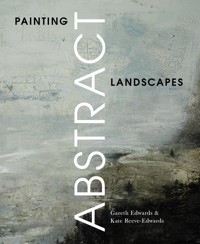
Abstract landscape painting expresses emotion while still capturing the essence of a landscape. This compelling book explores this suggestive style first developed by Turner. Using the hauntingly-beautiful paintings of Gareth Edwards, it explores the technical, historical and psychological dimensions of abstract landscape painting to help you develop your own skilful and intensely personal approach. Through this new book you can learn about how to begin an abstract landscape painting, using chance application; understand how to 'manage accidents' to create innovative pieces of work; discover the importance of effective composition and how this navigates the viewer's journey; determine the importance of the 'invisible' elements of painting: the unspoken value of the viewer and the influence of 'looking'. It also reveals how to utilize a convergence of linear and atmospheric perspective to help your viewer traverse the picture plane and helps you understand the importance of light, space, colour, and tone in generating evocative paintings. Finally, it encourages you to be more demanding of your surface, using textural techniques and glazing to achieve professional production values. It is a unique and exciting book into this under-documented genre.
Das E-Book können Sie in Legimi-Apps oder einer beliebigen App lesen, die das folgende Format unterstützen:
Seitenzahl: 283
Veröffentlichungsjahr: 2021
Ähnliche




















First published in 2021 byThe Crowood Press LtdRamsbury, MarlboroughWiltshire SN8 2HR
This e-book first published in 2021
© Kate Reeve-Edwards and Gareth Edwards 2021
All rights reserved. This e-book is copyright material and must not be copied, reproduced, transferred, distributed, leased, licensed or publicly performed or used in any way except as specifically permitted in writing by the publishers, as allowed under the terms and conditions under which it was purchased or as strictly permitted by applicable copyright law. Any unauthorised distribution or use of this text may be a direct infringement of the author’s and publisher’s rights, and those responsible may be liable in law accordingly.
British Library Cataloguing-in-Publication DataA catalogue record for this book is available from the British Library.
ISBN 978 1 78500 974 7
Cover design: Sergey TsvetkovAll photographs are by the authors unless otherwise stated
For Our Family
CONTENTS
Acknowledgements
Preface
Introduction
1Methods and Materials
2How to Start a Painting
3Composition
4Tone
5Colour
6Space and Texture
7Land
8Water and Air
9How to Finish a Painting
Conclusion
List of Contributions
Endnotes
Index
ACKNOWLEDGEMENTS
Writing this book was a collaborative process. We would like to thank our family, especially Rachael (Mum), who continues to be our mainstay. Thank you for the soup, the walks, the words of encouragement, and for organizing and sourcing over 200 images for us to use. Thank you to Freddie too, who offered constant cheer.
I would also like to personally thank my partner Jack, who persistently reminded me I was capable when I forgot myself.
We want to say a big thank you to the photographers who provided their beautiful, high-quality images in this book: Paul Massey, Olivia Whitbread-Roberts, Simon Cook, Todd White and Steve Tanner.
This book could not have been as richly tapestried without the generous contributions of the following artists: Richard Cook, Sherrie-Leigh Jones, Neil Canning, Kerry Harding, Andrew Hardwick and Lewis Noble. Thank you all for your time, your images and your thoughts.
Thank you too, to Gareth’s art dealer, Jill George. Thanks for your continuing support and belief and for creating the space within which small things feel safe to grow in, and for our ongoing friendship… onwards.
We also want to acknowledge the private collectors to which each of the paintings in the following pages belongs.
Finally, to each other. Daughters and Fathers. Fathers and Daughters. All the talking and all the listening. The Writing and the Painting. To be seen and to be heard. The gift of love.
PREFACE
“Beauty is truth, truth beauty”; – that is all Ye know on Earth and all Ye need to know.
Keats
Writing this book was eye opening, and not only because it was my first.
It has given me the insight into art history that I have always craved. I was finally given the time to read books like E.H. Gombrich’s The Story of Art, and Johannes Itten’s The Elements of Color. These are books I’d always desired to read. Yet, as my academic attention has been preoccupied with literary theory for most of my adult life, I had never allowed myself the time to truly immerse myself into the world of art history. This is partly why this book was such a delight to write.
Kate Reeve-Edwards and Gareth Edwards in his studio.
Yet, more so than the literature I was able to finally indulge in, collaborating with my father on this book was what made the process truly remarkable. We had not discussed art in the way our conversations that yielded this book generated, since I was very young. The studio time, the practical demonstrations, the lingering glances over the paintings in progress, our long, intimate conversations, all reminded me of the art lessons he and my mother used to give me as a child, every Saturday morning.
This book’s core was generated by these discussions between my father and I and, of course, continually visually enthused by his astonishing paintings. The works you will encounter on these pages have been my constant companions, my inspirations, my leaders throughout this process. Whenever I lost my way, whenever I was blocked by a thicket of uncertainty, his paintings gently called me back to the forward path. For in this book, they have acted as my characters, my friends, my confidants. They have decorated the walls of my childhood homes, they have occupied the walls of my father’s studios; they have been an unrelenting and comforting presence.
Although they have always been there, they have arrived, more often than not, fully formed, perfectly balanced, poetically present. I have never really known how they came to be. It has always slightly surprised me that these objects are created. They seem to have such presence, such history. I see them as almost prehistoric. The fact that my father actually builds them, using his hands and his mind, has continuously filled me with wonder and admiration. To write this book, to understand the steps, techniques, and procedures that generate these wonderful, transportative pieces of work, was so delicious. It has transformed my consideration of these paintings, from understanding them on a poetic and aesthetic level, to recognizing them as technical objects steeped in the art history that has come before them. This has only increased my delight in the works, and my admiration for the creative abilities of my father.
We have created this book for you, in order to share my father’s ( GE or Edwards, from now on) approaches to Abstract Landscape Painting. This text is instructional, yes, as our main aim is to democratize GE’s knowledge, to give you the tools to embark on your own creative journey with Abstract Landscape Painting. Indeed, the first five chapters lean more heavily on history, technique, and instruction. However, we strove to make this more than just a ‘how-to’ manual. The final chapters take a more melodious, stirring tone that is in keeping with both of our approaches to the multifaceted conditions and connotations of painting.
So much of Edwards’ work, and art in general, is about the convergence of technique and poetry, skill and feeling, mind and body. Therefore, we thought it imprudent to lean our text too heavily on one side of the balance. Instead, we accompany instruction with philosophy, psychology, poetry, and history, in order to enrich this text with layers, with weight, much like the prehistoric lamina of Edwards’ paintings.
Kate Reeve-Edwards
Introduction
By Gareth Edwards
Art should never try to be popular.
OSCAR WILDE
Something was definitely happening. It became more and more obvious with every mentoring session I was taking. Maybe an unspoken movement of sorts. An approach to painting that was neither pure abstraction nor a purely illustrative description of the landscape. An overwhelming majority of artists I was helping wanted to create ‘landscapes’ that were also expressions of their feelings without recourse to the old-style skills of observation and ‘correct’ technique. They wanted to learn how to paint abstracted landscapes that were both evocative of the environment and an expression of their innermost feelings.
Very many of these artists had left Fine Art courses because they had been encouraged to abandon any notion of landscape painting by their tutors, who may have been holding tight onto theoretical positions hard won in the 1980s. Positions that have precluded much painting and firmly rejected any sort of expressive landscape painting. Yet here were thousands of artists across the world desperate for a supportive and inspiring voice encouraging them to feel confident in their choice of landscape painting practice.
The Tourist; 165 × 180cm, oil on canvas.
Image of Gareth Edwards in his Porthmeor studio. (PHOTO: PAUL MASSEY)
This book is an attempt to answer that need. It sets out to inspire, inform and support your practice in the pursuit of creating beautiful and expressive Abstracted Landscape Paintings.
In order to contextualize this book, I searched for other texts on the subject. An authorized collection of essays on Abstract Landscape maybe, or a leading academic supporting this movement? Any contemporary book on Abstracted Landscape painting at all? Nothing. I could find almost no leading art institutions prepared to mount an exhibition of contemporary landscape painting other than exceptional artists such as Anselm Kiefer, who would describe himself more as a history painter and a poetical philosopher. I was personally told by a public gallery director that my practice was irrelevant and unfashionable. However, encouragement lay in the work of painters whose names kept popping up in mentoring sessions and discussions with other contemporary painters. These artists were J.M.W. Turner (in particular his later, more abstracted work), the Godfather of this approach to painting, as well as the painters Joan Eardley, Cy Twombly and Barbara Rae. We will be referring to these painters frequently throughout the book for expert help and guidance, as well as my own studio practice.
Joseph Mallord William Turner (1775–1851), The Evening of the Deluge (1843); 76 × 76cm, oil on canvas. (CREDIT: TIMKEN COLLECTION, COURTESY OF THE NATIONAL GALLERY OF ART, WASHINGTON)
I feel determined to give such a popular but overlooked movement in contemporary art a name, a space, and a contextual framework designed to encourage all the aspiring Abstract Landscape Painters out there; to provide both a practical guide and a poetical space to inspire and instruct.
We will explore the importance of play and accident and how to exploit these vital components alongside some rather more recognizable skills such as composition, colour, tone and space, so we can feel confident that our expressive ‘accidents’ are based on some sound pictorial indexes. We develop an approach to painting strategies that could be called ‘managed accidents’. The result will be that the careful observer of this book will quickly be able to make beautiful landscape paintings full of personal expressiveness and poetic beauty. This will happen without recourse to an ancient, historical tradition of oil painting skills; without long years enduring dry observations in front of a pretty ‘view’ with only your disappointment to look forward to. This is a book that gets results and can immediately open up the doors for years of successful, happy and gloriously creative Abstract Landscape Painting.
Low Tide, Infinite Light Forever; 90 × 100cm, oil on canvas. (PHOTO: SIMON COOK)
We will begin with a detailed exploration of a fundamentally radical technique: starting a painting by pouring liquid paint and solvents across properly prepared supports. We will talk about how to prepare your studio and canvases properly, to get the maximum out of this new technique and the pitfalls to look out for.
The traditional skills explained here are ones that are often not elucidated in art schools such as: basic paint technology (what paint goes with which solvent or oil and so on), as well as atmospheric perspective and mark-making. However, this is mostly a revolutionary approach that will transform your painting practice (after long hours practising in your studio) and radically alter your outlook on art.
The approach I’ve developed is a life-affirming and life-enhancing process that shifts your studio practice from one of frustration and disappointment to one of thrilling and fulfilling engagement with brilliant results. I try to encourage a real sense of release from the old ‘brush’ technology acquired after years of life-drawing and painting mired in history and convention; instead cultivating a fresh, modern, creative, and inspiring approach that genuinely opens up positive channels in your work and your mind.
The Abstract Landscape Painting strategies, which encompass the ‘pouring’ techniques and related approaches, dispense with the need for conceptual ‘meaning’ that is so much part of our current cultural education. In a recent article about my work the headline read, ‘My work is meaningless’ and the article continued ‘… but not without significance.’
I don’t make work to fit a theoretical framework and there is no ‘code’ to crack. What you personally feel in front of one of my paintings is the only relevant response: feelings and emotions, rather than intellectual positions. Throughout the book we emphasize the importance of emotional intelligence over Cartesian intelligence: suggestion and poetry rather than exacting prescriptions or ironic posturing. In this way, Abstract Landscape Painting is positioned directly between the old schools of Modernist Abstraction and Post-Modern Irony. It occupies a third way: a middle position rejected by the mainstream cognoscenti. This ‘third way’ seeks to combine instinctual, poetical approaches with some basic fundamental picture-making skills and to frame them in a considered, managed operating structure. This helps to develop an exciting sense of newly ordered chaos and deliberate accident wherein destruction and play are the key driving forces, especially when coupled with the safer harbours of composition, tone, colour and space.
Another mantra offered up by the book is the exhortation to realize that ‘the Truth is on the paper’. This idea is straight out of the Abstract Expressionist philosophical cupboard, but an idea not always appreciated by regular landscape painters who are often wedded to the old observational model in which an artist stands in front of nature and maps out, in paint, what they can see on to their canvases as faithfully as possible. They try to ‘capture’ the scene or light as it changes. I’m much more interested in creating space and light and atmosphere by myself in the studio, under sympathetic and reasonably predictable conditions. This method shifts the focus of the artist away from the observed scene and towards the canvas, paint, and tools in front of them. This releases us from the hegemony of mimetic verisimilitude, which is doomed to failure, as nature is always better!
We will be making it up. It’s what artists do. It’s what Turner did in his large, leaky London studio. Artists have always made it up: that’s our job. Move a tree here, shove in a dark cloud over there, shift a whole castle across from one side to another, in order to better embody the emotion and feelings we are wanting to portray. The strategies outlined in this book just take that idea a little bit further. We are creating our own poetic and emotional Truth. The Truth is on the paper: it is not a copy of nature. It doesn’t look like an ordnance view of Dartmoor; it is only itself: a painting on canvas or board made up of marks, suggestions, memories of light and space, which are all open to the interpretation of the viewer, with no egocentric prescription of meaning from the artist. A brand new, freshly minted object that only relates to itself, but that maybe hints at half-remembered landscapes and atmospheres. Each viewer will bring their own neurosis to bear on the painting, establishing a new personal poetic truth for it and them: a privilege that is ceded from the author to the viewer. The viewer fills in the gaps left by the artist and by their suggestive handling of paint and illusion. This is how poetry works and I very much regard painting as a form of poetry.
Aspen Lawns; 40 × 42cm, oil on paper.
The viewer is free to enjoy the surface of the painting with all its unique facturing, glazes and accidental continents of poured colour, as well as the emotional space that the painting takes them to. As authors of this surface, we have the whole haptic toolbox at our disposal. The viewer’s response to our work is not just affected by the lyricism of our content and its themes, it is also affected by the beauty of the painting’s surface. Throughout the book, we try to bring together the importance of developing both the poetic atmosphere of painting with its surface delights, exploiting its hand-made qualities, the accidental mark-making, the surprising colour combinations, and thrilling tonal and compositional effects.
Arriving by Sea, Aegean Island; 90 × 100cm, oil on canvas. (PHOTO: SIMON COOK)
Private Beach; 25 × 30cm, oil on board. (PHOTO: SIMON COOK)
What really lies behind the epithet of ‘the truth is on the paper’ is the conviction that the Truth is not ‘out there’, somewhere to be captured in paint. Rather, the Truth is being made new on our canvases as we paint. This seems to work in two ways:
1. Paintings’ ability to stir memories, feelings and desires.
2. Paintings’ ability to delight the eye through haptic qualities of the manipulated paint surfaces: its objectness.
Both of the above elements need to conflate into the following poetic paradox: a painting is always a window and a painting is always an object. We are the servants of both forces at the same time. So, let’s make the window element as poetic as possible and let’s make the object element as beautiful as possible; the definitions and parameters of these concepts are yours to explore. This is a generous gift to a viewer who can be transported in reverie and contemplation, as well as delighted by the sensual surface qualities. Both elements, the spatial and decorative, working in harmony: the macroscopic and the microscopic.
The surface of a painting can be a thing achieved very quickly but, if you are like me, you can spend days and days applying tiny dots of complementary colour before removing them, only to then reapply once more. This unseen work all adds to the overall incrementally accrued quality of painted surface. Da Vinci would sometimes apply up to twelve glazes of thin films of paint over an area to get a certain luminosity; the glowing shadow of Turner’s skies were very worked-up affairs. We too owe it to the viewer to work as hard and with as much diligence to our surfaces, to hold the eye in close-up as much as from a distance.
Each chapter deals with a different aspect of these tenets and goes into some practical details on how best to achieve them, whilst emphasizing the need to keep our poetical/emotional themes intact. Every aspect of each painting, both haptic and atmospheric, must be in the service of the theme. The theme, of course, may change during the course of the painting’s development. There is a whole section dealing with themes, their formation and their role in Abstract Landscape Painting in Chapter Two: ‘How to Start a Painting’.
Autumn; 110 × 105cm, oil on canvas.
The ‘Themes’ section is one that asks you to consider the question: What is your painting about?
Even if you are more on the ‘abstract’ end of the Abstract/ Landscape spectrum, some idea of a generalized theme, some ‘emotional weather’ will help to build notional guidelines and reference points for your painting. A key point we must take on board when we are considering themes is that they may change at any time during the process of the painting’s creation. I have often started a painting with a specific mood and idea in mind only to radically alter that theme later in mid-stream. This is not a bad thing. You are the author, the artist, so whatever theme/atmosphere emerges during the painting is absolutely fine because it is yours.
You will have a small rucksack of ideas in your head and any one of them may emerge during the making of a painting. To be this flexible is a strength. To take inspiration from the periphery of our mind and eyes is central to our success. To alter and change tack from our original ideas is only a good thing that adds spontaneity and surprise to our processes.
How we generate or recognize our themes that are relevant to us individually is the work of self-analysis, insight and an expertise beyond the extents of this book. I recognize that the themes I generally reach out for include: elegy, lament, transportation, ascension, and yearning with a little side order of modest hope. These are qualities I find in most of my favoured composers, poets and, of course, artists. You, of course, must come to recognize your own thematic ‘go-to’s. Name them. List them. Nurture them. Our neuroses and obsessions are our own creative well-springs and allow our studio practice to connect uniquely with our own inner world in an ongoing and self-aware relationship.
As Byron Slips Silently into the Lake; 40 × 42cm, oil on canvas. (PHOTO: SIMON COOK)
There will be some of us for whom these relationships segue into a kind of art therapy, whilst others may hold them more lightly. In my own practice, I push the poetry toward a universal relevance whenever possible, as I have, over the decades of making work, placed the viewer in the most privileged position that I possibly can. The communication with the viewer is, for me, the most central element of my work as an artist. I am not here to fulfil the Arts Council’s abstracted edicts and wish lists. I want to connect and communicate with the viewer and therefore I place them at the very heart of my imaginings. Even those tiny dots left on the surface are there to encourage the viewer: to transport them to wherever they may want to go.
I believe Turner did this. I feel it lies at the very heart of his popularity and contemporary relevance. He created open vistas, fictive spaces freighted with universal atmospheres, inviting us in, not with complex codas or conceptual frameworks, but with sensual grace and emotional generosity. It is this that we are able to experience as part of our own unique reaction to his compositions, spaces, colours and themes. We are allowed ‘in’ to his paintings through his generosity, integrity and universality: his emotional and poetic intelligence.
I often urge artists to have a close coterie of ‘friends’ either dead or alive. Artists, composers, poets: anyone with whose work you have built a connection with during your artistic development. These ‘friends’ will always be there, their work will always be available to consult and console and inspire. I do believe that amongst your exalted gang, there should be at least one contemporary living artist that you admire who can help to contextualize your practice; who can contemporaneously encourage your work because they are doing it too! My ‘friends’ are Turner, Monet, Twombly, Kiefer, Mama Anderson and, more recently, Ged Quinn.
Our painterly language is often developed over the years in a dynamic dialogue with our ‘friends’. This language eventually becomes such a second nature that we don’t even consciously think of it as separate from us. To others, of course, it is our ‘signature’ stamp of painterly identity. After about ten years of working as a professional artist, I was very happily surprised to hear an exhibition visitor say, ‘Oh that’s very Gareth Edwards’. These days, I sometimes even hear them say it when it’s not my work! So, you will develop an unselfconscious, identifiable style developed in relationship with your artistic heroes. This style can be very influenced, even created through pragmatic components such as your use of tools, painting materials, and specific techniques. Once a painter moves away from the academic approaches of ‘brush’ technology, they are much freer to invent and develop a personalized language fit for the purpose of manifesting their specific thematic atmospheres and emotional weathers.
My own box of materials and tools does of course contain dozens of brushes, but I mostly use a wide range of blades, knives, rags, kitchen roll, cardboard, sprays and diffusers. Ultimately, I use my hands and fingers most extensively. Health and safety must obviously guide you in your choices of tools, especially as many of them will be idiosyncratic and not necessarily available from the art shops, so find a relationship to tools and materials that best protects your personal well-being. I still believe in using oil paint and genuine fir turpentine with linseed and other oils, so I make sure they are kept locked in a metal box away from the studio wood burner. Many painters today opt for modern alternatives to pungent solvents such as Zest (citrus-based solvent) but I am romantically disposed toward the materials that derive from the natural world: the earth and pine trees. I love the sensuality of these old-school materials, from their feel to their smell, but you must find your own way in this matter. This book, it should be noted, does place a premium prejudice toward oil paint (see ‘Methods and Materials’ chapter) over acrylic, largely because of what I perceive to be its greater sensual qualities, however all the techniques and strategies outlined in the book can be equally achieved by water-based materials: these products present a lot less health and safety requirements.
In conclusion to this introductory chapter, I offer a brief description of my own practice and its biases and prejudices. As such, it offers a kind of mission statement to my current practice against which the reader can marry the images of my work reproduced throughout this book.
Ocean Atlantic Light; 40 × 40.5cm, oil on paper.
I have tried to make paintings that reach beyond the events of here and now, that engage with universal themes which are more in tune with the evanescent mysteries of time and space.
Each painting invites the viewer into its fictive spaces and inspires contemplation and personal connections along a remote trail of memory.
Paintings operate much like poems: relating to the viewer with half-remembered places and terrains triggering personal associations specific to the viewer.
Each piece is created with an evocative atmosphere, not drawn from a mimetic observation of nature nor a cartographic recording of topology, but, like a poem, the paintings are emotional spaces waiting for the viewer to enter, carrying their own thoughts, dreams and memories with them.
These paintings are evocative of an emotional weather and, although many are elegiac in atmosphere and embody shades of gentle melancholy, they all ultimately culminate in a subtly realized light of hope.
CHAPTER 1
Methods and Materials
By Gareth Edwards
There is no such thing as a dumb poet or a handless painter. The essence of an artist is that he should be articulate.
ALGERNON CHARLES SWINBURNE
There is so much to say about materials and methods, paint and techniques. We could fill many, many pages with pigment data, grinding techniques, colour provenances, mixing recipes, and so on but my instincts tell me this is not the book for that level of detailed information. However, materials themselves do cast a spell over the artist and can evoke a deeply sensual allure. In Amsterdam I spent several happy hours in Rembrandt’s studio chatting with the materials curator about raw umber, he even got his ‘raw’ supply of umber out from the back room! The arrival of a box of new materials, especially fresh tubes of oil paint, is always met with a certain amount of excitement. It often leads to self-conscious display on the studio palette, until the inevitable grabbed deployment in a rush of thoughtless creativity. So, the following pages outline in a personal and simple way some of the most apposite methods and materials to my practice, based on my oil painting techniques for Abstract Landscape Painting.
The Old Jetty, East Pier; 90 × 100cm, oil on canvas. (PHOTO: SIMON COOK)
Some of the following processes are traditional and some have been developed in my studio as part of my attempt to expand the repertoire of painting strategies. I have looked carefully at some artists’ processes and responded in my own unique way to those, in particular Gerhard Richter, Anselm Kiefer and Cy Twombly. They have all been inspirational for some of the innovative techniques that I have subsequently deployed in the studio.
As I mentioned earlier, the techniques that are specific to you and your needs, have to be developed by you as part of your personal journey in the studio. However, this book and this chapter in particular can provide a certain amount of inspiration and instruction. I love paint and paint technology and am enthusiastic about any new recipe, material or process that can help express my ideas. I spied a heap of ridged cardboard in an artist’s studio once and realized, in a glance, that was how they achieved a beautiful lined and ridged look across the background of their paintings. Now I’m never without ridged cardboard in my studio.
Innovative strategies can go a long way toward defining your entire practice; think of the Abstract Expressionists in 1940s and 50s America. The swooshed paint stroke and dripped acrylics became the very image of individualism and expressive existentialism and subsequently the very image of creativity throughout the contemporary media: an image still used in bank TV commercials to this day (usually a young woman expressing her freedom by throwing paint on to a large blank canvas in a New York loft style studio). Or, closer to home, the ‘Process’ painters of the 1990s, Jason Martin and Bernard Frize, for example, whose practices are defined by their unique techniques of applying paint on to canvases. Paint techniques are often codified and ironized by contemporary postmodern artists such as Fiona Rae and Richard Patterson who will pick and mix a variety of coded techniques. Each technique is an ‘image’ of a ‘real’ or even fake technique blended in a beautiful essay of painted quotes across the canvas. Disney cartoons meet Rembrandt sfumato meets expressionist drips, over painterly post-formalist grids! Much of this type of coding and signing has informed Art School practices over the last few decades and helps to add to the marginalization of un-ironic landscape painting to the snowy peaks of outlier practices.
Having said that, I frequently use loose unattended drips of paint and slashed brushstrokes in my paintings, in the full awareness that the mainstream art world will dismiss these clichés as uninvestigated, painterly tropes redolent of past glories and certainly not something for the contemporary painter. However, I love using them, they look great. The drips connect areas across the canvas: they are useful indicators of ‘fluid’ passages, they help to flatten out whole planes of composition, they hint at a partly hidden ‘grid’ structure when combined with horizontal ‘drags’ of paint… and, yes, they do embody a certain sense of freedom, looseness and stylistic insouciance. So all good, as far as I’m concerned.
OIL PAINT
I prefer oil paint to acrylic for its earthier and more buttery qualities. It can remain fluid and malleable for longer, as it takes a long time to dry. The colours are somehow more mineral, vestigial and so suit my needs more than the brighter, harsher colours of fast-drying acrylic. Of course, one can manipulate water-based paints to do all the things oil paint can do but it just feels you are acting against their specific nature to be vibrant, fresh and plastic. Oil paint possesses qualities of age and space and subtlety, of luminous glazes, of blended sfumato and atmospheric space. It is, of course a personal choice and, having used acrylic paint for many years, I now choose oil paint for my work because I have found it more sympathetic to my particular requirements.
There are many brands and types of oil paint out there; I have preferences for Old Holland, Michael Harding, Winsor & Newton, Mir, or Bloxx and Sennelier. Each brand has different price points for different pigments, and some have student or artist’s ranges that have differing qualities. In general, the artist’s quality is the best. The cheapest colours are nearly all earth colours, whereas the vermillion and violet pigments tend to be pricier. You will need larger quantities of white. I use titanium but many artists choose a softer, warmer white. Experimentation will help you to arrive at the right choice for yourself.
Gareth Edwards’ frequently used oil paints.
The fundamental quality of oil paint is that it takes longer to dry than water-based paints, especially when mixed with linseed oil. This means that patience and planning are major assets for the oil painter. Have multiple surfaces already prepared to work on whilst others are drying off, especially when applying final glazes and at the early pouring stage. Its ability to remain fluid means you can return again and again to a painting and constantly modify and reconfigure your work as it slowly dries. There are drying products out there: Liquin, siccative driers, alkyds, cobalt violet driers, even water mixing oil paints. All of which work by adding a small quantity to the oil paint. I use turpentine as a mixer to help underlying areas to go off more quickly. I never use Liquin but do occasionally use siccative linseed oils without cobalt violets. Working in oil is a sensuous, beautiful, unique and slightly complicated procedure. It is truly worth the effort and thought, as the results are spectacular. Following the steps outlined in this book will help you toward a contemporary mastery of this pliant and alchemical earthy material.
MIXING OIL PAINT WITH TURPS
Source genuine fir turpentine, preferably double rectified. You will need large amounts. Buy it in bulk from major suppliers and use recommended brands: personally, I love Kremer. You will need to keep reordering this product, as at no time must you hold back on its use: this could compromise your creativity.
White spirit is not suitable for mixing with oils; it is fine as a cheap brush and rag cleaner. Turps contains pine resin so it does not separate the pigments within the paint like a pure solvent will. This means that turpentine can hold paint together at larger tolerances as well as diluting it.




