


18,99 €
Mehr erfahren.
- Herausgeber: John Wiley & Sons
- Kategorie: Fachliteratur
- Sprache: Englisch
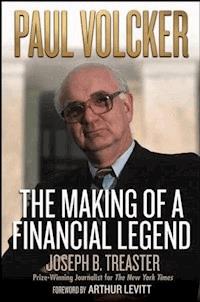
As the Chairman of the Federal Reserve from 1979 to 1982, Paul Volcker established himself as one of the most influential economic thinkers. Currently a major advocate for corporate governance and accounting reforms, Volcker's reputation as a great business leader with uncompromising ethics continues to this day. Written by award-winning New York Times journalist Joseph Treaster, Paul Volcker: The Making of a Financial Legend takes readers through the most compelling moments of this legend's life in private and public service. From his early days as a young Treasury Department official through his appointments to the New York Federal Reserve Bank, the Federal Reserve, and James D. Wolfensohn, Inc., this inspiring book captures the significant moments in Volcker life and explores the ethical, economic, and moral dilemmas he faced at every turn.
Sie lesen das E-Book in den Legimi-Apps auf:
Seitenzahl: 299
Veröffentlichungsjahr: 2011
Ähnliche


















Contents
Foreword
Chapter 1: A Finance Legend
Chapter 2: Seventy-Six
Chapter 3: The Power of the Fed
Chapter 4: Chairman
Chapter 5: Youth
Chapter 6: School Days
Chapter 7: Hardship
Chapter 8: Difficult Choices
Chapter 9: The Fallout
Chapter 10: Fly-Fishing
Epilogue
Bibliography
Acknowledgments
Index
Photo Insert
Additional Praise for Paul Volcker: The Making of a Financial Legend
“As Joseph Treaster’s quite wonderful biography makes clear, Paul Volcker is a rare gift to the nation. Read this book and be reminded anew of the extraordinary integrity and intellectual firepower Volcker has made synonymous with his service to the Republic. You may not think you care about the role of the Federal Reserve, but after you read Paul Volcker: The Making of a Financial Legend, you will.”
—Hodding Carter III, State Department Spokesman in the Carter Administration and currently President of the John S. and James L. Knight Foundation
“I remember well when Paul Volcker became chairman of the Fed and vowed to break inflation. Not many believed him, but he did it, almost single-handedly. The story of this great financial strategist will help you understand today’s economy and what lies ahead.”
—Jim Rogers, international investor and author of the bestselling books,Adventure CapitalistandInvestment Biker
“Through five decades of competence and integrity in both the public and private sectors, Paul Volcker has gained the respect of the world’s financial leaders while never forgetting those in America who needed a helping hand. He has been the voice of calm in times of financial crisis and of innovation in times of opportunity. Above all he has been candid in a world where candor often takes second place to public relations and spin. Treaster’s compelling book about an extraordinary American is long overdue.”
—Former Senator Bill Bradley
Copyright © 2004 by Joseph B. Treaster. All rights reserved.
Published by John Wiley & Sons, Inc., Hoboken, New Jersey
Published simultaneously in Canada
No part of this publication may be reproduced, stored in a retrieval system, or transmitted in any form or by any means, electronic, mechanical, photocopying, recording, scanning, or otherwise, except as permitted under Section 107 or 108 of the 1976 United States Copyright Act, without either the prior written permission of the Publisher, or authorization through payment of the appropriate per-copy fee to the Copyright Clearance Center, Inc., 222 Rosewood Drive, Danvers, MA 01923, 978-750-8400, fax 978-750-4470, or on the web at www.copyright.com. Requests to the Publisher for permission should be addressed to the Permissions Department, John Wiley & Sons, Inc., 111 River Street, Hoboken, NJ 07030, 201-748-6011, fax 201-748-6008, e-mail: [email protected].
Limit of Liability/Disclaimer of Warranty: While the publisher and author have used their best efforts in preparing this book, they make no representations or warranties with respect to the accuracy or completeness of the contents of this book and specifically disclaim any implied warranties of merchantability or fitness for a particular purpose. No warranty may be created or extended by sales representatives or written sales materials. The advice and strategies contained herein may not be suitable for your situation. You should consult with a professional where appropriate. Neither the publisher nor author shall be liable for any loss of profit or any other commercial damages, including but not limited to special, incidental, consequential, or other damages.
For general information on our other products and services, or technical support, please contact our Customer Care Department within the United States at 800-762-2974, outside the United States at 317-572-3993 or fax 317-572-4002.
Wiley also publishes its books in a variety of electronic formats. Some content that appears in print may not be available in electronic books.
For more information about Wiley products, visit our web site at www.wiley.com.
Library of Congress Cataloging-in-Publication Data:
Treaster, Joseph B.
Paul Volcker : the making of a financial legend / Joseph B. Treaster.
p. cm.
Includes bibliographical references and index.
ISBN 0-471-42812-4 (cloth)
1. Volcker, Paul A. 2. Economists—United States—Biography. 3. Board of Governors of the Federal Reserve System (U.S.)—Officials and employees—Biography. 4. United States—Economic policy—1971–1981. 5. United States—Economic policy—1981–1993.
I. Title.
HB119.V6T74 2004
332.1'1’092—dc22
2004000250
To Barbara and Chloe, my true loves
Foreword
Without Paul Volcker’s toughness and guts, we may never have broken the grip of rising inflation and declining productivity that plagued the United States during the 1970s. And we surely would not have been positioned to enjoy record economic growth in the 1990s. It would have been amazing to think in 1982, but now inflation barely registers as a concern in the United States. For that, Americans have to thank Paul Volcker.
At the start of the 1980s, America was suffering through its greatest economic crisis since I was a young boy during the Great Depression. In March of 1982, as Chairman of the American Stock Exchange, I put forward Wall Street’s perspective on President Reagan’s economic policies in an address at the National Press Club in Washington, buttressing my remarks with data from a poll of 400 leaders in the financial community. The results of the poll, conducted by the Exchange, were clear: Business leaders were losing enthusiasm for the president’s economic plans, but they overwhelmingly supported Paul Volcker’s stewardship of monetary policy at the Federal Reserve Board.
At the time, that was not an opinion shared by most Americans. As Joseph Treaster vividly describes in the following pages, Volcker was under intense pressure to reverse his policy of monetary restraint. At the time, it was hard for a lot of people to see that Volcker was administering the medicine that our ailing economy sorely needed. But I believed that he was. That is why at the end of that talk at the National Press Club, I told the reporters there that Volcker “may be the only voice of sanity left in Washington. We respect him for his toughness and guts.” My comments elicited a small storm of controversy, but I stood by them then, and I stand by them now.
Having gotten to know Paul over the years, I can say that this courage is a manifestation of how he has lived his personal and professional life. He has always stood for what he believes is right, regardless of the political consequences.
After Volcker left the Fed, he undertook the difficult task of chairing a joint committee of Jewish groups and Swiss banks to bring resolution to the question of unclaimed accounts of Holocaust victims. It was a situation fraught with emotion and acrimony, one in which the chance for failure was high. Yet Volcker took on the task, oversaw a massive accounting of Swiss bank records, and helped force a $1.25 billion agreement.
As that process was winding down in 2002, Volcker answered the call at Arthur Andersen, agreeing to chair an independent oversight committee at the height of that accounting firm’s problems concerning the Enron collapse. It was a total no-win situation. The public was outraged at the firm’s role in this massive corporate scandal, and the accounting industry had a history of obstinacy toward reform.
But Volcker truly believed that it was important to the future of accounting and to the future of our market system for him to help turn Arthur Andersen into a model for the entire field. Unfortunately, Volcker’s reorganization plan was never implemented, as criminal indictments quickly doomed the future of Arthur Andersen. Yet many of the recommendations that Volcker made—such as restrictions on nonaudit work and the rotation of auditors—became part of the groundbreaking Sarbanes-Oxley Act passed by Congress later that year.
Finally, I saw Volcker’s courage up close as a fellow member of the Conference Board’s Blue-Ribbon Commission on Public Trust and Private Enterprise. When everyone else in this august group of business leaders was talking about the right formula to treat stock options as an expense—an important move to realign the interests of management and shareholders—Volcker took the practical, principled, and bold stand that these options should be banned outright.
What motivates Volcker to take these principled stands is engagingly detailed in the following chapters. Joseph Treaster’s book paints an encompassing portrait of one of the great economic minds and financial leaders of our time, detailing his professional triumphs as well as the personal side of the man, from his upbringing in New Jersey to his struggles in caring for his wife and family.
Reading this book, one also learns the story of a now rare breed: the private sector leader who takes his public obligations seriously.
In an era in which business leaders are celebrated on magazine covers for acquiring a company in one stroke of the pen, firing tens of thousands of employees in another stroke, and in yet another, selling off the enterprise years later for less than shareholders paid for it in the first place, Volcker stands out as an exception to the rule. He traded years of lucrative earnings on Wall Street for years in the public service, and, when he moved to the private sector, placed more value on maintaining his integrity than on maintaining a flashy lifestyle.
Now, when anyone is drawing up a list of people to head an important public commission, Paul Volcker heads the list. Unfortunately, he is often the only name on it. Today, there are too few private sector leaders who appreciate the responsibilities that they have to the rest of society, who understand that their expertise is needed to navigate the challenges before us, and who recognize that their interests are served when they serve the public interest.
I hope those reading this book will see the story of Paul Volcker’s life not only as a piece of history, but as an example of the type of public-spirited behavior we need from our business leaders in the years to come. I can think of no more fitting tribute to this great man.
Arthur Levitt, Jr.
Westport, Connecticut
March 2004
CHAPTER ONE
A FINANCE LEGEND
The lanky man in the rumpled suit puffed serenely on a cigar, and the members of the House Committee on Banking sputtered with rage. The lawmakers had been flooded by their constituents with heartbreaking stories of personal hardship as the nation slid ever deeper into the worst recession since the Great Depression. Interest rates had shot above 20 percent, millions of Americans had been thrown out of work, and consumer spending had plummeted. The vital industries that built and sold homes and cars were struggling, and thousands of businesses were heading into bankruptcy.
Yet, as the Congressmen questioned the one man most responsible for the hard times, Paul A. Volcker Jr., the chairman of the Federal Reserve Board, they drew no comfort. As bad as conditions were, Volcker said on that summer day in 1981, they were only going to get worse.1
Volcker knew, because he pulled the levers and pressed the buttons that largely determined the flow of money in America, whether it would be bountiful or scarce and how much it would cost to borrow. He had deliberately orchestrated a stratospheric rise in interest rates over the previous two years in a determined campaign to crush inflation. He had not expected interest rates to soar quite so high or the economy to fall quite so deeply into distress,2 but he was convinced that the constant escalation of prices—the essence of inflation—gravely threatened America’s economic stability and its status as a world leader, and that it had to be stopped.
Most Americans, however, did not see the danger. As troubled as they were by the uncertainties of ever rising prices, they had learned to live with inflation. They realized that the money in their pockets was losing value every month, so they bought homes and land that would rise in value as inflation rose and took out loans that would be paid back in inflated dollars. They demanded and received higher wages. Manufacturers marked up their goods. When Volcker slammed on the brakes and threw the economy into a dive, the country was stunned—and many Americans complained to their representatives in Washington.
Lesen Sie weiter in der vollständigen Ausgabe!
Lesen Sie weiter in der vollständigen Ausgabe!
Lesen Sie weiter in der vollständigen Ausgabe!
Lesen Sie weiter in der vollständigen Ausgabe!
Lesen Sie weiter in der vollständigen Ausgabe!
Lesen Sie weiter in der vollständigen Ausgabe!
Lesen Sie weiter in der vollständigen Ausgabe!
Lesen Sie weiter in der vollständigen Ausgabe!
Lesen Sie weiter in der vollständigen Ausgabe!
Lesen Sie weiter in der vollständigen Ausgabe!
Lesen Sie weiter in der vollständigen Ausgabe!
Lesen Sie weiter in der vollständigen Ausgabe!
Lesen Sie weiter in der vollständigen Ausgabe!
Lesen Sie weiter in der vollständigen Ausgabe!




