


36,99 €
Mehr erfahren.
- Herausgeber: John Wiley & Sons
- Kategorie: Geisteswissenschaft
- Serie: Positive Psychology and Well-Being
- Sprache: Englisch
Provides the tools and knowledge to develop and nurture the essential building blocks of a thriving life
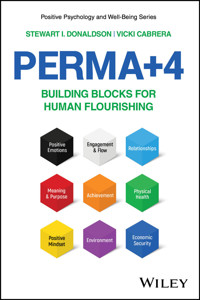
Understanding how to thrive, not just survive, has never been more critical in today's world. Grounded in over 25 years of peer-reviewed research, PERMA +4: Pathways to Well-Being and Positive Functioning provides a comprehensive guide to the essential building blocks of flourishing. Authors Stewart Donaldson and Victoria Cabrera share the latest evidence while providing actionable insights on how positive psychology interventions can help cultivate happiness and resilience.
With clear explanations of nine scientifically validated building blocks, including emotions, engagement, relationships, meaning, and accomplishment, PERMA +4 equips readers with tools to build their well-being while empowering others to do the same. The PERMA+4 framework extends foundational work by integrating new insights into areas such as physical health, mindset, and economic security. Each easy-to-read chapter is packed with practical activities, step-by-step guidance, informational charts and figures, full-color images, "Key Takeaways, " and reflection questions.
Offering practical strategies for anyone eager to lead a more fulfilling life, PERMA +4:
- Introduces the PERMA+4 framework, extending Martin Seligman's foundational well-being theory with new evidence
- Explains the science behind positive psychology interventions and why they work
- Integrates findings from more than 1,000 research studies on flourishing and well-being
- Covers practical applications for education, workplaces, healthcare, and personal growth
Ideal for health practitioners, educators, workplace leaders, and well-being coaches, PERMA +4: Building Blocks for Human Flourishing is essential reading for undergraduate, graduate, and professional audiences. It is perfect for courses in positive psychology, public health, leadership, and organizational development, or as a reference for practitioners aiming to enhance well-being in diverse settings.
Sie lesen das E-Book in den Legimi-Apps auf:
Seitenzahl: 315
Veröffentlichungsjahr: 2025
Ähnliche


















Table of Contents
Cover
Table of Contents
Title Page
Copyright Page
Dedications
About the Authors
Preface
References
Acknowledgements
1 A Fresh Look at the Science of Well‐Being and Positive Functioning
A Fresh New Look at Feeling and Doing Well in Life
PERMA+4 Building Blocks of Well‐Being and Optimal Functioning
Human Flourishing
Human Suffering
Human Struggling
Human Languishing
Human Thriving
Measuring Human Flourishing
Why Is Well‐Being Important?
How to Use This Book
Conclusion
References
2 Positive Emotions
What Are Positive Emotions?
Circumplex Model of Emotions (Russell, 2003)
Why Positive Emotions Are a Building Block of Well‐Being
The Broaden and Build Theory of Positive Emotions (Cohn & Fredrickson, 2010; Fredrickson, 2013a)
How to Leverage the Power of Positive Emotions to Improve Well‐Being
Apply What You Learned About Positive Emotions
Learn More About Positive Emotions
Key Takeaways
References
3 Engagement and Flow
What Are Engagement and Flow?
The Difference Between Engagement and Flow
Why Is Flow a Building Block of Well‐Being?
How to Create More Experiences of Engagement and Flow to Care for Your Well‐Being
How to Create the Conditions of Flow for Others
Apply What You Learned About Engagement and Flow
Learn More About Engagement and Flow
Key Takeaways
References
4 Positive Relationships
What Are Positive Relationships?
What About at School or Work?
Why are Positive Relationships a Building Block of Well‐Being?
How to Build and Nurture More Positive Relationships
Apply What You Learned About Positive Relationships
Learn More About Positive Relationships
Key Takeaways
References
5 Meaning and Purpose
What Is Meaning and Purpose?
Why Does Meaning and Purpose Matter?
Why Is Meaning and Purpose a Building Block of Human Flourishing?
How to Develop Meaning and Purpose
Apply What You Learned About Meaning and Purpose
Learn More About Meaning and Purpose
Key Takeaways
References
6 Achievement
What Is Achievement?
Why Is Achievement a Building Block of Human Flourishing?
Achievement in the Workplace
How to Nurture Achievement
Apply What You Learned About Achievement
Learn More About Achievement
Key Takeaways
References
7 Physical Health
What Is Physical Health?
Why Is Physical Health Important for Well‐Being?
How to Improve and Maintain Physical Health
Take It One Step at a Time
Apply What You Learned About Physical Health
Learn More About Physical Health
Key Takeaways
References
8 Positive Mindset
A Real‐World Journey of Growth
What Is a Positive Mindset?
Why Is a Positive Mindset Important for Well‐Being?
How to Develop and Maintain a Positive Mindset
The Psychological Capital Intervention (PCI) Model
Apply What You Learned About Mindset
Learn More About Mindset
Key Takeaways
References
9 Environment
What Is the Environment Building Block?
Why Your Environment Is a Building Block of Human Flourishing
How to Improve Your Environment to Support Your Well‐Being
Apply What You Learned About Your Environment
Learn More About Environment
Key Takeaways
References
10 Economic Security
What Is Economic Security?
Why Economic Security Is Crucial for Well‐Being
The Research on Economic Security and Life Satisfaction
How to Improve Economic Security
Apply What You Learned About Economic Security
Learn More About Economic Security
Key Takeaways
References
11 PERMA+4 Science: Why It Is Important to Monitor & Assess Well‐Being
Science: A Simple Guide
The Science of Positive Psychology and PERMA+4
Validated Research Measures
The PERMA+4 Scale (Donaldson & Donaldson, 2021)
The PERMA+4 Short Scale (Donaldson et al., 2023)
The Satisfaction with Life Scale (Diener et al., 1985)
The Flourishing Scale (Diener et al., 2009)
The Global Flourishing Index
Practical Tools for Developing and Monitoring Your PERMA+4 and Well‐Being
How to Score the Cantril’s Ladder
How to Interpret Your Cantril’s Ladder Scores
Conclusion
Key Takeaways
References
12 Activities to Develop PERMA + 4
How to Use This Chapter
How This Chapter Is Organized
Positive Emotions
Engagement and Flow
Positive Relationships
Meaning and Purpose
Achievement
Physical Health
Mindset
Environment
Economic Security
Activities That Develop Multiple PERMA + 4 Building Blocks
Resources for More Activities to Strengthen PERMA + 4 Building Blocks
Key Takeaways
PERMA+4 Activities Resources
Journal Articles
References
13 More PERMA+4 Resources
The PERMA Framework
Journal Articles
Books
Measures
Digital Resources: Websites, Articles, Video, and Audio Materials
The PERMA+4 Framework
Journal Articles
Books
Measures
Digital Resources: Websites, Articles, Video and Audio Materials
Positive Emotions
Journal Articles
Books
Measures
Digital Resources: Websites, Articles, Video and Audio Materials
Engagement and Flow
Journal Articles
Books and Book Chapters
Measures
Digital Resources: Websites, Articles, Video and Audio Materials
Positive Relationships
Journal Articles
Books and Book Chapters
Books
Measures
Digital Resources: Websites, Video & Audio Materials
Meaning and Purpose
Journal Articles
Books
Measures
Digital Resources: Websites, Video & Audio Materials
Achievement
Journal Articles
Books
Measures
Digital Resources: Videos, Podcasts, and Websites
Physical Health
Journal Articles
Books
Measures
Digital Resources: Videos, Podcasts, and Websites
Mindset
Journal Articles
Books
Measures
Digital Resources: Websites, Articles, Video and Audio Materials
Environment
Journal Articles
Books
Measures
Digital Resources: Videos, Podcasts, and Websites
Economic Security
Journal Articles
Books
Measures
Digital Resources: Videos, Podcasts, and Websites
Key Takeaways
References
Index
End User License Agreement
List of Tables
Chapter 2
Table 2.1 Ten types of positive emotions (Fredrickson, 2013 / with ...
Guide
Cover Page
Table of Contents
Title Page
Copyright Page
Dedications
About the Authors
Preface
Acknowledgements
Begin Reading
Index
Wiley End User License Agreement
Pages
iii
iv
v
xiii
xiv
xv
xvi
xvii
xix
1
2
3
4
5
6
7
8
9
10
11
12
13
14
15
16
17
18
19
20
21
22
23
24
25
26
27
28
29
31
32
33
34
35
36
37
38
39
40
41
42
43
44
45
46
47
48
49
50
51
52
53
54
55
56
57
58
59
60
61
62
63
65
66
67
68
69
70
71
72
73
74
75
76
77
78
79
80
81
82
83
85
86
87
88
89
90
91
92
93
94
95
96
97
98
99
100
101
102
103
104
105
106
107
108
109
110
111
112
113
114
115
116
117
119
120
121
122
123
124
125
126
127
128
129
130
131
132
133
134
135
136
137
138
139
140
141
143
144
145
146
147
148
149
150
151
152
153
154
155
156
157
158
159
160
161
162
163
164
165
166
167
168
169
170
171
172
173
174
175
176
177
178
179
180
181
182
183
184
PERMA+4
Building Blocks for Human Flourishing
Stewart I. Donaldson and Vicki Cabrera
This edition first published 2026© 2026 John Wiley & Sons Ltd
All rights reserved, including rights for text and data mining and training of artificial intelligence technologies or similar technologies. No part of this publication may be reproduced, stored in a retrieval system, or transmitted, in any form or by any means, electronic, mechanical, photocopying, recording or otherwise, except as permitted by law. Advice on how to obtain permission to reuse material from this title is available at http://www.wiley.com/go/permissions.
The right of Stewart I. Donaldson and Vicki Cabrera to be identified as the authors of this work has been asserted in accordance with law.
Registered OfficesJohn Wiley & Sons, Inc., 111 River Street, Hoboken, NJ 07030, USAJohn Wiley & Sons Ltd, New Era House, 8 Oldlands Way, Bognor Regis, West Sussex, PO22 9NQ, UK
For details of our global editorial offices, customer services, and more information about Wiley products visit us at www.wiley.com.
The manufacturer’s authorized representative according to the EU General Product Safety Regulation is Wiley‐VCH GmbH, Boschstr. 12, 69469 Weinheim, Germany, e‐mail: [email protected].
Wiley also publishes its books in a variety of electronic formats and by print‐on‐demand. Some content that appears in standard print versions of this book may not be available in other formats.
Trademarks: Wiley and the Wiley logo are trademarks or registered trademarks of John Wiley & Sons, Inc. and/or its affiliates in the United States and other countries and may not be used without written permission. All other trademarks are the property of their respective owners. John Wiley & Sons, Inc. is not associated with any product or vendor mentioned in this book.
Limit of Liability/Disclaimer of WarrantyWhile the publisher and the authors have used their best efforts in preparing this work, including a review of the content of the work, neither the publisher nor the authors make any representations or warranties with respect to the accuracy or completeness of the contents of this work and specifically disclaim all warranties, including without limitation any implied warranties of merchantability or fitness for a particular purpose. Certain AI systems have been used in the creation of this work. No warranty may be created or extended by sales representatives, written sales materials or promotional statements for this work. The fact that an organization, website, or product is referred to in this work as a citation and/or potential source of further information does not mean that the publisher and authors endorse the information or services the organization, website, or product may provide or recommendations it may make. This work is sold with the understanding that the publisher is not engaged in rendering professional services. The advice and strategies contained herein may not be suitable for your situation. You should consult with a specialist where appropriate. Further, readers should be aware that websites listed in this work may have changed or disappeared between when this work was written and when it is read. Neither the publisher nor authors shall be liable for any loss of profit or any other commercial damages, including but not limited to special, incidental, consequential, or other damages.
Library of Congress Cataloging‐in‐Publication Data Applied forPaperback ISBN: 9781394268160EPDF ISBN: 9781394268184EPUB ISBN: 9781394268177OBOOK ISBN: 9781394268191
Cover Design: WileyCover Image: © sanchesnet1/Getty Images
Dedications
Stewart would like to dedicate this book to all the established and student researchers across the world who have helped advance the science and practice of PERMA+4. And to his expanding and flourishing family, especially his first grandson Damian who has also arrived like this book in 2025.
Vicki dedicates this book to her family, for their love and encouragement, to her colleagues and collaborators, for their wisdom and inspiration, and to all who strive to flourish and help others flourish.
About the Authors
Stewart I. Donaldson, PhD, is a Distinguished University Professor and the Executive Director of the Claremont Evaluation Center and The Evaluators’ Institute at Claremont Graduate University. He is deeply committed to improving lives through positive psychology and well‐being research, evaluation, and education. He is a Co‐Founder of the first PhD and research‐focused master’s programs in positive psychology at Claremont Graduate University and mentors many graduate students specializing in positive psychology, well‐being science, and evaluation science.
Professor Donaldson was recently elected to serve on the Board and has been serving on the Council of Advisors for the International Positive Psychology Association (IPPA), is a Faculty Advisor for the Student Division of IPPA (SIPPA), served on the IPPA Board of Directors (2013–2017), was previously a Chair of IPPA’s World Congress of Positive Psychology in Los Angeles (2013), and is the President of the Western Positive Psychology Association (WPPA; 2013–present, and the new Claremont Flourishing Center).
He has published hundreds of peer‐reviewed articles, chapters, and evaluation reports, and more than 20 books on positive psychology and evaluation science topics, including PERMA+4: Building Blocks for Human Flourishing (2025, this volume); Flow 2.0: Optimal Experience in a Complex World (2025); Empowering Others to Flourish: A Positive Psychology and Evaluation Science Professors’ Search for His Own Well‐Being (2025, forthcoming); Positive Organizational Psychology: Evidence‐Informed Design & Evaluation (2025, forthcoming); Research Handbook on Positive Psychology in the Workplace (2025, forthcoming). Well‐Being and Success of University Students: Applying PERMA+4 (2024); Zdraví a mentální well‐being studentů distančního vzdělávání (2022); Positive Organizational Psychology Interventions: Design and Evaluation (2021); Positive Psychological Science: Improving Everyday Life, Well‐Being, Work, Education, and Societies Across the Globe (2020); Toward a Positive Psychology of Relationships (2018); Scientific Advances in Positive Psychology (2017); and Applied Positive Psychology: Improving Everyday Life, Health, Schools, Work, and Society (2011). Professor Donaldson has been honored with many career achievement awards for his research and evaluation contributions including the 2021 IPPA Fellow Award, 2019 IPPA Work and Organizations Division Exemplary Research to Practice Award, and the 2019 SIPPA Inspiring Mentor Award.
Vicki Cabrera, PhD, is a Research Fellow at the Claremont Evaluation Center at Claremont Graduate University and Principal Consultant, Evaluator, and Researcher at Vicki Cabrera Consulting. She is an expert in well‐being science, positive psychology, organizational psychology, applied research, evaluation, and intervention design. In her evidence‐based consulting work, she helps mission‐driven organizations use psychology, research, and evaluation to measure and improve well‐being and social impact. Dr. Cabrera is passionate about helping others flourish and reach their full potential, especially those from marginalized groups, and specializes in well‐being, professional development, workforce development, DEI, and positive psychology interventions and programs. She has over 20 years of experience working to create positive social impact across the nonprofit, education, public, and business sectors in the United States, the Philippines, and internationally.
As an award‐winning scholar‐practitioner, Dr. Cabrera also conducts academic research and has published articles and book chapters in her areas of expertise, including the PERMA+4 framework and well‐being interventions. Her research has been published in top‐tier journals, such as The Journal of Positive Psychology and the International Journal of Applied Positive Psychology. She holds a PhD in Positive Organizational Psychology and Evaluation & Applied Research Methods from Claremont Graduate University, where she received a Stuart Oskamp Fellowship, and an MPA in Public & Nonprofit Management & Policy from New York University. Dr. Cabrera has also served as the President of the International Positive Psychology Association's Work & Organizations Division and was the recipient of their 2021 Exemplary Research to Practice Award in recognition of advancing the application of evidence‐based science in the field of positive work and organizations. She is based in Los Angeles, California, and you can learn more about her work and research at vickicabrera.com.
Preface
It all began on a beautiful beach in the Hawaiian Islands. Psychology Professor Mihaly Csikszentmihalyi and his wife, Isabella, had escaped the hustle and bustle of the mainland and their busy lives near Los Angeles, California, to decompress for a week in Kona on the Big Hawaiian Island. The setting was just perfect for relaxing and forgetting about emails, meeting requests, and the piles of work sitting on Mihaly’s desk. After a pleasant day of being fully engaged in the moment, Mihaly decided it was time for some physical activity and ventured out into the calm, warm ocean water for a long swim. As a distinguished psychology researcher known as the “father of flow,” a positive mental state that is also described as “being in the zone,” he knew how to balance the challenge of his route with his ocean swimming skills to create an optimal, flow‐enriched optimal experience.
As often happens in life, our environments can change rather quickly and sometimes dramatically. The calm afternoon tide quickly became unsettled. Powerful currents began to dictate the path of Mihaly’s route and it was looking like a strong rip tide was pulling him out to sea. About 30 minutes into his struggle, he escaped the grip of of the ocean’s pull and began to angle his way back to shore. However, a new problem was developing as the new currents were pushing into the rocks and away from his target of the sandy beach. He was thrown into the first big rock, then into a second and third as he desperately tried to make his way to safety. In the distance, a man on the beach noticed Mihaly was struggling. Once this man determined that the situation was serious, he ran into the water to lend a hand and help Mihaly out of the water.
The man offered to call the lifeguard or 911 to treat all of his cuts, scrapes, and bruises, but Mihaly said he was OK and just wanted to walk down the beach to the resort where they were both staying to take care of himself. As the man struck up a conversation while they walked together along the beach, it turned out they were both well‐known psychology professors and actually knew something about each other’s work, although they had never met. Once the small talk ran its course, these two giants in psychology decided to spend the rest of the week having meals together and charting a new future for the science and practice of psychology.
It turns out, the man who helped Mihaly was Martin Seligman, a distinguished psychology researcher in his own right and President‐Elect of the American Psychological Association (APA). Martin had been grappling with the challenge of writing his 1998 APA Presidential Address. He and Mihaly spent hours discussing how successful psychological science had become in helping people who were suffering or struggling to become “normal” again after mental illness and getting past their psychological pain. However, they also agreed that this success was accomplished at the expense of focusing more scientific research on what goes well in life and what helps people move beyond an absence of mental illness to thrive and flourish in their daily lives. At the time, there seemed to be much more empirical research on problems, deficits, depression, anxiety, and the like. They also realized that psychological science knew much less about the other side of the spectrum of well‐being, positive functioning, strengths, and what makes life worth living. It dawned on them that the field of psychology was unbalanced. A new focus was needed. A new kind of psychology. They would eventually establish the field of positive psychology, which would go on to fill an important gap that would add to (not replace) traditional psychology and create a more balanced understanding of the full range of human experience. This is the legacy they both decided that they would love to create and leave for the next generation of psychological scientists and practicing psychologists to pursue. During the 1998 APA Presidential Address and later in a special issue of American Psychologist, they shared their collective vision for the future of psychology—it would become more balanced in future years by establishing a science of positive psychology, “a science of positive subjective experience, positive individual traits, and positive institutions that promises to improve quality of life and prevent the pathologies that arise when life is barren and meaningless” (Seligman & Csikszentmihalyi, 2000, p. 5).
More than 25 years later, it is now clear that they did inspire the next generation to balance psychology with empirical evidence on topics illuminating what makes life worth living and how to empower people, programs, organizations, and communities to flourish and live their best lives possible. For example, Donaldson et al., (2023) concluded in their review of the development and growth of this burgeoning field that:
More than two decades of peer‐reviewed science and more than a 1,000 peer‐reviewed studies support the growing practice of positive psychology.
Evidence‐informed frameworks such as PERMA and PERMA+4 provide an effective guide for the assessment, development, and management of well‐being and positive functioning for all.
A wealth of rigorous causal evidence supports that Positive Psychology Interventions (PPIs) and activities work on average and
work well
under specific conditions.
The science and practice of positive psychology continues to grow and is being taught regularly at universities and through professional associations across the world.
One of the main goals of this book is to share as much of this new knowledge as possible in an engaging and understandable way to empower you, your loved ones, coworkers, clients, and students to flourish in your lives. Our new guiding framework, PERMA+4, builds on the PERMA framework introduced by Martin Seligman in his book, Flourish (2011), and summarizes what we now know in 2025 from more than 25 years of peer‐reviewed positive psychological science about nine essential building blocks of your well‐being. We are confident that if you practice the science‐based activities we share with you throughout this book, you too will flourish and become your best self more often. Please enjoy your journey throughout the chapters that follow!
Stewart I. Donaldson
Claremont, California
Vicki Cabrera
Los Angeles, California
References
Donaldson, S. I., Gaffaney, J., & Cabrera, V. (2023). The science and practice of positive psychology: From a bold vision to PERMA+4. In H. S. Friedman & C. Markey (Eds.),
Encyclopedia of mental health (3rd edition)
(pp. 79–93). Elsevier.
Seligman, M. (2011).
Flourish
. Simon & Schuster.
Seligman, M. E., & Csikszentmihalyi, M. (2000). Positive psychology.
An introduction. The American Psychologist
,
55
(1), 5–14.
Acknowledgements
The authors would like to sincerely thank Tatiana Shemiakina and Bowman Leigh for all their detailed editorial contributions. Special thanks to the team at Wiley for their help with this project all along the way: Jake Opie, Content Acquisitions Editor; Christina Weyrauch, Editorial Assistant; Nathanael Mcgavin, Managing Editor; and Naveen Kumaran Shanmugam, Content Refinement Specialist.
1A Fresh Look at the Science of Well‐Being and Positive Functioning
“A joyful life is an individual creation that cannot be copied from a recipe.”
—Mihaly Csikszentmihalyi—Flow, 1990
A Fresh New Look at Feeling and Doing Well in Life
I’m really sorry to admit that after more than 25 years of positive psychological science research (Donaldson et al., 2020), and many more years of study in other fields, we’ve come to an evaluative conclusion about what makes a good life—it depends. That is, it depends largely on how you live, not just what you read. We will be encouraging you to learn, explore, and care for many of the most effective ingredients that seem to comprise a life worth living. And we will help guide you toward how you can best combine these ingredients with your values so that you can be your best self more often during your precious time on Earth. We aspire to provide you with a range of useful ideas, scientific findings, and evidence‐informed activities and tools that will inspire you to work on your individual creation, your engaging and meaningful life, on a regular basis.
People who learn to control inner experience will be able to determine the quality of their lives, which is as close as any of us can come to being happy.
―Mihaly Csikszentmihalyi (1990)
Professor Mihaly Csikszentmihalyi taught us that in order to be truly happy, we must learn to control the direction of our attention. Even in the face of a bad day (which we all have), suffering, trauma, tragedy, or death of a loved one, once we experience and navigate the normal grieving process, it is what we choose to place our attention on that makes us happy or sad.
It is better to look suffering straight in the eye, acknowledge and respect its presence, and then get busy as soon as possible focusing on things we choose to focus on.
―Mihaly Csikszentmihalyi (1997)
So what should we focus our attention on? More likes on our social media? Fast cars? Big homes? Money? Beer? Good wine? Sex, drugs, and rock ‘n’ roll? How about ways to flourish more often in our lives through developing and caring for our PERMA+4 Building Blocks of Well‐Being and Optimal Functioning?
PERMA+4 Building Blocks of Well‐Being and Optimal Functioning
During the past 25 years, scientists inspired by the vision for a new science of positive psychology have been conducting rigorous peer‐reviewed research to discover how to help people flourish more often throughout their lifespan (see Donaldson et al., 2020). These positive psychological scientists have determined with great confidence that there are at least nine building blocks of well‐being that we can develop and care for that will make us feel and do well in our lives. The first five were introduced by Professor Martin Seligman in his 2011 book Flourish: A Visionary New Understanding of Happiness and Well‐Being, and the additional +4 were added based on extensive empirical research by Professor Stewart Donaldson and colleagues (Donaldson & Donaldson, 2020; Donaldson et al., 2021, 2022).
Positive emotions
: Experiencing happiness, joy, love, gratitude, etc. in the here and now.
Engagement
: Fully using your strengths, skills, and attention, and being highly absorbed or
experiencing flow
while engaged in the activities of your life.
Relationships
: Having the ability to establish and maintain positive, mutually beneficial relationships with others, characterized by the experiences of love and appreciation.
Meaning
: The experience of being connected to something larger than the self or serving a higher purpose.
Accomplishment
: Experiencing a sense of mastery over a particular domain of interest or achieving important or challenging life/work goals.
Physical health
: Having optimal physiological functioning, being able to carry out daily physical activities, and feeling in control and optimistic about your health.
Mindset
: Adopting a growth mindset characterized by an optimistic, future‐oriented view of life, where challenges or setbacks are seen as opportunities to grow. This may also be a function of having positive psychological capital (hope, optimism, self‐efficacy, and resilience), perseverance, and/or grit.
Environment
: The quality of one’s physical environment (which includes spatiotemporal elements, such as access to natural light, fresh air, and physical safety), aligned to the preferences of the individual.
Economic security
: Perceptions of financial security and stability required to satisfy individual needs.
We will discuss each of these PERMA+4 building blocks in much more detail in the chapters that follow. You will learn about the theory, research, and most importantly how to develop and care for each of these building blocks to promote your own well‐being, as well as how to help other people in your life feel well and do well. But, before we go deeper into the PERMA+4 building blocks, let me first discuss why we think these applications of the science of positive psychology are so important for your life and for the lives of your colleagues, friends, and loved ones.
Human Flourishing
PERMA+4 has been found to be one of the strongest predictors we have ever discovered to indicate who is flourishing in life. The latest positive psychological science research identifies well‐being and optimal functioning (two essential indicators of human flourishing) across a wide range of cultures and domains such as work, school, higher education, community service, and everyday life (see Cabrera & Donaldson, 2024).
Human flourishing refers to living a life in which individuals thrive, experience happiness, and achieve their fullest potential (Keyes, 2002). It goes beyond simply being free from illness or hardship; flourishing encompasses a deep sense of well‐being, fulfillment, and purpose.
At its core, human flourishing means living in alignment with our values and capabilities, where physical, emotional, and mental health are all in balance. It involves positive emotions like joy, love, and gratitude, as well as meaningful relationships that provide connection and support. Flourishing individuals often feel engaged in their daily activities, are optimistic about the future, and pursue goals that align with their passions and skills.
Importantly, flourishing also involves resilience—the ability to bounce back from setbacks (Donaldson & Villalobos, 2025; Luthans et al., 2007). Life isn’t free from challenges, but those who flourish find ways to grow through adversity, learn from their experiences, and find strength in difficult times.
In addition to personal factors, flourishing is influenced by external conditions. Supportive environments, such as safe communities, opportunities for education and meaningful work, and access to healthcare, play a crucial role. Flourishing often involves contributing to the well‐being of others, creating a ripple effect of positivity and growth.
Psychologists, philosophers, and researchers have studied flourishing for centuries, linking it to concepts like Aristotle’s idea of “eudaimonia” (living a virtuous and meaningful life). Modern science‐based frameworks, such as PERMA+4, provide tools to understand and foster flourishing.
Ultimately, human flourishing is about living a rich and rewarding life—not perfect, but deeply satisfying and impactful. It is the aspiration to not just survive but thrive, to find joy and purpose in the every day, and to leave a positive mark on the world around us.
One approach for better understanding when you are flourishing is to compare it to other states of being along a flourishing–suffering continuum. For example, we can think of a flourishing ladder that anchors suffering at the bottom, and as you move up, you go through struggling, languishing, and thriving until you arrive at flourishing. We imagine most people experience all of these states at various times in their lives. But we also know that there are practices we can all develop and follow that improve our chances of flourishing more often.
Human Suffering
Kuzmaphoto / Adobe Stock Photo
Unfortunately, most people experience suffering throughout their lives. However, it has been found that people who are low on PERMA+4 and well‐being tend to experience more suffering than those with higher levels. The good news is that effective PERMA+4 practices and interventions have the potential to significantly reduce the amount of suffering in people’s lives. To better understand what it feels like to be in a flourishing versus suffering state, we will briefly describe human suffering.
Human suffering and human flourishing are two very different experiences, like being lost in a storm versus walking in sunshine. While flourishing is about living a life full of joy, purpose, and connection, suffering involves deep pain, struggle, and a sense of being stuck or overwhelmed.
When people flourish, they feel positive emotions like happiness, love, and gratitude. They have meaningful relationships, a sense of accomplishment, and a purpose that gives their life direction. In contrast, suffering often feels heavy and dark. It may include sadness, fear, or loneliness, and it can seem as though the good things in life are out of reach. Where flourishing feels energizing and uplifting, suffering can drain energy and make even simple tasks feel difficult.
Flourishing also means being resilient—able to handle challenges and bounce back from setbacks. Suffering, on the other hand, can leave someone feeling overwhelmed, without the strength or tools to cope. Flourishing is about feeling connected to others, while suffering often brings isolation, making people feel alone in their struggles.
Despite these differences, suffering and flourishing are part of the same human journey. Everyone experiences suffering at times, whether from loss, illness, or hardship. But these moments of pain can also lead to growth. They can teach us lessons, build empathy, or help us find new meaning in life.
Ultimately, suffering and flourishing highlight the ups and downs of life. While flourishing is about thriving, suffering reminds us of the importance of support, healing, and the possibility of hope. Even in times of suffering, the seeds of flourishing can be planted, showing that brighter days can follow the storm.
Human Struggling
Creativa Images / Adobe Stock Image
Human struggling and human suffering are closely related, but they are not the same. Both involve challenges and hardships, but struggling often contains the possibility of movement and hope, while suffering can feel heavier and more overwhelming.
Suffering is like being caught in a storm without shelter, where everything feels uncontrollable, and the pain is deep and consuming. It’s marked by feelings of despair, helplessness, and sometimes a loss of purpose. In contrast, struggling is more like climbing a steep hill. It’s hard, it’s exhausting, and there may be moments of doubt, but there’s often a sense that progress is possible, even if it’s slow.
When people are suffering, they might feel stuck or defeated, as if the weight of their problems is too much to bear. Struggling, on the other hand, involves effort and perseverance. Someone who is struggling is still actively trying to cope, solve problems, or find their way forward, even if it’s difficult.
Struggling can be a step toward growth, while suffering often feels like a state of being. For example, a person struggling with a tough job or a difficult relationship may feel stressed and challenged but still holds onto hope for improvement. A person suffering, however, may feel completely drained or hopeless, as though no solution exists.
Importantly, struggling and suffering can overlap. Struggling can lead to suffering if challenges become too much to handle, but it can also lead to strength and resilience when the effort pays off. Struggling shows that a person is still fighting, still moving, and still holding on to the possibility of change.
In many ways, struggling represents the bridge between suffering and flourishing. It’s the hard but meaningful work of turning pain into progress and building the resilience needed to thrive.
Human Languishing
Human languishing and human struggling are different ways people experience challenges in life, but they feel distinct (Keyes, 2024). Struggling is about actively facing difficulties, even if it’s hard and exhausting, while languishing is a quieter, less visible state—a feeling of being stuck in neutral, neither fully engaged nor completely in despair.
When someone is struggling, they are trying to move forward despite obstacles. Struggling can be draining, but it’s also a sign of effort and determination, with the hope that things might improve. Languishing, on the other hand, is like treading water: You’re not drowning, but you’re not swimming toward anything meaningful either. It’s a feeling of emptiness, stagnation, or lack of purpose, even if life isn’t outwardly falling apart.
Struggling often comes with strong emotions—stress, frustration, or even anger—but these emotions reflect engagement with life. In contrast, languishing feels like a dull haze. People might feel disconnected, unmotivated, or indifferent, going through the motions of daily life without a sense of progress or excitement. Where struggling feels hard but active, languishing feels passive and stuck.
One key difference is that struggling holds the potential for growth. By pushing through tough times, people often gain strength, resilience, or a clearer sense of purpose. Languishing, however, can persist for long periods, quietly sapping joy and fulfillment without dramatic ups or downs. It’s often described as the absence of both flourishing and suffering, a middle ground where nothing feels particularly bad—but nothing feels particularly good either.
Languishing can be harder to recognize because it doesn’t come with the urgency of struggling. But it’s just as important to address, as it can lead to deeper struggles if left unchecked. Finding ways to reconnect with meaning, purpose, or joy is key to breaking free from languishing.
Human Thriving
weerapat1003 / Adobe Stock Photos
Human thriving and human flourishing are closely related, both representing positive states of well‐being. However, while flourishing is about achieving a deeply fulfilling, purposeful, and balanced life, thriving focuses more on growth, progress, and actively navigating life’s challenges with strength and resilience.
Flourishing is the full bloom of well‐being—a state where all aspects of life are in harmony. It includes feeling positive emotions, being deeply engaged in meaningful activities, having strong relationships, and living with a clear sense of purpose. Thriving, on the other hand, emphasizes the journey more than the destination. It’s about being in a dynamic state of growth, where a person is actively improving, learning, or adapting, even if they haven’t yet reached full flourishing.
Thriving often occurs in contexts of challenge or change. For instance, someone thriving in their career may still face obstacles but feel energized by the opportunities to learn and grow. Thriving doesn’t require everything to be perfect; it’s more about how people respond to situations—finding ways to adapt, overcome setbacks, and seize opportunities for progress. Flourishing, by comparison, feels more settled and enduring, reflecting a life that is balanced and deeply fulfilling.
In a way, thriving is a pathway to flourishing. When people are thriving, they’re building the habits, skills, and resources that lead to a flourishing life. Thriving is the active process of striving toward goals, building resilience, and cultivating a positive outlook, even amid life’s ups and downs.




