


5,49 €
Niedrigster Preis in 30 Tagen: 2,99 €
Niedrigster Preis in 30 Tagen: 2,99 €
Mehr erfahren.
- Herausgeber: Eric Bandini
- Kategorie: Geisteswissenschaft
- Sprache: Englisch
Science fiction reaches its limits when the human and the fantastic are mutually confirmed in concept and thought, which are the same thing and the thing itself. Androids, by extension and concept, belong to the human as much as the possibility of the reciprocal. The function of thought forges itself as a device for its own concepts. The android is inherent in the human; the world-universe has, in thought, an inevitably anthropocentric conformation. In the vast production of Philip K. Dick automatisms and simulacra necessarily lead the reflection of thought to a struggle of rationality that imposes itself on the individual as an absolute power. In this struggle, the possibility/need for an elsewhere is a void that is filled with the mystical as well as the fantastic. In this essay (Philip K. Dick - Humans And Androids [first published in Italian version: Philip K. Dick - Umani e androidi - Eric Bandini © 2017]) are mentioned some of the many works written by Philip K. Dick in reference to the relationship Humans And Androids, but in particular there is a fairly detailed reference about the novel "The Man In The High Castle" in which, otherwise, and in other manners, the droid used as a device-paradigm is the ancient Chinese system of divination called I-Ching. The literary operation that Philp K. Dick puts in place in this novel seems to have a "negative" counterpart in Franz Kafka's novel "The Castle", specifying that in that work of Kafka, none of the characters goes up to the Castle, no one can enter; the reason is implicit in the concept: the Castle is the very structure of thought that no one can inhabit. This automatism is our own thinking, this myth is the present that is filled with our decisions, droids, androids, simulacra... Humans And Androids, after all....
Das E-Book können Sie in Legimi-Apps oder einer beliebigen App lesen, die das folgende Format unterstützen:
Veröffentlichungsjahr: 2021
Ähnliche




















PKDhumansandroidsericbandinipreview
Indice dei contenuti
Cover
Colophon
Copyright
Eric Bandini © 2018
Introduction
Unique chapter
Eric Bandini about
Figura 4: Logo «ericbandini.com»
Cover
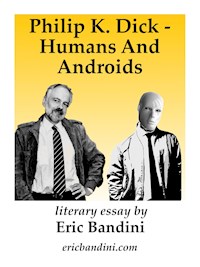
Figura 1 : Cover: Philip Dick with Android
Colophon
Philip K. Dick – Humans and Androids
Literary essay
By
Eric Bandini
Figura 2: Logo «ericbandini.com»
Copyright
Philip K. Dick – Umani & androidi
Eric Bandini © 2018
New digital edition © 2024
ericbandini.com
Figura 3:Logo «ericbandini.com»
ISBN: 9781716841910
Literary property. All rights reserved
Proprietà letteraria, tutti i diritti riservati
Index:
Cover
Colophon
Copyright
Index
Introduction
Unique Chapter
Eric Bandini about
Unique chapter
Philip K. Dick – Humans and Androids
A few years ago, it doesn't matter here the exact moment, a newspaper article appeared on the website of a daily newspaper in which it was mentioned a scientific problem inherent to artificial intelligence about whose dilemma (human intelligence vs. artificial intelligence and vice versa) a British university had/should have (?) charged a team of scholars to deal with the issue in the relationship between human intelligence and computing power of computers in order to assess the possible risks of an overpowering by the latter ("the" computers' artificial intelligence) on the human kind. We don't know and it doesn't seem possible to know how that specific assignment is proceeding, but the issue doesn't seem of little importance, although the concept of artificial intelligence doesn't have a definition separable from the one of intelligence in general, as far as it seems possible to find in terms of information, because the world of humans is inhabited and constituted by what humans themselves think, do, realize, and from this point of view intelligence always appears artificial, because every artifice produced by the human mind, even abstract or purely conceptual, belongs to the field of intelligence that produced it, as well as its "information". There is nothing natural even in purely human activities, such as art, cooking, trade, finance, etc., it is the speculation itself that introduces the mechanism, so that any device created by human thought and aimed at implementing its activities does not leave the field of human thought, modifying and conditioning it. The concept of artificial intelligence drags with it, less visible but not less important, that specific one of artificial life, and this last configuration seems to confirm a separation between natural and artificial, which in fact does not exist except in concept in relation to problems of ethical, moral, social, theological, or whatever else.
The complex automated world (the worldwide network of computers, the automation of industries, the human intervention in the DNA chain, etc.) that the global and planetary society has constituted and put together (but the «"exact"» definition would be "patched up", since nothing and no one can really regulate all this in an absolute way, at least at the current date, and if it became so it would be a planetary totalitarianism) forms the same environment as the intelligence that created it, that pervades it and that receives its results in the form of the product of an intelligence that appears separate, i.e. artificial, when it is nothing but the thing itself in the form of its result: the automatism of intelligence.
From a universal point of view (assuming that such a point of view is possible [and in fact it is not]) the human being has never been more or less intelligent, in the sense that his evolution took place and takes place in the wake of nature and its rules that the development of the human kind has tried to bend to its own purposes and interests, almost always economic or speculative in terms of survival if not directly in financial terms and power. The mirror of these activities of conquest allowed to glimpse spaces of development as long as they existed materially as places and as objects-matter in which and with which to expand their speculations, until the intelligence itself in the overall view of the world organized by itself (the human kind) found in itself the obstacle of its own creative intelligence; in fact there is nothing in the world that comes from another world, intelligence is always an object of itself and in this it becomes artificial; this is the antagonism of knowledge, that is to distinguish what is consonant with intelligence from what is not, and on this there are no universal laws that are not emanations of an intelligence or of some normative power.
In a long paper by Philip K. Dick entitled "The android and the human" (published in Italy by the publisher Fanucci in the collection of essays and short stories "The dark-haired girl"), written for a conference or convention on science fiction literature, the author begins by citing the tribal man who is considered healthy and adult once he has objectified the world within himself and no longer as a magical and mysterious world of events surrounding him, and below immediately uses the word "reify" to render the idea of an objectification of the real by the human mind, and the question takes the form of a question: «Reifying the world?»
… ..
This is an extract, a preview of the book
… ..
Eric Bandini about
Eric Bandini (ericbandini.com) is a pseudonym under which as author and physical person, has published the following books.
«Notturno italiano» © 2016 - romanzo,
«JR – Di William Gaddis», saggio letterario © 2016
«V. - Il Mito in Thomas Pynchon» © 2017, un saggio letterario sui primi tre romanzi del noto autore americano.
English version available : «V. The Myth in Thomas Pynchon» © 2017
«Il luogo del concetto – Un romanzo del pensiero occidentale e un'analisi del postmoderno (Compimento della rivoluzione copernicana iniziata da Immanuel Kant)» © 2016
«Pìrule – Dieci giorni d’infanzia», romanzo pubblicato con editore Ponte Vecchio © 2017
«Philip K. Dick – Umani & Androidi» © 2018, un saggio letterario sull’opera dell’autore americano di fantascienza, e anche una fanta-scientifica analisi del concetto di intelligenza naturale (umana), artificiale (informatica), ed anche (eventualmente) extraterrestre.
English version available : «Philip K. Dick – Humans & Androids» © 2018
«Logica universale, o assoluta» © 2017; una serrata analisi, necessariamente in chiave filosofica nonché logica, dell’opera “Scienza della logica” di G.W.F. Hegel.
«Una storia italiana» © 2020, romanzo; pubblicato dapprima a puntate sul suo sito web (ericbandini.com) e poi in formato epub e stampa.
«Samuel Beckett – Uno studio. I romanzi e il teatro di Samuel Beckett spiegati in dettaglio» © 2022 – Saggio letterario sull’opera di Samuel Beckett.
English version available: «Samuel Beckett’s novels and theatre explained in detail» © 2022




