


5,49 €
Niedrigster Preis in 30 Tagen: 2,99 €
Niedrigster Preis in 30 Tagen: 2,99 €
Mehr erfahren.
- Herausgeber: Eric Bandini
- Kategorie: Geisteswissenschaft
- Sprache: Englisch
A "mythological" path through Thomas Pynchon's first three novels: «V.», «The Crying of the Lot 49», «Gravity's Rainbow»
Das E-Book V. The Myth in Thomas Pynchon wird angeboten von Eric Bandini und wurde mit folgenden Begriffen kategorisiert:
Thomas Pynchon,V.,The Crying of the Lot 49,Gravity's Rainbow,postmodern
Das E-Book können Sie in Legimi-Apps oder einer beliebigen App lesen, die das folgende Format unterstützen:
Veröffentlichungsjahr: 2020
Ähnliche



















Vthemythinthomaspynchonebpreview
Indice dei contenuti
Cover of the book
Colophon
Copyright
Index
Unique Chapter
Figura 3: Logo ericbandini.com
Back cover
Cover of the book
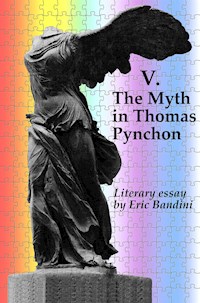
Image 1 : Cover (Nike’s statue against rainbow background)
Colophon
V. The Myth in Thomas Pynchon
Literary essay by
Eric Bandini
Image 2: Logo ericbandini.com
Forewords
This essay has been written between 2016 and 2017, self-published by the author in 2017 in Italian language. This is a translation in English language made by the author himself.
Eric Bandini is a pen-name.
Copyright
Copyright © 2017 Eric Bandini
All rights reserved. This book or any portion thereof may not be reproduced or used in any manner whatsoever without the express written permission of the publisher except for the use of brief quotations in a book review or scholarly journal.
Published: © 2017 (Italian language), © 2020 (English language), © 2024 (English language)
ISBN: 9791220207928
Eric Bandini (website: ericbandini.com)
Index
Cover
Colophon
Copyright
Unique Chapter
Eric Bandini about
Back cover
Unique Chapter
V. The Mith in Thomas Pynchon
Vida es sueño, life is dream, and dream has no other interpretation than dream. The wide narrative spaces of Borges' stories have the aspect of infinity, which is the subjectivity of the dream. In Borges' short stories, even of a few or very few pages, the perception expands substantially without boundaries where the dream is the foundation of itself as much as of its indeterminable dimensions. Without dream there is no subjectivity, and without subjectivity there is no reality, which in perception is confirmed in the dream of life.
V., Thomas Pynchon's first novel, has a dimensionless spatiality, although the canonical "real" world shows its objectivity in forms and in aspects, in the descriptions and settings, which are also fantastic and invented (as it is natural in any and in each novel, as “in” real), and they form the anchor of the dream, rather than a "concrete" world inhabited by the characters. In the apparently ordered and functioning world (and/or even chaotic and disharmonious, which can be the subjective perception, indifferently), which engulfs behaviors that are congruent or inconvenient to its use and consumption, appear in «V.» subjective openings, as reversed, that cannot be “forms” other than that of the dream, where the misunderstanding and the opening of a «vague infinite» find a clash, or rather a limit of reaction, in other «subjective» environment and spaces; the characters are interwoven with their own dreams creating an environmental relationship where “the” above and “the” below, the straight and the reverse, the true and the false, have a sense of perception, which is always individual. The times and ways of a narrative set «world-based», designed as a given, fixed and immutable background («Whole») where the actors on stage put in place the story, are here indifferently outdated and outdone, although the descriptive objectivity must make the appropriate coordinates, whose dimensions draw on the geography and physical geometry of reality as functions that make subjectivity «dream-making». The dream has always been considered an element of sleep (the under-side of an above?), or of oblivion (the un-conscious of the conscious?), but subjectivity cannot forget itself or transcend itself, so that every interpretation has a dreamlike uncertainty at every moment; it is a very fragile balance based on sensation and its inevitability, where time shows the aspects of spaces with a continuous exchange and/or overlap of roles between the two entities; space and time are the same or different things based on the subjective amplitude and other individual variables at play.
Myth is the first narrative force of V., the whole novel is run through and pervaded by the myth, which cannot be known or identified because the dream itself produces its own reality, which has the appearance of the solid world of objects and the perceptions of pain as well as of pleasure harassed by other dreams.
There is in V. a long episode which has further references along the novel and that in turn gave rise to a metropolitan mythology in different stories of other authors, in TV series, in movies, etc. The precarious work that Benny Profane undertakes under the direction of Zeitsuss, the boss of the crocodile hunting team in the New York sewers, is a representation of the mythical reversal that the "real" of the upper world (that one that moves in the city above the sewers) is no longer able to accommodate, indeed it generates this reversal. In the context of the narrative it seems that for a fleeting and temporary fashion (but this is only the way of the novel), little and young crocodiles had been given to children or adults, or were however carelessly purchased, and the buyers or recipients of the gift, aware of the encumbrance that the animal created, or simply because this crocodiles became a nuisance, thrown and abandoned them as "waste" into the sewage discharges, where these crocodiles grew in size and perhaps even in number so as to require the killing and systematic hunting; but the feeling of Benny Profane is that these crocodiles let themselves be torn down, that perhaps they try to be knocked down by concealing this instinct to death. Much of this will be taken up further, but the image of the crocodiles seems to be that of the human rejection of the surface, toys or social parts repudiated by the economy of the dream of relationship which sees the aspect of «the» above, the dream-image of reality, and rejects the unwanted dream in its entirety ( Whole), which (would) includes the ineluctable absolute of the above and below without distinguishable boundaries whose completion belongs to the dream. Rejection (“the” waste) as an object (even living and/or human) can only be rejected, not eliminated-canceled, it can be thrown into the sewer, the landfill, etc., but it does not come out of the absolute, which is the original and all-encompassing mythical dream. In this sub-world, others are looking for some thing or something else that is unavoidably inaccurate, without understanding, that is perhaps a useless or impossible attitude. The schlemihl Benny Profane, without perhaps being aware of it, has an overall vision which, however, he is unable to render to himself, much less able to express, if ever were the case. The world of the sewer, hidden from the surface of glittering life (?), belongs to the completeness of reality from which it cannot be erased and resembles a receptacle of rejection as a metaphor for the human relationship as for its results, and the strange work of Father Fairing, a Jesuit who in the sewer tries to evangelize mice, does not equally understand that “the” below without “the” above is incomplete or useless; in fact, he evangelizes rats and seems to have some erotic relationship with a she-rat, in addition to feeding on rats themselves; in his diary it is in fact mentioned that the liver (of rat) is a particularly succulent morsel. Father Fairing created a sub world of the sub world, and in this perspective no future in «this» world is visible.
«V.» mostly has the appearance of a place rather than an event or a character, which can generally be the topic of a novel with the sequence of collateral events and identified facts, it is an environment where “ the” truth is “ the” dream of something or someone in search of its objectivity (of the true) which should be confirmed by another truth with the same prerogatives but different characteristics whose diversity should attest the truth; but the true, like the dream, is never equal to itself. Different scenic and chronological prospects find their place in the story where the quest for «V.» assumes the connotation of the subject who seeks, so that the object and the quest for it tend to define the subject rather than the object, because the real has the conformation of the myth.
V.'s plot is not linear, at least not in a chronological sense, V. is a kind of collective image of which some characters dream of a feeling, a sensation; Stencil son, especially, in an almost obsessive way on the basis of his father's writings, and in many, or perhaps in all the scenes’ settings, V. appears with different references or allusions whose interpreters have no awareness but only vague, or very vague, knowledge received and/or used as an element of which they have no idea of the meaning, assuming that it is possible to identify an expressible one; this will be explained step by step further in this writing.
Despite the vintage flavor of the novel, which has its main setting in the 1950s of the United States of America, the story is by no means dated, it may have been written yesterday, or perhaps tomorrow. The myth that pervades it is a continuum that does not cease its entity and does not fix precise or anchorable space-time coordinates; the story, that in the context can have the double meaning of historian as well of narrative, joins different periods of the characters, and/or generations that preceded them, against the spy-background of Western powers whose action of espionage moves the individual existences that weave an intricate web of misunderstandings and interests where the inaccurate vision of the myth takes on the only possible aspect, the “subjective” one, which is always the least comprehensible. A summary of the plot is not really conceivable and would be useless rather than reductive, because the novel feeds on the details, which are the antithesis of the summary and form the structure of the work, where they fade, like the numerous characters and their relationships. Succinctly. The schlemihl Benny Profane is the unaware collector of elements that do not belong to him, in-fact, but in which he participates through his friends, his knowledge, his experiences, like the generic female entity with which he has to deal; the various and intertwined relationships carry, pursue and interpret, without knowledge, that mystery V. whose origins are as indefinite as they are very difficult to perceive, leaving out «identifiable». Mainly is possible to distinguish two narrative space-time planes that are joined by the family relationship: Stanley Stencil father of Herbert Stencil, and the latter, for strange and not well-defined coincidences, appears in the circle of acquaintances of Benny Profane as one of the people he frequents. Stencil son learns of this mystery V. (but probably he "fixes" it in his mind by himself) by reading certain writings of his father, secret agent of the British Foreign Office decades earlier in the Mediterranean area, and this sea, cradle of the Western myth, appears from the first chapter for the presence of Paola Maijstral, a young woman born in the island of Malta, from where she, more or less, has fled (it seems she was sixteen but the age is not certain or ascertainable) taking for husband a sailor of the ship «US Scaffold», certain Pappy Hod, from whom is actually separated. Benny Profane, a former comrade of these sailors, shares with them occasional drunkenness and friendships such as the consequent experiences that pose themselves as masculine side, perhaps stereotyped over the period, framed in social schemes to which the femininity they encounter opposes a behavioral distinction whose comparison is maintained in being by certain aspects of relationship that would ordinarily form the stories of novels as well as films, etc., but these scenes are narrative elements that render the myth «V.» floating in the story. Eros is as usual the driving element (Eros is, in the original Mediterranean Myth, the internal element of the feminine as «the» Great Mother Goddess) but the narrative plane moves across different times drawing to the present (which is what happens now, whatever the time and/or the moment) elements that cannot be placed except in the mystery of the Myth, of which, in the present of Benny Profane, no one has knowledge any more but whose consequences or interactions cannot equally be transcended.
Herbert Stencil's fatherly reenactments, and substantially esoteric-for-himself, drag into the text imprecise memories of a time spent not excessively back in History, the late 19th and early 20th century, when heroisms were still possible as well as machinations, plots, riots, revolutions, adventures, discoveries, intrigues and swindles, naivety and super-tricks, bureaucracies and individual initiatives, escapes, chases, hunts, evasions, wars of armies and armies in distant lands not only geographically, explorations and intrusions of powers in lands, that even carto-graphed, kept in being a mystery that solicited the dream of the myth without really evoking it, like VHEISSU, a land that recalls dreams of achievable mythology, as it seems to have happened for some characters interwoven by the espionage of powers that partly misunderstand, partly seek information, in part they fight, or even all this together; all of this on the skin of subjectivities that put their life in the collective dream under their own responsibility (because, in-fact, there is no alternative) in the full of their subjective dream. VHEISSU; on this, one will return further in this writing, as on the generically feminine aspect of the mystery that pervades the whole novel (V. is always sought or cited as [a] woman).
The temporal fragmentation that punctuates the narrative is the unifying element that evokes the myth without identifying it, although many, or even very many clues are scattered in every setting; what cannot be said can be lived and remain unexpressed and misunderstood; the definition is the main enemy of the myth, which can only be named in mythology, of any kind, and has little or no importance that the time of the characters have a chronological belonging, the present is timeless and chronological history is the expression of thought that is thought (by “the” thought) in the foundation of itself, which despite a perceived shareability is subjective in the perceptible senses as well in the experience, as «thought» "thing", or perceived through the senses (which has anyway to be “thought”).
… ..
… .. this is only an extract, a preview of the book
… ..
Eric Bandini 2017
Figura 3: Logo ericbandini.com
Eric Bandini about
Eric Bandini (ericbandini.com) is a pseudonym under which as author and physical person, has published the following books.
«Notturno italiano» © 2016 - romanzo,
«JR – Di William Gaddis», saggio letterario © 2016
«V. - Il Mito in Thomas Pynchon» © 2017, un saggio letterario sui primi tre romanzi del noto autore americano.
English version available : «V. The Myth in Thomas Pynchon» © 2017
«Il luogo del concetto – Un romanzo del pensiero occidentale e un'analisi del postmoderno (Compimento della rivoluzione copernicana iniziata da Immanuel Kant)» © 2016
«Pìrule – Dieci giorni d’infanzia», romanzo pubblicato con editore Ponte Vecchio © 2017
«Philip K. Dick – Umani & Androidi» © 2018, un saggio letterario sull’opera dell’autore americano di fantascienza, e anche una fanta-scientifica analisi del concetto di intelligenza naturale (umana), artificiale (informatica), ed anche (eventualmente) extraterrestre.
English version available : «Philip K. Dick – Humans & Androids» © 2018
«Logica universale, o assoluta» © 2017; una serrata analisi, necessariamente in chiave filosofica nonché logica, dell’opera “Scienza della logica” di G.W.F. Hegel.
«Una storia italiana» © 2020, romanzo; pubblicato dapprima a puntate sul suo sito web (ericbandini.com) e poi in formato epub e stampa.
«Samuel Beckett – Uno studio. I romanzi e il teatro di Samuel Beckett spiegati in dettaglio» © 2022 – Saggio letterario sull’opera di Samuel Beckett.
English version available: «Samuel Beckett’s novels and theatre explained in detail» © 2022
Back cover
Figura 4 : Back cover, Botticelli's Venus Jigsaw




