


Erhalten Sie Zugang zu diesem und mehr als 300000 Büchern ab EUR 5,99 monatlich.
- Herausgeber: Birlinn
- Kategorie: Lebensstil
- Sprache: Englisch
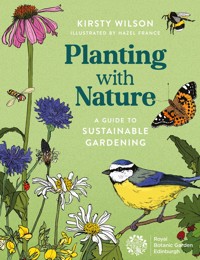
By re-imagining how we plan and use our gardens, we can all do our bit to support local wildlife, improve our health and help tackle the climate crisis. Positive steps, no matter how small, can really make a difference. This is a practical, easy-to-use guide for anyone who wants to boost nature in their patch and make the world a little greener. Illustrated with specially commissioned drawings, it contains essential information on many topics, from planting nectar-rich borders, native hedgerows, trees and wildflower meadows to creating rain gardens, green roofs and ponds. These activities, together with providing homes and feeders for birds, mammals, amphibians, bees and other insects, will encourage many kinds of native wildlife to thrive in your garden, whatever its size. Expert advice is also provided on sustainable gardening approaches to fruit and vegetable production, making compost and the propagation of new plants.
Sie lesen das E-Book in den Legimi-Apps auf:
Seitenzahl: 152
Veröffentlichungsjahr: 2023
Das E-Book (TTS) können Sie hören im Abo „Legimi Premium” in Legimi-Apps auf:
Ähnliche



















Kirsty Wilson is a Garden Manager at the Royal Botanic Garden Edinburgh. She is also a presenter on BBC TV’s Beechgrove and appears on BBC Radio 4’s Gardeners’ Question Time as a panellist. Kirsty has a degree in Horticulture and Plantsmanship, a diploma in Garden Design, and has previously worked for HM King Charles III at Highgrove, Longwood Gardens in the USA and St Andrews Botanic Garden. In 2021 she won the RHS Roy Lancaster Award. Kirsty wants to inspire people to grow plants, connect with nature and have a positive impact on the world.
Hazel France studied fine art before discovering a love of plants. Inspired to study for a degree in Horticulture with Plantsmanship at the Royal Botanic Garden Edinburgh, she is now employed there as a Glasshouse Horticulturist, helping to conserve plants in the tropical collections. In her work as an illustrator, she is passionate about drawing plants as a way of capturing the liveliness, vibrance and detail of the natural world.
First published in 2023 by
Birlinn Limited
West Newington House
10 Newington Road
Edinburgh
EH9 1QS
birlinn.co.uk
and the Royal Botanic Garden Edinburgh
rbge.org.uk
Text and illustrations copyright
© Royal Botanic Garden Edinburgh 2023
The moral right of Kirsty Wilson be identified as the author of this work, and Hazel France as illustrator, has been asserted by them in accordance with the Copyright, Designs and Patents Act 1988
All rights reserved. No part of this publication may be reproduced, stored or transmitted in any form without the express written permission of the publisher
ISBN: 978 1 78885 577 8
British Library Cataloguing-in-Publication Data A catalogue record for this book is available from the British Library
Designed and typeset by Mark Blackadder
Printed and bound by PNB, Latvia
Contents
Foreword
Chapter 1: The Living Garden
Chapter 2: Creating a Nectar Border
Chapter 3: Planting a Wildflower Meadow
Chapter 4: Creating a Native Hedgerow or Wildlife Fence
Chapter 5: Planting Trees and Shrubs for Wildlife
Chapter 6: Bug Houses, Bird Boxes and Feeders
Chapter 7: Wildlife and Container Ponds
Chapter 8: Creating a Rain Garden and Water Management
Chapter 9: Combining Nature with Fruit and Vegetable Production
Chapter 10: Creating Green Roofs and Living Walls
Chapter 11: Producing Valuable Compost
Chapter 12: Creating New Plants for Free – Propagation
Chapter 13: Attracting Specific Species with Planting
List of Specialist Nurseries
Glossary
Index
Foreword
Why wouldn’t you want to attract wildlife to your garden? Whilst you would wish to draw the line at voracious herbivores such as rabbits, hares or deer, gardening with nature is a great way of adding colour, movement and interest, and achieving even more satisfaction from your horticultural labours. Encouraging wildlife into your garden can work in wonderful harmony with designing and maintaining your green space. It makes a meaningful, and much needed, contribution to the conservation of nature and improves the quality and health of our environment.
At the Royal Botanic Garden Edinburgh’s four Gardens we encourage and take much joy from the native wildlife which flourish alongside 13,500 plant species in our care. From robins to red squirrels and beetles to butterflies, our Gardens provide a haven for over 1,000 indigenous species.
Parks and private gardens have much potential to sustain and develop urban biodiversity. According to the Office for National Statistics, the urban areas in the UK cover nearly two million hectares, the human occupants of which need nature for their health and wellbeing.
This stimulating book by Kirsty Wilson, beautifully illustrated by Hazel France, provides a wealth of information and tips for gardening for nature, and how to help nature play its part in creating a more sustainable and ecologically valuable garden. Whatever the size of your garden, Planting with Nature provides both the inspiration and expertise to live in closer harmony with the natural world and to get even more pleasure from your personal green space.
Simon Milne MBE FRSE FRGSRegius Keeper
The Royal Botanic Garden Edinburgh
Digitalis purpurea (foxglove)
CHAPTER 1
The Living Garden
‘To plant a garden is to believe in tomorrow’
AUDREY HEPBURN
As a child, I was always out in the Scottish countryside, and I loved observing the interactions of plants, insects, birds and other animals. The way that everything is interlinked fascinated me and as I have grown older, I have become more aware that humans and our actions are deeply connected to nature and the well-being of the planet. The natural world is made up of complex life cycles and food chains that have evolved over thousands of years. Sadly, our focus has tended to be on seeing the Earth as simply a provider of resources in terms of energy, building materials, food and consumables. As a result, forests have been destroyed, land has been over-cultivated, hedges have been removed, areas have been quarried, drained or concreted over and waste materials have been dumped. In addition, global warming as a result of increased carbon dioxide emissions from transport, heating and industry is also impacting on the balance of nature and the health of our planet for future generations. This can mean that certain birds, mammals and plant species are under threat, and they may become less visible in our gardens. Climate change may allow us to grow different plants in Scotland, but these exotic plants from other countries may not always benefit our local native wildlife.
Even in our own gardens, we have been actively encouraged to manicure our lawns and neatly clip our shrubs to produce something that is aesthetically pleasing. It is also not unknown for gardeners to use chemicals to fertilise and control so-called garden pests. However, a garden is a microcosm of the wider natural world, and our over-controlling behaviour is having a damaging effect on biodiversity and the overall health of the planet. In writing this book, I want to show that no matter the size of your garden, you can make a positive difference to support nature and biodiversity by making small changes to the way you manage and enjoy your gardening. If every household adopted just one idea from this book, we could make a big impact on the natural world. Your garden could safeguard many species like bees, butterflies, hedgehogs, birds, frogs, insects and a variety of plants as well as providing a beautiful space for you to enjoy. After all, we are all an integral part of the planet’s nature and being in a biodiverse greenspace can make us happier, healthier and reduce our stress levels.
This book is about gardening with nature, a form of gardening where the emphasis is on us stepping back and letting nature play its role in our gardens in comparison to more active forms of garden management and control. There has been significant interest in sustainability with large-scale rewilding projects in the Highlands of Scotland, in north-east Portugal, in Alaska, in the Danube delta and in many marine conservation areas around the world. These projects have been aimed at reversing the impact of humans and allowing the natural landscape and all the species that depend on it to recover. Many of the rewilding principles behind these large-scale projects can be adopted and adapted for our own gardens.
Some of the major rewilding projects have involved no intervention, letting nature take over, reversing humanity’s activities and allowing the natural landscape to recover. However, as many of us live in towns and cities, a totally wild garden is unlikely to be very attractive to our neighbours or as a relaxing place to enjoy. Also, rabbits digging up your vegetables may not be one of the natural activities you really want to witness. It is more about creating a well-balanced sustainable garden where we can live in harmony with nature by attracting the birds, insects and other animals that support an effective garden ecosystem and undertaking garden tasks in such a way that we do not damage the planet.
Erica cinerea (bell heather)
The garden ecosytem. A garden needs a balance of wildlife in order for it to flourish
It is important that we understand the interrelated nature of our garden ecosystem. If you start with trees and shrubs, they produce leaf mould and organic matter. This provides energy for primary consumers such as fungi and bacteria. Secondary consumers such as protozoa, nematodes and mites feed on these before being eaten by higher level consumers such as earthworms, beetles, spiders, centipedes and ants. These are a source of nourishment for birds, moles, and shrews which are then predated by larger mammals and birds. Introducing chemicals into our gardens or removing organic matter can break that chain. This may mean we have a soil with no worms to improve soil structure and water infiltration. There may be no ladybirds or house sparrows around to eat the aphids that have set up home on our roses. Our garden should not be a sterile area managed purely for aesthetics, but it should be teeming with all aspects of wildlife from fungi to insects and other animals. We need to allow nature to come into our gardens and trust that in time even with more pests, more predators will appear to control them, and the natural ecosystem will operate in a balanced and healthy equilibrium.
It is not just about insect and other animal species; it is also about plant species. Often plants that are frequently labelled as weeds are actually native flora that attract beneficial insects and birds into our gardens. For example, a small nettle patch can overwinter insects which provide early food for ladybirds, hedgehogs, shrews, frogs and toads. All of these are important for eating the garden ‘pests’ such as aphids, slugs and snails. Nettles also attract some of the country’s most colourful and best-known butterflies, such as the small tortoiseshell and peacock butterflies. Nothing brings a garden to life as much as watching these butterflies dart around the flowers. I am not suggesting we dig up our flower beds and give them over to a bed of nettles, but a small patch of nettles in a corner or behind a shed can just provide that boost for biodiversity. Some wildflowers or even clover in the lawn can also attract many important pollinators such as bees.
Urtica dioica (common stinging nettle)
Gardening for nature is also about the landscaping of our gardens. Hard landscaping with concrete or tarmac in driveways and patios can lead to waterlogging of surrounding areas and potentially flooding. Areas of gravel let water percolate into the soil, reducing flooding and providing damp soils for root systems and enhancing the soil ecosystem.
Native planting (plants originally from the UK) versus nonnative planting has also been a hotly debated topic over recent years. Originally it was believed that native species were better for attracting wildlife. Whilst this is considered to be the case for the ability of trees to provide a wildlife habitat, recent studies have found little difference when looking at other plant species. For flowering plants, it was identified that having more flowers with nectar and pollen over a long season provided a more varied diet for pollinators than local flowers with a shorter lifespan. Therefore, a variety of native and non-native plant types would seem to be the most beneficial, incorporating shrubs, herbaceous perennials, climbers, bulbs, grasses and trees. In addition, a monoculture of one plant type can result in increased diseases and a prevalence of certain types of pests. Sustainability is determined by a balance, by allowing nature to take hold, but at the same time keeping an eye out for potential areas of dominance and conflict. If you notice one species taking over, it might be worth intervening a little to alter the balance so that nothing begins to get out of control.
Before doing anything to your garden, try to find out what wildlife is already in residence and might be disturbed if you start making radical changes. In a large garden, this may take 6–12 months as you wait to see which plants come up, what wildlife is attracted and if any nesting sites exist. Don’t just consider the daytime visitors, check for nocturnal life including moths, hedgehogs, slugs and snails. If you are lucky enough to already have a pond or water feature, check for frog and toad spawn as well as any other aquatic life.
As it is difficult to observe your garden at all times of the day and night, you could use a camera trap to monitor your garden. Camera traps are generally inexpensive and once triggered by movement will photograph or record the action. People are often surprised about what activity takes place in their garden without their knowledge.
When planning your planting, there are a number of points to consider. Firstly, your soil type (alkaline, neutral, or acid) and the underlying drainage (well drained, poorly drained) as these will impact on the type of plants you can grow. Secondly, the amount of space you have as you need to consider the final size and shape of the planting. Very large trees and shrubs can block out the light to other plants as well as your home and potentially your neighbours’ property. Thirdly, the aspect of the garden in terms of the proportions of sun and shade in the garden will also impact on what will grow successfully. A shady, damp garden will be good for a woodland edge or wetland habitat, but not so useful for attracting bees and butterflies. Also note that some plants that thrive in the south-east of England may do less well in Scotland and the north of England.
You will also need to consider the wider food chain and ecosystem that you are trying to support.
Your garden is also your family’s relaxation space, and any design should take account of each family member’s activities. Consider what everyone wants and determine which of the requirements can be met. Are there any types of wildlife that family members do not want to encourage into the garden? Any garden, even a wildlife garden, will also require some maintenance. Who is going to do this and how much time and effort will they want to spend on the task? Which tools will be required and where will they be stored?
Having considered all of these points, draw a plan of your garden by measuring the garden with a tape measure and then transferring the measurements using an appropriate scale onto paper or a tablet or desktop. For most gardens, a scale of around 1–2cm per metre tends to fit a standard sheet of A4 or A3 paper. Then you can start allocating space for specific purposes, such as meadow, paths, nectar border, compost bins, boundary hedges etc. In doing so, you need to consider the ecosystem you are trying to support in relation to the feeding, drinking and nesting/accommodation requirements of different species.
To assist in your planning, the remaining twelve chapters of this book will concentrate on four main areas:
1. Planting for wildlife in nectar-rich borders, wildflower meadows, hedgerows and in trees and shrubs
2. Building for wildlife with bird boxes, bug boxes, feeders and ponds
3. Green gardening approaches with fruit and vegetable production, rain gardens, green roofs, compost making and creating new plants through propagation
4. Attracting specific species of birds, bees, butterflies, other insects, aquatic life and nightlife.
CHAPTER 2
Creating a Nectar Border
‘Where flowers bloom, so does hope’
LADY BIRD JOHNSON
Nectar borders offer sustenance to a wide range of pollinators such as birds, bees, butterflies, beetles, bats and other small mammals. These pollinators are important as they facilitate reproduction in 90 per cent of the world’s flowering plants and trees. Nectar borders are rich in flowers, providing an attractive addition to the garden as well as providing breeding grounds for many varieties of insect species. There is nothing quite like exploring a floral border with a variety of shapes and colours and hearing the buzz of the busy bees. Typically, borders follow a fence, wall or hedge, but they don’t need to be large, and even a balcony with nectar-rich plants in pots can attract and sustain many pollinators.
The Beneficiaries
Bee, butterfly, moth, ladybird, lacewing, spider, beetle, hoverfly, bat, song thrush, goldfinch, chaffinch, blue tit, great tit, hedgehog.
Establishing a Nectar Border
1. Selecting a Location
Survey your site and find a suitable location to have your border. Ideally, you want to find a location within your garden that is sunny and sheltered. It is therefore important to start by considering the direction your garden faces as this will determine how much sun and shade your plants will receive. Is it south, east, west, or north facing? This will determine the best location for the border and which plants will flourish there.
South-facing gardens receive the most sun which may be beneficial for the majority of wildlife, but there may need to be some shady spots to provide some refuge for wildlife and the hard-working gardener. Depending on the size of the plot, this may mean putting some taller shrubs and trees in a border at the bottom of the garden whilst putting your nectar border in the sunnier middle of the garden or nearer the house.
East-facing gardens may be in full sun in the morning but in the shade by mid-afternoon. Therefore, any border close to the house may not be suitable as a nectar border as insects will move to other locations and even your neighbours’ gardens when it gets shady.
West-facing gardens get the sun in the afternoon but are in the shade in the morning. Plant your nectar border away from the house to avoid the colder morning shade. If you have a wildlife pond, it may be important to ensure that it is far away from the house to allow newts, frogs and hoverflies to warm up in any morning sunshine before they get active.
North-facing gardens will get most sunshine the further you get from the house. So, nectar borders should be nearer the end of the garden to enable bees and other insects to receive the heat of the sun.




