


Erhalten Sie Zugang zu diesem und mehr als 300000 Büchern ab EUR 5,99 monatlich.
- Herausgeber: Luath Press
- Kategorie: Lebensstil
- Sprache: Englisch
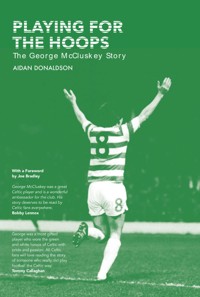
"How did George McCluskey become one of Celtic F.C.'s most memorable football players? What binds the fans and players and creates this strong sense of belonging? And what does the Irish diaspora have to do with Celtic F.C.? George McCluskey was one of the key strikers for the Hoops in the '70s and '80s, a successful time in the club's history. He did not only score for his team, but changed the entire game in favour of Celtic more than once. In this account of his life story told by his close friend Aidan Donaldson and his son Barry McCluskey, George McCluskey is praised as the embodiment of the Celtic spirit. His individual history is intertwined with the history and mentality of the club. However, George McCluskey did not only influence Celtic F.C. but also other clubs he played for and the people he has met during his life. This book takes you on a journey through the development of the club from its very beginning, as well as exploring the evolution of football in general. How did we get from football legends like George McCluskey to football celebrities like David Beckham? What did professional football look like back then, what constitutes it nowadays? This timely book will appeal not only to Celtic supporters, but to anyone interested in the development of professional football. His exuberant celebration depicted on the cover of the book remains iconic in the eyes of Celtic supporters today. His Cup winning goal led inadvertently to a riot and the banning of alcohol in Scottish football grounds."
Sie lesen das E-Book in den Legimi-Apps auf:
Seitenzahl: 447
Veröffentlichungsjahr: 2016
Das E-Book (TTS) können Sie hören im Abo „Legimi Premium” in Legimi-Apps auf:
Ähnliche



















Playing for the HoopsThe George McCluskey Story
First Published 2016
ISBN: 978-1-910324-85-1
The authors’ right to be identified as author of this book under the Copyright, Designs and Patents Act 1988 has been asserted.
© Aidan Donaldson 2016
Contents
Acknowledgements
Timeline
Personal Introduction by George McCluskey
Preface by Joseph M Bradley
Introduction
EARLY LIFE IN LANARKSHIRE
CHAPTER1 – The Irish Diaspora and Celtic Football Club
CHAPTER2 – ‘The Apple Does Not Fall Far from the Tree’
CHAPTER3 – School Days, Bus Protests and Celtic Win the European Cup!
CHAPTER4 – Moving on, Changing School and Keeping your Appendix
EARLY PLAYING DAYS AND SIGNING FOR CELTIC
CHAPTER 5–Starting on the Road to Paradise
CHAPTER 6–Scoring against Bellshill Academy and England as Well
CHAPTER 7–Signing for Celtic
PLAYING IN THE GREEN AND WHITE HOOPS OF CELTIC
CHAPTER 8–Moving through the Ranks
CHAPTER 9–Making a Debut, Starring against Rangers, then Catching a Bus Home
CHAPTER 10–‘Whatever Happened to that Young Boy McCluskey?’
CHAPTER11–‘Ten Men Won the League Tralalalala!’
CHAPTER12–Real Madrid, How Tommy Burns Nearly Got us Killed in Spain and ‘That Goal’
CHAPTER13–Three Strikers and a Rotation System
CHAPTER14–Stepping up to the Mark and Winning the League for Celtic
MOVING FROM CELTIC BEFORE RETURNING HOME
CHAPTER15–Paradise Lost – and a Loss to Paradise
CHAPTER16–From Celtic to Leeds – into a Different World
CHAPTER17–A Return to Scotland and a Brutal ‘Tackle’
CHAPTER18–Paradise Regained – via Hamilton, Kilmarnock and Clyde
Postscript
This work is dedicated to our parents – Joe and Alice Donaldson and John and Teresa McCluskey – and to our families; to Celtic supporters everywhere and to Our Lady, the Mother of Jesus.
Aidan Donaldson and George McCluskey
Acknowledgements
THIS BOOK WOULD not have seen the light of day had it not have been for the help, advice, guidance and encouragement of many people. In particular I would like to thank George himself for his openness, patience and, above all, friendship. I am indebted also to George’s wife, Anne, and their children – Leeanne, Barry, Natalie and Ashleigh – for tolerating frequent intrusions into the life of their family in Uddingston by one who arrived as a stranger from Ireland but has since become very much one of the family. Sincerest thanks also to George’s brother, John, his sisters, Pat, Jeanette and Teresa and his Aunt Mary who were all rich sources of family stories, and to George’s close friends from boyhood, Paul Brannan and John Kirkwood, who were invaluable companions of the author throughout the writing of this work. I am also most grateful to Dr Joe Bradley who has guided me throughout this project. His wisdom, knowledge and passion for illuminating and articulating a greater understanding and contextualisation regarding Celtic fc, its supporters and the Irish diaspora, particularly in Scotland, have played a most significant role in helping me write this book. While it is difficult (indeed impossible) to list all of those who have been part of bringing George’s story to print I would like to thank Jim Mervyn, Eddie Whyte, Martin Donaldson, Declan Leavy, Lenny Gaffney, Declan Dunbar, Cormac McArt, Andrew Milne (and his fanzine More than 90 Minutes), Celtic Football Club and the countless friends and Celtic minded people who endured, tolerated and (indeed) encouraged my intrusion into their lives. Special gratitude to my wife, Philomena, and my children, Caoimhe, Eadaoin and Grainne, who were so understanding during my frequent absences from ‘normal family life’. Finally, sincerest thanks to everyone at Luath Press for their most professional support in turning a manuscript into this finished work.
Timeline
1957 – 15 September: George McKinley Cassidy McCluskey born in Hamilton
1973 – 9 June: Scores winning goal in under-15 Scotland v England at Wembley
1974 – July: Signs for Celtic
1975 – 1 October: Makes debut for Celtic against Valur fc
1 November: Makes league debut for Celtic against Rangers
1976 – 18 September: Scores first goal for Celtic in 2-2 draw (v Hearts)
1979 – 21 May: Scores in dramatic last game of the season when Celtic defeat Rangers 4-2 and win the league
6 June: Marries Anne Williams
1980 – 10 May: Scores winning goal in Scottish Cup Final when Celtic beat Rangers 1-0
1982 – 15 May: Scores two goals as Celtic beat St Mirren 3-0 to win the league on the final day of the season
29 September: Comes off the bench to score last-gasp winner to put Ajax out of the European Cup in Amsterdam
1983–86 – Leaves Celtic and plays for Leeds
1986–89 – Moves to Hibernian
1989 – August: Signs for Hamilton
1991 – December: Wins the B&Q Scottish Challenge as Hamilton beat Ayr in the final 1–0 at Fir Park
1992 – August: Tommy Burns signs George McCluskey for Kilmarnock who secure promotion to SPL on the final day of the 1992/93 season
1994 – Signs for Clyde and retires from professional football at end of 1995/96 season
George McCluskey is currently a member of the Celtic hospitality team and coach of the under–17 academy.
Personal Introduction by George McCluskey
I FIRST MET Aidan Donaldson in Cassidy’s Bar in Belfast about 15 years ago. I had been in Ireland speaking at a function organised by Beann Mhadaghain csc the day before and it was suggested that I should pop into Cassidy’s Bar if I got a chance. So I did and was warmly greeted by the people there. While I was discussing some aspects of Celtic and football, Aidan came into the conversation with a list of facts and statistics to which my response was, ‘You must be a bloody anorak, buddy!’ There was an embarrassed silence in the bar before Aidan retorted, ‘Nobody ever said that to me before, George.’ Despite that rather awkward first meeting Aidan and I have become great friends over the years and he’s now very much part of our family. Indeed, it is only through our friendship that this work has appeared. It was Aidan’s constant cajoling and encouragement that led me to agree to have my story told. His determination, hard work and knowledge have done the rest and I thank Aidan from the bottom of my heart for the wonderful job he has done in getting my story in print.
From the very start I wanted the book to be about my family and friends and everything else that has shaped me to be the person I am. In football biographies the reader often only sees the player and not the real person. I was extremely fortunate to play football for the club I supported my entire life. My great friend Tommy Burns once said (about himself) that he was ‘a supporter who got lucky and wore the shirt’, and I am sure that the same could be said about me. Coming from a Celtic minded family and community it has been an absolute privilege to have played for Celtic on so many occasions and to have shared in their joy, hopes and dreams – as well as in their disappointments. It is true to say that when you pull on the green and white hoops and run out in front of a packed Jungle you are playing for your family and friends as well as for Celtic and there is no feeling like that. And I wanted to get that sense of club, community and family across in this book.
I have many wonderful memories and made many friends among players and supporters alike. Yet the footballer’s life is not always about the great moments and matches. I have had many great moments in football and also many low points too and not just when bitter defeat was experienced. It’s only when you hit life’s ‘bumps’ that you really understand who your true friends are and I have been blessed to have been surrounded by so many close friends who have stuck by me over the years. So sincerest thanks and love to the Dollichans, McAteers, McCormacks, Paul Brannan, Gerry Green, John Kirkwood and all others whose loyalty and friendship means the world to me.
It is to my family that I owe the greatest debt. My mother and father sacrificed so much for all of us when we were growing up and an awful lot to help myself and my brother, John, as we pursued our dreams to play for Celtic. They taught me everything I know and have tried to pass on to my own children. Both Anne and I are proud of each and every one of them as they make their own journey in life. Anne and I have been together since we met in St Catherine’s High School 44 years ago. She has been the rock that has kept me going when times are difficult and has made our house a loving, caring and happy place, home for our children and grandchildren. She has the patience of a saint and the wisdom and understanding that has helped me enormously throughout our lives and I thank her most sincerely for that.
God has always played an important role in my life from my childhood to today. I am most certainly not the best Christian in the world but I pray every day for my family, friends and those in need. In particular I pray to Our Lady. It was a teacher at St John the Baptist Primary School called Teresa Maxwell who said that if you ever wanted to ask Jesus for something then you should always pray to his mother since no son would refuse a mother’s request. When I think of the two most important women in my life – my own mother and my wife – I am certain that Mrs Maxwell gave a young boy great advice all those years ago. She also told us that her favourite saint was St Jude – the Patron Saint of Lost Causes. St Jude is now one of my favourite saints whom I pray to especially in times of difficulty. I recommend him!
I hope that those who are kind and patient enough to read this book will enjoy it and see part of themselves and their own story in it. The world we live in is a challenging and often confusing place. Yet there are values and gifts that are passed on from one generation to the next. Celtic has always been an extremely important part of my life and continues to be so. So too are my family, friends and community. All of them are intertwined and interconnected. I was indeed a fan who got lucky and played in the Hoops. I also hope by doing that I played for you.
Hail! Hail!
George McCluskey
Preface
QUESTIONS OF MORALITY, greed, vanity and selfishness are never too far from the surface when discussing modern elite football. Some observers argue that these and other influences and dynamics threaten the very future of the world’s greatest team game. It seems that menaces and perils also arise from too much televised football, the rise of wealthy celebrity footballers and managers, the destruction of former models of youth development, a perceived decline in creativity and imagination on the pitch via suffocating tactics and a corporate sanitised manufacturing of football fandom at the expense of the originality of community. It has been said by some that elite football is in mortal danger as it sits on a narcissistic fashioned precipice, in danger of falling even deeper into the toxic sea of global capitalism, never to regain previous values and virtues. Is a great cultural, social and community resource passing away for millions around the world?
Partly reflecting such changes, many or most modern footballers’ biographies are often superficial, tedious and too obviously commercially orientated. In reality they often constitute stories not worth hearing. Where are the challenging standpoints, principles, views on fundamental aspects of life, meanings, understandings, lessons to be learned? Not every footballer need produce a great piece of art and not every story needs to have lessons for life, but… the word ‘boring’ seems to characterise so many elite player biographies.
George McCluskey became a footballer at a time in Scotland when many young lads still harboured dreams of playing football because they loved the sport, and often because they wanted to play for the club they saw as representing their community. George McCluskey lived this dream. For many people from McCluskey’s geographical, working class, ethnic or religious background, becoming rich and famous simply wasn’t on the radar. Indeed, George was part of a generation that had frequently been taught values often constructed as the opposite to those of being rich and famous. For George McCluskey and many others of his ilk, a good number of parents and grandparents lived and taught values steeped in humility, charity, hospitality, decency, respectfulness, good neighbourliness and community.
George McCluskey played for a Celtic team that for most of the 1960s and 1970s had dominated Scottish football, and was simultaneously a principal force in the European arena; winning the European Cup, runners-up and appearing frequently in the quarter and semi-final stages of the premier club trophy in world football. This was also during a long period when other clubs in Scotland, the likes of Dunfermline, Hibernian, Dundee, Glasgow Rangers, Dundee United and Aberdeen among others, all produced stunning results and successes on the European football stage. In addition, Scotland’s players filled the ranks of the best teams in England as they too made their mark at national level and in European football.
McCluskey’s time at Celtic was also one of club success. Great players, huge crowds, championships, cup wins and exciting European campaigns. However, as McCluskey’s biographer Aidan Donaldson rightly points out, success on the pitch isn’t everything: to be held in the highest regard by the fans ‘requires that a player should have a love and passion for the club as well as knowledge, understanding, appreciation and love for all it represents’. Answering his own enquiry, for Donaldson, McCluskey ‘not only played in the hoops – he played for the Hoops’.
All football clubs have some significance to players and supporters. However, few compare to Celtic in that the club not only has a unique genesis story, invoking images of poverty-stricken refugees fleeing Ireland’s death-dealing Great Hunger, but also subsequent inter-generational experiences frequently characterised in a confrontation with religious, ethnic, social, economic, cultural and educational marginalisation, discrimination and prejudice – all of which added to the struggle to rise above these racist, bigoted inhumane and immoral ways and practices. Many Celtic supporters who are descendants of the Irish emigrants of the 19th and 20th centuries retain a belief – often born from experience, knowledge, insight and understanding – that although most or many of the worst excesses of these denials and deprivations are in the not too distant past, many retain a hidden potency that can still negatively affect life chances and choices today if one is known to be a member of the multi-generational Irish-Catholic diaspora in Scotland. After all, a black president in the usa certainly doesn’t equate with the end of prejudice and discrimination against non-whites in the ‘land of the free and home of the brave’.
Dr Aidan Donaldson’s biography of George McCluskey includes numerous insights and experiences that add to our knowledge of not only Celtic as a club, but also that of the offspring of the refugee immigrant community that gave rise to it, and who today remain the most significant ingredient amongst its support. Family, faith, community and their relationship to football threads much of this work. In itself that makes it a more interesting proposition than many football biographies. Many Celtic supporters will relate to the story of George McCluskey as relayed by Dr Aidan Donaldson. Simply put, this is a story well worth the read.
Joseph M Bradley
Introduction
ON 25 MAY 1967 a young boy in the village of Birkenshaw in Lanarkshire watched his sporting heroes – Glasgow Celtic – win the European Cup final against the highly fancied Inter Milan and become true football legends. That glorious evening in Lisbon during which Celtic became the first British (and, indeed, northern European) side to lift the coveted European trophy is etched in the memory of every Celtic supporter old enough to have watched the match, as well as in the minds of all Celtic supporters who have had the story handed down to them from previous generations. Like most football-daft youngsters, the ten-year-old George McCluskey dreamed that one day he too would wear the colours of his heroes, and for young McCluskey this meant the green and white hoops of his beloved Celtic. It was not only his team, it was his entire family’s team, his whole community’s team. To run out in front of the ‘Jungle’ at a packed Celtic Park was indeed the ambition of many from George McCluskey’s background and it was not simply a matter of wanting to play football for a very successful club. For people like George McCluskey and the community he belonged to Glasgow Celtic Football Club was much more than just a successful sports team.
Celtic: an identity – not a commercial brand
It was Barcelona FC that coined the slogan ‘més que un club’ (‘more than a club’). It is an expression that also fits perfectly in the heart and mind of every Celtic supporter. ‘Més que un club’ is a feeling of identity that beats to the rhythm of the soul of all Celtic minded people. Celtic is not just a football club – though it is a wonderfully successful one. Celtic represents its supporters – and their hopes, dreams and aspirations – in a different fashion than the vast majority of other major football teams do. Celtic is seen by its fans as an ambassador that extends beyond the field of play. For the founders of the club, and the generations of those who embraced and sustained it, Celtic was – and is – about an identity, a culture and a people. It was created by and for the descendants of those who had fled poverty and starvation in Ireland in the years following the Great Famine (an Gorta Mor) of the 1840s and who found shelter in the East End of Glasgow and a plethora of villages, towns and cities throughout Scotland, England and the world. It also, however, represents a world vision and a very specific and positive one at that. To be ‘Celtic minded’ means having a shared cultural identity and expressing this in an inclusive and open way. The Celtic community has always looked at the world differently – from its founding on 6 November 1887 in St Mary’s Hall in the Calton by those such as Brother Walfrid, John Glass and Pat Welsh right up to the present day. After all, it was founded as a charity and not a business or simply a sporting club. While the initial goal was to help to provide food and education for the poor children of Irish emigrants who had fled Ireland during and in the wake of the ‘Great Hunger’ or ‘Famine’, the founding fathers – and not least Brother Walfrid – had a vision beyond that initial one. The beneficiaries of Celtic Football Club – the children, their families and community – were not simply to be pitied and helped: rather, they were to be affirmed and, indeed, celebrated.
The leaders of the Irish community who were instrumental in establishing Celtic and driving it forward understood from the outset that they were dealing with something of much greater intrinsic value than a sporting club or a business. Celtic Football Club – unlike many other football clubs – was not a mere distraction that allowed supporters to forget about or escape from the hardship of their lives. Quite the opposite. Celtic has always been the focal point of a community’s living, breathing hopes and dreams. When the Celtic players take to the pitch we take our place with them. When they play we play. When they win we win. When they lose we lose. When they celebrate we celebrate. We are them because they are us. Supporters of other teams just don’t get it – and there’s no surprise in that. To support a particular football team, for many, simply requires attachment and loyalty to that team and its particular set of players at a given time. It rarely goes beyond that. It does not require or inspire that close identification between the values of the club and the values of the supporter. To be ‘Celtic minded’ is about how you look at the world, your community, yourself and others. In today’s globalised world of ‘Planet Football’ in which supporters – like footballers – are encouraged to transfer their allegiance as money brings ‘success’ as surely as day follows night, Celtic are truly remarkable indeed, and players who wear the green and white hoops stand out as legends in a world of shallow celebrities. Jock Stein once famously said that ‘Celtic shirts don’t shrink to fit inferior players’. They were made for players to grow to fit them. Celtic indeed has always produced legends who have ‘grown to fit the shirt’, and are more than very talented – even exceptionally talented – players.
What is remarkable is that the bond between the players and the fans has endured – and even thrived – in the new commercial reality that defines football today. Of course like every other successful club we have had our share of badge-kissing mercenaries who will swear undying loyalty to the club and its fans one day, even as their agents seek to move them on to to more lucrative contracts elsewhere the next. In spite of this there are many others who, although they are not from a Celtic background or tradition, have come to fall in love with the club and its supporters. Celtic has always celebrated inclusiveness, openness and diversity. The fact that many of those who became ‘Celtic greats’ – including John Thompson, Bertie Peacock, Ronnie Simpson, Bertie Auld, Tommy Gemmell, Kenny Dalglish and Danny McGrain – came from backgrounds removed from those traditionally associated with Celtic, is a clear demonstration that Celtic Football Club is open to all who wish to share its vision and celebrate with all other like-minded supporters or players its successes – irrespective of social, religious or ethnic background. This ‘reaching out and drawing in’ has not been undermined with the internationalisation and globalisation of football. It is indeed remarkable and, perhaps, unique that Celtic continues to attract people from diverse backgrounds who become Celtic minded themselves. They arrive having signed a contract as footballers and often become part of the Celtic family. They start to realise that playing for Celtic means something different, something greater, something beyond what they had initially arrived in Glasgow to do. Instead they become. One suspects that many such as Henrik Larsson, Chris Sutton, John Hartson, L’ubomír ‘Lubo’ Moravčík and a host of other players who ‘came, saw and were conquered by the Celtic spirit’ would immediately empathise with the new generation of players who have arrived at Celtic from various corners of the world and have instantly fallen in love with the Celtic family. Players such as these have come to understand that Celtic is ‘més que un club’.
George McCluskey: a Celtic legend
The young boy who watched Celtic on their most famous night all those years ago and who dreamed of playing in front of his friends and family at a packed Celtic Park did indeed manage just that – and on many occasions too. George McCluskey made his way through the ranks of the junior Celtic Boys Club to sign for Celtic at the age of 16. He made his debut at 17 and played for the club for the next eight years before leaving the only club he had ever supported in controversial circumstances in 1983 to go to Leeds. During his time at Celtic George McCluskey made a magnificent contribution to the club and was held in great esteem and admiration by Celtic fans then – and this remains so today. In recognition of his role as a prolific goal scorer George was inaugurated into the Celtic Hall of Fame in 2006. This honour is hugely significant in that, unlike many other sporting accolades which are bestowed by sports writers, journalists, fellow professionals and so on, it is the Celtic fans who decide who should be included in the Hall of Fame.
There have been numerous players of immense footballing ability and commitment who have made significant contributions to Celtic Football Club. Yet in simple terms of ability, commitment and contribution, supporters for George McCluskey’s inclusion in this elite group had a very strong case. George was indeed a wonderfully gifted striker who could (and often did) change games, be that with a run into the box, a sudden turn or twist, or simply by arriving in (or creating) a bit of space for himself. He scored many spectacular goals and, crucially, many important ones. George McCluskey possessed those two wonderful and precious abilities that are only found in the most talented of goal scorers – namely that uncanny knack of ‘showing up’ just at the right time, coupled with lightning-quick reflexes – something which managers pray for and that make the possessor of these rarest of abilities stand out in the eyes and affection of the fans. And George McCluskey most certainly had these most ineffable of talents. His winning goal in the 1980 Scottish Cup Final (the only goal in a hard fought for 1–0 victory over Rangers) typifies the top-class striker’s ability to be in the right place at the right time, and to do the right thing. He demonstrated the same earlier that season when he scored the opening goal at Celtic Park in a 2–0 victory over Real Madrid in the quarter-final of the European Cup. His 89th minute strike against Ajax in Amsterdam dumped the great ‘total football’ side (which included one Johan Cruyff) out of the same competition in 1982. His two goals in May 1982 against St Mirren at Celtic Park when Celtic won 3–0 against the ‘Buddies’ clinched the league for Celtic on the final day of the season. Many Celtic fans also remember his goal in that unbelievable final game of the season the following year at Celtic Park when ‘ten men won the league’ with a 4–2 victory against Rangers. All of these – and many more – are of significance to all Celtic and other football supporters. George was brave and never hid from the opposition nor shirked responsibility on or off the field. And he scored when we most needed it.
Yet in spite of this, something much more than football achievements has, rightly, placed George McCluskey in such illustrious company. Place a number of Celtic supporters together and inevitably the conversation will come round at some stage to talk about Celtic ‘greats’. It is the same for all supporters of all clubs. Yet, with Celtic fans, the definition of a ‘genuine great’ of this incredible club is completely different from almost every fan base in the world. Sure, all who are accorded this accolade must have talent, contribution, personality etc, but the Celtic community look for – in fact demand – something more. The words ‘legend’ or ‘great’ are not given to anyone who played for and distinguished the Hoops easily. Connection, attitude, commitment, respect and integrity are touchstones for Celtic supporters and any Celtic player (former or present) will be judged by this criteria. Being ‘Celtic minded’ is not an optional extra that adds to a player’s cv: rather, it is a necessary quality that all genuine Celtic greats possess.
George McCluskey has this quality – and has it in abundance. He is a genuine Celtic legend precisely because he is adored and loved by the fans for being what he is. There never was any false kissing of the badge or appearing in the media to proclaim undying loyalty to the club while looking for a move to something bigger and better from George McCluskey. In many ways he epitomised so much of the club’s ethos and attitude. Every supporter who has had the privilege of meeting George or any young person who has been coached by him – as well as everyone from outside the Celtic family whom he has encountered throughout the world – cannot have walked away from the encounter without feeling genuinely valued and affirmed. For Celtic fans George McCluskey is simply one of us. For his local community in Uddingston – many of whom he has known for a lifetime – he is a source of inspiration and friendship, one who came from them and remains one of them. For his family George is, like all of the McCluskey clan, a loved and valued member in whom all rightly have a great sense of pride. George McCluskey’s story reveals a rich and multi-layered narrative of a tightknit extended family, communities in the West of Scotland and the Irish diaspora and, of course, Celtic Football Club. In a very profound way, the story of George McCluskey opens up the opportunity for many who share that same sense of values, world outlook, community and collective identity to enter the world of Celtic. When George played for Celtic he played for us. He not only played in the hoops – he played for the Hoops. For so many who hold a place in their hearts for Celtic – and all it has stood for since its inception at a meeting chaired by Brother Walfrid in St Mary’s Hall on East Rose Street in the Calton on 6 November 1887 – George McCluskey represents everything that Celtic Football Club are about – community, family, sporting success and celebration and friendship. This is what makes George McCluskey a real Celtic legend.
Early Life In Lanarkshire
1
The Irish Diaspora and Celtic Football Club
‘COMMUNITY’ COMES FROM the Latin word ‘communitas’ whereby a group of people are bonded together through a conscious shared sense of history, experience and belonging. Strong communities often exhibit similar characteristics as families and recognise and support each other in a similar manner. Members of such communities share common bonds, recognising that commonality and shared identity when they meet. Celtic supporters understand this more than any other football supporters as they regard themselves as part of the worldwide ‘Celtic family’. Meet a Celtic supporter anywhere in the world and in any setting and you have met a member of the ‘Celtic family’. It is not merely by supporting a certain football club that unites Celtic supporters in the way that, say, being a supporter of Manchester United, Real Madrid or any other global football product makes you, well, a United or Madrid supporter. Being a Celtic supporter is something entirely different. It evokes a sense of identity, history, understanding and world vision completely different from that of supporters of other football clubs. The origins and identity of Celtic Football Club are linked to the Irish immigration that followed ‘The Great Hunger’ of the 1840s and led some 2–3 million people to flee starvation in the decades that followed. This does not mean that one has to be able to trace one’s roots back to this time (although many Celtic supporters worldwide can). Celtic, like the community that gave birth to it, is open to anyone who wishes to embrace the ‘Celtic way’. This involves a certain philosophy of playing football based on flair, an attacking style and a flamboyance that others may lack (or sacrifice). It also promotes a very conscious openness to and, indeed, embracing of its fans as evidenced by the club’s willingness to ‘adopt’ two young fans – Oscar Knox (the young lad from Belfast whose courageous struggle against cancer captured the hearts of Celtic fans, authorities and players alike) and Jay Beattie from Lurgan who has become best buddy with one Georgios Samaras and who won the SPFL for Best Goal for January 2015 with his penalty against Hamilton.1 And, of course, charity. Celtic was founded as a charity and retains a deep sense of social justice and concern for those in need – no matter who they are. There are many factors that shape a community. Some are historical, some are economic or social, while others may be environmental or ecological. Some are relatively minor but, when added together, can contribute to the distinctive character of a particular community. The community that Celtic emerged from was shaped by many factors but one above all else – ‘An Gorta Mor’ – ‘The Great Hunger’.
Fleeing famine and poverty: from Ireland to the West of Scotland and founding Paradise
The movement of people between Ireland and Scotland has been going on for many hundreds of years and, especially, from counties in the north-west of Ireland such as Tyrone, Derry and Donegal, as well as Antrim and Down. Many of their descendants would come to establish a new life in Scotland many years later. And it was these people who would build something quite wonderful and unique in the slums in the East End of Glasgow that would become famous throughout the world.
‘And then came the Irish’
Irish immigration did not begin in 1847 – ‘Black ’47’ as it is still known today. For generations beforehand people from Ireland had been going to Scotland for employment – almost exclusively in the agricultural sector. The work was primarily in picking potatoes and other crops. The offensive and racist term ‘tattie hokers’ which is still often used to refer to Celtic fans at some grounds in Scotland owes its origin to this migration. For the ‘spalpeens’ (as they were known in their native Gaelic) the work was hard, dirty and badly paid. Just like many recent immigrants from Eastern Europe and other less affluent countries who have come to Scotland, Ireland, England and other well off countries in the European Union in search of a better life and who take the jobs that no one else wants, these Irish came, worked and didn’t complain. They also went home, back to Ireland. The migrations that took place during these earlier times were temporary and linked to the agricultural season. After the potato harvest was finished the Irish migrants vanished and would not be seen until the onset of the following harvest. At first, their imprint and impact on Scottish society were negligible. Yet some did stay and became essential to the industrialisation of the Scottish economy. In particular there was a need for labour for infrastructure projects such as roads, canals, factories, coal mining, textile and steel industries and the Irish provided an important source of labour. Whole towns sprung up around these industries and significant Irish communities began to emerge within them. In 1831 it is calculated that some three-quarters of the population of Girvan in Ayrshire was Irish-born, while the census of 1841 reveals that some 125,321 (almost 5%) of the population of Scotland was originally from Ireland.
Although the Irish were not unknown in Scotland (or England or Wales for that matter) before the ‘Great Hunger’ of the 1840s, the scale and impact of the wave of migrants that arrived in Scotland in the famine years and in the decades following that disaster, had an enormous and long-term effect on the west of Scotland. Dr Joseph Bradley points out that the sudden arrival of tens of thousands of Irish refugees had the effect that ‘numerous areas in west-central Scotland changed in their religious and social composition as Irish Catholics streamed in.’2 Scotland absorbed a proportionately higher number of Irish migrants than any other country in the world at that time and most of this migration settled within a 20 mile radius of Glasgow. One further characteristic distinguished this wave of migration from any other that had hitherto occurred. Previous migrants from Ireland had either been (a) mainly Catholic seasonal agricultural workers who came and went each year, (b) mostly Catholic unskilled but physically strong labourers who worked in the mines or were engaged in canal/railway/road building or (c) ‘returning’ Protestants who originated from within the Scots and English communities that had been part of the British plantation of the north of Ireland and who took the skilled trades to the shipyards on the Clyde or to the textile industries. The Irish who arrived in the aftermath of the Famine were almost all Catholic and many were ill, weak and just about alive. Almost skeletal, these survivors of this traumatic catastrophe, found themselves shunned and treated with suspicion in a foreign land. These migrants had nowhere to go back to. Those tens of thousands who had made the journey to Scotland arrived, found a place to live and then began to develop as a community in the villages and towns throughout the west-central belt of Scotland. Bradley describes the harsh reality of the conditions that faced this new wave of refugees in these early years:
For much of the 19th century, the Irish in Scotland huddled together in the worst parts of towns and cities. They came to Scotland with an alien and often detested Catholic faith and arrived in a land that had played a significant role in what they often perceived as the subjugation and division of their own country. They often constituted the very poorest sections of Scottish society. They were labelled unskilled due to their limitation to mainly manual labour, although their presence was viewed as essential to the progress of the industrial revolution in Scotland and the development of the transport infrastructure, the coal industry and other economic concerns.3
One additional feature of this mass migration is that it was a very localised one and that the vast majority of Irish who found their way to Scotland were from the western counties of Ireland that suffered particularly severely from the Great Hunger. These counties included Leitrim, Mayo and Sligo (where a certain Andrew Kerins was born) and, especially, the northern eastern counties of Derry, Tyrone and Donegal. These latter counties are also the counties from which George McCluskey’s people came.
As well as being the ‘outsider’ who threatened to undercut wages to the detriment of the ‘native’ Scottish worker, the Irish migrants, because of their weakened state on arrival (exacerbated by the crowded and unsanitary housing conditions that they were forced to live in), were regarded as carriers of disease and infections, so much so that typhoid was called ‘the Irish fever.’ The city of Glasgow at that time was indeed a byword for poverty and squalor. There were outbreaks of cholera in Glasgow shortly after the Irish arrived; first in 1849 and five year later in 1854. In both outbreaks several thousand people perished of the disease – and the Irish got the blame much as victims of leprosy, Ebola and hiv/aids also are treated with hostility and fear today. Already weakened by the ravages of the famine from which they were fleeing, the recently arrived Irish suffered greatly and disproportionately during these outbreaks of this deadly and extremely contagious plague. Leaving behind one horror, the Irish in Scotland found another. Salvation had not come easily.
Yet the newly-arrived Irish in Scotland had one thing that helped them to overcome these great hardships and difficulties: they had each other. The values, identity and culture that this community brought with it served it well during these times. These include solidarity and care for those in need, inclusiveness and openness, reaching out to others and supporting one another. All of those of the Irish diaspora who had arrived in Scotland during the middle and later decades of the 19th century would have had first-hand experience of the dreadful suffering and trauma experienced during the Great Hunger and its aftermath. They also would have had a deep sense of injustice and would have regarded themselves as survivors and victims of a national disaster that had been visited onto them. Their collective identity would have been reinforced by their experience in the country in which they sought refuge and survival. Furthermore, their separation from mainstream Scottish society would have been accentuated by profound differences in ethnicity, language, social class and, above all else, religion. In such a heady mix, Celtic was born.
‘And then came Andrew Kerins’
The founder of Celtic Football Club, Brother Walfrid (Andrew Kerins), didn’t have as his primary purpose the aim of setting up a football club that has become the wonderfully successful and famous club it is today. He was motivated by something much more important than that. A religious brother with the Marist Order, Kerins was deeply moved by the plight of the marginalised and those oppressed by poverty and injustice. While looking on the faces of fellow Irish immigrants in the East End of Glasgow Brother Walfrid would have been struck by how their wretched conditions conflicted with their God-given human dignity and decided to act. Everything he did in relation to establishing and developing a football club in the East End of Glasgow had the noble goal of helping to alleviate the appalling suffering and degradation of the huddled masses crammed into the tiny disease-infested hovels of the Calton, Bridgeton and the other slums of Glasgow around St Mary’s.
Andrew Kerins was born in 1840 in Ballymote in County Sligo, just a few years before the Great Hunger struck. As a young boy and youth he would have witnessed at first hand the dreadful suffering of many in his community, including members of his own family. He studied teaching and joined the Marist Brothers in 1864 before moving to Scotland in the 1870s, making the journey on a coal ship. In Glasgow Brother Walfrid (as he was now known) was assigned to the teaching of young children in some of the poorest quarters of Glasgow. This was in accordance with the Marist ethos which was (and remains) to teach the most neglected and marginalised children. He taught first at St Mary’s School in the Calton and later the nearby Sacred Heart School where he became headmaster in 1874. The conditions he encountered in the East End of Glasgow would not have been dissimilar to those of the towns and villages that he would have witnessed being emptied of its people – his people – in the aftermath of the Great Hunger. Given the huge concentration of Irish migrants in these parts of Glasgow it is unsurprising that Andrew Kerins would have felt a high degree of empathy and compassion to his fellow countrymen and women. As a teacher in the East End of Glasgow he would have come into contact with many names which were only too familiar to him as most of the Irish refugees and migrants of the Famine and its aftermath came from the part of Ireland that he called ‘home’. He may have looked down the school roll and saw familiar surnames such as Walsh, Brennan, Gallagher, O’Hara and other names that were commonplace in Sligo and may have pondered if these had some connection to those bearing the very same surnames back in the land that he had left behind when called to teach on the banks of the Clyde.
Of course, Andrew Kerins was no simple teacher who found himself among a community he recognised as his own and felt a natural duty to help. It was not mere idealism or sentiment that motivated the man from Ballymote to dedicate his life to those in need. He was also a member of a religious order and, as such, would have been deeply formed and shaped by a Christian vision of the world and would have viewed the world – and everyone he encountered – through these lenses. In particular, Brother Walfrid would have reflected on the inescapable and unconditional imperatives that lie at the very heart of the Christian world outlook and saw everyone as his brother and sister and would reach out to those in need. Little wonder that this man from Co. Sligo would look for opportunities to make life better for the children whom he taught and for their families. And if forming a football club in the East End of Glasgow would help these hungry children then Brother Walfrid from Ballymote would not be shy in doing just that.
‘And then came Celtic Football and Athletic Club’
Celtic Football Club was established by Brother Walfrid and other leading members of the Irish community such as John Glass and Pat Welsh. The initial idea of founding of a football club that might to help to provide food and education for the poor children of Irish refugees who had fled Ireland during and in the wake of the Great Hunger. Charities dispensing soup and bread to the poor were widespread throughout Glasgow and many other cities and towns throughout Europe as the industrial revolution attracted many people from the countryside seeking work. Soon after his arrival in Glasgow Brother Walfrid organised the ‘Poor Children’s Dinner Table’ charity in 1867 which fed up to 2,400 of the poorest children in Glasgow in 13 districts in the East End of Glasgow. So when an opportunity came up – quite unexpectedly – to help to support this charity work, it was of no surprise that Brother Walfrid did not let it pass.
While the purpose of Brother Walfrid’s charity, and many other similar ventures, was to feed victims of poverty irrespective of creed, some groups used the plight these people found themselves in for other ends. According to Mark Burke:
Some among the Protestant establishment who perceived an opportunity to thwart the spread of the Catholic threat opened soup kitchens to the swelling throng of starving Irish. A hot meal would be provided upon the simple act of renouncing their faith. Desperate and famished, many felt that they were left with little choice but to ‘take the soup’.4
This misuse of the soup kitchen – of exchanging faith for food (or ‘souperism’) was viewed with great fear and loathing by many in the Catholic community as it preyed on the vulnerability of famine victims. It is not that all who offered food-aid at this time were of such a nature. Some leading Anglicans including the Archbishop of Dublin at that time, Richard Whatley, denounced and strongly condemned the practice. Many Anglicans set up soup kitchens that did not proselytise, as did the Quakers whose soup kitchens were concerned solely with charitable work and were never associated with the practice. Yet there were some evangelical Bible societies who did engage in such practices including serving meat soups on Fridays – which Catholics were forbidden by their faith from consuming, and by the fact that they couldn’t afford meat in the first place. This practice of proselytising spread to the United States of America, England and Scotland and anywhere where the dominant religious ethos viewed the newly arrived Irish with suspicion. Thus, in addition to responding to the needs of the poor in the East End of Glasgow, one of the motivations of Brother Walfrid (himself a Catholic religious brother) in helping to establish Celtic Football Club, would have been to stop ‘his flock’ effectively turning away from its religious faith in order to gain food. Yet there soon became much more to Celtic than just that.
As most Celtic fans know the club was formally constituted at a meeting in St Mary’s Hall in East Rose Street – now Forbes Street – in the Calton district of Glasgow on 6 November 1887 with the purpose of helping to alleviate poverty through forming a football team that would raise much-needed funds for Brother Walfrid’s ‘Poor Children’s Dinner Table’. The story of the founding of Celtic is well known and recorded and involved another club with a very distinctive Irish identity, Hibernians. The Edinburgh club was formed in 1875 in Leith by Irish émigrés from the Cowgate area of the city. It was self-consciously an Irish Catholic club and for the first 12 years of its existence you had to be a member of the Catholic Young Men’s Society and have been to mass on the previous Sunday in order to be eligible for selection the following Saturday!5 Hibs was one of a number of football clubs associated with the Irish community around that time including Dumbarton Harp, Inverness Celtic and the short-lived but very interesting Dundee Harp. One remarkable footnote in Scottish football history associated with this now defunct club is that on the 18 September 1875 it secured a (recorded) 35–0 win over Aberdeen Rovers on the very same day that Arbroath thumped Bon Accord 36–0, a score that remains the highest victory in any senior football competition. Even more bizarrely, it seems that the referee in the Dundee Harp – Aberdeen Rovers game had actually made the score 37–0 but the Harp’s secretary suggested a miscount must have occurred as he had recorded only 35! The match official, unable to give a precise number of goals scored, accepted the lower number and sent that figure to the Scottish football authorities, depriving Dundee Harps of a possible place in world football history!
It was, of course, the arrival in Glasgow in September of the newly (self) acclaimed ‘World Champions of Association Football’ (having defeated the English Champions, Preston North End), Hibernians of Edinburgh, for a charity match in support of Brother Walfrid’s charity that caused quite a stir. It was not the first-string Hibs team that played but their ‘star factor’ meant that a large crowd of some 12,000 attended that charity match in Renton. Afterwards, and also after ‘refreshments’ in St Mary’s Hall, it seems that the Secretary of Hibernians, John McFadden, challenged the assembled audience to consider doing in Glasgow what Hibs had done in Edinburgh and establish a team that would make the Irish proud! A number of weeks later, on 6 November 1887, Brother Walfrid, John Glass, Pat Welsh and a number of other leading members of the Irish community in Glasgow reassembled and decided to set up a football club in the East End of Glasgow in response to the challenge from the established ‘Irish’ team from Edinburgh. But what emerged in the East End of Glasgow was completely different from anything had existed before or has been created since. A quite remarkable entity grew among the poorest of the poor in Glasgow and quickly became the source of celebration and hope for the huddled masses in that area and far beyond. Brother Walfrid and his co-founders were always dreaming something else, something new, something beyond even their vision and imagination. Those who founded Celtic Football Club did it entirely differently from their co-religionists and fellow Irish who had been so successful in footballing terms in Edinburgh. Celtic was not simply (or at all) a west of Scotland mirror of their eastern compatriots. It was entirely different from anything that had been seen in Scotland or anywhere else in the world at that time.
Consciously, the founders decided that this new football club would not be confessional or insular. From its inception Celtic was open to all sections of society. While those such as Brother Walfrid, John Glass, Pat Welsh and the other founders of Celtic may have been motivated initially by the horrendous conditions suffered by the Irish emigrants in the East End of Glasgow to establish the club as a means of supporting the children of the impoverished Irish communities in places such as the Calton and Bridgeton, it was the need of the child and not his or her religious background that determined access to support and sustenance. The Glasgow-born historian and educationalist, Frank O’Hagan, points out that the notion of ‘charity’ is foundational to and a fundamental principle of Celtic Football Club. According to O’Hagan ‘the roots and original rationale, mission and raison d’être of Celtic Football Club are inextricably linked to the concept of charity.’6 O’Hagan goes on to highlight the inclusive and out-reaching nature and vision upon which Celtic was founded and concludes that ‘Celtic Football Club, at the beginning of the 21st century, is true to its founder’s vision and clearly recognises that it has a wider role in its responsibility of being a major social institution promoting health, well-being and social integration.’7




