


16,99 €
Mehr erfahren.
- Herausgeber: John Wiley & Sons
- Kategorie: Geisteswissenschaft
- Sprache: Englisch
The establishment of durable, democratic institutions constitutes one of the major challenges of our age. As countless contemporary examples have shown, it requires far more than simply the holding of free elections. The consolidation of a legitimate constitutional order is difficult to achieve in any society, but it is especially problematic in societies with deep social cleavages.
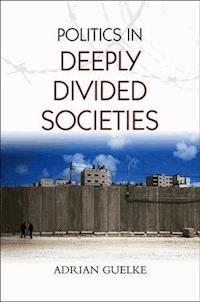
This book provides an authoritative and systematic analysis of the politics of so-called 'deeply divided societies' in the post Cold War era. From Bosnia to South Africa, Northern Ireland to Iraq, it explains why such places are so prone to political violence, and demonstrates why - even in times of peace - the fear of violence continues to shape attitudes, entrenching divisions in societies that already lack consensus on their political institutions.
Combining intellectual rigour and accessibility, it examines the challenge of establishing order and justice in such unstable environments, and critically assesses a range of political options available, from partition to power-sharing and various initiatives to promote integration. The Politics of Deeply Divided Societies is an ideal resource for students of comparative politics and related disciplines, as well as anyone with an interest in the dynamics of ethnic conflict and nationalism.
Sie lesen das E-Book in den Legimi-Apps auf:
Seitenzahl: 362
Veröffentlichungsjahr: 2013
Ähnliche




















Table of Contents
Cover
Title page
Copyright page
PREFACE
LIST OF TABLES
1 INTRODUCTION
Classifying Democracies
Consociational Democracy
Conflict Regulation
Organisation of the Book
Centrality of Security
2 THE CHARACTERISTICS OF DEEPLY DIVIDED SOCIETIES
Class and Caste
Religion and Sectarianism
Language and Race
Ethnicity
Binary Divisions
Polarising Differences
Approaching a Definition
3 VIOLENCE, ORDER AND JUSTICE
Force and Violence
Dominant and Subordinate Communities
Representative Violence
Consequences of a Lack of Consensus
Communal Deterrence
Genocide and Ethnic Cleansing
The Deadly Ethnic Riot
4 THE CHALLENGE OF POLICING
Typology of Strategies for Maintaining Order
The Case of Northern Ireland
The Case of Israel/Palestine
The Case of South Africa
Vertically Divided Societies
5 LIMITS TO INTEGRATION
Assimilation and Integration
Multiculturalism
Civil Rights
Non-Racialism
Racism as a Special Case
6 PARTITION AND POPULATION TRANSFER
Fragmentation
Absorption and Irredentism
Partition of Ireland
The Palestinian Case
The Failure of Apartheid
Boost to Separatism
7 POWER-SHARING AND POLITICAL ACCOMMODATION
Consociationalism
External Conflict Management
Entrenching Divisions
Territorial Approaches
Accommodating Linguistic and Religious Differences
Unimplemented Solutions
8 EXTERNAL MEDIATION
Self-Determination
Challenges to the Post-Colonial Norm
The New Interventionism
External Engagement
Camp David and after
Northern Ireland’s Long Peace
Coercive Diplomacy
9 CONCLUSION
The Quest for Legitimacy
Negotiated Settlements
International Influences
Primacy of Internal Solutions
BIBLIOGRAPHY
Index
Copyright © Adrian Guelke 2012
The right of Adrian Guelke to be identified as Author of this Work has been asserted in accordance with the UK Copyright, Designs and Patents Act 1988.
First published in 2012 by Polity Press
Polity Press
65 Bridge Street
Cambridge CB2 1UR, UK
Polity Press
350 Main Street
Malden, MA 02148, USA
All rights reserved. Except for the quotation of short passages for the purpose of criticism and review, no part of this publication may be reproduced, stored in a retrieval system, or transmitted, in any form or by any means, electronic, mechanical, photocopying, recording or otherwise, without the prior permission of the publisher.
ISBN-13: 978-0-7456-4849-1
ISBN-13: 978-0-7456-4850-7(pb)
ISBN-13: 978-0-7456-6064-6(Multi-user ebook)
ISBN-13: 978-0-7456-6065-3(Single-user ebook)
A catalogue record for this book is available from the British Library.
The publisher has used its best endeavours to ensure that the URLs for external websites referred to in this book are correct and active at the time of going to press. However, the publisher has no responsibility for the websites and can make no guarantee that a site will remain live or that the content is or will remain appropriate.
Every effort has been made to trace all copyright holders, but if any have been inadvertently overlooked the publisher will be pleased to include any necessary credits in any subsequent reprint or edition.
For further information on Polity, visit our website: www.politybooks.com
PREFACE
There are social and political divisions in all societies. But deeply divided societies are a special category of cases, in which a fault line that runs through the society causes political polarisation and establishes a force field. This divide makes establishing and sustaining democratic rule a huge challenge. The nature of such societies and the manner in which their political problems have been addressed form the subject of this book. My approach is thematic but it is linked to consideration of individual polities throughout. However, the relevance of the analysis is by no means confined to just the cases discussed in the book. This is an important consideration in the context of the political changes transforming the Middle East and North Africa, from which fresh examples of deeply divided societies seem likely to emerge.
This book has had a long gestation. I have been lecturing on the subject of the politics of deeply divided societies for most of my academic career. Initially it was as a theme in a larger Comparative Politics course, but from 1992 a module just focusing on deeply divided societies was established and has been taught at Queen’s University of Belfast ever since. I owe a huge debt of gratitude to the students who have taken the module. Their critical engagement with what they were taught stimulated my own thinking. It helped that nearly all of them had expertise aplenty on the subject, simply by reason of having grown up in Northern Ireland. Another debt is owed to the numerous colleagues who have shared in the teaching of the course over the years. They include Neo Loizides, Roberto Belloni, Karin Fierke, Paul Mitchell, Amalendu Misra, Ephraim Nimni, Stefan Andreasson, and Peter McLoughlin. But a special mention must be made of Beverley Milton-Edwards. She and I previously put together a book manuscript that was intended to be a textbook for the module. This ultimately came to nothing, as each of us pursued other projects, but some of the material I contributed to that effort has proved useful as a source for this book.
Two anonymous reviewers made invaluable comments on an earlier draft and I am grateful to them for helping me to refine and to extend my analysis. I also owe a debt of gratitude to the editors and staff of Polity, including Louise Knight, David Winters and Neil de Cort. In this context, my copyeditor, Manuela Tecusan, deserves to be singled out. She did more than simply cajole me to correct errors of grammar and to unravel convoluted prose. She educated me on such issues as the etymology of irredentism. My thanks are also due to my intern from Venice, Federica Marsi, and to my wife, Brigid. They both helped me with proof-reading. However, a significant caveat applies to all these expressions of thanks. Particularly as I did not always follow the advice I was given, any failings in what follows remain solely mine.
Adrian Guelke,
Belfast,
January 2012
LIST OF TABLES
1
INTRODUCTION
Two households, both alike in dignity,
In fair Verona, where we lay our scene,
From ancient grudge break to new mutiny,
Where civil blood makes civil hands unclean.
Shakespeare, Romeo and Juliet, Prologue, 1–4 (in Craig 1943: 764)
Deeply divided societies are plainly not a new phenomenon. The divisions that Shakespeare imagined in the Verona in which he set his play were based on the realities of the factionalism to be found in many a polity in medieval Europe. Indeed, Shakespeare drew on stories that were rooted in the existence of a violent political rivalry between two families that had been fought out across Lombardy. The cleavage Shakespeare described was a vertical one. Thus the Montague and the Capulet families were equal in status, as Shakespeare’s opening lines make clear. But the divisions that mark deeply divided societies can also commonly be horizontal, pitting members of a subordinate community against a dominant one. And there is, similarly, no shortage of historical precedent for societies with horizontal divisions. Further, any number of examples might be given of societies where such divisions have led to conflict, going back to the great slave revolts that took place in the ancient world. Both types of deeply divided societies will be examined in this book. However, for the most part, the emphasis will be on the examination of contemporary societies, and not on how the concept of deeply divided societies might be applied in different historical contexts.
This is in part a choice made because the existing literature on deeply divided societies is about contemporary cases. In particular, the identification of deeply divided societies as presenting a special challenge to the establishment of democratic governance is comparatively new, especially insofar as the assumptions, both of the superiority of democracy over other forms of government and of its near universal feasibility, are themselves relatively recent. That is reflected in the fact that most examples of the use of the term ‘deeply divided societies’ in the titles of books or journal articles date from the last 40 years. Indeed, the added impetus given to the concept by the rash of ethnic conflicts that followed the end of the Cold War means that many of these works were published after 1990 (e.g. Harel-Shalev 2010; Kumar 2009; O’Flynn 2006; Al-Haj 2004). However, too much should not be made of the use of the term as a label. The problems that deeply divided societies give rise to have been a subject of debate in politics since the beginnings of political analysis, under a variety of different rubrics. Thus, in the 1920s the focus tended to be put specifically on the question of minorities in the new states of Central and Eastern Europe, but consideration of the problem of minorities raised similar sorts of issues.
Lesen Sie weiter in der vollständigen Ausgabe!
Lesen Sie weiter in der vollständigen Ausgabe!
Lesen Sie weiter in der vollständigen Ausgabe!
Lesen Sie weiter in der vollständigen Ausgabe!
Lesen Sie weiter in der vollständigen Ausgabe!
Lesen Sie weiter in der vollständigen Ausgabe!
Lesen Sie weiter in der vollständigen Ausgabe!
Lesen Sie weiter in der vollständigen Ausgabe!
Lesen Sie weiter in der vollständigen Ausgabe!
Lesen Sie weiter in der vollständigen Ausgabe!




