


15,99 €
Mehr erfahren.
- Herausgeber: John Wiley & Sons
- Kategorie: Geisteswissenschaft
- Serie: China Today
- Sprache: Englisch
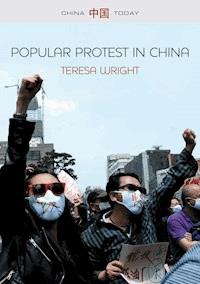
Popular protest in China has been widespread and prevalent. Why do people protest and how are such demonstrations handled by the authorities? Could they ultimately imperil China's political system? In this book, Teresa Wright analyzes the array of protests that have swept China in the post-Mao period. Exploring popular contention through a range of different groups - from farmers to factory workers, urban homeowners to environmentalists, nationalists to dissidents, ethnic minorities to Hong Kong residents, Wright shows that - with the exception of the latter - popular protest has achieved adequate government responses to the public's most serious grievances. Yet Wright cautions that this may not last forever. For Chinese citizens that engage in protest often suffer serious emotional and physical costs. As a result, they have developed an unhealthy relationship with the regime. In this context, Xi Jinping's recent efforts to restrict public expression may backfire - leading to an explosive dynamic that may threaten the political stability that China's ruling elites so desire.
Sie lesen das E-Book in den Legimi-Apps auf:
Seitenzahl: 398
Veröffentlichungsjahr: 2018
Ähnliche



















Table of Contents
Series page
Title page
Copyright page
Map
Chronology
Acknowledgments
Introduction
What Is Popular Protest?
How Are People in “Communist” China able to Engage in Popular Protest?
Opportunities and Constraints: Political System
Constitutional Provisions
Laws, Directives, and Guidelines
“Letters and Visits”
Courts
Opportunities and Constraints: Mass Media
The Internet
Opportunities and Constraints: Economy
Elite Disagreement
Expanding Opportunities from Below
Layout of the Book
Notes
1: Popular Protest in the Post-Mao Era
Popular Protest in the Early Post-Mao Era (1976–89)
Popular Protest in the Late Post-Mao Era (1990–Present)
Notes
2: Rural Protest
The Changing Opportunity Structure for Rural Protest
Changing Opportunity Structures and Rural Grievances in the Early Post-Mao Period
Changing Opportunity Structures and Rural Grievances in the Late Post-Mao Period
Conclusion
Notes
3: Labor Protest
Opportunity Structures in the Post-Mao Period
Late Post-Mao Period
Conclusion
Notes
4: Homeowner Protest
Late 1970s–Mid-1990s
Late 1990s–Present
Housing Demolition
New Housing Developments
Conclusion
Notes
5: Environmental Protest
Grievances
Opportunities and Efficacy
When Does Environment-Related Protest Occur?
How Do Environmental Protestors Act?
Examples
Central Government Response
Conclusion
Notes
6: Nationalist Protest
Grievances
Opportunities and Efficacy
When and Where Does Nationalistic Protest Occur?
How Do Nationalistic Protestors Act?
Who Has Participated in, and Who Has Led Nationalistic Protests?
How Has the Government Responded to Nationalistic Protests?
Examples
Conclusion
Notes
7: Political Protest
Types of Political Protest
Opportunities and Efficacy
Grievances
Behavior
Leaders and Participants
Government Responses
Conclusion
Notes
8: Ethnic Minority Protest
Grievances, Opportunities, and Protest: Imperial China Through the Maoist Era
Grievances, Opportunities, and Protest: Late 1970s–Early 1990s
Grievances, Opportunities, and Protest: Early 1990s–Present
Conclusion
Notes
9: Protest in Hong Kong
Pre-Handover
1997–2002
2003
2004–2013
The 2014 “Umbrella Movement” Through 2017
Conclusion
Notes
Conclusion
Protest Causes
Protest Features
Protest Consequences
Conclusion
Note
Index
End User License Agreement
Guide
Cover
Table of Contents
Begin Reading
Pages
ii
iv
vi
vii
viii
ix
x
xi
xii
xiii
xiv
1
2
3
4
5
6
7
8
9
10
11
12
13
14
15
16
17
18
19
20
21
22
23
211
212
24
25
26
27
28
29
30
31
32
33
34
35
36
37
38
39
40
41
42
43
44
213
45
46
47
48
49
50
51
52
53
54
55
56
57
58
59
60
61
62
63
64
214
215
216
65
66
67
68
69
70
71
72
73
74
75
76
77
78
79
80
81
82
83
84
85
86
87
88
89
90
91
217
218
219
220
92
93
94
95
96
97
98
99
100
101
102
103
104
105
106
107
108
109
110
111
112
113
114
221
222
115
116
117
118
119
120
121
122
123
124
125
126
127
128
129
130
131
132
133
134
135
136
137
223
224
225
226
138
139
140
141
142
143
144
145
146
147
148
149
150
151
152
153
154
155
156
227
157
158
159
160
161
162
163
164
165
166
167
168
169
170
171
228
229
172
173
174
175
176
177
178
179
180
181
182
183
184
185
186
187
230
231
188
189
190
191
192
193
194
195
196
197
198
199
200
201
202
203
232
204
205
206
207
208
209
210
233
234
235
236
237
238
239
240
241
242
243
244
245
246
247
248
249
250
Series page
China Today series
Greg Austin, Cyber Policy in China
Jeroen de Kloet and Anthony Y. H. Fung, Youth Cultures in China
Steven M. Goldstein, China and Taiwan
David S. G. Goodman, Class in Contemporary China
Stuart Harris, China's Foreign Policy
William R. Jankowiak and Robert L. Moore, Family Life in China
Elaine Jeffreys with Haiqing Yu, Sex in China
Michael Keane, Creative Industries in China
Joe C. B. Leung and Yuebin Xu, China's Social Welfare
Hongmei Li, Advertising and Consumer Culture in China
Orna Naftali, Children in China
Eva Pils, Human Rights in China
Pitman B. Potter, China's Legal System
Pun Ngai, Migrant Labor in China
Xuefei Ren, Urban China
Nancy E. Riley, Population in China
Judith Shapiro, China's Environmental Challenges 2nd edition
Alvin Y. So and Yin-wah Chu, The Global Rise of China
Teresa Wright, Party and State in Post-Mao China
Jie Yang, Mental Health in China
You Ji, China's Military Transformation
LiAnne Yu, Consumption in China
Copyright page
Copyright © Teresa Wright 2018
The right of Teresa Wright to be identified as Author of this Work has been asserted in accordance with the UK Copyright, Designs and Patents Act 1988.
First published in 2018 by Polity Press
Polity Press
65 Bridge Street
Cambridge CB2 1UR, UK
Polity Press
101 Station Landing
Suite 300
Medford, MA 02155, USA
All rights reserved. Except for the quotation of short passages for the purpose of criticism and review, no part of this publication may be reproduced, stored in a retrieval system or transmitted, in any form or by any means, electronic, mechanical, photocopying, recording or otherwise, without the prior permission of the publisher.
ISBN-13: 978-1-5095-0355-1
ISBN-13: 978-1-5095-0356-8(pb)
A catalogue record for this book is available from the British Library.
Library of Congress Cataloging-in-Publication Data
Names: Wright, Teresa, author.
Title: Popular protest in China / Teresa Wright.
Description: Cambridge, UK ; Medford, MA : Polity Press, 2018. | Series: China today | Includes bibliographical references and index.
Identifiers: LCCN 2017056580 (print) | LCCN 2017059364 (ebook) | ISBN 9781509503599 (Epub) | ISBN 9781509503551 (hardback) | ISBN 9781509503568 (pbk.)
Subjects: LCSH: Protest movements–China–History. | Political participation–China–History. | China–Politics and government–1976–2002. | China–Politics and government–2002-
Classification: LCC HN733.5 (ebook) | LCC HN733.5 .W754 2018 (print) | DDC 303.48/40951–dc23
LC record available at https://lccn.loc.gov/2017056580
Typeset in 11.5 on 15 pt Adobe Jenson Pro
by Toppan Best-set Premedia Limited
Printed and bound in Great Britain by Clays Ltd, St. Ives PLC
The publisher has used its best endeavours to ensure that the URLs for external websites referred to in this book are correct and active at the time of going to press. However, the publisher has no responsibility for the websites and can make no guarantee that a site will remain live or that the content is or will remain appropriate.
Every effort has been made to trace all copyright holders, but if any have been inadvertently overlooked the publisher will be pleased to include any necessary credits in any subsequent reprint or edition.
For further information on Polity, visit our website:
politybooks.com
Chronology
October 1949
People's Republic of China (PRC) established under leadership of Mao Zedong
1958–60
Great Leap Forward; tens of millions die of starvation
1959
Tibetan Uprising in Lhasa; Dalai Lama flees to India
1966–76
Great Proletarian Cultural Revolution
1969
Deng Xiaoping purged from Party-state posts
1974
PRC Premier Zhou Enlai convinces Mao to restore Deng and other purged leaders to Party-state posts
January 1976
Death of Zhou
April 1976
Citizens gather in Tiananmen Square to memorialize Zhou, support Deng; Maoist “Gang of Four” orchestrates removal of Deng from Party-state posts, uses official media to deem the protestors “counter-revolutionary”; thousands arrested
September 1976
Death of Mao Zedong
October 1976
“Gang of Four” arrested and sentenced
July 1977
Deng restored to high-level Party-state posts, criticizes Cultural Revolution and calls for a “Beijing Spring” wherein citizens express grievances
March 1978
New PRC Constitution adopted; includes “four big freedoms”
November 1978
Citizens put up big-character posters at “Democracy Wall” in central Beijing and circulate “people's periodicals,” criticizing the Maoist period and calling for political reform
December 1978
Deng Xiaoping recognized as paramount leader; CCP Central Committee lays out reform program emphasizing economic reform and promising to strengthen democracy and law. Party-state leaders purged during the Cultural Revolution restored to posts; 10,000 political prisoners freed and cleared of wrongdoing; Official verdict on the April 1976 movement reversed; universities re-opened; crowds gather at “Democracy Wall” in downtown Beijing
1979
Rural collectives dismantled; Ministry of Justice restored; Special Economic Zones (SEZs) established; “one-child” policy established;
Explorations
editor Wei Jingsheng jailed; “Democracy Wall” closed
1980
“Four big freedoms” removed from PRC Constitution
1982
New CCP Constitution adopted; right of workers to strike not included
December 1984
Sino-British Joint Declaration agreeing to return Hong Kong to China in 1997
1986–7
Student demonstrations
1987
Protests in Tibet
1988–9
Tibetan monks arrested; martial law declared in Tibet
April–June 1989
Student-led protests in Beijing and other major cities; worker autonomous federations established; violent crack-down in Beijing June 3–4
1992
Deng Xiaoping's “Southern Tour” of Special Economic Zones
1994
PRC citizens granted the right to sue government officials; Labor Law requires contracts for all workers; owners/residents of urban residential tracts directed to elect “homeowner associations”
1995
Commercial Internet accounts appear in PRC
1997
Hong Kong becomes Special Autonomous Region of PRC; death of Deng Xiaoping
Late 1990s
Privatization of state-owned enterprises (SOEs) and urban housing
1998
China Democracy Party established
1999
Students protest US bombing of Chinese embassy in Belgrade
2000
“Open Up the West” campaign begins
Early 2000s
Rural taxes and fees abolished
2001
China enters WTO
2002
“Three Represents” embraced; private entrepreneurs allowed to join the CCP
2002–3
“Subversion law” provokes protests in Hong Kong
2003
Environmental Impact Assessment law passed
2004
PRC Constitution amendments protect “legally obtained” private property
2005
Anti-Japan protests
2006
“New Socialist Countryside” initiative
2008
Protests and repression in Tibet; summer Olympic Games in Beijing; Labor Contract Law; Liu Xiaobo and others post “Charter 08,” calling for fundamental liberal democratic reforms; PRC becomes world's largest emitter of greenhouse gases
2010
PRC becomes nation with highest number of Internet users
2011
PRC citizens granted the right to sue the government for the release of information
2012
Criminal Procedure Law revised; anti-Japan protests; Xi Jinping assumes top Party-state posts
2014
PRC journalists required to pass ideological exams; “Umbrella” Movement in Hong Kong
2015
Environmental Protection Law takes effect
Acknowledgments
When I was asked by Polity to consider writing this book, I was in the final throes of another book (Party and State in Post-Mao China, Polity, 2015) and had been looking forward to a break. But, the proposed topic of this book – popular protest in China – reinvigorated me. As a new graduate student in the fall of 1988, I had been captivated by the student protests that had emerged in China 1986–7, and made them the subject of my MA thesis. In early 1989, I excitedly signed up for my first trip to China, for summer Mandarin language study. When student demonstrations again arose in mid-April of 1989, I was glued to the television, following every turn in the developing story. Watching the movement end with a bloody crack-down, I was devastated. I also found that my planned summer study abroad program had been cancelled. In the summer of 1990, I finally made my first visit to China, traveling on my own across many provinces, and doing my best with my still rudimentary Mandarin to speak with the people I met. I wanted to know more about the protests of 1989, and as I began my PhD dissertation research in the early 1990s, I sought out and interviewed exiled Chinese protest leaders (later published in Protest and Peril: State Repression and Student Activism in China and Taiwan, University of Hawaii, 2001). I was inspired by these leaders’ courage and commitment to ideals in confusing and highly risk-laden circumstances, and overcome by the great sacrifices they had made. Few would ever return to their families back in the mainland PRC.
In the late 1990s, some of the leaders of the protests of 1989 worked alongside leaders of China's earlier “Democracy Wall” movement (1978–80) to establish the first true opposition political party in China – the China Democracy Party (CDP). Intrigued, I interviewed those that I could find, collected a great deal of information about the group, and published some of my findings. Like the protests of 1989, the CDP was allowed to exist for a number of months before its major leaders were imprisoned. But unlike in 1989, when millions joined protests in virtually every major Chinese city, the CDP did not attract a large following.
This lack of apparent public interest in political change – which stood in stark contrast to the late 1970s and 1980s – puzzled me. My attempt to explain it resulted in two subsequent books, Accepting Authoritarianism: State–Society Relations in China's Reform Era (Stanford University Press, 2010) and Party and State in Post-Mao China.
But in their focus on the reasons why the Chinese public had appeared to become more satisfied with CCP rule since 1989, these books did not sufficiently address the tens of thousands of new and often large-scale non-political protests that had arisen since 1989 – protests that involved a far greater range of socioeconomic groups (most notably, China's vast rural population) than had been the case in the more politically-oriented protests of 1978–89. In addition, these books did not consider the political protests that have been undertaken by Tibetans, Uighurs, and residents of Hong Kong in the post-1989 period.
Consequently, despite my desire to rest after completing Party and State, I accepted Polity's invitation to write this book. The research for this book reminded me of the courage in the face of injustice and adversity that I so admired in those who led the protests of the 1980s. It also underscored that the Chinese public is far from passive, obedient, or complacent. To the contrary, Chinese citizens often boldly, defiantly, and doggedly confront authority when they feel that their rights have been violated or that they have been treated unjustly. This is not to stay that they are not careful and strategic in their activism; as you will see in this volume, they are very astute in their protest behavior. But at the same time, they are not cowed by their apparent lack of power relative to political and economic elites, and they do not shy away from confrontation when they feel that it is warranted.
Chinese citizens’ commitment to standing up for what is right reminds me of my parents, Pete and Nancy, whose dedication to social justice and community betterment has inspired me throughout my life. I could not be more grateful to them for giving me this gift.
More concretely, I wish to express my sincere thanks to the many scholars that generously took the time to read and provide valuable feedback on portions of this text. They include: Dorothy Solinger, Yongshun Cai, Yanhua Deng, Christopher Heurlin, Anne Christine Lie, Dragan Pavlicevic, Benjamin Read, Christoph Steinhardt, Zhengxu Wang, Ngai Ming Yip, and two anonymous reviewers. Of course, any errors and flaws are mine alone. I also am grateful to the East-West Center for supporting my research with office space and intellectual camaraderie over the course of many summers. In addition, I am thankful for the unfailing support of Amelia Marquez, who has assisted me with administrative matters – and generally has kept me smiling – for nearly two decades. Similarly, the editorial staff at Polity Press – Louise Knight, Nekane Tanaka Galdos, Neil de Cort, and Ian Tuttle – have been an absolute pleasure to work with; professional, reasonable, and supportive. Further, I extend my heartfelt appreciation to Fanyi Yang for our weekly Skype sessions in Mandarin; a more talented and good-humored jiaoshou would be impossible to find.
And finally, I am deeply grateful to my daughter Anna, my son Nicholas, and my partner Ty for helping me grow on a daily basis, for appreciating my passion for studying China, for reminding me to prioritize the things that matter most, and for being the best companions a person could ever hope for. I cannot thank them enough for the joy and fulfillment that they have brought to my life.
Introduction
Popular protest has occurred in every kind of political system, and in every country around the world. In contemporary China this is also the case, and often dramatically so. In the 1980s, the most prominent mass protests focused on political reform, including the massive student-led demonstrations of the spring of 1989. From 1990 through the present, there have been no similarly large-scale, nationwide public street protests in China, and very few public acts calling for fundamental changes to China's central Chinese Communist Party (CCP)-dominated governing regime. However, protests of other kinds have been widespread and frequent. Indeed, since the 1990s, tens of thousands of mass protests have arisen in China each year.
Why do people protest in China? What happens when they do? How have protests affected the way that people interact with and view their government? Will popular protests lead to the fall of China's ruling CCP? This book answers these questions. To do so, it comprehensively analyzes the multitudinous protests that have arisen in China's post-Mao period, particularly focusing on the 1990s through the present. To begin, it examines the many causes of protest in contemporary China. In addition, the book describes what people in China do when they protest, how Chinese political authorities at various levels respond to their actions, and how these experiences shape the way that protestors view their government.
These aspects of protest in China have important implications for this book's final question – what do these protests tell us about the stability of China's governmental system? Overall, popular protest in contemporary China has not posed an existential threat to CCP rule. Although collective contention has been a highly inefficient and often violent way to express and resolve social discontent, it has worked adequately to address the public's most serious grievances. Indeed, to the extent that protest demands have been met with sympathy and support on the part of national political leaders, protest actually may have worked to strengthen central government legitimacy.
At the same time, there are three important qualifications to this overall argument. First, these findings apply only to protest within mainland China proper undertaken by the majority Han Chinese population, which constitutes roughly 92 percent of the Chinese citizenry. Protests in China's Special Autonomous Region of Hong Kong have had their own dynamic, as have those undertaken by ethnic minority groups – particularly, Uighurs and Tibetans. These protests have involved fundamental conflict between central Chinese political leaders and protestors, and have the potential to lead to more revolutionary (or separatist) unrest. However, thus far, these kinds of collective contention have found little sympathy among mainland Han Chinese. Indeed, most Han Chinese have seemed to support the central government's repressive actions toward ethnic minority protests. Further, they generally have not viewed Hong Kong protesters’ aims as being linked to their own interests.
Second, even when the overall result of protest has been seen by activists as satisfactory, the often highly negative experiences of protestors during the course of their interaction with ruling authorities have made for an unhealthy relationship between aggrieved citizens and governing officials. In part, this is because the intense conflict, trauma, and often violence associated with popular protests have left participants scarred. For, citizens typically have received redress only after grievances have become severe, and only when citizens have undertaken large-scale and sustained actions involving significant emotional and physical commitments and costs. This unhealthy relationship also has been a byproduct of the unpredictable nature of protests. In a context where both regime authorities and citizens have not played by clear “rules,” individual political officials and activists have chosen among a number of options within the vague boundaries of what constitutes acceptable behavior. Consequently, each protest episode has been characterized by great uncertainty, with actions on both sides frequently shifting among conciliation, confrontation, negotiation, intransigence, non-violence, and violence. As a result, the development of trust between citizens and ruling elites has been inhibited.
Third, given this situation, efforts by CCP General Secretary and PRC President Xi Jinping to restrict public expression may lead to an explosive situation that may undermine the political stability that the CCP has enjoyed since the early 1990s. To the extent that Xi's repressive measures stifle the ability of mainland Han Chinese to voice their grievances through protest, popular protest may no longer be allowed to act as a crucial social outlet. If aggrieved citizens come to view central political leaders as repressors rather than as allies, the legitimacy of China's CCP-led regime may be expected to decline. Further, because people that have engaged in protest in China have been both empowered and traumatized by their prior protest experiences, and because their relationships with regime authorities have been characterized by unpredictability and flux, they may be more inclined to engage in more revolutionary confrontations.
What Is Popular Protest?
Before delving into the specifics of the various kinds of popular protests that have arisen in China's post-Mao period, it is important to clarify what this book is talking about when it speaks of “popular protest.” Taking a relatively wide approach to the term, it is defined herein as public collective action directed toward political and/or economic elites. Within this definition, “elites” refers to persons who hold positions of power relative to the persons that are collectively and publicly engaging in protest, and/or that hold a position of power relative to the issue at hand. An example of an “economic elite” is an employer that controls the working conditions and payment of his or her workers. An example of a “political elite” is a local government official that has control over land use. A “political elite” can also be a higher-level official that has power over lower-level political authorities.
Within this definition, “collective action” refers to coordinated efforts by a group of people on behalf of a shared interest. For the purposes of this book, popular protest is a type of contentious collective action that is directed at power-holders who are in positions that give them control over the matter about which the protestors are concerned or aggrieved. Finally, according to the definition of popular protest used in this book, such contentious collective actions must be public. At the same time, this book takes a broad view of what is “public,” including not only actions in physical spaces (such as street marches and sit-ins) but also public acts undertaken in virtual spaces, such as the Internet.
With this relatively broad definition in hand, this book examines a wide range of popular protests in contemporary China. It includes contentious collective actions on the part of different socioeconomic groups (such as rural residents, urban workers, and homeowners), as well as other kinds of demographic groups – particularly, ethnic minorities. It also looks at protests that focus on issues that are not related to a particular demographic group, such as environmental protests, nationalist protests, and protests calling for political reform.
How Are People in “Communist” China able to Engage in Popular Protest?
In a country like China, which is governed by an authoritarian regime that self-identifies as “communist,” how is it possible for people to engage in public protests that are directed at those who hold power? One might think that in an authoritarian and communist political system, such activities would be harshly repressed, and few would dare to engage in them. However, the situation in China is more complicated than its designation as “authoritarian” and “communist” implies. In fact, there is some legal basis upon which China's citizens may engage in collective protest, and there are some institutionalized channels within China's political system that are designed to accept and respond to popular grievances. Further, when these institutionalized mechanisms fail to satisfactorily address citizen concerns, the aggrieved have been allowed by regime authorities to engage in acts of public contention outside of formal, institutionalized channels.
To more fully understand the context that both provides opportunities for and constraints on protest in China, we must look more closely at what scholars of contentious politics refer to as “opportunity structures.” They emphasize that some “opportunity structures” are more open to protest, while others are more closed. At the same time, they stress that opportunity structures are not static, but rather are continually changing. Further, they note that different aspects of changing opportunity structures have different influences on various demographic groups and types of protests. In addition, scholars point out that it is potential protestors’ perception of opportunity structures that matters the most.1
Applying these concepts to China, we can first point to “opportunity structures” related to protest that affect virtually all Chinese citizens, and that have been relatively unchanged over the course of the post-Mao period. Next, we can examine changes in “opportunity structures” during this period. Finally, we can disaggregate the specific ways in which particular aspects of (both changing and unchanged) opportunity structures have differentially influenced particular demographic groups and types of popular protest.
Opportunities and Constraints: Political System
The most notable, important, and unchanged feature of China's opportunity structure is that a single party – the CCP – has controlled the Chinese government since 1949. Although China has a formal “state” structure (with a President, etc.) that is “on paper” separate from the CCP, in reality, the CCP created the state to serve the CCP's ends, and the CCP determines who will serve in all important positions within the state, as well as what the state does.2
Constitutional Provisions
A feature of China's opportunity structure that has changed somewhat over the course of time, and is much more complicated than the simple facts discussed above, is the legal status of popular protest. Both the CCP and the Chinese state have constitutions that contain statements related to the legality of protest. These constitutions have been amended since Mao's death in 1976, with the result that the constitutional status of popular protest has not been consistent over time. Moreover, both constitutions contain some statements that appear to protect citizens’ right to protest, yet other statements that restrict that right.
The current constitution of the CCP was adopted in 1982, but has been amended on several occasions since then. The most recent CCP constitution declares that the CCP “respects and safeguards human rights” and “encourages the free airing of views.”3 But, the CCP constitution does not specify or clarify what it means by “human rights,” and it also stipulates that “leadership by the CCP” is one of the “cardinal principles” upon which the People's Republic of China is to be “built.” It also states that the CCP must “combat” “bourgeois liberalization.”4 Thus, there is no clear protection for the “airing of views” that might be seen as challenging the “leadership” of the CCP or as promoting “bourgeois liberalization.”
The constitution of the Chinese state (technically, the constitution of the PRC) has also been amended on a number of occasions since the death of Mao in 1976. From 1978 through the present, China's state constitution explicitly has claimed to protect civil liberties, even using the same language that is found in liberal democracies such as the US. Specifically, Article 35 asserts that “citizens of the People's Republic of China enjoy freedom of speech, of the press, of assembly, of association, of procession and of demonstration.”5 Further, Article 41 stipulates that China's citizens have “the right to criticize and make suggestions to any state organ or functionary.” In 2004, constitutional amendments were added to protect the “legally obtained” private property of citizens, and to protect “human rights.”
However, other parts of China's current state constitution place limits on many of the rights listed above. Among them, Article 1 states that “sabotage of the socialist system by any organization or individual is prohibited.” Similarly, Article 28 emphasizes that “the state maintains public order and suppresses treasonable and other counter-revolutionary activities.” Further, Article 51 asserts that “the exercise by citizens of the People's Republic of China of their freedoms and rights may not infringe upon the interests of the state,” and Article 53 warns that citizens “must abide by the constitution and the law, keep state secrets, protect public property and observe labor discipline and public order.” Thus, according to China's state constitution, civil liberties are guaranteed, but only as long as they are not perceived by ruling authorities to “sabotage” China's “socialist system” or to “infringe” on the “interest of the state;” to otherwise be “counter-revolutionary” or “treasonous;” or to disturb “public order.” Moreover, language that seemed to encourage the public airing of grievances in the 1978 constitution (the so-called “four big freedoms” to speak out freely, air views fully, hold great debates, and write big-character posters) was removed in 1980. In addition, protection of the right of workers to strike was included in the 1978 constitution, but was removed in 1982.
Overall, China's state and CCP constitutions have become somewhat less protective of civil liberties over the course of the post-Mao era. At the same time, throughout the post-Mao period, both constitutions have contained contradictory statements that have given China's political leaders a great deal of constitutional leeway when it comes to dealing with popular protest. Concomitantly, these constitutional contradictions have provided openings for potential protestors.
Laws, Directives, and Guidelines
Laws and other directives and guidelines also can be interpreted to both protect the right to protest and to justify its suppression. Technically, protest organizers are required to apply for and receive legal permission before gathering publicly. Further, a 1998 directive from the central State Council defines as “intolerable:” attempting to overthrow the CCP or overall political system, threatening China's territorial integrity, destroying important infrastructure and facilities, or attacking state agencies. According to China's Criminal Law, the latter can include preventing the operation of a state agency. Further, the Law defines as a crime “assembling the masses to disrupt social order,” which can occur when a protest action disrupts work, production, business, or school. “Disrupting social order” can result in sentences of up to seven years, and “attacking state agencies” can be punished with sentences up to ten years. Moreover, in 2004, Beijing municipal officials announced that those who gather or protest in “important” places will be sent by police to official complaint departments, and that persons violating the law will be sent back to the state agency in their place of residence. These rules give the authorities wide leeway in pursuing legal action against protestors.6
Yet simultaneously, and particularly since the early years of the new millennium, central authorities have issued regulations seeking to ensure that collective contentious actions are handled professionally, and without violence, and that those who face charges as a result of their involvement in protests have legal protections. In 2002, the central Ministry of Public Security laid out a series of regulations that are to be strictly followed by police in their handling of social unrest, with the goal of avoiding violence or escalation. In 2012, the Criminal Procedure Law was revised to ban extorted confessions and the use of torture to collect evidence, and to require the videotaping of confessions. In 2013, the Supreme People's Court issued guidelines for the elimination of confessions acquired through torture. The fact that these rules have been publicized indicates that the problems that they attempt to address have been widespread. Thus far, there is little evidence that these relatively new regulations have had the desired effect.7 Nonetheless, they provide protesters with some legal backing, and – especially in cases where police have used unwarranted violence against protestors – these rules have been the basis for higher-level governmental intervention on behalf of protestors.
Adding to the lack of clarity regarding the legality of protest in China, there is no judicial body in China with the power to decide when a citizen or group has exceeded the limits of its constitutional rights, or when a political official has violated a citizen's constitutional rights. Although China does have a judiciary with a “Supreme People's Court,” the court system – as with the entire “state” structure – is controlled by the CCP. Thus, if top CCP leaders decide that a particular popular protest action is unacceptable and should be repressed (as was the case in the student-led protests of the spring of 1989), there is no judicial body with the power or authority to rule on the legality of the CCP leaders’ decision or action.
Nonetheless, from 1990 through the present, China's central political leaders only infrequently have declared a particular popular protest to be unacceptable and ordered its repression. And in a not insignificant number of cases, central authorities have intervened in support of the protestors. Further, since the late 1990s, officials from the local level through the provincial level have been reviewed annually according to their record of maintaining “social stability,” including numerical measures such as how many collective petitions are lodged with higher-level authorities, and how many popular “disturbances” occur within a particular jurisdiction. If officials fail to achieve the goals outlined in these criteria, the evaluation guidelines clearly state that this will result in dismissal. Conversely, promotions are to be given only to officials who meet or exceed these specific goals. Unfortunately, this reality often has led local officials to repress local protests and even use violence against protest leaders. However, these evaluation criteria also give aggrieved citizens leverage, as they know that if word of local unrest gets out, the local officials’ reviews will be tarnished. As a result, despite the lack of clear constitutional or other legal protections, many disgruntled citizens have had a feeling of efficacy with regard to engaging in collective protests.8
As with many other aspects of China's political and economic system, reliable statistics on the number of popular protests in a given year are elusive. In part, this is because different sources use different definitions of “protest.” The Chinese government typically uses the terms “mass incidents” or “public order disturbances,” which can include organized crime and other actions that do not fall within the definition used in this book. Further, since 2006, the Chinese government has not published official statistics on such events. However, some Chinese officials have provided verbal estimates, and some Chinese scholars and non-governmental organizations (NGOs) have offered statistics based on their research. Drawing on these sources, the number of annual popular protests in China appears to have risen from roughly 5,000–10,000 in the early 1990s, to 60,000–100,000 by the middle of the first decade of the 2000s.9 For about the past decade, the number of yearly popular protests is estimated to have remained in the high tens-of-thousands, and according to some mainland Chinese scholars rose to 180,000 in 2010.10
These numbers show that the ambiguous legal status of contentious collective action in China has not prevented citizens from protesting. Indeed, the lack of clarity as to when a particular protest action will be tolerated or punished seems to have worked to the benefit of both China's ruling authorities and its citizens. From the perspective of the citizenry, this ambiguity has led to what Kevin O’Brien calls “boundary-spanning” collective contention that is neither entirely “contained” by the CCP/ruling elites nor wholly “transgressive” of rules/laws made by the CCP/state.11 In other words, China's citizens have used the ambiguous legal status of popular protest, and have capitalized on local officials’ career-related vulnerability to protests within their jurisdictions, engaging in contentious collective actions that test – and often push against – the boundaries of what is considered by authorities to be “acceptable” behavior. One specific way in which aggrieved citizens have done so is by pursuing what O’Brien and Lianjiang Li term “rightful resistance” – taking seriously constitutional provisions and laws that purport to protect citizen rights, and challenging regime authorities to make good on these legal claims.12
Importantly, central CCP authorities (at least prior to the political ascension of Xi Jinping to the Party-state's top posts) have seemed to accept, and even welcome, “rightful resistance.” For, by allowing members of the public to collectively voice their dissatisfaction, regime leaders have been able to find out about public grievances before they develop to such an extent that they pose a threat to the stability of the CCP-led political system. At the same time, however, to the extent that participants in protest actions have experienced violent treatment in the course of their collective contentious actions, they have become both further incensed and more disillusioned with the existing political system. Further, because the “rules” concerning protest have not been clear, the progression and outcome of protest have been unpredictable, as both political authorities and aggrieved citizens have chosen among an array of behaviors within the ambiguous boundaries of “acceptable” actions. To a large extent, their choices have differed according to the idiosyncratic preferences of those involved. As a result, protests always have the potential to spin out of control and destabilize the political status quo.
“Letters and Visits”
A second element of China's post-Mao “opportunity structure” are the Chinese political system's unique “letters and visits” (xinfang) offices. This system was created during the Maoist era, with the intention of allowing for citizen input. Every governmental level from the county to the center has a “letters and visits” office, as does every Chinese court, higher education institution, and state-owned enterprise. Disgruntled citizens have the right to submit letters to or visit these offices to voice their grievances. The system is free, legal, and does not require the complainant to submit formal evidence. Xinfang offices are obligated to accept and respond to all petitions to their office. And, higher-level officials track and analyze the number and content of these petitions, taking particular note of grievances that seem to be pervasive, and may be the result of flawed policies rather than simply corrupt or inept behavior on the part of local elites.13 In some cases, xinfang offices send out investigation teams to assess the validity of the grievant's claims.
Very few petitioners have resolved their grievance successfully through the petition process. Typically, xinfang officials are very slow in responding. And, not infrequently complainants have been punished as a result of their letter/visit – including being fined, having their homes ransacked or demolished, having their property confiscated, being beaten (along with their family members), and being captured and detained in informal (and illegal) “black jails.” When this occurs, aggrieved citizens can – and often do – move up the political hierarchy, submitting their complaint to higher levels of authority, be it at the provincial level or even traveling to Beijing to contact central xinfang offices.
Use of the xinfang system rose by an estimated 8 percent per year between 1994 and 2002, and then peaked from 2003 to 2006, shortly after Hu Jintao ascended to the top CCP post. When central leaders became concerned that petitioners coming to Beijing were beginning to disrupt “social stability,” Party leaders pressured lower-level authorities to reduce the number of petitioners seeking help from the national government – resulting in the inclusion of the specific evaluation criteria discussed above. Local officials responded mainly by stepping up their use of coercive methods to prevent petitioners from doing so.14 Nonetheless, every year millions of disgruntled citizens have continued to submit petitions to “letters and visits” offices. In most cases, it is only after citizens have found themselves stymied in their attempt to seek redress through the “letters and visits” system that they have engaged in more overtly conflictual and less clearly legal methods of protest, such as street marches, demonstrations, and sit-ins.
Courts
A relatively new feature of the opportunity structure in post-Mao China is the court system. During the Mao era, China had no courts (at least not in the Western sense of the word), and law did not exist as a profession. In 1979, under reformist CCP leader Deng Xiaoping, the Ministry of Justice was restored as part of the state structure, and the Party-state began to recruit “state legal workers” to work as lawyers. However, most had no legal training, and all were entirely dependent on the Party-state for their livelihood. In addition, citizens did not have the right to use the courts to seek redress for wrongs perpetrated by political authorities.
Beginning in the mid-1990s, this situation changed: virtually all law firms were privatized, and lawyers became private-sector workers. Since 2001, all new lawyers have been required to pass a “bar” exam. Meanwhile, citizens have been given new legal rights vis-à-vis the government: in 1994, citizens gained the right to sue government officials for abuse of authority or malfeasance, and in 2011 citizens were granted the right to sue the government for the release of information. As will be discussed in more detail in chapter 7, this changing aspect of China's opportunity structure has made it possible for “rights protection” lawyers to emerge.
Nonetheless, for most citizens that have suffered at the hands of political authorities, the court system rarely has been seen as a practical method of seeking redress. In the mid-1990s, use of the court system increased, but since the middle of the first decade of the 2000s, it has plateaued as legal reforms have stalled and even backtracked. In 2008, the new chief justice of the Supreme People's Court (a man with no legal training), reminded China's judges that the interests of the Party supersede adherence to the law.15 Relatedly, local Party leaders have power over the appointment and promotion of local judges, and these leaders are thus able to dissuade local courts from accepting cases of a politically sensitive nature, to force delays in hearings with the goal of draining the plaintiff's resources, and to prevent the implementation of court rulings. As a result, most citizens have come to the (accurate) conclusion that the odds of successfully filing and winning a case against local elites are low.16
Opportunities and Constraints: Mass Media
Another facet of the opportunity structure that has changed over time are China's mass media. In one key and fundamental respect, this system has remained as it was during the Mao era: ultimately, the CCP-led Party-state has the power to dictate what is and is not covered in the media, as well as how stories are covered. Relatedly, those who work in China's mass media outlets know that they may be not only fired, but jailed, if they run afoul of these dictates.
Yet in other respects, China's post-Mao mass media system is significantly different than it was during the Maoist period. First, whereas in the Mao era all mass media outlets were wholly owned and operated by the Party-state and did not have to worry about making a profit, in the post-Mao period, many private media outlets have operated in China, or otherwise have been able to access Chinese consumers on the mainland. Since the late 1990s, even state-owned media outlets have been expected to turn a profit (or at least not operate at a loss). Moreover, in their quest to provide more “marketable” and “popular” content (and thereby attain greater profits), many Chinese media outlets have pursued controversial stories – including those that involve government corruption and abuse. Further, central political authorities generally have allowed media outlets to do so, as this has been a method by which high-level CCP leaders can be apprised of serious wrongdoing among lower-level officials. In this sense, central authorities in the post-Mao era have allowed the mass media to act as a sort of “watchdog” over lower-ranking political officials. Cognizant of this (and not unlike protestors in liberal democratic countries), aggrieved citizens have at times contacted the media in order to publicize their cause and gain the (hopefully sympathetic) attention of higher-level authorities. In the Maoist period, this simply was not an option. Overall, these changes in China's mass media system have made the opportunity structure more “open” in the post-Mao era than it was during the Maoist period.
Nonetheless, Chinese media outlets have remained subject to Party-state control. And, although many stories about relatively low-level political corruption and abuse have been uncovered and publicized, the boundary between what is and is not acceptable typically has not been clear until after a story has appeared. Indeed, numerous media outlets have been punished (such as by being closed down, or having particular employees fired or even jailed) for airing material that later was determined by high-level authorities to be unacceptable.
Beginning around 2008, and further ramping up since Xi Jinping's ascension to the Party-state's top posts in fall 2012, media controls and repression involving both domestic and foreign media outlets have increased. Regime tactics have included: restrictions on permitted reporting locations; visa scrutiny, delays, and rejections for foreign reporters; cyberattacks; direct pre-emptive pressure; and even physical violence. Further, since 2014, journalists have been required to pass an ideological exam in order to be able to legally work. In this environment, many domestic and foreign reporters in China have admitted to engaging in self-censorship.17 Overall, this aspect of China's opportunity structure has been more closed under Xi Jinping than it was earlier in the post-Mao period.
The Internet
A related aspect of the changing opportunity structure in the post-Mao era is the Internet. Through the end of the 1980s, Internet access in China (as in most of the world) was almost unheard of. In the early 1990s, CCP leaders allowed some of China's top universities to experiment with Internet use, and in 1995 the first commercial Internet accounts appeared in China. Initially, only an infinitesimal number of citizens utilized such accounts. Between 1998 and the present, Internet use has skyrocketed. Since 2010, China has had the highest number of Internet users in the world. At the close of 2016, more than 730 million Chinese citizens were on the Internet – approaching triple the number (just under 287 million) in the US. As a percentage of China's population, this amounts to roughly 53 percent. Further, although at first citizens could access the Internet only via public computer terminals, as of late 2016 an estimated 95 percent of Chinese netizens




