


16,99 €
Mehr erfahren.
- Herausgeber: John Wiley & Sons
- Kategorie: Geisteswissenschaft
- Sprache: Englisch
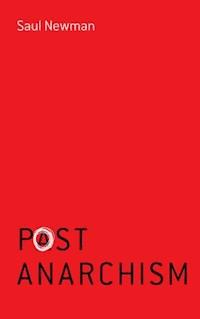
What shape can radical politics take today in a time abandoned by the great revolutionary projects of the past? In light of recent uprisings around the world against the neoliberal capitalist order, Saul Newman argues that anarchism - or as he calls it postanarchism - forms our contemporary political horizon.
In this book, Newman develops an original political theory of postanarchism; a form of anti-authoritarian politics which starts, rather than finishes, with anarchy. He does this by asking four central questions: who are we as subjects; how do we resist; what is our relationship to violence; and, why do we obey? By drawing on a range of heterodox thinkers including La Boétie, Sorel, Benjamin, Stirner and Foucault, the author not only investigates the current conditions for radical political thought and action, but proposes a new form of politics based on what he calls ontological anarchy and the desire for autonomous life. Rather than seeking revolutionary emancipation or political hegemony, we should affirm instead the non-existence of power and the ever-present possibilities of freedom.
As the tectonic plates of our time are shifting, revealing the nihilism and emptiness of our political and economic order, postanarchism�s disdain for power in all its forms offers us genuine emancipatory potential.
Sie lesen das E-Book in den Legimi-Apps auf:
Seitenzahl: 219
Veröffentlichungsjahr: 2015
Ähnliche


















Contents
Cover
Title Page
Copyright
Preface
Autonomous political life
Structure of the book
1 From Anarchism to Postanarchism
Anarchism: an outline of a political heresy
The end of the metanarrative
From anarchism to
anarchy
Non-power
Notes
2 Singularities
The neoliberal government of life
The neoliberal subject
Radical subjects
The politics of the incommunicable
Singularities
The unique one
The union of egoists
Notes
3 Insurrection
Anarchism and social revolution
The insurrection of the self
The new Cynics
Ownness
Prefiguration
Notes
4 Violence against Violence
Anarchism and social warfare
Sorel’s proletarian general strike: mythic war
Autonomy and violence
Benjamin and the ‘Critique of Violence’
Divine violence
Violence and ontological anarchy
Notes
5 Voluntary Inservitude
The problem of obedience
La Boétie and the phenomenon of voluntary servitude
The impotence of power and the will to freedom
The discipline of indiscipline
Notes
6 Thinking from the Outside
A politics of autonomy
Voluntarism and self-constitution
The axiom of freedom
Autonomy and democracy
The postanarchist horizon
Notes
References
Index
Guide
Cover
Table of Contents
Begin Reading
Pages
iii
iv
vi
vii
viii
ix
x
xi
xii
xiii
xiv
1
2
3
4
5
6
7
8
9
10
11
12
13
14
15
16
17
18
19
20
21
22
23
24
25
26
27
28
29
30
31
32
33
34
35
36
37
38
39
40
41
42
43
44
45
46
47
48
49
50
51
52
53
54
55
56
57
58
59
60
61
62
63
64
65
66
67
68
69
70
71
72
73
74
75
76
77
78
79
80
81
82
83
84
85
86
87
88
89
90
91
92
93
94
95
96
97
98
99
100
101
102
103
104
105
106
107
108
109
110
111
112
113
114
115
116
117
118
119
120
121
122
123
124
125
126
127
128
129
130
131
132
133
134
135
136
137
138
139
140
141
142
143
144
145
146
147
148
149
150
151
152
153
154
155
156
157
158
159
160
Saul Newman
Postanarchism
polity
Copyright © Saul Newman 2016
The right of Saul Newman to be identified as Author of this Work has been asserted in accordance with the UK Copyright, Designs and Patents Act 1988.
First published in 2016 by Polity Press
Polity Press65 Bridge StreetCambridge CB2 1UR, UK
Polity Press350 Main StreetMalden, MA 02148, USA
All rights reserved. Except for the quotation of short passages for the purpose of criticism and review, no part of this publication may be reproduced, stored in a retrieval system, or transmitted, in any form or by any means, electronic, mechanical, photocopying, recording or otherwise, without the prior permission of the publisher.
ISBN-13: 978-0-7456-8877-0
A catalogue record for this book is available from the British Library.
Library of Congress Cataloging-in-Publication Data
Newman, Saul, 1972-
Postanarchism / Saul Newman.
pages cm
Includes bibliographical references and index.
ISBN 978-0-7456-8873-2 (hardcover : alk. paper) -- ISBN 0-7456-8873-X (hardcover : alk. paper) -- ISBN 978-0-7456-8874-9 (pbk. : alk. paper) -- ISBN 0-7456-8874-8 (pbk. : alk. paper) 1. Anarchism--Philosophy. 2. Political science--Philosophy. I. Title.
HX833.N4976 2015
335’.83--dc23
2015012745
The publisher has used its best endeavours to ensure that the URLs for external websites referred to in this book are correct and active at the time of going to press. However, the publisher has no responsibility for the websites and can make no guarantee that a site will remain live or that the content is or will remain appropriate.
Every effort has been made to trace all copyright holders, but if any have been inadvertently overlooked the publisher will be pleased to include any necessary credits in any subsequent reprint or edition.
For further information on Polity, visit our website: politybooks.com
Preface
What shape does radical politics take today? What sort of imaginary, which political and ethical horizon, animates contemporary struggles? What kinds of alternatives to our current political and economic order are being proposed and fought for?
Asking such questions usually elicits either cynical disdain or sighs of resignation. Everywhere the regime of neoliberal capitalism appears to have prevailed. Even in the wake of its most serious crisis since the Great Depression, when its catastrophic structure was laid bare for all to see, when it seemed to be at its weakest and most vulnerable, global finance capitalism, propped up with massive state support, was resurrected from its apparent demise and now takes on a strange new life. Perhaps this life is an afterlife, but afterlives have an unfortunate tendency to last a long time. Not only has the ongoing economic crisis not brought about the end of neoliberal capitalism, but it has proved merely grist to its mill, allowing, in the form of policies of austerity, even greater incursions of market rationality into everyday life and even more obscene levels of wealth accumulation by a global class of plutocrats. Our lives are increasingly dominated by the dictates of the market, by the imperatives of work, by the spectre of precariousness, poverty and debt. Yet, an inexplicable compulsion to continue as usual grips hold of us, and all the while we are haunted by the ever-present spectre of catastrophe. Alternative horizons seem obscure, almost impossible to imagine. Brief flickerings of resistance appear to have died down or been snuffed out. A great Nothingness engulfs the already exhausted political imagination – an abyss which is in danger of being filled by new and violent forms of reactionary, populist and fascist mobilization.
So where do we look for signs of hope? Despite the apparent bleakness of the current moment, this book does not counsel pessimism or despair. Rather, its aim is to explore the contours of a new kind of political terrain, one that is opened up by the nihilism of the contemporary condition. I want to suggest that, notwithstanding the ambiguous and dangerous ground that we stand on and the seemingly insurmountable nature of the powers we confront, we are nevertheless witness to the emergence of a new paradigm of radical political thought and action, one that takes the form of an autonomous insurrection. Let me be bolder still and say that, if we turn our gaze away from the empty spectacle of sovereign politics, we can glimpse an alternative and dissenting world of political life and action which can only be described as anarchistic. By this I intend to convey the idea of a mode of politics in which self-government and free and spontaneous organization, rather than organization by and through the state, are central.
Autonomous political life
Exemplary of this autonomous form of politics, notwithstanding its relatively short-lived existence and ambiguous and uncertain future, would be the movements of Occupation that have appeared around the world in recent times. The unexpected gathering of ordinary people in squares and public places around the world – from Tahrir Square, to Wall Street, to Gezi Park in Istanbul and the streets of Hong Kong – embodies a wholly new form of political activity, in which the construction of autonomous, self-managed spaces and relations was more important than the presentation of specific demands and agendas to power. While these events took place in different political contexts, they were linked by the common claim of ordinary people to the right to political life in opposition to regimes and systems of power which denied this to them. In doing so, they rejected the usual channels of political communication and representation. The cry of the Indignants in the plazas of Spain was, ‘You do not represent us!’ This has a double meaning that must be heard and properly understood: it is at once a cry of indignation against a political system that no longer represents the interests of ordinary people and a refusal of representation altogether, a refusal to be spoken for, interpreted (and inevitably betrayed) by politicians. It is as if the denizens of the square were saying, ‘You do not represent us and you can never represent us!’ While this led many, on both the left and the right, to dismiss such movements as anti-political, incoherent and disorganized, such criticisms merely reflected an inability to come to terms with what is an alternative model of radical politics. Moreover, what was genuinely striking about such movements was their rejection of leadership structures and centralized forms of organization. Instead, their originality lay in the networked and rhizomatic forms of political life they engendered.
However, these events, glorious in their audacity, were only the most visible and striking symbols of a broader and more subterranean movement of resistance spreading spontaneously throughout the nerve centres of our contemporary societies. Here, for instance, we could speak of occupations in cyberspace – from WikiLeaks to Anonymous – in which anonymous networks are engaged in a form of information warfare with the state. We could point to mobilizations in support of undocumented migrants and against border policing and surveillance; to autonomous movements of indigenous people; to the dissenting world of climate camps, squats, social centres, alternative economies and ecological communities.
Such spaces, movements and practices, it seems to me, are post-statist. They open up a political terrain which is no longer organized by or directed towards sovereign state power and its representative institutions. The liberal democratic state has suffered a cataclysmic crisis of legitimacy – its veils and garbs have been torn asunder, and the bailout of the banks and the repression of dissent have laid bare the ignominious truth of state power and the political elites which govern it. The state in contemporary liberal societies increasingly appears as a sort of empty shell, a vessel without life, a machine of domination and de-politicization which no longer even pretends to govern in the interest of all. Voting in democratic elections and participation in party politics comes increasingly to resemble an arcane religious rite performed by fewer and fewer people. While one may lament political apathy and cynicism, I prefer to speak to a kind of withdrawal from the political form of liberal democracy and the invention of alternative autonomous political spaces and practices, and even the possibility of new forms of political community. It is important to reflect on the way that the autonomous movements referred to above are not directed towards the state – their demands are not addressed to it, nor do they seek to capture state power, in either a democratic or a revolutionary sense. The people who gather in the squares and public places of our metropolises look towards one another rather than towards the state. They embody the desire for autonomous and sustainable life which no longer bears the imprint of the state.
It is for reasons such as these that I believe that anarchism, rather than Marxism or Marxist-Leninism, is the most appropriate prism through which to interpret these new forms of politics. Despite recent attempts, particularly in continental theory, to resuscitate a communist revolutionary form of politics based on rehashed ideas of the party vanguard and a fetishization of the figure of the great revolutionary leader, this Jacobin model, whereby an organized, disciplined revolutionary force seizes the reins of power and uses the coercive apparatus of the state to implement socialism from above, is now defunct. There is no new Robespierre, Lenin or Mao waiting in the wings to lead a revolutionary movement, and the fantasy of seizing control of the state, as though it were a benign instrument to be commanded by a revolutionary will, is no longer plausible, if indeed it ever was. Radical movements today turn their backs on the state rather than seeking to command it, and they reject centralized structures of leadership and party discipline. If there is a horizon of political struggles today – and there is always a danger in positing a single horizon – it is no longer communist, but anarchist or, rather, as I shall go on to argue, postanarchist. This is not to say that the movements and struggles I have referred to consciously identify themselves with anarchism, or indeed with any ideology in particular, but rather to say that their practices, discourses and modes of organization embody an anarchistic ethos in which autonomy and self-organization are the key elements.
Structure of the book
This book develops a political theory of postanarchism. Rather than merely being an updated theory of anarchism, postanarchism is a distinct way of thinking about politics and ethics anarchistically. It draws more on the thought of Stirner, Sorel and La Boétie than it does on Bakunin, Kropotkin and Proudhon. Some of these differences are outlined in the first chapter: the main one being that, while anarchism is a project whose goal is the destruction of state power and the construction of the liberated society, postanarchism emphasizes an anarchism of the here and now, unencumbered by this revolutionary metanarrative. The central idea I introduce here is that of ontological anarchism, derived from Reiner Schürmann and Michel Foucault, which entails a form of thinking and acting without an arché – in other words, without stable foundations or essential identities to determine its course.
The next three chapters develop a uniquely postanarchist approach to major areas of contemporary radical politics: respectively, subjectivity, radical action and violence. In chapter 2, I explore the ways in which the governable identities are produced through contemporary neoliberal regimes of power, which, paradoxically, rely on a certain self-subjection. I argue that the only way to escape these mechanisms of control is through autonomous acts of political subjectivation. Yet, I suggest that these can longer be understood in terms of class struggle, identity politics or populist struggles. Instead I propose an alternative political figure here – singularities – an unrepresentable and opaque subject which I theorize through Max Stirner’s radical philosophy of egoism. In chapter 3 I suggest that revolution, as a way of thinking about radical political action, is no longer operational, and I propose the notion of insurrection instead. Again drawing upon Stirner’s thinking, I understand the insurrection as primarily a form of ethical and political self-transformation in which one distances oneself from power rather than seeking to fight against it directly. I apply this to an understanding of contemporary forms of radical politics which seek to foster autonomous relations and practices outside power, rather than trying to capture it. Chapter 4 explores the problem of violence in radical politics. I argue that, rather than trying to disavow violence, we should transform its meaning. By drawing on the thought of Georges Sorel and Walter Benjamin, I develop the idea of violence as a radical and ethical rupturing of existing social relations which, at the same time, does not shed blood. Here violence is understood as an ontologically anarchic form of autonomous action as pure means without end.
The remaining two chapters are devoted to questions of freedom and autonomy, which are absolutely central to radical politics. However, rather than relying on the familiar normative categories of human emancipation or individual rights – which I argue are largely exhausted today – I approach the question of freedom from the opposite direction, through an encounter with the enigmatic problem of voluntary servitude. So, in chapter 5, I explore Étienne de la Boétie’s extraordinary diagnosis of this phenomenon: our strange tendency to will our own domination. However, the implication of this is that all forms of power rely on our self-abrogation, something which reveals to us both the radical potential of the will and the great secret of power – its own non-existence. These implications are explored in the final chapter, in which I outline a postanarchist theory of autonomy, distinct from Kantian and liberal understandings and irreducible to democratic politics. Instead autonomy is based on the condition of ontological anarchy and the realization that we are always and already free.
Postanarchism, in contrast to much of the political theory tradition, is a politics and ethics of indifference to Power. Indeed, I insist on a fundamental distinction between politics and power here. And, rather than seeking to establish new kinds of political institutions or normative foundations, postanarchism affirms the immanent capacity for autonomous life and the ever-present possibility of freedom.
1From Anarchism to Postanarchism
Anarchism: an outline of a political heresy
If this book is concerned with the theorization of contemporary post-statist forms of radical politics, it is necessary to revisit the political theory of anarchism. Here one immediately stumbles up against a problem: anarchism, more so than other political ideologies and traditions, is difficult to define within clear parameters. It cannot be organized around key names – unlike Marxism and Leninism – although it too has its important theoreticians, some of whom I will discuss in this chapter. Nor can anarchism be confined to a certain periodization, and, although it has had its moments of historical prominence, it has for the most part led the marginal life of a political heresy. Let us think of anarchism, then, as a diverse and heterodox assemblage of ideas, moral sensibilities, practices and historical movements and struggles animated by what I call an anti-authoritarian impulse – that is, a desire to critically interrogate, refuse, transform and overthrow all relations of authority, particularly those centralized within the sovereign state. Perhaps the most radical contention that anarchists make is that the state has no rational or moral justification – that its order is inherently oppressive and violent, and, moreover, that life can function perfectly well without this encumbrance. Anarchist societies are stateless societies, in which social relations are autonomously, directly and cooperatively managed by people themselves, rather than through the mediation of alienating and centralized institutions. It is this implacable hostility to state authority that places anarchism at odds not only with more conservative doctrines but also with liberalism – which sees the state as a necessary evil – with socialism and even with revolutionary Marxism – which sees the state as an instrument, at least in the ‘transitional’ period, for building socialism, whether through social democratic reforms or through the revolutionary seizure and control of state power.
The debate between anarchism and Marxism is an old one, going back to the nineteenth century when the First International Workingmen’s Association was split between the followers of the Russian anarchist Mikhail Bakunin and the followers of Marx, largely over the question of revolutionary strategy and the role of the state. The more ‘authoritarian’ wing (Bakunin’s characterization) of the socialist movement, including Marx, Engels and Lassalle, saw the state as an instrument of class power which, if it was in the hands of the right class – the proletariat led by the Communist Party – could be a useful tool of revolutionary transformation. By contrast, the more libertarian wing regarded the state, in its essence, as a structure of domination which would only perpetuate itself after the revolution, rather than wither away as was hoped, and was therefore the main impediment to revolutionary transformation. The state was an apparatus which had therefore to be destroyed rather than seized; the pursuit of political power was a trap which would lead only to catastrophe. Other aspects of the dispute involved the organization of the revolutionary party and the question of leadership and authority – which are discussed in Lenin’s State and Revolution (1918). The implications of this great rift in revolutionary theory and practice have resounded for over a century, being tragically realized in the deterioration of the Bolshevik revolution into the Stalinist totalitarian state. The terms of the Marxism–anarchism debate have been explored elsewhere in great depth, and it is not my intention to go into it here (see Newman 2001). Yet, the most powerful insight that emerges from the anarchist side was that the revolution must be libertarian in means as well as ends, and that, if the means are sacrificed to or simply made to serve the ends, the ends themselves would be sacrificed. This refers to the emphasis anarchists place on ‘prefigurative’ politics, which is something I shall expand on later.
So anarchism is a form of politics and ethics which takes the value of human freedom and self-government – inextricably linked to equality – as central and sees authoritarian and hierarchical relations – those enshrined not only in the state, but also in capitalism, organized religion, patriarchy, even certain forms of technology – as external limitations and encumbrances upon human freedom. There is a central opposition within the anarchist imaginary between social relations, which, in their ‘natural’ state, are freely formed and self-regulating, and external structures of power and authority – most prominently the sovereign state – which interfere with these spontaneous social processes and relations, corrupting and distorting them, imprinting upon them artificial, hierarchical and oppressive relations in which human life is alienated. In the words of the eighteenth-century thinker William Godwin, governments ‘lay their hand on the spring there is in society, and put a stop to its motion’ (1968: 92). The state, this infernal machine of domination and violence, justified neither by religious illusions nor by liberal artifices like the social contract, nor even by modern democratic notions of consent, is the chief obstacle to human freedom and development. As dramatically put by Bakunin, ‘the State is like a vast slaughterhouse and an enormous cemetery, where under the shadow and the pretext of this abstraction (the common good) all the best aspirations, all the living forces of a country, are sanctimoniously immolated and interred’ (1953: 207).
The end of the metanarrative
We can see how aspects of anarchist thought might resonate strongly with contemporary political struggles, which situate themselves apart from the state and in autonomous relations towards it. When Bakunin, in his revolutionary programme, calls for a different kind of politics – not the seizure of state power in a ‘political’ revolution but the revolutionary transformation of all social relations (what he calls the ‘social revolution’) – and when he talks of the need for the masses of the nineteenth century to ‘organize their powers apart from and against the state’, he seems to be invoking an insurrectionary form of politics in which people autonomously transform their own lives and relations outside the immediate control of the state (see Bakunin 1953: 377). We need to think and rethink what this injunction ‘to organize [our] powers apart from and against the state’ might mean today.
However, if the current situation demands a reconsideration of, or even a return to, anarchism, what sort of return is possible here? It seems unlikely that the revolutionary anarchism of the nineteenth century has the same currency today or can even be conceptualized in the same way. The anarchist Alfredo Bonanno (1988), in an honest appraisal of the implications for anarchist politics of the emergence of the post-industrial society in the late 1970s and 1980s, says the following:
What is dead for them [anarchists today] – and also for me – is the anarchism that thought it could be the organisational point of reference for the next revolution, that saw itself as a structure of synthesis aimed at generating the multiple forms of human activity directed at breaking up the State structures of consensus and repression. What is dead is the static anarchism of the traditional organisations, based on claiming better conditions, and having quantitative goals. The idea that social revolution is something that must necessarily result from our struggles has proved to be unfounded. It might, but then again it might not.
What is being questioned here, I would suggest, is the revolutionary metanarrative that has in the past impelled anarchist thought and politics. Central to this metanarrative is the story of human liberation from a condition of servitude – forced upon an otherwise free and rational being by the corrosive forces of state power – to a condition of freedom and full humanity. In other words, the revolutionary destruction of the State, along with Capital and the Church, and the building of a free society in their place would emancipate man from his situation of oppression, inequality and ignorance and allow him to realize his full humanity. Furthermore, there is at the core of this revolutionary narrative the idea that beneath the layers of ‘artificial’ political and economic authority there lies a natural commonality, a rational and moral sociability, which is inherent to the human subject but simply lies dormant, latent; this is why anarchism could sustain the idea of social relations as being spontaneously self-regulating once the state was overthrown. Moreover, this innate sociability could be revealed and verified through scientific enquiry. Most famously, Peter Kropotkin (1972) developed his theory of ‘mutual aid’, as opposed to egoistic competition, which he proposed as an evolutionary and biological instinct that could be observed in both animal and human relations. Murray Bookchin, a modern exponent of this sort of positivist approach – which he terms ‘dialectical naturalism’ – saw the possibilities of a rationally ordered society embodied within a sort of social totality that is immanent within nature, and whose dialectical unfolding will produce a flowering of human freedom (see Bookchin 1982: 31). Anarchism,




