


13,99 €
Mehr erfahren.
- Herausgeber: Parkstone International
- Kategorie: Geisteswissenschaft
- Sprache: Englisch
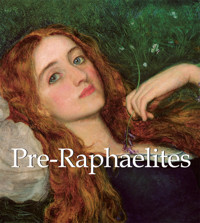
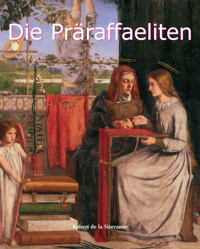
In the Victorian era, England – swept along by the Industrial Revolution, the Pre-Raphaelite fold, William Morris, and the Arts and Crafts movement – aspired to return to traditional values. Wishing to resurrect the pure and noble forms of the Italian Renaissance, a group of painters including John Everett Millais, Dante Gabriel Rossetti, and Edward Burne-Jones, favoured Realism and Biblical themes. This work, with its informed text and rich illustrations, enthusiastically describes this singular movement which provided the inspiration for Art Noveau and Symbolism.
Das E-Book können Sie in Legimi-Apps oder einer beliebigen App lesen, die das folgende Format unterstützen:
Seitenzahl: 82
Veröffentlichungsjahr: 2023
Ähnliche















Robert de la Sizeranne
© 2023, Confidential Concepts, Worldwide, USA
© 2023, Parkstone Press USA, New York
© Image-Barwww.image-bar.com
All rights reserved. No part of this may be reproduced or adapted without the permission of the copyright holder, throughout the world.
Unless otherwise specified, copyright on the works reproduced lies with the respective photographers. Despite intensive research, it has not always been possible to establish copyright ownership. Where this is the case, we would appreciate notification.
ISBN: 978-1-78310-489-5
Contents
Chronology
English Art in 1844
The Pre-Raphaelite Battle
The Definition and Results of Pre-Raphaelitism
Intentions
List of Illustrations
Chronology
1848:
Founding of the Pre-Raphaelite Brotherhood in Great Britain by three students of the Royal Academy: William Hunt, John Everett Millais, and Dante Gabriel Rossetti. According to Millais, the Brotherhood has one aim: “The depiction of nature on canvas.”
1849:
First exhibition at the Royal Academy. The displayed works were signed with P.R.B. (Pre-Raphaelite Brotherhood), a monogram unknown to the public. The exhibition is received favourably.
4 May 1850:
The meaning of the three enigmatic letters P.R.B. is revealed in an article in the Illustrated London News.
1850:
Hunt, Millais, and Rossetti found the journal The Germ, in which they divulge the theories of the Pre-Raphaelite movement. From the first issue, they are confronted with embittered critique. The movement is defended by author and critic John Ruskin. Only four issues of the journal are printed. Rossetti leaves the group.
1851:
As part of the Exhibition of 1851, Millais displays Mariana, Hunt Valentine Rescuing Sylvia from Proteus. The Pre-Raphaelites receive even more criticism for their technique. Millais completes one of his most famous works: Ophelia.
1852:
Last exhibition year before the disbandment of the group. Millais displays The Huguenot and Ophelia, Hunt The Scapegoat. Their works are received with success. Contemporary and literary subjects take the place of medieval themes previously found in Pre-Raphaelite paintings.
1853:
Millais is named Member of the Royal Academy. The group separates, and Rossetti writes to his sister: “So now the whole of the Round Table is dissolved.” The second Pre-Raphaelite generation is represented by the works of Edward Burne-Jones and William Morris.
1854:
William Hunt travels to Palestine.
1855:
At the World Exhibition in Paris, the Pre-Raphaelites are at the peak of their success.
1856:
Rossetti, who has not exhibited anything since 1850, presents at an exclusive Pre-Raphaelite exhibition, where he is greeted with enthusiastic applause. He displays the watercolourDante’s Dream, which remains one of his most significant works.
1860:
The influence of Pre-Raphaelites, which extends to the end of the 19thcentury, is seen in the works of certain painters such as William Dyce, Augustus Egg,and William Powell Frith, as well as for photographers Julia Margaret Cameron or Roger Fenton.
1882:
Death of Rossetti. His work and that of his fellow painters are representative of Pre-Raphaelites and will continue to be a source of inspiration for future artists for a long time, especially for Aubrey Beardsley.
End of the 19th century:
The Pre-Raphaelite movement gradually fades. Its influence on Art Nouveau and Symbolism is substantial.
Chaucer at the Court of Edward III, Ford Madox Brown, 1847-1851
Oil on canvas, 372 x 296 cm. Art Gallery of New South Wales, Sydney
English Art in 1844
Until 1848, one could admire art in England, but would not be surprised by it. Reynolds and Gainsborough were great masters, but they were 18th-century painters rather than 18th-century English painters. It was their models, their ladies and young girls, rather than their brushwork, which gave an English character to their creations. Their aesthetic was similar to that of the rest of Europe at that time. Walking through the halls of London museums, one could see different paintings, but no difference in manner of the painting and drawing, or even in the conception or composition of a subject. Only the landscape painters, led by Turner and Constable, sounded a new and powerful note at the beginning of the century. But one of them remained the only individual of his species, imitated as infrequently in his own country as elsewhere, while the work of the other was so rapidly imitated and developed by the French that he had the glory of creating a new movement in Europe rather than the good chance of providing his native country with a national art. As for the others, they painted, with more or less skill, in the same way as artists of other nationalities. Their dogs, horses, village politicians, which formed little kitchen, interior, and genre scenes were only interesting for a minute, and even then the artists did not handle them as well as the Dutch. Weak, muddy colours layered over bitumen, false and lacking in vitality, with shadows too dark and highlights too intense. Soft, hesitating outlines that were vague and generalising. And as the date of 1850 approached, Constable’s words of 1821 resonated, “In thirty years English art will have ceased to exist.”
And yet, if we look closely, two characteristics were there, lying dormant. First, the intellectuality of the subject. The English had always chosen scenes that were interesting, even a bit complicated, where the mind had as much to experience as the eye, where curiosity was stimulated, the memory put into play, and laughter or tears provoked by a silent story. It was rapidly becoming an established idea (visible in Hogarth) that the paintbrush was made for writing, storytelling, and teaching, not simply for showing. However, prior to 1850 it merely spoke of the pettiness of daily life; it expressed faults, errors or rigid conventional feelings; it sought to portray a code of good behaviour. It played the same role as the books of images that were given to children to show them the outcomes of laziness, lying, and greed. The other quality was intensity of expression. Anyone who has seen Landseer’s dogs, or even a few of those animal studies in English illustrated newspapers where the habitus corporis is followed so closely, the expression so well-studied, the look of the animal so intelligent and so different depending on whether it is waiting, feeling fear or desire, questioning its master, or thinking, can easily understand what is meant by “intensity of expression”. But in the same way that intellectuality was only present before 1850 in subjects that were not worth the effort, intensity of expression was only persistently sought and successfully attained in the representation of animal figures. Most human figures had a banal attitude, showing neither expressiveness nor accuracy, nor picturesque precision, and were placed on backgrounds imagined in the studio. They were prepared using academic formulas, according to general principles that were excellent in themselves, but poorly understood and lazily applied.
Such was English art until Ford Madox Brown came back from Antwerp and Paris, bringing an aesthetic revolution along with him. That is not to say that all the trends that have emerged and all the individuality that has developed since that time originated from this one artist, or that at the moment of his arrival, none of his compatriots were feeling or dreaming the same things that he was. But one must consider that in 1844, when William the Conqueror was exhibited for the first time, no trace of these new things had yet appeared. Rossetti was sixteen years old, Hunt seventeen, Millais fifteen, Watts twenty-six, Leighton fourteen, and Burne-Jones eleven, and consequently not one of these future masters had finished his training. If one considers that the style of composition, outline, and painting ushered in by Madox Brown can be found fifty years after his first works in the paintings of Burne-Jones, having also appeared in those of Burne-Jones’ master Rossetti, one must acknowledge that the exhibitor of 1844 played the decisive role of sower, whereas others only tilled the soil in preparation or harvested once the crop had arrived.
The Eve of St Agnes, William Holman Hunt, 1848
Oil on canvas, 77.4 x 113 cm. Guildhall Art Gallery, Corporation of London, London
The Girlhood of Mary Virgin, Dante Gabriel Rossetti, 1848-1849
Oil on canvas, 83.2 x 65.4 cm. Tate Britain, London
The Renunciation of St Elizabeth of Hungary, James Collinson, c. 1848-1850
Oil on canvas, 120 x 182 cm. Johannesburg Art Gallery, Johannesburg
Rienzi vowing to obtain justice for the death of his young brother, slain in a skirmish between the Colonna and the Orsini factions, William Holman Hunt, 1849
Private collection
Christ in the House of his Parents (“The Carpenter’s Shop”), John Everett Millais, 1849-1850
Oil on canvas, 86.4 x 139.7 cm. Tate Britain, London
Ferdinand Lured by Ariel, John Everett Millais, 1849-1850
Oil on panel, 64.8 x 50.8 cm. The Makins Collection, Washington, D.C.
Ecce Ancilla Domini! (The Annunciation), Dante Gabriel Rossetti, 1849-1850
Oil on canvas, 72.4 x 41.9 cm. Tate Britain, London
Twelfth Night, Act II, Scene III, Walter Howell Deverell, 1850
Oil on canvas, 101.6 x 132.1 cm. Christie’s images, The FORBES Magazine Collection, New York




