


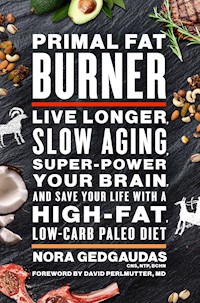
Erhalten Sie Zugang zu diesem und mehr als 300000 Büchern ab EUR 5,99 monatlich.
- Herausgeber: Allen & Unwin
- Kategorie: Ratgeber
- Sprache: Englisch
Popular nutritionist Nora Gedguadas returns with advice that may sound counterintuitive: eat fat to burn fat. In Primal Fat Burner she explains the benefits and science behind a ketogenic (or fat-burning) diet, which switches your metabolism from a dependence on sugar to running on healthy fats. As Gedgaudas reveals, numerous studies in recent years refute the long-promoted anti-saturated fat and anti-cholesterol agenda. Now Gedgaudas explains the science that fat isn't a 'no-no' but rather a 'yes-yes' - if you know the right kinds of fats to eat. In her accessible, enjoyable style, she also lays out a practical meal plan with recipes. When you follow a ketogenic diet, you consume fewer calories overall! Author of the bestselling Grain Brain, Dr. David Perlmutter writes in his foreword that Primal Fat Burner is 'wonderfully actionable, compassionately taking the reader from "why" to "how."' On this diet, you efficiently and effectively metabolise fat (ketones and free fatty acids) as your primary source of fuel, rather than glucose from carbs, starches and sugars. Because fat is so satisfying, you naturally wind up eating less - without feelings of hunger or deprivation. And natural dietary fat is ultimately key to optimum health and longevity. Gedgaudas communicates a real appreciation for and understanding of the central role that dietary fat plays in your body and brain, and explains how you can eat to feel better, look better, think clearer and live longer.
Sie lesen das E-Book in den Legimi-Apps auf:
Seitenzahl: 553
Veröffentlichungsjahr: 2017
Das E-Book (TTS) können Sie hören im Abo „Legimi Premium” in Legimi-Apps auf:
Ähnliche




















PRAISE FORPrimal Fat Burner
‘Primal Fat Burner has a wealth of new information and science showing us the power of a ketogenic diet in addressing many health issues, including obesity, diabetes, heart disease, neurological diseases and cancer. Nora writes with passion, enthusiasm and a warm sense of humor as she takes you on a life-changing, easy-to-implement journey to take control of your health by putting fat front and center! This is a book that should be read far and wide.’
—Vicki Poulter, Director of Nourishing Australia, on the International Advisory board of the Price-Pottenger Nutrition Foundation
‘This book tells the fascinating story of how our very humanity—our healthy bodies and exceptional brains—evolved from eating animal foods including their natural fats. The science supporting the lack of harm— and indeed the benefit—of dietary fat, including saturated fat, has grown by leaps and bounds in recent years. In this well-researched and wide-ranging book, Gedgaudas shows a mastery of that science—and then takes it a step further. Drawing upon her many years of personal, clinical experience with patients, she explains how to take these principles into practice, bridging the gap between science and usable information for daily nutrition. This is a unique and profound contribution to the field.’
—Nina Teicholz, author of The Big Fat Surprise
‘Ready to live long, lustily, wisely and well? Then it’s time to let Nora Gedgaudas teach you the “fats of life”.’
—Kaayla T. Daniel, PhD, The Naughty Nutritionist, and co-author of Nourishing Broth
‘This [adopting a fat-based, ketogenic diet] is the single most important health intervention we can make as doctors . . . and as nations.’
—Timothy Noakes, MD, Emeritus professor in the Division of Exercise Science and Sports Medicine at the University of Cape Town, South Africa
‘Gedgaudas’s nutritional knowledge is about a decade ahead of 99% of US physicians, who are taught virtually zilch about healthful eating in medical school. Counterintuitive though it sounds, increasing your fat intake will promote weight loss. The real nutritional villain is sugar (a fact kept hidden from us by the sugar industry!). The low carb-high fat diet in Primal Fat Burner actually protects people from obesity and heart disease. When it comes to making the overweight and chronically ill American healthy again, Primal Fat Burner is destined to be a real game changer.’
—David Edelberg, MD, author of The Triple Whammy Cure
‘Primal Fat Burner is always engaging and flawlessly referenced. For everyone who is interested in the science and practicality of prolonging the health span, this book is a must-read’
—Dan Murphy, DC, Professor, Life Chiropractic College West
‘Nora Gedgaudas makes the unique case for the central role of fat and outlines a way of eating to dramatically improve health. Ketogenic eating plans are an important tool to address the growing epidemic of autoimmune disease.’
—Terry Wahls, MD, popular TED Talk presenter and author of The Wahls Protocol: A Radical New Way to Treat All Chronic Autoimmune Conditions Using Paleo Principles
‘Gedgaudas presents compelling information on the health benefits of dietary fat from an evolutionary perspective, debunking the myth that high-fat, low-carbohydrate diets are unhealthy, and that low-fat, high-carbohydrate diets are healthy. She provides valuable resources for those interested in transitioning from unhealthy high-carbohydrate diets to healthy fat-based diets’
—Thomas N. Seyfried, PhD, Professor of Biology, Boston College
‘Gedgaudas deftly describes the link between what we eat and what we become. Millions of years of human evolution made us omnivores with well-muscled bodies and extraordinary minds that could not have developed without a diet rich in fat, including saturated fat! Read this book and you’ll understand why much maligned animal fat is so important to your health and why it is critical that it come from animals grazing on healthy land (and not confined to feedlots). I cannot recommend this book highly enough.’
—Allan Savory, The Savory Institute
‘This unique book provides a much-needed big picture, addressing the state of humankind, the errant direction we have all taken, the dark influence of global corporations and, most importantly, how we can regain our power and embrace a truly healthy, sustainable future. Nora makes the case to focus on what we all share: a common biological design and a need for a food economy that restores local, natural systems. In this way, we can take back what was once ours, and what is fundamentally our primal birthright.’
—Helena Norberg-Hodge, author of Ancient Futures
Dedicated to the pioneering work and memories of Mary Enig, PhD, George Cahill, MD, and George V Mann, MD, without whose courage, integrity, and important research we would all still be stumbling in the dark.
Also, for Lisa and for the wolves . . .
NOTE TO READERS
This publication contains the opinions and ideas of its author. It is intended to provide helpful and informative material on the subjects addressed in the publication. It is sold with the understanding that the author and publisher are not engaged in rendering medical, health, or any other kind of personal professional services in the book. The reader should consult his or her medical, health, or other competent professional before adopting any of the suggestions in this book or drawing inferences from it.
The author and publisher specifically disclaim all responsibility for any liability, loss, or risk, personal or otherwise, which is incurred as a consequence, directly or indirectly, of the use and application of any of the contents of this book.
Please note that while all readers should consult their doctor before implementing any of the suggestions in this book, the following is of particular importance for discussion with your doctor:
•If you are taking medication to control your blood sugar or blood pressure, your dosage requirements may change rapidly if you significantly restrict your carbohydrate intake.
•The diet outlined in Primal Fat Burner stresses the consumption of only moderate levels of protein and is not a high protein diet, for anyone who has serious kidney disease, any increase in dietary protein can potentially be a problem.
Note, however, that the dietary approach in this book also has the potential to benefit those with kidney-related issues.1
• If you have gallbladder attacks or gallstones, you should exercise extreme caution when increasing dietary fat.
• Anyone who has a serious illness such as unstable cardiovascular disease, cancer, or liver disease needs to exercise reasonable caution if making dietary changes.
• If you are pregnant or lactating, you should not overly restrict protein (or fat) intake. Babies, young children, and teens have much more demanding nutrient and caloric needs and should not have their protein or fat intake overly restricted. There is no established dietary requirement for carbohydrates (sugar or starch), but when pregnant you should use caution in changing your existing diet—other than eliminating junk foods.
CONTENTS
Foreword by Dr David Perlmutter
Introduction
Personal Preface: Discovering a Long-Lost Key
PART ONE
BORN TO RUN . . . ON FAT
Why Our Ancestors’ Persistent Search for Fat Is What Ultimately Made Us Who and What We Are (and Why Vegetarianism Is a Modern-Day Experiment)
CHAPTER 1
From Lucy to Tribal Hunter: How Eating Meat—and Especially
Fat—Jump-Started Our Evolution from Apelike to Human
Selecting for Fat
Man, the Fat Hunter
CHAPTER 2
Think Fat
A Tale of Two Brains
DHA: The Fatty Acids That Forged Our Intelligence
The Food Chain Game
Fat-Head vs. Potato-Head: Who Wins?
You Say Potato, I Say Bacon
Ketones: Your Natural IQ Fuel
The Incredible Shrinking Brain
Rethinking Vegetarianism
CHAPTER 3
A Is for Agriculture and Adapting to Glucose
The Grain Drain
Losing Our Primal Potential: How We Diverged from Our Evolutionary Design (and How We Can Restore Order Again)
Eating for Joy, Eating for Stress
Pushing Back: Reclaiming Our Primal Birthright
PART TWO
THE METABOLIC FUEL DUEL: SUGARS AND FATS DUKE IT OUT
Challenging Sugar’s Top-Dog Status, and Why Fat Doesn’t Make You Fat
CHAPTER 4
You Can Choose Your Fuel (Just Please Don’t Choose Glucose)
The Metabolic Secret: You Have Two Fuels
Energy 101
How We Burn Sugar (and Why It Is Perilous)
The Insulin Effect
The Plight of the Carbovore
A Wild Ride—and Not the Fun Kind
The Damaging Effects of Glycation
Sorry, There’s No Safe Threshold for Sugar
Fire-Starting the Right Way: With Fat (or, How to Stop the Carb Roller Coaster and Get Off)
The American Paradox
“If You Worked Out More, You Wouldn’t Be Fat”
What If . . . We Started by Just Ditching the Carbohydrates?
CHAPTER 5
Harnessing Your Superfuel: Flipping on the Fat-Burning Switch
The Making of a Superfuel: Ketones
The Benefits of Fat Burning
Won’t Eating Fat Make Me Fat?
Losing Weight . . . and Keeping It Off
Flipping on the Fat-Burning Switch
The Twenty-First-Century Ketogenic Phenomenon: Where Primal Fat Burning Fits In
Fasting, Restricting, and Burning: How Three Powerful Approaches Intersect
CHAPTER 6
Becoming a Lifelong Fat Burner
How Much Fat Do I Eat?
No More Carbs? Ever? (Are You Completely Nuts?)
The Lost Art of Digestion
Making the Switch: How Your Body Converts from Sugar Burning to Fat Burning
PART THREE
THE UNRIVALED POWER OF PRIMAL FAT BURNING
Optimizing Your Health, Preventing and Resolving Disease, and Achieving Peak Performance
CHAPTER 7
A Field Guide to Fat-Soluble Nutrients
We Are Family: How Fat-Soluble Vitamins Team Up
Vitamin A: The Rodney Dangerfield of Fat-Soluble Nutrients
Vitamin D: The Rock Star (with Multi-Platinum Status)
Vitamin K2: The New Rock Star
Vitamin E Complex and Tocotrienols: Primal Fat Protector Pals Extraordinaire
Key Supporting Players: The Other Fat-Soluble Micronutrients You Need to Know
Genetics, Epigenetics, and the Fat-Soluble Nutrient Connection
CHAPTER 8
Primal Fat Burning May Help Prevent and Alleviate Disease
Heart Disease: Overturning Decades of Misinformation
Brain Health: Protecting Your Brain for Life
Leaky Gut, Inflamed Brain
Autoimmune Diseases: Relief for a Silent Crisis
An Important Note on Type 1 Diabetes
Cancer: A New Approach to a Uniquely Modern Problem
Resistant Weight Loss, Resistant Insulin: Winning the Battle of the Bulge, and Type 2 Diabetes
CHAPTER 9
Carbovore No More: The Game-Changing Effects of Fat Burning for Peak Physical Performance
The Faces of Super-Powered Fat Burning
How EKA Supports Your Sports and Fitness Goals
Who Might Need to Tweak the Plan?
PART FOUR
THE PRIMAL FAT BURNER PLAN
CHAPTER 10
Setting Up for Success
Getting Ready to Burn: The Prep Work
Setting Your Expectations (and Preparing for Bumps)
CHAPTER 11
The Primal Fat-Burning Food Guide: What to Buy and How to Use It to Ensure Optimal Health
Basic Guidelines: Pasture-Raised, Wild-Caught, Organically Grown, Minimally Processed
The Foods to Eat
The Foods to Avoid
When Good Fats Go Bad: Using Fats Safely
CHAPTER 12
The Primal Fat Burner Meal Plan and Recipes
What You Can Eat
The Meal Plan
The Recipes
Helpful Resources
Nourishing Resources
Your Primal Shopping List
Afterword: Welcome to the Tribe!
Acknowledgments
Notes
Index
FOREWORD
We all have a sweet tooth. It is as basic to our constitution as thirst. And for more than 99 percent of the time we have walked this bountiful planet, our sweet tooth has served us well and helped us to survive. The surge of insulin brought on by our deep desire for sugar flips biochemical switches that cause the human body to make and store body fat. And body fat, throughout the entire history of our species, has served as a supremely concentrated source of survival calories, allowing us to continue the tasks of hunting and gathering during times of food scarcity.
But times have changed. Coming upon a source of sugar, like a tree full of ripe fruit, is no longer a rare event that triggers life-sustaining fat deposition. For most people, sugar consumption, in all of its various forms, is a biochemical event culminating in the creation of fat tissue 365 days a year. A mechanism that graced us with survivability for millennia now threatens the functionality of every organ system in the body.
Dr. Robert Lustig, in his highly informative book Fat Chance, points out that “of the six hundred thousand food items for sale in the United States, 80 percent are laced with added sugar.” Data suggests that close to 70 percent of adult Americans are overweight or actually obese. And a powerful catchphrase that has supported the sales of these sugar-enriched products has often centered on their reduced levels of fat, as if that were somehow a health attribute.
In 2009, Nora Gedgaudas published her seminal book, Primal Body, Primal Mind, which confronted the well-accepted doctrine that so much of our ill health results from our consumption of dietary fat. Her detailed research revealed that while our Paleolithic ancestors did on occasion consume sugar and carbohydrates, the bulk of their calories, as much as ten times what we consume today, derived from fat.
Primal Body, Primal Mind eloquently presented the science supporting the role of healthful fats in keeping us healthy, especially when coupled with substantial reduction in sugar and carbohydrates. As a physician, I welcomed Primal Body, Primal Mind to my clinical practice, giving out hundreds of copies to fat-phobic patients whose health issues, including their obesity, clearly related to their consumption of sugar and carbohydrates coupled with a lack of adequate dietary fat.
In her new book, Primal Fat Burner, Gedgaudas writes from a position supported by a sea change in the scientific community. In these pages she underscores how, from an evolutionary standpoint, our body’s relationship and response to specific foods have been finely honed over hundreds of thousands of years, how food actually informs our DNA about changes in our environment, and how current dietary choices threaten this intimate communication, paving the way for ill health.
The science presented in Primal Fat Burner is fascinating, as the narrative reveals how we have come full circle, back to a place of honoring the evolutionary gifts of our forebears. Primal Fat Burner leaves no doubt that much-maligned dietary fat is absolutely critical for health and longevity. But Gedgaudas carefully delineates the characteristics of healthful versus health-threatening fats. She shows how healthful fats serve to reduce inflammation, the cornerstone of all degenerative conditions, and how fat represents the most efficient fuel for each and every cell in the human body, creating energy while producing fewer damaging free radicals. She explores the important role of dietary fat in regulating hunger and explains how increasing dietary fat will actually open the door for weight loss.
But most important, the text is wonderfully actionable, compassionately taking the reader from “why” to “how.” From vitamins to recipes, Primal Fat Burner leverages an incredibly robust body of science to create a life plan that will allow us to embrace our genetic legacy.
DAVID PERLMUTTER, MD, FACNNAPLES, FLORIDAJANUARY 2016
INTRODUCTION
In my first book, Primal Body, Primal Mind, I described how the primal lifestyle can lead to optimal health and longevity. In the seven years since its first publication, that book has reached more people than I could have ever imagined, many of whom have applied its principles and who have written me to say that their health and well-being improved significantly after changing what they eat. Many people asked that I put together a more structured eating plan along with additional information, recipes, and resources for primal eating. Primal Fat Burner does just that. But the book you are about to read isn’t necessarily a weight loss book.
Fat—including saturated fat—is nowhere near the bad guy we used to think it was. Eating fat can make you thin. Primal Fat Burner helps you harness the best dietary practices of our ancestors with the most current scientific understanding of nutrition. With this knowledge you can use quality dietary fat and the rich abundance of critical nutrients contained within it to create total health and well-being.
I am not simply here to tell you that “fat isn’t as bad as you might have heard,” or “fats are okay, just as long as you keep them to a minimum,” or “fats are okay just as long as you stick to strictly unsaturated fats.” I am here to supply you with a mountain of compelling evidence that fats from animals that eat a natural diet not only are essential to your health but have served more than any other dietary adaptation to literally make us human.
In Primal Fat Burner, based on the latest science and research, I explain why eating foods rich in dietary fat (while avoiding the consumption of sugars and starch and moderating protein intake) is the best and most natural nutritional approach for your complete health and well-being. This book emphasizes (in part) a low-carbohydrates approach to eating. There is far more to the plan, but you will find that the fewer utilizable carbs you consume and the less insulin your body needs to produce, the better your long-term health will likely be.
Primal Fat Burner focuses on the single biggest factor in your health and longevity: the primal fat-burning diet, a modification of what is commonly known as a ketogenic diet. This approach to food is radically different from our current nutritional status quo—but in many ways it is the oldest form of nutrition in human history. A fat-based ketogenic diet has powered humans and our pre-human hominid ancestors through almost all of our three million years of evolution, and it is a critical tool that has the power to reduce weight, strengthen resilience, and reverse many of the chronic diseases of today.
As a clinical nutritionist and ancestral nutrition expert, I consult and lecture with health seekers around the globe. Countless times I’ve seen clients and audience members meet the word ketogenic with equal doses of fascination, trepidation, and misunderstanding: “Isn’t that Atkins? Starvation? A medical treatment? For hard-core health nuts?” Having devoted my life to understanding the evolution of our metabolic functioning, I can assure you that a well-balanced ketogenic approach to eating is none of those things. Nor is it especially controversial. Surprise: the fat-burning ketogenic diet is actually our norm, and it is fundamental to our human design as breathing. It simply means using the energy from fats found in real foods, in the form nature intended them, as your primary source of fuel. When this is explained, what was once mysterious starts to become commonsense.
Over the fifteen or so years that I have followed a primal fat-burning protocol myself, I’ve worked with and counseled a remarkably diverse client population. At one end of the spectrum are those battling significant weight issues or serious ailments, from type 2 diabetes to early onset dementia. Often, the pain of the solutions they’ve been offered by medicine and mainstream nutrition exceeds the pain of the problem, so they come to primal fat burning in order to take things into their own hands. In the middle of the spectrum are women and men approaching middle age, or sometimes advanced age, who look healthy but who have discovered that they have underlying, unhealthy, and elevated blood sugar levels and other troubling blood test markers. They have been following seemingly balanced, carb-friendly ways of eating that have been invisibly ravaging their physiology—even though they still fit into their jeans.
At the far other end of the spectrum is a different crowd: people who are consciously eating what they consider to be a “paleo” diet (yes, I said “consider to be”—more on that later) but who have not gotten the results they are seeking; primal eaters who have drifted slowly from their low-carbohydrate goals and need help (or a swift kick in the pants) to reboot their program and to focus and dial in on their efforts; and elite or endurance athletes who are harnessing the energy from dietary fats to powerfully boost their performance.
If you’ve picked up this book piqued by the idea of becoming a primal fat burner, chances are you fall somewhere on this arc. You might have long struggled with diets that don’t work, or despaired at ever achieving a lean physique. Like me, you might have a deeply personal experience with depression, anxiety, or low energy. Or maybe you are watching others in your family suffer from health issues you know to be genetic, and you want to do anything you can to avoid those diseases yourself. Women and men of all ages simply want to feel better, live longer, and look and feel younger, with a clearer mind and most certainly a leaner and more resilient body that they inhabit proudly. They want to enjoy every day of their lives—whether young, middle-aged, or older—and they resist what is sold to us as the “inevitable” modern-day aging scenario of prescription drugs in their bathroom cabinet. They refuse to sign up for one of the so-called diseases of civilization—diabesity, depression, dementia and brain degeneration, heart disease, cancer. If this is “civilized,” they are saying, they’d rather be primal!
For the Love of Fat
Fat has recently become the darling of the health world. In numerous peer-reviewed studies scientists are exonerating fat for health crimes it didn’t commit. For fifty years, fat was vilified by an aggressive anti-fat campaign, which shunted it out of its rightful place on our plate to make way for excesses of carbohydrates.
While I am glad that fat has finally won some redemption, its acceptance has been a little begrudging and timid. Most experts are all open arms when it comes to fat-rich, plant-based foods. And they’re pretty friendly with fish. They suggest modest little drizzles of this and splashes of this and that—and a quarter of an avocado, if you please.
As for me, please pass the lard. I wrote Primal Fat Burner to the beat of a much louder drum and with the intention of blazing a bolder path. This book is based on the fundamental scientific understanding that all fats, especially fats from healthy animal sources and unrefined tropical oils, are paramount to the functioning of our physiology and to our robust health. These formerly maligned fats must be wholeheartedly reclaimed as vital to our health. Animal-sourced fats provide sustaining energy and absolutely critical fat-soluble nutrients. Without them, we would not have become who we are as humans.
In Primal Fat Burner I will take you on a journey of discovery. I will show you how humans’ ability to “run on fat” defined how our remarkable body and brain functioning evolved—and why the modern shift to “running on sugars” has been one of the most egregious missteps in human history. I will share why the natural fats found in wholesome real foods, in particular the fats from animals that eat a diet of grasses and other natural forage, are a match for your genetic makeup and help you achieve a stable weight and robust health—and how the lack of these things can dangerously erode your well-being. And I’ll explain why naturally fat-rich foods, used correctly, are the foundation of an optimal way of eating that (with some minor tweaks in individual implementation) is relevant to everyone.
Then I take you further. I will give you tools that can help you become a lean and energized fat burner yourself.
In Parts One, Two, and Three, I share everything you need to know about how a fat-burning metabolic state functions and why it is your natural state. You’ll discover that the cells of your body, in particular the cells of your heart and brain, thrive on fat. And you’ll learn that not all calories are created equal. I explain how using ketones, the energy units of fat, instead of glucose, the energy from carbohydrates in the form of starches and sugars, gives you a life-changing (and potentially lifesaving) metabolic advantage. This advantage not only affects your entire quality of life but can be measured quantitatively on your blood work panels.
The real goal of Primal Fat Burner is to show you how to ignite your fat-burning metabolism—think of metabolism as the mechanism of converting food to fuel—by using a well-balanced and high-quality ketogenic diet. When you switch on your fat-burning metabolism and allow it to stay on continuously by maintaining this way of eating every day, the results can be tremendous. You create the conditions to achieve a healthy and stable weight, even if you are very overweight. That’s because, once your body adapts to relying primarily on ketones and free fatty acids for energy, it starts using your fat reserves for fuel, instead of storing them on your belly, love handles, hips, and thighs. Your brain runs sharper and better, too—an effect that can stay with you for life. Imbalances in blood sugar and insulin as well as inflammation can be resolved, with the effect of stabilizing, reducing, or even eliminating chronic pain and disease.
SWITCH ON A WELL-ADAPTED, FAT-BURNING STATE AND YOU LAY THE GROUNDWORK FOR:
•Easier weight loss, without excessive hunger or cravings, and long-lasting energy
•Reduced blood sugar issues, lower hemoglobin A1C and other metabolic markers associated with metabolic diseases such as obesity and diabetes
•An anti-inflammatory effect and a dampening of excess free radical activity (which causes harmful tissue damage and is a driver of disease and aging)
•Anti-aging effects, with improved cellular regeneration and repair mechanisms and healthier, younger-looking skin
•Improved sleep
•Improved immune function
•Reduced blood pressure
•Stabilized neurological functioning in the brain, which makes you less susceptible to migraines, panic attacks, mood swings, and seizures, and reduces your risk of neurodegenerative diseases . . . and more
And all these benefits come from making a basic but consistent modification to your diet, eating moderate protein from clean, sustainable, and nutrient-enhancing sources, ample fibrous vegetables and greens, and as much fat as you need to satiate your hunger. By the end of Part One, you’ll come to an empowering understanding: you can decide whether to be a fat burner or sugar burner, simply by eating certain real, whole foods and avoiding others. This makes you the agent of your own well-being and longevity.
Then, in Part Four, I hand you the road map you need to make the metabolic switch yourself. To make it simple and achievable, I’ve outlined a 21-day plan that gives you step-by-step guidance. It includes sixty simple recipes for breakfast, lunch, dinner, and snacks; guidance on how to prepare, cook with, and store all kinds of healthy fats; and balanced weekly meal plans. It also lays out how to prepare yourself physically and how to avoid common pitfalls during the transition period.
Shifting to an effective and well-adapted fat-burning metabolism takes between three and six weeks for most people. Once initiated, this fat-burning metabolic state becomes a fairly effortless new norm. I’ll also walk you through exactly what to do if fatigue or discomfort arises during this transition time.
When you are successfully using the energy of fat for fuel, you are in what I call a state of effective ketogenic adaptation (EKA). In this book, we’ll be following a unique approach that combines a state of EKA with high-level nutrition derived from quality food sources and support against stress and toxicity. This is primal fat burning.
The effects of primal fat burning are:
Energizing. You benefit from enduring energy that takes you easily from one meal to the next without snacks or cravings.
Protective. Your mitochondria—the cellular powerhouses that supply energy and guard against aging, among other important functions—are protected. The health of your heart and brain is safeguarded, and those organs’ efficiency and function are greatly enhanced.1
Regulating. Your blood sugar and insulin levels are given the conditions to normalize and function more efficiently, as nature intended.2 Excess weight that has been resistant to diets can be regulated, as trapped fat stores get mobilized for energy.3
Stabilizing. Brain function and moods normalize and stabilize when the brain is fed with fat.4 Emotional struggles around food, such as cravings and even certain eating disorders, can subside or be eliminated.
Anti-aging. Human longevity markers improve (including thyroid efficiency), and overall disease risks related to inflammatory markers, cholesterol (which tends to elevate with inflammation), and more are naturally lowered.5
Completely safe. A fat-based ketogenic diet based on the Primal Fat Burner Plan is safe for almost everyone—with some possible exceptions, which I will explain in detail. With guidance from a physician, it can also be modified for specific needs, such as pregnancy or nursing, type 1 diabetics, the increased growth rates of children and teens, and the demands of high-intensity athletics.
The Primal Fat Burner Plan has a varied and satisfying menu. You’ll eat grass-fed, fat-rich meat and wild-caught seafood; greens and other fibrous vegetables and sprouts; nuts and a few seeds; probiotic-rich, fermented foods; and homemade bone broth. You’ll find that the plan described in this book is also:
Achievable. It’s refreshingly straightforward and simple to execute.
Enjoyable and efficient. The tasty, satiating food is easy to make for yourself and your family.
Familiar. It’s a return to wholesome, traditional foods you may already know and love.
Affordable. You’ll consume fewer packaged, pre-made foods and snacks. You’ll wisely use quality ingredients, including cheaper cuts of high-quality meat (and bones), and indulge in fewer pricey splurge foods and nutritionally empty treats.
Liberating. By shifting from primarily sugar as fuel (which is addicting and damaging) to mainly slow-burning fat, you are freed of urgent cravings and the sudden, intense need to eat (which come from a dependency on carbs). You’ll discover a new relationship with farmers and other sources of health-giving food. Most important, your relationship to food and eating will become clearer, healthier, and more resilient. It is a far saner, happier way to be.
Some of the information that follows might seem radical at first. Stay with me: you will see that this approach to caring for your health is in fact quite rational. Primal Fat Burner is based on a deep understanding of our ancestral origins. It is a foundational way of eating with an unshakable basis in evolutionary science. Its primary principle is this: If your body could choose its fuel, it would choose fat.
Though we have been conditioned to believe that we are designed to use glucose as our primary fuel, this is not exactly correct. The human glucose metabolism evolved to deliver short-term energy. Used in sustained or excessive ways, as occurs when you eat a carbohydrate-laden diet (and also one that contains too much protein), sugars damage cells. Over a lifetime, excessive glucose and other dietary sugars damage our health irreparably, causing obesity, neurodegeneration, and many chronic diseases. It also helps to create a cellular environment that’s a little too friendly to cancer.
Let’s cut to the chase on one important subject: to maintain a fat-burning metabolism, you need to greatly minimize starches and sugars, every day. In our twenty-first-century society, with our obsession with instant gratification, this can sound shockingly rigorous. Yes, it requires a choice and a change. But that choice becomes self-reinforcing as you feel more energy, more clarity, and greater self-empowerment by the day as you throw off a dependency that was not doing you any favors. And when you choose to do this, your blood test results improve as well. If the thought of going low-carb strikes dread in your heart (and taste buds), know that anticipation is much worse than reality. You’ll discover that the satiating qualities of good fats in each meal have an extraordinary power to quiet cravings for sugars.
In fact, if you asked your body, it would tell you that it prefers ketones far more than glucose, because the fuel ketones deliver is steady and reliable—no spikes and crashes. Your body would tell you that it needs an abundance of quality fat to get critical micronutrients that its cells require for proper functioning. Oh, and it would tell you that eating fat does not make you fat—if done wisely, that is, with carbohydrates minimized. Two decades of clinical experience have shown me that a properly fed body can usually and almost effortlessly drop extra weight.
In the chapters to come, you’ll find that there is a unique aspect to the primal fat-burning approach that makes it distinct from variations of paleo or primal nutritional advice you may already know. Eating the foods that our ancestors relied on as the most consistent available sources is just the starting point. The Primal Fat Burner Plan also assesses these original foods according to human longevity science to measure how optimally they fit our needs in the uniquely challenging world we live in today. For instance, we know that the high amounts of protein that our ancestors tolerated—perhaps thanks to their robust genome—are not suitable for us today. Despite what you may have read in some paleo guidebooks, there is no physiological justification for filling your supermarket cart with stacks of Styrofoam-encased, factory-farmed meat or piling your plate high with animal protein at every meal—an act that is both dubious healthwise and clearly unethical. You’ll hear this a few times in this book: the Primal Fat Burner Plan is not a high-protein diet.
These days our bodies also need significantly more detoxification support to face the onslaught of pollution and stressors coming at us from every direction. That’s why phytonutrient-rich, fibrous vegetables and greens are much more critical for us than they were for our predecessors. The toxic stressors we encounter every day are dangerous new selective pressures that compromise our human genome in ways our ancestors did not have to deal with. The alarming and unprecedented pollution pervasive in our air, water, soil, and food, and the constant presence of electromagnetic frequency polution and radiation, motivate my quest to go beyond paleo. I will help you optimize your nutrition and keep your wits about you as you shop. The growing epidemic of autoimmune issues triggered by food sensitivities and environmental contaminants is something a foodie or cook might want to ignore but a true scientist cannot. Today we understand more than ever the environment inside our cells, created by what we deliberately and unwittingly ingest and absorb, profoundly influences whether inherited tendencies toward illness are expressed or stay safely dormant. Bringing this consciousness to our plate is an important part of the Primal Fat Burner Plan; in fact, it may be as vital as the amount of fat and protein on your plate.
To protect and defend your health, the Primal Fat Burner Plan is built on a firm commitment to using only the most unprocessed, uncontaminated food sources. We need food that goes beyond being merely “natural” or coming from a health food store. We need food that actually comes from prime growing and raising conditions—the way nature intended food to be. That’s why the plan is built on a foundation of humanely, healthfully, and sustainably pasture-raised animal products. It will help you find the best local produce you can. Only this way can you supply your body with the nutrients it needs to combat toxins and stress. The good news is that there is a way to do this affordably and wisely. Our great-grandparents did it, and so can we.
In the pages to come, these two aspects—ancestral roots and modern science—combine to create an optimized nutritional approach to your health and well-being that will give you back the power over your own health. Fair warning: this book will have you questioning authority and what you’ve come to know as “normal.” It might have you questioning everyone who ever told you to finish your cereal, take two aspirin and call back in the morning, and avoid that evil, “artery-clogging” animal fat at all costs and replace it with margarine and canola oil instead. Let this be a motivating force: To help you switch on your fat-burning metabolism, free yourself from an unhealthful dependence on starches and sugars, and forge a more healthful alliance with nutritious, unadulterated fats. Serena Williams didn’t get good at tennis by playing golf all day, any more than Tiger Woods mastered the game of golf by bowling. You cannot become good at burning fat by burning sugar all the time. To burn fat at a world-class level, you need to become a Primal Fat Burner and train your body to choose fat, not sugar, as your primary source of everyday fuel.
I’ve seen all kinds of people succeed in using the power of a fat-burning metabolism to transform their lifestyle and reclaim their good health, from the mother motivated to stay healthy for her children and dodge diseases that have taken her own parents to the septuagenarian who is able to put down his blood pressure and prostate medication and walk free of long-standing pain. The foundation to health that fat burning provides is universal. Of course, there may be some adjustments needed in order to target any uniquely personal vulnerabilities. But fat burning provides the firm ground on which to do that next level of work.
It really does all start with what you eat—and what you choose not to eat. When you restore your primal birthright of robust physical and mental health and a life unhindered by preventable pain and disease, it is astounding how energized you feel to make and sustain change—and I mean that at every level. By the end of Primal Fat Burner, you will discover that it’s really not as complicated as you might have thought.
WHAT DOES A PRIMAL FAT BURNER EAT?
In this way of eating, you will be enjoying roasted meats and poultry; creamy Thai coconut soup; colorful vegetables and greens that can be raw, steamed, sautéed, broiled, or cultured; seasoned ribs; pan-seared chicken livers with pastured bacon; beef mince salad; coconut-wrapped burritos; and succulent fish tacos; Thai salad with spicy dressing; lamb chops; steamed zucchini noodles with rich meat sauce; delicious and tangy cultured vegetables; burgers (with an extra-primal twist); coconut chicken salad; crispy pork belly; stuffed grape leaves; curries; and many other mouthwatering dishes.
Is Primal Fat Burning Right for You?
Given our common human design and our bodies’ preference for running on fat, the short answer is universally yes! But use this quiz to check how it might specifically support you to feel your best and function at your peak.
Are you overweight? Do you experience:
Fatigue?
Mood swings?
Brain fog?
Chronic pain?
Food cravings or frequent hunger?
Memory issues or absentmindedness?
Problems focusing or thinking?
Morning stiffness?
Digestive problems?
Water retention or bloating?
Poor muscle tone?
Poor sleep?
Irritability or emotional reactivity?
Sleepiness after meals?
Feelings of helplessness and hopelessness about your health?
An awareness that things could and should be better?
If you answer yes to three or more of the questions, then you can be assured that Primal Fat Burner will offer you a powerful path forward to greater health and well-being. If you answered yes to fewer than three—or to none at all—read on anyway! The Primal Fat Burner Plan will increase your resistance to disease, improve your cognitive functioning, offer better physical performance, and more. You do not need to be sick or unhealthy to benefit from this approach, any more than you need to be out of shape in order to benefit from exercise!
QUICK ASSESSMENT
If you have recent blood test results available, take a look at them now. If your results show any of the following, you are most definitely a prime candidate for the Primal Fat Burner Plan:
Fasting blood sugars above 90 mg/dL
Fasting triglycerides above 100 mg/dL
Hgb A1C above 5.5%
HDL below 55 mg/dL
CRP above 1.0 mg/L
Homocysteine above 6.0 μmol/L
Fibrinogen above 423 mg/dL
See here for more information on blood test markers.
PERSONAL PREFACE: DISCOVERING A LONG-LOST KEY
“What are we meant to eat?” is a question that has inspired, provoked, challenged, and obsessed me for my entire life. For thirty-five years I’ve pondered it as a researcher, immersing myself in the study of anthropology and ancestral nutrition. And over my two-decade career practicing clinical nutrition and neurofeedback, I’ve pursued the subject in a hands-on way, seeking better results for my clients. But the roots of this inquiry go back further, to my own personal story of struggle.
The Canadian-born child of a prominent medical family, I grew up in the 1960s and 1970s in Minnesota. I followed the doctor-approved, heart-healthy diet of the time: low-fat food cooked in vegetable oils, potatoes topped with margarine, and low-sodium snacks from America’s most trusted brands. My mother, a former ballet dancer, wanted to make sure we all stayed slim and healthy, and my father, a world-renowned radiologist with a specialty in cardiology, faithfully adhered to admonitions about avoiding evil fats and cholesterol and to recommendations about consuming superior grains and starches as reliable staple foods.
This way of eating, as it turned out, did not serve my beloved parents well. Their lives from late middle age onward were rife with medical interventions for everything from gallbladder disease, aneurysms, autoimmune disease, and cancer to, tragically, a fatal heart attack and Alzheimer’s.
This diet also took its toll on me. As a child and young adult, I suffered from persistent depression. I struggled for years to understand why I felt this way, and I pursued every avenue of inquiry I could, encompassing mind, body, and soul. Slightly before I started studying premed at college, the emerging fields of nutritional research and supplementation captured my scientific mind. The cutting-edge work of longevity research scientists (such as life extension gurus Durk Pearson and Sandy Shaw) and amino acid researchers (such as Eric Braverman, author of The Healing Nutrients Within) hooked me with the promises that amino acid supplements and other natural substances could positively affect my brain chemistry. They did, to a point—sharpening my thoughts and lifting my dark moods. But these pricey supplements were more of a distraction than a cure, and in my excitement I didn’t even realize I was missing out on a more fundamental piece of the puzzle: What food did my body and brain need to be well?
Being hip to the health trends of the eighties, I soon found my way to the “ultimate diet” according to the bestselling books of the time: vegetarianism. It lined up with what I’d heard all my life about the dangers of fat-rich, animal-source foods, so I faithfully followed the “healthful” path of whole grains, beans, and lentils—to my own detriment. Within a year I experienced deeper and longer depressive episodes, had pronounced anxiety and panic attacks, and developed an eating disorder. I began craving meat so much that, racked with guilt, I abandoned the vegetarian lifestyle before completing a second year. Fairly quickly my eating disorder evaporated and my depression and anxiety lessened. But rather than feeling proud that I had listened to my body, I struggled with feelings of shame and self-recrimination, thinking: What is so wrong with me that I can’t even succeed at being vegetarian?
The answer, of course, was that there was nothing wrong with me; there was just something wrong with my diet. A life-changing invitation started to open my eyes. Famed wolf biologist Dr. L. David Mech offered me a coveted spot as his research assistant for a summer. Few people in my life at the time knew this but, along with bio-hacking and longevity research, I had an ardent passion for wolves. As a young child I’d read and reread Farley Mowat’s classic book Never Cry Wolf, about his time observing the animals in the northern Canadian Arctic, and I had volunteered on wolf research projects in Minnesota in my twenties. So Dr. Mech’s invitation was quite literally a childhood fantasy come true. We would live alone together on Ellesmere Island, less than five hundred miles from the North Pole, and closely observe a family of wild wolves. Days after my thirtieth birthday, and stocked with a summer’s worth of personal provisions, I left civilization for the wilds of the Canadian Arctic High Archipelago.
The wolf pack that I would study lived 350 miles north of the closest village, the remote Inuit hamlet of Gris Fjord. These wild wolves were unique because they had never been hunted. As a result, they weren’t afraid of humans, which allowed for unprecedented close-range observation of their otherwise elusive behavior. (They remain the subjects of ongoing research under the supervision of Dr. Mech, who returns each summer to observe this same pack.)
Known as Umingmak Nuna in the Inuktitut language, which means “land of musk ox,” Ellesmere Island has a long history of native human habitation. According to archaeologists, the earliest Paleoeskimo inhabitants were made up of small bands of hunters drawn to the area for the abundant Peary caribou, musk ox, and a variety of marine mammals (including polar bears) starting about 2000 to 1000 BCE. The island holds remnants of the ancient Thule culture, ancestors of the Inuit. Strewn about ancient abandoned encampments were the bones and skulls of hunted animals. Stone hunting blinds topped hills from which ancient Thule hunters once ambushed musk ox. Stone-circle outlines of what had been skin-covered summer shelters dotted the shoreline in clusters. A few artifacts were still lying out in the open as though their owners might be coming back for them. As I carefully stepped around the ancient animal skulls and bones, I made a startling observation: most of the skulls had been broken open for access to the nutrient-dense, fat-rich brains they had once housed, and numerous large femur bones from hunted land mammals had been cracked open for their precious marrow.
I had always felt an inexplicable connection to the peoples and the landscape of the High Arctic, and when I realized the cunning and ingenuity it had taken for the ancient Inuit to thrive in such a harsh climate, I was quite in awe.
Had any of them known about my dietary habits prior to arriving on Ellesmere Island, they would have thought them very odd indeed. My diet was primarily plant-based and dutifully low in fat, with some lean meat, seafood, and nonfat yogurt forming the occasional accents to my primary fare of salads and freshly made juices. (None of that felt incongruous with my fitness regimen of daily three-mile runs and some weight training—it was what “healthy” people did, after all.) Stepping off the Twin Otter cargo plane after arriving from Resolute Bay in my subzero boots, I was quite nervous about how I’d subsist up there, without any fresh fruits and vegetables or organic-food co-ops.
Ellesmere Island is a breathtakingly beautiful landscape that displays Mother Nature’s grandeur in her barest, most raw, almost primordial countenance. Alive in its rich subtleties of colorful flora, it is a silent, dignified, and pristine land that time forgot. This land was not even glaciated during the previous Ice Age (the glacial movement that once covered most of North America had begun well south of this remote northerly place). The particular location on the island where Dave Mech and I spent the better part of our summer qualified as a “thermal oasis,” with rich carpets of colorful greenery covering much of the hummocky landscape, rocky bluffs, and outcroppings, and small rivers and streams winding throughout the vast area. White glaciated mountains loomed in the distance, and the local fjord looked almost like a fairy tale of Arctic dreams, filled with ghostly, drifting icebergs, with the occasional thundering roar of calving glaciers some distance away. It is easily the most peaceful place on earth.
During my Arctic adventure, I spent long days sitting quietly upon the frozen tundra, closely observing a family of white Arctic wolves (Canis lupus arctos). Since the movement of humans can cause the wolves some distress, we respectfully maintained a quiet stillness. We did not interact with the wolves unless they initiated contact, but they treated our presence with a mix of curiosity and indifference, and frequently passed within inches of us. I once awoke from a nap to discover a huge paw print in the dust, one inch behind my head, where a wolf had sniffed my hair as I slept. The pups were always curious and frequently came close to us. Through this consistent, calm, and respectful behavior (and their long-term habituation to Dave during his many summers there), we earned their trust. We followed them on their hunts on ATV four-wheelers, to which they were accustomed.
While I occasionally took evening walks during the twenty-four-hour daylight, there were no real opportunities to go for a jog or lift weights. Nearly all my time was spent bundled up and just sitting on the frozen ground or on a four-wheeler on the Tundra, observing the Arctic wolves. I was very well insulated and really never felt cold. My only other activity was eating. Constantly. And uncharacteristically for me, the one thing I craved above all else was fat. I ate copious amounts of nuts, cheese, and salami, plus some nut butter, but almost no fruits or vegetables (save some onions we had brought along to stir-fry in butter with the Arctic hare we were occasionally able to procure). It was the complete opposite of the diet I had been raised on.
In Farley Mowat’s book People of the Deer, he documents his own life among the remote Ihalmiut people of northern Canada. In one section he recounts how he had become so mysteriously weak and ill that he couldn’t even stand. His Ihalmiut companions rendered the fat of a caribou and forced him to drink the warm liquid tallow. He described his recovery as nearly miraculous and almost immediate. This particular account stayed with me, and during my silent research sessions, I wondered, How could animal fat possibly heal like that? I also recalled the writings of Vilhjálmur Stefánsson, an Arctic explorer who documented the Inuit way of life in the early 1900s. In his book Arctic Manual he attributed the Inuits’ extraordinary physical prowess and mental constitution to their animal-source diet and documented the particular delicacies of the caribou—the marrow and in particular the fat behind the eyes, lower jaw, and kidneys. He also famously said that meat is a complete meal only when the animal you eat is fat. Nobody was offering me any caribou fat, but suddenly the logic of eating it started to make sense. I was certainly craving it!
Once a week Dave and I made a middle-of-the-night pilgrimage to a remote military weather station, which housed our extra supplies. With twenty-four-hour daylight in summertime, this isn’t as strange as it sounds. Each of us would take a badly needed shower and make a fifteen-minute phone call to loved ones. The officer in charge would let us sneak into the mess hall, where food was set out for midnight snacks. The only thing I had eyes for was the enormous bowl of butter set out by the bread. I’d slather it onto a piece of toast— the mere vehicle for lashings of soft, creamy, salty-sweet fat—then repeat, indulging in as much of this heavenly ambrosia as I could.
You would think that someone doing nothing but sitting on her backside all day and eating such a diet would have gained a fair amount of weight over those couple of months. Yet when I arrived home at the end of that summer I had lost a good twenty-five pounds of body fat while developing an even leaner, more visibly muscular build. In fact, I looked so changed that my loved ones were concerned that I had been intentionally starving myself. Nothing could have been further from the truth! In fact, I felt transformed on multiple levels.
My body’s changes that summer in the Arctic and my observations of the mostly subsistence-living Inuit peoples I had met in extreme northern Canada made me rethink everything I thought I knew about how to eat, and I started to seriously ponder what might actually constitute an optimal human diet. Some thermogenic effects may have helped my body burn more fat for warmth, at least in part, but I knew that there was more to the story than that. Why had I gotten healthier and leaner the more fat I consumed? And if eating fat doesn’t make us fat, then what does?
A few years after returning from Ellesmere, as I continued to pursue a new passion for nutrition and refine my eating habits with good-quality, animal-sourced foods, I stumbled across the now-classic text Nutrition and Physical Degeneration by Weston A. Price. A dentist by trade and a pioneer in nutrition by passion, Price traveled the world in the 1920s and 1930s, covering more than a hundred thousand miles over ten years and chronicling the health and nutrition of numerous native and traditional peoples. His meticulous and exhaustive research ultimately concluded that, despite the varied nature of their diets, they all had two things in common. First, none of them ate strictly vegetarian or vegan diets; all of them consumed the many animal foods available to them. Second, in all of the cultures he studied, the most important and sacred foods were consistently those highest in fat and fat-soluble nutrients, regardless of whatever else they had available to eat. This was true whether these people lived on a remote tropical Pacific island, an African savanna, the hot, arid Australian outback, or the Arctic tundra. Dr. Price also observed that, when the first generation of these groups began eating processed and refined foods such as flour, sugar, and packaged foods, their health deteriorated. This was seen most visibly in their subsequent offspring’s (and later descendants’) cranial shape and dentition, and in emerging physical and mental problems. It was as if millennia of problem-free health were suddenly undermined—all by food.
Price’s exciting findings about fat-rich ancestral diets offered tantalizing clues to a tightly woven relationship between human beings and fat that had been completely forgotten—or was it completely covered up?—in modern cultures. His research radically challenged the pervasive (some would say militant) anti-fat dietary dogma of the time and the paranoia about all things cholesterol-related. It hinted at serious problems with conventional paradigms and government-approved, starch-heavy food pyramids. But the many diets and foods of the global groups that Dr. Price surveyed didn’t quite provide the fully foundational framework that I sought. I was searching for something that, most critically, would speak to our common physiological blueprint and provide a single way forward, relevant to us all.
To arrive at that answer, I engaged in a massive and complex investigation that took me thousands of generations further back in time than the relatively recent post-agrarian cultures in Dr. Price’s studies. Combining my anthropological research with some of the most cutting-edge contemporary science and the stories from the clients I saw daily as a clinician, I would connect the dots to show that the missing key ingredient of our dietary health is fat.
It was the Inuit culture that inspired this radically different path for me—the group of people whose way of living seemed closest to the harsh conditions of our prehistoric Ice Age past, and whose fat-rich, nearly carbohydrate-free way of eating hinted at the longest-held patterns in human history. Unable to shake the stories of their robust constitution and the images of the shattered bones and skulls I’d seen, I peered back into the Ice Age and beyond, into our very origins and evolution as humans, seeking to uncover the roots of our basic physiological makeup and nutritional requirements toward a more universal and foundational approach to optimal health. I wondered, Did the keys to our healthier future live in our primal past?
PART ONE
Born to Run . . . on Fat
Why Our Ancestors’ Persistent Search for Fat Is What Ultimately Made Us Who and What We Are (and Why Vegetarianism Is a Modern-Day Experiment)
Look into the fossil record of our evolutionary antecedents, or explore the basic design of our human digestive system and physiological makeup, and you will find clues—distinct and clear clues—about how we evolved over roughly a hundred thousand generations to become fat burners. These principles formed the human blueprint and established the makeup of our very being, making us unique among all of the earth’s life-forms. But we have more recently diverged from our ancestral norm in what is, evolutionarily speaking, the blink of an eye. What began as a backslide has become a dangerous, slippery slope. Today, humanity’s very future lies in the balance . . . and clues to the ultimate solution may well lie in our evolutionary past.
CHAPTER 1
From Lucy to Tribal Hunter
HOW EATING MEAT—AND ESPECIALLY FAT—JUMP-STARTED OUR EVOLUTION FROM APELIKE TO HUMAN
The fresh kill left by the saber-toothed cats lay still in the dewy morning grass as the sun rose over the parched savanna. The heat was already beginning to rise as Lucy’s eyes scanned the horizon for any sign of the predators that had brought down the giant, bloodied buck. The saber-toothed cats were busy chasing off hyenas, but they would soon return.
The smell of smoke from distant wildfires was a reminder that edible plant life in the area had been scarce since the long drought had set in. In the vast distance beyond the plain, a cloud of ash billowed high into the hazy sky from a looming volcano. Small particles of ash littered the landscape, smothering the few patches of green grass that were still growing. Only a few of the grazing animals that were still around were finding much to eat.
Lucy rose on her two legs to peer cautiously above the tall, dry grass for any sign of immediate danger and made her way a few feet to the kill. Her mate stood nearby, watching for the return of the cats.
The carcass was just too large and heavy to steal away, but Lucy had planned ahead. Her rough, leathery hand grasped a large, razor-sharp stone for carving flesh. With swift and powerful blows, she cut deeply into the partially eaten hindquarters and managed to disarticulate the large, meaty shank. She pulled and twisted it free from the rest of the carcass and quickly fled with her mate, scrambling for cover in the nearby brush. When they’d found a protected place, they ravenously feasted on that meat until all that was left was a femur and a smattering of smaller bones. Lucy raised her sharp stone tool and struck the bone repeatedly until it cracked open to yield the creamy contents within . . . rich, life-giving fat.
This scene, and others like it, took place about 3.39 million years ago. Not quite an ape and not quite human, Lucy has become something of a celebrity in paleoanthropology circles, the earliest hominin ever discovered. (She’s a member of our hominid species group, but from a separate line called Australopithecus afarensis.) The unearthing of Lucy’s partial skeleton in Ethiopia radically challenged the notion that our very earliest ancestors were herbivores. When it became clear that Lucy’s kind used stone tools to cleave meat and marrow from animal prey, the practice of hominid meat eating became more deeply ingrained in history than previously thought—by a whopping eight hundred thousand years.1
When the global climate began to change and warm radically, less than a million years later, the earliest proto-members of our own human species finally emerged from the dwindling trees, forced by the change in climate to live out and exposed on the grass-filled savanna. The scarcity of edible plants pressured them to make meat and animal fat their primary food, with fruit and leaves becoming side dishes. This dependence on an extremely nutrient-dense food was a turbo-boost to this emerging brand of intelligent primate,2 who learned to stand upright in order to better scan the horizon for predators, grasp and use spears (thanks to their opposable thumbs), and adapt to a hunting and scavenging way of life. Notably, they also learned how to scavenge brain tissue along with fatty bone marrow.
Before long, what anthropologists term “persistent carnivory”— the full-time dependence on meat eating—became our new consistent ancestral norm.3,4




