


17,99 €
Mehr erfahren.
- Herausgeber: Batsford
- Kategorie: Lebensstil
- Sprache: Englisch
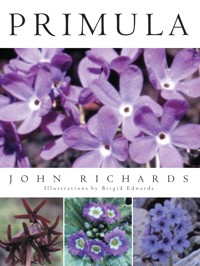
The classic text on primulas updated and revised by the leading expert, Professor John Richards of the University of Newcastle. Primula is one of the greatest garden genera, in terms of the number of varieties grown and its popularity. It is also among the largest and most widespread - approximately 430 species. This comprehensive title covers: Major taxonomic revision History of the exploration and introduction of Primula Cultivation: temperature, soil and compost, propagation Pests and Diseases Evolutionary history Biological characters used in sectional classification Heterostyly and homostyly Phyletic scheme for the sections of Primula Synopsis of the genus Primula. ?This thorough revision brings this definitive reference work right up to date and incorporates new and improved information for most of the species. For the first time, identification keys are included for all species, and other special features include several newly described species, over 30 new illustrations, and important fresh details on the evolutionary history of Primulas from recent DNA evidence, leading to major changes in classification. The book covers the historical and practical information on the exploration and cultivation of the genus; the evolution of the species; and a chapter on heterostyly and homostyly includes the latest developments in this fascinating subject. However, the bulk of the book is given over to a systematic treatment of each species, including: valid name and place of publication synonym description chromosome number breeding behaviour and flowering time distribution habitat, including altitudinal range taxonomic and other general notes variation cultivation hybridization
Das E-Book können Sie in Legimi-Apps oder einer beliebigen App lesen, die das folgende Format unterstützen:
Seitenzahl: 1060
Veröffentlichungsjahr: 2014
Ähnliche



















More About Batsford
Founded in 1843, Batsford is an imprint with an illustrious heritage that has built a tradition of excellence over the last 168 years. Batsford has developed an enviable reputation in the areas of fashion and design, embroidery and textiles, chess, heritage, horticulture and architecture.
PRIMULA
PRIMULA
JOHN RICHARDS
Illustrations by Brigid Edwards
First published 1993
New edition published 2002 by Batsford,
an imprint of Pavilion Books Company Limited
1 Gower Street
London WC1E 6HD
www.batsford.com
Twitter: @Batsford_Books
© text John Richards 2002
© illustrations Brigid Edwards 2002
© volume B.T. Batsford
The right of John Richards to be identified as Author of this work has been asserted to him in accordance with the Copyright, Designs and Patents Act 1988.
All rights reserved. No part of this publication may be copied, displayed, extracted, reproduced, utilised, stored in a retrieval system or transmitted in any form or by any means, electronic, mechanical or otherwise including but not limited to photocopying, recording, or scanning without the prior written permission of the Pavilion Books Company Limited. .
First eBook pulication 2014
ISBN 978-1-84994-241-6
Also available in hardback
ISBN 978-0713487282
Contents
Acknowledgements
Introduction to the first edition
Introduction to the second edition
A Short History of the Exploration, Introduction and Cultivation of Primula
Primula Gardens
The Cultivation of Primula
Temperature and Humidity
Soil and Composts
Propagation
Pests and Diseases
Special Conditions
The Evolutionary History of Primula and its Relatives
Introduction
Geographical Distribution
High Information Biological Characters
Primitive Primula
Relationships in Primula according to DNA
Cladogram
The Most Important Biological Characters used in Sectional Classification in Primula
Heterostyly and homostyly
Evolution of the Heterostyly in Primula
How does the Primula Mating System Work?
How does the Mating System vary between Primula species?
The structure of the Primula Heterostyly/Mating System Linkage Group
Casual Secondary Homostyly
An Alternative Form of Long Homostyly
Fixed Secondary Homostyly
Features of Primary and Secondary Homostyly Species
A Key to the Sections of the Genus Primula
Notes on the systematic Account
Synopsis of the Genus Primula
Glossary
References
Measurements Conversion Table
Index of Plant Names
Acknowledgements
I wish to thank the following people for their contributions, conscious or unwitting, which have helped in the writing of this book.
The first edition was originally commissioned for Christopher Helm by Graham Rice in 1988, and after the title had passed to B.T. Batsford, its publication was overseen by Tim Auger and expedited by Marion Boddy-Evans. I am grateful to Tina Persaud of Chrysalis Books for suggesting that a completely rewritten second edition, with some new plates, should be prepared, and for seeing this through to press.
Graham Rice particularly noted that of all the previous volumes on Primula, none had highquality colour illustrations. Consequently, Brigid Edwards was commissioned to prepare a set of paintings of primula species from life. She undertook this at a relatively early stage in a meteorically successful career as a botanical artist, and once again I should like to thank her for her magnificent illustrations which subsequently formed the centre-piece of an Exhibition at Kew. Brigid’s work was only made possible by the generous cooperation of many growers. Foremost amongst these was Tony Hall of Kew who took a close interest in Brigid’s work throughout.
A number of colour photographs are published here with the generous permission of the photographers, who are individually acknowledged on the plates.
My interest in Primula was first kindled by Jack Crosby at the University of Durham, and was later renewed by Stan Woodell at the University of Oxford. In later years, I was fortunate to know several of the Scottish growers of fine primulas, such as Betty Sherriff, Bobby Masterton, David Livingstone and Alec Duguid, who helped me in many ways.
I should also like to express my gratitude to those research students at the University of Newcastle who, under my supervision, undertook research projects based on Primula: Halijah bt. Ibrahim, Fran Wedderburn, Hussen Al Wadi, Valsa Kurian, Juno McKee, Liz Arnold and Michelle Tremayne.
In recent years, I have benefited from discussions with other workers who have been concerned with the evolution of Primula, or of heterostyly and homostyly, notably Sylvia (Tass) Kelso, Ulla-Maj Hultgaard, Susan Mazer, Phil Gilmartin, Elena Conti, Austin Mast, Fabienne van Rossum, Pam Eveleigh, and David Winstanley, who painstakingly translated much of Ernst’s classic works from the German for me.
I am coauthor with Tass, Elena and others in Austin’s massive DNA study and I am grateful to Austin and the other authors for permission to publish diagrams from this.
During taxonomic investigations, I was greatly helped by the authorities at the Natural History Museum, the Royal Botanic Gardens at Kew and Edinburgh, and Gothenburg Botanic Garden, who have given me free access to their material.
A number of people have sent their thoughts, criticisms, additions or corrections to the first edition or to early drafts of the second edition, and in particular I would like to mention Chris Chadwell, David Rankin and Pam Eveleigh in this context. In addition a number of people, notably Anne Chambers, Tony Cox, the Miehes, David Rankin, Susan Maxwell, Henrik Zetterlund, Harry Jans, John and Hilary Birks, David Milward, Mike Hirst, Philip Cribb and Chris Grey-Wilson, but a number of others as well, have sent me records and/or photographic material to identify, usually from China.
Amongst the books published on Primula in recent years, the present work owes a deep debt of gratitude to Fenderson (1986) and Smith et al. (1984). In particular, the latter work reviews the European species with such thoroughness that I have found it difficult to improve on the accounts there. The descriptions and Jarmila Haldova’s inspirational illustrations in Josef Halda’s The Genus Primula in cultivation and the wild (1992) have been a source of reference during the preparation of both editions, particularly for its access to Chinese material which became more readily available after the English version of the Chinese Flora was published.
Finally, it must be emphasized that the present work still depends heavily on Smith and Fletcher’s great monograph. Over the intervening 60 years, many advances in the study of primulas have been made, and the present work differs from theirs in very many particulars. Nevertheless, their pioneering work had a great impact on studies on the genus. Without it, the present book could not have been written.
Introduction to the first edition
Primula is one of the three great garden genera. In terms of the number of varieties grown, the income generated by the horticultural industry, or its hold over the hearts and minds of the public, only Rhododendron and Rosa can compare with it.
Primulas are also familiar plants in the European countryside. In particular, the primrose and cowslip are delightful spring plants held in much affection by all visitors to the countryside, and greatly celebrated in prose and verse.
Primula is also one of the largest and most widespread of all genera. Approximately 430 species are distributed throughout the moister and cooler regions of the northern hemisphere. By far the greatest concentration of species is found in the great mountain chain of the Himalaya and western China. No less than 334 species are found in this region, some 78 per cent of the total. In China, more than 50 species grow on some mountains, an extraordinary concentration. The genus is classified into 37 sections, and of these, no less than 24 sections (65 per cent) are confined to the Sinohimalaya, while all except six sections (84 per cent) are found there. By way of contrast, Europe has only 34 species, classified into four sections, while north America has 20 species classified into five sections.
Primula is of equal fascination to the gardener and the botanist. Most species are beautiful, and although many are difficult to maintain in cultivation, some have proved to be very important as garden or house plants. To the horticultural trade, the primula industry is worth many millions of dollars annually.
For well over a century, evolutionists from Darwin to Darlington have been fascinated by the genetical and evolutionary implications of the pin and thrum flowered (heterostylous) mating system in Primula. This has resulted in hundreds of scientific publications, which continue to be produced as I write.
It is not surprising that such a charismatic genus has attracted previous authors. I am aware of at least 25 previous books devoted solely to Primula, and indeed I am responsible for one myself. The question must be asked ‘why is another needed?’
In this book, there are several approaches, which I hope will prove new and valuable. I believed that a full account of all the species of Primula should be brought together in a single book. Previously, this has only been attempted by Smith and Fletcher’s great monograph of the genus. This originally appeared over some seven years in ten scientific papers scattered through three journals. Although these were reprinted within a single volume in 1977, the monograph remains a scientific work rather inaccessible to non-botanists.
Sixty years have now elapsed since the monograph was published. In that time there have been major advances in the taxonomy, classification and cultivation of primulas. Most of the evolutionary and genetic studies in the genus have also appeared in the last 60 years.
Since Smith and Fletcher, important areas of the Himalaya, particularly Nepal, have become freely accessible for the first time. During these years, China effectively closed its gates to western travellers, and then opened them again. The last decade has witnessed a resurgence in the cultivation and understanding of the great wealth of western Chinese species. Much of this work has proceeded within China, and an account of Primula for the Flora of China by Professor Hu and the American Sylvia Kelso has appeared
In America, too, studies have advanced. Remarkably, no less than five new species have been described from there in the last 30 years.
Today, we have the benefit of new collections, modern insights into the nature of plant variation, and a wider experience of species in the wild and in cultivation. As a result, other workers and myself have made taxonomic and nomenclatural decisions, which, at times, vary widely from those of Smith and Fletcher. Consequently, it is hoped that this book can be considered as a modern taxonomic revision of the whole genus. Although Halda’s (1992) recent book covers all the species and incorporates many taxonomic and classificatory changes, it does so in the absence of critical discussions or explanations.
This volume inevitably concentrates on the species. In recent years, several excellent books have appeared that concentrate on the cultivars of Primula. In the present work, some cultivars are mentioned under the sections of species accounts which discuss variation, but on the whole a greater emphasis is given to the species and varieties found in the wild.
In the systematic account, I have tried to dovetail evolutionary considerations into the taxonomy and classification. In Primula, we are fortunate that features of the breeding system, cytology and morphology are relatively informative with respect to the nature of some of the evolutionary mechanisms and pathways through which the genus has diversified.
In recent years there has been a surge in interest in the evolution and functioning of the curious pin and thrum flowered mating system in Primula. The breakdown of this system, giving rise to self-fertile homostyles, has also been intensively studied. We now know that both primary homostyles and secondary homostyles are found in Primula, and this information has resulted in several evolutionary insights.
Much of the cytological work in the genus had been completed by the time of Smith and Fletcher (chiefly in Bruun’s great monograph published in 1932). However, those authors placed little stress on the cytological data, and modern insights into the interplay between the chromosomes and classification have radically altered some of our concepts, particularly at the sectional level.
Equally significant has been the role played by the use of the scanning electron microscope when applied to the study of pollen morphology. With respect to the classification of Primula, this new information has provided major new insights. Particularly when used in conjunction with cytological data, our ideas about the evolution and classification of the genus Primula have often been radically altered. The Norwegian Per Wendelbo and the German Otto Schwarz both deserve credit for their pioneer work in this field.
In attempting to write a book accessible to gardeners and botanists alike, I have tried to cross the gulf supposed to lie between them. By profession I am an evolutionary botanist, who has, together with six research students, worked on the Primula breeding system for some 25 years. By inclination, I am a gardener who has at various times grown (and usually lost!) about 160 species of Primula in the relatively amenable climate of northern England.
I have developed a great respect for the knowledge and expertise of the specialist gardener. In no way do I agree with the commonly held sentiment that gardeners are not interested in, and should not be exposed to, botanical information. Further, I believe that the botanist has a great deal to learn from the experiences and observations of the gardener. In this book I have tried to marry botanical and horticultural information in such a way that both camps may benefit.
To take one of many examples, information on the fertility of self-pollinations of pin flowers or of thrum flowers for a species mostly originates from scientific studies. Yet, this information is plainly of interest to the gardener. Furthermore, the gardener may acquire similar information which is new to the botanist.
There are other areas of equal interest to the botanist and the gardener, for instance hybridization, the history of introductions to cultivation, and ecological information.
We have tried to produce a book which will be attractive to own and use. A number of books on Primula contain some line drawings of the species. These are sometimes excellent, for instance the late Duncan Lowe’s drawings in Primulas of Europe and North America, and Jarmila Haldova’s drawings in Halda (1992). However, this is not always the case. Remarkably, although several books on Primula contain colour photographs, none have coloured illustrations. Brigid Edwards has produced for this volume an extremely beautiful set of paintings of most of the species most frequently seen in cultivation today. In my view, these will rank highly in the annals of botanical illustration, and they add immeasurably to the quality of this book.
We have also added a number of colour photographs. For these, I have concentrated on little-known species which have rarely been illustrated. Where possible, these photographs are taken in the wild and are selected to show the habitat. Most of these have never been published before. In many of the previous books on Primula, much of the book has been occupied by chapters on cultivation, hybridization, cultivars, and pests and diseases, with only a relatively short section being devoted to systematic accounts of a selection of the species.
For the present volume, I have written four relatively short introductory chapters on the history of the exploration and cultivation of Primula, on the cultivation of Primula, on the evolutionary history of Primula and some of its relatives, and on heterostyly and homostyly. However, much of the book is taken up with the systematic section, where many of these questions are addressed in more detail, as they apply to the various species.
However diverse the genus is, many features of the cultivation, biology or ecology of a species become more uniform when the species within a single section are considered. Characteristics which tend to be common to all the species within a section are given a detailed treatment in the sectional account. These features are only further mentioned in the species accounts where more detailed information is available, or when the species is in some way different from its relatives. It follows that if readers wish to refer to a particular topic in this book, it may pay them first to consult the sectional account before turning to the actual species concerned.
Readers should note that the systematic account is preceded by a guide to the structure and conventions used in each species account. Also, where unfamiliar terms are encountered, a glossary is provided.
Introduction to the second edition
As I write this, almost ten years have elapsed since I wrote the introduction to the first edition. If I queried then why yet another book on Primula was needed, it would be easy to support those who question the need of a further edition now. However, the first edition was on the whole well received and it sold well, so that it achieved a scarcity value a few years after it was first published, second-hand prices at times greatly exceeding the recommended shelf price. An ongoing demand caused kind friends to suggest to the publishers that the book should be reprinted. B.T. Batsford suggested to me in May 2001 that I might consider preparing a wholly new edition.
I was keen to undertake this revision for a number of reasons. Most importantly, great scientific advances in the study of Primula had been made during the intervening decade. First amongst these have been the intensive DNA studies, during which nearly a quarter of the species have been examined. In the first edition, I used deduction, intuition and guesswork as I attempted to elucidate evolutionary pathways and biological relationships between species and sections. Now these speculations have been completely superseded by incontrovertible evidence of these relationships. There are some weaknesses in this evidence; many key species are missing which might change the closeness (but not the direction) of some relationships. The evidence only informs us on maternally inherited relationships; and some of the conclusions are as yet tentative. Nevertheless, these studies provide us with a massive step forward, and I have depended heavily on this new evidence in the preparation of this new account.
Fortunately, few major taxonomic upheavals have resulted. The DNA evidence has largely agreed with our sectional concepts, and species affiliations, and in most cases it has also supported our previous conclusions about evolutionary pathways and higher order relationships between sections. This has been gratifying, so that on the few occasions when the evidence from the DNA completely disagreed with previous concepts, the new evidence has been accepted with acclamation (perhaps most strikingly in the discovery that the Dryadifolia should be placed in subgenus Auganthus, not Aleuritia, while the Pinnatae should be transferred in the reverse direction).
A good deal of progress has also been made in the study of heterostyly in Primula. Although the molecular structure of the heterostyly supergene remains as a challenge for future generations, work by Valsa Kurian, and a reworking of Ernst’s original data by two doyens of population genetics, themselves almost of Ernst’s generation, have revealed more of the complexity of this miracle of evolution.
We have also learnt much more about plants in the wild and in cultivation in the last ten years. Towards the end of the decade we received the astounding news that three new species of Primula had been described, not from some remote Asian fastness, but from Italy. The status of one of these, P. grignensis, requires confirmation, but I have included two of them here, and one, P. albenensis, is a remarkably distinct new discovery which has now settled into cultivation.
As I went to press in 1992, the initial results of the first of the great Sino-European expeditions to western China, known by the acronym CLD, were becoming known. Since then we have had in rapid succession KGB, ACE, SQAE, ARGS and collections by a number of private individuals during the 1990s. Also, a number of organizations have organised tours to this extremely rich region, and even to south-east Tibet. I myself was able to visit north-west Yunnan in 1995, seeing 30 species, and this visit alone led to new insights on the status of P. zambalensis, P. pulchelloides, P. nanobella and others. Some herbarium material has come back, and some seed was introduced, some of which is still grown. But, especially, we have been flooded with highquality colour photographs of plants, many of which were scarcely understood at the time and previously had seemed almost mythical. Even more importantly, we have been provided with a medium scarcely dreamt of a decade ago. Any traveller can now scan his photographs, or use a digital camera, and display his results to the world, on the web. A Canadian enthusiast, Pam Eveleigh, deserves great credit for dedicating her IT skills to the furtherance of our knowledge of Primula through her website www.primulaworld.com,which is a wonderful source of information on the genus. Her scholarship and research has resulted in the deserved success of this site and could be taken as an object lesson.
Another advantage of IT has been that I have been able to prepare this second edition using the original text already on disk. As a consequence, it has been relatively easy to incorporate changes of various magnitude throughout the book. Few passages of the original edition have survived unscathed, and much of the original edition has been completely rewritten, often including the plant descriptions. Another innovation has been the introduction of identification keys. Several reviewers, and a number of private individuals since, have commented that the usefulness of the first edition was limited by the absence of sectional keys. In many sections, I was originally disinclined to prepare identification keys because our state of knowledge at that time was inadequate. I have now written keys for all the sections except the still very poorly known Obconicolisteri. This discipline has also led to a better understanding of species descriptions, distinctions and limits, so that many diagnoses have benefited considerably.
I am delighted that Brigid Edwards’ superb plates and her text drawings will continue to grace the present edition. This edition also contains the original 51 photographs by a number of photographers. Many of these are also superb, and I am glad that we are using them again. I would have liked to have replaced those few, mostly taken by the author, which are less than superb, but this would have involved a considerable increase in shelf price. Instead, I am delighted that I have been able to add more than 30 new images, mostly of species scarcely known in 1992, again by a variety of photographers. I hope that the result will be an attractive book which has been brought up to date, is mostly new, and in my view has been greatly improved, which I hope provides sufficient justification for its publication.
A Short History of the Exploration, Introduction and Cultivation of Primula
The origins of cultivated primulas are lost in the mists of time. From Elizabethan sources we know that complex hybrid derivatives of the primrose and cowslip, now called ‘polyanthus’, already formed an important component of many English knot gardens. Varieties of the primrose, some of them floral mutations such as ‘Jack in the Green’ and ‘Hose in Hose’ were also popular. Early primrose varieties are often known today as ‘old-fashioned primroses’.
From the even earlier writings of Clusius, Gerard and others we know that central Europeans had by then also hybridized the yellow ‘bear’s ear’, P. auricula, and the rose-coloured P. hirsuta from the Alps. These hybrids, the ‘garden auricula’, P. × pubescens, were popular plants for pots and parterres in the sixteenth century.
Garden Auriculas formed the subject of the next primula enthusiasm. As country folk massmigrated into the new northern towns of the British Industrial Revolution, they found that the Auricula stood up to the sooty, acrid conditions better than many plants. Manure from the thousands of urban working horses was freely available, and formed the basis of complex, often secret composts and feeding rituals which fostered the cultivation of these remarkable plants. Many new, often startling varieties were bred, in which the paste-white foliage showed off the brilliantly or weirdly coloured flowers to great effect. Greenish flowers were as popular as the sealing-wax reds and velvetly blues, often set off by the mealy ‘eye’ of the flower.
The social life of the Lancashire mill-towns in the Victorian era often revolved around the many Auricula societies and their shows, where considerable sums of money could be won.
The modern Auricula is very much an invention of the English Working Class. Possibly, this is still reflected today in the archaic rules of some societies that Auriculas with ‘paste’ on the flowers are deemed unsuitable for exhibition, except sometimes in special classes. However, by the end of the nineteenth century, the big houses had often espoused the cause of the workers’ Auricula, to the extent that elaborate ‘theatres’ with shelves and a matt-black background were specifically built to show them off in flower.
While the Europeans were breeding the hybrids of the primrose and the bears-ear, the Chinese and Japanese had equally developed a few of their own native species. When the horticultural riches of eastern Asia were first explored by Europeans in the early nineteenth century, they discovered that P. sinensis and P. sieboldii were being grown in a wide variety of forms, suggesting that they had been in cultivation for many centuries.
However, it fell to Europeans to introduce and breed the popular twentieth-century house-plants P. obconica and P. malacoides. Doubtless, those areas of western China where the great richness of primula species was later discovered by Europeans were as remote to the civilized, gardening eastern Asians as they were to the early European explorers.
The stage is now set for the great era of Sino-Himalayan exploration which revealed to the world the astonishingly rich primula flora of these regions.
The first botanical explorations were made into the western Himalaya, then part of ‘British India’, which was becoming a popular resort for the Raj in the early nineteenth century. The most important botanist there was not in fact British, but Austrian. Nathanial Wallich (1786– 1854) became Superintendent of Calcutta Botanic Garden. Other botanists who discovered new primulas in the north-west Himalaya in the first half of the nineteenth century included J.F. Royle (1779–1858) and David Don (1799–1841).
By far the most important botanical explorer of the Himalaya in the nineteenth century was the younger of the ‘Hookers of Kew’, Sir Joseph (1817–1911). Sir Joseph was destined to become one of the most influential botanists of all time. At the age of 31, he already had a distinguished record of botanical exploration in the Southern Hemisphere, when, under the sponsorship of his father Sir William, he visited the central Himalaya. Based at Calcutta Botanic Garden, he made two expeditions into Sikkim, and a third to Assam (1848–51). Here he distinguished himself by reaching what was believed to be the highest point reached by man (5800 m, 19,000 ft), and was then incarcerated by Tibetans for 46 days after trespassing into that territory.
Hooker was the first botanist to demonstrate the great botanical riches of those regions, and in doing so he collected a number of new species of primula. Hooker also introduced several species of rhododendron, which formed the basis of extensive hybridization of that genus, transforming late nineteenth-century estates. It seems that the only primulas that he successfully introduced were P. sikkimensis and P. capitata.
At the turn of the twentieth century very few Primula species were yet in cultivation. P. sinensis, P. sieboldii, P. obconica and P. cortusoides had been introduced from China, P. japonica had been introduced via Hong Kong, and a few Himalayan species such as P. denticulata, P. capitata, P. rosea, P. reidii, P. involucrata, P. prolifera, P. sikkimensis, P. floribunda and P. nana were established. P. verticillata from Arabia, P. luteola from the Caucasus, and a few American species (P. parryi, P. rusbyi and P. suffrutescens) were also grown. Naturally, a number of European natives were firmly in cultivation, but it comes as a surprise to discover that such an accessible and familiar species as P. allionii was not in fact introduced until 1901. In the year 1900 it is probable that only some 30 species of primula were in cultivation.
In contrast, by the time of the fourth Primula conference of the RHS in 1928 it seems that at least another 60 species had become established in cultivation. At that date perhaps 100 species were being grown. The majority of these additions had recently arrived from the extremely rich regions of western China, which were being explored for the first time.
The first Western botanists in west China were French Catholic missionaries. In the last quarter of the nineteenth century, such familiar names as David, Delavay, Maire, Farges and Soulie were exploring virtually uncharted territory on the frontiers of China, Tibet and Burma. At that time this was a politically and religiously sensitive region (it still is today!), and more than one of them lost their life to religious fanatics. Nevertheless, quantities of specimens were sent back to Paris, and the many specific epithets in Primula based on French names testify to the importance of these early collections.
The French missionaries were mostly working in forested zones, peopled with primitive tribes. Most of these forests have now been logged, and the peoples dispersed. Many of the forest primulas they found, for instance in sections Davidii, Chartacea, Carolinella, and Obconicolisteri have not been seen in recent years, and the fear is that they might now be extinct. What little seed the missionaries collected was poorly treated, so few introductions were effected. However, the Irishman Augustine Henry, who was also travelling in this area at this time, did make a few important introductions.
The introduction of the flora of Yunnan and Sichuan to Western gardens needed a further impetus, and this came from a rather unlikely source. Arthur Bulley was a Lancashire cotton millionaire who built a red sandstone house on the green hills of the Wirral, Cheshire, overlooking the Dee estuary. This is now the University of Liverpool Botanic Garden at Ness. Bulley was an unusual magnate, perhaps, in that he was a socialist and a philanthropist. He started a seed firm, Bees seeds, maybe as a hobby, and was very keen that many of the plants discovered by the missionaries should be introduced into cultivation.
Bulley approached the Regius Keeper of the Royal Botanic Garden, Edinburgh, Sir Isaac Bayley Balfour, to recommend a man who could go to China as his collector. At this date (1904), Edinburgh already had a strong interest in the taxonomy and cultivation of primulas, resulting from the earlier work of G. Watt, W.G. Craib, and of Balfour himself. This has continued to the present day through Sir William Wright Smith, Harold Fletcher, Peter Davis, Jennifer Lamond and Andrew Grierson.
Balfour suggested George Forrest, a young man from Falkirk who had recently returned from Australia to take up a post as an assistant at the Botanic Garden. In this way, what was perhaps the most illustrious career in the history of plant collecting began (there is a good account of Forrest and his introductions in the Journal of the Scottish Rock Garden Club 13 (3) (1973)).
Forrest spent most of the rest of his life in China, supported by Bulley, and later by a syndicate of other growers. His first expedition (1904–6) was particularly adventurous. Having narrowly escaped a murderous attack on three missionaries by Tibetan lamas, and without clothing or boots, he was hunted in dense forest for eight days. When he finally reached a friendly village, he had lost all his collections and seeds. News of his supposed death had already reached Edinburgh and thence to Bulley, who was greatly upset. It is thus ironic that when Forrest did die at the end of his sixth Chinese expedition in 1932, it was of a heart attack while he was on a recreational duckshooting trip.
Forrest was so superbly organized in the field that he was able to cover vast areas of uncharted country using hundreds of native collectors. Farrer, who was collecting in China at the time, wrote of ‘Forrest’s octopus tentacles’. There is no doubt that Forrest, a forthright and competitive man, deeply resented any activities from other collectors in what he regarded as ‘his’ territory.
In all, Forrest collected over 30,000 specimens, and introduced well over 1,000 species to European gardens. He is perhaps best known for his introductions of rhododendrons, but his influence on the cultivation of primulas was also considerable. In particular, P. bulleyana, P. beesiana and P. aurantiaca which play such a significant role in the drifts of ‘candelabra’ primulas, which form such a feature in many gardens today, were first collected by Forrest. Amongst other significant introductions he made were P. vialii, P. chionantha, P. flaccida, P. malacoides, and of course P. forrestii itself.
Later in his life, although untrained, Forrest became an expert botanist who took a special interest in the taxonomy of Primula. He described a number of species, and together with Smith prepared a systematic account of the whole genus in 1928.
Although Forrest carved out a special niche in the botanical exploration of western China, he was by no means alone in this field, although he refused to co-operate with the others. Working in similar areas at the same time were the Americans Ernest (‘Chinese’) Wilson and Joseph Rock, and the Englishmen Reginald Farrer and Frank Kingdon Ward, all re-sounding names in the annals of plant introduction.
Ernest Wilson was a professional plant collector who spent much of his career in China, specializing in the introduction of trees. Indeed, his first expedition was mounted especially to collect seed of the ‘handkerchief tree’, Davidia. He was subsidized by many sources, not least by Bulley, and the London nursery firm of Veitch, but he also worked for the Arnold Arboretum. He learned to speak many Chinese dialects, and often dressed as a Chinese. His many primula introductions included P. secundiflora, P. polyneura, P. cockburniana and P. pulverulenta.
Joseph Rock was originally Professor of Botany and Chinese in Hawaii. A well-known Chinese scholar, he lived in Yunnan for some years, and his Chinese collections spanned over 40 years. Sadly, he was forced to flee the country after the revolution in 1948. I have been fortunate enough to visit the house in which he lived in Lijiang (Lichiang) and which still contains many of his possessions. The occupant in 1995 was a great authority on local music who had known Rock personally, and who had spent a number of years in jail during the ‘Cultural Revolution’. Rock’s introductions of primulas included many species popular in the garden today, although none seem to have been collected by him first.
Reginald Farrer (1880–1920) was an extraordinary man; an aesthete, poet, novelist, playwright, poseur and enfant terrible, he was also an important botanical explorer who died from pneumonia while collecting in Burma. Almost incidentally, Farrer is generally regarded as the ‘father of the modern rock garden’, as a result of his imaginative and importunate garden books. The ‘English Rock Garden’, much of which was rewritten while he was in Gansu, is at the same time perhaps the most ambitious and the least accurate horticultural work ever published. Farrer’s capacity for hyperbole never ceases to amaze, and this was also recognized by his contemporaries, for Forrest commented tersely ‘all Farrer’s sparrows are eagles’.
It seems that Farrer would dearly have liked to invade Forrest’s regions, but Forrest’s fierce territoriality drove Farrer firstly to Gansu with William Purdom as a paid companion (1914– 15), and then to Upper Burma (1919–20), with Euan Cox as a companion for the first year. Particularly in Gansu, Farrer discovered a number of interesting new species in sections such as Crystallophlomis, Pulchella and Muscarioides, and several were introduced. Unfortunately, species from this area seem to be particularly difficult to grow, and none have survived.
Frank Kingdon Ward (1885–1958) was a unique character. A scholar by birth, and a traveller by inclination, he made a career as a kind of botanical travel writer, publishing no less than 700 articles and 25 books about his remarkable journeys. At times, his wanderings were subsidized by seed firms and syndicates (once again, Bulley was a sponsor), but Ward was a loner, travelling light, and both his botanical collections and gatherings of seed tended to be sparse. Ward’s expeditions spanned over 40 years, from his first trip to Tatsienlu and Gansu in 1909, to his last to Manipur in 1953. Many of the regions he visited, for instance the Tsangpo valley in south-east Tibet, and the Mishmi hills in Assam, were then largely unexplored, and have been rarely visited by Western botanists since. As the only Westerner with experience of the Mishmis, Ward was employed by the USAF after the war as a guide to recover the bodies of American airmen lost on bombing raids from India to Japanese bases in south-east Asia. At this time he was already over 60 years old.
When Ward was 63, he married for the second time, Jean Macklin. They went on two further expeditions together, discovering the exquisite lily Lilium. mackliniae, and among many primulas P. macklinae which is described here for the first time. Some time after the first edition of ‘Primula’ was published, Kenneth Cox led a series of expeditions to Tsari and the Tsangpo bend, in which he largely retraced Ward’s steps. This led to the reissue of a magnificent edition of Ward’s ‘The Riddle of the Tsangpo Gorges’ (2001), edited in part by Cox and full of modern colour photographs. The preface was written by Jean Rasmussen, née Macklin and formerly Jean Ward. I was able to discover her address so that I could inform her that a primula now unofficially bore her maiden name, and received a gracious reply.
In Primula, Ward’s botanical discoveries rate second only to those of Ludlow and Sherriff. His introductions of such magnificent species as P. florindae, P. alpicola, P. burmanica, P. chungensis, P. concholoba, P. cawdoriana and many others should enrich our gardens permanently.
Ward’s journeyings into south-east Tibet, in the company of Lord Cawdor (1924–25), and again in 1935 introduced the world to a rich new ground for primulas, and set the scene for the most important primula expeditions ever made.
Frank Ludlow (1886–1972), originally a college-teacher in Biology and English at Karachi, was recruited after the First World War into the Indian Education Service, and later taught in Tibet. A keen bird-watcher, he was holidaying in Kashgar in 1929 (not a place to visit lightly, even today) where he met Major George Sherriff (1898–1967), originally of the Indian Army, who entered the consular service in 1928. Afterwards Ludlow undertook a major collecting expedition into Tien-Shan.
Ludlow’s momentous meeting with Sherriff led to a discovery of shared interests in natural history and travel. Both men were keenly interested in the possibility of exploring the eastern Himalaya, particularly Bhutan and south-east Tibet, which were almost totally unknown to Westerners at the time. Their first expedition into this area was in 1933, and from then until the outbreak of war, and again from 1947 until 1949 they undertook seven major journeys together. On several of these they were accompanied by the medical men Lumsden, Elliott and Hicks, and by Sir George Taylor, later Director of Kew. The tale of these momentous journeys is well told in Harold Fletcher’s book ‘A Quest of Flowers’ (1975). In his introduction to this book, Sir George told how these two great friends, who spent a good deal of their lives in each other’s close company, often in perilous circumstances, could never bring themselves to address each other, except as ‘Ludlow’ and ‘Sherriff’.
Sherriff married during the war, and took his bride to Lhasa where they replaced Ludlow as British Resident from 1943–45. Here they got to know the boy Dalai Lama very well, taking as a gift a Hornby toy train set. Betty Sherriff accompanied her husband on the post-war expeditions, breaking her arm on one occasion. On their retirement in 1950, George and Betty Sherriff built together a magnificent garden at Ascreavie, near Kirriemuir in Scotland, where they grew many of their Himalayan introductions. Some, such as Primula kingii and Meconopsis sherriffii, were only managed successfully by them.
George Sherriff was the organizing genius behind the expeditions. Often accompanied by 100 retainers, his staff work was immaculate, and his men and animals well cared for. Every night, it is said, Ludlow and Sherriff relaxed with a nip of whisky distilled at Sherriff’s own family distillery.
Although both Ludlow and Sherriff were men of independent means, I have often wondered how it was that an ex-teacher and an ex-consular official were able to fund such ambitious expeditions during the prime of their careers. It seems probable that they were in fact part of what Kipling called ‘the Great Game’, and that their wanderings also served some tactical and political purposes.
However, whatever their primary motives, there is no doubt that the excitement and challenge of uncovering totally new botanical store-houses of great richness soon dominated their interests. Ludlow, a bird-watcher who seems initially to have been lukewarm about flowers, spent the later years of his life as a fulltime plant taxonomist, while Sherriff became an authority on the taxonomy and cultivation of Primula and several other genera.
Bhutan had been visited previously by botanists such as W. Griffith (1838–39), Sir Claud White (1905–7) and R.E. Cooper (1914–15), while Ward had briefly explored the Tsangpo and Tsari in south-east Tibet. However, the thorough exploration of these areas by Ludlow and Sherriff first revealed fully the richness of these territories for a number of groups of Primula. For instance, Ludlow and Sherriff discovered no less than eight new species in section Minutissimae, six in section Petiolares, and four in section Soldanelloides. In all, they found no less than 26 species of Primula new to science.
On their early expeditions, Ludlow and Sherriff mostly collected herbarium material, and much of that from carefully selected genera. However, such was the interest that their expeditions generated that latterly they preserved all the plants they encountered (even dandelions!) Their herbarium specimens are amongst the best collected and most thoroughly annotated I have ever seen. Also, Sherriff took many superb photographs on a half plate camera.
Ludlow and Sherriff made second forays into selected areas for the purpose of collecting seed. They also pioneered the ‘flown home’ technique, often ‘stashing’ collected material in caches to be collected later and flown home to Edinburgh by aeroplane. In all they introduced at least 66 species of Primula, the majority of them new to cultivation. For many growers, their best introduction was, arguably the loveliest of all primulas, the ice-blue P. bhutanica.
Ludlow and Sherriff’s activities in the eastern Himalaya ceased just as the next significant advance in the exploration of primulas was starting. For most of the previous 200 years, the Kingdom of Nepal had been closed to Westerners, although Indian collectors from the Darjeeling herbarium and seed firms, and explorers such as Major Lal Dhjow, had introduced a few plants from this centrally placed region of the Himalaya.
Immediately Nepal became open, the British Museum sponsored a series of expeditions into Nepal. Adam Stainton, L.H.J. Williams, Oleg Polunin, a school-teacher from Charterhouse, and Lt. Col. Donald Lowndes were significant participants in these early explorations (1950–55). By 1956, it was possible for independent tourists like Marjorie Brough and S. Bowes-Lyon to visit new and remote districts which had not been explored botanically, discovering exciting species such as P. aureata.
This brief era links seamlessly with the present day when expertly arranged botanical ‘holiday’ tours to Nepal, and even to Bhutan and Tibet, are commonplace. During the 1970s and 1980s a host of enthusiasts introduced seed and living material of primulas from Nepal, notably George Smith, John Templar, Bernard Thompson, Edward Needham and Keith Rushforth. Professional botanists are still active in the area. Work centred on the Royal Botanic Garden, Edinburgh, led to the publication of a ‘Flora of Bhutan’.
There was an initial period in the 1950s when several notable new species, such as P. poluninii, P. megalocarpa and P. ramzanae were discovered in the remoter parts of Nepal, while others such as P. petiolaris and P. boothii became much better understood. It now seems likely that few new discoveries remain to be made in this area.
There was a period of some 40 years when the botanical exploration of China by Westerners was not permitted. Notwithstanding, botanical work continued within that vast country, and a number of new species were published during the 1950s and until the ‘Cultural Revolution’, notably by Fang Yun-yi and Chen Feng-hwai. More recently, Professor Hu Chi-ming has revised the Chinese Primulaceae for ‘Flora Republicae Popularis Sinicae’ (1990) (Flora of China). In co-operation with the Missouri Botanic Garden, USA, and with Sylvia (‘Tass’) Kelso of the University College of Colorado Springs he collaborated in the preparation of an English translation of this fine work.
After 1981 a number of joint Sino-British expeditions revisited the hunting grounds of Forrest, Wilson and Rock in western China, such as the Cang Shan, Yulong Shan, the Zhongdian plateau, the Beima Shan, Da Xue Shan, Emei Shan, Wolong Shan, etc. In the early 1990s, several major expeditions made extensive seed collections from north-west Yunnan and south-west Sichuan available to the gardening public. The best known of these go under the acronyms CLD, KGB (Swedish) and ACE. A very large number of good new plants have successfully come into cultivation as a result, including such primulas as P. dryadifolia, P. rupicola, P. yunnanensis, P. nanobella, P. deflexa, P. florida, P. brevicula and others.
The purpose of these expeditions has been primarily scientific, the herbarium material gathered being split between Chinese and Western institutes. Most collection of living plants has rightly been discouraged, and since about 1995 it has been difficult to get permission even to gather seed. When Chinese authorities have discovered that seed has been furtively secreted away by botanical travellers, it has been confiscated and destroyed, and the miscreants have spent several worrying days in captivity.
Nevertheless, most of these districts are now on the tourist trail and can be visited on wildflower holidays, in varying degrees of comfort. Hotels in Dali and Lijiang, which give easy access to amazingly rich floras, are now very good, although those who penetrate to Zhongdian or Deqen (Atuntse) can still sample the discomforts of ‘old China’. Although some formerly remote areas are nowadays found to be heavily logged, many alpine localities have remained relatively undisturbed. Logging has allowed vehicular access into previously difficult country, and second growth often proves to be species-rich.
Undoubtedly, many good plants remain to be introduced from the fantastically rich regions of the ‘Tibetan borderlands’ of south-west China. At the turn of the Millennium, however, attention was directed towards Reginald Farrer’s hunting grounds far to the north, in north Sichuan, Gansu and Qinghai. Although much less rich, these districts still have many interesting plants and it is hoped that these drier regions will yield plants more suited to many garden conditions (although this was not on the whole Farrer’s experience). Participants (as in the SQAE expedition of 2000) have also experienced problems in persuading Chinese authorities to release seed outside the country. However, this trip, and a ‘tourist’ visit to the same districts in 2001, revealed many almost unknown species of great interest such as P. limbata, P. optata, P. woodwardii, P. tangutica, P. maximowiczii, P.violacea and P. flava.
Another previously remote region which became briefly accessible, if only under canvas, was the wonderfully rich districts of south-east Tibet. To the north of the Himalaya in rain-shadow, the Tibetan plateau is on the whole very dry. This huge, high region is drained eastwards by a single river, the Tsangpo, which turns very dramatically to the south-west as it penetrates the main chain and becomes the Brahmaputra. The gaps so created allow the monsoon to penetrate northwards across a few very wet passes into some limited wet and precipitous districts with a very rich, isolated and often endemic flora. The principal flowerrich districts of south-east Tibet are Tsari and Pemakochung, and even here the wet, plantrich habitats are often localised and at a considerable altitude. It has been possible to drive to Tsari from Lhasa, and the best known of the recent expeditions have been organized during the 1990s by the Cox family, descendants of Euan who travelled to nearby regions of Burma with Farrer. The Cox expeditions have been chiefly organized to research and reintroduce the fantastically rich rhododendron flora of this district, and in this they have been phenomenally successful. However, they have also been able to visit many primulas which had only been seen once or twice previously, by Ludlow or Sherriff, or Ward, for instance P. laeta, P. falcifolia, P. rhodochroa, P. genestieriana, P. jonardunii, P. advena and others. South-east Tibet remains largely unexplored, and this is potentially the most rewarding region for future primula field work. Unfortunately, some of the richest passes such as the Doshong La have proved too close to the Indian border for the comfort of the relevant authorities and are closed again as I write (2002).
In the post-revolutionary years, vast areas of Siberia and central Asia became accessible to Soviet botanists. These areas are not rich in primula species, but the account by A. Federov in ‘Flora SSSR’ (1952) was a notable advance in our understanding of the species in this region. This work adopts an approach which ‘splits’ species too much for my taste. For instance, under the three species P. veris, P. vulgaris and P. elatior, Federov describes no less than 15 species, and of the 67 species listed there, I only accept 41 in the present account. Nevertheless, several striking new species were discovered in central Asia during this exploratory period, such as the Cortusoides species P. eugeniae, with yellow flowers.
In recent years, several Czechs, notably Josef Halda, have explored these regions thoroughly and have introduced a number of the little-known species from there into cultivation.
Central Asia forms the centre of diversity for a previously little-understood section, the Armerina. Schwarz (1972), in monographing this group, shows that no less than five species described after 1950 belong to this section and are confined to this area.
In recent years, our attention has been unexpectedly diverted from the treasure-house of Asia to the USA. Here there have been two important developments. Firstly, Tass Kelso very productively used her time at the University of Alaska to revise the north American species in sections Aleuritia, Armerina and Crystallophlomis. This has not only greatly increased our understanding of arctic-American species which were previous little known, but a new species, P. anvilensis, was described in 1987.
Secondly, the dry-land primulas of the western United States have become much better known. In the last 25 years, four new species have been described from this area, including two new localized segregates of P. cusickiana, P. domensis and P. nevadensis, treated in the present account as subspecies, the distinctive P. capillaris, and a local white-flowered relative of P. modesta, P. alcalina. These dry-land species have been well described by Jay Lunn (1991).
Primula gardens
Until the great era of Chinese exploration was under way, after 1904, there was little incentive for collectors to specialize in the growing of species primulas. Too few species were yet in cultivation. The cultivation of the many varieties to be found in P. sinensis, P. sieboldii, and the hybrid grexes derived from the primrose and the Auricula were popular nineteenth-century pastimes. However, these are of peripheral interest to this particular book.
The great wealth of species introduced from China, and later from the Himalaya, were on the whole found to thrive best in maritime climates with moderate, humid climates. Reports in the Fourth RHS Primula Conference (1928) make interesting reading. Several of the gardens which feature prominently there, the Royal Botanic Garden, Edinburgh, the University of Liverpool Garden at Ness, Wirral, and the RHS Garden at Wisley, Surrey, still figure prominently amongst important collections of primula species. However, it is perhaps significant that Bodnant in north Wales, still a magnificent garden well suited to the cultivation of primulas, nowadays seems unable to reconcile the interests of such short-lived (and portable?) plants as primulas with the pressures of its large numbers of visitors. At Edinburgh, Kew and Wisley, too, many of the more interesting species tend to be found ‘behind the scenes’.
Unfortunately, some of these gardens have not survived the decease of their owners. Ascreavie, near Kirriemuir, was not maintained after Betty Sherriff’s death in 1979, nor was the famous garden at Keillour Castle, Perth, after Mrs Knox-Finlay died. I continued to garden at Kilbryde near Corbridge in Northumberland for some seven years after Randall Cooke’s death in 1973, but in the end the rarer plants were dispersed, many to other famous collections where some still survive. This has also been the case with respect to Gerry Mundey’s hill-top garden at Tinney’s Firs near Salisbury, after his death in 1989.
In other cases, famous gardens have ‘gone public’ after the death of their owners and, like Bodnant, have rarely been able to cope with the pressures of maintaining a collection of rare primula species. To various extents this is true of the garden of the Rentons at Branklyn, Perth, Inverewe in Wester Ross, Arduaine in Argyll, and Harlow Carr, the Northern Horticultural Society Garden near Harrogate, Yorkshire.
Cluny, near Aberfeldy, has proved to be an exception to this. Bobby Masterton, a vet who built up a superb collection of Asiatic species in magnificent mountain surroundings, has been succeeded by his son-in-law John Mattingley.
Over the last 50 years, some of the most interesting collections of primula species have been grown by specialist nurseries, and these sometimes survive the tenancy of their original owners. Jack Drake’s nursery at Inshriach on Speyside continued to be been run by John Lawson for a number of years, when it still kept its proud record for succeeding with difficult species in sections Crystallophlomis and Soldanelloides which had proved short-lived elsewhere. Doubtless the reliable snow-cover and cool summers in that district helped to make this possible. These days, the reputation of north-east Scottish nurserymen as purveyors of fine and rare primulas is maintained by Ian Christie who lives near the Sherriffs’ old home above Kirriemuir, Fred Carrie of the Tough Nursery, and Jim Sutherland and his son near Inverness.
Edrom, near Coldingham on the Berwickshire coast, was another well-known example. Originally started by two sisters, the Misses Logan-Hume before the Second World War, it was later owned by their gardener, Alec Duguid. On Alec’s retirement, Jim Jermyn took over, since when this franchise has changed hands yet again, although this concern still offers a wide and interesting range of species. Edrom is a wooded site, and its prox-imity to the east coast ensures cool summers and mild winters. In the late 1990s, a master collector and grower of Sinohimalayan species, Ron McBeath, recognized these local qualities when he purchased a nursery high above the sea right on the Scottish border. He has rapidly established a most interesting collection of rare species, many of which he has introduced himself.
Most of the gardens listed above are best known for their collections of Asiatic species. Over the last 30 years there has been a resurgence of interest in the cultivation of the scarcer European species. This group in particular are grown superbly in the harsh climate of Askival, near Fort Augustus, where Michael and Polly Stone have created one of the finest private gardens in Scotland. Henry and Margaret Taylor of Invergowrie, and Brian Burrow in Lancashire are amongst other growers who have built up interesting collections of the European species.
Urban conditions do not always favour the cultivation of the scarcer primulas, as the warmer, drier conditions are not always to their liking. Nevertheless, many of the more interesting collections have always been found in the smaller private garden. In earlier years, names such as David Livingstone of Edinburgh, Dr McWatt of Duns, and Kenneth Corsair were amongst those especially associated with the cultivation of the rarer species. Today, it would perhaps be invidious to list names, but visits to the shows of the Alpine Garden Society, or the Scottish Rock Garden Club, demonstrate that a large number of growers maintain collections of the scarcer primulas.
This account is largely restricted to the British Isles, as this is the area with which I am most familiar. The north Pacific coast of the USA is another area with a long tradition of growing the less-common primula species. In the spring of 2001 I was fortunate enough to travel to this area and was able to visit a number of gardens and nurseries, many of whom have interesting collections of primulas. Many growers there struggle with the hot, dry, bright conditions experienced in their summers (northern Britain is so satisfactorily gloomy!) But Rick Lupp and Steve Doonan are amongst those able to supply a rich array of Primula species to an expanding market, and private growers such as Betty and Ned Lowry, Barbara Flynn and others are amongst those with very interesting collections in the Seattle area. I have discussed elsewhere the very recent trend to grow high alpines very satisfactorily in very cold districts (in winter) such as Alaska (Ed Burayaski) and Alberta (Pam Eveleigh). There is a Society in the US dedicated to the genus (the American Primula Society), just as there is in the UK (the National Primula and Auricula Society), while the more generic societies such as the Alpine Garden Society, American Rock Garden Society and the Scottish Rock Garden Society promote the cultivation of Primula as well as many other beautiful alpine genera.
This is perhaps the point to note the increasing influence of the internet in the dissemination of information, and of images, as I write in 2002. All the societies listed above possess websites which not only promote activities of the societies themseves, but are rich sources of links to many other types of information. There are chatlines, often owned by the Societies, but some managed independently. Alpine-L is one of the longest established. Many private individuals run rich websites with images and information about Primula, for instance John Lonsdale and Alan Grainger. For those particularly interested in species primula, by far the most rewarding is www.primulaworld.com run by Pam Eveleigh, which is a magnificent source of images of Primula species. Many other important databases can be accessed, for instance the Primula account in Flora of China, which contains a large number of images and drawings, and even individual specimens in major herbaria, for instance that at the New York Botanic Garden. It is possible to buy primulas on the internet, not only from conventional western sources, but also from China, where a dealer has been offering extremely interesting living collections by post. Although these are often not true to name, they are nevertheless frequently as interesting as those advertised, and the identity of most can be ascertained through previewed images available on the net. As yet the origin of this material has not been ascertained, and when mature specimens of difficult species are offered, it is hard to avoid the suspicion that many have been dug from the wild. Finally, I must acknowledge the power of the internet in allowing me to access photographs of plants from remote regions. Where formerly correspondents expensively and riskily had to pack up photographic images, or dried material, for my perusal, the judicious use of a scanner nowadays means that I rarely pass a morning without receiving an email containing one or more primula images for my pleasure, instruction or opinion.




